REVIEW · POMPEII
Pompeii Private Tour with an Archaeologist Guide
Book on Viator →Operated by Askos Tours · Bookable on Viator
Pompeii can feel like a maze. This private tour is built to make sense of it fast, with an archaeologist guide and a 2-hour, question-friendly format. I like that you’re not stuck staring at walls; you get explanations tied to how people lived, worked, and spent time in the city.
The best part for me is the private, archaeologist-led attention. Your guide can slow down where you want more detail and speed up where you don’t, which matters at Pompeii because the place is huge and the crowds can be unpredictable. When guides like Rossana or Mena run the show, people consistently describe how well they keep the group moving and how easy it is to ask questions.
The main consideration is time and ticket expectations. Even though the tour covers a lot of famous spots, a couple of hours can still feel short, and admission can be a point of confusion since one stop is listed as included while some bookings end up requiring a separate Pompeii park ticket.
In This Review
- Key highlights worth your time
- Why a 2-hour private Pompeii route works (and where it falls short)
- Meeting at Porta Marina Superiore and starting without chaos
- The “archaeologist lens” route: what you’ll see stop by stop
- Stop 1: Archaeological Park of Pompeii (Porta Marina Superiore)
- Stop 2: Casa dei Vettii (House of the Vettii)
- Stop 3: Lupanar
- Stop 4: House and Thermopolium of Vetutius Placidus (Termopolium)
- Stop 5: Teatro Grande (Large Theatre)
- Stop 6: House of the Faun
- Stop 7: Stabian Baths (Terme Stabiane)
- Stop 8: Via dell’Abbondanza
- Stop 9: Forum Baths
- Stop 10: Macellum
- Stop 11: House of Menander
- Stop 12: Granaries of the Forum
- Stop 13: Foro de Pompeya (Forum)
- Price and value: what $178.45 gets you
- Crowd pressure, walking surfaces, and comfort tips that actually help
- Who this Pompeii private tour suits best
- Should you book Askos Tours for Pompeii?
- FAQ
- How long is the Pompeii private tour with an archaeologist guide?
- Is this a private tour or will I join other groups?
- Where do I meet the guide?
- What is included in the tour price?
- Do I need a Pompeii entrance ticket?
- Does the tour provide transportation to or from Pompeii?
- Is the tour offered in English?
- What should I wear for Pompeii?
- What’s the cancellation policy for a full refund?
Key highlights worth your time
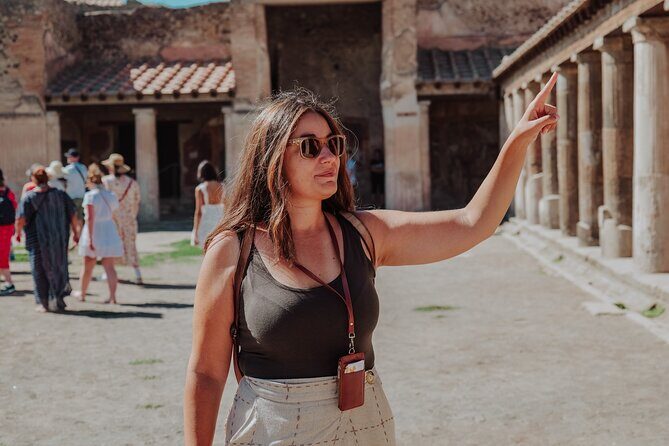
- Archaeologist guidance that turns ruins into daily life, not just dates and names
- Private pacing so you can ask questions without feeling rushed
- A tight route that hits signature stops like the Forum area, baths, and major houses
- Crowd-smart navigation that helps you see more with less standing around
- Comfort-focused advice, including wearing closed shoes for the uneven ground
Why a 2-hour private Pompeii route works (and where it falls short)
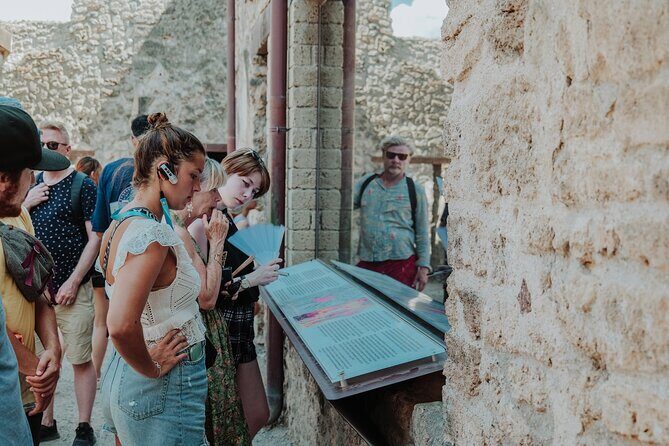
Pompeii is one of those sites where self-guided wandering can go either way: either you spot details you never knew to look for, or you just feel overwhelmed. This tour aims for the first outcome. In about 2 hours, you cover the kinds of places that give you the full “city picture,” from housing and street life to public buildings and the big social spaces.
I also like that the tour isn’t just a checklist. The value here is the archaeologist angle: your guide can point out what’s preserved, what’s interpretive, and why certain rooms matter. That’s why many people call it a must-do if your time in Pompeii is limited.
Now the drawback. If you’re hoping for a long, slow “soak it in” day, 2 hours is not that. Even with a private guide, you’ll be moving through major highlights rather than getting stuck in one deep neighborhood for an hour. If you want maximum absorption, you may still want time afterward to explore on your own.
Other private Pompeii tours we've reviewed in Pompeii


Meeting at Porta Marina Superiore and starting without chaos
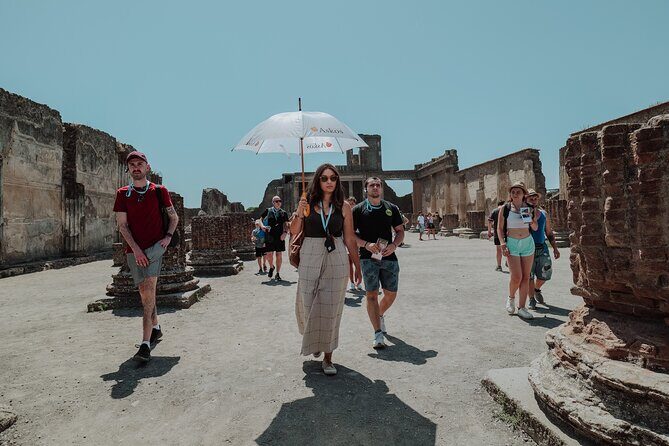
You meet at the Pompeii archaeological park entrance called Porta Marina Superiore. Your guide will be holding a sign with Askos Tours at the top, which makes it easier to spot each other quickly. The whole start matters because Pompeii can be disorienting at first, and a private tour only helps if you’re underway early.
Your meeting address is Via Villa dei Misteri, 1, 80045 Pompei NA, Italy, and the tour ends at the same address after the visit. One practical detail I appreciate is that the guide is set up to help you with getting back to your accommodation or the closest train station.
For planning: this tour is in English, and it’s designed for most travelers. If you’re coming on a day when it’s hot, aim for lighter layers and bring water. Pompeii ruins don’t care about your plans.
The “archaeologist lens” route: what you’ll see stop by stop
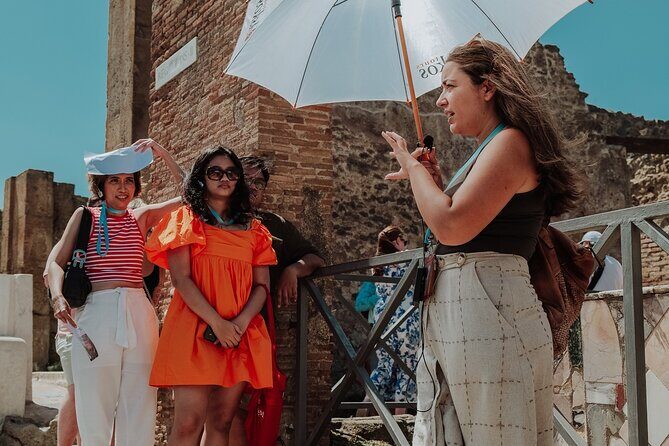
This tour moves through a focused sequence of Pompeii’s key areas. Some stops are short looks, but the guide’s job is to give you context fast, so those short visits still feel meaningful.
Stop 1: Archaeological Park of Pompeii (Porta Marina Superiore)
You begin at the main entrance of the archaeological area, Porta Marina Superiore. The park entry ticket is listed as included for this first stop, and that’s a big deal because it reduces one big friction point.
That said, keep one eye on your confirmation. One review experience described being asked for a separate park admission fee (around 20 euro per person). So I recommend you check your voucher details before you arrive, and be ready for the possibility of paying the Pompeii admission separately if your booking is handled that way.
Stop 2: Casa dei Vettii (House of the Vettii)
The Casa dei Vettii is where Pompeii starts to feel like a real neighborhood, not a museum. This is an upper-class house, and your guide can help you understand how wealth showed up in design and decoration.
Even with limited time, this is a smart stop because the house format teaches you how to “read” other rooms later. Once you know what you’re looking at, you’ll notice more when you wander afterward.
Other archaeologist-led tours in Pompeii





Stop 3: Lupanar
Then you hit a totally different side of Pompeii: the Lupanar, a well-known site often associated with sexual commerce in the Roman world. Your guide can explain what’s visible, what’s debated, and why this place is important for understanding daily life.
This stop isn’t for everyone. If you’d rather keep things family-friendly or avoid explicit topics, tell your guide at the start so they can frame it in a way that matches your comfort level.
Stop 4: House and Thermopolium of Vetutius Placidus (Termopolium)
Next comes a termopolium, a kind of Roman street-food spot. Pompeii has a way of making modern habits feel familiar, and termopolia are a great example. You’re essentially looking at the built environment of fast food and takeout before those words existed.
If you like the “how did people actually live?” side of history, this stop is one of the best. A good guide will connect it to social patterns, not just the walls.
Stop 5: Teatro Grande (Large Theatre)
The Teatro Grande gives you a feel for public entertainment and the role of performance in city life. This isn’t just about the building; it’s about how crowds gathered and how people shared culture.
The stop is brief, so the real payoff is the guide’s orientation—what the space was for and how it fits into the rest of the city.
Stop 6: House of the Faun
Then you move back into elite housing with the House of the Faun. This is one of those places people remember because it’s dramatic and visually rich, even when you’re just seeing the main features.
If you’re curious about Pompeii’s social classes, houses like this are key. The guide’s explanations help you connect floor plans to status and daily routine.
Stop 7: Stabian Baths (Terme Stabiane)
After houses and streets, the tour shifts to public life at the Stabian Baths. Baths in the Roman world weren’t only about hygiene. They were social hubs, workout spaces, and conversation zones.
This is a good pivot stop because it balances the private-house vibe and makes Pompeii feel like a living city. Even a quick visit can land well if the guide explains how bathing worked.
Stop 8: Via dell’Abbondanza
Now you’re walking a major street: Via dell’Abbondanza. This is where Pompeii starts to look like a city layout instead of isolated attractions.
Streets also help you understand how far people walked, where commerce clustered, and why certain public spaces mattered.
Stop 9: Forum Baths
Next, Forum Baths show the overlap between city institutions and everyday routines. If the Stabian Baths are your introduction, this stop adds another angle to Roman bathing as part of civic life.
A guide can also help you spot patterns in the architecture so you’re not just moving past rooms.
Stop 10: Macellum
The Macellum is the market area. Markets are where you see the city’s economic pulse—food, trade, and daily errands.
This stop is short, but it’s still useful because it rounds out the “home and street” story with “city economy.”
Stop 11: House of Menander
Then you reach another house, the House of Menander. It’s a strong option for understanding how decoration and layout reflected identity in Roman homes.
If you’re the type who likes comparing houses—what’s similar, what’s different—this stop will help you build that mental map.
Stop 12: Granaries of the Forum
The granaries of the Forum add a more functional layer: storage and supply. Grain logistics might not sound glamorous, but it’s exactly what keeps a city running.
This stop is a reminder that Pompeii wasn’t only art and architecture. It was also systems and survival.
Stop 13: Foro de Pompeya (Forum)
You finish at the Forum, Pompeii’s central civic space. This is a fitting wrap-up because everything you saw in houses, markets, and baths ties back into what the Forum represented: governance, gatherings, and public life.
If you want the day to feel coherent, this ending helps a lot. It’s the “big picture” close.
Price and value: what $178.45 gets you
At $178.45 per person, this isn’t a cheap add-on. So the question isn’t just cost—it’s whether you’re buying the right advantage.
Here you’re paying for three things:
- A private setting so you get time to ask questions
- An archaeologist guide, which changes the quality of what you notice
- A tight route that helps you see key highlights without wasting hours
Many people in the feedback put a strong focus on value for money, especially because the guide could navigate around crowd pressure. If you’ve ever tried to follow a map through Pompeii mid-day, you already understand why this matters.
One more pricing reality: admission/ticket expectations can vary based on how your booking is structured. The itinerary lists park admission included at the first stop, and several later stops marked as free, but one described experience involved paying about 20 euro per person more for entry. If you budget a little extra just in case, you’ll avoid the awkward surprise moment.
Crowd pressure, walking surfaces, and comfort tips that actually help
Pompeii is often described as overwhelming for a reason. Even on a well-planned route, you’ll be dealing with uneven stone, lots of foot traffic, and heat in summer.
I recommend you wear closed shoes with solid grip. Flip-flops are a bad idea here. Your feet will thank you, and you’ll move faster because you won’t be constantly adjusting for slippery ground.
If it’s a hot day, think shade and water. There are outdoor gaps between key areas, so you’ll feel the weather even on a short tour.
And because this is private, you can ask your guide to slow down if needed. One review example mentioned a guest with a broken foot taking it at an easier pace, with the guide helping manage rest stops.
Who this Pompeii private tour suits best
This tour fits you best if:
- You only have about half a day in Pompeii and want the highlights plus real context
- You learn faster when someone points out what matters
- You don’t want to spend your energy in crowd navigation
It’s also a smart choice if you’re traveling with teens or kids who need engagement. Several guide stories emphasized keeping younger visitors involved, which you can feel when the explanations aren’t just lecture-style.
If you’re a hardcore Pompeii explorer, you might still love this tour but treat it like an orientation. Use it to understand the city, then add time for deeper independent exploration.
Should you book Askos Tours for Pompeii?
I’d book this tour if you want a well-paced, private introduction to Pompeii that stays focused on what you’re actually seeing. The best reason is the archaeologist guidance: it turns the ruins into something you can understand quickly, and it gives you a chance to ask questions instead of guessing.
I’d hesitate only if you’re very time-rich in Pompeii and want to linger for hours in fewer places. Also, double-check your confirmation about the Pompeii park ticket so there are no surprises when you arrive.
If your goal is to make your Pompeii day feel organized and meaningful, this route does the job.
FAQ
How long is the Pompeii private tour with an archaeologist guide?
It runs about 2 hours (approx.).
Is this a private tour or will I join other groups?
It’s private. Only your group participates.
Where do I meet the guide?
You meet at Porta Marina Superiore, with the guide holding a sign with Askos Tours.
What is included in the tour price?
The tour includes guidance and assistance by an archaeologist, plus the private tour itself.
Do I need a Pompeii entrance ticket?
Pompeii entrance ticket is not listed as included in the general pricing. The first stop states admission ticket included, but one experience described paying extra for park admission, so it’s smart to confirm what your specific booking includes.
Does the tour provide transportation to or from Pompeii?
No. Transportation is not included.
Is the tour offered in English?
Yes, it’s offered in English.
What should I wear for Pompeii?
Wear closed shoes. Flip-flops can be difficult on the ruins’ walking surfaces.
What’s the cancellation policy for a full refund?
You can cancel up to 24 hours in advance for a full refund.