REVIEW · POMPEII
Pompeii 2-hour Private Tour with an Archaeologist-Ticket included
Book on Viator →Operated by Askos Tours · Bookable on Viator
Pompeii hits different with a real guide. This private pacing tour in English lets you focus on Pompeii’s main spine without getting buried by large-group noise, and I love the archaeologist-led context that turns stones, rooms, and casts into a lived-in place.
The tour keeps you moving through major stops like the Forum area, baths, and famous houses, with just enough time at each to actually understand what you’re looking at.
One thing to weigh: at $214.75 per person for about 2 hours, it’s focused and efficient, not a full-day “see everything” option—so plan your expectations if you want extra wandering.
In This Review
- Key Points Before You Go
- Why This 2-Hour Private Pompeii Tour Feels Worth It
- Price and What You Actually Get for $214.75
- Meeting at Porta Marina Superiore: How to Start Smoothly
- The Walk to Pompeii’s Center: How the Route Builds Understanding
- Stop 1: Entrance and Pompeii admission
- Stop 2: Basilica (merchants under a portico)
- Stop 3: The main square and the Forum vibe
- The main street walk-through: pace and perspective
- Forum Granaries and Menander’s House: Seeing Wealth and Daily Use
- Stop 4: Granaries of the Forum (and those striking casts)
- Stop 5: House of Menander (rich architecture and decoration)
- Stabian Baths, Lupanar, and the Houses: Pompeii’s Social Life
- Stop 6: Stabian Baths (Terme Stabiane)
- Stop 7: Lupanar (Pompeii’s famous brothel)
- Stop 8: House of the Faun (a large, impressive private residence)
- Theaters: Teatro Piccolo and Teatro Grande in One Finish
- Teatro Grande: the big public stage
- How Guides Actually Improve Your Pompeii Day
- Who This Tour Fits Best
- Should You Book This Pompeii Private Tour?
- FAQ
- How long is the Pompeii private tour?
- Is this tour private?
- What’s included in the price?
- Where do we meet the guide?
- Where does the tour end?
- Is the tour offered in English?
- Does the tour run in bad weather?
- What should I wear?
- Is transportation or hotel pickup included?
- What is the cancellation policy?
- Is there a limit on mobility?
Key Points Before You Go
- Private means only your group, with an archaeologist guide who can answer your questions on the spot.
- Admission for Pompeii is included, with ticket handling built into the visit flow (mobile ticket available).
- You’ll walk Pompeii’s core route, from Porta Marina Superiore toward the Forum area, houses, baths, and the theaters.
- Stop lengths are short and intentional, which helps you cover highlights without fatigue taking over.
- Pace can adjust for uneven ground, which matters in Pompeii’s rough, steep sections.
- You end at Piazza Esedra, and the guide can point you toward the way back or the closest train station.
Why This 2-Hour Private Pompeii Tour Feels Worth It
Pompeii is one of those places where the ruins can either feel like random piles of rock or like a whole city you can almost hear. This is built for the second feeling.
The big win is the private format. When it’s just your group, you’re not constantly waiting for others to catch up, and you’re not trying to interpret everything through a swarm of shoulders. You can slow down when something catches your eye—like a carved detail, a floor layout, or a display of human and animal casts.
You’ll also get a guide with real excavation context. In this tour lineup, guides have included people like Alessandra and Silvia, both described as having doctorate-level archaeological work tied to Pompeii’s excavation and ongoing study. Other named guides—Amedeo, Giovanni, Mena, Rafaella, Ivan, Luca, Sara, Diego, and Paolo—were praised for making stories clear and for staying patient when schedules or interests got a little messy. That combination matters: Pompeii rewards curiosity, and a good guide gives you a framework to ask better questions.
Other private Pompeii tours we've reviewed in Pompeii


Price and What You Actually Get for $214.75
Let’s talk value without pretending it’s cheap.
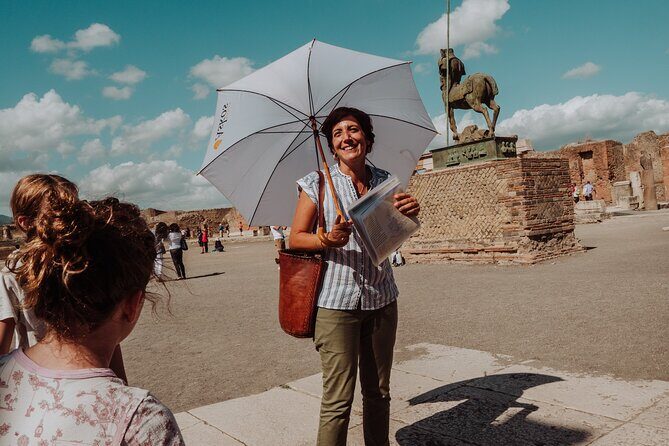
You’re paying $214.75 per person for a private, about-2-hour walk led by a professional archaeological guide, with Pompeii admission included. That included ticket is not a small add-on here—Pompeii entry is part of the cost equation, and it’s baked into what you’re buying.
Where this can feel like a smart deal:
- If you’d otherwise buy entry tickets and try to piece together the site yourself, you’re also buying your own time and attention. A good guide saves you from wandering in the wrong direction with the wrong mental picture.
- If you want a curated route through high-impact areas—Forum zone, baths, brothel, and standout houses—this gives structure in a short window.
Where it might not fit:
- If you’re the type who wants to sit longer in each area, bounce between museums and displays for hours, or you want to cover the entire park. A 2-hour private tour is a highlight reel, not an all-day sweep.
If you’re visiting Pompeii as a day stop with limited hours, this format usually makes more sense than forcing a longer plan that leaves you exhausted and still unsure what you just saw.
Meeting at Porta Marina Superiore: How to Start Smoothly
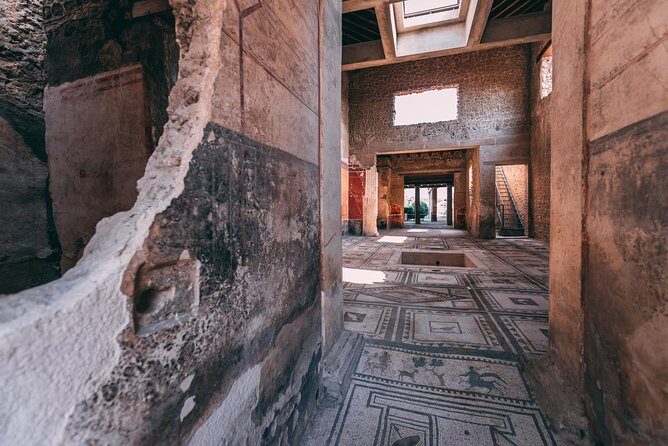
The tour begins at the main entrance called Porta Marina Superiore. Your guide will be holding a sign that shows Askos Tours. That simple detail matters more than it sounds—Pompeii can feel like a maze when you’re arriving with limited time.
You also need to know the tour’s official meeting location on the ground: Via Villa dei Misteri, 2, 80045 Pompei NA, Italy. You’ll find the start point there, then connect with the guide at Porta Marina Superiore.
A good practical tip: if you arrive early, take a minute to orient yourself before walking into crowds. This tour is short, so you want your first 5–10 minutes to count.
And when you’re done, the guide ends the tour at Piazza Esedra, 80045 Pompei NA, Italy. The guide can also help you with directions back to your accommodation or to the closest train station, which is useful if you’re not renting a car.
The Walk to Pompeii’s Center: How the Route Builds Understanding
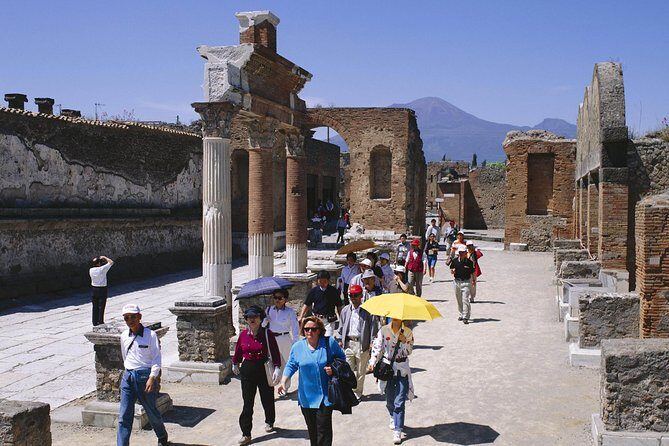
This tour is planned like a guided “reading” of the site. The stops are close enough to cover a meaningful arc, but spaced with breathing room so the story stays coherent.
Stop 1: Entrance and Pompeii admission
At the start, you’ll be at the Archaeological Park of Pompeii, meeting at Porta Marina Superiore. This first stop is short—about 10 minutes—but it’s where your admission ticket is included. Even if you’ve been to ruins elsewhere, that first context is key: you get oriented fast before the guide starts pointing out how the city functions.
Other archaeologist-led tours in Pompeii





Stop 2: Basilica (merchants under a portico)
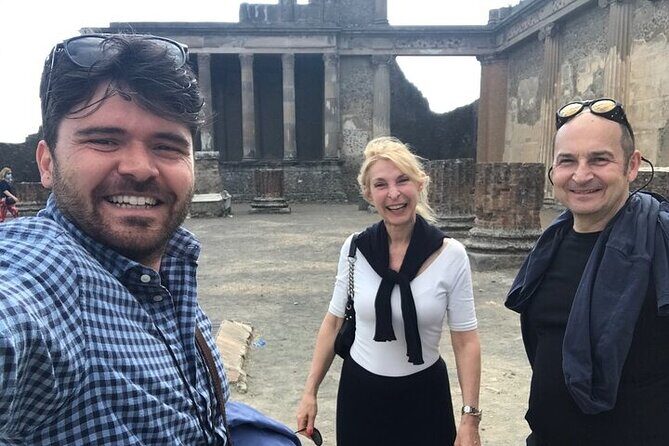
Next is the Basilica, described as an open portico that offered shelter for merchants and other activities. In plain terms, this is where you start to see Pompeii as an everyday business place, not just an ancient backdrop.
The drawback: if you’re expecting big dramatic interiors, this one is more about function and atmosphere. The payoff is in understanding how a covered public space helped people keep moving through rain and heat.
Stop 3: The main square and the Forum vibe
Then you’re looking at the Forum’s main square for around 10 minutes. This is where Pompeii starts to feel civic—public life, speeches, commerce, and the kind of space where people recognized each other by routine, not by building names.
If you like city planning and human scale, this stop usually lands well.
The main street walk-through: pace and perspective
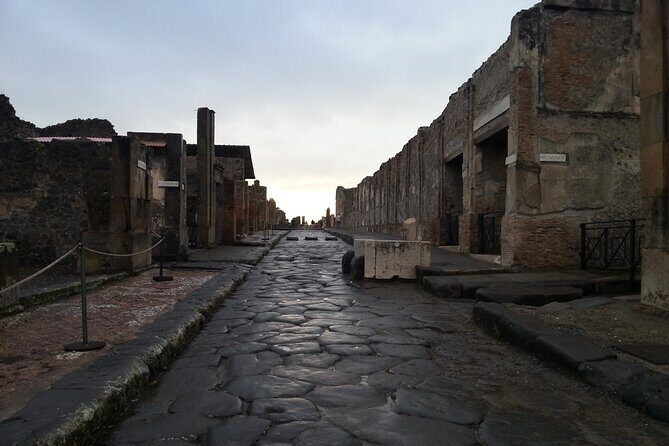
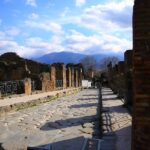
After that, there’s a walk along Pompeii’s main street. You may not get a long stop here, but it’s valuable because it connects the dots between the civic area and the residential and social spaces you’ll see next. In a place this big, moving with a guided route is how you avoid “ruins scatter syndrome.”
Forum Granaries and Menander’s House: Seeing Wealth and Daily Use
The next part of the tour focuses on what people stored, displayed, and lived with.
Stop 4: Granaries of the Forum (and those striking casts)
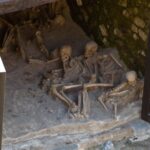
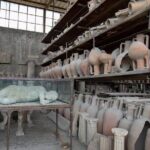
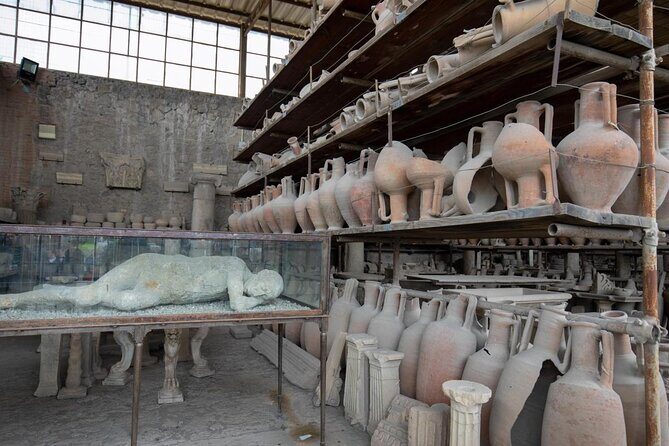
At about 15 minutes, the Granaries of the Forum bring multiple layers together. You’ll see marble tables and features linked to baths for fountains that adorned entrances of houses. You’ll also encounter casts of victims of the eruption, and even a cast connected to a dog and a tree.
This stop can hit hard. It’s not just “sad facts,” though. It’s a reminder that you’re looking at objects that once served a practical city—storage, public movement, and home entrances—alongside displays that communicate what happened in a way a written description never quite does.
Possible consideration: if you’re sensitive to disaster-related material, take your time here and decide ahead of time whether you want to linger or keep moving.
Stop 5: House of Menander (rich architecture and decoration)
Next is the House of Menander, another 15-minute stop. It’s one of Pompeii’s richest residences, especially noted for architecture, decoration, and contents.
This is the type of place where a guide’s storytelling matters. Without context, you might focus only on what’s preserved. With context, you start thinking like a Roman homeowner: where guests would enter, how rooms relate, and why certain decorations and layouts signaled status.
If you’re a photo person, this is one of the areas where you’ll likely pause naturally—just keep in mind that the tour is timeboxed, so try not to let one angle eat your whole visit.
Stabian Baths, Lupanar, and the Houses: Pompeii’s Social Life
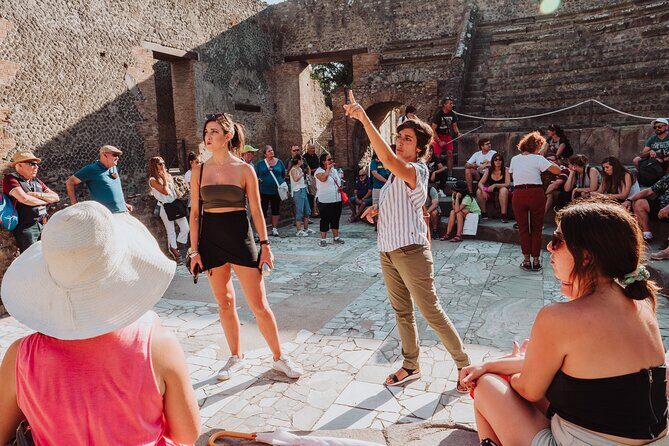
This section is where Pompeii stops being about “what survived” and starts being about how people spent their time.
Stop 6: Stabian Baths (Terme Stabiane)
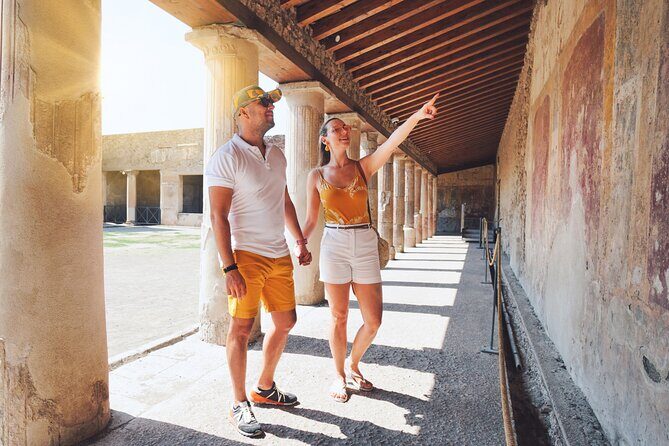
The Stabian Baths (Terme Stabiane) take about 15 minutes. You’ll learn they’re among the city’s oldest thermal complexes and see a vast area between landmarks like the brothel lane, crossroads, and Via Stabiana.
Baths were social and practical. Even in ruins, you can often feel how a system like this shaped daily routines. The tour’s short pacing is an advantage here: you get an overview without burning hours.
A practical consideration: bath areas can be uneven. Comfortable shoes are a must. Pompeii is not a “cute sneakers only” kind of day.
Stop 7: Lupanar (Pompeii’s famous brothel)
Then comes the Lupanar, about 15 minutes. This is described as the most famous brothel in Pompeii. Whatever your comfort level with the subject, it’s historically significant because it’s part of the city’s documented social systems—how commerce, services, and human behavior intersected.
The real value is how your guide frames it. A good guide keeps it informative, not sensational, and helps you read the space as a functioning establishment rather than a shock prop.
Stop 8: House of the Faun (a large, impressive private residence)
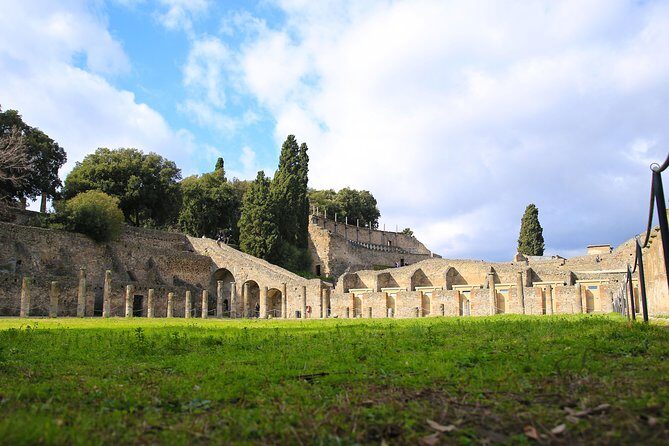
After the Lupanar, you’ll hit the House of the Faun in another 15-minute window. This is one of Pompeii’s largest and most impressive homes.
This stop helps you balance the earlier social and civic spaces. You see how private wealth and public visibility worked together: a home large enough to signal status, with rooms that tell you how people lived day to day.
Theaters: Teatro Piccolo and Teatro Grande in One Finish
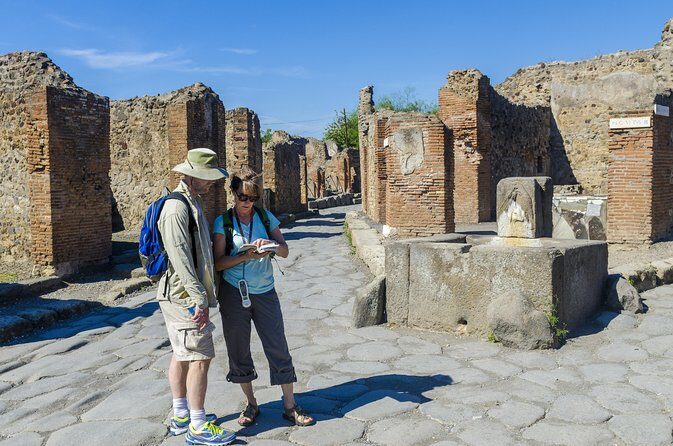
The last leg includes theater spaces, starting with a look at the Teatro Piccolo (time not specified) and then a more focused visit to the Teatro Grande, about 10 minutes.
Teatro Grande: the big public stage
The Teatro Grande is described as the most important theater in Pompeii. Even in a brief stop, it’s a strong finale because it ties together civic identity and public gatherings. People didn’t just work and shop and bathe. They also gathered to watch performances, and theater spaces were part of that social rhythm.
If you’re thinking about memory, theaters also work well: they’re visually striking, and your guide can connect your earlier stops to the idea of public life.
When the tour ends, you’ll leave at the Piazza Esedra area, and your guide can help you figure out your next steps—often just getting back to where you’re staying.
How Guides Actually Improve Your Pompeii Day
This tour wins on more than route planning. It’s the guide’s method.
From the praised experiences in this tour lineup, here’s what tends to make the difference:
- Enthusiasm with structure: Guides like Amedeo and Giovanni were highlighted for passion and patience, especially when timing was off.
- Photo-friendly focus: One review emphasized a guide who stayed patient while focusing on photo time without turning the tour chaotic.
- Question-friendly explanations: People also mentioned archaeologist-level depth where the guide answered questions directly.
- A pace that respects bodies: One guide, Silvia, was specifically praised for being mindful of older family members and slower ground where Pompeii can be steep or rough.
In other words, you’re not just “watching someone talk.” You’re getting help building a mental map so Pompeii makes sense after you leave.
Who This Tour Fits Best
I think this tour is a strong match if:
- You want a high-impact Pompeii route without spending the day lost or exhausted.
- You like learning through context rather than reading every sign.
- You’re traveling with family members who benefit from short stops and a guide controlling the pace.
- You’re visiting in English and want the explanations done for you.
It may be less ideal if:
- You want a long, slow walk with lots of free time in every area.
- You’re trying to cover Pompeii’s every district and museum-like exhibits in one go.
If your time in Campania is limited, this tour’s tight structure is exactly what you want.
Should You Book This Pompeii Private Tour?
Yes—if you want Pompeii to feel understandable fast.
Book it if you value private pacing, an archaeologist-led explanation style, and admission included with a route that covers the Forum area, baths, brothel lane, key houses, and ends at the theaters. The people who get the most out of this kind of tour are usually the ones who are okay with a focused “best of” approach and want clarity over hours of aimless wandering.
If you’re the type who needs a full day to meander, take dozens of break stops, and explore extra areas beyond the main highlights, you might want a longer private or small-group option instead. But if 2 hours is your available window, this one is a practical, high-value way to make Pompeii click.
FAQ
How long is the Pompeii private tour?
It runs for about 2 hours.
Is this tour private?
Yes. It’s a private tour/activity, and only your group participates.
What’s included in the price?
It includes guidance by a professional archaeological guide and admission fees to Pompeii (Pompeii ticket included).
Where do we meet the guide?
Meet at the main entrance of the archaeological site called Porta Marina Superiore, with the guide holding an Askos Tours sign. The start location is Via Villa dei Misteri, 2, 80045 Pompei NA, Italy.
Where does the tour end?
The tour ends at Piazza Esedra, 80045 Pompei NA, Italy.
Is the tour offered in English?
Yes, it’s offered in English.
Does the tour run in bad weather?
Yes, it operates in all weather conditions, so you should dress appropriately.
What should I wear?
Comfortable shoes are recommended due to walking on site.
Is transportation or hotel pickup included?
No. Hotel pickup and drop-off and transportation to/from the ruins are not included.
What is the cancellation policy?
You can cancel for a full refund up to 24 hours in advance of the experience’s start time.
Is there a limit on mobility?
The tour is for travelers with moderate physical fitness level, and it takes place on uneven, steep ground.