REVIEW · POMPEII
Pompeii 360° – 4-hour tour with an expert Guide in archaeology
Book on Viator →Operated by Guide Centre Sorrento · Bookable on Viator
Pompeii clicks into place with the right guide. The Pompeii 360° tour strings together the biggest sights and the most telling details, using a licensed archaeology expert to make the ruins feel readable instead of random stones. I really like the way the route gives you quick Vesuvius photo viewpoints plus the kind of context that helps you understand what you’re standing on.
Two other things I love: you’re on a private tour with only your group, and the guided stops include admission for each site so you don’t waste time figuring out what ticket covers what. Guides here are praised for being engaging and practical, with examples like Luciano for clear, professional storytelling, and Martina for making history click even for kids.
The one catch is simple: the tour price does not include the €20 Pompeii Archaeological Park entrance, so budget that on top. Also, each stop is short, so if you want a long, wandering, photo-heavy day with lots of free time, you might feel a bit rushed.
In This Review
- Key highlights
- Pompeii 360° in plain terms: what this tour is really for
- Price and park entry: what you’re paying for (and why it’s not just a markup)
- Where you start and how to prepare for the walk
- Your 4-hour Pompeii 360° route, stop by stop
- Anfiteatro Romano: the oldest amphitheater feel
- Orto dei Fuggiaschi: refuge and the plaster casts
- Tempio di Giove Capitolino: temples plus the Mount Vesuvius view
- Foro de Pompeya: power, faith, and everyday politics
- Casa del Fauno (first look): mosaics, gardens, and big-house life
- Temple of Apollo: a restored classic with a Vesuvius perspective
- Casa del Cinghiale: the wildboar mosaic detail
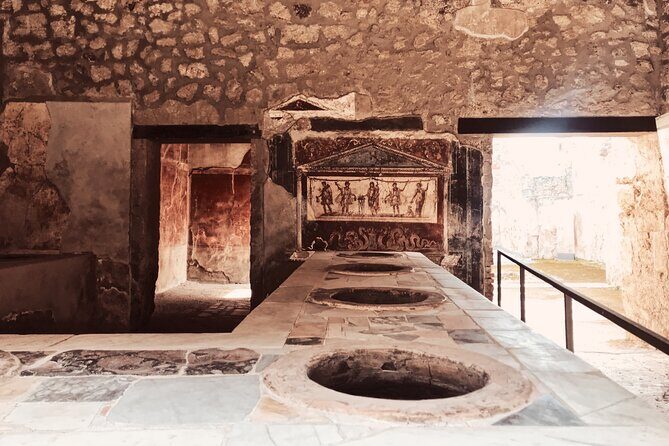
- Via dell’Abbondanza: Pompeii’s commercial spine
- Odeon – Teatro Piccolo: music and poetry in miniature
- Stabian Baths (Terme Stabiane): exercise, cooling, and treating the body
- Casa dei Vettii: preserved domus and myth scenes
- Basilica: the courthouse, not a church
- Tempio di Venere: goddess worship with a big view
- Casa del Fauno (second stop): the highlights again, more focused
- Lupanar: optional, adult-focused frescoes
- House of Venus in the Shell: the garden and the birth of Venus
- What makes the guide factor so highly praised here
- How to get the best photos and avoid feeling rushed
- Who should book Pompeii 360° (and who might prefer something else)
- Should you book Pompeii 360°?
- FAQ
- How long is the Pompeii 360° tour?
- What is the price per person for Pompeii 360°?
- Is the Pompeii Archaeological Park ticket included?
- What language is the tour offered in?
- Where is the meeting point and where does the tour end?
- Is this a private tour?
- Can the Lupanar be skipped?
- What is the cancellation policy?
Key highlights
- Expert archaeology guide who explains what matters, not just what’s there
- Private format so your group can move together at a comfortable pace
- Vesuvius-focused moments at multiple temples and the Forum photo stop
- Big variety in 4 hours: amphitheater, baths, domus mosaics, courthouse, and more
- Optional visit to the Lupanar if you want the more adult side of Pompeii
Pompeii 360° in plain terms: what this tour is really for
If you’ve been to Pompeii on your own, you already know the truth: it’s vast, and your brain can get stuck in logistics. This tour is designed for the opposite feeling. In about four hours, you get a guided “360°” walkthrough of the city’s main layers—public life, religion, home life, entertainment, and even the darker corners—without needing to plan every turn.
The park itself is a World Heritage Site, and it’s huge: Pompeii covers 66 hectares, with about 50 excavated. That scale is why a guided route helps. A good guide doesn’t just point at ruins; they connect buildings to daily behavior—where people ate, how they worshipped, how events were staged, and how power worked in the Forum.
Other archaeologist-led tours in Pompeii

Price and park entry: what you’re paying for (and why it’s not just a markup)
The tour costs $203.70 per person for a 4-hour English-language experience with a licensed archaeology expert guide. That’s a premium price compared with a basic admission ticket, but you’re also paying for real-time interpretation and a tight, curated route.
What you should add to the budget: the Archaeological Park entrance ticket is €20 per person and is not included. This matters because the “value math” changes depending on your age. The park has a few specifics you can use: entry is free for under 18, and EU citizens aged 18 to 25 with valid ID pay €2 per person.
What’s included in the tour package is the guide, taxes, and admission for each listed stop—so you’re not constantly hunting for ticket rules while you’re in the park. And because it’s described as a private activity with only your group, you don’t get swallowed by large-group pacing.
In short: this is best when you want high-quality guidance and a concentrated hit of Pompeii’s highlights in a single morning or afternoon. If you’re the type who enjoys slow strolling with no structure, you may prefer a cheaper, self-guided day.
Where you start and how to prepare for the walk
You’ll meet at Piazza Esedra (Pompei) and the tour ends back there. That’s handy because you’re not trying to solve a last-mile puzzle after you finish.
Come ready for sun and uneven ground. The practical dress guidance here is simple: comfortable shoes, plus hat and sunglasses. The tour also notes a backpack size limit (no larger than 30×30×15), which is worth respecting so you’re not dealing with baggage restrictions while you’re moving through the site.
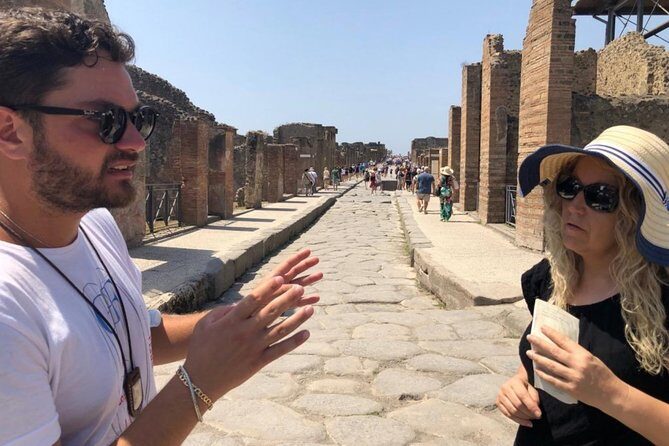
The route is active. Even though individual stops are short, you’ll still be walking across a major archaeological area. If you’re traveling with kids, this kind of structured pace can help. Martina, for example, is praised for patience with children and for explaining historical significance in a way that lands.
Your 4-hour Pompeii 360° route, stop by stop
This itinerary is built like a tour through different “rooms” of ancient life. Each stop is listed with an on-site visit time (often 5 to 15 minutes). That means you’ll see a lot, but it also means you can’t plan on reading every inscription or lingering in every room.
Anfiteatro Romano: the oldest amphitheater feel
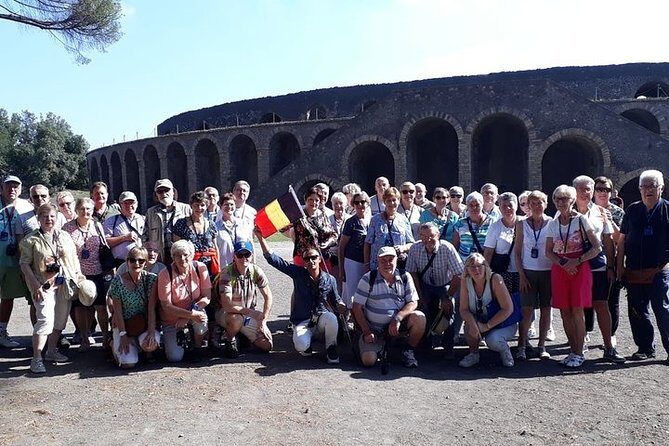
The tour starts at the Roman amphitheater, described as the oldest in the Roman world and very well preserved. This is a smart opening because it sets the tone: Pompeii wasn’t just homes and streets; it had entertainment built into its culture.
What to watch for: how the space is shaped for viewing and crowd movement. When a guide explains how amphitheaters function, you start seeing the ruins as a machine for public spectacle, not just an ancient shell. The on-site time is short, so focus on the big structural details first.
Other guided tours in Pompeii



Orto dei Fuggiaschi: refuge and the plaster casts
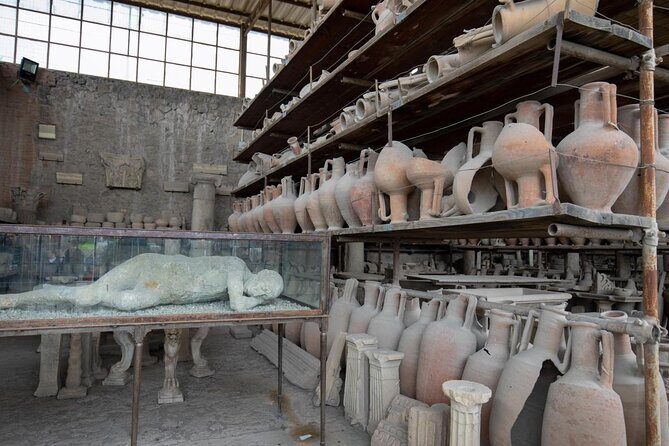
Next is the Orto dei Fuggiaschi, famous for a garden where some inhabitants took refuge during the eruption. The most memorable part here is the plaster casts—physical evidence that turns catastrophe into human reality.
This stop often hits hardest because it’s not about admiration; it’s about empathy and scale. With only about 15 minutes, you won’t get a full lesson on the science, but you will get the story in a way that helps you process what you’re seeing.
Tempio di Giove Capitolino: temples plus the Mount Vesuvius view
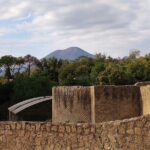
The Tempio di Giove Capitolino is one of Pompeii’s most famous temples, and the guide build-in here is the view toward Mount Vesuvius. The temple is dedicated to Jupiter, Juno, and Minerva.
Spend a moment with your camera ready. This is one of those stops where the ruins and the volcano belong together in your frame. A good guide also helps you connect the temple’s purpose to how the city organized authority and belief.
Foro de Pompeya: power, faith, and everyday politics
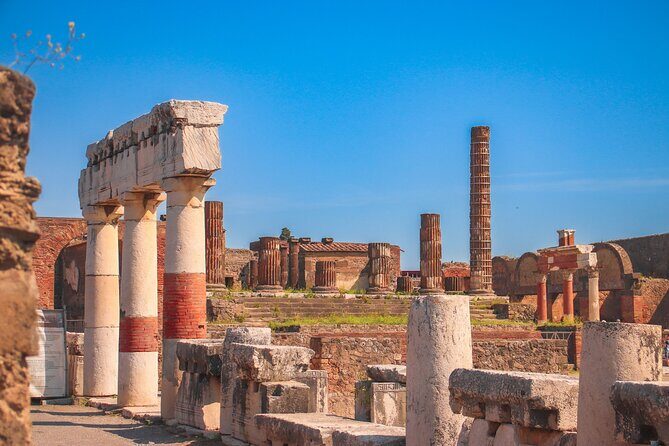
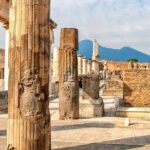
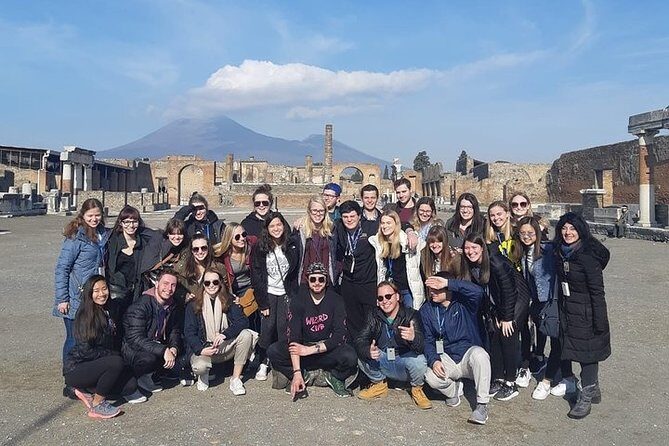
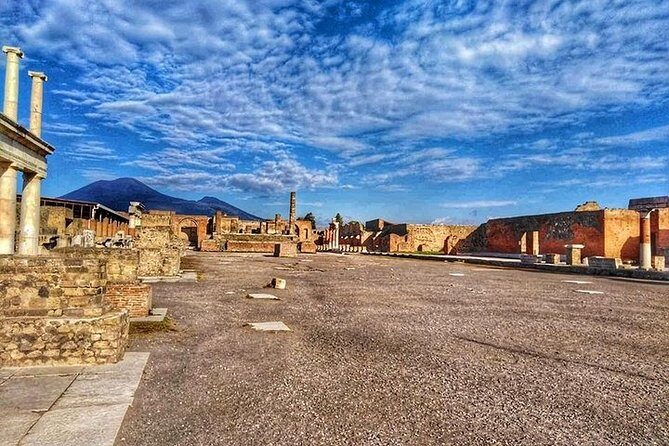
The Forum is the city center for political, religious, civil, and economic life. This is where Pompeii feels most “active,” even though everything is silent now. The stop includes a photo stop with Vesuvius behind, which is exactly what you want here because the geography explains so much.
In a short visit, the goal is understanding the building types and how people would have moved through the space. Think of the Forum as the city’s main stage: public decisions, ceremonies, and commerce all shared the same ground.
Casa del Fauno (first look): mosaics, gardens, and big-house life
You’ll visit the Casa del Fauno, described as the largest house in ancient Pompeii. Expect gardens and multicolor mosaics, including the famous Alexander the Great mosaic.
This first stop is a broad introduction: the size is the point, and the goal is to understand what wealth looks like in domestic space. When the guide brings the mosaics into context, you start noticing how floors functioned like decoration with messages—taste, status, and identity.
Temple of Apollo: a restored classic with a Vesuvius perspective
The Temple of Apollo is noted as one of the most ancient temples, restored not long ago, with a spectacular view toward Mount Vesuvius. It’s dedicated to Apollo (sun) and his twin sister Diana (moon).
If you’re photo-minded, this is another strong angle. If you’re history-minded, this stop is about symbolism: the pairing of sun and moon is a reminder that Roman religion was full of “meaning layers,” not just worshipping random names.
Casa del Cinghiale: the wildboar mosaic detail
Walking along the main street near the Forum, you’ll see the Casa del Cinghiale with a beautiful mosaic floor featuring a wild boar. Even in a short visit, this stop is worth it because mosaics are where Pompeii’s artistic skill becomes obvious fast.
The guide’s role here is to point out what makes the depiction special and how domestic decoration communicates social position. It’s a small stop time, but it’s a high-impact detail if you pay attention.
Via dell’Abbondanza: Pompeii’s commercial spine
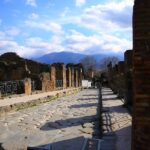
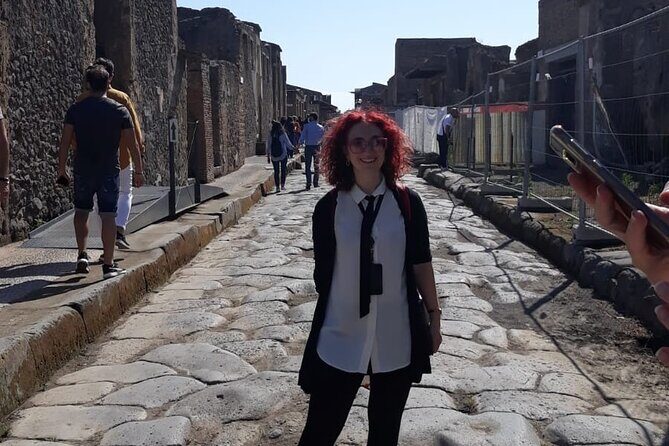
Via dell’Abbondanza is the ancient city’s main commercial street, with shops, houses, and public fountains. The point of this walk is that you begin to “feel” the city as a place that moved, sold, and served.
A practical way to use this stop: look for how pedestrian traffic would have flowed past entrances and street activity. The guide helps you read the urban layout so it doesn’t feel like wandering through disconnected ruins.
Odeon – Teatro Piccolo: music and poetry in miniature
The Odeon, also called Teatro Piccolo, is a smaller theater. Here you’ll see details like a precious marble floor, and you’ll learn it was used for music and poetry.
This is where Pompeii gets more personal. Entertainment wasn’t only giant public events; smaller venues existed too. In a short time window, your best move is to focus on materials and design choices—marble shows attention to comfort and prestige.
Stabian Baths (Terme Stabiane): exercise, cooling, and treating the body
The Stabian Baths are a typical Roman thermal bath complex, and the stop includes the gym, a swimming pool, and rooms dedicated to sauna and massages. Baths were social spaces, not just hygiene stops.
If you want a break from temples and mosaics, this is it. Even with 15 minutes, the guide can help you understand how people used different rooms for different purposes. You’ll come away thinking differently about Roman daily life—less abstract, more human routine.
Casa dei Vettii: preserved domus and myth scenes
Casa dei Vettii is described as one of the best-preserved examples of a Roman domus. You’ll see mythological frescoes and mosaics, with special mention of their beauty and preservation.
This stop rewards close attention. When a guide explains the myth themes, the artwork stops being decoration and becomes storytelling. It’s also a great example of how Pompeii’s art survives: not just fragments, but clear compositions.
Basilica: the courthouse, not a church
The Basilica’s name can trick you. It’s not a religious building; it’s an ancient Roman courthouse. The visit highlights its beautiful details.
I love this stop because it corrects a common mistake. Once you understand it’s about law and civic administration, you start reading the space like a legal system—how authority looked and where public disputes would have happened.
Tempio di Venere: goddess worship with a big view
The Temple of Venus is dedicated to the main goddess of Pompeii and sits in a panoramic spot. The stop is short, but the combination of religious function plus the open view toward the surrounding area helps you frame the city’s spiritual geography.
If you’re chasing photos, it’s one more chance to get Vesuvius and sky into your images. If you’re chasing understanding, it’s another moment to learn how belief was built into daily space.
Casa del Fauno (second stop): the highlights again, more focused
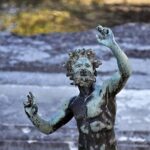
You’ll circle back to the Casa del Fauno for a second visit. This time the emphasis is described as its roughly 3,000 square meters, its famous statue of the faun, and the Alexander mosaic.
Why a second stop works: it lets the guide handle details in two passes. First you get the overall feel (size, gardens, mosaics), and then you return to the standout pieces that anchor the house’s fame. It’s a smart structure for remembering what matters.
Lupanar: optional, adult-focused frescoes
At the discretion of the customer, you can visit the Lupanar, the house of pleasure, known for erotic frescoes. This stop is optional, and that’s important.
You’re not forced to do it, which helps keep the tour comfortable for families and for anyone who’d rather keep their Pompeii day more culture-and-architecture focused. If you do choose it, expect a change in tone: this is the social underbelly of the city, not myth-making or temples.
House of Venus in the Shell: the garden and the birth of Venus
The final stop is the House of Venus in the Shell, close to the amphitheater, famous for its beautiful garden and for a fresco representing the birth of Venus.
This ending is satisfying because it combines art and domestic space in a way that feels complete. It’s not just “look at ruins”—it’s “look at how people tried to create beauty inside everyday life.” And if you’ve been staring at stone all day, gardens and fresco themes can be a gentle landing.
What makes the guide factor so highly praised here
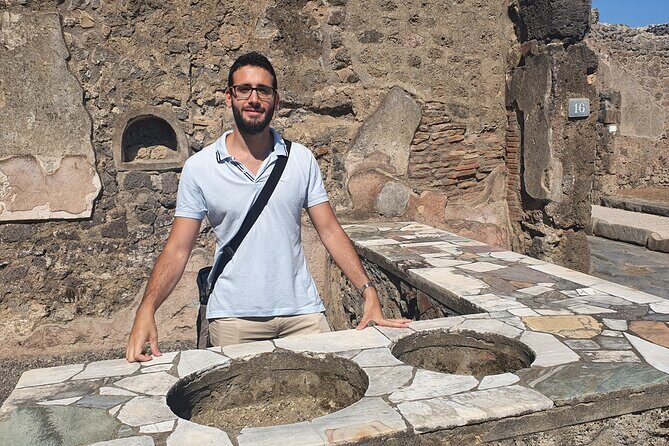
The strongest theme in the feedback is not just facts. It’s clarity, interaction, and pacing that keeps Pompeii from turning into sensory overload.
Guides get praised for being professional and interactive, like Luciano for professional, knowledgeable explanations. Others are praised for being fun to listen to, like Eugenia, and for tailoring how they explain things to families, like Martina. Even language skills show up in the praise—Ernesto is specifically noted for speaking French well and keeping the information clear.
That matters for you because Pompeii is not a museum with labels at every corner. Your guide is essentially your translation layer: archaeology terms become practical, and the big story becomes visible in everyday details like floors, rooms, and street layout.
How to get the best photos and avoid feeling rushed
This tour is time-efficient. That’s the deal. Each site is short, so you’ll get your moments, but you won’t have hours at one building.
A simple strategy: prioritize one “must photograph” per stop type. For example:
- pick temples for Vesuvius shots
- pick mosaics for floor details
- pick baths for a change of pace
Also, bring water and plan your bathroom breaks around transit segments. The tour stays focused, so you’ll feel best if you’re not managing discomfort mid-walk.
If you want shopping time or a slower extra wander after the guided circuit, build that into your day. The tour is designed to cover major highlights efficiently, not to leave you idle.
Who should book Pompeii 360° (and who might prefer something else)
Book it if:
- you’re visiting Pompeii for the first time and want an architecture-to-everyday-life understanding fast
- you care about archaeology context, not only photos
- you want a private format so your group can move together
- you’re traveling with kids and value patience and clear explanations (Martina-type support)
Consider something else if:
- you want a very slow day with long time in each building
- you’re comfortable navigating Pompeii on your own without an archaeology interpreter
- you’d rather avoid any chance of adult-content stops, even though the Lupanar is optional
Should you book Pompeii 360°?
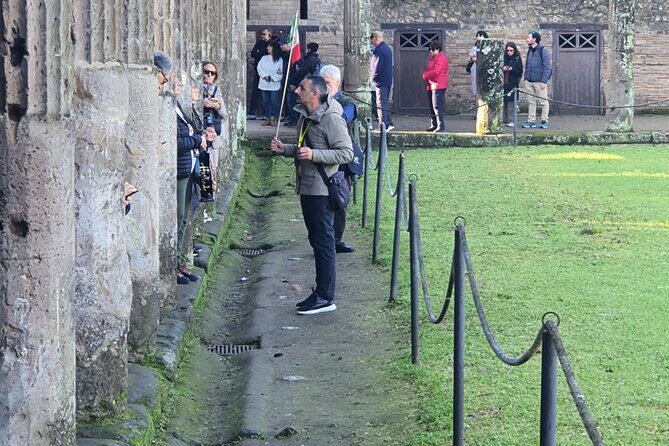
I think this tour is a strong choice when your time is limited and you want Pompeii to make sense. The route covers the big, memorable categories—entertainment, worship, civic life, domestic mosaics, baths, and civic law—then ties them together with an archaeology expert guide.
The price is real money, but you’re not only buying entry. You’re buying interpretation plus admission for the listed stops, and you’re doing it in a private format. Just remember the €20 park ticket on top, and plan to be active for four hours. If that fits your style, Pompeii 360° is the kind of day that leaves you with more than photos—it leaves you with understanding.
FAQ
How long is the Pompeii 360° tour?
The tour lasts about 4 hours.
What is the price per person for Pompeii 360°?
The price is $203.70 per person.
Is the Pompeii Archaeological Park ticket included?
No. The Archaeological Park entrance fee is €20 per person and is not included in the tour price. Under 18 is free, and EU citizens aged 18 to 25 with valid ID pay €2 per person.
What language is the tour offered in?
The tour is offered in English.
Where is the meeting point and where does the tour end?
The meeting point is Piazza Esedra, 80045 Pompei NA, Italy, and the tour ends at Piazza Esedra as well.
Is this a private tour?
Yes. It’s a private tour/activity, and only your group participates.
Can the Lupanar be skipped?
Yes. The Lupanar visit is optional, based on customer preference.
What is the cancellation policy?
You can cancel for a full refund if you cancel up to 24 hours in advance. If you cancel less than 24 hours before the start time, the amount paid is not refunded.