REVIEW · POMPEII
Pompeii Tour & Admission included in a Small Group
Book on Viator →Operated by Grand Tour Experience · Bookable on Viator
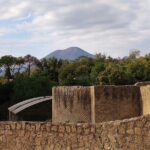
Pompeii hits fast, and this tour helps. You get a small-group walk through the ruins with an on-site headset when it’s busy, plus Pompeii admission built into the price. Mt. Vesuvius looming in the background turns the whole story of 79 AD from theory into something you can actually see.
What I like most is how the guide connects the big moments—city life, daily routines, and the eruption—with the very specific spots you’re standing in. You move along the main streets and through key landmarks like the Roman Forum and baths, then see standout houses and public buildings in a way that feels ordered, not random.
One thing to keep in mind: the pacing is highlights-first. Each major stop is short, so if you want a long, detailed explanation of excavation methods, this format may feel more like a smart overview than a deep technical breakdown.
In This Review
- Key highlights
- Price and what you actually get for $66.01
- Starting at the Villa of the Mysteries and getting oriented fast
- Porta Marina to the Roman Forum: where Pompeii’s daily life comes into focus
- Tempio di Venere, Sanctuary of Apollo, and the Forum’s temple skyline
- Macellum plaster casts, Forum baths, and the thermopolium diner culture
- Houses and main street life: House of the Faun, Vettii, and Via dell’Abbondanza
- Teatro Grande and how you end with the feeling of a full city
- Pacing reality: short visits, good pace, and what to do with extra time
- Practical tips before you go (that matter at Pompeii)
- Who should book this tour (and who might want a different style)
- Should you book this Pompeii Tour & Admission in a Small Group?
- FAQ
- How much does the Pompeii Tour & Admission cost?
- How long is the tour?
- Is the entrance ticket to Pompeii included?
- What group size should I expect?
- What language is the tour offered in?
- Do I need to print my ticket?
- Will I have audio support at the site?
- Where is the meeting point?
- Does the tour include bottled water?
- Can I cancel for a full refund?
- Are the houses included dependent on access?
Key highlights
- Admission included so you can focus on the site, not ticket math
- Headsets help when Pompeii is crowded
- Porta Marina to the Forum corridor gives you a clear “main loop” through the city
- Temples, theaters, baths, shops, and domus all get represented
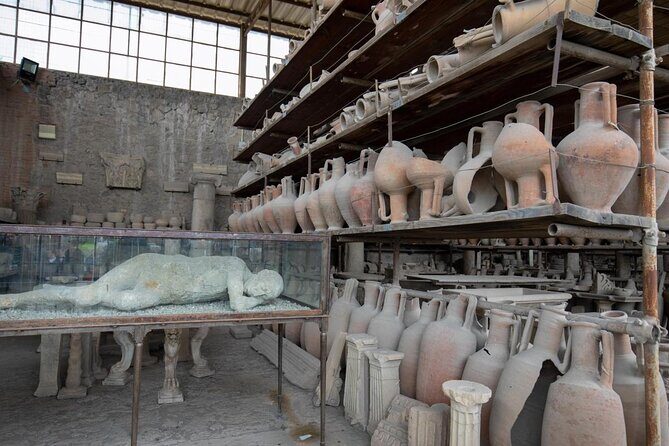
- Macellum plaster casts area brings the human tragedy into sharper focus
- House details like the Latin HAVE inscription and Priapus-linked Vettii story
Price and what you actually get for $66.01
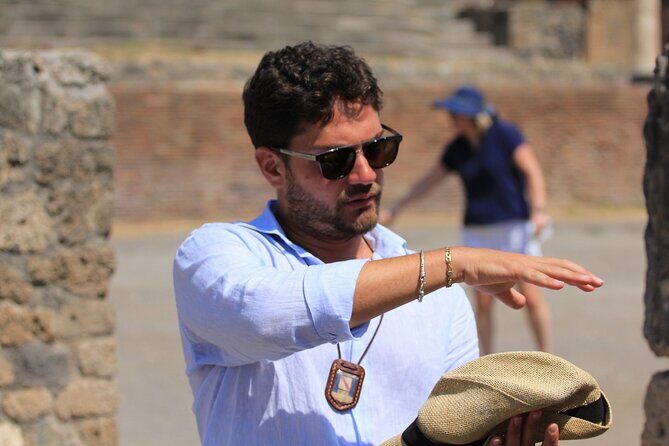
At $66.01 per person for about 2 hours, the value comes from what’s bundled. You’re not just paying for a walking guide—you’re also getting Pompeii site admission included, an authorized guide/archaeologist, a mobile ticket, and a paper map. In practice, that matters because it keeps your day simple: less time sorting paperwork, more time learning the layout and seeing the key buildings.
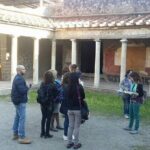
This is also a small group tour (maximum 15 travelers). That size tends to help with listening and pacing. You’ll also use a headset if the site is crowded, which is a big deal at Pompeii where chatter, wind, and crowds can make details hard to catch.
One more value point: Pompeii is huge, and self-guided visits often turn into “I saw a lot, but I’m not sure what I saw.” This tour is designed to give you a mental map fast—main streets, forum buildings, public baths, and the kinds of homes that made the rich stand apart.
Other small-group tours we've reviewed in Pompeii

Starting at the Villa of the Mysteries and getting oriented fast
Your tour starts at the Villa of the Mysteries (Via Villa dei Misteri, 2, 80045 Pompei NA, Italy). The ending is back at the same meeting point, so you’re not stuck figuring out transportation or timing.
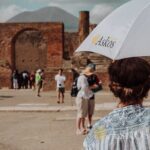
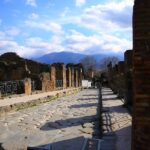
You’ll likely feel the benefits right away because the guide is helping you build orientation in the first stretch—starting from the main entrance area near Porta Marina, with Mt. Vesuvius in view. The tour doesn’t treat Pompeii like a set of random ruins. Instead, it pushes you through the city’s “center of gravity”: main routes leading into public space.
If you show up with basic expectations—temples, forums, baths, shops, and houses—you’ll leave with names for what you saw and a better sense of what each place was for. The paper map also helps you keep your bearings when you’re moving on your own afterward.
Porta Marina to the Roman Forum: where Pompeii’s daily life comes into focus
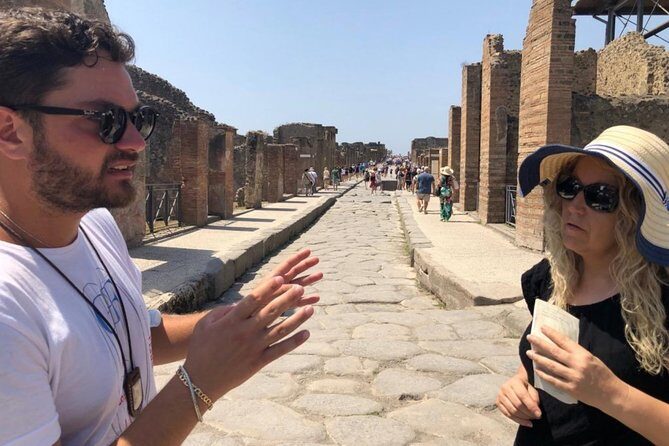
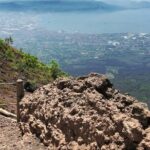
The first major segment is the heart of the experience: you enter the Archaeological Park and the guide sets up the story of Pompeii’s final moments, the eruption of 79 AD, and the later history of excavation. Seeing Mt. Vesuvius in the background while you learn about that day is powerful because the ruins aren’t floating in the abstract. You’re standing inside the geography that shaped the tragedy.
From there, you walk along the ancient streets toward the Roman Forum, then the Basilica, and on through the market area and temples. The guide’s job here is practical: help you read the buildings. For example, the Basilica wasn’t just impressive architecture—it served as a busy place for business management and administration of justice.
As you move along the main thoroughfare, the tour also highlights the Decumanus Maximus route. This is where you see daily life’s rhythms reflected in stones: public architecture, commercial spaces, and the big civic structures people gathered around.
Then you reach two standout kinds of places that tend to make Pompeii feel real:
- A Roman bath area that’s described as recently reopened
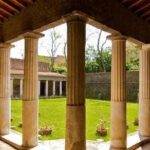
- A domus (a house) that’s also noted as recently opened
If you care about “what did daily life look like,” this portion is the payoff. You’re moving through Pompeii’s public core, then into the private world of wealthy residences—so the city isn’t just temples and tragedy. It’s also routine.
Tempio di Venere, Sanctuary of Apollo, and the Forum’s temple skyline
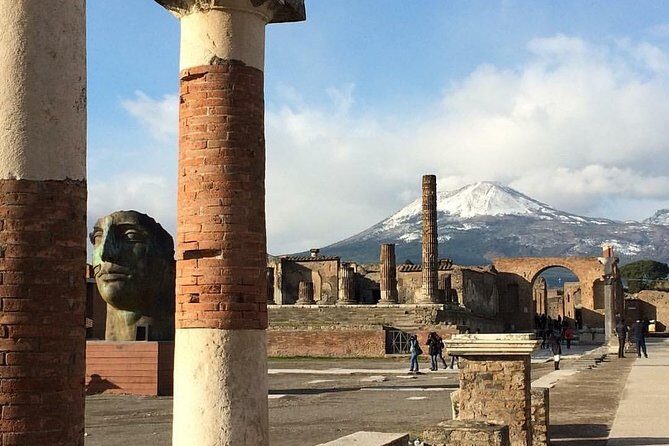
After the sweep of major public spaces, the tour shifts into the religious spine of the city. You’ll stop at the Tempio di Venere (Temple of Venus), dedicated to Venus, the patron goddess of Pompeii. This is a short stop, but it’s the kind of place where a good guide matters. Temples weren’t decorative. They were part of identity—who the city worshipped and how public life and religion overlapped.
Next is the Sanctuary of Apollo, noted as among the oldest worship areas and set along a strategic street route leading from Porta Marina toward Pompeii’s public heart. The value of this stop is that it helps you see how the city’s planning worked: important roads and important worship sites grew together.
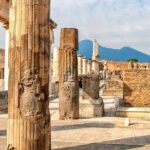
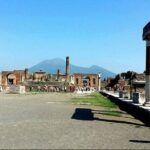
You’ll then spend time around the Forum – Main Square and the Temple of Jupiter on the northern side of the Forum, with Mt. Vesuvius rising behind it. That specific sightline is memorable because it connects the forum’s civic center with the dramatic geography outside the city walls.
If you’re the type who wants to understand “why people built things here,” these temple stops give you the answer in a very visible way.
Macellum plaster casts, Forum baths, and the thermopolium diner culture
One of the most sobering moments in Pompeii comes when the story shifts from buildings to people. The tour includes the Macellum, a monumental marketplace used for the sale of food and everyday consumer goods. Here you can see plaster casts of bodies—described as an archaeological method to find the ancient bodies as they were at the moment of the eruption.
That can land emotionally, so I suggest you treat it like a pause, not a quick photo stop. Even a short look, with the guide’s framing, helps you understand that Pompeii wasn’t just stone. It was living streets.
Then the tour moves into how people cooled off and cleaned up: the Forum Baths. You’ll learn that male and female areas had separate entrances. That detail helps you avoid the common mistake of thinking Roman bathing was one-size-fits-all.
After that, you get a very human “food stop” moment: the Thermopolium of Vetuzio Placido. A thermopolium was basically an ancient diner—places for quick refreshment and prepared food. It’s a great counterpoint to temples and courts. Pompeii wasn’t only solemn; it was also everyday meals, errands, and social patterns.




Houses and main street life: House of the Faun, Vettii, and Via dell’Abbondanza
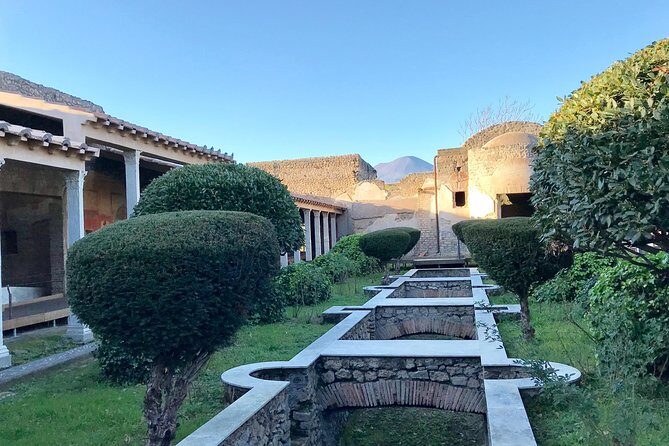
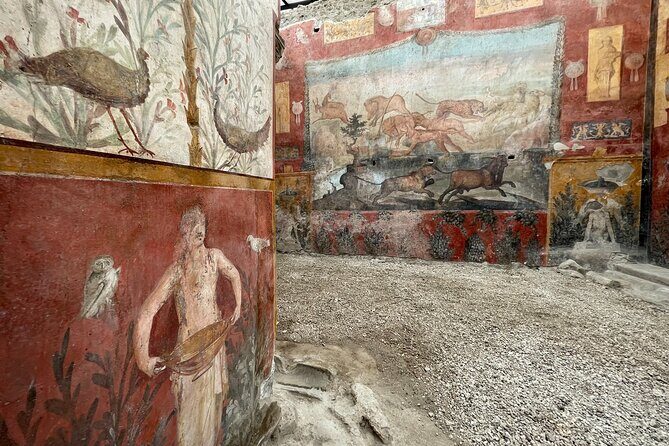
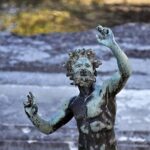
Next comes the domestic Pompeii that many visitors crave: the houses. You’ll visit the House of the Faun, known as one of the largest homes in Pompeii, with a welcome inscription on the sidewalks in Latin: HAVE. It’s the kind of tiny detail that makes a huge difference. Even if the home is partially ruined, the messaging still feels human and direct.
The tour also includes the House of the Vettii and connects it to the protection of Priapus, described here as the god of prosperity. The guide can help you notice what symbols likely meant to the owners—status isn’t only about size; it’s also about what you choose to display.
One practical thing: these houses are subject to seasonal openings and closings. So depending on the day, you might spend time at the main focus areas listed, but access to certain interiors can vary. It’s a normal part of Pompeii touring, not a flaw in the experience.
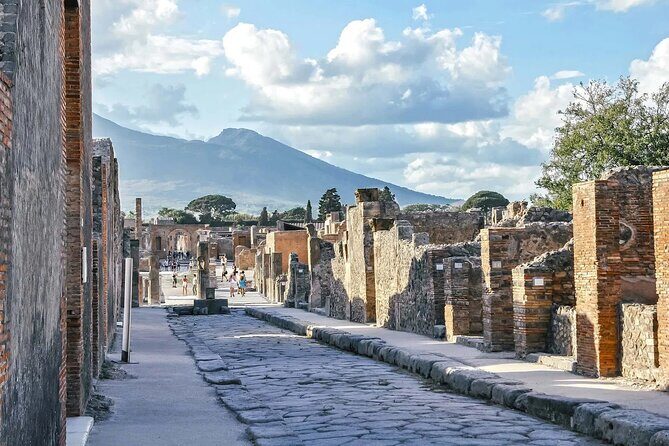
Then you walk Via dell’Abbondanza, the ancient main street (also described as the decumanus maximus). This portion ties everything together. You see the street network that connects public buildings, commercial areas, and the neighborhoods of residents who shaped the city’s economy.
Teatro Grande and how you end with the feeling of a full city
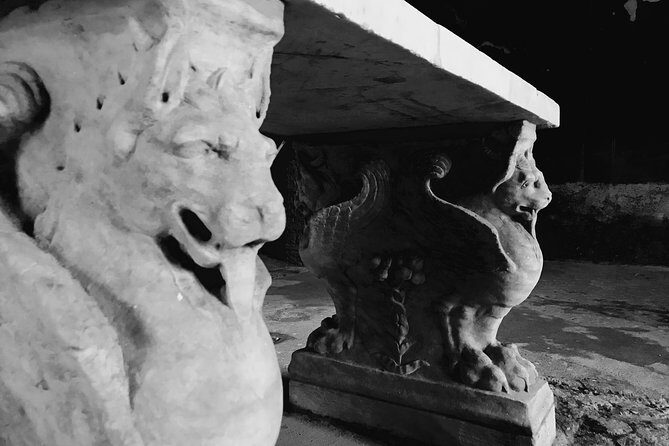
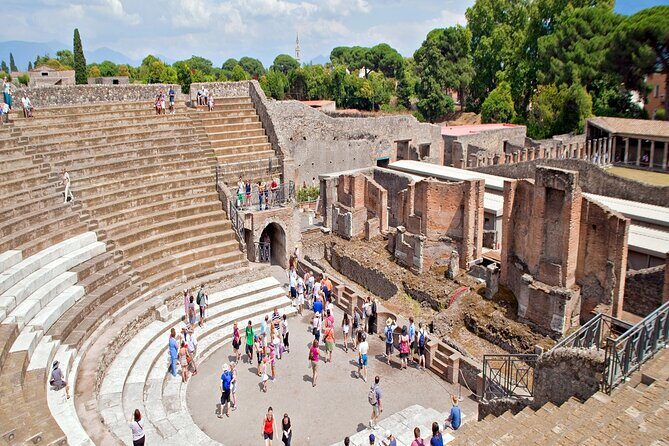
The tour finishes with Teatro Grande (theater). Pompeii’s theater scene connects to the Greco-Roman tradition—comedies and tragedies performed in an indoor setting. A quick stop here is still worth it because it’s one more “function” of the city: work, worship, food, home life, and public performance.
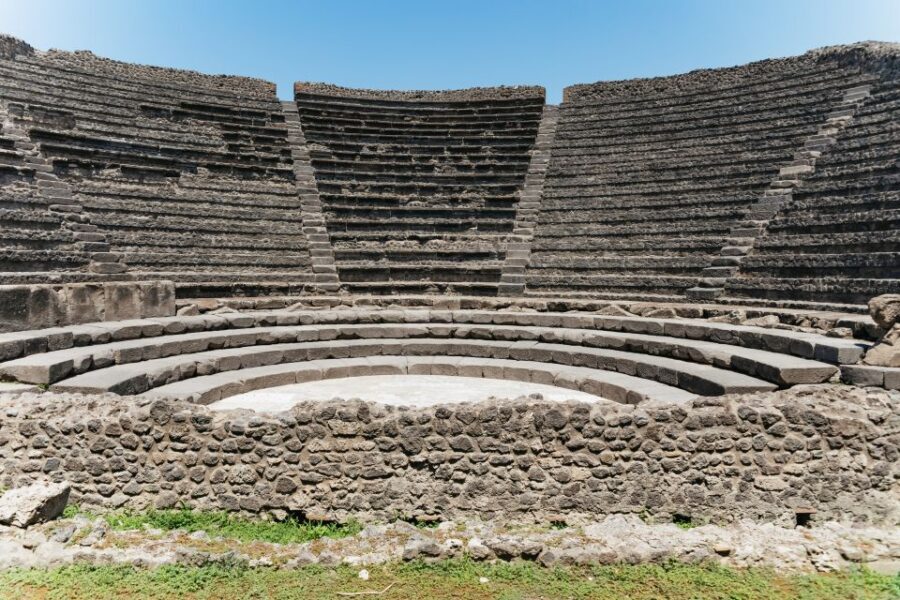
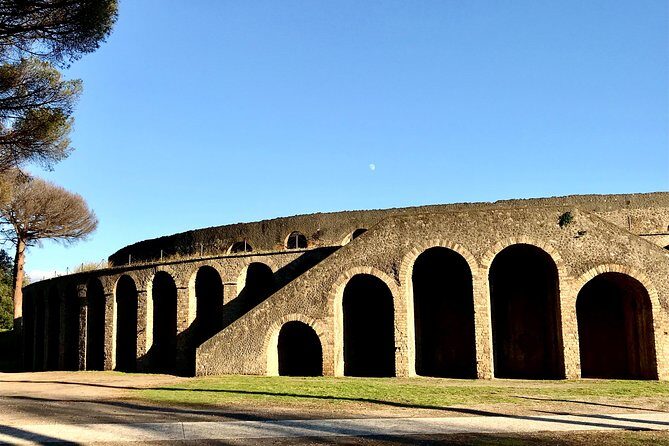
You’ll also hear about additional highlights included in the overall walk through the site, such as the Large and Small Theatres and the Gladiators’ Barracks. Even if you don’t spend the same time at every spot, the guide’s narration helps you understand Pompeii as a full social machine, not just a museum of famous ruins.
Mt. Vesuvius is also a repeating visual theme. You see it framed behind major structures, which gives you a constant reminder that the city’s identity and its fate were connected to one volcano.
Pacing reality: short visits, good pace, and what to do with extra time
This tour keeps things moving. Many stops are described as around 10 minutes each, so you’ll cover a lot without feeling like you’re stuck in one room for an hour.
That pace helps first-timers most. Pompeii is so big that if you slow down too much, you run out of energy before you run out of ruins. Here, the guide gives you the right priorities: forum buildings, baths, marketplace, key temples, then houses and theater.
You’ll also appreciate the flexibility when the guide helps you find exits quickly. One clear example from guide feedback is a situation where a guest had to leave early to catch a bus, and the guide adjusted to make sure everyone knew how to get out. That tells me the tour isn’t just rigid marching. It’s managed.
Still, keep your expectations realistic. You’ll get a strong overview, not a long, room-by-room study of Pompeii’s archaeology.
Practical tips before you go (that matter at Pompeii)
A few small things can make or break your comfort at Pompeii:
- Bring your own bottled water. It’s not included.
- Expect walking on uneven terrain and curbs/stepping stones. It’s not a smooth museum floor.
- Wear sturdy shoes. If your feet hate uneven stone, plan for that now.
- Some protected areas can close by early evening. One guide feedback note says some guarded sites closed at 6 PM, limiting access. If you’re visiting late in the day, consider prioritizing what you most want to see.
If you want the best chance of getting the most out of short stop times, arrive early and stay mentally ready to listen. The headset and guide explanations are where the “value” lives.
Who should book this tour (and who might want a different style)
This small-group Pompeii tour is a great match if:
- You want high-impact highlights in a tight time window
- You’re a first-timer who needs help understanding the city layout
- You like an expert guide who can explain both architecture and daily life
- You prefer a group size that stays manageable (up to 15)
It may be less ideal if:
- You want a deep technical focus on excavation methods and long-form archaeology
- You’re the type who wants long interior time in houses and baths every day, regardless of seasonal access
One more nice note from the guide pattern: different guides are named in feedback—such as Livio, Antonio, Riccardo, Ornella, and Annalisa—and the common theme is passion and clear teaching. You’re not relying on someone reading a script.
Should you book this Pompeii Tour & Admission in a Small Group?
If you’re trying to get maximum meaning from limited time, I think this is a smart book. For the money, you’re getting admission + an authorized archaeologist/guide + headsets when it’s crowded + orientation tools (mobile ticket and paper map). That’s a lot of built-in support for a 2-hour visit.
I’d book it if your goal is to leave Pompeii with a mental map: Porta Marina entrance, Forum core, temples, baths, marketplace, and the homes where daily Roman life had a style. If you want a longer archaeology seminar, you’ll likely need a different type of tour.
If you do book, bring water, wear good shoes, and use the guide’s explanations to connect the stones to the people—because Pompeii is really about both.
FAQ
How much does the Pompeii Tour & Admission cost?
The price is $66.01 per person.
How long is the tour?
The duration is approximately 2 hours.
Is the entrance ticket to Pompeii included?
Yes. Admission to the Archaeological Park of Pompeii is included in the price.
What group size should I expect?
The tour has a maximum of 15 travelers.
What language is the tour offered in?
The tour is offered in English.
Do I need to print my ticket?
No. A mobile ticket is included.
Will I have audio support at the site?
A headset is provided in case the site is crowded.
Where is the meeting point?
The meeting point is the Villa of the Mysteries, Via Villa dei Misteri, 2, 80045 Pompei NA, Italy.
Does the tour include bottled water?
No. Bottled water is not included.
Can I cancel for a full refund?
Yes. You can cancel up to 24 hours in advance for a full refund.
Are the houses included dependent on access?
Yes. The House of the Faun and House of the Vettii are subject to seasonal openings and closings.