REVIEW · SORRENTO
Skip the Line Pompeii Guided Tour from Sorrento
Book on Viator →Operated by Acampora Travel · Bookable on Viator
Pompeii is big, so you need a plan. This half-day style tour from Sorrento helps you cover the right highlights without getting lost, and it comes with headsets so you can actually hear your guide while walking. I like the mix of included transportation and real on-site storytelling, especially around the Forum and baths—those areas are where Pompeii starts to feel like a living city.
Two things I especially like: the small-group format (max 30 travelers) makes it easier to follow the route and ask questions, and the stop pattern keeps you moving through major public spaces rather than just wandering. The only drawback to keep in mind is the ground can be uneven, so this isn’t a great fit if you have mobility limits or need step-free access.
In This Review
- Skip-the-Line Feel From Sorrento: The Value in the Whole Package
- Getting There: Air-Conditioned Bus, Live Commentary, and Pick-Up Reality
- Walking Route: How the Stops Build One Clear Story of Pompeii
- Pompeii Archaeological Park: The Forum as the City’s Real Center
- Teatro Grande: A Brief Stop That Explains Pompeii’s Social Life
- Foro de Pompeya and the Basilica: Justice, Business, and Power in Stone
- Macellum: The Food Market and the Imperial Touch
- Stabian Baths (Terme Stabiane): Where Pompeians Cooled Off
- Granai del Foro: The Warehouses That Hold the Best Clues
- Small-Group Advantage: Hearing Your Guide and Staying Oriented
- Who This Tour Is For (and Who Should Consider Another Plan)
- Practical Notes That Affect Your Day
- Should You Book This Pompeii Guided Tour From Sorrento?
- FAQ
- How long is the Skip the Line Pompeii Guided Tour from Sorrento?
- What’s included in the price?
- Is the Pompeii entry ticket included or do I pay separately?
- Is the tour offered in English?
- Is pickup from Sorrento included?
- How many people are in the group?
- Does the tour include food or drinks?
- Is this tour suitable for mobility problems?
- Can I cancel for a full refund?
- FAQ
- Can I hear the guide clearly during the Pompeii walk?
- What major sites are included in the itinerary?
- What if traffic changes the schedule?
Skip-the-Line Feel From Sorrento: The Value in the Whole Package
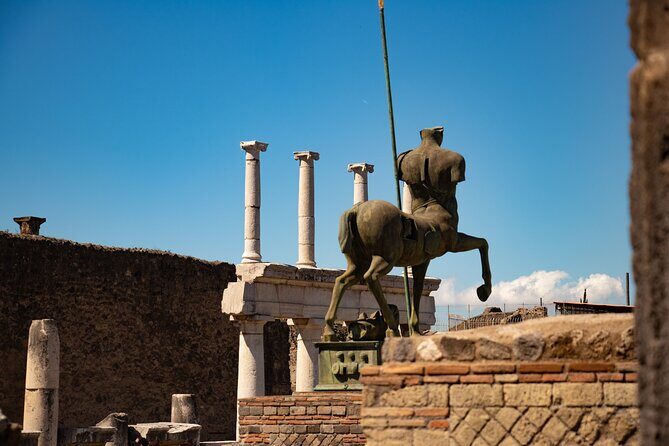
For $107.17, you’re not just paying for entry. You’re paying for three practical wins: (1) an air-conditioned bus ride, (2) an English-speaking guide, and (3) headsets during the walking time at Pompeii. That matters because Pompeii is crowded and noisy, and the ruins are spread out enough that you’ll lose time if you go it alone.
Your tour runs about 4 to 5 hours, which is ideal if you’re basing in Sorrento and don’t want your whole day tied up. It’s also booked fairly far in advance on average, so if you’re traveling in peak seasons, locking in your dates early can make things smoother.
One more detail I appreciate: the tour uses a guided route with set stops, which means you get context as you walk. Pompeii is easy to misread if you don’t know what you’re looking at—this tour helps you connect buildings to daily life.
Getting There: Air-Conditioned Bus, Live Commentary, and Pick-Up Reality
The experience starts with transportation by air-conditioned bus from Sorrento. On the ride, you’ll get live commentary onboard, which is a smart move because it sets expectations before you reach the ruins.
Pick-up is offered, but timing is the part you must take seriously. Pick-up begins 45/30 minutes before departure (depending on the supplier timing), and you need to confirm the exact pick-up time and location ahead of departure. Sorrento has many traffic restriction areas, so you may not be picked up at the exact place you assume—double-check the meeting location you’re using.
Also know this: if you miss the pick-up because you don’t coordinate with the staff, the supplier isn’t responsible. And on the return trip, the bus route can include extra stops—one past experience noted the trip back took longer due to additional drop-offs, so don’t schedule a tight connection right after.
If you're still narrowing it down, here are other tours in Sorrento we've reviewed.


Walking Route: How the Stops Build One Clear Story of Pompeii
This tour is paced like a guided walk-through of Pompeii’s core public areas, then shifts into daily life with baths and food storage. The result is that you don’t just collect photos—you build a mental map: where people governed, worshiped, shopped, cooled off, and stored supplies.
You’ll spend the most time at Pompeii Archaeological Park (about 2 hours at the first big stop), then shorter, targeted visits at additional points. The duration and exact flow can vary a bit due to traffic or on-the-ground realities.
Pompeii Archaeological Park: The Forum as the City’s Real Center
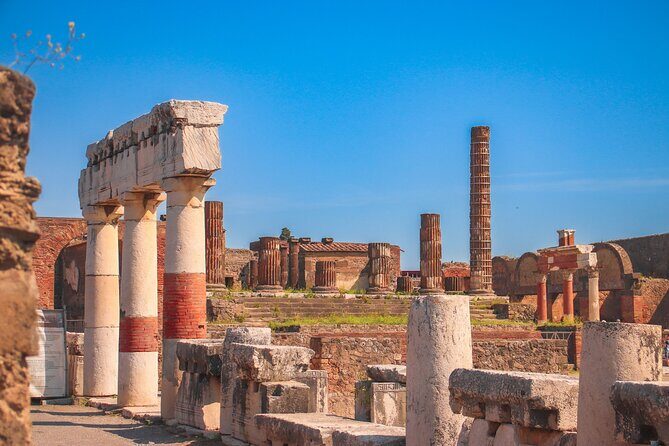
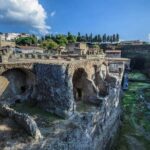
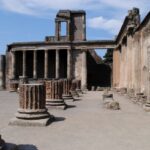
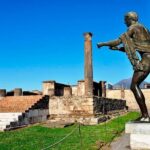
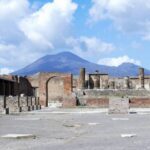
Your main start is Pompeii Archaeological Park, where the focus is the Forum—Pompeii’s civic heart. This is where the city’s daily public life was organized, and it’s surrounded by important buildings such as the Basilica, the Temple of Jupiter, and the Macellum.
Why I like this approach: the Forum is the best place to understand how a Roman city worked. It’s not just impressive stone. It’s a place where you can picture administration, business, justice, and trade all happening in one concentrated area.
The Forum stop is where your guide helps you make sense of the layout. You’ll be walking through space that served as a hub for ceremonies and errands at the same time—so when you see the nearby religious and legal structures, you’ll know why they were located there.
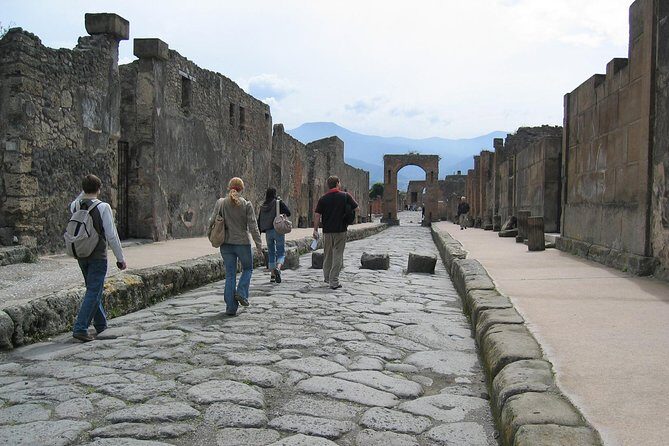
Practical tip: Wear shoes that can handle uneven stone. Pompeii’s paths are not designed for flip-flops or fragile soles.
Teatro Grande: A Brief Stop That Explains Pompeii’s Social Life
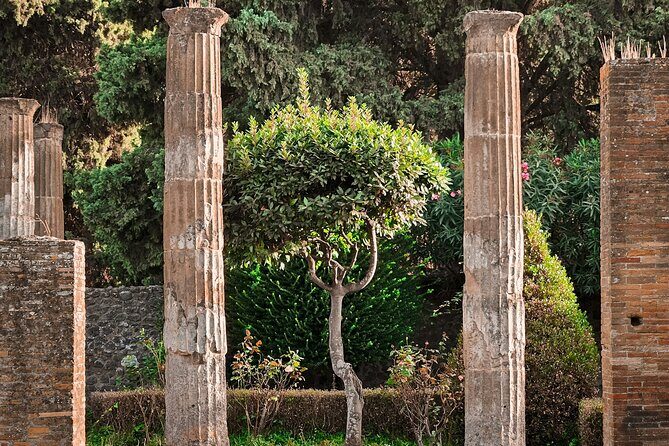
Next comes Teatro Grande, the Large Theatre. It was built by using the hill’s natural slope, which helped create the auditorium. The layout is described as separated into areas with corridors, plus sectors connected to a passage with a barrel vault.
The theatre dates to the mid-2nd century BC, then it was restored in Roman style. There’s also an inscription at the corridor entrance tied to the works carried out in the Augustan age.
Even though this is a quick stop (about 10 minutes), it’s a useful one because it shows that public entertainment and civic identity lived side-by-side. If your day is tight, I’d rather do a short, guided theatre stop than lose time trying to read the architecture on your own.
Foro de Pompeya and the Basilica: Justice, Business, and Power in Stone
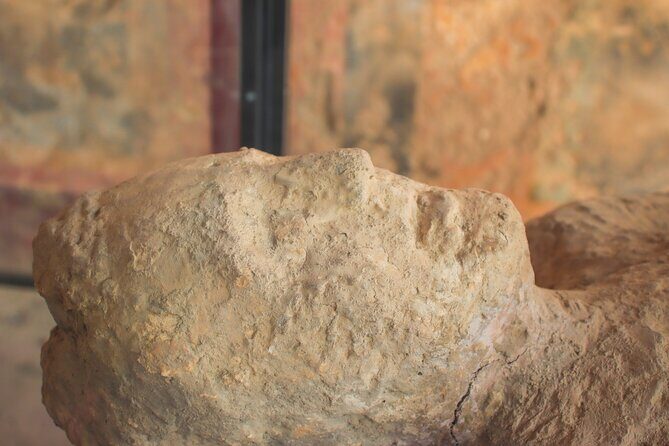
You’ll also hit the civil Forum area again as a distinct stop, described as the focal point for administration, justice, business management, markets, and worship. That repetition isn’t redundant—it reinforces the role of the Forum as the city’s main stage.
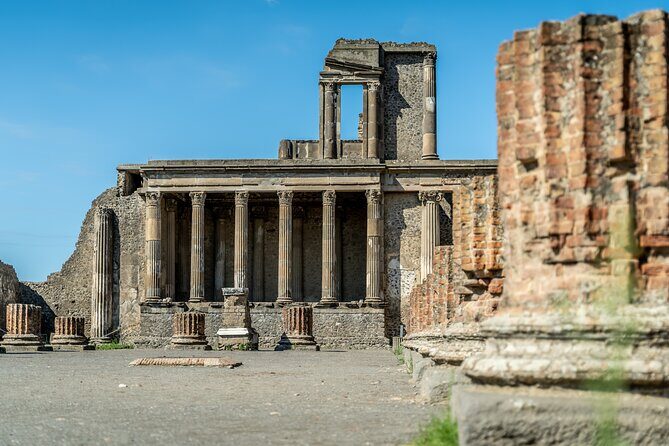
Then comes the Basilica, the Forum’s most sumptuous building, with an extension of about 1,500 square meters. The Basilica wasn’t just for decoration. It was used for business and legal administration. From the Forum, it connects through five entrances with tuff pillars, and inside it’s laid out in a way that supports large crowds and formal proceedings.
The Basilica has a centerpiece tied to judges: the suggestum, where judges sat while judicial affairs were managed.
Why this stop works: it gives you a “how it functioned” perspective. You’ll start to see the ruins as designed systems for movement and decision-making—not only as ruins you pass by.
Macellum: The Food Market and the Imperial Touch
Another short stop in the center of things is Macellum, the food market. It’s described as a tuff quadriporticus (a courtyard-style structure) with a hall for worship placed on an elevated position aligned with the entrance.
The details around the Macellum make the place feel more real: copies of marble statues (a female and a male armed) appear in niches, plus a fragment that likely relates to an emperor, Titus or Vespasian. That connects the market area to the imperial cult—yes, even shopping had political and religious undertones.
The guide’s explanation here is often what turns “market ruins” into something memorable. You’ll also notice there’s a room tied to a sacred board and another with a masonry counter that may have been used for fish sales.
This is one of those places where the architecture and daily life click together fast.
Stabian Baths (Terme Stabiane): Where Pompeians Cooled Off
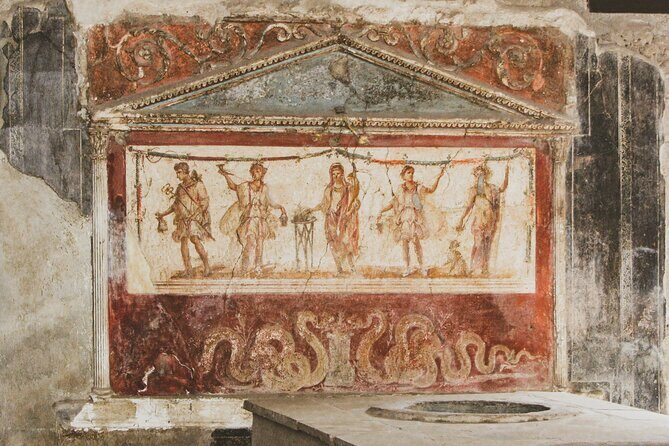
After the public core, your tour shifts to Stabian Baths, dating back to the 2nd century BC and among the oldest Roman baths known. The entrance is on Via dell’Abbondanza into a large courtyard, then the pools and colonnades unfold into the men’s quarters.
The bath sequence you’ll hear about is clear: apodyterium (dressing room) leading to frigidarium (cold baths), then tepidarium (warm baths), and finally calidarium (hot baths). Heating was maintained through a piping system in the walls and double floors circulating hot air from furnaces and braziers.
Why this matters on a guided tour: Pompeii baths aren’t just “a big room.” They’re a daily routine—social, practical, and physical. When you know the temperature flow, the spaces make more sense.
This stop is also one of the best places to spot how Roman engineering created comfort long before modern plumbing vibes existed.
Granai del Foro: The Warehouses That Hold the Best Clues
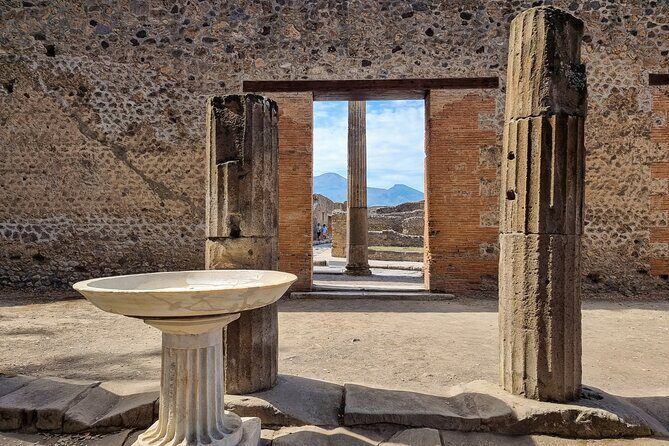
The last major stop is Granai del Foro, a set of structures stretching along the western side of the Forum. They have eight openings separated by brick pillars and were used as part of the market system (specifically tied to the Forum Holitorium for fruit and vegetables).
Here’s what I love about ending at Granai: it shifts the focus from “what people did” to “what survives.” Today these warehouses hold the greatest archaeological inventory of the city, with more than 9,000 artefacts from Pompeii excavations since the late 1800s.
Even the storage of everyday items is meaningful. The remains include terracotta cooking vessels—pots, jugs, bottles, and large amphorae used to carry oil, wine, and fish sauce across the Mediterranean.
Even if your time here is short (about 10 minutes), it gives you a strong “last impression” of Pompeii: the city wasn’t only drama and tragedy. It was also food supply, daily use, and repeat routines.
Small-Group Advantage: Hearing Your Guide and Staying Oriented
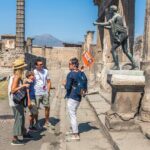
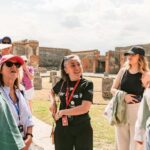
This tour caps at maximum 30 travelers, with maximum 30 pax per guide. That’s a big deal at Pompeii, where crowds can swallow your attention in a hurry.
You’ll also get headsets during the walking tour, which helps you hear directions and explanations clearly. In practice, that means fewer moments of squinting at signage and more time understanding what you’re standing in front of.
One more advantage: you’re moving on a structured route. You’ll get from stop to stop without having to navigate Pompeii’s scale while reading signs or maps.
Who This Tour Is For (and Who Should Consider Another Plan)
This is a strong fit if you want an efficient, guided way to see top Pompeii areas from Sorrento. It’s also ideal if you like learning as you walk rather than reading alone at your own pace.
It’s not a great match if you have mobility problems. The tour notes the uneven surface of the archaeological site makes it unsuitable for people with mobility issues.
If you’re the type who hates long bus days, this still might work because the whole format is half-day length and includes a set plan with minimal wandering.
Practical Notes That Affect Your Day
A few details will shape your experience more than you think:
- Wear sturdy shoes. Pompeii’s ground is uneven.
- Bring water if you like. The tour doesn’t include meal or drinks, and you might find bottled water or basic facilities on site for a small extra fee.
- Expect short stop times. Several highlights are only about 10 minutes each—this is normal for an efficient route.
- Build in buffer on the return. Extra bus stops can add time.
And one more thing: you receive a confirmation at booking, and the tour uses a mobile ticket. Group discounts are offered too, so if you’re traveling with friends, it may be worth checking how it applies.
Should You Book This Pompeii Guided Tour From Sorrento?
Book it if you want a structured, English-guided Pompeii visit that covers the Forum and key public spaces plus baths and food storage, without turning your day into a logistics puzzle. The combination of entry ticket included, headsets, and small-group size is what makes the price feel fair.
Skip it (or choose a different style) if you need step-free access or prefer a slower self-paced tour where you can linger in one spot for an hour.
If you’re staying in Sorrento and want the main hits done well in about half a day, this is one of the more sensible ways to get your bearings fast—and then actually understand what you’re looking at.
FAQ
How long is the Skip the Line Pompeii Guided Tour from Sorrento?
It runs about 4 to 5 hours (approx.).
What’s included in the price?
The tour includes air-conditioned bus transportation, live commentary on board, the Pompeii entry ticket, an English-speaking guide through the site, and headsets during the walking tour.
Is the Pompeii entry ticket included or do I pay separately?
The Pompeii entry ticket is included.
Is the tour offered in English?
Yes, it’s offered in English.
Is pickup from Sorrento included?
Pickup is offered. Pick-up time starts 45/30 minutes before departure, and you must confirm the exact pickup time and location with the supplier.
How many people are in the group?
The tour has a maximum of 30 travelers.
Does the tour include food or drinks?
No. Meal and drinks are not included.
Is this tour suitable for mobility problems?
No. Because of uneven surfaces, it’s not suitable for people with mobility problems.
Can I cancel for a full refund?
Yes. There is free cancellation up to 24 hours in advance for a full refund.
FAQ
Can I hear the guide clearly during the Pompeii walk?
Yes. Headsets are provided during the walking tour.
What major sites are included in the itinerary?
You visit Pompeii Archaeological Park with the Forum, Teatro Grande, the Civil Forum areas, the Basilica, the Macellum (food market), the Stabian Baths, and the Granai del Foro.
What if traffic changes the schedule?
Duration and itinerary may vary due to local traffic conditions and unforeseen circumstances.