REVIEW · POMPEII
Pompeii & Herculaneum Family Adventure | Guide+Transport+Tickets
Book on Viator →Operated by Leisure Italy · Bookable on Viator
Two ancient cities, one unforgettable lesson. This family-focused Pompeii & Herculaneum day pairs an English private guide with skip-the-line entry, so your time goes to ruins, not lines. Pickup is flexible from Naples, Sorrento, Pompeii, and other local spots, which helps a lot when you’re traveling with kids.
I really like how the day balances big-story history with human-scale details. In Herculaneum, you see how a deadly eruption preserved everyday life in jaw-dropping ways like painted walls and carbonized wood. Then in Pompeii, the guide turns the Forum, baths, market, and theater into a kid-friendly walk with games and prompts, while adults get solid context in the same stops.
One watch-out: it’s still an 8-hour day with walking on uneven ground, so plan for moderate stamina and sun. Also, bottled water isn’t included, so bring your own.
In This Review
- Key highlights worth planning around
- First stop: Herculaneum’s preservation feels personal
- The Boat Pavilion: turning ruins into a port town
- Antiquarium in Herculaneum: the objects that survived
- Ancient shoreline and the human story at sea level
- House of the Deer: luxury with a dramatic focal point
- Exercise courtyard: where civic education happened
- Restored residence and a look at multi-level Roman life
- Ancient shop with cucumae jars: everyday commerce made visible
- Neptune and Amphitrite mosaic: color you can still feel
- Public baths for women: hygiene, routine, and community
- Cult of the Emperor hall: religion, politics, and social rank
- Pompeii second act: civic buildings, markets, and real momentum
- Porta Marina and the Basilica: starting where people arrived
- Temple of Apollo and a built-in Vesuvius photo moment
- Forum and Macellum: the heartbeat of everyday life
- Forum Baths: mosaics and routine, not just wow-factor
- Elite homes with mosaics: wealth you can interpret
- The lively street and the dollhouse effect from above
- Main theater acoustics: modern curiosity in an ancient setting
- Pompeii Antiquarium: artifacts that help you connect dots
- Private transport and skip-the-line: why this tour saves energy
- Vesuvius views from the bottom: photos without the summit logistics
- Planning for kids and real walking: how to make the day feel doable
- Price and value: what $738+ per person is really buying
- Who this Pompeii and Herculaneum family tour suits best
- Should you book this family adventure?
- FAQ
- How long is the Pompeii and Herculaneum family adventure?
- Is pickup available, and where does it happen?
- Does the tour include admission tickets?
- Is lunch included?
- Do I need to bring water?
- What language is the guide?
Key highlights worth planning around
- Herculaneum’s preservation effect: carbonized wood, sealed upper floors, and streets that feel almost intact
- Boat Pavilion port story: a recovered Roman vessel plus maritime gear, so you understand daily sea trade
- Antiquarium objects you can actually picture: carbonized furniture parts and other household items
- Pompeii with built-in family activities: riddles, spotting symbols, and hands-on prompts for kids
- Vesuvius views without the climb: picture-taking from Pompeii and Herculaneum while avoiding the summit road
- Private transport + skip-the-line: less waiting means more time for the good stuff
First stop: Herculaneum’s preservation feels personal
If Pompeii is the famous “freeze-frame,” Herculaneum is the close-up. You start your day in Herculaneum because it’s smaller, easier to walk with kids, and far less crowded in most planning. The eruption didn’t bury the town in the same way. Here, a fast, superheated surge carbonized wood and quickly sealed spaces. That means you can see everyday life in a way most archaeology can only hint at.
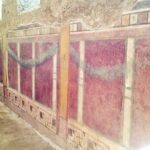
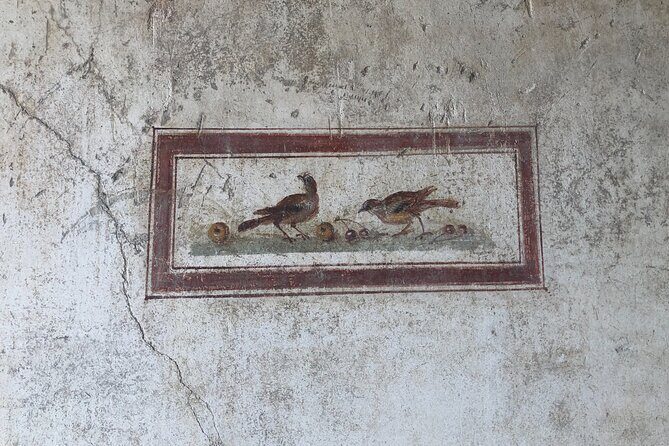
Your guide focuses on why that matters for families. Think painted walls that still read like decoration, wooden beams and doors that were literally preserved by the eruption conditions, and objects that help you imagine a home with real habits. I love that the guide keeps your pace humane. This is not a rush-through where kids have to keep up mentally. It’s a story you can absorb room by room, even if you have short attention spans in the group.
Other Pompeii & Herculaneum combo tours in Pompeii
The Boat Pavilion: turning ruins into a port town
One of the smartest ways this tour teaches is by shifting your perspective from homes to the waterfront. You’ll visit the Boat Pavilion, where maritime finds were uncovered. Kids usually latch onto the idea of fishermen and sailors getting ready to leave from a harbor that was right there, not “over there in the imagination.”
Adults get a clearer sense of trade and travel by sea. When you see a recovered vessel and the related tools, it stops being abstract. Herculaneum becomes a working community connected to the wider bay and beyond, not just a sad set of walls. It’s also a great break from the heavier emotional sites, because the emphasis is on daily routines.
Antiquarium in Herculaneum: the objects that survived
Next comes a stop that’s especially useful for kids who like concrete details. The Antiquarium highlights objects that survived with surprising clarity, including pieces of carbonized wood from furniture, doors, beams, and shelves. This is the kind of moment where a child can genuinely understand the science of survival, because you can see it.
For adults, the lesson is about conditions. Most organic materials vanish in archaeology. Here, volcanic sealing helped protect them. Your guide also brings attention to how restoration and preservation changed what you can interpret today, so you leave with a grounded sense of why these finds matter.
Ancient shoreline and the human story at sea level
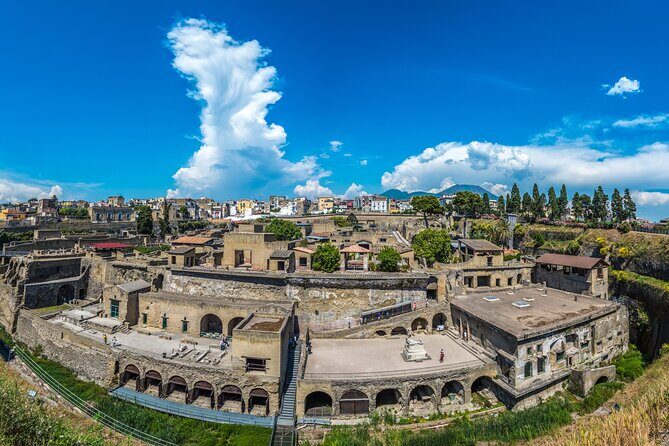
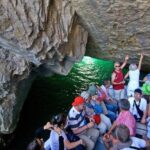
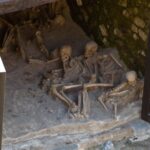
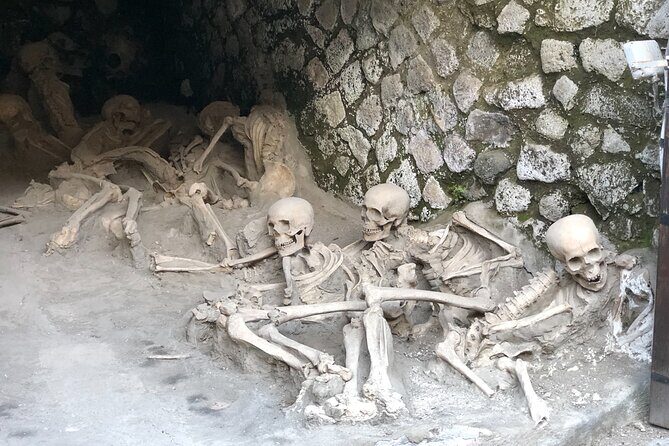
After the indoor objects, you head down toward the ancient shoreline. Your guide helps your family visualize Herculaneum as a true seaside town where boats were pulled ashore and goods arrived by water. You’ll also learn about one of the most important discoveries from this area: archaeologists found over 300 skeletons inside the boathouses in 1980, including men, women, and children who tried to escape by sea.
This stop can be heavy, so it’s good that the tour approach is paced for families. You’re not pushed to take it in all at once. You can absorb it at a speed that works for your group, and your guide keeps the tone sensitive.
House of the Deer: luxury with a dramatic focal point
Then you move from daily port life to wealthy household life. The elegant seafront villa known as the House of the Deer is famous for marble sculptures of deer attacked by dogs. Kids often get a kick out of the story-like imagery. Adults usually enjoy the way the art signals status, leisure, and a relationship with the sea views.
What I like is the context: the guide ties sculptures to setting and to how Roman luxury worked in real households. It’s not just a beautiful room; it’s a lifestyle staged around art and landscape—right where the coastline used to be.
Other family and kid-friendly tours in Pompeii

Exercise courtyard: where civic education happened
You’ll also see the large exercise courtyard, once used for athletic training and social life. This part helps kids understand Rome wasn’t only about gladiators and theaters. For the young citizens, training and discipline mattered, and public spaces played a role in learning.
Your guide points out the surrounding porticoes and the connections to classrooms. It becomes easier to picture boys running drills while teachers watched from the shade. Adults tend to leave with a clearer sense of how Roman civic pride included physical education, not just public ceremonies.
Restored residence and a look at multi-level Roman life
One of the best “wow” stops is entering a celebrated residence that’s been reopened after restoration. Here, preserved wall paintings, wooden shutters, and upper-floor structures show what daily home life looked like across levels. For families, this is a visual gift. You can better imagine stairways, rooms, and the flow of daily routines.
The guide highlights what restoration lets you understand today. That matters because ruins are not a direct movie; they’re partial remains that have been put back together in different ways. Still, the result feels remarkably close to a lived-in home.
Ancient shop with cucumae jars: everyday commerce made visible
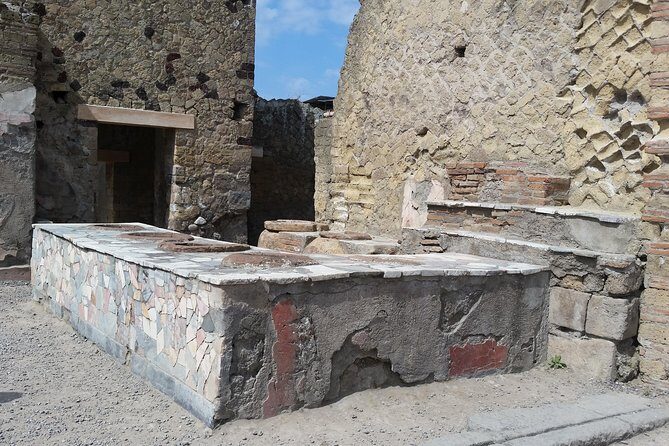
Your route also includes an ancient shop with terracotta jars set into a marble counter—cucumae. The guide points out how residents bought food and drinks, in a style that feels familiar enough for kids to relate to a café or takeaway counter.
This stop is great for adults because it’s about systems: where goods were stored, how serving spaces worked, and how small traces survive from a business that didn’t exist for nearly two millennia. You leave thinking about ordinary errands, not just major monuments.
Neptune and Amphitrite mosaic: color you can still feel
Next up is a more elegant home featuring a mosaic panel of Neptune and Amphitrite. The deep blues and golden glass tesserae help the Roman interior feel alive, even when you’re standing still and staring upward at ancient art fragments. For kids, the visual punch is immediate. Adults usually appreciate how much effort and skill went into domestic display.
The guide connects rooms, dining spaces, painted walls, and fountain niches so you can picture how the house looked during banquets. It’s a reminder that Romans used art as part of social performance.
Public baths for women: hygiene, routine, and community
Another standout is the public baths in Herculaneum’s women’s section. These are remarkably preserved thanks to the rapid burial conditions. You’ll see benches, painted walls, and even surviving wooden shelving. Then you step through a changing room and toward warm and hot areas where steam would have filled the space.
For families, baths can be a fun way into everyday Roman routines. The guide explains them as both hygiene and social time. It’s intimate, and it helps kids imagine the day-to-day rhythms of ancient life.
Cult of the Emperor hall: religion, politics, and social rank
You’ll finish the Herculaneum circuit inside a richly decorated hall for the cult of the Emperor. Frescoes show mythological scenes, but the real value here is how the guide ties religion to civic life and imperial politics.
You’ll also hear about the Augustales, a prestigious group of freedmen with an important social role. The atmosphere is vivid in a different way than the mosaics. It’s about power, status, and how people found meaning inside public structures.
Pompeii second act: civic buildings, markets, and real momentum
After Herculaneum, you drive to Pompeii. The tour keeps flexibility in mind, so the guide may suggest visiting in the afternoon depending on the day and season, when the site can be less crowded. With kids, that can make a noticeable difference in comfort and energy.
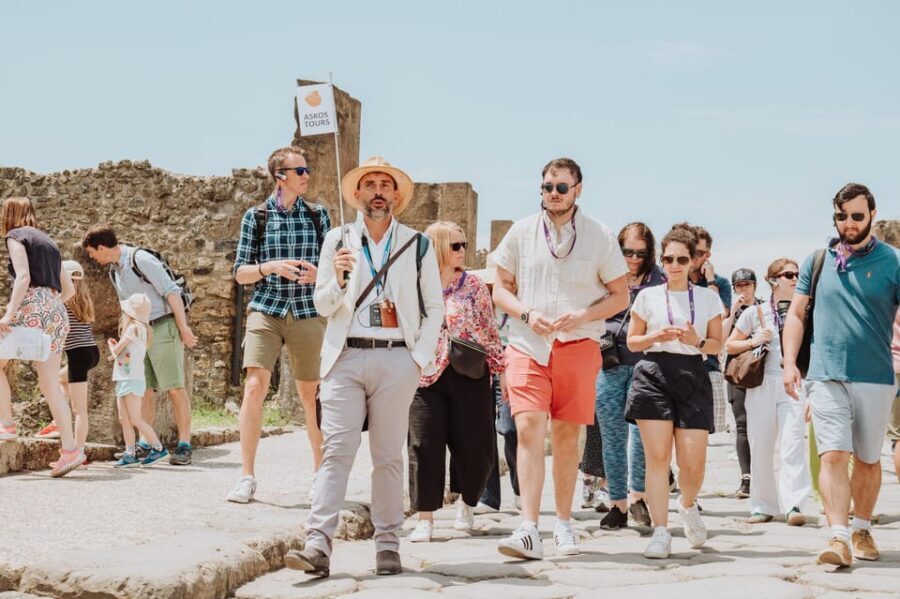
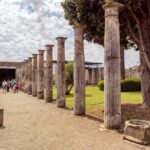
Pompeii is expansive, and that’s where a good guide earns their keep. You’ll see temples, theaters, bath complexes, bakeries, villas, and streets marked by ancient cart tracks. The key is how the guide turns the space into a story: how Romans worked, cooked, prayed, and played.
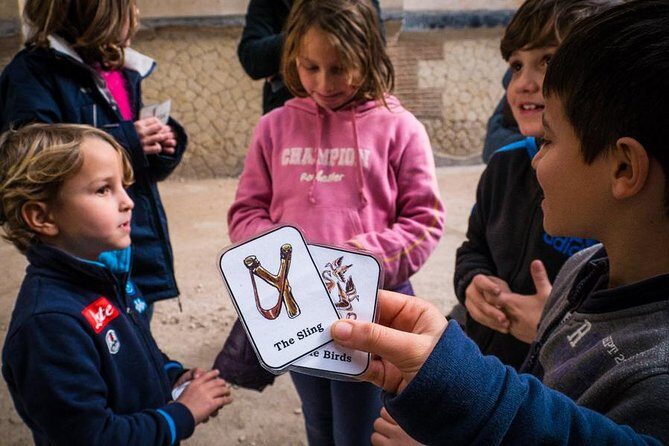
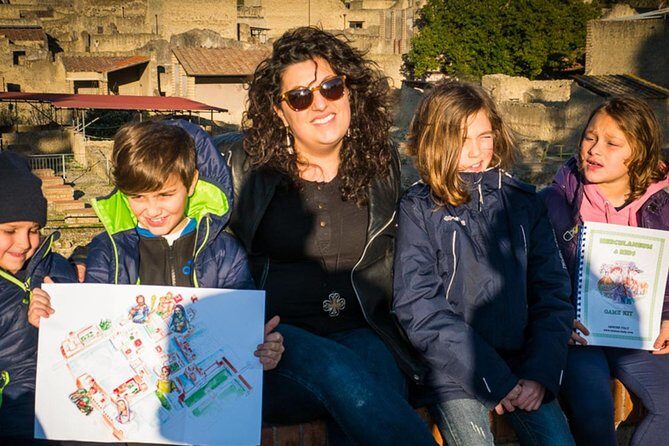
For kids, the method matters. There are family-friendly activities like riddles, symbol-spotting, sticker-style prompts, and short tasks that keep moving through the site from becoming a chore. For adults, you still get the core archaeological interpretation, just delivered in smaller, more digestible pieces.
Porta Marina and the Basilica: starting where people arrived
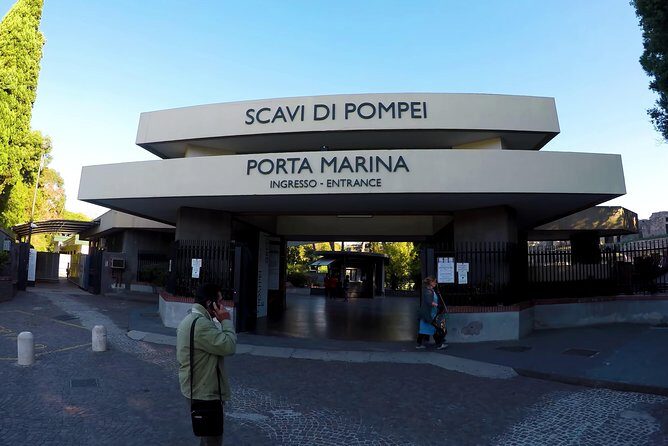
You’ll begin through Porta Marina, one of the main gateways. Here, merchants and sailors entered from the port. It’s an ideal opening because Pompeii feels instantly bigger once you picture incoming goods and busy movement right at the city edge.
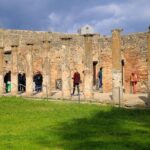
From there, you enter the Basilica, the city’s most important civic building. It’s where disputes were heard and contracts were agreed. Even without its roof, the columns and design help you understand Roman authority and how civic life worked before paper and signatures existed in the modern way.
Temple of Apollo and a built-in Vesuvius photo moment
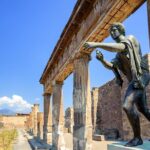
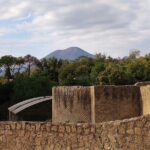
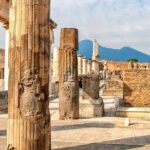
You’ll visit the Temple of Apollo, and you’ll also get a view toward Mt. Vesuvius from a terrace. This matters because the day includes Vesuvius viewing without a climb. You’ll see the volcano from the bottom and get great photos from both Pompeii and Herculaneum. The tour does not drive up toward the summit road.
Kids enjoy pretending priests are doing ceremonies. Adults tend to appreciate how religion shaped politics and identity in Roman society. It’s also one of those stops where geography and history land in the same frame.
Forum and Macellum: the heartbeat of everyday life
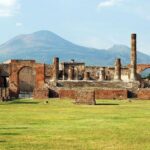
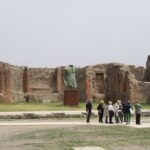
The Forum is next, and it’s basically the beating heart: business deals, religious ceremonies, political speeches, and everyday movement between monumental buildings. The guide encourages kids to imagine noise—vendors calling out and citizens flowing through the square—while adults get the structure of how Roman cities organized public life.
After that comes the Macellum, Pompeii’s marketplace. Here you see where citizens shopped for meat, fish, fruit, and imported delicacies. You’ll spot marble counters and storage vessels. Again, the guide’s value is in connecting objects to habits. It’s easier to feel how Romans ate and shopped when you can match the space to the story.
Forum Baths: mosaics and routine, not just wow-factor
You’ll also see the Forum Baths, where ancient Romans came to wash, relax, and socialize. The changing rooms and heated areas give you the practical side of daily life. Kids often enjoy comparing it to modern spas or sports clubs, as long as the guide keeps it grounded in Roman routine rather than modern analogies.
You’ll also see mosaics and stucco decoration that survived the eruption. These details remind you that “public” didn’t mean boring. Public spaces were part of status, comfort, and community.
Elite homes with mosaics: wealth you can interpret
Two home stops help you understand Pompeii beyond the big public buildings. One aristocratic residence has gardens and intricate mosaics, and you’ll learn about a famous mosaic floor depicting Alexander the Great in battle. There’s also a small bronze statue of the dancing faun that often grabs kid attention like a mascot.
Then you’ll go through the House of the Vettii, known for vivid frescoes and a garden courtyard. Kids usually respond to the mythological scenes painted like story panels. Adults focus on the layout and what the preserved rooms tell you about how wealthy households rose in status and used art to show culture and power.
The lively street and the dollhouse effect from above
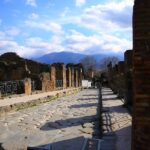
You’ll walk along one of Pompeii’s liveliest ancient streets lined with bakeries, bars, and storefronts. Kids can hop across stepping stones, imagining carts rattling over basalt pavement. Adults get a more accurate picture of daily routines: errands, snack breaks, street fountains, shop counters, and signage-like cues that make the city feel almost normal at street level.
Then comes a raised platform view into a whole Pompeian city block. The guide describes a “dollhouse effect” so kids can picture rooms without roofs, while adults understand how archaeologists interpret spaces to reconstruct daily routines. It’s one of the best ways to wrap your head around density.
Main theater acoustics: modern curiosity in an ancient setting
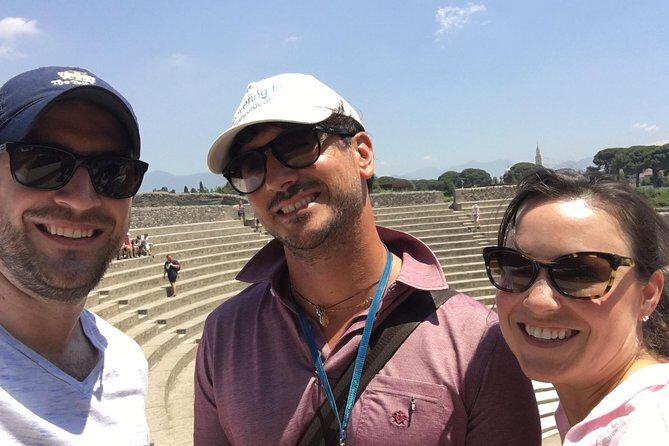
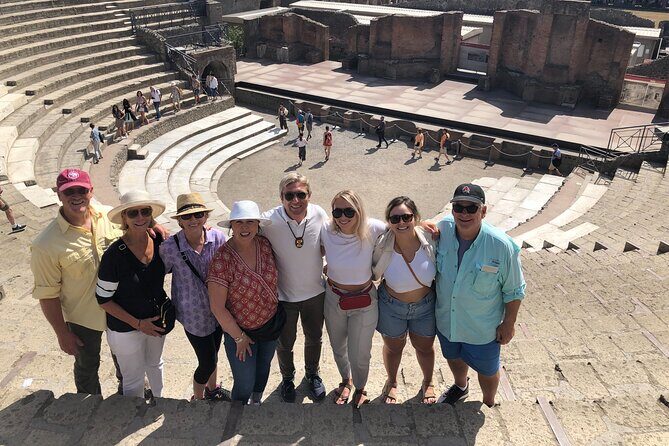
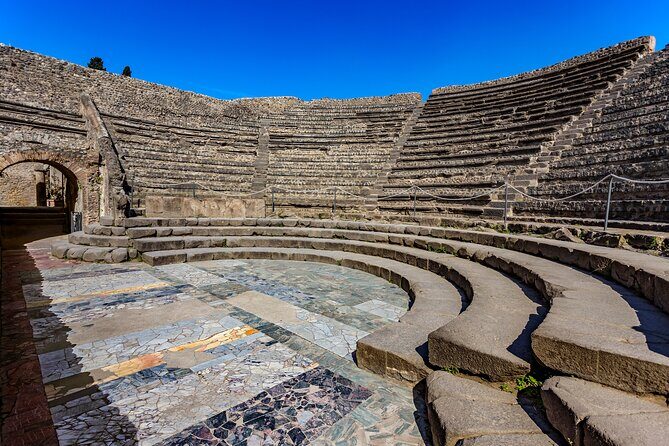
You’ll finish Pompeii at the main theater built into the hillside, designed to amplify sound. Kids often test the acoustics from the stage steps and grin when they hear their own voice travel. Adults learn how public entertainment mattered in Roman culture, from comedies to music performances.
Sitting on the stone steps makes it easy to picture afternoon performances in shade. This stop connects ancient and modern habits without needing complicated explanation.
Pompeii Antiquarium: artifacts that help you connect dots
To close, you’ll visit Pompeii’s Antiquarium. This is where real artifacts recovered from excavations turn the ruins into a personal story. Jewelry, coins, tools, and household objects help explain how people worked, worshiped, decorated, and expressed themselves.
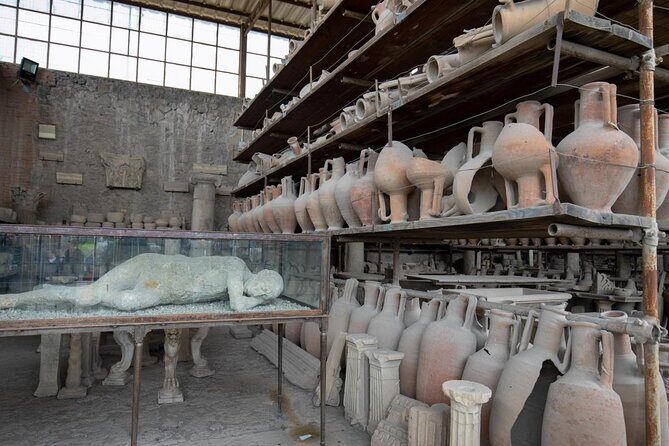
Kids can recognize items they saw in the ruins. Adults appreciate the curated displays of everyday life. You may also see plaster casts of victims introduced sensitively, giving families a way to understand the human tragedy without bulldozing younger kids with details.
Private transport and skip-the-line: why this tour saves energy
This is one of the big value points. You get transport by private vehicle, plus Blue Badge private guides in both Pompeii and Herculaneum. That combination matters when you’re juggling timing, crowds, and kid energy levels.
Skip-the-line tickets in both sites also reduce that special kind of travel frustration: standing still while everyone else moves. You still walk a lot, but the day feels more purposeful. Your guide can use those minutes for stories and stop-and-look moments instead of losing time at ticket checkpoints.
Pickup is flexible from places like Naples, Sorrento, Pompeii, hotels, vacation rentals, train stations, airports, and cruise terminals/ports. That can be a huge relief if you’re not staying in the exact right place for easy access.
Vesuvius views from the bottom: photos without the summit logistics
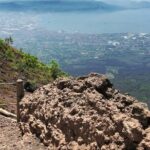
Vesuvius is part of the emotional math of this day, and the tour keeps it practical. You’ll see the volcano from the bottom, with photo opportunities from both Pompeii and Herculaneum. You’re not driving up to the top of the volcano, which keeps the day focused on the archaeological core.
If you care about photos, use natural framing points the guide highlights, especially terrace views like the Temple of Apollo area. Early light can be great, and the guide’s pacing can help you stop long enough to get a shot without turning the day into a photo shoot marathon.
Planning for kids and real walking: how to make the day feel doable
Even with a private guide, this is a long day at archaeological sites. You should have moderate physical fitness, wear comfortable walking shoes, and use sun protection. Stone can be uneven, and archaeological places rarely offer the same smooth comfort you’d get in a city park.
The tour is designed to keep attention moving. The guide uses family-friendly activities, booklet and map materials, and prompts at many stops. Still, your group’s pace matters. If your kids need extra breaks, this type of private setup is better than a fixed-group cattle car because the guide can adjust as long as the schedule still works.
One more practical note: bottled water isn’t included. Bring it, especially if you’ll be out in summer heat.
Price and value: what $738+ per person is really buying
The price ($738.31 per person) is not cheap. The good news is that the cost isn’t just “someone telling you facts while you stand there.” You’re paying for a full package:
- Private vehicle transport
- Blue Badge private guide in both locations
- Herculaneum and Pompeii Express skip-the-line tickets
- Family-friendly activities plus a booklet and map
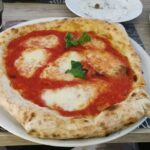
- Meals only if you select the pizza lunch option
In plain terms, you’re buying time, guidance quality, and kid-focused structure. If you’re a family who wants a single-day plan that doesn’t fall apart under crowd pressure, this price can feel more reasonable than piecing together separate tickets, separate guides, and extra transport.
If you’re traveling solo or as a couple with no kids, you might prefer a cheaper group format. But if you have children who need engagement to keep listening, a family-oriented private guide can be the difference between a memorable day and a tiring one.
One guide name that stands out from a recent experience is Giuseppe D’Angelo, praised for being knowledgeable, kind, and thoughtful. If you happen to get him, it’s a good sign for a calm, organized pace.
Who this Pompeii and Herculaneum family tour suits best
This is a great match if you want:
- A day that includes both Herculaneum’s preservation and Pompeii’s larger scale
- Kid-friendly prompts that keep energy from dropping mid-day
- A guide who can explain Roman daily life through specific rooms and objects, not just big theories
- Skip-the-line entry and private transport to protect your day from delays
It’s also a smart option for multi-generation groups. Many of the stops hit “family favorites” (mosaics, theaters, baths, shops) while still giving adults clear, meaningful context.
Should you book this family adventure?
I’d book it if your goal is a guided, family-managed day with the biggest “make it real” moments from both Pompeii and Herculaneum. Herculaneum’s preservation, the boat and port storytelling, and Pompeii’s mix of markets, baths, theater, and domestic mosaics add up to a day that teaches without feeling like homework.
I wouldn’t book it if your group hates long walking days, or if you want a lighter, slower stroll with no structured stops. Also, factor in that you’ll need to plan hydration since bottled water isn’t included.
If your family can handle a full day on foot with sun and uneven ground, this is a strong choice.
FAQ
How long is the Pompeii and Herculaneum family adventure?
The tour runs about 8 hours.
Is pickup available, and where does it happen?
Pickup is flexible and can be arranged from Naples, Sorrento, Pompeii, hotels, vacation rentals, train station, airport, and cruise terminal or port. You specify your pickup place when booking.
Does the tour include admission tickets?
Yes. Herculaneum and Pompeii Express skip-the-line tickets are included.
Is lunch included?
Meals are included only if the pizza lunch option is selected.
Do I need to bring water?
Yes. Bottled water is not included.
What language is the guide?
The tour is offered in English.