REVIEW · POMPEI CAMPANIA
Pompeii: Guided Tour & Skip the Line Ticket
Book on GetYourGuide →Operated by Enjoy Pompeii · Bookable on GetYourGuide
Pompeii feels frozen in time. This guided tour uses skip-the-line entry and a real small-group pace to help you understand what you’re seeing as you walk.
You’ll get a guided story that goes beyond stone—expect the guide to connect daily Roman life with the myths, beliefs, and religion that shaped it, with names like Giulia, Gennaro, and Sasà showing up on past groups. One possible drawback: Pompeii is a walking, uneven-ruins kind of place, and the tour isn’t suitable for wheelchair users or people with motion sickness.
If you want Pompeii to make sense fast, this is a practical way to do it. You spend about 2 hours with a guide at the key highlights, including the Forum and standout homes, then you’re free to keep exploring on your own after you’ve gotten oriented.
In This Review
- Key takeaways before you go
- Pompeii in 2 hours: what this guided walk actually covers
- Skip-the-line entry: saving energy for the good parts
- Meeting at Ristorante Bar Sgambati and keeping the pace
- Pompeii’s Forum: the public square where Roman life gets real
- The House of the Tragic Poet: domestic life with personality
- The House of the Golden Cupids: symbols you can actually look for
- Stabian Bath and Roman routines: why everyday spaces matter
- Mt. Vesuvius and 79 AD: the reason Pompeii looks the way it does
- Guide style in English or Italian: what you’ll notice in the real experience
- What’s the walking like, and who should choose this tour
- Price and value: is $60 a fair deal for Pompeii?
- Tips to get the most from your 2 hours in Pompeii
- Should you book this Pompeii guided tour?
- FAQ
- FAQ
- Where does the Pompeii tour start?
- How long is the guided tour?
- Do I get skip-the-line entry?
- What Pompeii highlights are included?
- What languages are the live guides?
- Is there parking included?
- Are food and drinks included?
- What should I bring with me?
- Is this tour suitable for wheelchair users?
- Can I cancel for a refund?
Key takeaways before you go
- Skip-the-line entry through a separate entrance so you lose less time standing around
- A 2-hour guided focus on major Pompeii stops, not a rushed blur
- Forum, homes, and baths: the tour hits public life and everyday routines
- Mt. Vesuvius context to explain why Pompeii looks the way it does today
- English or Italian live guide with time for questions in a smaller group setting
- Comfort matters: bring shoes for real walking on ancient surfaces
Pompeii in 2 hours: what this guided walk actually covers
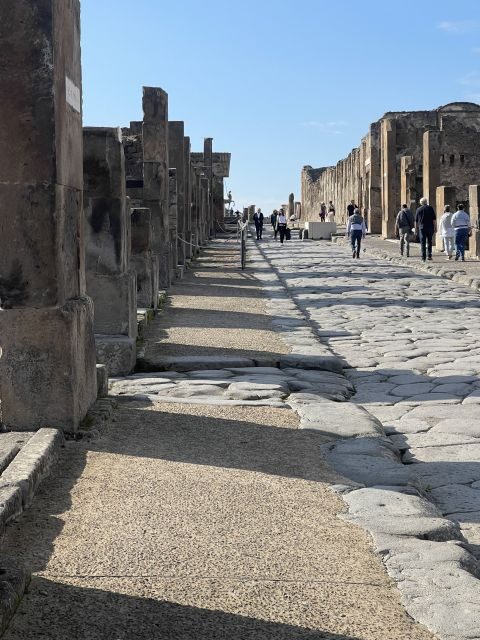
This tour is built around a simple goal: help you walk Pompeii with a guide who can explain what you’re looking at. You’re not just buying a ticket and hoping for the best. Instead, you follow a route that concentrates on the most memorable parts of the ancient city and ties them together with the story of the 79 AD eruption.
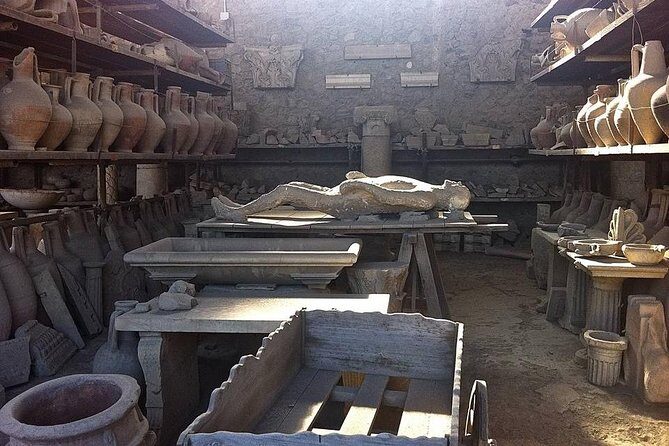
Expect to move through the ancient streets and see how Roman architecture shows up in everyday spaces. The stops are designed to give you contrast: public life in the Forum, domestic life in famous houses, and the social rhythm of bathing at the Stabian Bath. The guide also brings in the big cause-and-effect moment—Mt. Vesuvius and the volcanic ash that preserved Pompeii—so the ruins feel less like random walls and more like a whole living place that was abruptly interrupted.
If you're still narrowing it down, here are other tours in Pompei Campania we've reviewed.



Skip-the-line entry: saving energy for the good parts
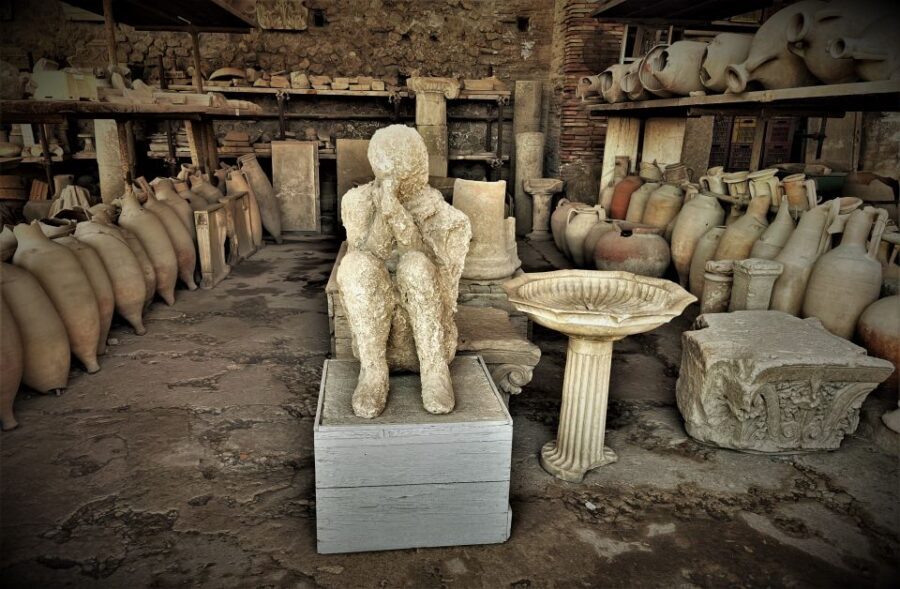
Pompeii can be busy, and standing in line is wasted time when your actual experience depends on how long you can walk comfortably. This tour solves that by including a skip-the-line entry ticket with access through a separate entrance.
Practically, that means you can focus on starting your walk closer to when you’re scheduled, not losing your energy to crowds. In a place like Pompeii, where you’ll want your eyes open and your legs ready, arriving and getting inside smoothly is a real quality-of-life upgrade.
Meeting at Ristorante Bar Sgambati and keeping the pace
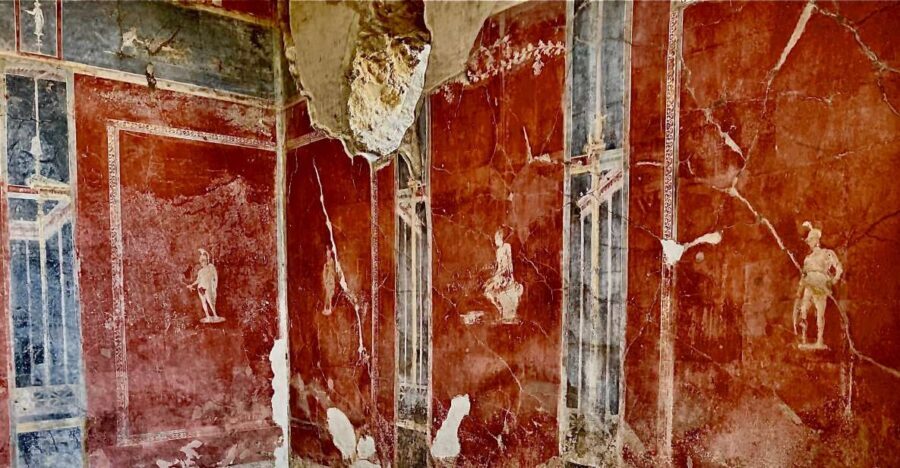
The tour starts at Ristorante Bar Sgambati, your first point of organization before you head into the archaeological site. I like this kind of clear meeting place because Pompeii is large, and a specific address-style start helps you avoid that late-arrival scramble.
Timing is handled with a guide-led flow rather than a long wait. On past groups, guides have started promptly once everyone is ready, and they’ve finished on time as well. For you, that matters because the tour is only about 2 hours of guided time—so you want those hours to count.
Pompeii’s Forum: the public square where Roman life gets real
One of the strongest reasons to book a guided Pompeii visit is that the Forum stops being impressive if you’re just passing by. With this tour, the Forum is a centerpiece, and the guide’s job is to connect the space to how people interacted day-to-day.
In the Forum area, you’re seeing the city’s public gathering place—so this stop helps you understand Pompeii beyond houses. It’s where civic life and social rhythms would have played out. As you walk through, you’ll likely hear explanations that make the layout feel purposeful, not just archaeological.
This is also where the guide’s storytelling style really helps. People often don’t know what to look for in a public space. The guide can point out what mattered and why it mattered, which makes your photos feel like evidence, not just scenery.
The House of the Tragic Poet: domestic life with personality
After the Forum, the tour shifts into residential Pompeii—where you start seeing how private spaces worked. The House of the Tragic Poet is one of the standout stops included on this route, and it’s a great choice for your understanding of Pompeii’s daily life.
Houses like this let you compare public and private Pompeii fast. In the Forum, you’re dealing with shared civic space. In a home, you’re reading a different kind of Roman culture—more about taste, routine, and the way people structured time inside their own walls.
A guide who is comfortable answering questions makes a difference here. Past groups have experienced guides who could explain mythology and religious beliefs in a way that ties back to what people valued in everyday settings. Even if you’re not a history buff, that kind of connecting-the-dots narration can turn a house visit into real understanding.




The House of the Golden Cupids: symbols you can actually look for
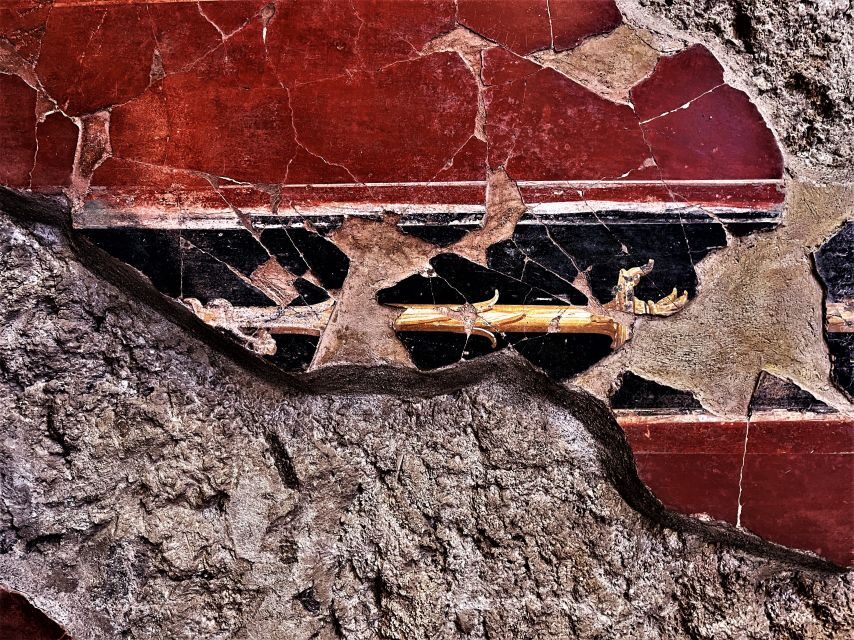
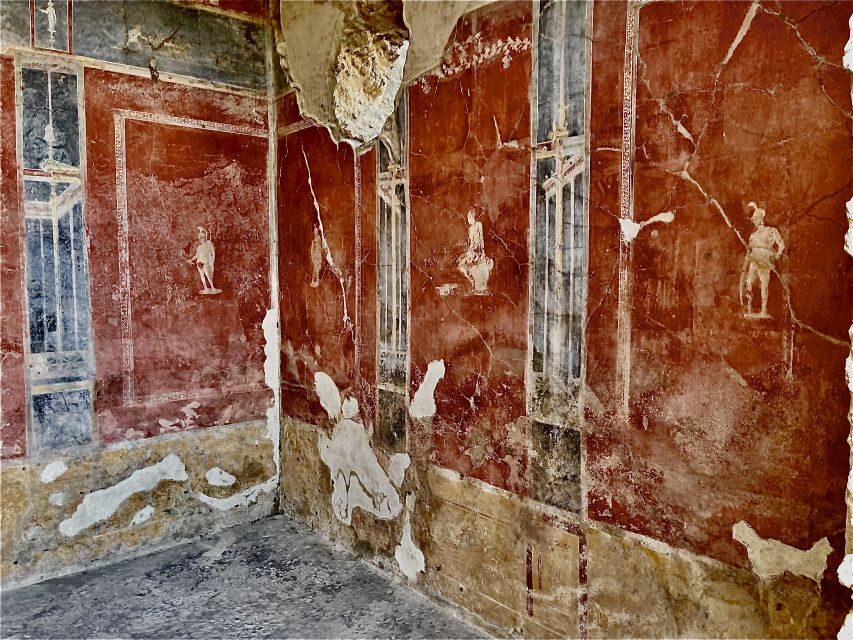
The tour also includes the House of the Golden Cupids, another domestic highlight that’s ideal for people who want to see the human side of Pompeii. Houses like this don’t just show rooms. They show choices—how decoration and symbolism expressed identity.
If you only see Pompeii through a general historical lens, you might miss the meaning that decorations and themes were meant to carry. With a live guide, you have someone there to help you interpret what you’re seeing without turning it into a textbook.
This is where a small-group format pays off. Instead of hearing a lecture while standing behind other people, you can usually move with your group, look at details at a workable pace, and ask follow-up questions when something sparks your curiosity.
Stabian Bath and Roman routines: why everyday spaces matter
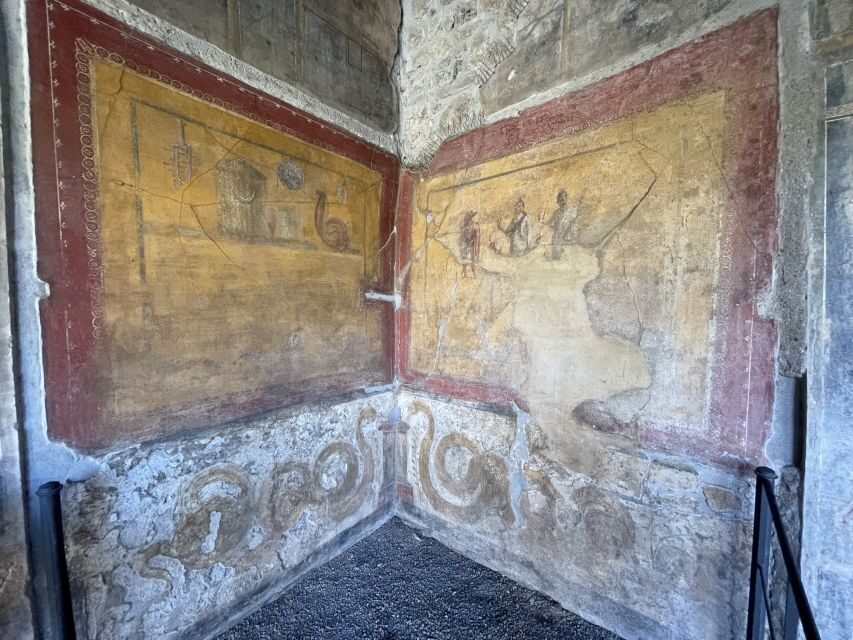
The Stabian Bath stop helps balance the tour. Pompeii isn’t only about grand public life and famous houses. It’s also about daily routines—how people used shared spaces as part of their social world.
Bathing wasn’t just hygiene in Roman times; it was also part of routine and conversation. The Stabian Bath is included here because it gives you that everyday rhythm. You get a sense of how a facility like this would have functioned as a communal place in the city’s life.
One of the best reasons to do this as a guided walk is simple: it’s easy to see a ruin and think it’s just walls. A guide helps you reframe it as a working space with a purpose, so you leave with a stronger mental map of Pompeii as a lived-in place.
Mt. Vesuvius and 79 AD: the reason Pompeii looks the way it does
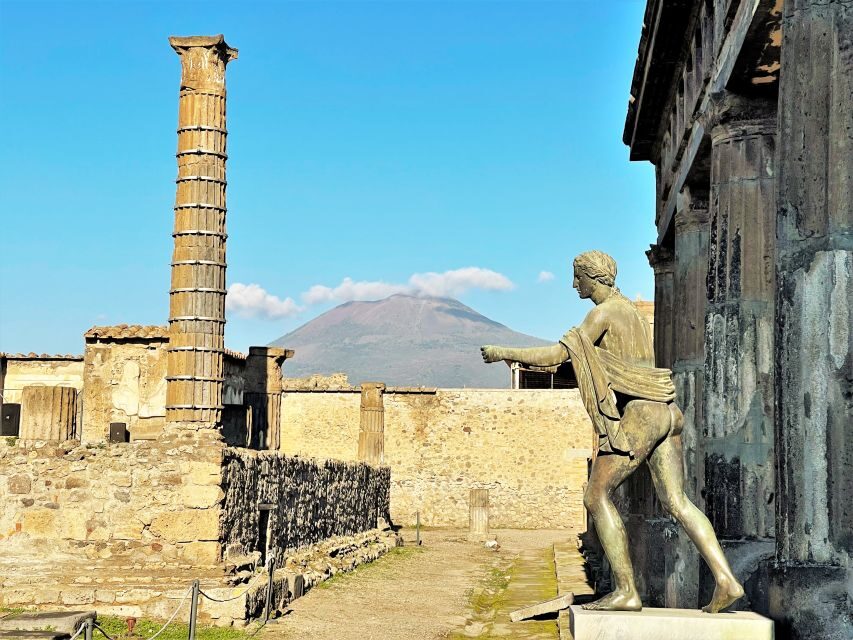
This tour doesn’t treat Vesuvius as a distant historical footnote. You’re taught about the eruption day and how it preserved Pompeii under volcanic ash after 79 AD.
I like this approach because it changes your mindset while you walk. Once you understand the basic cause-and-effect, you don’t just see “old ruins.” You start seeing a city that was interrupted at a moment in time—leaving behind evidence of daily life in a way that feels almost startling.
For you, this means the guide can help you connect details as you move: what a public space suggests, what a house implies, and why the overall layout still reads like a city rather than a pile of stone. It’s the difference between collecting stops and building a coherent picture.
Guide style in English or Italian: what you’ll notice in the real experience
This is a live-guided experience in English or Italian, and that matters more than you might think. When you’re standing in front of ruins, you want your guide to be able to explain clearly, then answer questions as they come up.
From what you can expect based on past groups, guides have handled not only history but also mythology, religious beliefs, and how people lived. That mix is useful. It helps you understand why people built spaces the way they did and what they might have believed about the world around them.
Small-group tours also tend to feel more personal. Some groups have shared that guides helped take photos at good spots and kept the conversation going when someone had a random question. If you like asking why something was built or what a symbol meant, this kind of guide interaction is a major part of the value.
What’s the walking like, and who should choose this tour
The tour involves walking the archaeological site for about 2.25 hours of total time (with a 2-hour guided component). Pompeii is not a sit-and-watch museum. You’ll want comfortable shoes and weather-appropriate clothing, because you’re moving through an outdoor site.
This tour is listed as not suitable for wheelchair users, people with pre-existing medical conditions, or people with motion sickness. Even if you’re generally comfortable walking, Pompeii’s uneven ancient surfaces mean you should plan with extra caution and keep your pace realistic.
If you’re coming with kids, this could still work—one group included children ages 12 and 10 who were excited during the visit. The key is that the guide can keep the story moving and understandable, so the stops feel like a narrative instead of a checklist.
Price and value: is $60 a fair deal for Pompeii?
At $60 per person for a 2-hour guided tour plus a skip-the-line entry ticket, the value comes from two things you can’t easily replicate on your own.
First, you’re paying for the guide time. Pompeii is big, and without help, you can end up seeing famous locations without understanding what makes them meaningful. The guide’s job is to connect highlights—Forum, houses, baths—back to the bigger story of Pompeii and Vesuvius.
Second, the skip-the-line component is not just convenience. It’s time saved, and time saved in Pompeii usually turns into more energy for walking and looking. If you’re visiting during a busy stretch, being able to enter via a separate entrance can keep your plan from feeling squeezed.
Food and drinks aren’t included, and you’ll also need to handle parking separately if you’re driving. That’s normal for this kind of tour, but it’s worth planning so you don’t lose your momentum partway through.
Tips to get the most from your 2 hours in Pompeii
If you want your guide time to pay off, show up ready to walk. Here’s what helps most:
- Wear shoes you can trust for a lot of walking on uneven ground
- Dress for the weather, since you’ll be outside for most of the experience
- Bring your passport or ID card (a copy is accepted)
- Keep your expectations focused: you’re there for key highlights, not the entire site
Also, bring a question or two. If you’re curious about how Roman beliefs showed up in daily life, or you want the eruption story tied to what you’re seeing right now, a good guide will answer in plain language.
Should you book this Pompeii guided tour?
I’d book it if you want Pompeii to make sense quickly, and you care about efficiency. The skip-the-line entry plus a 2-hour guided route through major highlights like the Forum, the House of the Tragic Poet, the House of the Golden Cupids, and the Stabian Bath is a smart way to get real value from limited time.
I’d think twice if you’re sensitive to motion on uneven surfaces or you know Pompeii’s walking style will be tough for your body. And if you want to wander freely without structure, this tour is more focused than that.
If your priority is understanding the city you’re seeing, not just checking off famous ruins, this is one of the more practical Pompeii options.
FAQ
FAQ
Where does the Pompeii tour start?
The starting location is Ristorante Bar Sgambati.
How long is the guided tour?
The activity includes a 2-hour guided tour.
Do I get skip-the-line entry?
Yes. You’ll receive a skip-the-line entry ticket and enter through a separate entrance.
What Pompeii highlights are included?
The tour includes stops such as the Forum, the House of the Tragic Poet, the House of the Golden Cupids, and the Stabian Bath, plus other highlights.
What languages are the live guides?
The live tour guide is available in English and Italian.
Is there parking included?
No. Parking is not included.
Are food and drinks included?
No. Food and drinks are not included.
What should I bring with me?
Bring comfortable shoes and comfortable, weather-appropriate clothing. Also bring your passport or ID card (a copy is accepted).
Is this tour suitable for wheelchair users?
No. It’s listed as not suitable for wheelchair users.
Can I cancel for a refund?
Yes. Free cancellation is available up to 24 hours in advance for a full refund.