REVIEW · POMPEII
Fast Access Exclusive Private Ancient Pompeii Half Day Tour with Local Guide
Book on Viator →Operated by Private Tours of Pompeii · Bookable on Viator
Pompeii is overwhelming—this tour keeps it simple and fast. With private guide access plus timed entry at major sights, you’re set up to see the heart of UNESCO Pompeii without spending your vacation stuck in queues. I like that the route is tightly planned, but you still get room to steer the experience toward what you care about most.
Two things I really like: you’re not just looking at stones, you’re hearing how daily life worked—from theater entertainment to household streets. And because this is a private setup, you can move at a pace that works for your group rather than the slow-drift rhythm of a big coach tour.
One possible drawback: there’s no hotel pickup, so you’ll need to get yourself to the meeting point and be ready to walk. The good news is the route is structured into short, manageable stops.
In This Review
- Key things to know before you go
- Fast line access and a guide who makes Pompeii feel human
- The 2-hour route that hits the Pompeii “must-sees”
- Teatro Grande: Pompeii’s big open-air stage
- Teatro Piccolo (Odeon): a smaller theater with a different vibe
- Via dell’Abbondanza: Pompeii’s main street of villas and shops
- Terme del Foro: the Roman bath complex and what survives underground
- The Lupanar: frescoes, social reality, and a careful kind of context
- Customizing for mosaics and plaster casts
- Choosing morning or afternoon: making time work for you
- Price and value: what $203.95 gets you (and why it can be worth it)
- Logistics that actually matter: meeting point, walking, and what to bring
- Who should book this private Pompeii half-day tour
- Should you book this Pompeii tour?
- FAQ
- How long is the Pompeii tour?
- Is this tour private?
- What language is the tour offered in?
- Does the tour include admission tickets?
- Where does the tour meet?
- Is hotel pickup included?
- What should I bring or prepare before going?
Key things to know before you go
- Fast line strategy: your private guide helps you skip long lines and reach sights with less waiting
- Timed highlights: short visits (about 20 minutes each) at the major anchors so you don’t miss the best-known parts
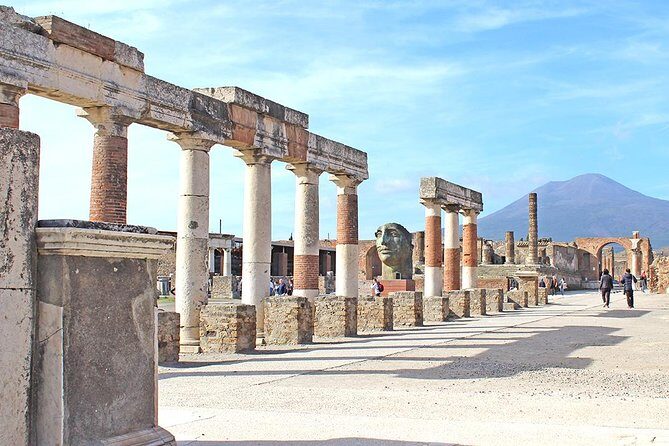
- Two theaters in one sweep: Teatro Grande and Teatro Piccolo let you compare scale and design quickly
- Everyday Pompeii stops: Via dell’Abbondanza and the bath complex show daily routines, not just big monuments
- Lupanar details: the brothel’s surviving frescoes help explain how the eruption-era city worked socially
- Pick your interests: you can tailor attention toward things like mosaics or plaster casts
Fast line access and a guide who makes Pompeii feel human
If you only have a short window in Pompeii, time becomes your biggest enemy. The value of this tour is that it’s built around skipping long lines and using a guide to get you into key areas without turning your day into a waiting game.
You’ll also benefit from having a guide who can connect what you’re seeing to what it meant. Pompeii can feel like a museum display until someone puts it back into context: what people did for fun, where they walked, what their workplaces looked like, and what daily life looked like right up to the eruption.
A final practical win: this is a private experience. Your group stays together, and the guide can adjust explanations to your speed and interests. That matters when you’re trying to cover a lot in about two hours.
Other private Pompeii tours we've reviewed in Pompeii


The 2-hour route that hits the Pompeii “must-sees”
This half-day tour is designed like a focused sprint. You’ll spend roughly 20 minutes at each stop, with entry included, and you’ll return to the meeting point at the end. The structure is helpful because it keeps you from wandering too long and missing the main anchors.
The stops are also smartly chosen. You’re moving from public life (theaters) to the social street (Via dell’Abbondanza), then to routine and survival (baths, the forum area connection), and finally to the Lupanar, which gives you a sharper view of the city’s human layer.
Also, there’s a built-in option to customize. The tour highlights the ability to adjust attention based on whether you’re more interested in mosaics or the plaster casts, which are often some of the most emotionally memorable parts of Pompeii.
Teatro Grande: Pompeii’s big open-air stage
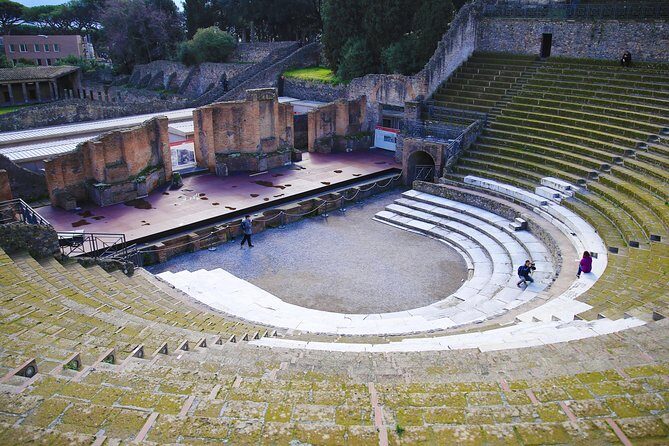
Teatro Grande is the kind of place where your eyes instantly want to do math. It’s an open-air theater with a 5,000-seat capacity, so you can picture how performances worked at scale—people packed in, sound traveling across stone, and the whole city using shared public spaces.
In a short stop, you won’t get a long lecture, and that’s fine. Instead, you’ll want to focus on orientation: where performers faced, how seating was arranged, and why an outdoor design mattered in a Roman city. Your guide’s job is to translate those details into a sense of how evenings likely felt before the eruption froze everything in place.
The main tradeoff is time. Twenty minutes means you’ll see the theater, learn the key points, and move on. If you’re the type who likes to linger and take dozens of photos from every angle, plan for quick, efficient looking.
Teatro Piccolo (Odeon): a smaller theater with a different vibe
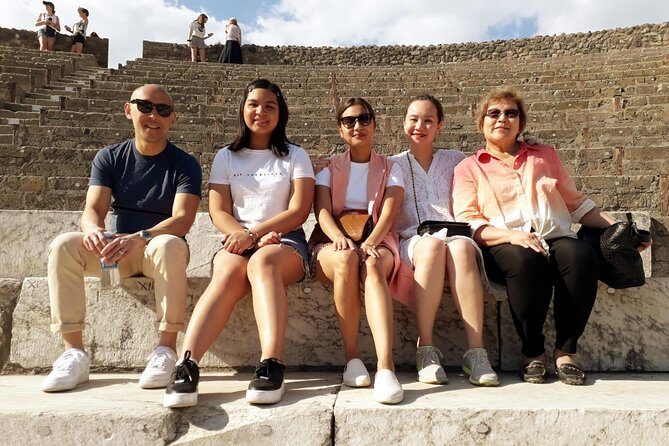
Right after the big one, you’ll also visit the Odeon / Teatro Piccolo, an open-air theater with about 800 seats. This pairing is great because it gives you an instant contrast: less crowd, smaller scale, and a different role in the city’s entertainment life.
What I like about hitting both theaters back-to-back is that your brain starts comparing. You can think about how performances might have differed, and how Roman design used both large and small venues for different kinds of gatherings.
Again, it’s not a long stay. You’re here to understand the role quickly, then carry that context to the next stops.
Via dell’Abbondanza: Pompeii’s main street of villas and shops
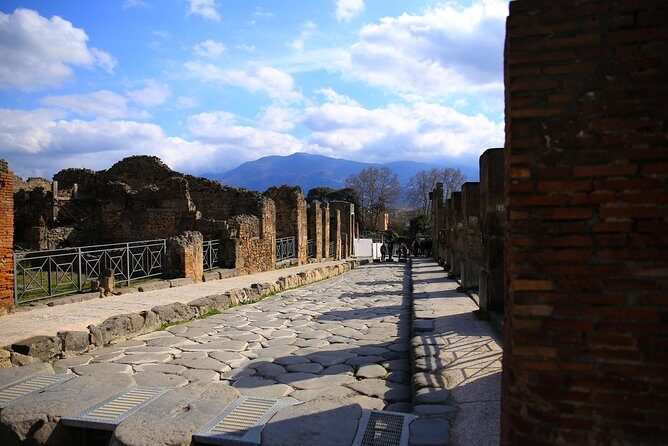
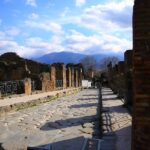
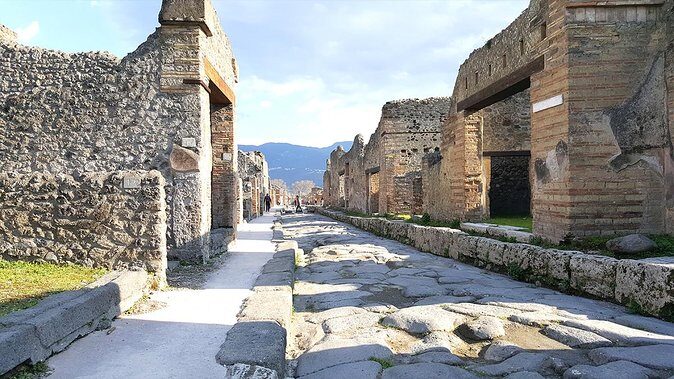
Via dell’Abbondanza is the promenade you’re supposed to walk. This is Pompeii’s main street, lined with major villas and ancient Roman shops, so it’s where the city starts feeling like a lived-in place rather than a collection of ruins.
Because you’ll be moving through an active section of the site on foot, come ready with comfortable shoes. You’re getting a compact “city walk” feel: storefronts as you’d pass them, entrances and streetfront spaces, and the big-picture idea of how people moved through daily life.
The best way to use this stop is to look beyond one building. Ask yourself: what would a normal day look like along this street? Your guide can help connect the dots so you see it as a working urban corridor.
If you don’t love walking, the upside is that the tour keeps it short—about 20 minutes—so it’s manageable even with moderate stamina.
Other skip-the-line Pompeii tours in Pompeii



Terme del Foro: the Roman bath complex and what survives underground
Terme del Foro is one of the most memorable stops for many people because baths weren’t just for cleanliness. They were social space, daily routine, and a place where people gathered to talk.
This complex was buried by the eruption in 79 A.D., and that context changes how you look at what’s preserved. Even if you don’t study architecture, you can still get a sense of how the bath complex worked by observing its layout and the scale of the ruins you’re standing next to.
In a short visit, your guide will help you interpret what you’re seeing: what rooms likely served which purposes, how water would have moved through a system, and why this kind of complex is central to understanding Roman life.
Consideration: if you’re expecting a fully hands-on “do not miss every corner” type of experience, you’ll need longer than 20 minutes here. But for a fast, high-impact tour, this stop does exactly what it should.
The Lupanar: frescoes, social reality, and a careful kind of context
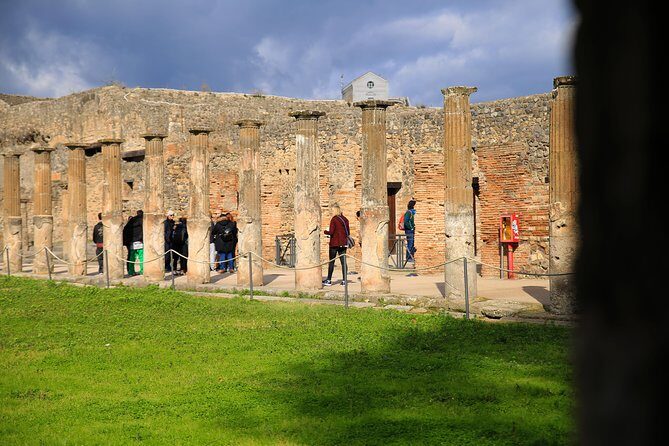
The Lupanar is an ancient Roman brothel. Some frescoes are still visible, and they include imagery that illustrates the “speciality” of the women working there. That means this stop is direct, human, and not for everyone’s comfort level.
The benefit of visiting with a guide is context. Without that, ruins like this can turn into sensational sightseeing. With good explanation, you can understand it as part of the city’s social economy—where this business sat in the broader urban fabric and how art was used in everyday advertising.
If your group prefers lighter topics, keep expectations realistic: Pompeii includes everything, including the parts that feel awkward. The tour keeps the visit short, so you’ll get the key visual details and the story without getting stuck there too long.
Customizing for mosaics and plaster casts
One of the best features in the tour highlights is customization. You can tailor your visit based on what you want most, such as mosaics or plaster casts.
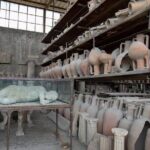
This matters because Pompeii hits different people differently. Some visitors light up when they spot decorative floors and wall work. Others remember Pompeii most vividly through the plaster casts—where people’s final positions and faces are preserved in a way that’s emotionally heavy.
In a fast tour, customization is also practical. It helps you make sure you don’t spend your limited time on the parts you weren’t really hoping to see. If one topic matters more to you than another, this guide setup gives you a chance to put your attention where it counts.
Choosing morning or afternoon: making time work for you
You can pick either a morning or an afternoon tour, and that choice isn’t just about convenience. Pompeii gets busy, and the timing of your entry affects how stressful your walking feels and how quickly you can take in the sights.
If you prefer calmer looking conditions and less crowd friction, you’ll likely lean toward the morning option. The bigger picture is simple: earlier often means smoother access, and a tour that starts with a plan for less crowded gates performs better.
Your guide’s job is to manage flow. If your group starts early, you’ll likely get through the site’s key access points before the main rush forms.
Price and value: what $203.95 gets you (and why it can be worth it)
At $203.95 per person, this isn’t the bargain-bin way to see Pompeii. But it also isn’t priced like a generic bus tour where you queue with everyone else.
Here’s what you’re paying for:
- Private guiding, not a shared lecture hall experience
- Guaranteed skip-the-line handling so you’re not spending your limited time waiting
- Admission tickets included for the listed stops
- Expert-style guidance for the art and context around what you see
- A route that’s timed to fit a short visit rather than an all-day shuffle
For many travelers, the math comes down to opportunity cost. Two hours in Pompeii can either disappear into lines—or be used to understand the site and actually see the major stops. This tour aims for the second outcome.
Also, there’s mention of group discounts. If you’re traveling as a small family or with friends, the private value can feel more reasonable fast.
Logistics that actually matter: meeting point, walking, and what to bring
This tour meets at Piazza Esedra, 80045 Pompei NA, Italy, and ends back at the same meeting point. There’s no hotel pickup, so your plan should include how you’ll reach that square.
It’s also listed as near public transportation, which helps if you’re coming in from elsewhere in the area. The tour runs in all weather conditions, so bring what you need for the day—light rain gear if skies look sketchy, and shoes that handle uneven stone.
You’ll want moderate physical fitness. That doesn’t mean this is a strenuous hike, but it does mean you should be comfortable walking through the Pompeii site and standing at each stop while the guide explains key details.
Finally, you’ll need a current valid passport on the day of travel. That’s one of those rules that’s easy to forget until it’s time to check in.
Who should book this private Pompeii half-day tour
This is a strong match if:
- You want the main sights without committing to a full day
- You hate long lines and prefer a guided plan to a self-guided maze
- Your group includes people with different interests, and you want a guide who can flex toward your priorities
- You’re traveling as a couple, family group, or small circle and want the comfort of a private setup
It may be less ideal if:
- You’re the kind of visitor who wants to linger for long stretches on every street corner
- You’re looking for hotel pickup or a door-to-door service style day
- Your group would struggle with short walks between stops
Should you book this Pompeii tour?
If you have limited time and you want a high-impact Pompeii visit with skip-the-line convenience, I think this tour is a smart choice. The route focuses on major anchors—two theaters, the main street, baths, and the Lupanar—so you leave with a clear mental map of what mattered in the city.
Book it when you value efficiency and context: a guided plan that keeps you moving, explains what you’re looking at, and helps you spend your time seeing rather than waiting. If Pompeii is on your list for a once-in-a-lifetime visit, this is one of the more practical ways to make it count in about two hours.
FAQ
How long is the Pompeii tour?
It runs for about 2 hours.
Is this tour private?
Yes. It’s a private tour/activity, and only your group participates.
What language is the tour offered in?
The tour is offered in English.
Does the tour include admission tickets?
Yes. Admission tickets are included for each listed stop.
Where does the tour meet?
The meeting point is Piazza Esedra, 80045 Pompei NA, Italy, and the tour ends back at the same location.
Is hotel pickup included?
No. Hotel pickup and drop-off are not included.
What should I bring or prepare before going?
You should have a current valid passport on the day of travel, wear shoes suitable for walking, and dress appropriately for all-weather conditions.