REVIEW · POMPEII
Best of Pompeii & Herculaneum: Private Tour with an Archaeologist
Book on Viator →Operated by Tours with an archaeologist · Bookable on Viator
Two ancient cities in one guided sprint. This private tour pairs Pompeii and Herculaneum, where your archaeologist guide helps you connect the Roman world to what happened during the eruption. The one thing to plan for: entrance tickets for both parks are not included in the base price.
I like that the experience is truly for your group only (up to 8 people), so you can ask real questions and not lose them to crowd noise. Roberto has been praised for answering everything from the fateful day of the eruption to day-to-day life, and Giada is called out for being funny and kind while keeping her explanations tightly on the archaeology.
You’ll cover Pompeii first (about 2 hours) and then Herculaneum (about 1 hour 30 minutes), so you’re getting the high-impact highlights rather than trying to see every last corner. You’ll start at Piazza Esedra, 10/13 in Pompeii and end at the Archaeological Park of Herculaneum on Corso Resina.
In This Review
- Quick hits before you go
- Why an archaeologist guide is the difference-maker
- Price and logistics: what you really pay for
- Stop 1 in Pompeii: public life plus the Lupanare
- Stop 2 in Herculaneum: private homes and everyday shops
- The pacing: 4–5 hours, highlights-first
- Where you meet and where you finish
- What stood out from guide performance
- Who should book this Pompeii and Herculaneum private tour
- Should you book it?
- FAQ
- Is the entrance fee included in the tour price?
- How long is the tour?
- Is lunch included?
- Is private transportation included?
- What language is the tour offered in?
- What happens if the weather is bad?
Quick hits before you go
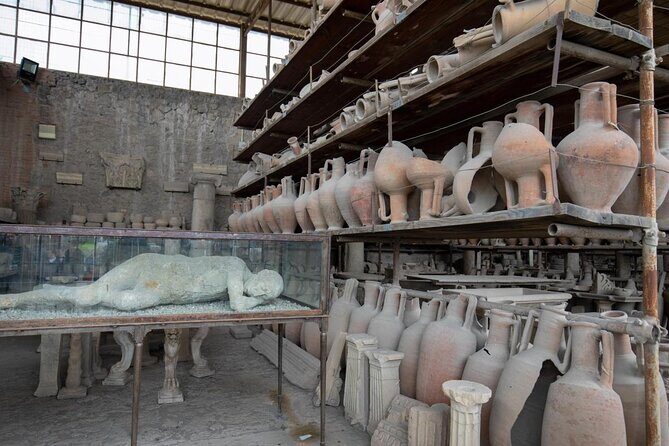
- Two UNESCO sites, one day: Pompeii first, then Herculaneum for a strong contrast in preserved spaces.
- An archaeologist guide, not a narrator: expect answers that link buildings, artifacts, and real life.
- Roman daily life on display: public spaces in Pompeii and private houses plus shops in Herculaneum.
- Key visuals you can spot fast: frescos, mosaics, and stucco details are built into the route.
- Lupanare included in Pompeii: you’ll see the famous brothel site, not just the “safe” postcard spots.
- Private-group feel: capped at your group only, which makes the tour feel flexible.
Why an archaeologist guide is the difference-maker
Pompeii and Herculaneum can look like ruins you already recognize from books and photos. What changes everything is having an archaeologist guide who can explain what you’re actually looking at—how spaces worked, what kinds of people used them, and how the eruption tied the story together.
On this kind of private format, I like that questions don’t get swallowed by a schedule. Roberto’s praised ability to cover both the eruption day and everyday Roman routines is exactly the balance you want: event history plus how people lived around it.
Other private Pompeii tours we've reviewed in Pompeii

Price and logistics: what you really pay for
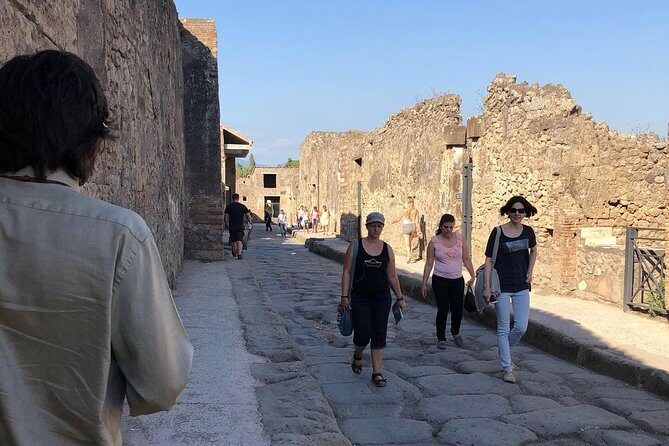
The base price is $720.91 per group (up to 8), and it runs about 4 to 5 hours. That can be a great value if you’re traveling with a small group, because you’re sharing a single private-guiding cost rather than paying per person for the guide.
Just budget for the extras that are clearly part of the math:
- Entrance fees: €40 per person for the Pompeii and Herculaneum Archaeological Parks.
- Lunch: optional, light lunch break at about €20 per person.
- Private transportation: optional, from €350 with a professional driver.
If you’re thinking in per-person terms, the guide cost alone depends on your group size. For example, if you’re a full group of 8, the base price spreads out; if you’re only 2 people, it won’t feel as “cheap,” even though you still get the private experience.
You’ll also get a mobile ticket, and the tour is offered in English. Start and end are set: Piazza Esedra, 10/13 in Pompeii to the Archaeological Park of Herculaneum on Corso Resina, 187—so plan your day around that flow.
Stop 1 in Pompeii: public life plus the Lupanare
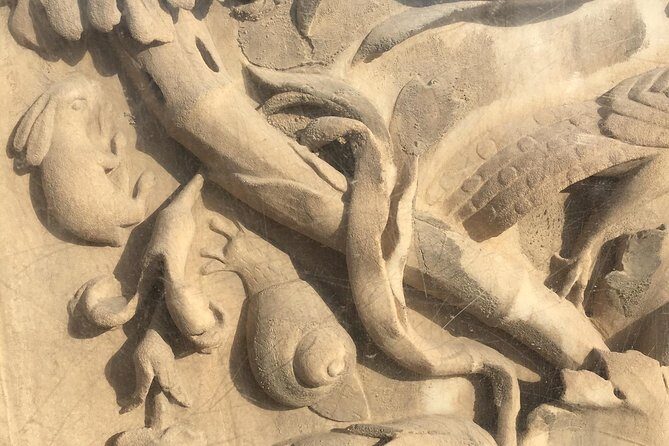
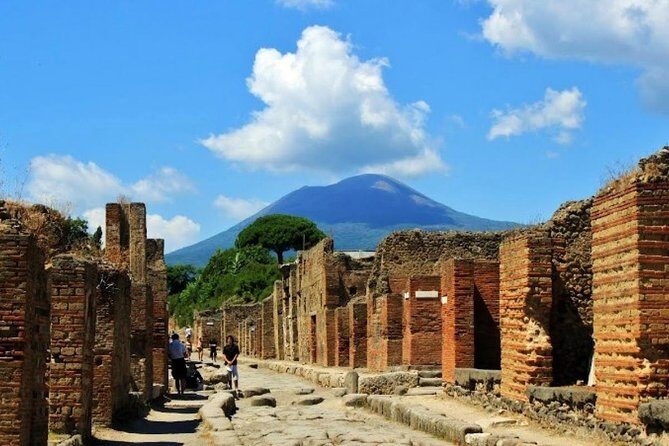
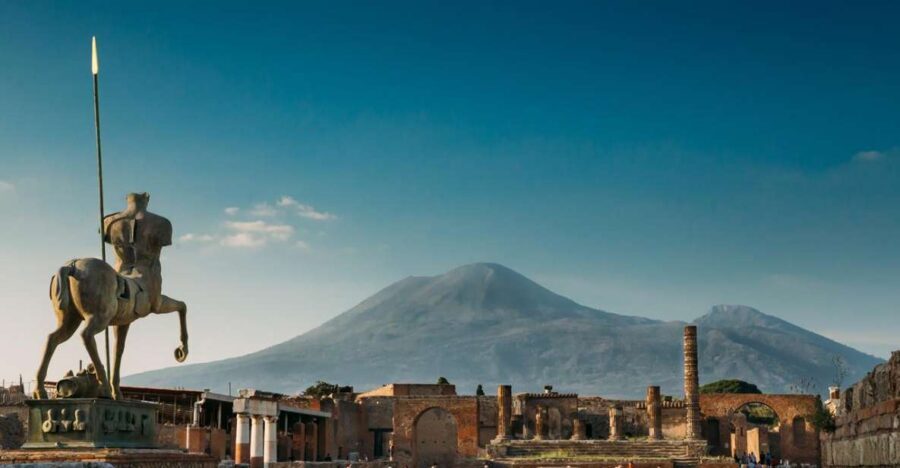
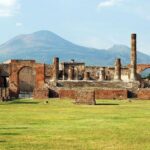
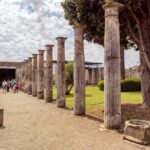
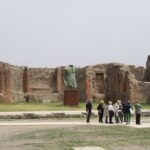
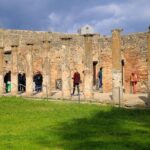
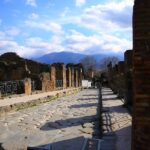
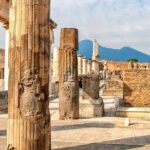
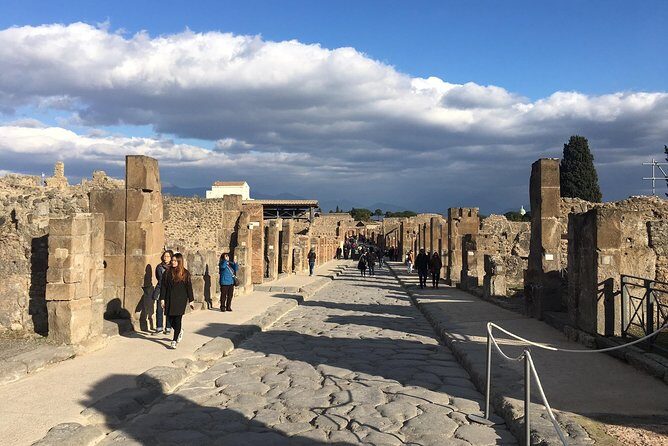
Pompeii takes about 2 hours, and the focus is practical: you’ll see the major public buildings and the surrounding areas that shaped daily routine. That includes theaters, thermal baths, the Forum, and the nearby context around them—places where Roman life wasn’t private, but on display.
Here’s what I find useful about this Pompeii slice. Theaters and baths are easy to misunderstand if you only look at stone walls. With a guide, you can connect what you see to how people socialized, stayed clean, and made plans in a city that ran on public rhythms.
You’ll also visit the Lupanare, described as the famous brothel. Including it on a highlights route matters because it rounds out the picture of ancient life. You see Pompeii not just as a site of big monuments, but as a place with everyday services and complex social reality.
One practical consideration: since admissions aren’t included, you’ll need your park tickets sorted ahead so you’re not losing time at the start.
Stop 2 in Herculaneum: private homes and everyday shops
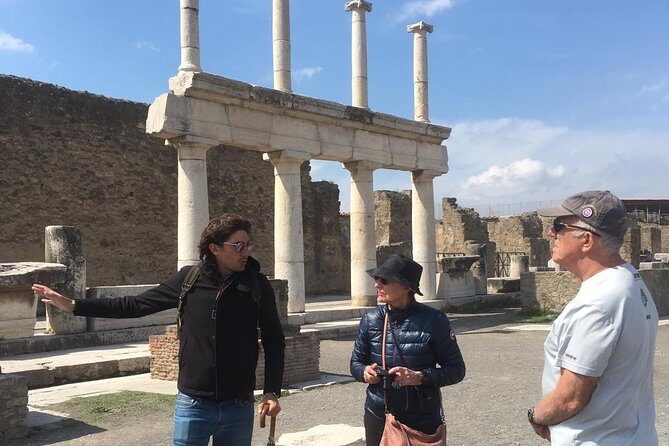
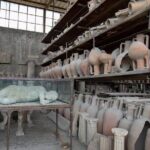
After Pompeii, Herculaneum is shorter—about 1 hour 30 minutes—but it’s built around a different kind of discovery. Instead of mostly public spaces, you’ll spend time in private houses and the commercial areas, including shops like a bakery and a thermopolium.
This is where I like the tour’s logic. Pompeii helps you understand the city as a public stage; Herculaneum helps you picture the city as a lived-in set of rooms and errands. If you care about how people ate, worked, and lived close to their neighbors, this stop gives you that angle fast.
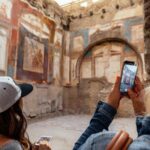
You’ll see frescos, mosaics, and stucco decorations in those spaces. Even if you’re not an art person, it helps to have a guide point out what’s decorative versus what’s functional or symbolic. The payoff is leaving with more than a list of “pretty walls”—you start to connect decoration to taste, status, and daily habits.
As with Pompeii, admission fees are separate, so bring your ticket plan.
The pacing: 4–5 hours, highlights-first
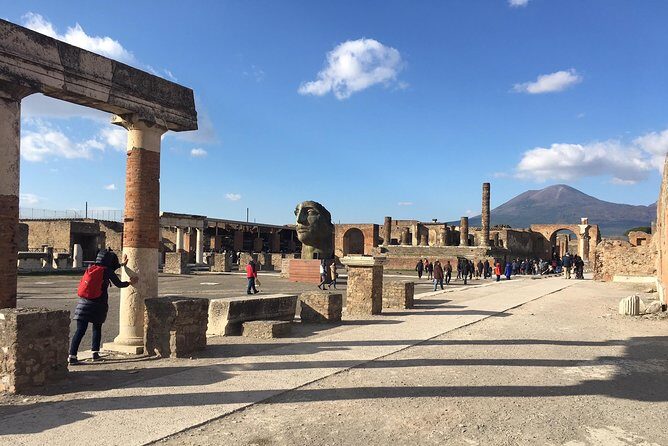
This is a half-day style tour. That means you get a strong “best-of” experience, but you’re not meant to wander indefinitely or linger for hours in every room you pass.
If you’re someone who likes to read every label and follow every side path, you might feel a little time pressure. If you prefer a focused route guided by an expert who can help you prioritize, this schedule is actually a plus.
The timing also affects your logistics. You start in Pompeii, then finish at Herculaneum, so you’ll want to plan your onward transportation with the end location in mind.
Other archaeologist-led tours in Pompeii



Where you meet and where you finish
Meeting point: Piazza Esedra, 10/13, 80045 Pompei NA, Italy.
End point: Archaeological Park of Herculaneum, Corso Resina, 187, 80056 Ercolano NA.
It’s good to know the tour is described as near public transportation. If you’re building your own plan around a train or local transit, you’ll probably have easier options than if everything were remote.
Also, this tour requires good weather. If conditions are poor, the operator offers a different date or a full refund—so keep an eye on forecasts if your trip dates are tight.
What stood out from guide performance
Two guides come up in the feedback you provided, and their strengths line up perfectly with the purpose of this tour.
Roberto is praised for answering questions with thorough knowledge covering both the eruption day and the day-to-day lives of the Pompeiians. That’s exactly what you want when you’re trying to understand not just what happened, but what life looked like before it stopped.
Giada gets high marks for being funny and kind, while staying expertly informed about what you’re seeing. Add in recommendations for a pizza place, and you get a guide who treats the tour like a real day with you—not just a script.
Who should book this Pompeii and Herculaneum private tour
This private tour is a good match if you want depth without spending an entire day. You’ll see two major sites, learn the day-to-day context, and focus on visible details like frescos and mosaics—without needing to interpret everything alone.
It’s also a strong pick for small groups (up to 8), because the base price is per group. If you’re traveling with friends or family who like asking questions, the private format helps you move faster through “what matters” and slower through “what you care about.”
If you have specific needs, the provided info notes that service animals are allowed and that most travelers can participate.
If you’re on a strict budget, the entrance fees plus optional add-ons (lunch and transportation) can change the final total. But if you’re comfortable with that math, the guide-driven focus is the value you’re buying.
Should you book it?
Book this tour if you want a guided best-of route that connects buildings to real daily life. The Pompeii + Herculaneum pairing, the inclusion of public spaces plus private houses and shops, and the emphasis on frescos, mosaics, and stucco details are all built to help you leave with understanding, not just photos.
I’d hesitate only if you’re the type who wants to control every minute and linger everywhere at your own pace. This is structured, about 4 to 5 hours, and it’s meant to hit the highlights with an archaeologist leading the way.
FAQ
Is the entrance fee included in the tour price?
No. Entrance tickets for both Pompeii and Herculaneum Archaeological Parks cost €40 per person and are not included.
How long is the tour?
The tour is about 4 to 5 hours total, with roughly 2 hours in Pompeii and about 1 hour 30 minutes in Herculaneum.
Is lunch included?
Lunch is optional. The tour offers a light lunch break, and it’s listed as about €20 per person.
Is private transportation included?
No. Private transportation is optional, and it’s listed as €350 with a professional driver.
What language is the tour offered in?
The tour is offered in English.
What happens if the weather is bad?
This experience requires good weather. If it’s canceled due to poor weather, you’ll be offered a different date or a full refund.