REVIEW · POMPEI CAMPANIA
From Naples: Pompeii Wheelchair-accessible with a Guide
Book on GetYourGuide →Operated by WORLDTOURS S.r.l. · Bookable on GetYourGuide
Pompeii is a lot easier when someone handles the logistics. This wheelchair-accessible tour gives you tickets included and a professional guide who keeps the story clear as you move through the site. I also like the way the visit is built around accessible ramps and a wheelchair-friendly route.
The main plus for most people is support: you’ll get help from the driver, skip the usual entry hassle with a separate entrance, and follow a path planned for reduced mobility. One thing to consider, though: Pompeii still has uneven, sloped areas, so you may need an all-terrain wheelchair and you might have to do short standing/walking moments in a few spots.
In This Review
- Key highlights to know before you go
- Pompeii for reduced mobility: why this route makes sense
- Getting there from Naples: the ramped van rhythm
- Tickets and meeting point: start strong at Pompeii’s Anfiteatro Entrance
- The guided part: about 3 hours of Roman life on a practical route
- Free time inside Pompeii: use it strategically
- Accessibility reality check: what to bring and how to set yourself up
- Price and value: is $88 a fair deal?
- Who should book this Pompeii wheelchair tour (and who might want a backup plan)
- A few real-life guide moments to look for
- Quick “day-of” advice so nothing surprises you
- Final call: should you book this Pompeii experience?
- FAQ
- How long is the Pompeii tour?
- Where do we meet the guide?
- Is pickup from Naples included?
- Is this tour wheelchair accessible?
- Do tickets cost extra?
- Is the tour only for wheelchair users?
- What languages are available for the guide?
- What should I provide after booking?
- Do I need to bring my passport or ID?
- What items are not allowed during the experience?
Key highlights to know before you go
- Ramped van + driver help for boarding, exiting, and getting to your day on the ground
- Meet at Pompeii’s Anfiteatro Entrance with tickets ready, so you can move without stress
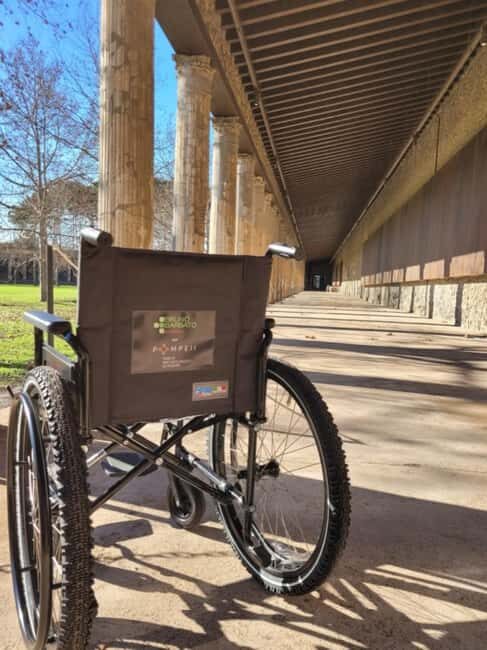
- Guided route with ramps designed to reduce architectural barriers inside the excavations
- Skip-the-line access via a separate entrance, which matters when you’re limited on mobility
- Free entry for wheelchair users and their assistant with proof of identification
- Option to tailor the setup with private car+guide or guide-only, meeting at the amphitheater entrance
Pompeii for reduced mobility: why this route makes sense
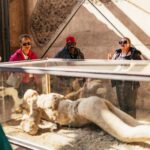
Pompeii is famous for a reason. In 79 A.D., Vesuvius buried the city under ash, and that harsh, sudden moment froze daily Roman life in place. What you see today is not a museum recreation. It’s real streets, real buildings, and real reminders of how people lived, worked, shopped, and relaxed.
What makes this tour especially useful is that it doesn’t treat accessibility like an afterthought. You’re not just handed a wheelchair path map and told good luck. Instead, the experience is organized around a wheelchair-accessible itinerary with ramps and a route planned through the excavations.
And here’s the practical angle: when you’re navigating a big archaeological site, the hardest part is often decision-making. Should we go left or right? Where’s the least-bumpy area? How do we interpret what we’re seeing? A guide solves a lot of that in about the first 15 minutes.
If you're still narrowing it down, here are other tours in Pompei Campania we've reviewed.



Getting there from Naples: the ramped van rhythm
Most people don’t realize how tiring the transfer can be until they’re doing it with stairs, tight spaces, and buses that were never designed for wheelchairs. This tour uses a special vehicle that’s set up to handle it.
Your wheelchair-accessible van can accommodate four passengers plus one person in a wheelchair and has a ramp. The driver assists with getting in and out, which is a big deal if you rely on careful transfers or you’re traveling with someone who needs predictable support.
Pickup is optional, depending on your choice. If you select the transfer option, you’ll be picked up from your hotel, Naples cruise terminal, train station, or airport. Either way, you end up at the key meeting point at Pompeii: the entrance near the Anfiteatro area.
One small-but-important planning tip: your day starts in Naples, so bring your ID and plan for a smooth handoff from driver to guide. The tour is designed so you don’t waste time once you arrive.
Tickets and meeting point: start strong at Pompeii’s Anfiteatro Entrance

Once you’re at Pompeii, the tour begins in a way that feels calmer than the usual approach. You meet your guide at the Pompeii Entrance / Anfiteatro Entrance, where tickets are handled for you.
You also get skip-the-line access through a separate entrance. That matters for everyone, but especially if you’re waiting in a queue with limited mobility, uneven ground, or long stretches of standing.
A logistics detail that’s worth treating seriously: you’ll need to provide the names of all travelers and their dates of birth after booking, because they’re required for your entrance tickets. This is not the kind of thing you want to scramble about later.
The guided part: about 3 hours of Roman life on a practical route
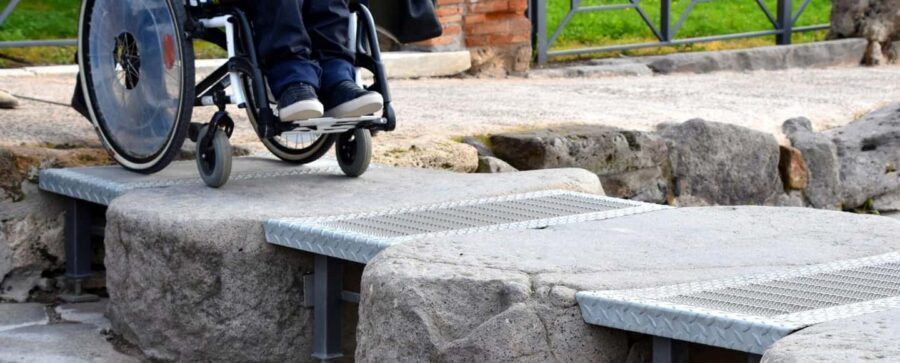
The visit portion with the professional guide lasts about three hours. During that time, you’ll follow a wheelchair-accessible path inside the excavations, including ramps meant to overcome barriers you’d otherwise hit quickly in a place like Pompeii.
What you get from a good guide here is context. Pompeii can look like a pile of walls until someone connects the dots: where people lived, how spaces were used, what daily routines looked like, and why certain architectural choices mattered. The goal is to make the ruins readable, not just photogenic.
This tour also aims to get you to areas that are currently under excavation, so you can see the site as an active archaeological workplace rather than a sealed-off set piece. That angle tends to make Pompeii feel less static, more like a living research project you’re briefly stepping into.
If you’re traveling with English support needs: the guide can be in English, Spanish, Italian, French, or German, so you’re not stuck with generic explanations that don’t match your pace.
Free time inside Pompeii: use it strategically
After the guided portion, you’ll have free time. That’s great, because it lets you linger where something caught your eye and move on if you’re tired.
But don’t treat this as open-ended freedom without a plan. Pompeii includes sloped areas and uneven ground, so use your guided time to learn what’s worth revisiting. Then, during free time, focus on the spots that are easiest for your mobility level.
Also, remember the “time window” reality. If you’re using a wheelchair, your pace depends on the surface and the slope, not just your stamina. A smart move is to decide beforehand how far you want to roll before taking a rest, then stick to it.




Accessibility reality check: what to bring and how to set yourself up
The tour is wheelchair accessible, but it’s still Pompeii. The site has steep and uneven terrain, so you’ll want the right setup.
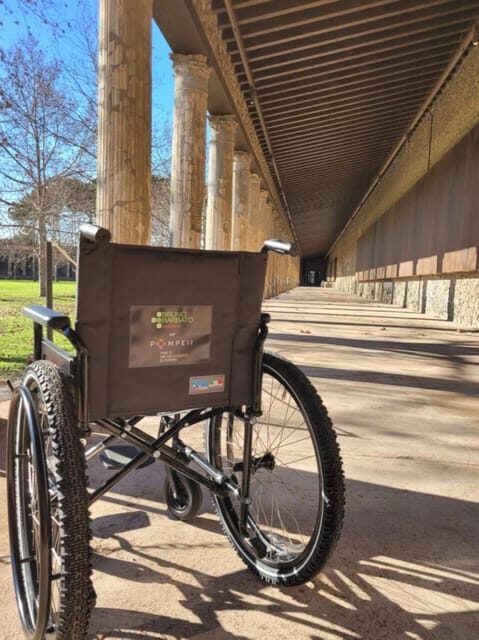
The tour specifically recommends an all-terrain wheelchair with rugged wheels. That’s not marketing language—it’s practical advice. Wheelchair tires that work on smoother paths can struggle on the kind of ground you’ll meet here.
It also helps to communicate your needs after booking. The operator asks for detailed info about the size of your wheelchair and your needs so they can tailor the experience. Do it early, not at the last minute.
What to bring is simple and clear:
- Passport or ID card
- Sunglasses
- Hat
And watch the vehicle rules. No smoking in the vehicle, and alcohol and drugs are not allowed. Bags and food/drinks are also not allowed in the vehicle. If you rely on snacks or water outside the vehicle, plan for that on your own time rather than assuming you can carry it onboard.
Price and value: is $88 a fair deal?
At $88 per person for about 3–4 hours, this tour can be good value, especially if accessibility and stress reduction are your priorities.
Here’s what you’re paying for beyond a standard sightseeing walk:
- A professional guide for the Pompeii portion
- Tickets handled at the Pompeii entrance
- Wheelchair users get free admission plus a personal assistant with proof of identification
- A wheelchair-accessible private transfer with a ramped van
- Skip-the-line entry through a separate entrance
If you’re paying for a private day in a place like Pompeii, the guide and the accessible logistics often save energy you’d otherwise spend figuring things out on your own. And energy is currency when mobility is limited.
Also note: it’s a private group experience. That usually means less waiting, fewer coordination headaches, and a pacing style that can better fit your needs.
Who should book this Pompeii wheelchair tour (and who might want a backup plan)
This is a strong choice if you:
- Want a guided Pompeii experience instead of wandering through ruins trying to interpret them
- Need a day built around accessible routes and ramps
- Prefer the predictability of a driver-assist ramped van
- Would benefit from a guide who can adjust to wheelchair needs without making you feel rushed
It may be less ideal if your wheelchair use is strictly limited to smooth, flat surfaces only. Even with an accessible itinerary, Pompeii includes uneven and sloped terrain. One review notes that navigation was fine for the most part, but some areas required standing or walking briefly. So if you can do only wheel-only movement, you may want to discuss your needs carefully before going.
If you can do short transitions—like brief standing or short transfers with support—this tour sounds set up for you.
A few real-life guide moments to look for
Guides matter here. In the experiences shared, the standout theme is support plus clarity.
One guide named Jasmine was praised for being helpful and teaching a lot, while also assisting with navigating sidewalk-like areas in a wheelchair. Another highlight was a guide who met people at the gate, got them into the site smoothly, and led them along the wheelchair accessible path with clear explanations. If you’re hoping for a guide who watches pacing and adjusts to mobility needs, this tour’s format is designed for that.
You’ll also notice a practical difference in how a guide reads Pompeii. Instead of just pointing at famous spots, they help you understand what you’re looking at right now—streets, buildings, and daily routines—so you leave with meaning, not just photos.
Quick “day-of” advice so nothing surprises you
A few small moves can make your Pompeii day smoother:
- Plan for hills and uneven ground, even on the accessible route
- Bring the right wheelchair setup, especially rugged wheels if you have them
- Wear comfortable clothing and use a hat and sunglasses since Pompeii can be sun-heavy
- Keep your ID ready for ticket entry, since your details are tied to admission
- Tell the driver/guide anything that affects transfers, turning radius, or comfort—this tour is designed to tailor
Final call: should you book this Pompeii experience?
If you want Pompeii without the usual maze of entry lines, uneven navigation, and guesswork, this wheelchair-accessible tour is a smart way to go. The combination of a ramped private transfer, tickets handled at arrival, and a guide-led route built for accessibility makes it feel designed for real needs, not just wishful thinking.
Book it if your goal is to actually understand Pompeii while staying supported and paced. Consider a backup plan (or ask extra questions in advance) if your mobility needs are extremely strict for slopes or uneven surfaces. Either way, with the right wheelchair and the right expectations, you can see one of the world’s most important archaeological snapshots without spending the day fighting logistics.
FAQ
How long is the Pompeii tour?
The experience runs about 3–4 hours total, with around 3 hours spent on the guided ruins portion.
Where do we meet the guide?
You meet the guide at the Pompeii Entrance, specifically at the Pompeii Anfiteatro Entrance area.
Is pickup from Naples included?
Pickup is optional. If you choose it, you can be picked up from your hotel, Naples cruise terminal, train station, or airport.
Is this tour wheelchair accessible?
Yes. The itinerary is wheelchair accessible, with ramps to help overcome architectural barriers. The van is also equipped with a ramp.
Do tickets cost extra?
Tickets are included as part of the tour experience. You meet the guide at Pompeii Entrance to get your tickets.
Is the tour only for wheelchair users?
It’s suitable for wheelchair users, and the tour notes free admission for wheelchair users and a personal assistant with proof of identification.
What languages are available for the guide?
Guides are available in English, Spanish, Italian, French, and German.
What should I provide after booking?
After booking, you’re asked to provide detailed information about your wheelchair size and your needs so the experience can be tailored.
Do I need to bring my passport or ID?
Yes. You should bring a passport or ID card for entry.
What items are not allowed during the experience?
No smoking in the vehicle. Alcohol and drugs are not allowed. Bags and food and drinks are also not allowed in the vehicle.