REVIEW · POMPEII
2 Hours Pompeii Group Tour with Archaeologist Guide and Skip the Line
Book on Viator →Operated by ELIANA SANDRETTI · Bookable on Viator
Pompeii in two hours, minus the ticket crush. I like the skip-the-line access built into this tour, and I also like how you get a real archaeological guide who helps you read what you’re seeing instead of just staring at stones. One thing to plan for: it’s a fast overview, and the 18-euro site entrance ticket is not included in the tour price.
You meet at Ristorante Suisse in Piazza Esedra (main entrance), and the tour runs about two hours with a group capped at 15. If you’re booking English, you’ll be led through major landmarks like the gladiators’ barracks, Roman theatres, the baths, and key forum areas—plus a short stop that uses Pompeii 3D to explain the bodies behind the headlines.
In This Review
- Key Things I’d Do (And Why This Tour Works)
- Two Hours in Pompeii: What You Actually Get
- Skip-the-Line Tickets and the 18-Euros Reality Check
- Meeting at Ristorante Suisse in Piazza Esedra
- Vicolo di Gladiatori: Gladiator Barracks and Training Space
- Fullonica di Stephanus: Roman Laundry and What People Smelled Like
- Tempio di Giove Capitolino: Forum Worship in Morning Light
- Odeon and Teatro Grande: Theatre Where Musical Events Happened
- Casa del Menandro: Luxury Living, Fresco Details, and Status
- Lupanar: A Brothel Stop That Explains Its Own Shock
- Pompeii La Basilica and the Justice of Daily Life
- Shops, City Market, and the Way Goods Moved
- Stabian Baths and Pompeii 3D: Hygiene, Frescoes, and a Quick Reset
- Temple of Venus and Temple of Apollo: Religion in Two Very Different Moods
- The Real Value: Archaeologist Guidance in a Time-Limited Route
- Who Should Book This 2-Hour Pompeii Tour
- Should You Book It?
- FAQ
- What’s the duration of this Pompeii tour?
- Does this tour include the Pompeii entrance ticket?
- How does the skip-the-line part work?
- Where do I meet the guide?
- How many people are in the group?
- Is the tour offered in English?
- Is it suitable for most people?
- Are mobile tickets used?
- What if the weather is bad?
- Can I cancel and get a refund?
Key Things I’d Do (And Why This Tour Works)
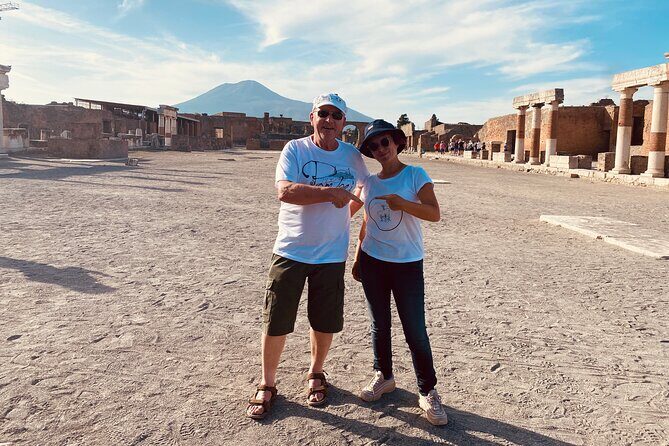
- Skip-the-line ticket help saves time when the entrance area is crowded.
- Small group size (up to 15) keeps the pace manageable for a two-hour route.
- Archaeologist guide focus means you learn what each building did in daily life.
- Top sights, tightly grouped gives you a strong first visit without needing a full day.
- Multiple “life-in-Pompeii” stops cover work, worship, entertainment, and justice—not just the dramatic bits.
Two Hours in Pompeii: What You Actually Get
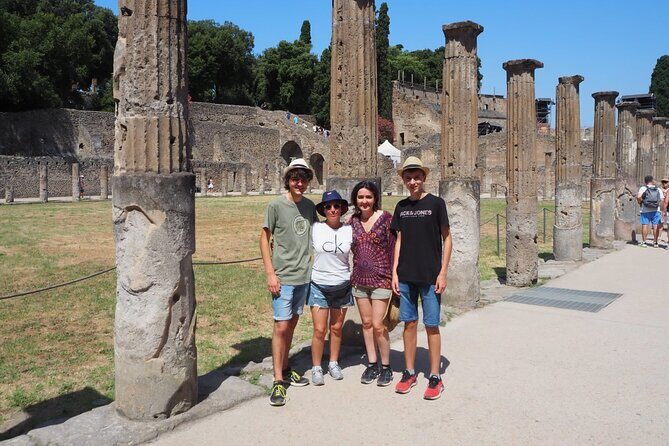
This tour is built like a sprint with a plan. Pompeii is huge, and two hours isn’t enough to wander every corner, so you’re relying on the guide to choose the most telling places and connect them. The payoff is that you get an efficient overview that helps you understand the site once you step away on your own.
I like that the route mixes “big name” spots with everyday-life buildings. You see the places tied to power and worship, sure, but you also stop at sites that explain work like laundry and the messy practical side of ancient life.
The main thing to keep in mind: you’ll spend short windows at each stop. That’s great for a first visit, but if you want slow photo time and long reads, you may feel a bit rushed.
Other skip-the-line Pompeii tours in Pompeii

Skip-the-Line Tickets and the 18-Euros Reality Check
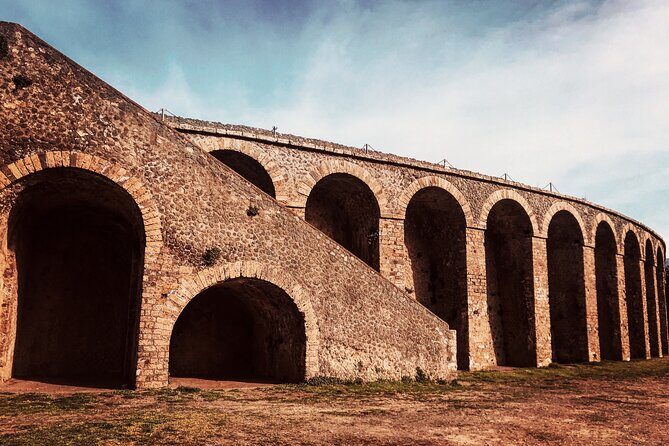
The headline feature here is skip the line to buy tickets on site. That matters because Pompeii’s entrance area can slow you down even when you’re excited to start. Time is your most valuable resource on a two-hour tour, so anything that trims waiting helps.
Now the practical part: your entrance ticket is 18 euros for adults and free for minors (minors need an identity card). The tour price is $132.03 per person, but you should budget for that additional site entry. If you’re traveling with kids, the math can get better because minors are covered for admission.
My advice: treat the tour fee as payment for the guide + time saved, not as a complete ticket bundle. You’re buying a guided route through the essentials, with the ticket process handled faster.
Meeting at Ristorante Suisse in Piazza Esedra
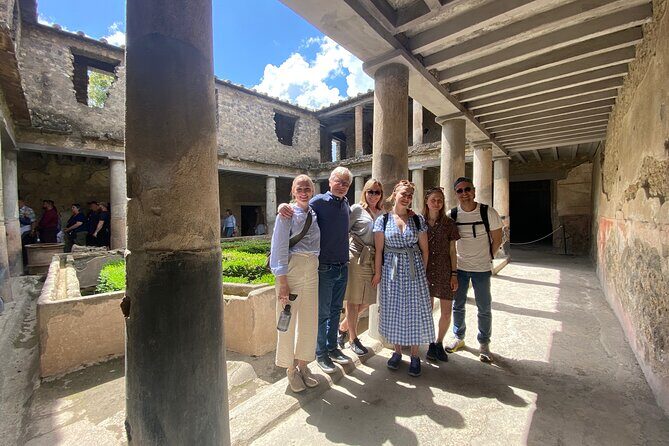
Your starting point is the main entrance of Ristorante Suisse in Piazza Esedra. Do yourself a favor and show up a little early—this kind of tour depends on getting everyone together before you step into the flow of the archaeological park.
The tour also ends back at the meeting point. That’s convenient when you want to keep the rest of your day flexible, whether you’re heading to lunch or planning a second stop on your own.
English is offered, and you’ll receive a confirmation at booking. There’s also mobile ticket support, so if you prefer keeping everything on your phone, you’re set up well.
Vicolo di Gladiatori: Gladiator Barracks and Training Space
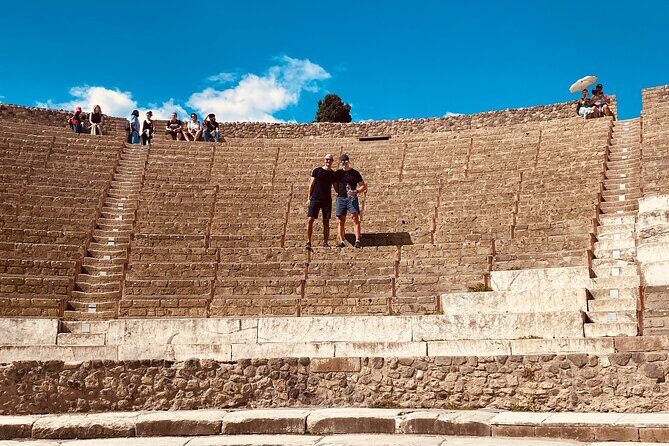
The first stop is Vicolo di Gladiatori, centered on the Gladiators’ Barracks—the place where gladiators trained and fought. Pompeii can feel like a city frozen mid-day, but gladiators bring a sharper edge: this is entertainment with real stakes.
In about 10 minutes, you’re not trying to become a gladiator historian. Instead, you’re getting the big idea of what this space meant—training routines, controlled violence, and the kind of spectacle that would have drawn crowds.
Possible drawback: because it’s only a short stop, you’ll want to listen closely and ask questions early if something clicks for you. If you love combat history, you may still wish you had more time here after the tour.
Fullonica di Stephanus: Roman Laundry and What People Smelled Like
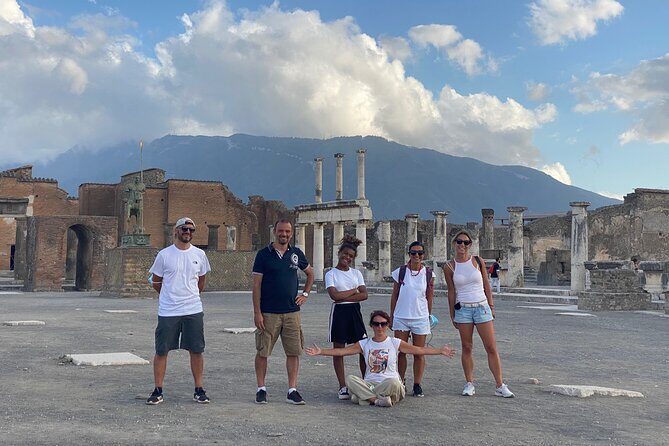
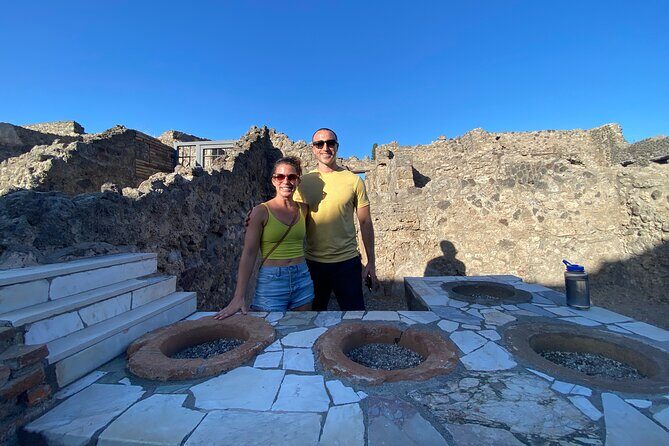
Next is Fullonica di Stephanus, described as the most famous laundry in Pompeii. This is one of the most valuable stops for first-timers because it’s so tied to daily life: washing clothes, handling rough fabrics, and the materials Romans used.
A laundry building is also a lesson in reality. This wasn’t a quiet “clean clothes” operation. You can expect to think about dyes, treatments, and the practical workflow behind textiles.
In 10 minutes, the goal isn’t depth on chemistry. It’s understanding how Romans maintained clothing and how a whole industry could live in a city block. If you like connecting buildings to human routines, this stop usually lands well.
Other archaeologist-led tours in Pompeii





Tempio di Giove Capitolino: Forum Worship in Morning Light
Then you move into the Tempio di Giove Capitolino. This is the temple of Pompeii’s deities, located in the large forum where Romans carried out mercantile and cult activities. In other words, this wasn’t just a temple you visited on special days—it was woven into commerce and public life.
The tour gives you about 5 minutes here. That’s short, but it’s a smart choice because you’re learning the function more than collecting details. You’ll see how the forum acted like the city’s working brain: religion and business sharing the same core space.
If you’re the type who likes to linger, you might want to come back later. But for a two-hour intro, getting the forum context early helps everything else click.
Odeon and Teatro Grande: Theatre Where Musical Events Happened
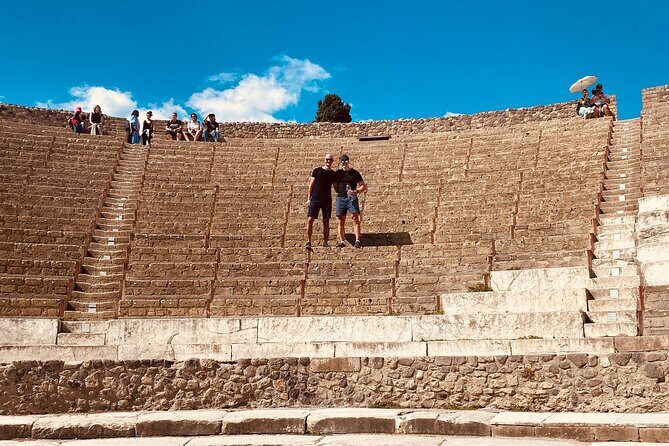
After the temple, the route includes two theatre stops.
First is the Odeon – Teatro Piccolo, the smaller theatre for musical events. The tour notes that musical instruments were found inside and are currently housed in the Antiquarium, while you can still visit the theatre and see original parts. That detail is useful: it links the building to what people actually did there, not just the architecture.
Next is the Teatro Grande, Pompeii’s largest theatre. It’s described as fully renovated thanks to grants from the Gens Holconia, one of the important families of Pompeii. That means politics and family power weren’t separate from entertainment. In cities like this, who pays often shapes what gets built and how it’s used.
In practice, you’re looking at major public entertainment spaces and learning how they fit into civic identity. In about 10–15 minutes total across both theatres, you should be able to picture the social rhythm: music, drama, crowds, and status.
Casa del Menandro: Luxury Living, Fresco Details, and Status
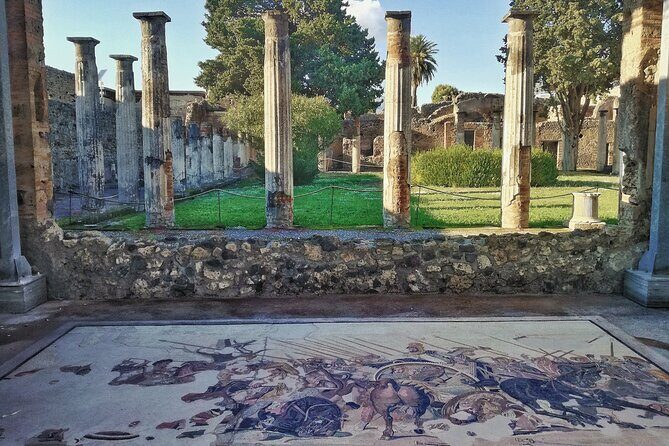
Then comes Casa del Menandro, one of the luxury houses. The tour frames it as a home full of frescoes, decorations, and sculptures—basically the kind of interior Pompeii does best.
This stop matters because it shifts the story from public spectacle to private life. You see what wealth looked like day-to-day and how decoration functioned as identity, not just decoration.
The downside is simple: you only get around 15 minutes. Houses like this reward slow attention. Still, as part of a highlights tour, this works because it gives you a clear “before-and-after” feeling: Pompeii isn’t only about crowds and tragedy. It was also about people choosing beauty and comfort.
Lupanar: A Brothel Stop That Explains Its Own Shock
The route includes Lupanar, one of the most famous brothels in the world, with original frescoes showing scenes described as related to kamasutra. It’s an intense stop, no sugarcoating.
Why it’s worth seeing on a guided route: the guide can help you interpret what you’re seeing in context rather than treating it as only a scandal hotspot. A good guide connects the imagery to what the building was used for and how private commercial spaces worked in the city.
It’s 15 minutes, and that’s enough for you to grasp the function and the visual culture without turning it into a debate club. If you’re sensitive to explicit material, you should consider this stop carefully.
If you do go in, bring a calm mindset and focus on the architecture and purpose as much as the sensational reputation.
Pompeii La Basilica and the Justice of Daily Life
After Lupanar, you’ll visit Pompei La Basilica, described as the place where justice was administered near the main square. This is one of those spots that makes Pompeii feel like a living system again.
The basilica wasn’t just a dramatic courtroom. It was where civic decisions happened, which means it connects law, daily disputes, and the authority structures of the city.
The tour allots about 15 minutes here (and then you also move into street scenes). That helps you understand the city wasn’t only entertainment and worship—it ran on rules, negotiations, and enforcement.
Shops, City Market, and the Way Goods Moved
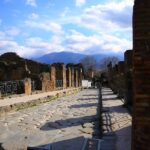
You’ll spend time on a street full of shops, described as the main street of the archaeological site. You also hit the city market, located near the large forum, where large purchases of goods were made to be resold in shops.
This is where the tour starts feeling real in a different way. You get a sense of how money and goods moved through the same urban lanes you’re walking today. Even if you don’t shop, you can visualize the flow: bulk buying, resale, and constant commerce.
One practical note: streets like this can be busy and uneven. If you’re doing more photos, keep your footing steady and don’t let the crowd tempo steal your time from the guide’s explanations.
Stabian Baths and Pompeii 3D: Hygiene, Frescoes, and a Quick Reset
Next is Stabian Baths (Terme Stabiane). The description highlights that they were the first baths built in Pompeii and that you can see casts and frescoes. Bathrooms sound basic, but in Roman cities they were social infrastructure. They also give you a window into how people refreshed, relaxed, and gathered.
After the baths comes Pompei 3D (Bodies of Pompeii), which is a short stop (about 5 minutes). A 3D component is a time-saver: it can translate what’s hard to visualize from the ground-level remains into something your brain can track fast.
I like pairing a physical site (the baths) with a visualization tool (Pompei 3D). It gives your eyes a break and helps you connect how people lived and suffered in the same place.
Temple of Venus and Temple of Apollo: Religion in Two Very Different Moods
The tour includes a Temple of Venus, noted as partly destroyed during the Second World War. That note matters because it reminds you that Pompeii is not only ancient damage—it also carries modern history in how it’s been preserved and restored.
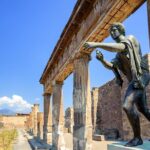
It also stops at the Temple of Apollo, described as one of the most popular deities in Pompeii. If Jupiter and the forum represent civic worship, Apollo brings a different tone: more of the personal and communal devotion side.
These religion stops help you understand the city as a place where faith wasn’t peripheral. It was part of the rhythm.
Short stays mean you’ll want to watch the guide’s framing. The “same ruins” can feel like random stones unless someone helps you see why the placement and design mattered.
The Real Value: Archaeologist Guidance in a Time-Limited Route
The most praised part of this tour is the guide storytelling, and that shows in how the stops are arranged. Guides like Mariagrazia get highlighted for engaging stories that can swing between fun and somber, helping the ruins feel human again. Eliana is mentioned as especially strong at explaining Roman life and even managing timing to avoid big crowd clashes while still seeing more of the site.
You can use that as your decision filter. If you love Pompeii because you want to understand the people behind it, a guided route with an archaeologist is money well spent. If you simply want postcard views and don’t care about context, you could get similar photos on your own—just with more wandering and potentially more ticket-line time.
This tour also keeps groups to a maximum of 15, which affects the experience more than people think. You’re less likely to get stuck behind someone stopping every five steps for a perfect shot.
Who Should Book This 2-Hour Pompeii Tour
This is a strong fit if:
- You’re doing Pompeii as a one-visit stop and want the essentials fast.
- You prefer a structured route so you don’t get overwhelmed by Pompeii’s size.
- You want an archaeological explanation at key landmarks like the forum, theatres, baths, and major houses.
- You’re traveling with kids and want a guide who can keep attention moving (some guides are specifically praised for handling families and heat with patience).
It may not be the best fit if you:
- Want to spend long hours inside buildings or read everything at your own pace.
- Are very sensitive about explicit content at the Lupanar stop.
- Plan to visit in peak crowds and need a very slow, quiet experience.
Also, the tour depends on good weather. If conditions are poor, you’ll be offered another date or a full refund, so plan your trip with some flexibility if you can.
Should You Book It?
I’d book this tour if you want a guided “first chapter” of Pompeii in about two hours, with ticket help that reduces friction at the start. The value isn’t just that it’s guided. It’s that the guide helps you connect gladiators, laundry work, forum worship, theatres, justice space, luxury homes, and baths into one coherent city.
If you’re the type who learns best by walking and asking questions, you’ll likely find this route satisfying. If you’re hoping for hours of free wandering and deep self-guided exploration, save your energy for a longer visit and consider adding a separate guided hour later.
FAQ
What’s the duration of this Pompeii tour?
The tour lasts about 2 hours.
Does this tour include the Pompeii entrance ticket?
No. The entrance ticket is 18 euros for adults and free for minors (minors need an identity card). The skip-the-line feature helps you buy the ticket on site faster.
How does the skip-the-line part work?
The tour includes skip the line to purchase tickets on site, helping you avoid waiting at the ticket office.
Where do I meet the guide?
You meet at the main entrance of Ristorante Suisse in Piazza Esedra (Piazza Esedra, 10/13, 80045 Pompei NA, Italy).
How many people are in the group?
The group is capped at 15.
Is the tour offered in English?
Yes, it’s offered in English.
Is it suitable for most people?
The info says most travelers can participate.
Are mobile tickets used?
Yes, the tour includes a mobile ticket.
What if the weather is bad?
This experience requires good weather. If it’s canceled due to poor weather, you’ll be offered a different date or a full refund.
Can I cancel and get a refund?
Yes. You can cancel for a full refund if you cancel at least 24 hours before the start time.