REVIEW · POMPEII
Private half-day tour with expert guide in the archaeological site of Pompeii
Book on Viator →Operated by Guided Tours of Pompeii with Livio · Bookable on Viator
Pompeii makes sense fast with the right guide. This 2.5-hour private tour focuses on the spots that explain how people worked, played, shopped, and bathed, with skip-the-line entry and an archaeology-history expert leading the way. I especially like how the route links the big monuments (Forum, Teatro Grande) to everyday life (Via dell’Abbondanza and the baths), so the ruins feel less random.
My second favorite part is the teaching style—guides like Italo and Rossana are singled out for making Pompeii click with clear explanations, enthusiasm, and answers to questions. The one thing to keep in mind is time: with a 2.5-hour loop and short stops, you’ll see major highlights, but it’s not a slow, wandery day. Also, you’ll want a moderate fitness level for the walking inside the site.
In This Review
- Key highlights you’ll care about
- Why this Pompeii half-day is a smart pick
- Getting to the meeting point and starting on time
- Stop 1: Pompeii Archaeological Park (your 1-hour orientation)
- Stop 2: Foro de Pompeya and why the Forum matters
- Stop 3: Teatro Grande (how people spent their time)
- Stop 4: Via dell’Abbondanza—shopping street logic
- Stop 5: Stabian Baths (Terme Stabiane) and Roman body culture
- Price and value: what $203.50 really buys
- The vibe: private group pacing, short stops, clear priorities
- Who should book this Pompeii tour?
- Should you book? My take
- FAQ
- FAQ
- How long is the private Pompeii half-day tour?
- What’s included in the tour price?
- Is this tour private?
- Where do we meet, and is there hotel pickup?
- Do I need good physical fitness for Pompeii?
- Can I cancel and get a full refund?
Key highlights you’ll care about
- Skip-the-line entry so you lose less time waiting at the entrance
- Archaeology expert guidance that turns ruins into real daily routines
- Focused “greatest hits” route: Forum, Teatro Grande, Via dell’Abbondanza, Stabian Baths
- Admission tickets included, which helps the pricing make more sense
- Private tour for your group—you get your own pace within the schedule
Why this Pompeii half-day is a smart pick
Pompeii is huge. If you try to cover everything alone, you can end up sprinting between spots without really understanding what you’re looking at. This tour solves that by giving you a tight route that hits the key public spaces and the places where Romans lived their rhythm.
You’ll spend about 1 hour at the Pompeii Archaeological Park before moving through a sequence of must-see landmarks: the Forum, the Grand Theater, the main shopping street Via dell’Abbondanza, and then the Stabian Baths (Terme Stabiane). It’s a “high signal” plan: each stop is short, but each stop has a point.
I also like that it’s in English and led by an archaeology/history expert, not just a generic guide who points and moves on. That matters a lot in Pompeii, because the difference between seeing stone and understanding the city is usually a good explanation of how it worked.
Other private Pompeii tours we've reviewed in Pompeii

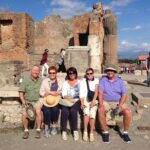
Getting to the meeting point and starting on time
The tour meets at Coffee Shop VittoriaVia Mare, 80045 Pompei NA, Italy. The good news: it’s noted as being near public transportation, so you’re not locked into a taxi if you’re coming from Naples or the train line.
Hotel pickup and drop-off aren’t included, so plan to reach the meeting point on your own. The tour ends back at the same spot, which keeps logistics simple after your final stop.
Because it’s a private experience, you’ll want to arrive a few minutes early so your group can check in and get moving without the kind of delays that can eat up your precious short stops.
Stop 1: Pompeii Archaeological Park (your 1-hour orientation)
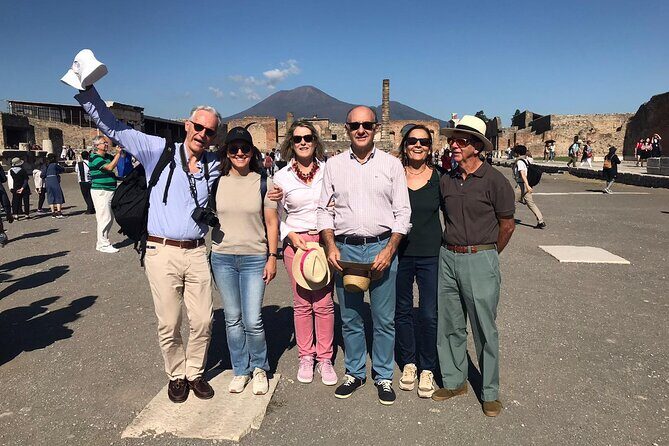
Your first stop is the Pompeii Archaeological Park, where the tour introduces the site and then focuses on the highlights that make Pompeii understandable. With about one hour here, the goal isn’t to see every corner—it’s to get oriented so the next stops feel connected instead of random.
What you’ll like most at this stage is the structure. Pompeii can feel like a museum without labels if you don’t know what to look for. A strong guide helps you notice patterns: public buildings near the main areas, street layouts that show movement through the city, and architectural clues that hint at the daily routines of different social classes.
Admission tickets are included for the park, and you’ll have skip-the-line access at the entrance. In practical terms, that’s time you can spend seeing, not waiting.
Stop 2: Foro de Pompeya and why the Forum matters
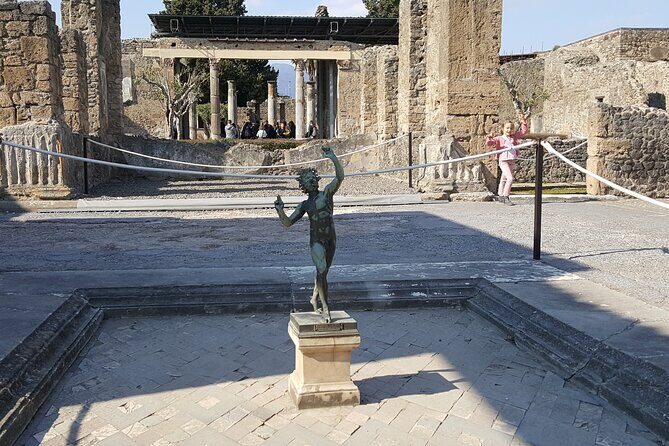
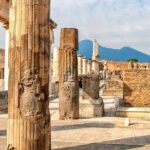
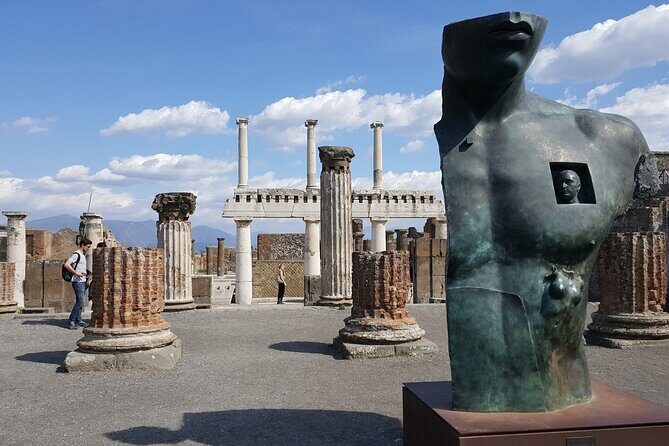
Next up is Foro de Pompeya, the largest square of ancient Pompeii and the city’s central hub for business and meetings. Even in a short visit (around 15 minutes), the Forum stop is key because it anchors the story of Pompeii as a living city, not just a tragic snapshot.
Here’s what the Forum is helping you understand: public space is where power and everyday life overlap. Think of it as the place where decisions were made, deals were discussed, and community life took shape. When your guide frames it that way, the square starts to read like a map of social behavior.
You’ll also get a clear sense of the city’s “center of gravity.” The buildings and open space around the Forum help explain why Pompeii grew the way it did and how people moved through the most important areas.
Stop 3: Teatro Grande (how people spent their time)
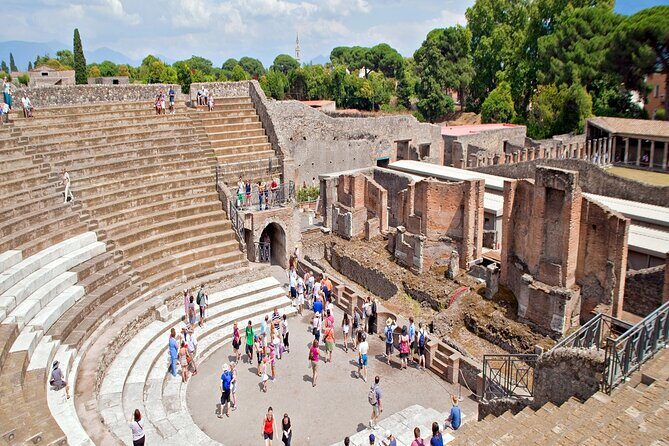
From the Forum you’ll head to the Teatro Grande, described as the largest theater of ancient Pompeii with its structure preserving all parts intact. You’ll have about 15 minutes here, which is enough to appreciate the scale and the design without rushing past the details.
What I like about including the theater is that it broadens Pompeii beyond economics and civic life. A theater wasn’t just entertainment—it was a social moment. It brought people together, reinforced shared culture, and turned public gatherings into part of the city’s daily rhythm.
A good guide helps you look at the theater as infrastructure. You start noticing how seating, entrances, and the overall layout would have shaped the experience of attending events.
Other guided tours in Pompeii


Stop 4: Via dell’Abbondanza—shopping street logic
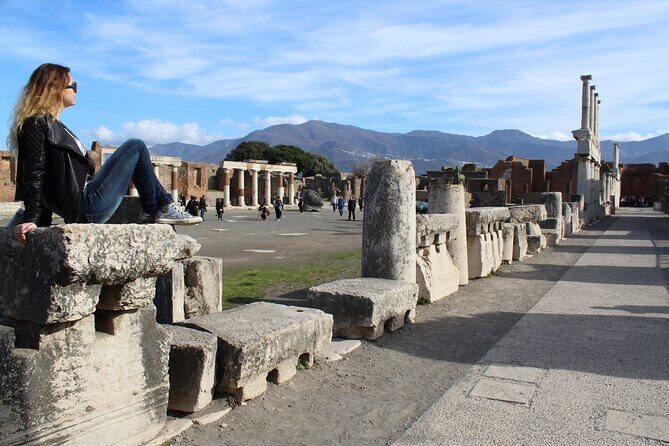
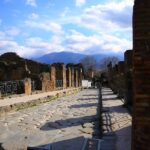
Then comes Via dell’Abbondanza, the main street of ancient Pompeii, known for shops and meetings. This stop is also around 15 minutes, but it’s one of the most useful ones because it turns ruins into a picture of movement and commerce.
Here’s the practical payoff: when you walk through a street area with an explanation, you stop thinking of Pompeii as isolated buildings. You start seeing the city as a system—people moving between public squares, entertainment spaces, and commercial storefronts.
Even if you’re not a deep architecture person, this stop helps you picture daily life. A main street is where practical needs meet social time: errands, casual conversation, and the routine flow of a working city.
Stop 5: Stabian Baths (Terme Stabiane) and Roman body culture
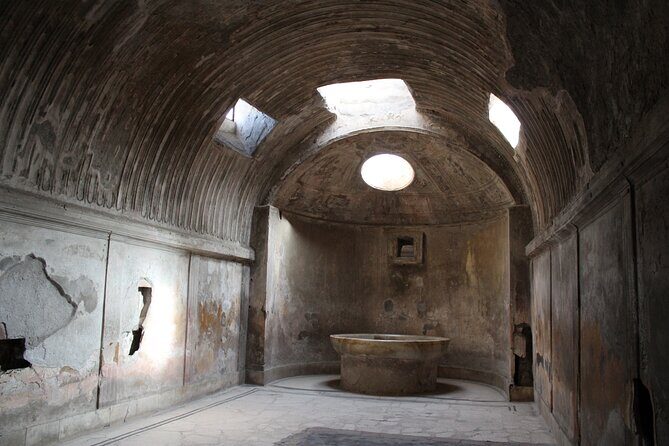
The final stop is the Stabian Baths (Terme Stabiane), a complex where bathing was both refreshment and a mental reset. You’ll spend about 15 minutes here, and the tour focuses on the areas that define how the baths worked—starting from the central arcaded gym area and moving through rooms used for the frigidarium, tepidarium, and caldarium.
This is one of my favorite types of Pompeii stops because baths are universal. Everyone understands the idea of cleaning up and relaxing, and then the guide shows you how Romans made it social and structured. The names of the rooms matter because they signal the temperature sequence and how visitors would move through the bathing experience.
A short bath tour can still be meaningful if it gives you the “why.” In this case, the bath stop explains how the baths weren’t just hygiene; they were a place for socializing and downtime, a civic-style comfort zone within the city.
Price and value: what $203.50 really buys
At $203.50 per person, this isn’t a budget tour. But the value is easier to justify when you look at what’s included.
You’re paying for:
- a local guide and an archaeology expert history guide
- skip-the-line entry
- entrance tickets to the site
- a private setup for your group
Those items add up quickly in a place like Pompeii, where entrance access and time management can make or break the day. If you were to piece this together on your own—tickets, waiting, and figuring out what to see first—the cost can climb fast.
Also, the tour is offered in English, which keeps it straightforward if you want a real explanation rather than a self-guided scavenger hunt. And since group discounts are mentioned, it can get more reasonable if your group includes multiple people.
One practical tip for value: because it’s a half-day and the stops are scheduled tightly, treat it like an orientation plus highlights package. If you go in expecting a full-day wander with long stays in every building, you may feel rushed. If you go in wanting key sites explained, it’s a good use of time.
The vibe: private group pacing, short stops, clear priorities
This is listed as a private tour/activity, meaning only your group participates. That usually makes a big difference in Pompeii, where a group can ask questions and adjust pace if needed. Guides like Italo and Rossana are noted for enthusiasm and for answering questions in an informative way, which tends to make even brief stops feel productive.
Expect a format built around moving efficiently. The schedule gives you roughly 15 minutes at several major landmarks after the 1-hour park orientation. That structure keeps the tour lively, but it also means you won’t linger for long photo sessions in one place.
If you like checklists, you’ll probably love this. If you prefer slow and contemplative, you might want to pair it with extra self-guided time afterward—though the tour itself is already designed to cover the highest-impact highlights.
Who should book this Pompeii tour?
This tour is a strong fit if you:
- want an expert to explain what you’re seeing fast
- care about public life and everyday routines, not just scenery
- want skip-the-line access and included tickets
- like the idea of a private experience without the hassle of planning stops
It may be less ideal if you:
- want to spend lots of time in just one or two buildings
- expect hotel pickup or door-to-door transport
- have trouble with moderate walking inside the archaeological park
Should you book? My take
I’d book this private Pompeii half-day if you want the ruins to make sense quickly. The route covers the city’s big story beats—Forum civic life, theater culture, street commerce, and baths as daily social comfort—and the fact that entrance tickets plus skip-the-line entry are included helps the pricing feel more fair.
The main tradeoff is the pace. You’re getting highlights, not everything. If that matches what you want from Pompeii—an intelligent first visit with an expert—you’ll likely feel satisfied by the end, with a clearer mental map of the city.
FAQ
FAQ
How long is the private Pompeii half-day tour?
It runs for about 2 hours 30 minutes.
What’s included in the tour price?
The price includes a local guide, an archaeology expert history guide, a professional guide experience, skip-the-line access, and entrance tickets for the site.
Is this tour private?
Yes. It’s a private tour/activity, and only your group participates.
Where do we meet, and is there hotel pickup?
The tour starts at Coffee Shop VittoriaVia Mare, 80045 Pompei NA, Italy, and it ends back at the meeting point. Hotel pickup and drop-off aren’t included.
Do I need good physical fitness for Pompeii?
The tour notes a moderate physical fitness level is recommended.
Can I cancel and get a full refund?
Yes. You can cancel for a full refund if you cancel at least 24 hours before the experience starts. If you cancel less than 24 hours before, the amount you paid is not refunded.