REVIEW · POMPEII
Private Awesome Pompeii Family Tour + Guide, Transport & Tickets
Book on Viator →Operated by Leisure Italy · Bookable on Viator
Pompeii hits differently when you move at your family’s pace. This private tour keeps things comfortable and question-friendly, with a guide who can tailor explanations for kids and adults alike. I especially like the fact that you’re not stuck with a rigid group schedule in a site that can feel nonstop. One consideration: it costs more than DIY, and you’ll still do real walking on uneven ancient surfaces.
Over 4 to 5 hours, you’ll cover Pompeii’s most important public spaces and standout homes, plus a great angle for photos of Mount Vesuvius from below. The route is designed to help you understand the city as a living place—work, worship, markets, baths, and theatre—without spending your time hunting for directions.
In This Review
- Key highlights (what I’d plan around)
- Private Pompeii With Family-First Pacing (and Why That Matters)
- The only “watch this” part
- Where You Start: Porta Marina and Getting Oriented Fast
- Why this matters for families
- What to watch for
- The Civic Core: Basilica, Forum, and How Romans Ran Their Days
- Basilica: law and business in a public hall
- Forum: politics, religion, and markets in one square
- One practical note
- Apollo and Sacred Space: Temple of Apollo
- What you’ll get from this stop
- Markets and Baths: Macellum and Terme del Foro
- Macellum: the indoor market
- Terme del Foro: baths as social life
- A balanced expectation
- Pompeii’s Elite Side: Casa del Fauno and the Alexander Mosaic
- A family-friendly way to approach it
- Via dell’Abbondanza: The City’s Main Commercial Street
- Why I like this stop
- The catch
- The View From Above: Insula dei Casti Amanti
- What makes it useful
- Teatro Grande: Sit in the Theatre Bowl
- What to expect
- Antiquarium di Pompei: Connect Ruins to Real Objects and Human Stories
- Why this stop is worth your time
- Vesuvius From Below: The Photo Stop Without the Summit
- Practical takeaway
- Price and Value: What You’re Paying For at $457.02 Per Person
- Who This Tour Fits Best
- Helpful Planning Tips Before You Go
- Should You Book This Private Pompeii Family Tour?
- FAQ
- How long is the Pompeii family tour?
- Is the tour private?
- What’s included with the tour price?
- Where can pickup happen?
- What language is the tour guide?
- How does this tour handle tickets?
- Does the tour include seeing Mount Vesuvius?
- Is the tour suitable for families with kids?
- What should I wear or bring?
- What fitness level is needed?
Key highlights (what I’d plan around)
- Private, family-friendly guiding: you can ask questions freely and adjust pace for kids.
- Early-crowd strategy: the guidance style can help you avoid the worst crunch early on.
- Tickets + mobile ticket included: admission is handled, so you spend time looking, not queuing.
- Vesuvius views without a summit trip: you’ll see the volcano from the bottom for strong photos without driving up.
- Big-range route in a short visit: you get public life, markets, baths, elite villas, and the theatre in one sweep.
- Naples/Sorrento pickup flexibility: meeting points are workable if you’re based on the Amalfi Coast side.
Private Pompeii With Family-First Pacing (and Why That Matters)
Pompeii is one of those places where the ruins are impressive, but the experience can be chaotic. Crowds move like a tide, and if you’re trying to keep kids (or even adults with short attention spans) focused, it can turn into a photo-and-rush mission.
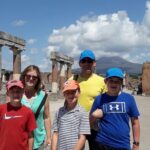
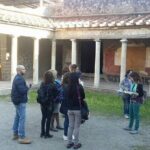
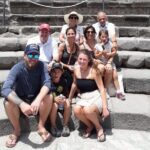
That’s where a private setup pays off. You get a real guide who can stop when something clicks, explain what you’re looking at in plain language, and slow down when your family wants to read inscriptions, trace street layouts, or linger over mosaics. One guest specifically praised the guide’s clarity for two grandchildren aged 10 and 12. Another review called out Fabrizio for adapting the timing to avoid the early crush, making the whole thing feel more private even in peak season.
The other reason I like this format: Pompeii rewards context. When someone explains how daily life worked—bathing, shopping, law, theatre, worship—you don’t just see stone rooms. You start picturing ordinary routines: vendors calling out, people negotiating in public halls, families moving between homes and markets.
Other family and kid-friendly tours in Pompeii

The only “watch this” part
You’re still touring a large archaeological park. The tour asks for moderate physical fitness, and you’ll want walking shoes and sun protection for May to September. Even with a guide, you can’t turn Pompeii into a low-walk experience.
Where You Start: Porta Marina and Getting Oriented Fast
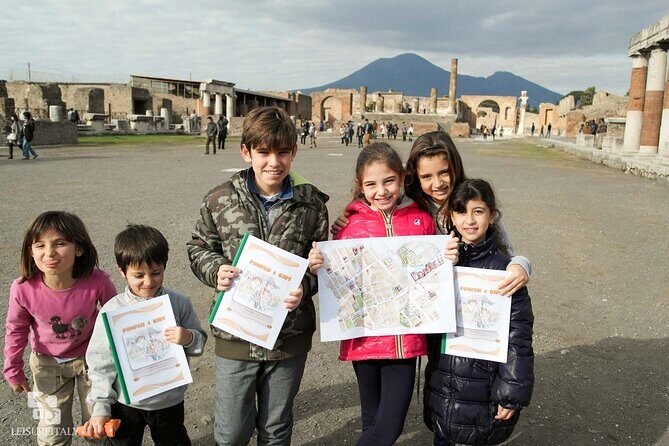
A lot of Pompeii visits start with a big-ticket ruin, then leave you to figure out how everything connects. This tour starts you at Porta Marina, a major gate and a strong way to understand the city’s scale.
From here, your guide helps you visualize how Pompeii functioned as a connected city—protected by walls, linked to ports and trade routes, and structured as a place where people flowed in and out. Think of it as your map, but explained with history you can see: gates, defensive walls, street direction, and the overall layout.
Why this matters for families
Kids often get restless when they feel lost. Starting at a major entrance gives you a narrative anchor. You can constantly refer back to the idea of how the city worked: people entered, businesses served them, baths refreshed them, and civic spaces ran the daily schedule.
What to watch for
The stop here is quick, and you’ll keep moving. If your family prefers slower pacing at each individual location, plan on asking your guide to pause for questions at the points that interest you most.
A few more Pompeii tours and day-trip experiences worth a look


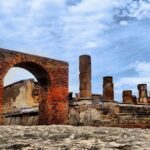

The Civic Core: Basilica, Forum, and How Romans Ran Their Days
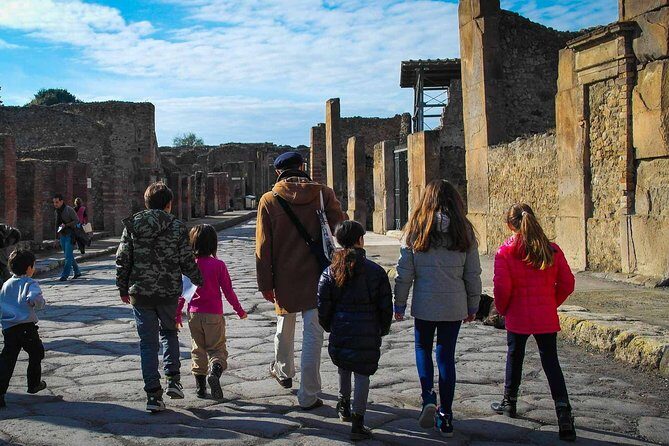
After the gate and the defensive story, you move through Pompeii’s civic and business center. The most valuable part of these stops isn’t just the architecture—it’s the human function.
Basilica: law and business in a public hall
Inside the Basilica, your guide explains how this hall operated as the city’s hub for law, commerce, and civic affairs. You’ll see a grand interior and learn how merchants negotiated and officials handled disputes. It’s a fast stop, but it sets up how to read Pompeii’s public buildings.
A key takeaway: Roman cities didn’t separate daily life from government. Civic power was right in the middle of where people worked and dealt with one another.
Forum: politics, religion, and markets in one square
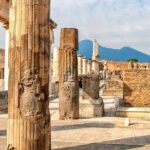
Then you reach the Forum, Pompeii’s heart of public life. This is where your guide ties everything together: temples and civic buildings around a central square, with spaces where people traded goods, sought justice, attended ceremonies, and shared news.
When you stand in the Forum area, you start seeing the city as a system—religion and governance sharing the same stage, commerce nearby, and public gathering built into the layout.
One practical note
These are the busiest-feeling areas of Pompeii because they’re central and visually compelling. A private guide helps you time your attention better, and if your group has kids, it’s easier to keep them from wandering by giving them clear “look for this” moments.
Apollo and Sacred Space: Temple of Apollo
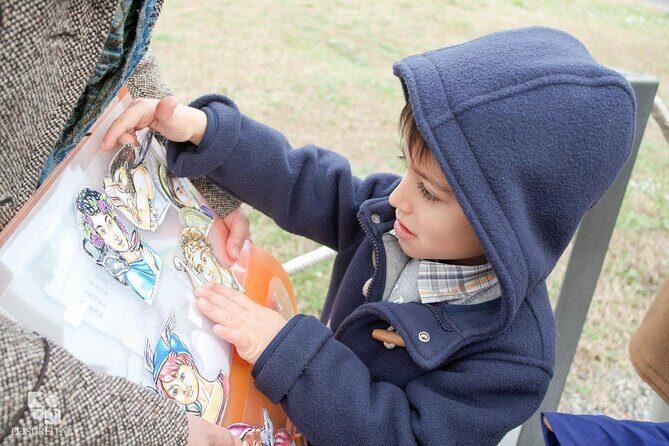
At the Temple of Apollo, the tour shifts into religious life. Your guide explains the sanctuary’s role in Pompeii’s spiritual world and connects it to public rituals and civic identity.
This stop is short, but it’s useful because it shows you that Pompeii wasn’t just about commerce and laws. Religion shaped public calendars and helped build shared community life.
What you’ll get from this stop
You’ll see an atmospheric complex: columns, altar areas, and decorative sculpture details. Even if you’re not a monument-spotter, a good guide can help you notice what makes temples different from civic buildings and why that would matter to people living there.
Markets and Baths: Macellum and Terme del Foro
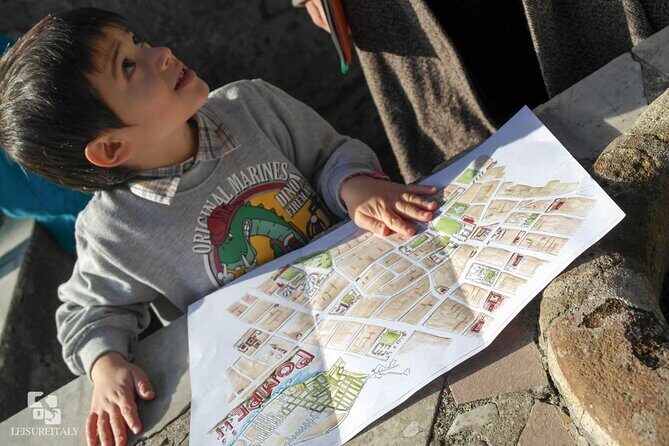
If you want a Pompeii tour that feels like real life—not just statues and walls—these two stops are your payoff.
Macellum: the indoor market
The Macellum was Pompeii’s main indoor market. Your guide walks you through how food and ingredients were bought and traded and how stalls operated. Expect to hear about fish, meat, produce, grains, and spices, plus the idea that market life had a rhythm—front-of-house trading and back-of-house storage and counters.
This is one of the best “imagination stops.” When someone explains what was sold and how it moved through the building, the ruins start feeling like a functioning workplace.
Terme del Foro: baths as social life
Right after that, you step into Terme del Foro, one of Pompeii’s best-preserved bath complexes. Your guide leads you through heated rooms and decorated spaces, including frescoes and stucco details, and you’ll see areas connected to changing and marble basins.
Here’s the value: Roman bathing wasn’t only hygiene. It was social time and conversation space—people meeting, discussing business, and keeping relationships strong.
A balanced expectation
You might not spend long here, but these stops are among the most “human” portions of the route. If your family likes daily-life stories—food, routines, how people passed time—put extra focus here and don’t rush your questions.
Pompeii’s Elite Side: Casa del Fauno and the Alexander Mosaic
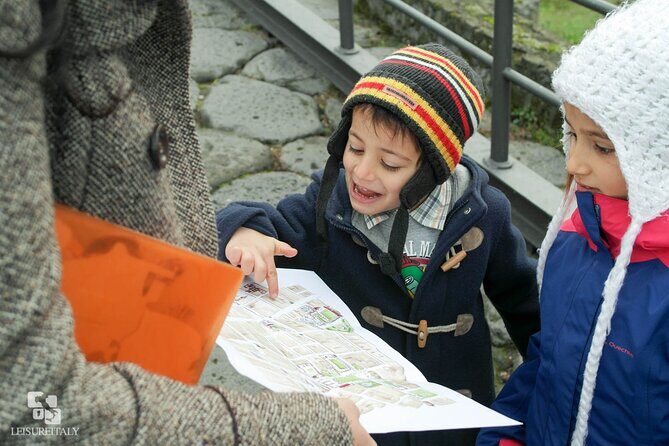
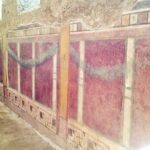
Then the tour turns to wealth and art: the Casa del Fauno. This is one of Pompeii’s grandest residences, and your guide shows you how elite families lived, hosted banquets, and used art and architecture to broadcast status.
You’ll move through courtyards and see intricate mosaics, including the famous Alexander Mosaic. Even for people who don’t “do mosaics,” a guide can help you understand why this matters: it’s not just decoration. It’s messaging about taste, connections, and power.
A family-friendly way to approach it
For kids, big houses can feel same-y unless you get context. Ask your guide to point out how rooms likely worked together—where people gathered, where servants may have worked, and what the layout suggests about daily movement.
This stop helps you contrast Pompeii’s public life (Forum, Basilica) with private life (homes and art).
Via dell’Abbondanza: The City’s Main Commercial Street
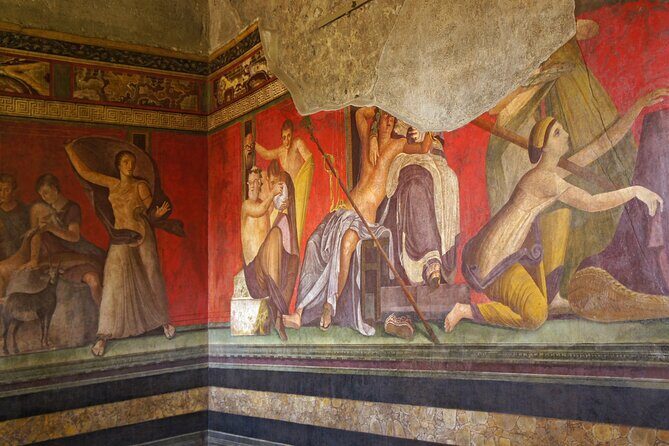
Next comes Via dell’Abbondanza, Pompeii’s busiest commercial street. This is where the city starts to feel like it’s buzzing—shops, workshops, bakeries, taverns, and homes along a major route.
Your guide helps you connect street life to infrastructure. You’ll hear about things like water fountains and raised stepping stones designed to keep the street moving in a world without cars and modern traffic systems.
Why I like this stop
It bridges everything you’ve seen so far. You get to connect the market (Macellum) to the everyday errands and food stops that lined the street.
The catch
This stretch can be crowded and sunny. If your group is heat-sensitive, bring sun gear and pace your photos. Your private guide can help you step aside at the right moments instead of losing time inside the crowd.
The View From Above: Insula dei Casti Amanti

At the Insula of the Chaste Lovers, you get a helpful change of perspective. Your guide brings you to an elevated viewpoint so you can see the layout of a dense residential block—courtyards, private spaces, working areas, and smaller components that are harder to understand from street level.
This is a smart stop for families because it turns “where are we?” into “now I get the shape of the whole place.”
What makes it useful
When you’re walking street by street, it’s easy to miss the overall density of Pompeii. This viewpoint helps you visualize how many households fit into one neighborhood and how daily life happened room by room.
Teatro Grande: Sit in the Theatre Bowl
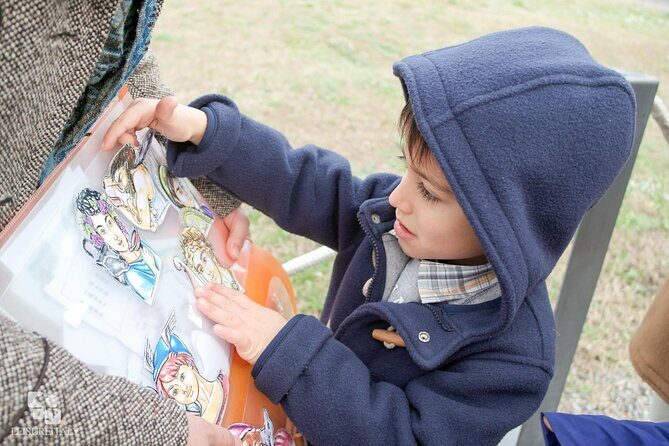
At Teatro Grande, the tour becomes cinematic. You’ll enter one of Pompeii’s most atmospheric spaces: the open-air theatre where comedies, tragedies, and public performances entertained large crowds.
Your guide helps you imagine sound projecting across the bowl shape. You can also sit on original stone tiers, which is a huge advantage versus just standing and looking.
From upper seats, you get broad views of the stage and surrounding ruins—useful for understanding the theatre’s setting in relation to the city around it.
What to expect
This stop is ideal for mixed-age groups. Even kids who struggle with reading inscriptions usually understand “people performed here.” Give your guide a minute to explain how the stage and seating worked, and the space starts telling its own story.
Antiquarium di Pompei: Connect Ruins to Real Objects and Human Stories
After all the outdoor walking, the Antiquarium di Pompei helps you link what you’ve seen in ruins to the objects that once filled those spaces.
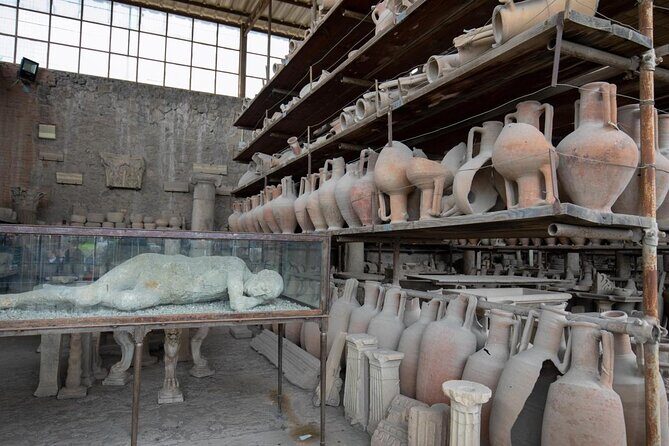
Your guide uses the museum area to connect statues, fresco fragments, daily items, and the emotional impact of victim casts. It’s where the story gains weight—because the eruption isn’t just a date anymore. It’s people’s lives, preserved in a different form.
Why this stop is worth your time
Outdoor ruins can sometimes feel like architecture trivia. The Antiquarium adds meaning. If your family likes tangible details—things you can point at, compare, and understand—this is where the visit clicks for a lot of people.
Vesuvius From Below: The Photo Stop Without the Summit
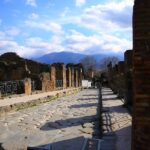
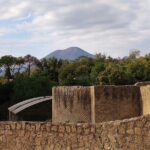
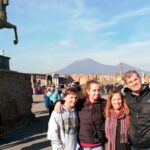
You also get views of Mount Vesuvius from the bottom—great for photos—without driving up to the top. This matters if you’re visiting with kids, because you get the dramatic context of the eruption without turning your day into an exhausting climb.
Practical takeaway
Plan for strong contrast in lighting. If you’re photographing, aim to have your camera ready as you reach the viewpoint area, then take your shots and move on quickly. Pompeii days can add up fast under the sun.
Price and Value: What You’re Paying For at $457.02 Per Person
At $457.02 per person for a 4 to 5 hour private experience, this isn’t a bargain price. But it can be good value depending on your group setup and priorities.
Here’s what that price is really buying:
- A private guide who can tailor explanations to your family and keep the pace comfortable.
- Admission coverage where noted (including the Archaeological Park ticket as part of the main time).
- Pickup flexibility from the Naples and Sorrento area, which can save you from extra planning and local transfers.
- Mobile ticket convenience and group discount options.
If you’re a family that wants a guided experience but also wants control—less waiting, fewer detours, and more direct answers—then the cost can feel reasonable. If you’re traveling solo or only two adults who love self-guided wandering, you might find cheaper options elsewhere. But if your goal is to understand Pompeii without stress, the private format is the value lever.
Who This Tour Fits Best
This is a great match if:
- You’re traveling with kids (the guide’s teaching style is built for explaining clearly).
- You want a relaxed pace without group-pressure timing.
- You care about daily-life context: law, markets, baths, homes, and theatre.
- You’d rather spend money on interpretation than on spending hours figuring out logistics.
It might be less ideal if:
- Your group wants minimal walking.
- You’re on a tight budget and planning to squeeze Pompeii into a DIY day.
Helpful Planning Tips Before You Go
A few things will make your day smoother:
- Wear comfortable walking shoes for uneven paths.
- Bring sun gear from May to September.
- If tickets require names, make sure you provide every participant’s full name for ticketing.
- Expect moderate physical fitness needs—Pompeii is a lot even when you’re moving with a guide.
- Plan your morning or afternoon to match your family’s energy level. A private guide can help with timing around crowds, but you still can’t escape Pompeii being busy.
Should You Book This Private Pompeii Family Tour?
I’d book it if you want Pompeii to feel understandable and manageable for your group. The private guide approach is the heart of the experience: you get clear explanations, flexibility for family questions, and a route that connects public life to everyday routines. If you value a guided flow over endless wandering, this tour makes a lot of sense.
I’d think twice if your priority is saving money above all else, or if your family needs a low-walk experience. For most people—especially families—private pacing plus ticket-included convenience is exactly what turns Pompeii from a crowded sightseeing list into a story you can follow.
FAQ
How long is the Pompeii family tour?
It runs about 4 to 5 hours.
Is the tour private?
Yes. It’s a private tour, so only your group participates.
What’s included with the tour price?
The experience includes pickup where offered, a private guide, transport, tickets, and a mobile ticket. Admission to the main archaeological park is included in the tour time.
Where can pickup happen?
You can choose a meeting point anywhere within the Naples and Sorrento area.
What language is the tour guide?
The tour is offered in English.
How does this tour handle tickets?
It uses a mobile ticket, and you’ll need to provide each participant’s full name for ticketing.
Does the tour include seeing Mount Vesuvius?
Yes. You’ll see the volcano from the bottom for good photo views, without going to the top.
Is the tour suitable for families with kids?
It’s designed as a family-friendly private tour, with explanations that can work well for younger travelers.
What should I wear or bring?
Wear walking shoes. If you travel from May to September, bring sun gear for the daytime heat.
What fitness level is needed?
It’s geared toward travelers with a moderate physical fitness level.