REVIEW · POMPEII
Pompeii Walking Tour: The Real History of the Ruins
Book on Viator →Operated by InStazione · Bookable on Viator
Pompeii hits different when explained on-site. This 2-hour Pompeii walking tour focuses on how the city worked day to day—entertainment, homes, baths, street life, and big religious/political spaces—right where you see the evidence from AD 79.
I love that the route moves beyond the obvious big monuments and includes places people rarely get to understand fast: the Teatro Grande for Roman entertainment and the Casa del Menandro for what wealthy daily life looked like.
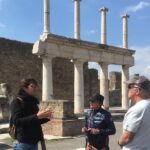
I also love the guide style. You can get clear, funny storytelling from guides like Grace, Frederica, or Vincenzo, which makes the ruins feel like a living place instead of a list of stones.
One thing to watch: timing can be a bit unpredictable in the real world. The day’s plan centers on a 10.30 am departure from the InStazione help desk, but you should build in buffer time if your group starts walking later than expected.
In This Review
- Key highlights worth knowing before you go
- Why Pompeii Feels Real, Not Just Old
- Price and Value: Is $42.05 Actually a Good Deal?
- Meeting at InStazione and Getting to Porta Anfiteatro on Time
- Teatro Grande: Roman Entertainment Under a Blanket of Ash
- Casa del Menandro: What a Wealthy Domus Looked Like
- Via Stabiana and Via dell’Abbondanza: The Street Level Pompeii
- Stabian Baths (Terme Stabiane): Pompeii’s Daily Reset Button
- The Lupanar: A Blunt Window Into Roman Commerce
- Forum of Pompeii and the Temple of Jupiter: Power in Plain Stone
- Basilica: Where Weather Sent Business Indoors
- Temple of Apollo and the Granaries: Gods, Trade, and Measurement
- Who This Pompeii Tour Is Best For
- Should You Book This Pompeii Walking Tour?
- FAQ
- How much does the Pompeii walking tour cost?
- How long is the tour?
- What time does the tour depart and where do we meet?
- Is the tour offered in English?
- Is the entrance ticket included?
- What sites does the tour include?
- Is lunch included?
- How big is the group?
- What is the cancellation policy?
Key highlights worth knowing before you go
- Teatro Grande and Odeon in the same walk so you see Roman theater from more than one angle
- Via dell’Abbondanza and Via Stabiana for the street-and-shop feel, not just stand-alone ruins
- Casa del Menandro (about 1,800 m²) gives you the wealthy-domus perspective with major decorative details
- Stabian Baths (Terme Stabiane), described as the oldest bath complex of its kind in Pompeii
- Lupanar walls with famous erotic scenes—a blunt look at Roman commercial sex
- Forum power blocks: Temple of Jupiter, Basilica, Apollo, plus the granaries area and measurement tables
Why Pompeii Feels Real, Not Just Old
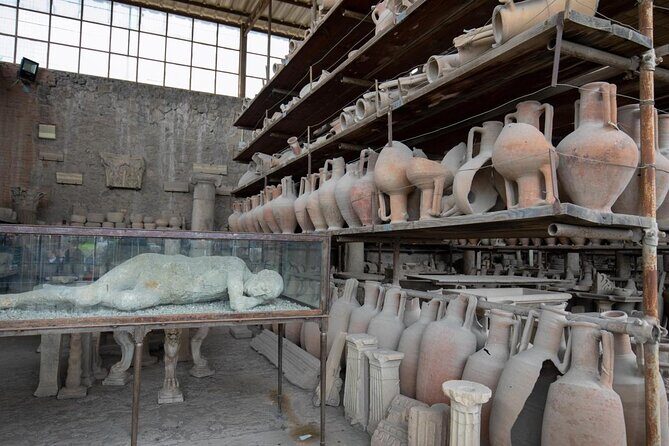
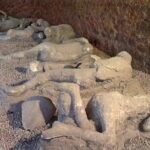
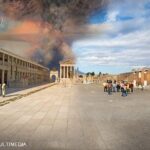
Pompeii was buried under volcanic ash in AD 79. That is why so many surfaces survived. Floors are still there. Doorways still line up. Paint and street texture can survive in places that would normally vanish.
The best part of this tour is that it’s built around how Romans lived and how the city kept running. You’re not only seeing what survived—you’re learning what those spaces were for. That turns the ruins into a working map of the city.
And because the route is tight—about two hours—you also get the benefit of momentum. You won’t feel like you’re wandering alone while your brain tries to assemble the story from scratch.
Other walking tours of the Pompeii ruins


Price and Value: Is $42.05 Actually a Good Deal?
At $42.05 per person for roughly 2 hours, this is priced for people who want a guide without spending half a day. The real value play here is that the entrance ticket is included, so you’re paying for the experience rather than adding a separate ticket cost on top.
You also get a small-group format: up to 35 travelers. That matters at Pompeii, where crowd flow can turn sightseeing into a slow shuffle. A guided walk like this is designed to keep your viewing time efficient, with context as you go.
You are not getting time for a long lunch stop (it’s not included). So think of this as a focused “see and understand” tour that pairs well with a longer self-paced afternoon afterward, if you stay in Pompeii.
Meeting at InStazione and Getting to Porta Anfiteatro on Time
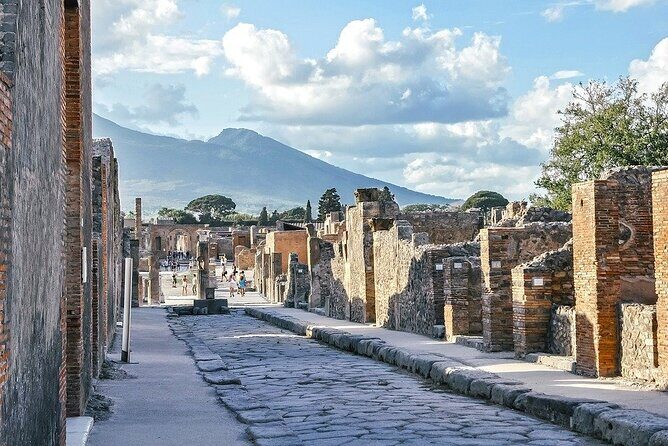
The tour departs every day at 10.30 am from the InStazione help desk. After you register and share your details, the group reaches the entrance at Porta Anfiteatro together with the guide.
Here’s my practical advice: arrive early enough to handle the last-minute human stuff—finding the desk, confirming your name, and walking as a group to the entrance. One provided caution is that start times can shift in practice. So don’t run on a knife-edge schedule.
In the end, the walk finishes at Scavi di Pompei, Viale delle Ginestre. That’s handy if you plan to keep exploring, grab a snack, or connect to onward transport.
Teatro Grande: Roman Entertainment Under a Blanket of Ash
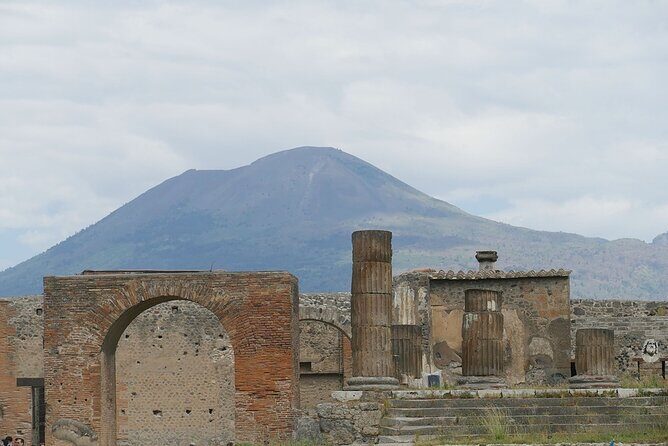
Your route begins at the Archaeological Park of Pompeii, with a guided visit that includes both the Teatro Grande and the Odeon.
The Teatro Grande was a Roman theater, buried by the eruption of Vesuvius in 79 and found through excavations. What I like about starting here is simple: it’s not a temple or a house. It’s where people gathered to watch. You get a quick sense of the city’s social rhythm—performances like comedies, mimes, pantomimes, and the atellane.
The odeon adds a second layer. Even if you know theaters, seeing these structures together helps you grasp how theater fit into Roman culture beyond a single building.
One real advantage of having a guide at this stop is interpretation. Without context, you might see seats and a stage and move on. With a good guide, you start noticing what mattered to performers and audiences—space, sightlines, and why this kind of venue was worth building.
Casa del Menandro: What a Wealthy Domus Looked Like
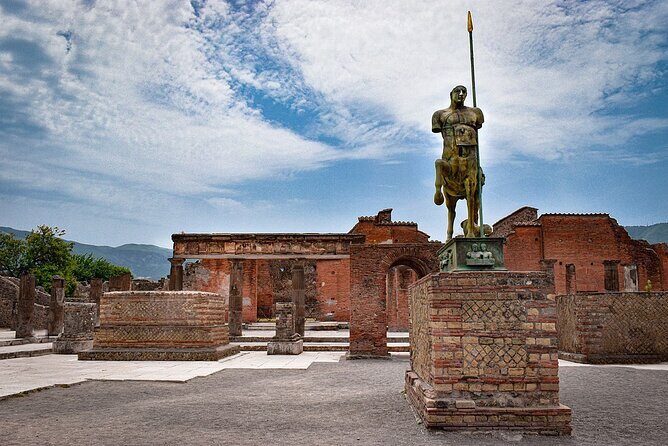
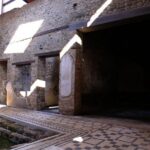
Next comes Casa del Menandro, a large urban domus of about 1,800 m². It was excavated between 1926 and 1932, and it represents a wealthy family house in Pompeii.
The name doesn’t come from the owner. It comes from a Greek poet image—Menander—found at the site. That detail matters because it ties a Roman elite home back to the broader Mediterranean cultural world, not just local life.
A guided stop here is worth it because domus interpretation is easy to get wrong on your own. You might focus only on “big house” without understanding what features signal wealth, taste, and how people moved through the spaces.
Even within a short timeframe, a guide can point you to the elements that make this house more than a shell: layout clues, decorative meaning, and why this particular domus got attention during excavation.
Other walking tours we've reviewed in Pompeii
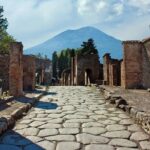

Via Stabiana and Via dell’Abbondanza: The Street Level Pompeii
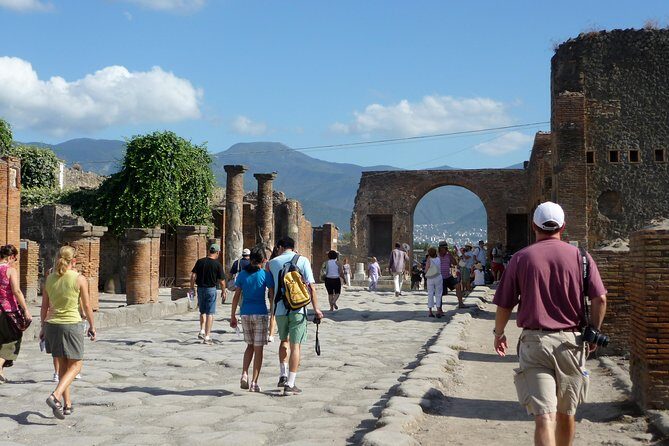
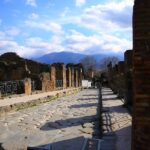
A key part of this tour is the street experience. After starting with the theaters, you move toward Via Stabiana, described as a perfectly preserved cobblestone street with sidewalks and pedestrian walkways. It’s lined with shops and houses, so you feel how people would actually travel through the city.
Then the tour continues along the Via dell’Abbondanza, a name tied to the city’s busy commercial energy. On this stretch, you get restored shop paintings and the sense of a town that was active right up to the eruption.
This is one of those “why a guide helps” moments. Streets can look like just streets unless someone explains the logic: where foot traffic mattered, where commerce likely concentrated, and how everyday life fit next to public life.
If you like street photography, this section is a strong payoff. Keep it simple: slow down at junctions and look for how doorways and shop fronts line up.
Stabian Baths (Terme Stabiane): Pompeii’s Daily Reset Button
The Stabian Baths are a Roman bath complex, buried in 79 and uncovered through excavation. The tour notes that it’s the oldest building of its kind in Pompeii, which instantly makes it a priority stop.
Baths were about more than hygiene. They were social space: a place to meet people, talk, relax, and reset your day. On-site, your guide can help you make sense of the layout and the way bath areas were organized.
A standout detail to look for is that the baths include male and female sectors that are described as perfectly preserved. Even if you don’t remember Roman bathing terminology, you’ll grasp the idea when you see how the spaces separate.
This stop also breaks up the “big monument” rhythm. You shift from theater and homes into something closer to daily routine.
The Lupanar: A Blunt Window Into Roman Commerce
Then you reach the Lupanar—a place dedicated to mercenary sexual pleasure, essentially a brothel. The tour describes these sites as real houses of tolerance, and it notes that the walls still show famous erotic scenes.
I’ll be direct: this is not a “soft” history stop. It’s part of Pompeii’s reality, and it can feel jarring if you’re used to museums cleaning up the story.
But that discomfort is also why it’s valuable. Roman life wasn’t only politics, baths, and theater. It included paid sex and commercial transactions, and Pompeii preserved how bluntly that could be built into the urban fabric.
If you’d rather keep a certain distance from explicit content, you can still appreciate this stop historically. Just pace yourself and focus on the architectural clues—layout, entrances, and how the site functioned.
Forum of Pompeii and the Temple of Jupiter: Power in Plain Stone
The walk then moves to the Forum of Pompeii, built around the 4th century BC in the Samnite era near a key road junction. After Roman conquest, the Forum was rebuilt and enlarged, especially in the 2nd century BC, turning it into a bigger stage for Roman civic and religious power.
The tour route includes the Temple of Jupiter, which later became the Capitolium. This temple connects to the Eternal City’s three main divinities: Jupiter, Juno, and Minerva. In the temple basement, the tour notes the public treasure (erarium) was kept, along with sacred furnishings and votive gifts.
That’s a big idea packed into one location: the Forum wasn’t only for speeches and commerce. It housed wealth and symbolized authority.
Basilica: Where Weather Sent Business Indoors
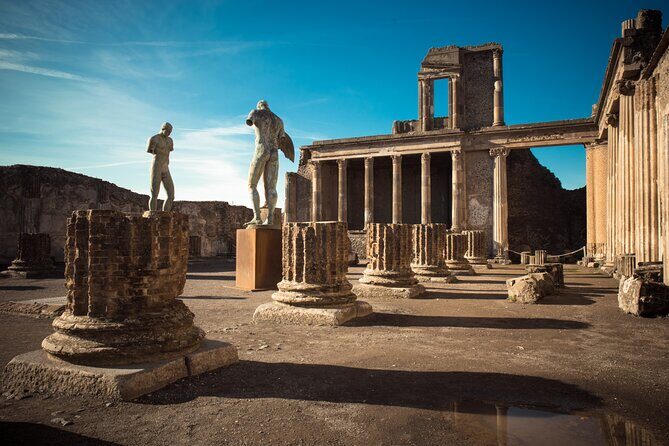
Next is the Basilica, a public building dating to the 2nd century BC. The tour describes it as an indoor forum for when weather pushed activities inside.
On one side was the tribunal, where the judge stood elevated above the parties. A detail worth noticing: the judge’s section was reachable via a mobile wooden staircase designed to prevent the condemned from attacking judges.
That kind of architectural safety tells you something about the reality of Roman justice. It wasn’t just a courtroom ideal. People were feared, tensions existed, and design reflected that.
If you tend to enjoy the “how did they actually work?” side of history, this stop will click. The Basilica turns Roman government from abstract into physical.
Temple of Apollo and the Granaries: Gods, Trade, and Measurement
Your final set of stops centers on religion and the everyday machinery of trade.
The Temple of Apollo follows the note that Apollo’s cult spread through Italic populations via the Greek world. In the period before 79, Apollo’s followers were said to have declined as Jupiter’s prominence grew.
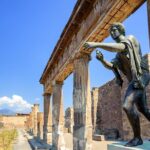
What to look for here is a bronze statue of Apollo represented as an archer, and the presence of Diana nearby. Even short viewpoints can feel satisfying when you know what the elements represent.
Then you reach the granaries area. The tour frames this as the former market for cereals and legumes. The belief mentioned is that no traces of plaster were found there, which suggests the structure may not have been finished at eruption time.
The most practical detail is the ponderary table. It’s tied to tools used to keep trade fair and to convert units of measurement from across the empire into units valid in Pompeii. That’s a surprisingly modern topic: standardization and trust.
This stop closes the loop of the tour. You started in public entertainment and elite homes. You ended in religious meaning and the nuts-and-bolts of commerce.
Who This Pompeii Tour Is Best For
This tour works well if you want a guide to connect the dots quickly. It’s also a good fit if you like practical storytelling—guides can explain what a space meant and how it fits the broader Roman city.
You’ll likely enjoy it most if:
- you want to see a lot without doing the full-day self-guided stamina test
- you care about how Romans lived, not only famous monuments
- you prefer an English guide who keeps things clear and often humorous (names like Grace, Frederica, Vincenzo, and Igor show up as examples of strong guide performance)
If you prefer total freedom to wander at your own pace for hours, this might feel short. But as a “smart first pass” through Pompeii, it’s hard to beat.
Should You Book This Pompeii Walking Tour?
If your goal is to walk into Pompeii and leave feeling like you understand what you saw, I think booking is a smart move. The combination of theaters, domus, baths, brothel, Forum, basilica, Apollo, and granary trade details gives you a broad slice of city life in about two hours, and the ticket is included.
Just come with two expectations: plan on a little timing buffer around the stated 10.30 departure, and know that the route includes the Lupanar, which is historically important but not comfortable for everyone.
If that works for you, this is the kind of Pompeii experience that makes the ruins feel less like random ruins and more like a city you could almost walk through again.
FAQ
How much does the Pompeii walking tour cost?
It costs $42.05 per person.
How long is the tour?
The tour lasts about 2 hours.
What time does the tour depart and where do we meet?
It departs every day at 10.30 am from the InStazione help desk, and the group then reaches the entrance of Porta Anfiteatro together with the guide.
Is the tour offered in English?
Yes, it is offered in English.
Is the entrance ticket included?
Yes. Admission tickets are included for the stops listed on the tour.
What sites does the tour include?
You’ll visit places such as Teatro Grande, Casa del Menandro, the Stabian Baths (Terme Stabiane), the Lupanar, the Forum (including the Temple of Jupiter), the Basilica, the Temple of Apollo, and the granaries area.
Is lunch included?
No lunch is included.
How big is the group?
The tour has a maximum of 35 travelers.
What is the cancellation policy?
You can cancel for a full refund up to 24 hours in advance. The experience requires good weather; if it’s canceled due to poor weather, you’ll be offered a different date or a full refund. The tour can also be canceled if a minimum number of travelers isn’t met, with an alternate date or refund offered.