REVIEW · POMPEII
Pompeii tour with LOCAL GUIDE and SKIP THE LINE entrance
Book on Viator →Operated by Gennaro Balzano · Bookable on Viator
Pompeii has a way of feeling uncomfortably real. This tour focuses on the parts you can’t easily piece together on your own, with local guide storytelling and skip-the-line priority entry to keep you from bleeding time at the gates. It’s a good “get your bearings fast” introduction, built around a tight walk through the city’s most readable neighborhoods.
I especially like the structure: you get a long, guided pass through the main Archaeological Park of Pompeii, then shorter spotlight stops at specific houses and public buildings. That pacing helps you see both the big picture (how Pompeii was preserved under volcanic ash) and the details (frescoes, rooms, and everyday routines). Bonus: the group size is capped at 14, which usually means the guide can actually keep an eye on the questions.
The main drawback is also the obvious one: 2 hours 30 minutes goes fast. If you want maximum learning and time for slow wandering, you’ll feel the “time budget” pressure before you’re fully satisfied—so consider whether you’d rather take a longer guided option.
In This Review
- Key points at a glance
- Skip-the-line priority entry, plus a real local guide
- Two hours inside the main ruins: what you’ll actually see
- Casa del Menandro: Roman luxury, plus the silverware story
- Forum of Pompeii: the daily city engine
- Lupanar stops: room layouts and the reality of paid sex
- Stabian Baths (Terme Stabiane): the oldest thermal complex in Pompeii
- Price and value for $66.38 in about 2.5 hours
- Who should book this Pompeii tour, and who should skip it
- Practical expectations: timing, walking, and comfort
- Should you book this Pompeii tour?
- FAQ
- How long is the Pompeii tour?
- What does skip the line include?
- What’s included in the price?
- Where does the tour start and end?
- Is the tour offered in English?
- How big is the group?
- Is it refundable if I cancel?
- Does it require good weather?
Key points at a glance
- Priority entry cuts down the waiting so you start seeing Pompeii sooner.
- A full 2 hours spent inside the main archaeological park gives real context, not just check-the-box stops.
- Casa del Menandro includes standout details like Iliad/Odyssey fresco scenes and a stash of 118 silverware pieces.
- Forum of Pompeii is explained as the city’s daily power center: administration, justice, business, and commerce.
- Lupanar lets you connect the Roman idea of paid sex to physical room layouts you can still recognize.
- Terme Stabiane is the oldest thermal complex of its kind in Pompeii, with a clear eruption-and-rediscovery story.
Skip-the-line priority entry, plus a real local guide
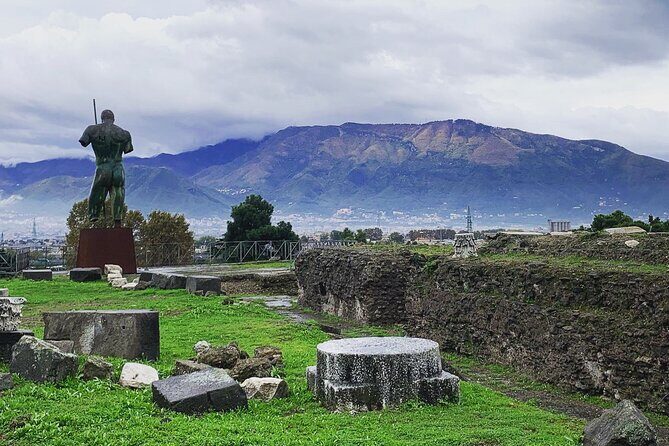
Pompeii is famous, but it can also be tiring. The reason I like tours with skip-the-line priority service is simple: you lose less time standing around while the clock keeps moving. That matters even more because most people are pairing Pompeii with other stops in the area, and a short tour can turn into a long day if you waste time early on.
Then you add the guide. A local guide changes Pompeii from a pile of ruins into a city you can reason through. You start picking up patterns—where people lived, where they worked, where laws got made, where meals and entertainment happened. And if your guide is someone like Antonio, Gennaro, Sasa, or Anna (names that have shown up with strong feedback), you’ll likely get explanations that land in normal human terms, not museum-speak.
One more practical note: this is offered in English, and the group cap is 14 travelers. Smaller groups tend to feel less chaotic around tight corners and multi-level spaces.
Other skip-the-line Pompeii tours in Pompeii



Two hours inside the main ruins: what you’ll actually see
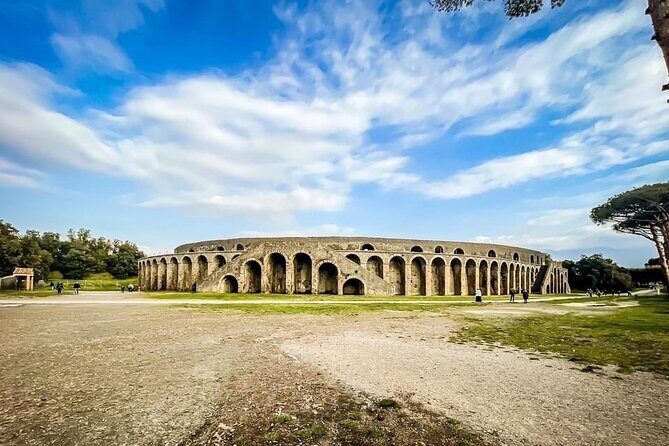
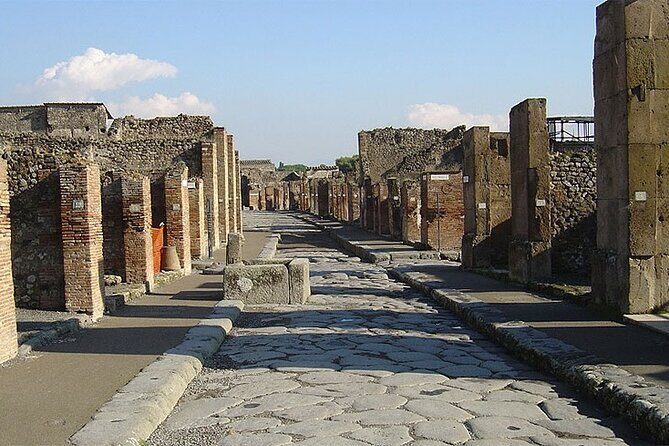
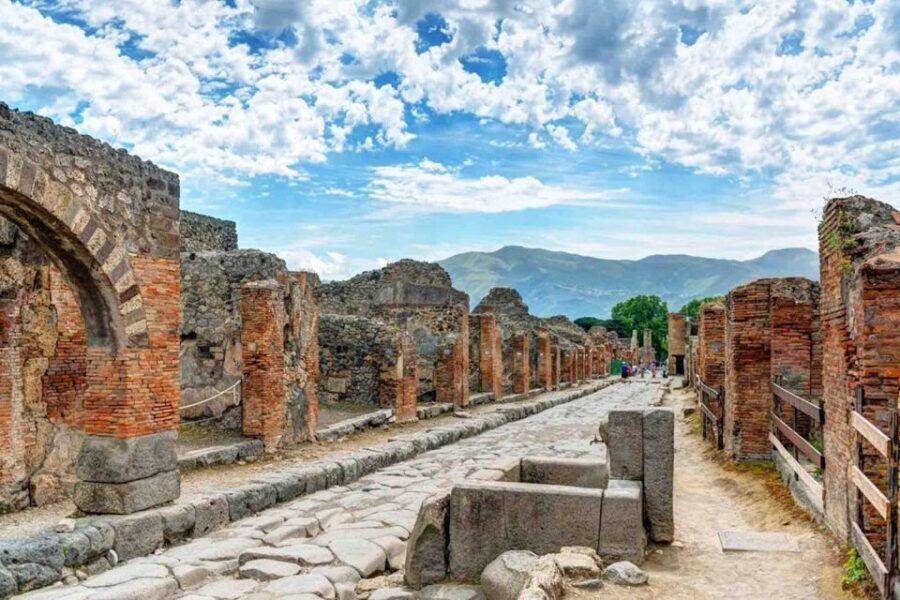
The tour starts at Via Villa dei Misteri, 3, 80045 Pompei NA, Italy and begins near the park entrance area, close to the station and car parks. From there, you spend about 2 hours walking with your guide through the Archaeological Park of Pompeii.
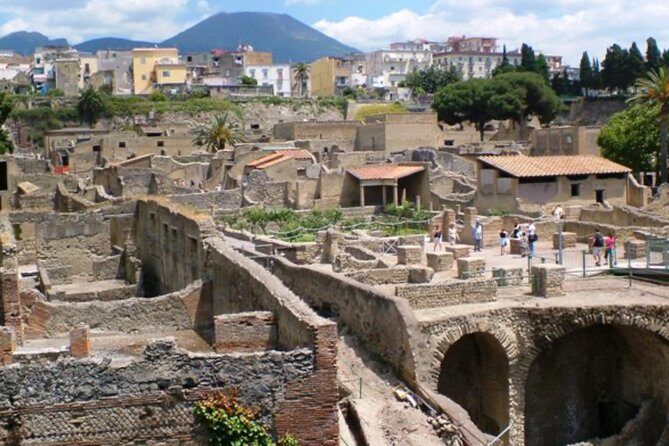
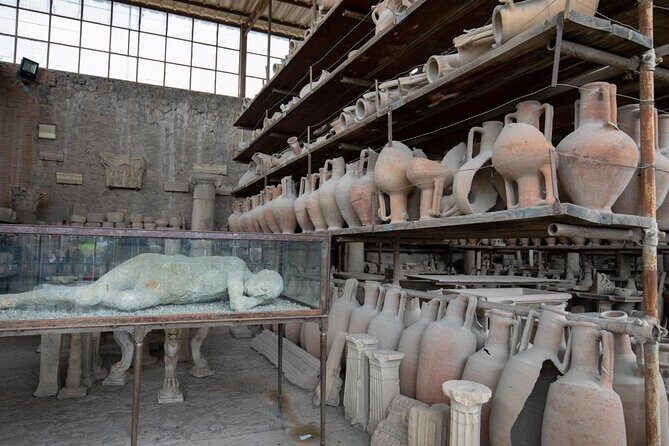
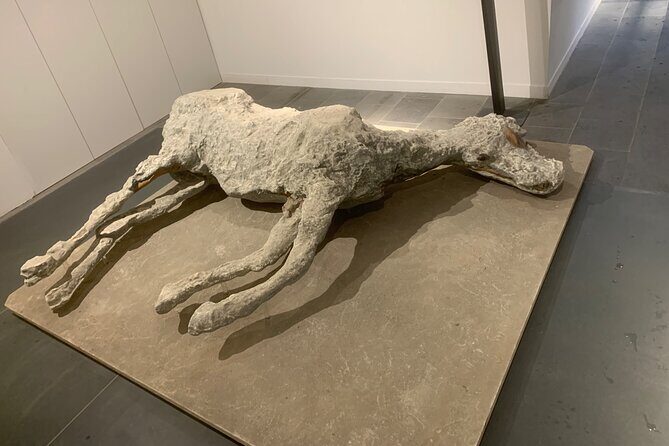
What makes this first block so important is the preservation story. Pompeii is preserved because volcanic ash sealed the city and its people. That one idea—ash as a kind of freeze-frame—helps you understand why historians and archaeologists can reconstruct daily life in the Roman Empire. You’re also given a sense of how much has been uncovered: excavations began in the 18th century, and after roughly 250 years, about 75% of the site has been brought to light.
As you walk the streets, you get that weird mental effect: it looks like the eruption is nearby, not a disaster from 2,000 years ago. Even when you know it’s impossible, the built-in “time gap” disappears. That’s what a good guided intro does: it gives you a framework so your brain can process what you’re seeing.
What can feel tight: Pompeii is massive. Even with good routing, a 2-hour guided pass means you can’t linger everywhere. You’ll get strong context, but you’ll also have to choose what you revisit afterward.
The good news: at the end of the guided tour, you have the option to remain inside the excavations on your own for extra time.
Casa del Menandro: Roman luxury, plus the silverware story
After the main park overview, the tour shifts to Casa del Menandro for a shorter spotlight stop (about 15 minutes). This house is described as a typical example of a high-ranking family’s home—and you can feel that in the way the layout is explained.
One of the standout details here is the atrium, which has frescoes with scenes from the Iliad and the Odyssey. These aren’t random decorations; they’re the kind of myth-based imagery that signals education and status.
Then there’s the peristyle detail: the courtyard has a type described as “rhodium,” and the northern side is higher. That kind of architectural nuance is exactly the sort of thing a guide helps you notice. Without a guide, you’d likely walk past it without realizing why it matters.
The house’s name comes from a portrait of Menander, an Athenian playwright, placed in the porch. That’s a fun connection because it turns a room label into a clue about who lived there and how they wanted to be seen.
The most dramatic detail is underground: beneath the house is an underground room—possibly a cellar—where a chest containing 118 pieces of silverware was found. The set is now exhibited in the National Archaeological Museum of Naples. The story matters because it’s not just luxury—it’s the idea that valuables were hidden before restoration work even began.
One small practical reality: 15 minutes is a “highlight reel.” You’ll understand the structure and the famous stories, but you probably won’t have time to read every surface thoroughly. If you love houses, you might want to plan your own return after the tour.
Forum of Pompeii: the daily city engine
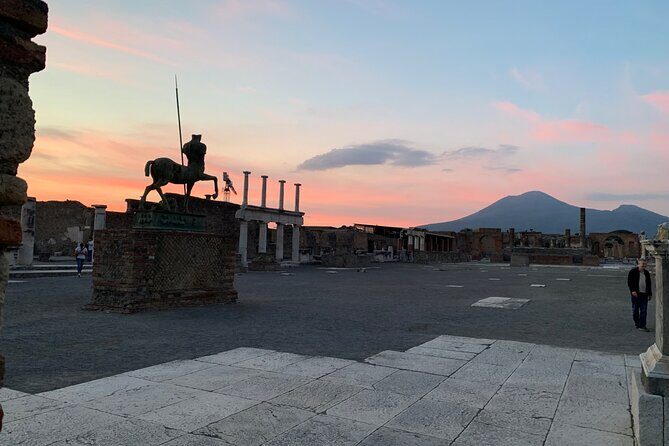
Next up is the Foro de Pompeya (about 20 minutes), described as the civil forum—the center of daily life. This is where you’ll feel Pompeii’s public rhythm. The forum fronts major buildings for administration, justice, business management, and commercial activity.
The explanation starts with what the forum originally was: a more open area with a relatively regular shape, made of rammed earth. On one side you have the Sanctuary of Apollo; on the other side there’s a row of shops. Then you learn the forum gets modified between the 3rd and 2nd centuries B.C., when the area becomes more regular, with arcades and paved surfaces made of tuff slabs.
A detail I like here is the axis alignment: the axis of the square was set to connect with the facade of the Temple of Jupiter, placed in line with Vesuvius. Even if you don’t stand in the exact line during your stop, the idea helps you see the forum as a designed space, not just a square where things happened.
Later, during the imperial age, the forum is paved again with travertine slabs. Some slabs are no longer in their original location, and some have recesses where bronze letters once sat for a major inscription.
This kind of stop is why I think this tour works well for first-timers. You’re not only seeing pretty rooms—you’re understanding how a Roman city organized power and everyday transactions.
Lupanar stops: room layouts and the reality of paid sex
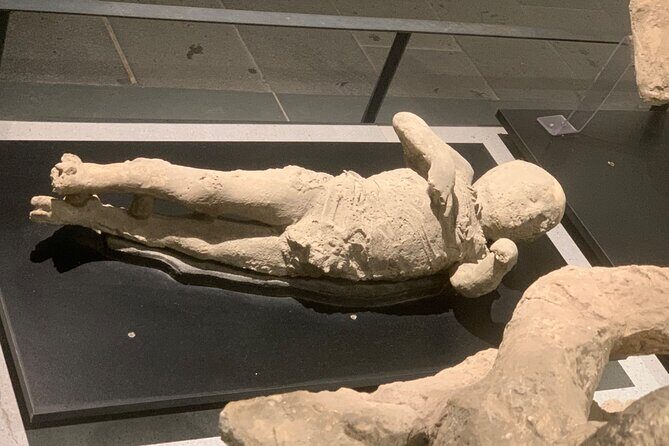
The tour includes a stop at the Lupanar, the ancient brothel. This is one of those topics that sounds scandalous, but the value here is very concrete: the building’s design lets you connect story to space.
You’re told that prostitutes were often Greek and Oriental slaves, and that services cost between two and eight asses—while a cup of wine cost one. That price comparison matters because it turns the rumor-level idea into something measurable.
The building is described as having two floors. On the upper floor are the owners’ and slaves’ homes. On the lower floor, there are five rooms arranged on either side of a corridor that connects the two entrances at ground level. Each room has a built-in bed, and rooms were closed by a curtain. At the end of the corridor—under the stairwell—you can see a latrine.
Then there are the wall details: on the walls of the central corridor, small pictures with erotic depictions were placed to advertise what happened inside. The name “Lupanar” comes from the Latin lupa for prostitute.
The tour also includes an additional Lupanar stop (another short moment) that reinforces the broader Roman context: these brothels were places assigned to mercenary sexual pleasure—places of tolerance where a certain economy of sex operated. The key benefit is that the extra stop gives you another angle on what you saw first. You’re not just in one room and done; you’re trying to connect the full building logic.
If you’re sensitive to sexual content, treat this as a “see what the site shows” moment, not a themed show. Pompeii is blunt like that. It’s also one of the places where a guided explanation helps you avoid turning the buildings into stereotypes.
Other guided tours in Pompeii




Stabian Baths (Terme Stabiane): the oldest thermal complex in Pompeii

The final major stop in this sequence is the Stabian Baths, or Terme Stabiane (about 10 minutes). Even in a short visit, it’s a good capstone because it shows Pompeii as a social city, not only a home-and-street place.
You’re told these are a Roman-era thermal complex that was buried by the eruption of Vesuvius in 79 and then rediscovered during the excavations. Of its kind, it’s also described as the oldest building in the city.
Why I like ending here: baths are where people relaxed, socialized, and cleaned up. When your day includes a forum and a brothel, it helps to end with something more routine and human. Even a brief look gives you that feeling of everyday life—public, practical, and repetitive in a way that ancient cities depended on.
Price and value for $66.38 in about 2.5 hours
At $66.38 per person, this tour isn’t trying to be the cheapest way into Pompeii. It’s selling convenience and context: entrance tickets, priority service (skip the line), and an authorized local guide bundled together.
That bundling is where the value really lives. Getting the skip-the-line element plus guided interpretation means you’re paying to buy back time and understanding. If you’ve ever tried to do Pompeii solo with an overloaded itinerary, you know how easy it is to get lost in logistics and miss the point.
You also get a mobile ticket, which is practical when you’re coordinating with other stops. And the tour is relatively short by Pompeii standards. The tradeoff is exactly what that 3 out of 5 feedback nailed: with limited time, you may feel you didn’t see enough.
So here’s how I’d judge value: if you’re using Pompeii as a once-or-twice-in-a-lifetime stop and you want a structured introduction, this kind of guided bundle is often worth it. If you’re the type who loves to read every wall and soak up details at a slow pace, you’ll probably want a longer tour or a follow-up window to wander.
One more timing note: the tour averages booking about 18 days in advance. If you’re traveling in peak season, I’d treat that as a hint to lock your date earlier than later.
Who should book this Pompeii tour, and who should skip it
This works best if you want Pompeii without the stress of planning in real time. It’s especially good for:
- First-timers who want context across multiple parts of the city
- People who prefer a structured walk with a guide who can answer questions
- Families or mixed-age groups who don’t want to spend all day pacing ruins
It’s less ideal if:
- You want deep reading and lots of time inside each building
- You hate being on a schedule during your sightseeing
- You plan to spend hours doing photos and slow exploration
One small practical question: do you like headphones during guided tours? Some guides use audio in different ways, and if this matters to you, bring your own headphones and be ready for whatever system is in use. It’s an easy way to stay comfortable if the group moves quickly.
Practical expectations: timing, walking, and comfort
This is an outdoors-heavy site with uneven terrain and lots of walking between stops. You’ll cover the main park for about 2 hours, plus shorter visits to Casa del Menandro, the Lupanar, the forum, and the Stabian Baths. That adds up to a packed day segment.
Wear shoes you trust. Pompeii doesn’t care if your soles are new. Bring water and plan for sun and heat, because your time outdoors is real.
If you finish the guided portion and want more, you can remain in the excavations afterward. That’s a big part of why a shorter tour can still feel satisfying: the guided part gives you the “why,” then you can do the “wow” at your own pace.
Should you book this Pompeii tour?
If you want Pompeii that feels guided, focused, and efficient, I’d book it. The combination of skip-the-line entry, an authorized local guide, and a balanced set of stops—main ruins, a high-status house, the forum, the lupanar, and the thermal baths—gives you a strong first pass.
I’d skip or look for a longer tour if your top priority is spending lots of time inside fewer places. Pompeii rewards slow attention, and a 2.5-hour format can feel tight once you’re emotionally attached to a specific building.
A final nudge: the overall rating is 4.9 with 55 ratings and about 96% recommending it. That suggests most people feel the guide and pacing land well. Just make sure you’re booking with your expectations aligned: this is an excellent introduction, not a full day’s worth of study.
FAQ
How long is the Pompeii tour?
The tour runs about 2 hours 30 minutes (approx.).
What does skip the line include?
It includes priority service for entry to the Archaeological Park of Pompeii.
What’s included in the price?
You get entrance tickets, an authorized local guide, and the tour includes the time machine feature. Tips are not included.
Where does the tour start and end?
It starts at Via Villa dei Misteri, 3, 80045 Pompei NA, Italy and ends back at the same meeting point.
Is the tour offered in English?
Yes, it’s offered in English.
How big is the group?
The tour has a maximum of 14 travelers.
Is it refundable if I cancel?
No. This experience is non-refundable and cannot be changed for any reason.
Does it require good weather?
Yes. The experience requires good weather. If it’s canceled due to poor weather, you’ll be offered a different date or a full refund.
If you want, tell me your travel dates and whether you’re visiting Pompeii only once or you can return to wander afterward. I can help you decide if this 2.5-hour version fits your pace.