REVIEW · NAPLES
From Naples: Ruins of Pompeii
Book on GetYourGuide →Operated by NapoliCityVision · Bookable on GetYourGuide
Pompeii surprises you quickly. I love the easy round-trip pickup from Naples and the way the commentary connects the stones to 1st-century daily life. You’ll also hit the ancient theater and key street areas without feeling like you’re just wandering.
The main thing to consider is that this is a 2-hour walking sprint in Pompeii, so it’s not ideal if you want to linger at every corner for long.
In This Review
- Quick hits
- From Naples to Pompeii: stress-free transport beats self-driving
- Pompeii in 2 hours: what you truly cover (and what you won’t)
- Ancient theater and the street-life route you can actually follow
- The house of Pompeii’s richest man: status you can walk through
- Forum, necropolis, and bath houses: the city’s public rhythm
- Cameos and corals workshop: a craft stop if there’s time
- Guides, group size, and keeping you moving in real conditions
- Price and value: is $59 fair for this kind of day?
- What to bring, and the rules that affect your comfort
- Who should book this Pompeii tour (and who should skip it)
- Should you book? My quick decision guide
- FAQ
- How long is the Pompeii tour from Naples?
- Does the price include Pompeii entry tickets?
- What languages are available for the tour?
- Is hotel pickup in Naples included?
- Will I have a live guide or an audio guide?
- Is luggage allowed on the tour?
- What should I bring to Pompeii?
- Is the tour suitable for wheelchair users?
Quick hits
- Round-trip transport from Naples with multiple hotel/meeting points, so you don’t have to figure out logistics
- A guided 2-hour Pompeii walk focused on the biggest sights and best photo stops
- Ancient theater + street life tied to real Roman routines, not random facts
- The house of the richest man plus the shopping lanes with preserved storefront features
- Necropolis, forum, and bath houses to give you a full-city feel in a short visit
- Optional cameo/coral workshop stop if time allows, for a hands-on look at craft tradition
From Naples to Pompeii: stress-free transport beats self-driving
This is one of those day trips that works because it removes the hardest part: getting there. You start in Naples with a scheduled pickup from several major meeting points (for example, Lungomare Caracciolo around 8:00, plus multiple stops through central Naples up to about 8:45). Then you ride out on a bus/coach for roughly 20 minutes, and your time is protected.
That matters, because Pompeii is a big site. Even with a guide, you’ll spend energy walking, climbing, and squeezing through crowds at peak hours. A pre-planned route plus transport means you can show up, follow the pace, and actually see the highlights without turning the day into a navigation project.
Also, the ride back is part of the plan. On days when the Naples traffic is intense, having a driver who knows the flow keeps things calm. You’re not stuck trying to “figure it out” near the end of a long day.
If you're still narrowing it down, here are other tours in Naples we've reviewed.

Pompeii in 2 hours: what you truly cover (and what you won’t)
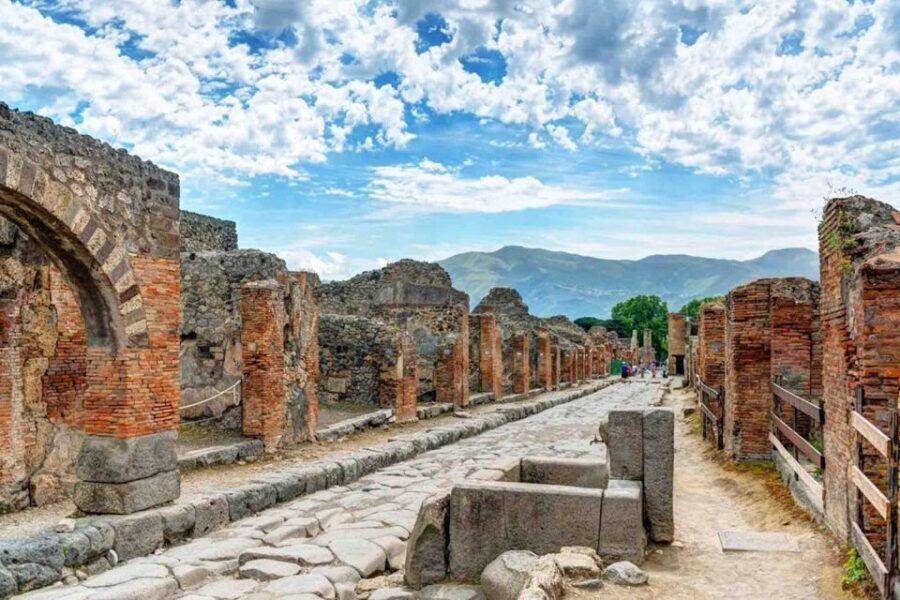
The on-site portion is about 2 hours of guided time in Pompeii. That’s short on paper, but smart in practice because the guide focuses on the places that tell the most about Roman life and the city’s layout after the eruption of Vesuvius in 79 A.D.
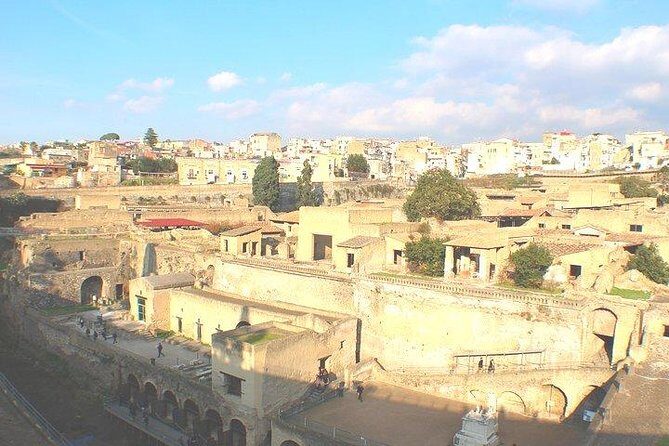
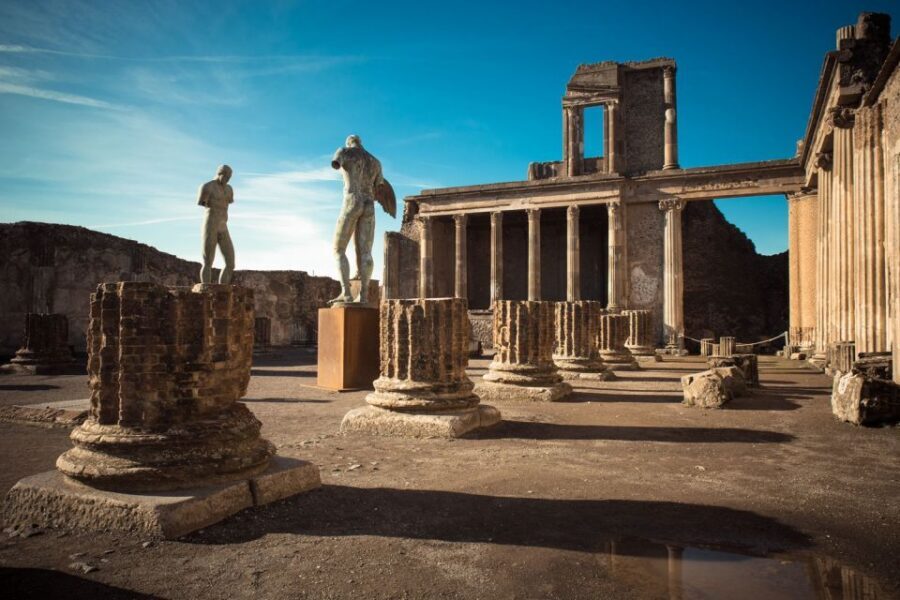
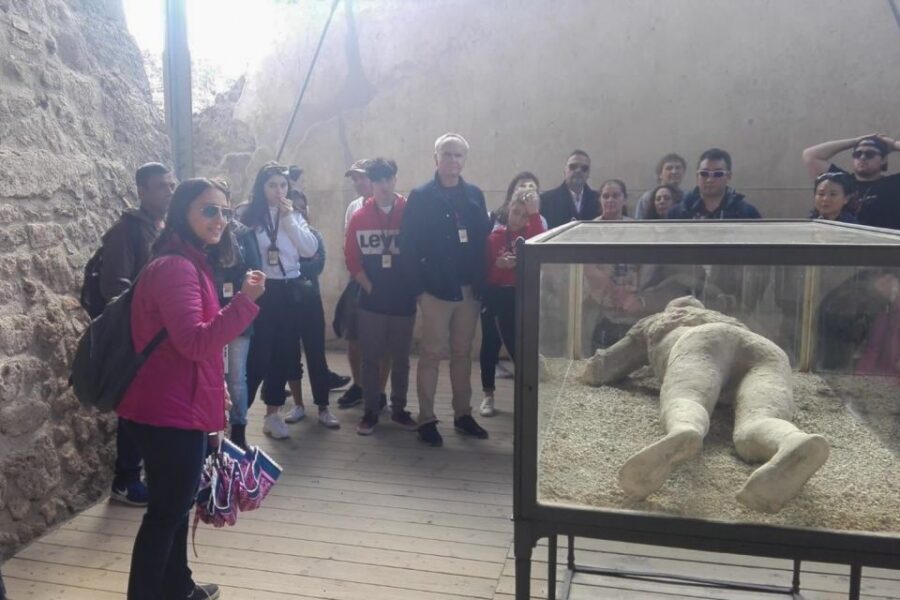
Inside Pompeii, you’re walking through preserved streets and buildings that survived for centuries under volcanic ash. That preservation is the whole point: you’re not just looking at ruins in a vague way. You can see the shapes of spaces—shops, civic areas, and homes—and understand how people moved through everyday life.
Here’s the trade-off: you will not see everything. If you want to read every inscription, interpret every villa detail, or make long stops for photos in every sector, two hours will feel tight. The upside is you leave with a clear mental map: where the city’s public core sits, what people did day to day, and why Pompeii is so readable compared to many other archaeological sites.
Ancient theater and the street-life route you can actually follow
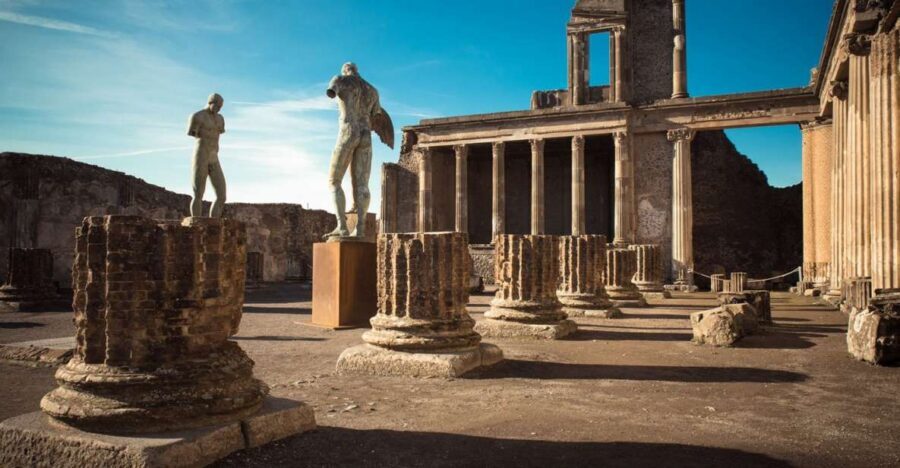
Your Pompeii walk starts with the kind of landmark that instantly makes the city click: the ancient theater. A theater in a Roman city isn’t just entertainment. It’s also a social magnet—where you’d expect community events and public gatherings. When the guide talks through what performances and gatherings meant to locals, the theater becomes more than a backdrop for pictures.
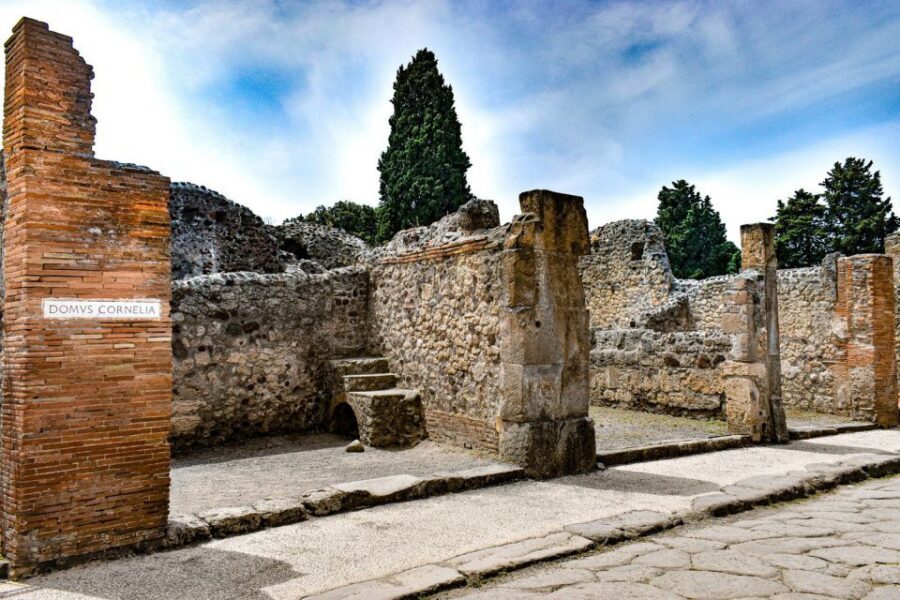
From there, the route pushes you into street life: preserved areas that feel like they were built for daily routines. You’ll see ancient shops, bakeries, and pizzerias—yes, the kind of preserved storefront features that make Pompeii feel strangely familiar. This is where you start noticing the practical side of Roman city living: the way commerce, food, and foot traffic shaped the day.
A good guide also keeps you oriented when the site gets crowded. In past departures, guides such as Salvatore, Maria, and Anita have been praised for staying attentive to the group, keeping everyone together, and adjusting pacing to the temperature. That’s not a small detail. Pompeii’s best moments often depend on not getting separated at the wrong time.
The house of Pompeii’s richest man: status you can walk through
One of the standout stops is the house of the richest man in Pompeii. This isn’t just about seeing a big residence. It’s about seeing how wealth shaped layout and movement inside a Roman home.
When you compare this house to the more public street areas, you start to understand the city as a system: public buildings and commerce for daily circulation, and then domestic spaces for social standing and lifestyle. The rich man’s house gives you a contrast that makes the whole site feel more three-dimensional.
The guide usually threads the narrative so you don’t treat the rooms as disconnected pieces. You’ll learn how daily life worked in the 1st century—what people ate, how spaces were used, and how Roman culture expressed class through architecture and access.
If you’re the type who likes “why this place matters,” this stop is a strong payoff because it anchors the story of Pompeii in real physical spaces, not abstract talk.
Forum, necropolis, and bath houses: the city’s public rhythm
After the more eye-catching highlights, the walk continues into Pompeii’s traditional must-sees: the necropolis, forum, and bath houses.
The forum is the city’s public center. It’s where civic life would have happened—meeting points, decision-making spaces, and everyday social traffic. When your guide explains what the forum meant, you start linking the city’s layout to human behavior. Pompeii becomes less like a museum and more like a town you could have walked through.
The necropolis adds a different angle. It’s where you see how Romans handled death and remembrance. Even if you’re not a deep-into-antiquity reader, a guide can help you interpret what you’re looking at so it doesn’t feel like random stone.
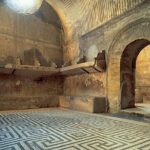
Then come the bath houses, which are often a favorite because they show daily habits that weren’t “special occasions.” Baths were social spaces as much as they were practical ones. Seeing them on foot gives you a sense of how routine and community blended in Roman life.
The bonus here is pacing. In a single 2-hour window, this combination helps you cover Pompeii as a city: public life, social habits, and cultural practices around death.






Cameos and corals workshop: a craft stop if there’s time
One optional add-on is a stop along the way to learn about the process of cameos and corals craft, jewelry made out of coral and seashell materials. The inclusion is time-dependent, so you may or may not get this segment depending on the day’s schedule.
If you do make it there, it can be a nice contrast to the ruins. Pompeii is about the past, but this is a living craft tradition connected to materials from the sea. You get a different kind of visual learning: the story behind objects you might see in shops later.
If you know you’re not interested in jewelry workshops, it’s still worth keeping an open mind. Even if you skip the purchase impulse, seeing how something is made can make your day feel more than just “walk, see, leave.”
Guides, group size, and keeping you moving in real conditions
This tour works because it’s designed to control chaos. Naples pickup points can be busy, and Pompeii itself can turn into a crowd puzzle. A big part of the experience is whether your guide keeps the group together and manages pacing so you don’t miss the best parts.
On some departures, the group size is reported as small, with one party of about eight people. Smaller groups matter in Pompeii. You move faster between stops, you ask questions without getting swept away, and you don’t feel like you’re competing for every photo angle.
For guiding style, you may see a mix depending on season and headcount. There can be a live guide (English, Italian, Spanish), or an audio guide if minimum group requirements aren’t met. Some departures are praised for an audio guide that’s witty and sharp, while others are led by live experts such as an archaeologist named Fabio.
Also pay attention to heat management. On hotter days, guides have been noted for finding shade and keeping things moving efficiently. That makes a real difference, especially in the summer when you don’t want to spend your energy standing still in the wrong spots.
Price and value: is $59 fair for this kind of day?
At $59 per person, you’re paying for a package, not just entry to ruins. What you get is:
- Round-trip transport from Naples
- Multilingual commentary on board
- A 2-hour guided walking experience in Pompeii
- Pompeii entry ticket when that option is selected
- A guide or audio guide, depending on the group size and season
So the value depends on what’s included in your chosen option. If the Pompeii entry ticket is included for your booking, it tightens the math quickly, because admission alone can be a meaningful part of the total cost.
Even when the entry ticket isn’t included in the base option, the transport + tight guiding plan is the practical value. Pompeii isn’t just a place you visit; it’s a place you navigate. Getting driven there and guided through a smart route saves you decision fatigue and helps you see the big, meaningful pieces in limited time.
One more practical point: lunch isn’t included. That’s not a deal-breaker, but you should plan for it. If you want to eat well after the ruins, keep your timing flexible.
What to bring, and the rules that affect your comfort
This tour is built for walking. Bring comfortable shoes first, then a sun hat and sunscreen for Pompeii’s exposed areas.
There’s also a simple luggage rule: no luggage or large bags. If you’re traveling with big gear, you’ll need a plan for that before you get to the meeting point.
Mobility matters too. This tour is not suitable for people with mobility impairments or wheelchair users. The site involves uneven ground and walking distance, and the tour format doesn’t mention accessibility accommodations.
Who should book this Pompeii tour (and who should skip it)
Book it if you want the best Pompeii highlights in a short window, with transport from Naples and guidance that explains what you’re looking at in plain language. It’s a great choice if you’re on a tight schedule, want less stress than self-planning, or you just want a clear introduction to Roman life through real spaces.
Skip it if you need accessibility support, or if you’re the type who wants hours and hours to wander without a route. Pompeii rewards slow exploration. A 2-hour guided slice can feel like a taste rather than a full meal.
Should you book? My quick decision guide
If your goal is a smart, low-stress Pompeii visit with a guide-led highlight route, this is a strong fit. The combination of round-trip Naples transport, focused 2-hour walking time, and stops like the theater, forum, necropolis, bath houses, and the rich man’s house makes it an efficient way to get oriented fast.
If you want deep, unhurried wandering, plan more time on your own. For everything else—especially first-timers who want a guided storyline—this tour format is easy to recommend.
FAQ
How long is the Pompeii tour from Naples?
The total experience is about 3 to 4 hours, and the Pompeii guided walking time is 2 hours.
Does the price include Pompeii entry tickets?
Pompeii entry is included if you select the option that includes the ticket. If you choose another option, the ticket may not be included.
What languages are available for the tour?
The live tour guide is available in English, Italian, and Spanish. Optional audio guides are offered in French, Chinese, German, Japanese, Russian, and Portuguese.
Is hotel pickup in Naples included?
Yes. Round-trip transportation includes pickup from selected Naples meeting points. After booking, you should contact the activity provider to confirm your pickup time and location.
Will I have a live guide or an audio guide?
This depends on season and group size. A live guide is provided in English, Italian, or Spanish when a minimum of 6 participants is reached; otherwise you’ll receive an audio guide.
Is luggage allowed on the tour?
No. Luggage or large bags are not allowed.
What should I bring to Pompeii?
Bring comfortable shoes, a sun hat, and sunscreen.
Is the tour suitable for wheelchair users?
No. The tour is not suitable for people with mobility impairments or for wheelchair users.