REVIEW · POMPEI CAMPANIA
Pompeii Ruins 2-Hours Guided Tour and priority entry ticket
Book on GetYourGuide →Operated by Tempio Travel Sorrento · Bookable on GetYourGuide
One city. One eruption. And suddenly, the streets make sense. This 2-hour Pompeii ruins guided tour pairs priority entry with an expert archaeologist-style guide so you don’t waste precious time wandering the wrong alleys. You’ll walk the Roman town preserved by volcanic ash from Mount Vesuvius in 79 AD, with just enough structure to hit the key sights.
What I like most is the focus on real daily life: you see mosaics, frescoes, and even a bakery display with cooking utensils still shown on-site. I also love how the guide connects the dots between public spaces and home life, so the Forum, baths, theaters, and villas feel like a working city, not a pile of stones. The priority entry helps you start without getting stuck at the ticket line.
The main thing to consider is the schedule: it’s a shared 2-hour tour, so you’ll move at tour pace and only get a limited look at each area before you’re invited to explore on your own.
In This Review
- Key Things You’ll Appreciate on This Pompeii Tour
- A 2-Hour Pompeii Tour That Helps You Not Get Lost
- Where You Meet at Pompei Train Station (and How the Tour Actually Starts)
- Why the 79 AD Story Hits Hard in Pompeii
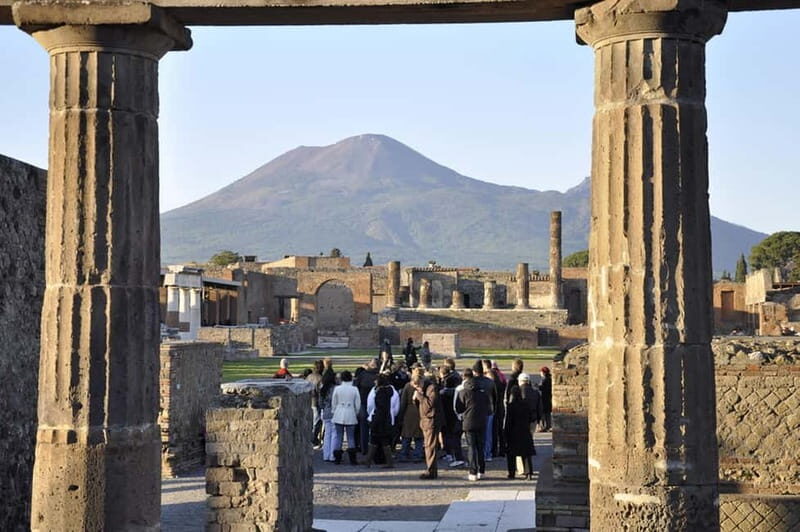
- Your Guided Route Through Pompeii’s Key Areas
- The Forum, Theaters, Baths, and Villas: See the City at Work
- The Forum
- Theaters
- Public Baths
- Famous Villas
- Termopolia, Mosaics, and Frescoes: The “Everyday” Finds
- Cooking Utensils and the Bakery Stop That Makes It Real
- Body Casts: When Pompeii Stops Being Just Interesting
- After the 2-Hour Tour: Time to Explore on Your Own
- Priority Entry and Headsets: Small Details, Big Comfort
- Price and Value: Is This $37.58 Ticket Worth It?
- What to Wear, Bring, and Expect on Walking Days
- Who Should Book This Tour?
- Should You Book Pompeii Ruins with Priority Entry and a 2-Hour Guide?
- FAQ
- How long is the Pompeii Ruins guided tour?
- Where do I meet for the tour?
- Is priority entry included?
- What languages are the tour and audio available in?
- Are headsets provided?
- Can I explore the ruins on my own after the guided portion?
- What should I wear or bring?
Key Things You’ll Appreciate on This Pompeii Tour
- Priority entry means less time queued and more time walking the ruins
- A real 2-hour guided route designed to keep you oriented in a place that’s easy to get lost
- You’ll see everyday-leaning sights like termopolia, plus mosaics and frescoes
- Stops include big-name areas such as the Forum, theaters, public baths, and famous villas
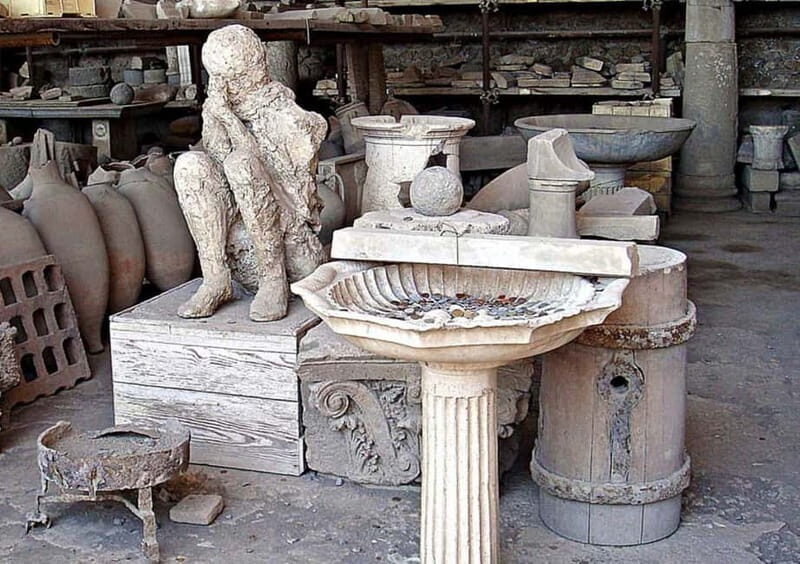
- You’ll look at body casts, bringing the 79 AD tragedy into sharper focus
- After the tour, you get freedom to explore independently while the site is still fresh in your mind
A 2-Hour Pompeii Tour That Helps You Not Get Lost
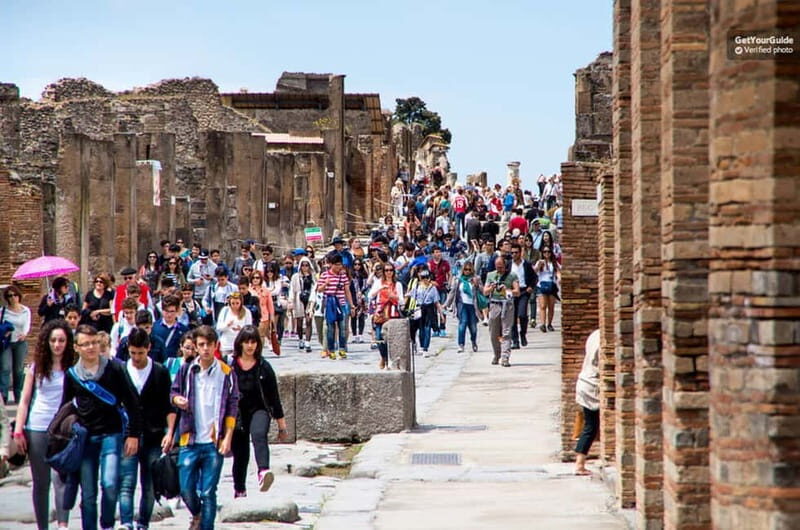
Pompeii can feel like a puzzle box. Streets split, buildings sprawl, and signs don’t always help you understand what you’re looking at. That’s where a guided format really pays off. In just two hours, you’ll cover major sites and get enough orientation to understand how this Roman town functioned.
This tour is built around expert storytelling. You’ll walk with a guide who explains life in the Roman Empire through the physical evidence left behind in ash. You’ll also learn the tragic context of the 79 AD eruption—why these spaces survived and why they’re so haunting to visit today.
And yes, it’s worth noting this is not an all-day marathon. If you’re only passing through the Campania region for a short time, this tour gives you the essentials without burning the whole day.
If you're still narrowing it down, here are other tours in Pompei Campania we've reviewed.


Where You Meet at Pompei Train Station (and How the Tour Actually Starts)
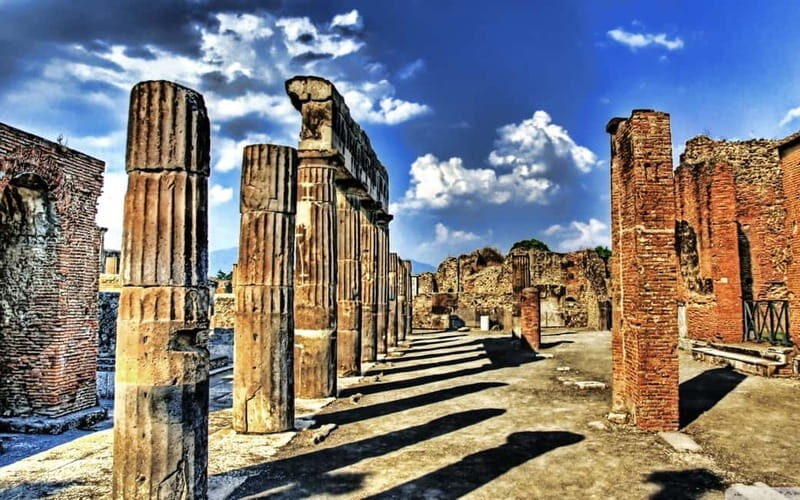
Your meeting point is practical and easy to find if you’re using the train. You meet at the Pompeii-tickets Tempio Travel office at Pompei Circumvesuviana Station, on the first floor. Plan to arrive at least 15 minutes early.
From there, the tour starts at Via Villa dei Misteri, 1. That first stop matters because Pompeii covers a lot of ground, and you want to begin with a route that makes sense rather than trying to piece one together yourself.
The tour ends back at the meeting point. So you’re not left scrambling at the far edge of the site when you run out of energy or daylight.
Why the 79 AD Story Hits Hard in Pompeii
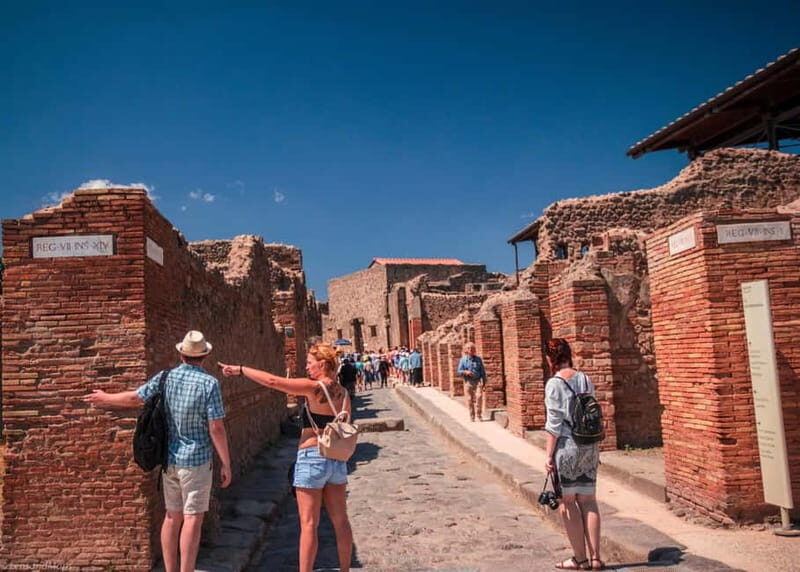
The volcanic ash from Mount Vesuvius preserved Pompeii in an almost unfair way. You can stand in front of spaces that were frozen in time and still recognize how people ate, worked, shopped, and gathered.
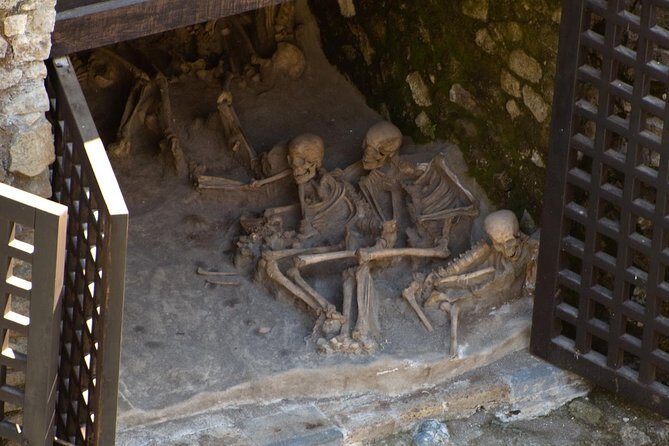
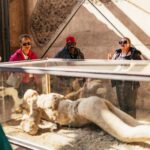
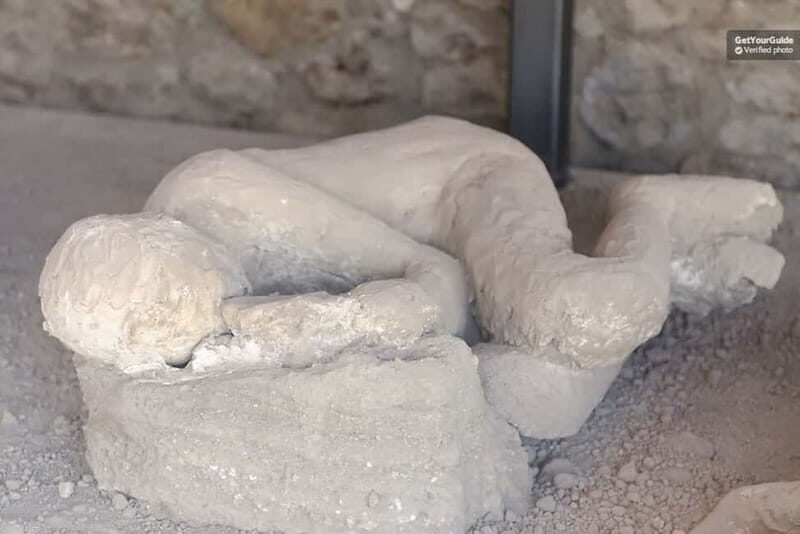
Your guide will walk you through what happened in 79 AD and what that meant for the people who lived there. You’ll hear about the sequence of events as you move through the ruins, and you’ll also see the result: body casts of citizens, preserved enough to show form and scale. It’s a heavy moment, but it’s also one of the clearest ways to connect a huge historical event to real human lives.
This is also where Pompeii becomes more than “cool ruins.” The guide helps you interpret what you’re seeing. A wall isn’t just a wall. A doorway isn’t just a doorway. It becomes part of a daily routine.
Your Guided Route Through Pompeii’s Key Areas
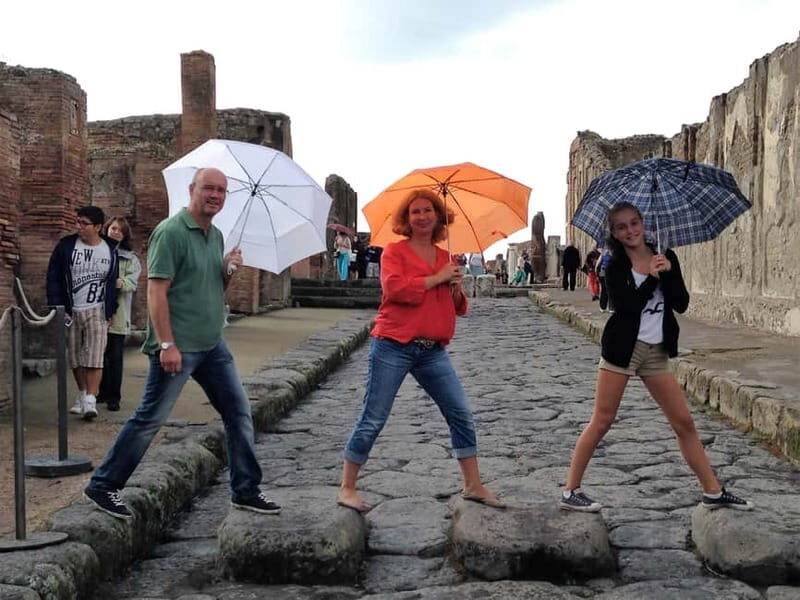
The tour runs for 2 hours, which is long enough to see the big highlights and short enough to avoid decision fatigue. With an expert guide, the goal isn’t just to show you famous structures. It’s to route you through Pompeii so you understand what matters and why.
You’ll pass through major public and residential areas, including:
- theaters
- famous villas
- public baths
- a bakery with cooking utensils displayed
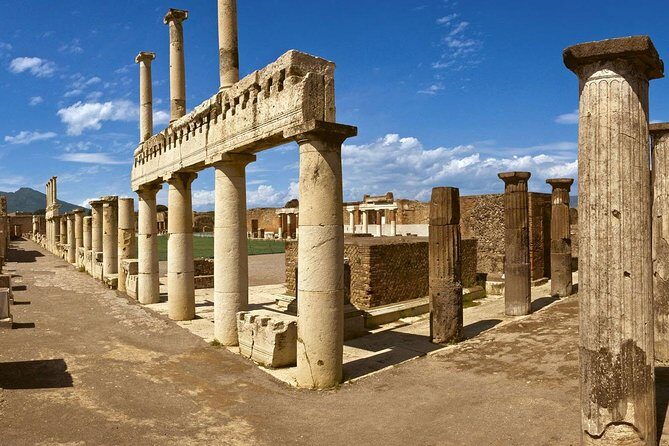
- the Forum
Each type of site gives you a different window into Roman life. The public spaces are where the city acted like a community. The baths show social habits. Villas and theaters hint at status and entertainment. The Forum ties it all together as a civic center.
A quick practical note: Pompeii is uneven and spread out. Comfortable shoes are a must. If you’re even slightly skeptical about your walking stamina, this is the kind of day where your feet make the rules.
The Forum, Theaters, Baths, and Villas: See the City at Work
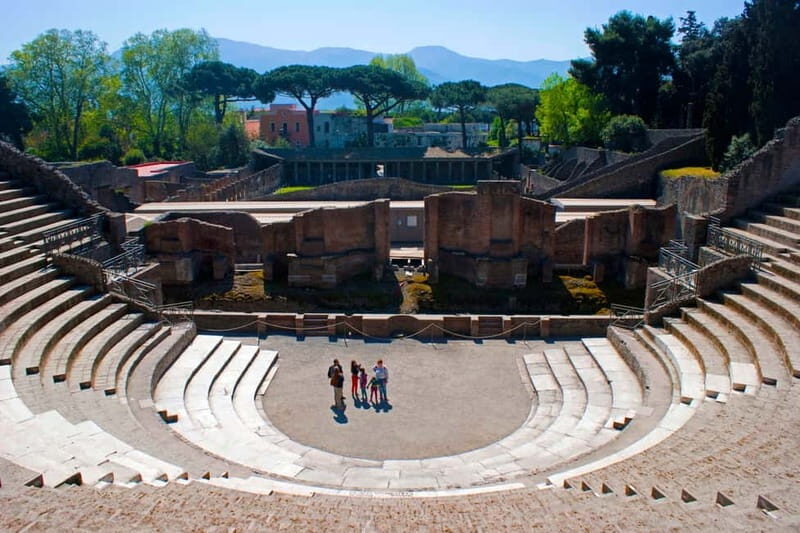
The most satisfying thing about this tour is how it structures Pompeii into recognizable categories. You’re not just collecting monuments. You’re learning how a Roman city operated.



The Forum
The Forum is where you’ll get a big-picture understanding. Even if you don’t memorize everything, you’ll come away knowing how public life was organized and why it mattered.
Theaters
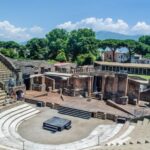
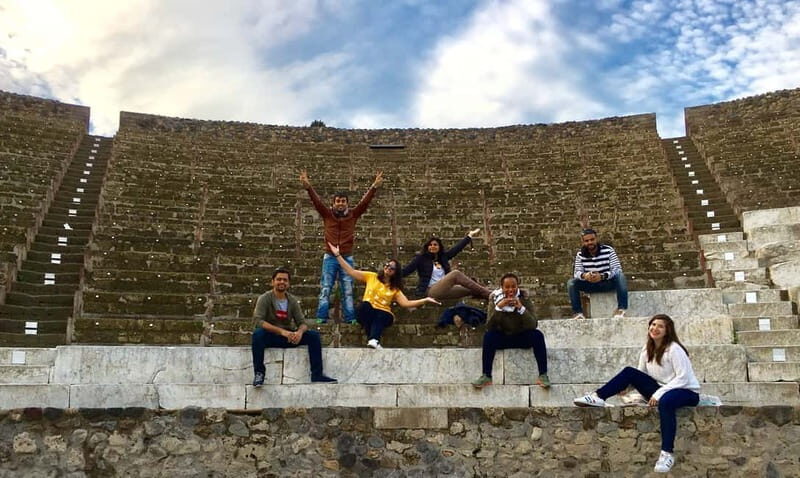
Theaters add a different flavor. You’re seeing where people likely gathered for performances and public events, which helps explain why leisure wasn’t separate from daily routine—it was part of it.
Public Baths
Public baths are an especially good stop if you want to understand social culture. You’ll see the spaces tied to washing, relaxing, and talking, which makes the city feel less archaeological and more human.
Famous Villas
Villas help you understand domestic life and how wealth and taste could show up in architecture and decoration. They also remind you that Pompeii wasn’t one uniform neighborhood—it had clear distinctions.
The main drawback of a highlight route is that you won’t have hours to linger in each location. But for many people, that trade-off is exactly what makes this tour manageable.
Termopolia, Mosaics, and Frescoes: The “Everyday” Finds
If you only remember Pompeii for big monuments, you miss half the point. This tour includes some of the best everyday details.
You’ll see termopolia, which were essentially Roman-style fast-food counters where people could eat and drink. Seeing that physical setup makes Roman street life feel immediate. It’s the kind of stop that changes Pompeii from distant history into something you can almost imagine.
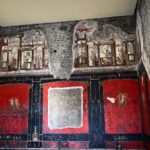
You’ll also focus on remarkably well preserved mosaics and frescoes. These aren’t just decorations to walk past. Your guide helps you read them as part of how people made their spaces feel personal and social—inside homes, and in connected public areas.
One of the most tangible moments is the bakery display with cooking utensils still shown. Even if you don’t know what every object is, the presence of real tools turns the site from impressive to instructive.
Cooking Utensils and the Bakery Stop That Makes It Real
The bakery stop is small compared to something like the Forum, but it can hit harder. That’s because you’re looking at traces of work. Food preparation isn’t abstract. It’s hands, heat, tools, and routine.
This tour includes that bakery area with cooking utensils on display. For me, this is where the guide’s explanations do real work. Without someone to frame what you’re seeing, it’s easy to look at objects and move on. With context, you notice details you’d otherwise miss.
If you like history that connects to daily habits—what people ate, how they cooked, how they fueled their day—this stop is one of the reasons the tour is worth the money.
Body Casts: When Pompeii Stops Being Just Interesting
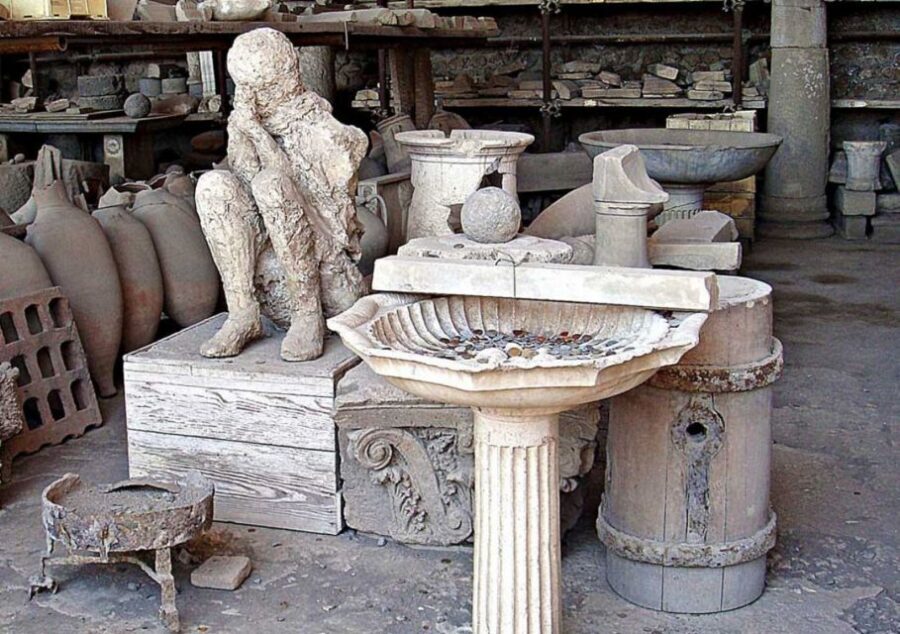
There’s a point in the tour where the mood changes. You’ll look at body casts of citizens, preserved in a way that gives you scale and shape. The guide will help you understand what you’re looking at and why it matters.
This isn’t entertainment. It’s a sobering historical moment tied to the terror of 79 AD. Standing there, you feel the weight of the disaster in a way that a textbook description can’t reproduce.
It’s also one of the reasons Pompeii attracts attention from around the world. You’re not only learning about buildings—you’re seeing the consequence of a catastrophe.
After the 2-Hour Tour: Time to Explore on Your Own
One smart part of this experience is what happens after the guided portion. The tour includes 2 hours guided, and then you have freedom to explore the archaeological site on your own.
That structure works well because your guide essentially gives you a working map in words. Even if you don’t follow a rigid route afterward, you’ll know what to look for when you turn a corner.
Use this time to do one of two things:
- re-check a stop that impressed you during the guide portion
- slow down at places you didn’t fully register the first time
Also, remember it’s a big site. If you try to squeeze everything in after your two hours, you can burn out fast. Better plan: choose a couple of areas and give them your full attention.
Priority Entry and Headsets: Small Details, Big Comfort
The tour includes a skip-the-line entrance ticket, which is exactly what you want in Pompeii. Even when you’ve timed your day well, lines can steal time from the experience.
You’ll also have audio support. Audio guide is included in English and Italian. And for groups of 16 or more, headsets are available for listening to the guide. This matters because in open-air ruins, it can be harder to hear without extra help.
So if you prefer not to strain your voice or chase your guide through crowds, the built-in audio setup is a real comfort upgrade.
Price and Value: Is This $37.58 Ticket Worth It?
At $37.58 per person, you’re paying for three key things: priority entry, a 2-hour expert-guided route, and audio support. The value shows up most if you fit one of these situations:
- you have limited time and want the major sights without guesswork
- you don’t want to spend your day figuring out what you’re looking at
- you want Pompeii to feel coherent rather than random
If you’re the type who enjoys reading a museum guide and building meaning on your own, you could tour independently. But for many people, Pompeii is too large and too easy to get turned around. A guided structure compresses the learning curve.
Then there’s the practical bonus: after the tour, you still get to explore on your own. So the guided time doesn’t have to be the only time you spend in your favorite corners.
Add in the priority entry, and the ticket feels like it’s buying you both time and clarity, not just access.
What to Wear, Bring, and Expect on Walking Days
This is a walking-heavy stop, even though it’s only two hours. Here’s the practical checklist based on the tour info:
- comfortable shoes recommended
- in summer: bring a sunhat and water
Pompeii’s surfaces can be rough, and sun exposure can be intense. If you show up underprepared, the experience gets harder than it needs to be.
Also, expect a shared guided group. That means you’re part of a schedule, not a private stroll. Shared tours are efficient, but they can feel slightly less flexible if you want to linger in one spot.
Who Should Book This Tour?
This guided Pompeii experience is especially a good fit if you:
- are visiting Pompeii for the first time
- want a smart route through major sites in two hours
- prefer learning from a guide instead of trying to decode everything alone
- want to end with time to explore more independently
If you’re hoping for long, unhurried wandering with deep stops in many neighborhoods, you might want more time than this tour provides. But if you want a focused hit of Pompeii’s best-known and most informative sights, this works.
Should You Book Pompeii Ruins with Priority Entry and a 2-Hour Guide?
I think you should book this tour if you value clarity and efficiency. It’s not just ticket access. You get a structured walkthrough of Pompeii’s major areas, plus guidance that helps you connect the ruins to everyday life in the Roman world.
The price makes sense because it includes priority entry and a full two hours of guided interpretation, and then you still have time to explore afterward. If you’re going to Pompeii at all, it’s hard to imagine a better use of limited time.
Book it if you want to leave with real understanding, not just photos of stone walls.
FAQ
How long is the Pompeii Ruins guided tour?
The guided tour lasts 2 hours.
Where do I meet for the tour?
Meet at the Pompeii-tickets Tempio Travel office at Pompei Circumvesuviana Station, first floor. You should arrive at least 15 minutes before departure.
Is priority entry included?
Yes. The tour includes a skip-the-line entrance ticket.
What languages are the tour and audio available in?
The live tour guide is available in English and Italian. Audio guide is also included in English and Italian.
Are headsets provided?
Headsets are available for groups of 16 or more.
Can I explore the ruins on my own after the guided portion?
Yes. After the 2-hour guided tour, you’ll have freedom to explore the archaeological site on your own.
What should I wear or bring?
Comfortable shoes are recommended. In summer, bring a sunhat and water.