REVIEW · POMPEI CAMPANIA
Pompeii: Guided Tour with Archaeologist with max. 12 People
Book on GetYourGuide →Operated by Benedetto Tourist Guide · Bookable on GetYourGuide
Pompeii hits different with an archaeologist leading. This 2-hour tour keeps the focus on how Romans lived, then lands on the eruption story through the city’s streets, homes, baths, and key public spaces. I especially like the small group size (up to 12 people) and the way the guide steers you through the site with expert context instead of just names on walls. One possible drawback is that Pompeii’s uneven paths and stone steps mean it is not suitable for wheelchair users or people with mobility impairments.
My favorite part is the combination of art and evidence: you get to see decorated interiors (think mosaics, frescoes, and marble details) and then connect them to the human tragedy via the plaster casts. I also like the practical pacing—this tour builds in enough stops to feel meaningful, with time left over afterward to wander at your own speed. The main consideration is heat and walking, so you’ll want comfortable shoes, a hat, and water before you start.
In This Review
- Key things to know before you go
- Why this Pompeii tour feels more like understanding than sightseeing
- Starting at the Suisse Restaurant: meeting fast, then getting moving
- Porta Marina Inferiore and the theaters area: reading the street layout
- Houses like the House of Menander: mosaics, frescoes, and class signals
- Terme Stabiane: the public baths that shaped Roman routine
- Shops to snacks to public life: seeing how the city fed itself
- The Foro Civile and Temple of Jupiter: the city’s “official voice”
- Macellum and Basilica: markets and law wrapped in stone
- Lupanare: a controversial stop handled with historical context
- The plaster casts and AD 79 tragedy: why this tour leaves a mark
- Time and pace: what 2 hours really gives you
- Headsets, crowd control, and why small groups matter
- Price and value: is $65 worth it?
- What to bring (and what to plan for) in Pompeii
- Who should book this Pompeii archaeologist tour
- Should you book this Pompeii tour with Benedetto?
- FAQ
- Where does the tour start?
- How long is the Pompeii guided tour?
- Is Pompeii entry included?
- Is the group small?
- Do we get headsets?
- What languages are offered?
- What do I need to bring?
- Is it wheelchair accessible?
- Do I need to provide participant names for the ticket?
Key things to know before you go
- Archaeologist guide (Benedetto) who works the site and explains what you’re really seeing
- Max 12 people for easier questions and a less chaotic route through Pompeii
- Skip the ticket line plus express entry, so you spend more time inside the ruins
- Frescoes, mosaics, and marbles plus the famous plaster casts connected to AD 79
- Headsets provided when the group is larger than 8
- Free time after the tour to explore more on your own
Why this Pompeii tour feels more like understanding than sightseeing
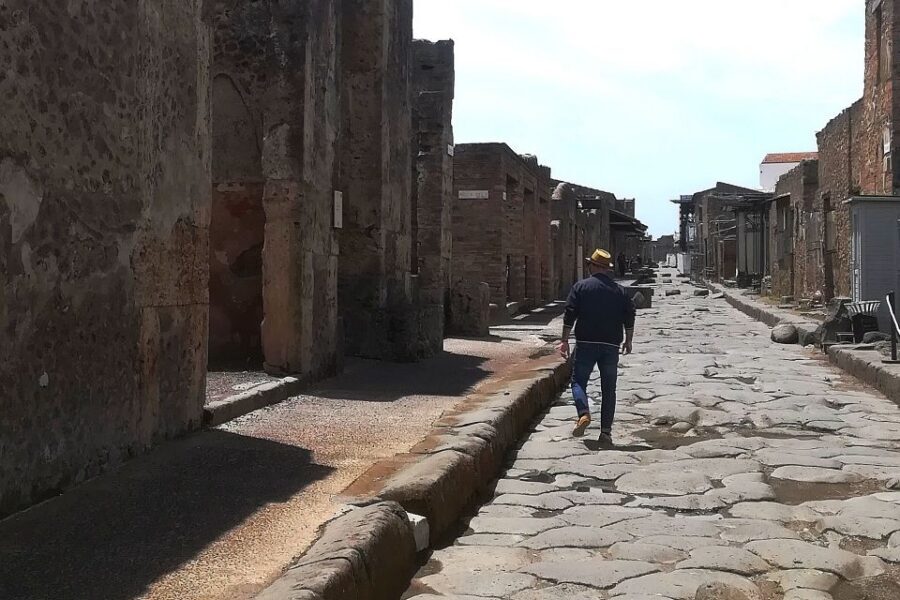
Pompeii is famous for one big moment—the eruption of Vesuvius in AD 79—but it’s the everyday details that make it stick. This tour is designed to help you read the city like a living place: shops and bakeries, public buildings, baths, and the layout of streets that guided daily routines.
A big reason this works is the guide’s role. Benedetto is not just reciting facts—he’s an archaeologist who can explain why certain things were built, how people used spaces, and what the surviving details suggest. When you’re standing in a Roman street or inside a decorated house, that kind of interpretation turns ruins into real life.
The small group matters too. Pompeii can get crowded fast, and the difference between a massive bus tour and a tighter group is huge for sightlines and questions. With a group up to 12, you can ask direct questions and stay together without constant waiting.
If you're still narrowing it down, here are other tours in Pompei Campania we've reviewed.



Starting at the Suisse Restaurant: meeting fast, then getting moving
Your guide meets you at Ristorante Suisse with a sign that includes your name. This is a small detail, but it reduces the most common early-trip stress: wandering around the wrong entrance area while everyone else arrives.
The tour then heads into Pompeii with an express entry ticket, which helps you avoid wasting the start of your visit in a line. Since your guided time is only 2 hours, those minutes add up.
If you’re traveling with kids or you just want a smoother first half-hour, this setup is a win. You get oriented, then you start seeing major districts right away instead of spending your energy figuring out where to go.
Porta Marina Inferiore and the theaters area: reading the street layout
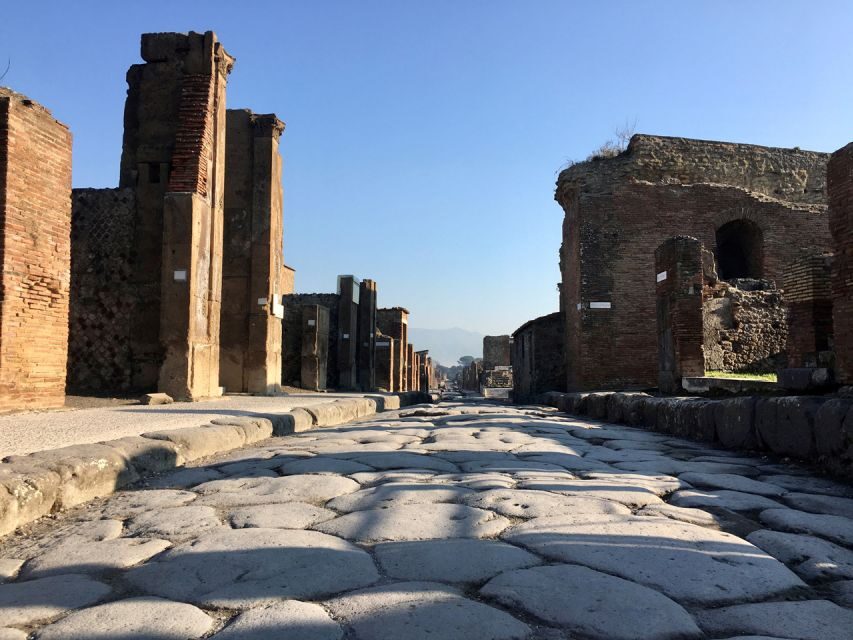
The walk begins at Porta Marina Inferiore and moves through the zone near the theaters. This early stretch is smart because Pompeii’s layout is easier to understand when you start from a road entrance and then work your way into the city’s rhythm.
Here, the guide focuses on what the streets and surroundings would have felt like. You’ll see the logic of Roman urban space—where people walked, what kinds of businesses lined routes, and how public life connected to everyday needs.
This is also a good stage for photos, because you’re learning what you’re looking at while you’re still fresh. If you’ve ever visited a site with almost no signage, this is where a guide can save you from feeling lost.
Houses like the House of Menander: mosaics, frescoes, and class signals
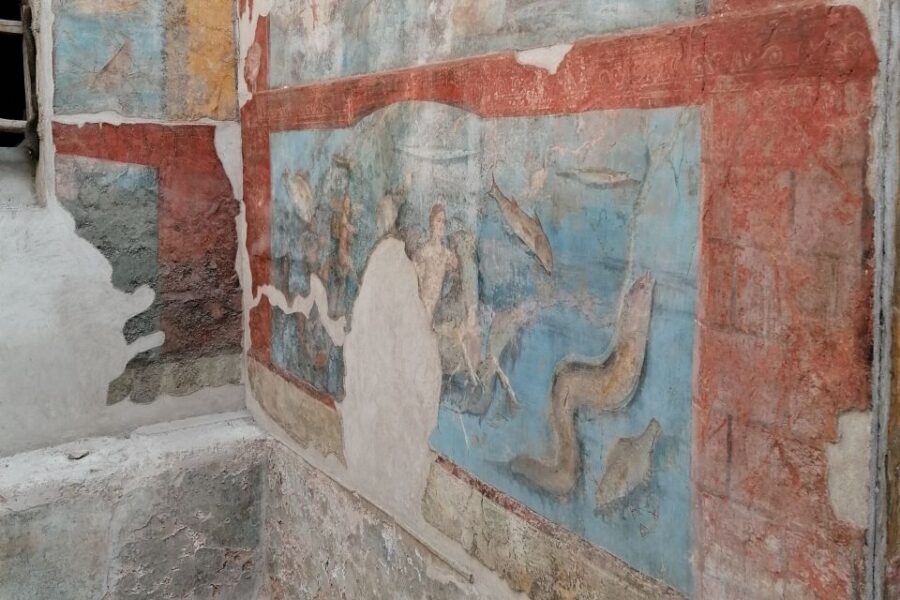
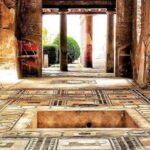
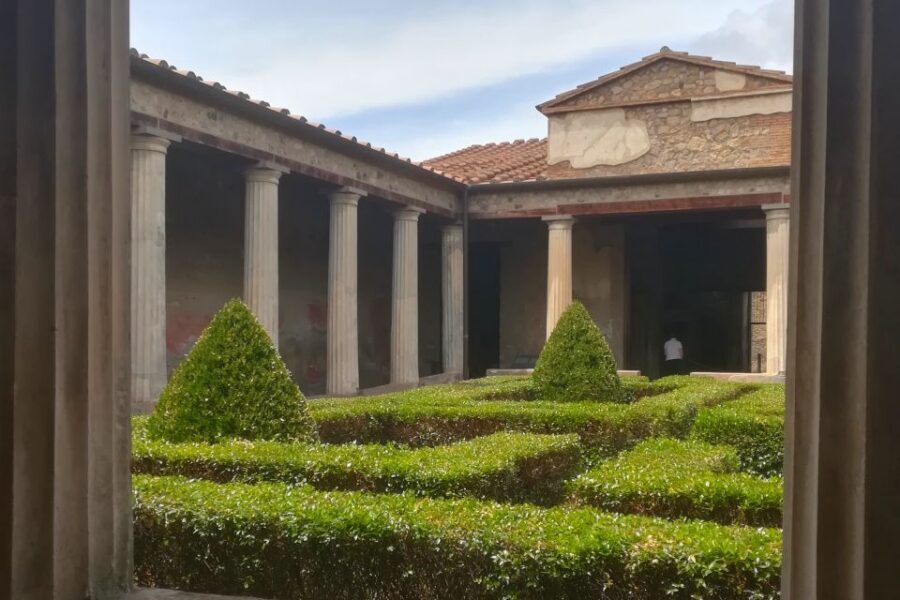
One of the stops is the House of Menander, which is all about domestic life and decorative skill. In Pompeii, houses aren’t just “rooms”—they’re statements. The decorations help you see how wealth and taste showed up in daily spaces.
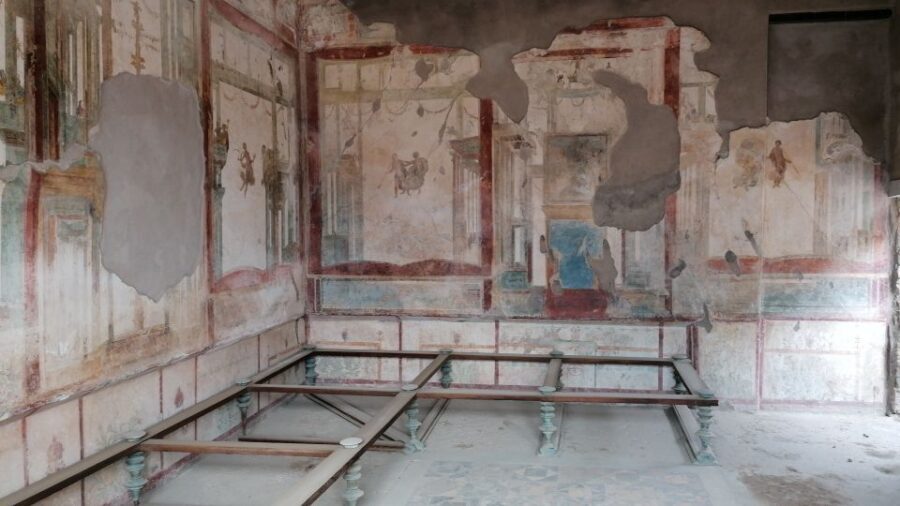
When the tour moves through areas with mosaics, frescoes, and marble-like details, you start noticing patterns: where the artwork appears, how rooms were used, and what kinds of surfaces were meant to be seen.
A practical point: interior ruins can be visually overwhelming. The guide helps you slow down long enough to interpret what’s left. Without explanation, you may spot decoration but miss what it was doing for the people inside.
Terme Stabiane: the public baths that shaped Roman routine
Next up is Terme Stabiane. Roman baths were social hubs, not just places to get clean. They were where you met people, traded news, and passed time—so even though it looks like stone fragments, the function is easy to imagine when someone explains the layout.
I like that this stop breaks up the tour. After houses and streets, the baths give you a different kind of “city life” perspective. It’s also an area where you can often understand Roman culture without needing every single technical term.
One caution: Pompeii in warm weather can feel relentless. If you’re sensitive to heat, plan on using shaded stops during explanations and keep your water bottle handy.


Shops to snacks to public life: seeing how the city fed itself
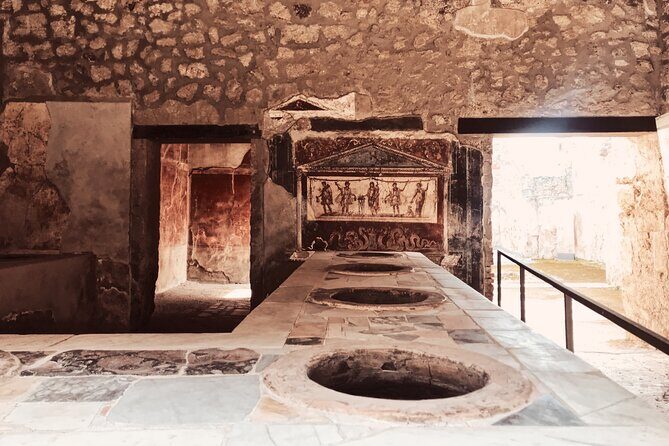
As the tour progresses, you’ll walk through areas that reflect everyday commerce—shops, Roman bakeries, and snack bars. This is where Pompeii becomes more than tragedy. You start seeing how a city organized food, goods, and foot traffic around main routes.
The guide’s job here is to connect physical remnants to human habits. Even if you don’t know Roman culture, you’ll understand the flow: people came out, bought things, chatted, and moved on.
This portion is also a useful mindset shift for your free time afterward. Instead of wandering randomly, you’ll know what to look for: commercial corners, public meeting spaces, and the connections between them.
The Foro Civile and Temple of Jupiter: the city’s “official voice”
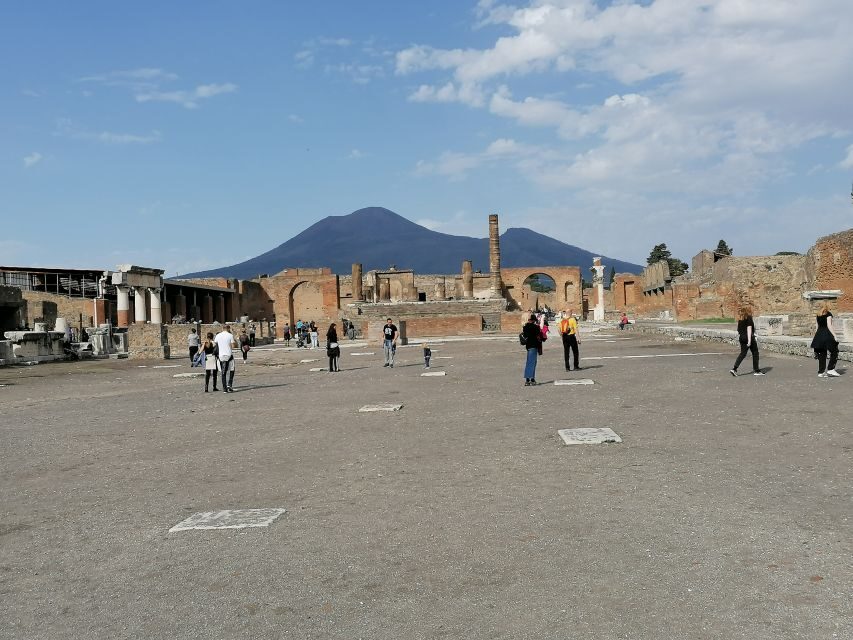
The tour then reaches the Foro Civile di Pompei and the Temple of Jupiter. If houses show private life, the forum area shows public authority—where civic decisions happened, where temples shaped beliefs, and where crowds would gather.
At the forum, it’s easy to feel like everything is just ruins until you understand what went on there. The guide helps you connect buildings to roles. Once you do, you can stand in the same spot and picture the city functioning instead of just imagining it as a frozen set.
Temple of Jupiter adds another layer: it anchors the idea that Roman religion wasn’t separate from daily life. You’re not just looking at a structure; you’re looking at how people understood order, power, and the world around them.
Macellum and Basilica: markets and law wrapped in stone
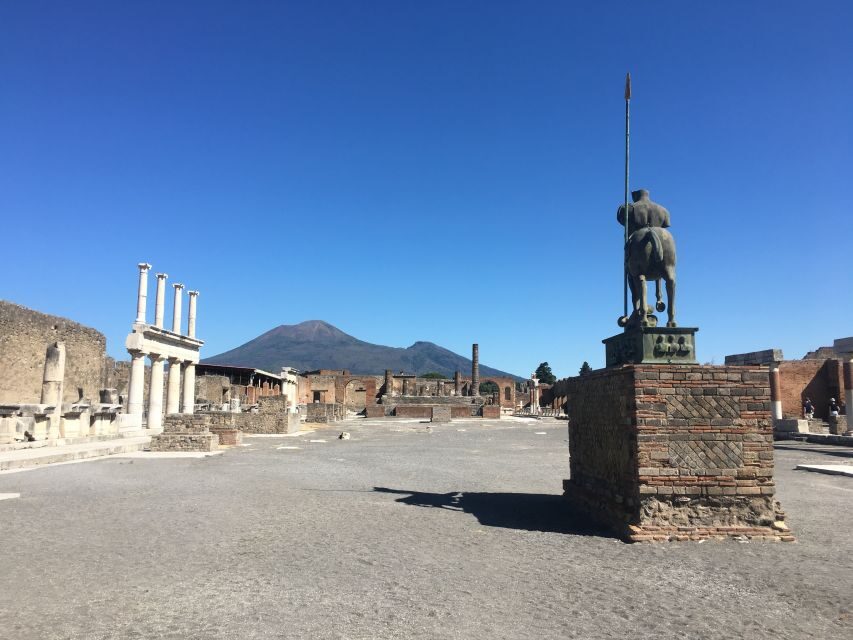
Two more major public stops round out the city’s working systems: the Macellum of Pompeii and the Basilica. The macellum was a market setting—again, food and trade, but tied directly to the city’s organization.
The Basilica is where civic life often played out. Even if your interest is casual, this stop helps you see how Roman society ran on public spaces built for crowds and routines.
This part of the tour is valuable for two reasons. First, it gives you a fuller picture than just “eruption and houses.” Second, it gives you a way to interpret architecture you might otherwise overlook because it feels less dramatic than frescoes.
Lupanare: a controversial stop handled with historical context
You also visit the lupanare, often described as a brothel. It’s one of Pompeii’s most talked-about sites, but the tour approach matters. With a guide, you can treat the building as evidence of social history—what existed in the city, how privacy and public access worked, and what the space suggests about daily realities.
This isn’t a stop that should be skipped out of discomfort, because it actually helps complete the picture of Roman life. Still, if you’re easily put off by adult-themed historical sites, it’s worth mentally preparing and focusing on interpretation rather than sensational imagery.
A good guide keeps the tone grounded. Here, the emphasis is on how the site functioned and what remains can tell you.
The plaster casts and AD 79 tragedy: why this tour leaves a mark
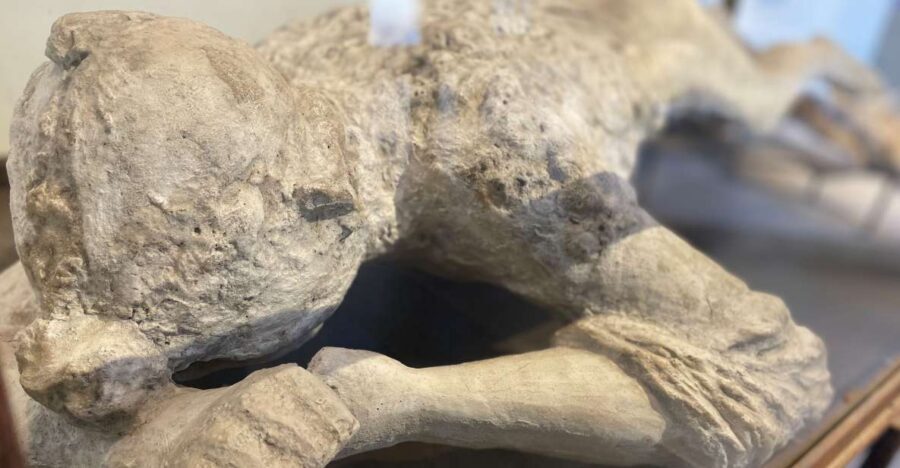
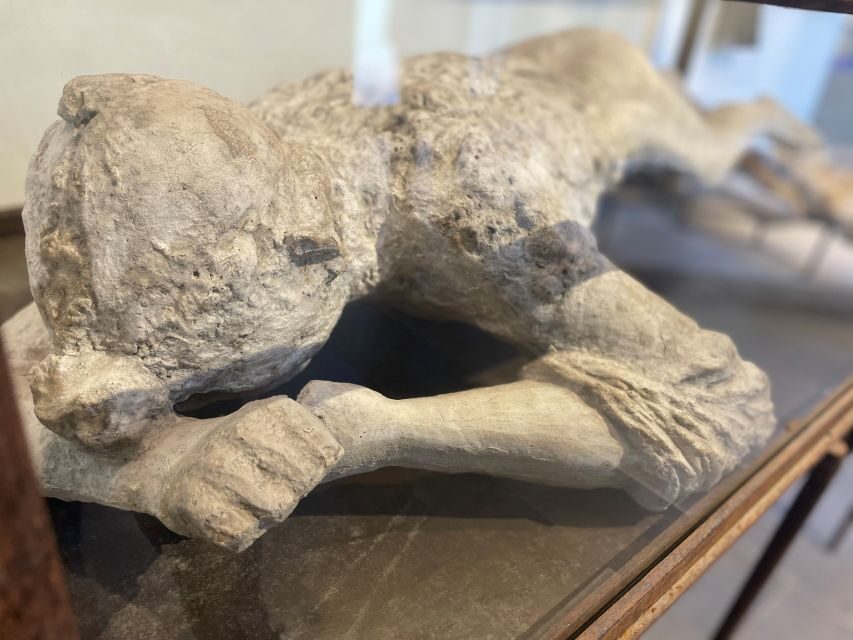
A never-missed highlight is the plaster casts of the victims. It’s the moment when Pompeii stops being purely architectural and becomes human. The guide connects what you see to the eruption story, which is the backbone of why the city is so preserved.
Even if you’ve seen photos before, the casts can feel heavy in person. The value of having a guide is not just the facts—it’s helping you understand why this evidence matters and what it implies about the final moments.
This is also why the tour’s structure works. You’ve seen streets, homes, shops, and public spaces first. Then the tragedy hits after you already understand what was lost.
Time and pace: what 2 hours really gives you
This is a 2-hour guided experience, plus free time to explore on your own afterward. In Pompeii, that timing can be just right if your goal is depth without burnout. You’ll hit the major districts and key stops, then return to your own wander with better instincts.
Pace is a common concern at Pompeii because the site is large and uneven. Here, the small group and guided route help you avoid feeling like you’re sprinting while still moving efficiently between highlights.
If you want more than the standard duration, you may be able to request extra time with the guide for an added fee, depending on what’s feasible on the day.
Headsets, crowd control, and why small groups matter
If your group is more than 8 people, you’ll get headsets. That’s useful because Pompeii’s sounds can be chaotic and your guide will be walking you forward on a schedule.
The bigger advantage, though, is crowd management. Many visitors lose time at bottlenecks. This tour is designed to keep your route tight enough that you spend less time stuck behind larger groups and more time where the stories make sense.
From practical experience planning, I’d treat this tour as a way to buy back your attention. In a place like Pompeii, time is easy to waste. A guided route helps you keep it.
Price and value: is $65 worth it?
At $65 per person for a 2-hour guided tour with an archaeologist, I think the value is strongest if you care about interpretation. If you just want to walk around and take photos, you might pay less by going without a guide.
But Pompeii is not a normal ruin. It’s a preserved city with evidence that needs context: decorative programs in houses, how rooms functioned, how public buildings worked together, and what the casts represent. When the guide has real archaeological experience, that interpretation can turn a quick visit into something you actually remember.
Add to that the express entry ticket and the fact that your group is capped at 12, and you’re paying not just for speaking time but for smart time use.
What to bring (and what to plan for) in Pompeii
Pompeii is outdoors and stony. Bring:
- Passport or ID card (original, because tickets are named)
- Comfortable shoes for uneven ground
- Hat for sun protection
- Water
Also plan ahead because the Pompeii ticket is named. After booking, you’ll need to provide a list with the first and last names of all participants. Getting this wrong is the kind of avoidable stress that eats vacation hours.
Your guide will include time to explore afterward, so you can build a personal “second lap” right after the structured part ends.
Who should book this Pompeii archaeologist tour
This tour is a great fit if you:
- Want to understand Roman daily life, not just see famous ruins
- Like asking questions and staying in a small group
- Prefer a route that helps you avoid the worst crowd surges
- Appreciate art details like frescoes and mosaics paired with historical context
It’s less suitable if you:
- Use a wheelchair or need mobility support (it’s not set up for wheelchair users)
- Don’t feel comfortable walking Pompeii’s uneven paths for a solid chunk of time
Should you book this Pompeii tour with Benedetto?
If your goal is a meaningful Pompeii visit in a short window, I’d book it. You get a strong mix of private life (houses), public life (forum, basilica, markets), and the AD 79 evidence that brings everything together.
The small group size and archaeologist guide are the two biggest value drivers. For $65, the real payoff is not the ticket—it’s the ability to look at ruins and understand what you’re seeing.
If you’re going mainly for postcard photos and don’t care about context, you might not feel the same value. But for most people trying to make Pompeii count, this is a smart, efficient choice.
FAQ
Where does the tour start?
You meet your guide at Ristorante Suisse. The guide waits with a sign that includes your name.
How long is the Pompeii guided tour?
The tour lasts 2 hours.
Is Pompeii entry included?
Yes. You get an express entry ticket to Pompeii included with the tour.
Is the group small?
Yes. The group is capped at a maximum of 12 people.
Do we get headsets?
Headsets are provided for groups of more than 8 people.
What languages are offered?
The live guide offers Italian, English, and French.
What do I need to bring?
Bring your passport or ID card (original), plus comfortable shoes, a hat, and water.
Is it wheelchair accessible?
No. The tour is not suitable for wheelchair users or people with mobility impairments.
Do I need to provide participant names for the ticket?
Yes. The Pompeii ticket is named, and you must provide the first and last names of all participants after booking.