REVIEW · POMPEI CAMPANIA
Pompeii Skip the Line Ticket + Guide Book with itineraries
Book on GetYourGuide →Operated by VISITING CAMPANIA S.R.L. · Bookable on GetYourGuide
Pompeii hits you fast. One minute you are standing by an amphitheater, and the next you are walking through streets frozen in time, with a guidebook that helps you steer your own pace. I like that this is self-guided but still structured, so you are not stuck waiting on a group plan.
My favorite part is the combination of a skip-the-line entrance ticket and an updated map that helps you choose where to go first. The second big win is the guidebook: it includes history and a practical “what to see” approach in itineraries for 2, 4, or 6 hours, plus it stays with you as a souvenir.
The main drawback to keep in mind is that skip-the-line can be more complicated than you expect. Even when ticket lines move quickly, you may still queue for security bag scans, and you could spend a few minutes processing your voucher before you head to the turnstiles.
In This Review
- Key takeaways before you go
- How the skip-the-line really feels at Pompeii
- A self-guided plan you can actually finish: 2, 4, or 6 hours
- Getting your bearings at the Piazza Anfiteatro entrance
- Frescoes, shops, and the feeling of ancient street life
- Baths, temples, and the Thermopolium for real-world Roman routines
- Entertainment after lunch: theaters, brothels, and the amphitheater
- The casts of victims: when the story turns from ruins to human scale
- Timing, crowds, and walking smarter in a site this big
- Price and value: is $41 worth it for a self-guided Pompeii day?
- Should you book this Pompeii skip-the-line ticket with guidebook?
- FAQ
- How long can I spend at Pompeii with this ticket?
- Where do I meet staff and how do I enter?
- What is included in the price?
- Do I get a live guide with this experience?
- Are food and drinks included?
- What languages are the guidebook and support available in?
- Do I need to bring anything?
- Is there a youth price?
- What if I need to cancel?
Key takeaways before you go
- Skip-the-line entrance, not a free pass through security: expect bag scan checks even if the ticket queue is shorter
- A guidebook that drives your timing: 2, 4, or 6-hour routes so you do not wander endlessly
- You get an updated map: helpful at a site this big, especially when you want to find specific types of places
- Choose your pace and your crowd level: the late afternoon window tends to feel calmer
- One guidebook per two reservations: plan around how you want to share or pair up
How the skip-the-line really feels at Pompeii
Let’s set expectations clearly. You are booking an entry ticket that’s meant to help you avoid the standard ticket-purchase line. In practice, you should still plan time for security checks. One person found they had to wait for a bag scan before anything felt “fast,” then the barcode scan and turnstiles went smoothly.
Also, you do not walk up to the gates with the final ticket in hand. You start at the staff information point. The archaeological park entrance for your reservation is Piazza Anfiteatro, and you meet staff at Via Roma 123, Pompeii, where you show your voucher for access. That means there can be a short buffer while staff process reservations, so I suggest arriving a bit early rather than counting on a perfectly timed sprint.
For value, this kind of ticket usually makes sense if:
- you hate ticket lines, even if they are not huge
- you want more time for the actual ruins
- you like having a plan (via the guidebook) instead of improvising
But if your visit depends on saving every single minute, know this: if the general ticket line is already short, the “skip” benefit might feel less dramatic than you hoped.
If you're still narrowing it down, here are other tours in Pompei Campania we've reviewed.



A self-guided plan you can actually finish: 2, 4, or 6 hours
Pompeii is massive. Without a plan, it is easy to start strong, then lose time and direction. This is why the guidebook itineraries matter. You can pick:
- a 2-hour sweep if you want the biggest highlights without stress
- a 4-hour visit if you want time to slow down and actually look
- a 6-hour plan if you want a fuller circuit and more context
You can enter any time between 9:00 am and 5:00 pm, so your itinerary choice should match your energy and how late you want to stay.
The guidebook approach works because it tells you what to look for in each zone: frescoed houses, spas, temples, shops, Thermopolium (the quick-stop food of the ancient world), theaters, brothels, casts of victims, and a top-tier Roman amphitheater. Instead of just wandering past things, you get a reason to pause.
Here’s my practical advice: choose your itinerary at arrival. If you feel fresh and the entry flow is smooth, switch up to a longer plan. If you hit a slow security moment, trim down so you do not end the day rushed and disappointed.
And remember: one book is provided for every two reservations, so if you are traveling solo, you may want to confirm how you’ll receive the guidebook. If you are a duo, this is ideal for sharing.
Getting your bearings at the Piazza Anfiteatro entrance
You start near Piazza Anfiteatro, which is a smart base because this is where the Roman amphitheater anchors your bearings. From here, you can structure your visit outward: begin with the most memorable landmark, then work your way through the residential, public, and entertainment areas.
The updated map helps you do this. Pompeii is not laid out like a tidy city center; it is a web of streets, buildings, and open spaces. When you want to find a particular type of place, the map keeps you from “accidentally skipping” what you came for.
One review specifically pointed out what you can improve: knowing where practical facilities are, like toilets and cafes. The site is large and you might need a break at some point. Since that detail is not guaranteed in your provided materials, I’d treat it as a reason to be strategic with your route. Plan small pauses rather than waiting until you are tired and far away from what you need.
Comfort matters here. Bring:
- comfortable shoes
- water
- a sun hat
- comfortable clothes
- ID or passport
Your body will do the rest, as long as you are not trying to tour in stiff footwear or under-energized.
Frescoes, shops, and the feeling of ancient street life
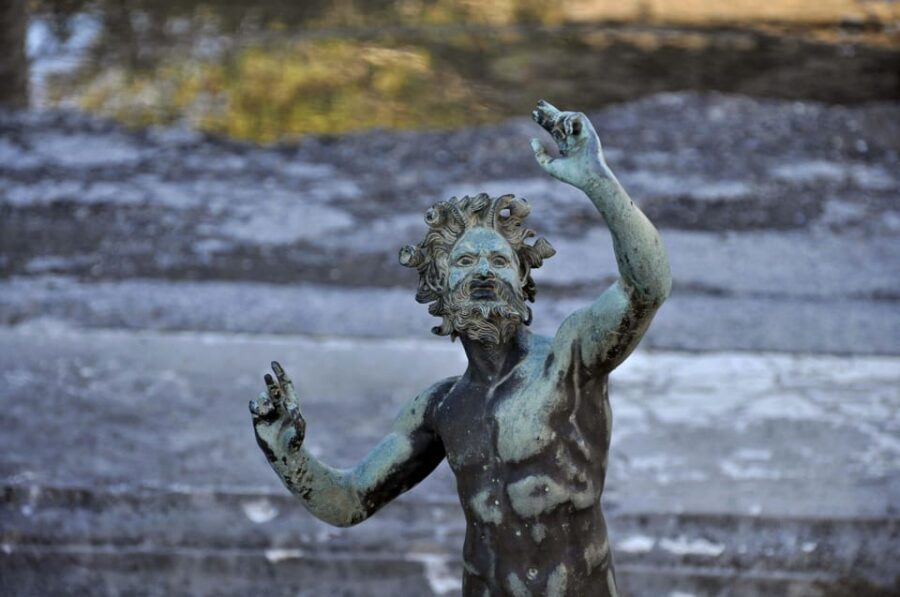
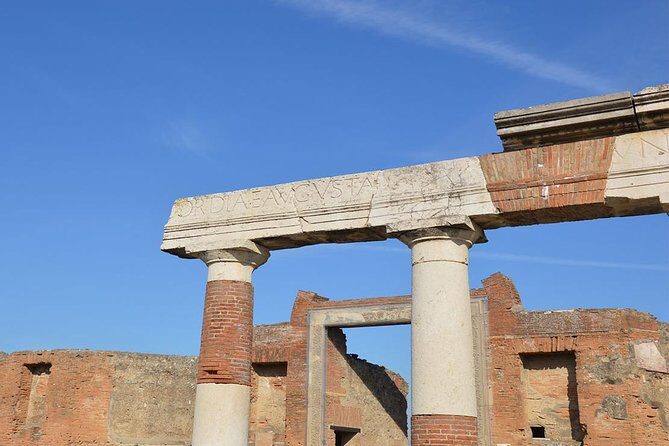
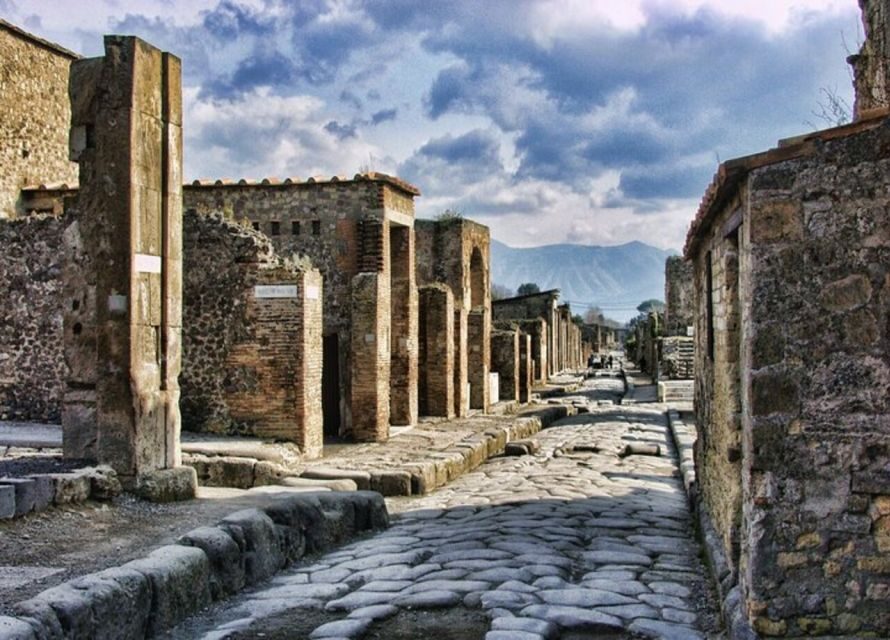
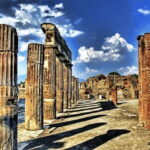
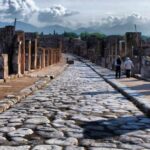
Once you start moving, Pompeii’s power is that you are not looking at isolated ruins. You are walking through parts of a lived-in town: streets with buildings on both sides, storefronts, and rooms where you can still sense everyday routines.
The guidebook helps you focus on:
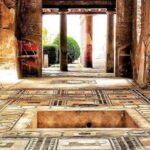
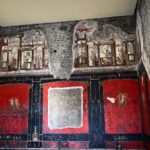
- frescoed houses (you are not just seeing walls, you’re learning what the interior suggests about daily life)
- shops along the way (so the town feels like commerce, not just history)
- street spaces that make the city feel like a route you could have taken on a normal day
In this part of the visit, your best tool is pacing. With itineraries, you’ll be tempted to “collect” everything. Instead, use the guide’s prompts as stop signs: pause where it tells you something matters, then keep walking. If you rush, you miss the details that make Pompeii feel personal.
One of the quietest tricks is simply time-of-day. One visitor noted that Pompeii feels much quieter after 4:30 pm. If you can handle the late afternoon heat and walking, the last stretch can give you that rare feeling of moving through a place that is not constantly surrounded.
Baths, temples, and the Thermopolium for real-world Roman routines
Pompeii’s public life shows up in a few key ways: bathing culture, religious spaces, and quick food stops.
Your guidebook and map point you toward:
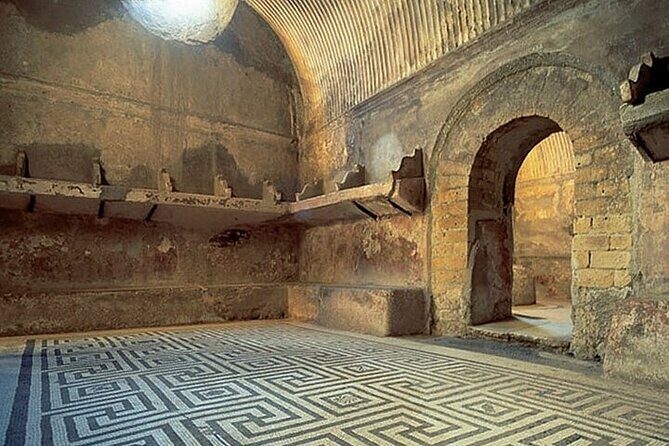
- spas (Roman bathing and social time)
- temples (where civic and religious life overlaps)
- shops and the Thermopolis, a kind of counter-service spot where people grabbed fast food
This is where a self-guided visit can feel especially smart. You can spend 10 minutes or 40 minutes depending on your interest, without worrying about keeping up with a group.
If you want the “how did people live” effect, spend extra time in spaces where people would have lingered: baths and everyday gathering areas. If you only have the 2-hour itinerary, prioritize at least one “routine” type of stop so the visit feels like more than sightseeing.
Also, Pompeii’s surfaces can be uneven and hot. Plan to drink water and take shade when you can find it. You’ll cover enough distance in a day that hydration is not optional.

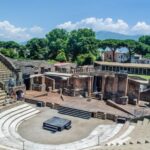



Entertainment after lunch: theaters, brothels, and the amphitheater
Pompeii is not all domestic. It’s also performance, pleasure, and public spectacle.
The materials you receive are designed to help you locate:
- theaters
- brothels
- the Roman amphitheater, described as one of the best-preserved of its type
This is one of my favorite parts of the experience because it changes the story. Instead of focusing only on home life and routine, you see how the city handled drama, crowds, and entertainment. Even if you do not spend long inside each building, knowing what you are looking at makes the ruins feel coherent.
The amphitheater area also gives your day a physical rhythm: you can come back toward the entrance region as a landmark, then head out again. That mental reset matters when you are walking a lot.
Timing tip: if you start later in the day, you may still have enough time to catch the amphitheater without feeling like you must race through everything else. Your entry window is 9:00 am to 5:00 pm, so use the late afternoon calm to your advantage if you can.
The casts of victims: when the story turns from ruins to human scale
Every Pompeii visit eventually hits the same emotional pivot: the casts of victims. This is included as a highlight you can build into any itinerary (2, 4, or 6 hours).
In a self-guided format, you choose when you want to face that part of the story. I find that matters. If you hit it too early, it can overshadow everything else. If you wait, you often get a clearer contrast: you first see the city as it was, then you understand what the eruption interrupted.
There is no “right” order, but I recommend doing this as a deliberate stop rather than a random pass-by. When the guidebook points it out, treat it like a moment, not just another location number on a map.
Timing, crowds, and walking smarter in a site this big
You are visiting over one day, and you can enter from morning to late afternoon. The best plan is the one that matches your pace and your willingness to walk.
A couple of practical points based on real-world experience:
- You may still line up for security bag scans, even with the skip-the-line ticket
- Voucher processing can add a small delay before you reach the turnstiles
- The site feels quieter later, with one visitor calling out that it is much calmer after 4:30 pm
So I suggest a “start strong, save energy for late” strategy. If you go early, use the first hours for zones you can get excited about quickly. Then, as the afternoon rolls on, slow down and linger in the places that reward looking—frescoed interiors, bath-related spaces, and the bigger public structures.
If you are prone to decision fatigue, let the guidebook choose for you. The itineraries are specifically meant to reduce wandering. Pick 2, 4, or 6 hours, then commit to that rhythm.
Price and value: is $41 worth it for a self-guided Pompeii day?
At $41 per person, the deal is mainly about what you’re buying besides the entrance. You get:
- a skip-the-line entrance ticket
- an updated map
- a guidebook with itineraries for 2, 4, and 6 hours
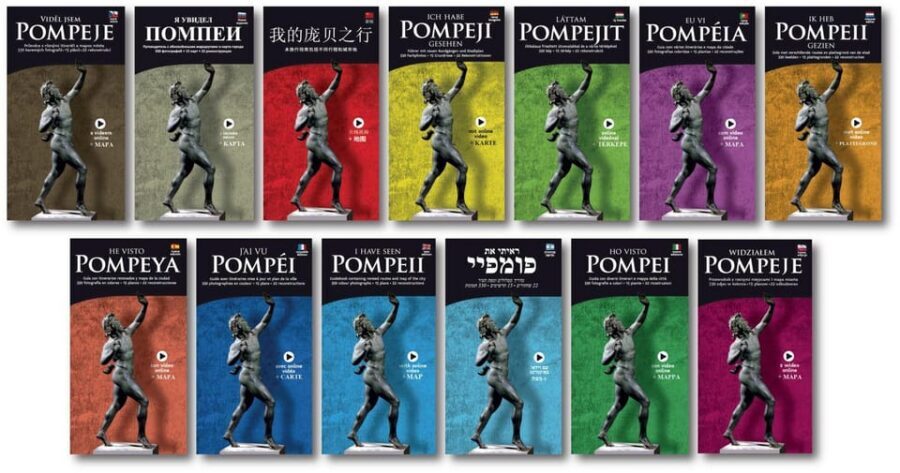
- the guidebook is translated into 13 languages
- it’s designed to be a souvenir you keep
For many people, that turns Pompeii from a stressful “where do we go now?” scramble into a plan you can follow on your own terms. The guidebook is especially valuable if you do not want to hire a live guide but still want context for what you are seeing.
But keep your eyes open about the skip-the-line promise. The reality can be: you may still queue at security, and if the general ticket line is short, the time saved might not feel huge. That does not make the purchase useless—it just means you should not treat it as a magic shortcut.
In short, this is good value if you want independence plus structure. It’s less satisfying if your only goal is shaving off every possible minute from the total process.
Should you book this Pompeii skip-the-line ticket with guidebook?
I’d book it if you want a self-guided Pompeii visit that feels organized, not random. The 2/4/6-hour itineraries plus the updated map are the key. They help you see the main categories: homes, public spaces, food stops like the Thermopolium, entertainment venues, and the human story via the victim casts.
Skip booking if you are chasing an ultra-fast, zero-line experience. Even with skip-the-line tickets, expect security checks and some processing at the start. If your heart is set on minimizing all waiting, give yourself extra time and do not schedule a tight connection right after your Pompeii entry window ends.
If you want a flexible day where you decide how long to linger, this ticket setup is a solid fit.
FAQ
How long can I spend at Pompeii with this ticket?
You can enter Pompeii for a one-day visit. Entry hours listed are 9:00 am to 5:00 pm.
Where do I meet staff and how do I enter?
The Pompeii park entrance for your reservation is Piazza Anfiteatro. Staff meet at Via Roma 123, Pompeii. You show your voucher at the information point for access.
What is included in the price?
Included are the Pompeii entrance ticket, a guide book (one book for every two reservations), an updated map, and itineraries for two, four, or six hours.
Do I get a live guide with this experience?
A guide is not included. This experience is designed for independent, self-guided exploring using the guide book and map.
Are food and drinks included?
No. Food and drinks are not included.
What languages are the guidebook and support available in?
The guidebook is translated into 13 languages, and the activity lists instructor support in English, Italian, Spanish, and French.
Do I need to bring anything?
Bring a passport or ID card, comfortable shoes, a sun hat, water, and comfortable clothes.
Is there a youth price?
Yes, the youth price applies to people aged 18–24, and it is only for EU citizens.
What if I need to cancel?
Free cancellation is available up to 24 hours in advance for a full refund.