REVIEW · POMPEII
Pompeii Ancient City Walking Tour – Italian & English Guide
Book on Viator →Operated by Sesto Continente Tours · Bookable on Viator
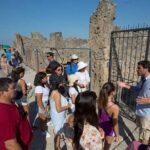
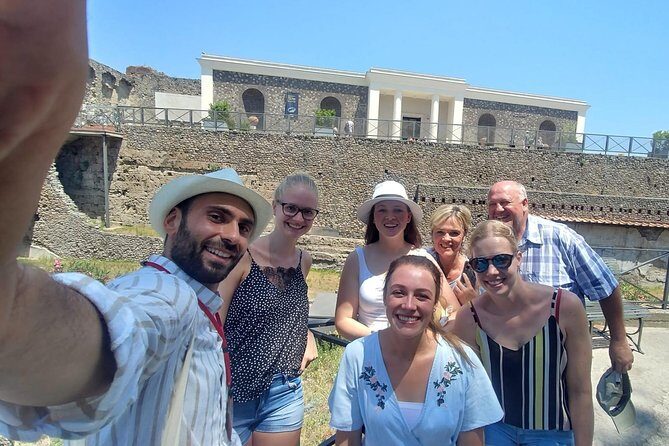
Pompeii hits differently when someone points at the details. This small-group walking tour through the ruins gives you a guided way to understand what you’re looking at, from public spaces to the villas that still carry their paintings and mosaics. I especially like the guide-led flow (including help at the ticket-office entrance) because Pompeii is big and you want to spend your time seeing, not figuring out.
Two things I really like: first, you’re guided between major sites such as the Amphitheatre, the Temple of Apollo, and the Villa/Misteri complex, so you leave with a story instead of a checklist. Second, you’re not just thrown into ruins you can’t read; the guide helps connect the eruption and daily life to the architecture and art you’re seeing. The main drawback to plan for is the Pompeii entrance ticket is not included (and it’s the big-ticket cost), so you’ll want to budget that upfront.
In This Review
- Key highlights in plain terms
- Pompeii with a guide: why it’s worth paying attention
- Getting started at Porta Marina (and why the meeting point matters)
- Day 1 in Pompeii Archaeological Park: the route that makes the city click
- Pompeii Archaeological Park: Amphitheatre, temples, and big-name houses
- Casa del Fauno: mosaics that give you an instant visual anchor
- Tempio di Giove Capitolino: religion framed by power
- Temple of Apollo: an early religious building you can still sense
- Anfiteatro Romano: the scale of spectacle
- Casa del Menandro: frescoes as the house’s naming story
- Casa dei Vettii: spending your freedom in full color
- Villa dei Misteri: the long-panel fresco drama
- Day 2 at the Roman Catholic Sanctuary: a quieter, different kind of Pompeii
- Price and value: what you’re really buying for $36.12
- Pacing, language, and what you should expect from your guide
- Practical tips to make your two days work
- Should you book this Pompeii tour?
- FAQ
- FAQ
- What’s included in the tour?
- Do I need to buy the Pompeii entrance ticket?
- How long is the tour?
- What languages are available?
- Where do I meet the guide?
- How big is the group?
- What’s the cancellation policy?
- Is the tour suitable for everyone?
Key highlights in plain terms
- Entrance-gate facilitation: less stress at the start, more time inside.
- A focused route through the Amphitheatre, Apollo, Jupiter, and standout houses.
- Art you can recognize fast: mosaics and fresco themes explained while you’re there.
- Small group size (max 25), which usually means better questions.
- Two-day rhythm: one day for the archaeological park, a calmer second day at the Sanctuary.
- English-led tour with flexibility: one guide situation included English delivery and repeat explanations in Italian when needed.
Pompeii with a guide: why it’s worth paying attention
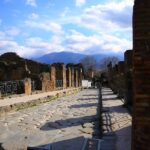
Pompeii can be overwhelming on your own. Streets feel like corridors, ruins overlap, and it’s easy to walk past things that were once the center of daily life. A guide helps you slow down in the right places and explains how each stop fits into the bigger picture.
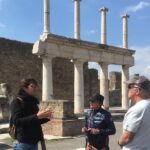
This tour keeps that focus. You start with help at the ticket office entrance, then you move through the Archaeological Park with a structured walkthrough. That matters because Pompeii is not just “pretty old stones.” You’re looking at a city plan, religious sites, public entertainment, and private homes—each with its own visual clues. When those clues get pointed out in context, the whole place makes more sense.
Other walking tours of the Pompeii ruins


Getting started at Porta Marina (and why the meeting point matters)
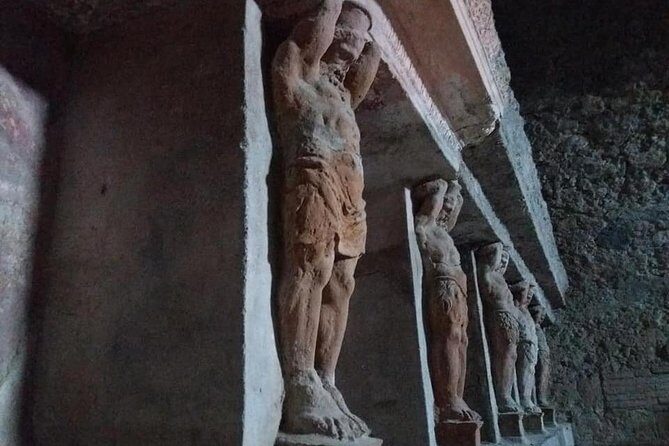
You’ll meet at Piazza Porta Marina, 80045 Pompei NA, Italy, and the tour ends back there. That location is handy because it puts you close to the main access area for getting into the park.
From a practical standpoint, “help at the entrance” is not a small detail here. Pompeii’s entrance process can be slow, and if you’re doing the walk in two days, you want your first day to start cleanly. This tour includes facilitation at the entrance to the Ticket Office, which can reduce the time you spend coordinating your group while also helping you avoid common first-day confusion.
Day 1 in Pompeii Archaeological Park: the route that makes the city click
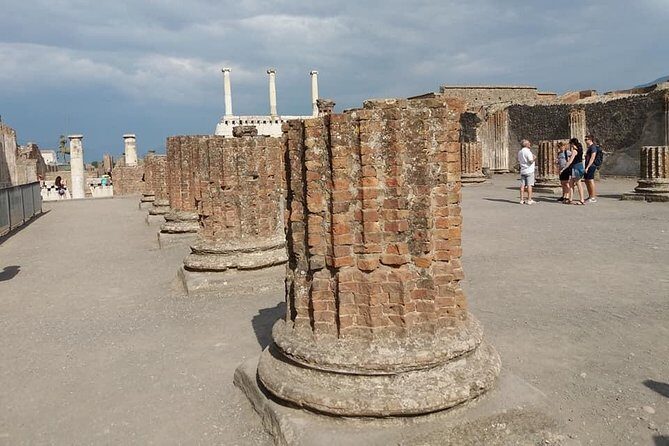
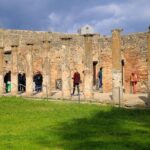
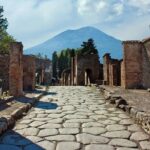
Day 1 is the heavy hitter: a long visit inside Pompeii’s Archaeological Park, using a guide-led route that hits both the public face of the city and some of the best-known houses and villas.
Here’s what that looks like as you move through the day, and why each stop works.
Pompeii Archaeological Park: Amphitheatre, temples, and big-name houses
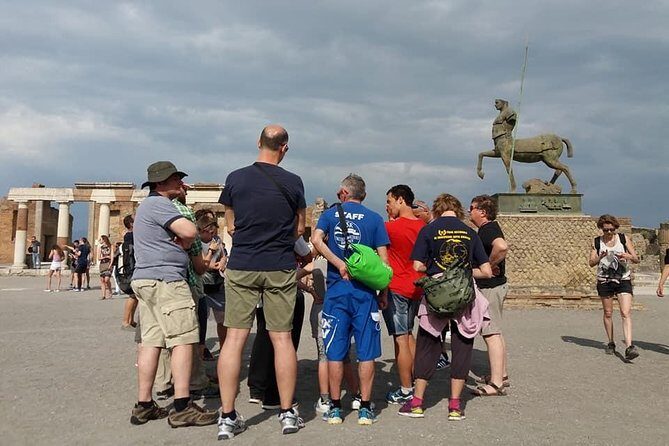
After meeting your guide (they’ll be holding a sign for Sesto Continente Tours), you go into the park and start with the big anchors. The tour route includes landmarks such as:
- Anfiteatro (Amphitheatre)
- Tempio di Apollo (Temple of Apollo)
- Tempio di Giove (Temple of Jupiter)
- Casa del Fauno (House of the Faun)
- Casa del Menandro (House of Menander)
- Casa dei Vettii (House of the Vettii)
- Villa dei Misteri (Villa of the Mysteries)
What I like about this selection is that it spans different “types” of Pompeii. You’re not only seeing architecture; you’re seeing how art and belief showed up in both public and private spaces.
Also, Pompeii changes as the day goes on—light shifts, crowds move, and some details look better from certain angles. A guide’s pacing helps you hit the most meaningful viewpoints in a way that’s hard to do solo.
Casa del Fauno: mosaics that give you an instant visual anchor
The stop at Casa del Fauno is brief, but it’s built around one of Pompeii’s memorable visual moments: a replica of Alexander the Great’s famous mosaic. That battle scene gives you a direct “you are here” reference to ancient art and status—especially helpful if you’re not an art specialist.
Even with a short visit, you’ll come away thinking about mosaics as more than decoration. In Pompeii, they were a statement.
Other walking tours we've reviewed in Pompeii

Tempio di Giove Capitolino: religion framed by power
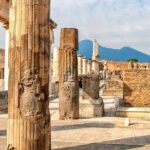
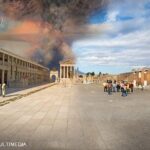
At the Tempio di Giove Capitolino, the guide brings you to a religious site connected to the Roman belief system—Jupiter as the top deity in the Capitol Triad (Jupiter, Juno, Minerva). There’s a natural drama to this stop because you’ll often feel the scale of the temple against the wider region.
Why it helps: when you understand how the Romans framed divinity and authority, other details around the city start to make more sense.
Temple of Apollo: an early religious building you can still sense
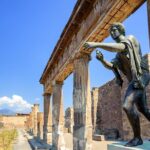
The Temple of Apollo gets described as one of Pompeii’s oldest religious structures. The tour route includes a reproduction connected to Apollo—standing in a pose as if holding a bow and arrow.
This is a stop where you’ll likely get more out of it if you let your guide translate the symbolism for you, rather than just looking for what’s left. Even in ruins, the layout and the art themes help explain what people expected the gods to do.
Anfiteatro Romano: the scale of spectacle
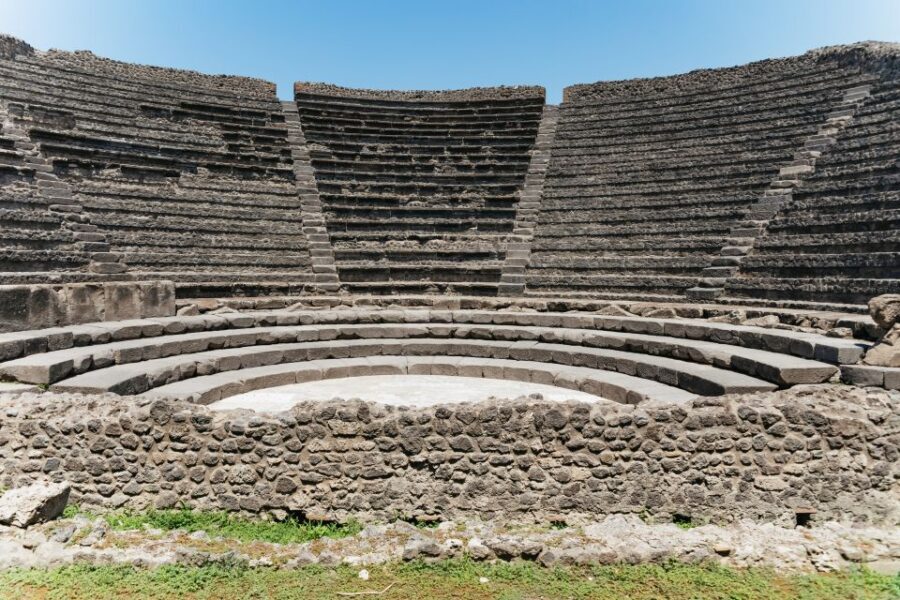
The Roman Amphitheatre is the biggest “wow” stop on many people’s routes. It was built around 80 BCE and could hold up to about 20,000 spectators, arranged in sections by social class. You get to stand where people once watched gladiators and other events.
What’s useful here is not just the size, but the social order implied by the seating. Pompeii’s ruins can feel detached until you remember that these spaces were designed to stage status.
Casa del Menandro: frescoes as the house’s naming story
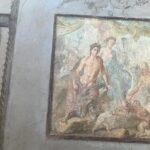
At Casa del Menandro, the name comes from a great fresco featuring the Greek poet Menander (it doesn’t come from the owners’ family name). The guide focuses you on that storytelling through art—an important theme in Pompeii because so many interiors survive because paintings and mosaics were preserved under layers of volcanic material.
Even if the visit is short, it’s a strong example of how Pompeii’s houses were cultural stages.
Casa dei Vettii: spending your freedom in full color
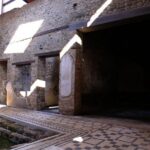
The stop at Casa dei Vettii connects to the story of the Vettii brothers—freed slaves who still showed off their new status. Their home included impressive frescoes and wall paintings.
This is one of the “status tells a story” moments. It helps you understand Pompeii as a city where people were constantly negotiating identity, success, and belonging through what they displayed.
Villa dei Misteri: the long-panel fresco drama
The Villa of the Mysteries is centered on a series of nine scenes painted in sequence on the walls. The topic is a rite of passage for a bride into adulthood and the cult of Dionysus (wine and fertility are tied to that worship).
This is the kind of stop where a guided explanation can make a big difference. A guide can help you see the sequence as a narrative, not random fragments.
Day 2 at the Roman Catholic Sanctuary: a quieter, different kind of Pompeii
Day 2 is a shorter second-day visit to the Roman Catholic Sanctuary of Pompeii. This part is a free visit (ticket included), and it’s scheduled for about an hour.
The Sanctuary is a change of pace from the excavated ancient city. Instead of focusing on the Roman household and public entertainments, you’re stepping into how later communities have related to the place. If you want a break from the nonstop walking and want a more reflective stop, this works well.
If you’re sensitive to heat, Day 2’s lighter schedule can also be a good way to recover your energy before you do anything else in the area.
Price and value: what you’re really buying for $36.12
The tour price is $36.12 per person, and the biggest separate cost is the Pompeii entrance ticket of €22.00 per person, which is not included. So your likely total for the park visit becomes the tour price plus that admission.
Is it still good value? Often, yes, because Pompeii is one of those places where:
- a guided route saves time,
- you get explanations while you’re standing in front of the object,
- and you avoid spending precious hours trying to assemble a coherent plan on your own.
There are also situations where you may not pay the entrance fee for the park: entrance is free for minors under 18, EU seniors +65, and certain categories like journalists and students/teachers from the EU. If that applies to you, the math shifts strongly in favor of the tour.
Small-group size (max 25) also plays into value. You’re paying partly for the pacing and interpretation, not only for “someone to walk with you.”
Pacing, language, and what you should expect from your guide
The tour is offered in English, but the title and the on-the-ground reality can be more flexible than that. One example from a similar situation: a guide had to deliver the full visit in English for a mixed group, yet they were available to repeat in Italian if anyone had trouble understanding.
That tells you two things:
- You’re unlikely to be stuck with zero understanding if your group includes Italian speakers.
- Communication problems can happen with any operator, so build in a little patience and come with curiosity.
One guide name you might hear in connection with this tour is Simone. In one case, Simone’s explanations helped bring the eruption story to life while still keeping the focus on art in the villas. That’s the ideal mix: tragedy plus detail, not just one or the other.
Also, because it’s a walking tour across multiple sites, wear shoes you trust. Pompeii involves plenty of uneven surfaces, and short stop times mean you’ll move often.
Practical tips to make your two days work
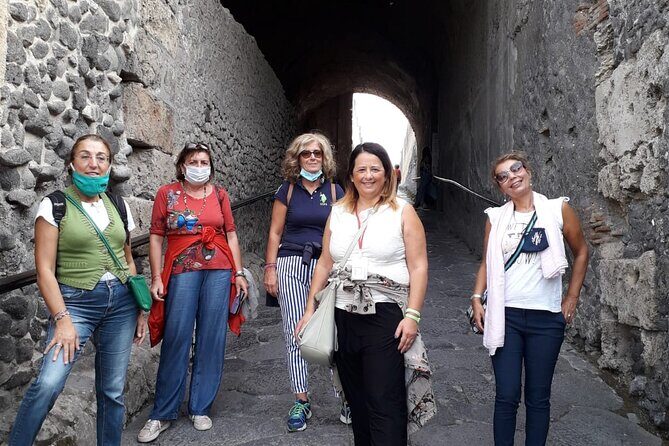
A couple of straightforward choices will make a noticeable difference:
- Plan your entrance ticket day-one: since it’s not included, you’ll want your budget ready and your timing tight so you don’t lose momentum at the start.
- Bring something for sun and water: you’ll be outside for long stretches on the main day.
- Use the guide for context questions: if you’re wondering what you’re looking at, ask. The value is in the explanation right where you stand.
- Don’t try to “win” Pompeii: the tour is built around a set of key sites. Focus on understanding those rather than trying to add everything else.
If the tour is canceled due to poor weather, you’ll be offered a different date or a full refund, and you can cancel up to 24 hours in advance for a full refund. That flexibility is useful in southern Italy, where conditions can change fast.
Should you book this Pompeii tour?
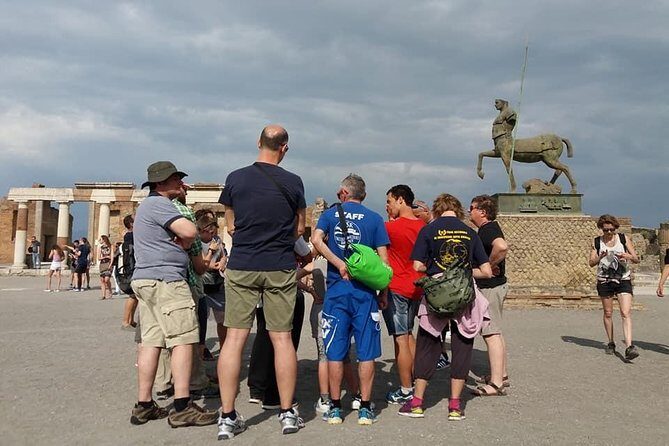
I’d book it if you want a guided route that connects ruins to stories, especially if you’re visiting for the first time and don’t want to feel lost in the park. The “ticket-office help + structured stops + short art explanations” combo is the core value here.
I’d think twice if:
- you already know Pompeii well and prefer total freedom to roam at your own pace,
- or you’re trying to keep the trip extremely low-cost once you add the €22 entrance ticket on top of the tour price.
If you’re aiming for a balanced visit—public spaces, major temples, standout houses, and a second-day change of scenery at the Sanctuary—this format fits that goal.
FAQ
FAQ
What’s included in the tour?
The tour includes facilitation at the entrance to the Ticket Office and the day-to-day guided experience. The Pompeii entrance fee is not included, while the Roman Catholic Sanctuary of Pompeii stop on day 2 has admission included.
Do I need to buy the Pompeii entrance ticket?
Yes. The Pompeii entrance ticket is €22.00 per person and it’s not included in the tour price.
How long is the tour?
It’s described as 2 days (approx.), with Pompeii Archaeological Park on day 1 and the Sanctuary of Pompeii on day 2.
What languages are available?
The tour is offered in English. In a mixed-group situation, one guide was available to repeat explanations in Italian if needed.
Where do I meet the guide?
You meet at Piazza Porta Marina, 80045 Pompei NA, Italy. The tour ends back at the same meeting point.
How big is the group?
The group size has a maximum of 25 travelers.
What’s the cancellation policy?
You can cancel for a full refund up to 24 hours in advance. The experience requires good weather, and if it’s canceled due to poor weather you’ll be offered a different date or a full refund.
Is the tour suitable for everyone?
Service animals are allowed, it’s near public transportation, and most travelers can participate.