REVIEW · POMPEI CAMPANIA
Pompeii: 2 Hours Skip the Line Visit with a Licensed Guide
Book on GetYourGuide →Operated by HP TRAVEL · Bookable on GetYourGuide
One of the fastest ways to make Pompeii click is a guided loop like this. It’s built for a short visit, with a licensed guide and skip-the-line entry, plus targeted stops that explain what you’re looking at instead of leaving you to guess.
I like the way this tour points you toward Pompeii’s everyday details: homes, markets/artisan workshops, and the kinds of rooms where people ate, worked, relaxed, and socialized. You’ll also get the “how did it freeze in time” angle, which helps the site feel more like a snapshot than a ruin.
One thing to keep in mind: the experience is advertised as 2 hours, but timing can run short in real life if schedules change or group members roll onto other tours. So I’d go in with a bit of flexibility, even though the structure is clear.
In This Review
- Pompeii in 2 Hours: what this skip-the-line format gets right
- From Hotel Vittoria to Piazza Esedra: the meeting point that matters
- Skip-the-line entry and headsets: why this tour feels efficient
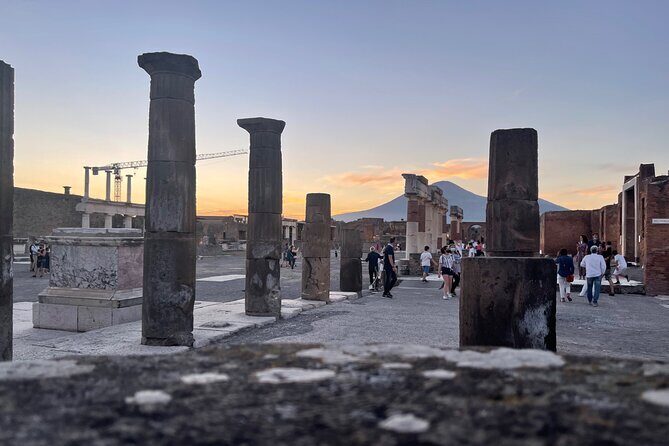
- What you’ll see on the Pompeii route: Forum, houses, workshops
- Thermopolium stop: the ancient fast-food experience
- Lupanare (brothel) visit: Roman society seen through a specific lens
- Terme Stabiane baths: where people relaxed and socialized
- The eruption angle: why Pompeii still feels like a snapshot
- Group size and timing reality check: what can affect your 2 hours
- Price and value: is $58 worth it for a guided Pompeii loop?
- Who this tour is best for (and who should pick a different plan)
- Should you book? My straightforward recommendation
- FAQ
- How long is the Pompeii tour?
- Where do I meet the guide?
- Does the tour include skip-the-line access?
- Are entry tickets included?
- Will I get headsets on the tour?
- What stops are included during the visit?
- What languages are offered?
- What do I need to bring?
- Is cancellation free?
- Can I reserve now and pay later?
- Is this tour a small group?
Pompeii in 2 Hours: what this skip-the-line format gets right
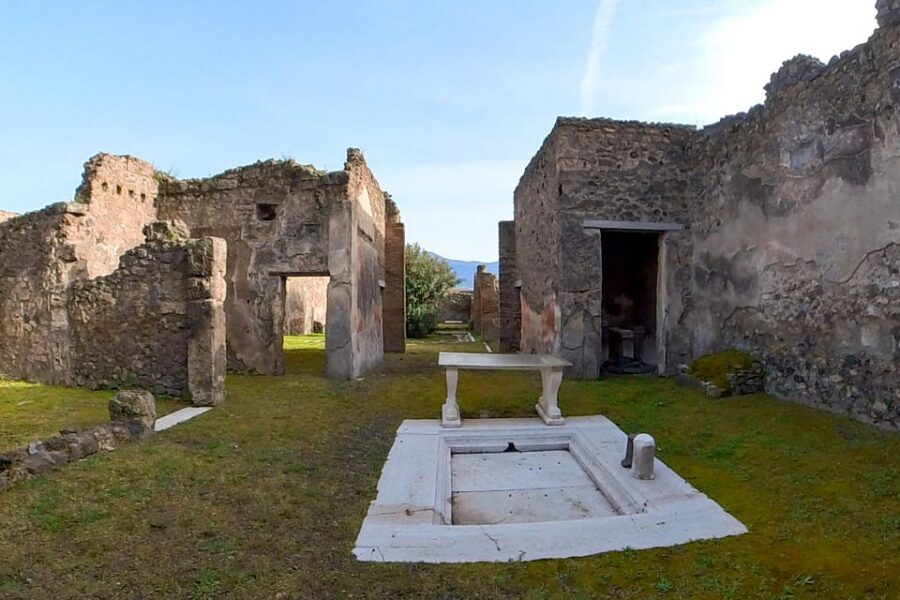
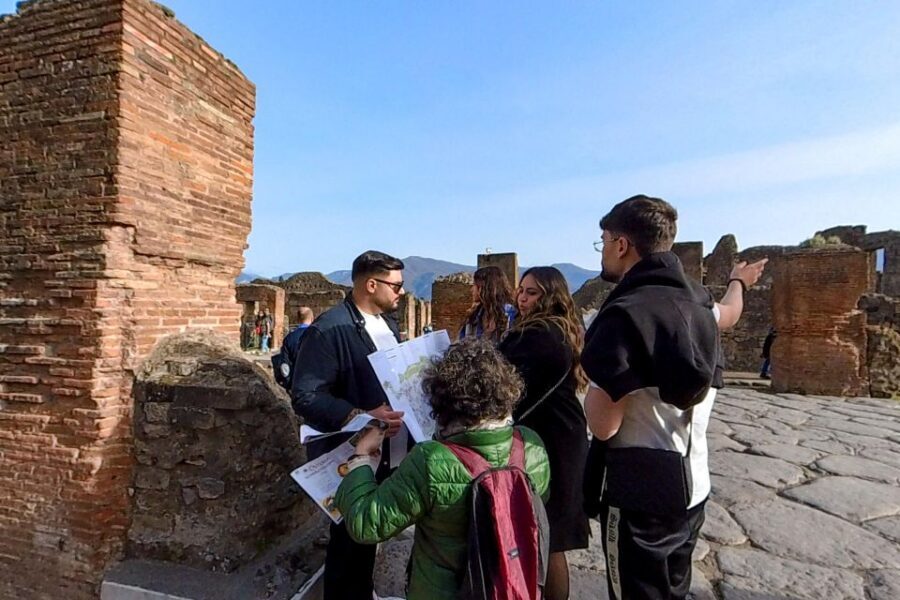
Pompeii is huge, and free-roaming without context can turn into a lot of staring at stones. This tour is designed to keep you moving with a plan, starting from a convenient pick-up area and then moving into the main “read the city” parts of the archaeological site.
The format matters. You get entry tickets handled (so you’re not spending your limited time negotiating the entrance), and you get headsets, which is a big deal in open-air ruins. If you’ve ever been stuck behind someone taller in a museum crowd, you’ll appreciate hearing your guide clearly here.
The tour is led in English or Spanish by a licensed guide. In practice, that language option helps you get a real story instead of just a few bullet points.
From Hotel Vittoria to Piazza Esedra: the meeting point that matters
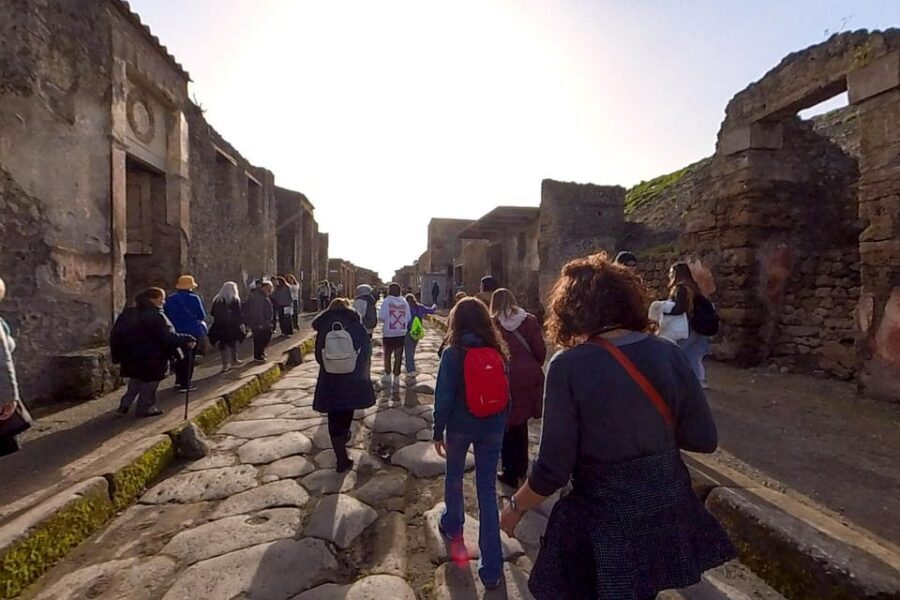
The meeting point is at the ticket office near Hotel Vittoria, in Piazza Esedra. That’s an easy anchor if you’re already near central Stazione area landmarks, and it keeps the start simple.
What I’d do: when you arrive, take a minute to confirm you’re at the exact ticket office entrance, not just somewhere in the square. One recent guide (Carlo) was helpful when someone struggled to find the meeting spot, and that’s a reminder that signage and crowding can make starts feel chaotic even when everything is technically correct.
If you’re running even a little late, communicate quickly. One guide experience (Anna) included a delayed start that affected tour length, so early arrival is your friend.
If you're still narrowing it down, here are other tours in Pompei Campania we've reviewed.


Skip-the-line entry and headsets: why this tour feels efficient
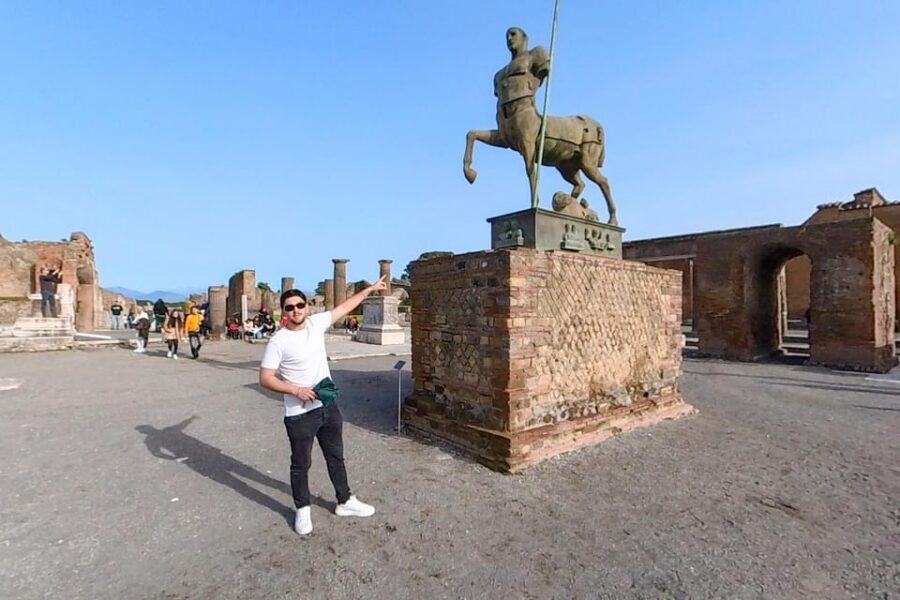
This is a short tour, so the “admin friction” matters. The package includes skip-the-ticket line entry plus a licensed guide and headsets. That combination is what lets a 2-hour plan feel like you saw more than a quick highlight reel.
Another value point: there’s helpdesk support. That’s not just a nice-to-have. It matters when Pompeii day logistics get messy—meeting points, group assembly, or last-minute schedule adjustments.
Also, the tour confirms access via entry tickets arranged for you. If you qualify for a reduced or free ticket, the tour provides help for eligible visitors. Just be ready with the right ID.
What you’ll see on the Pompeii route: Forum, houses, workshops
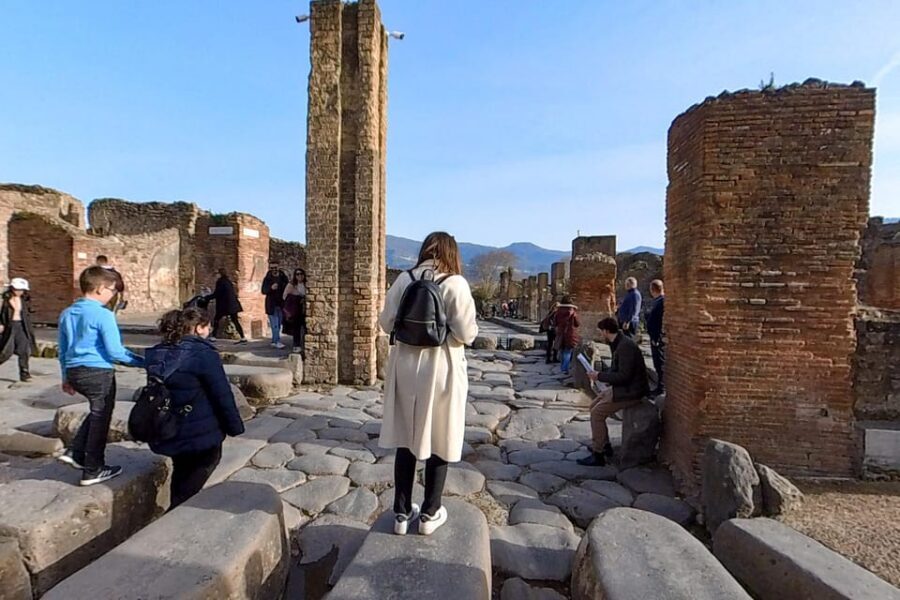
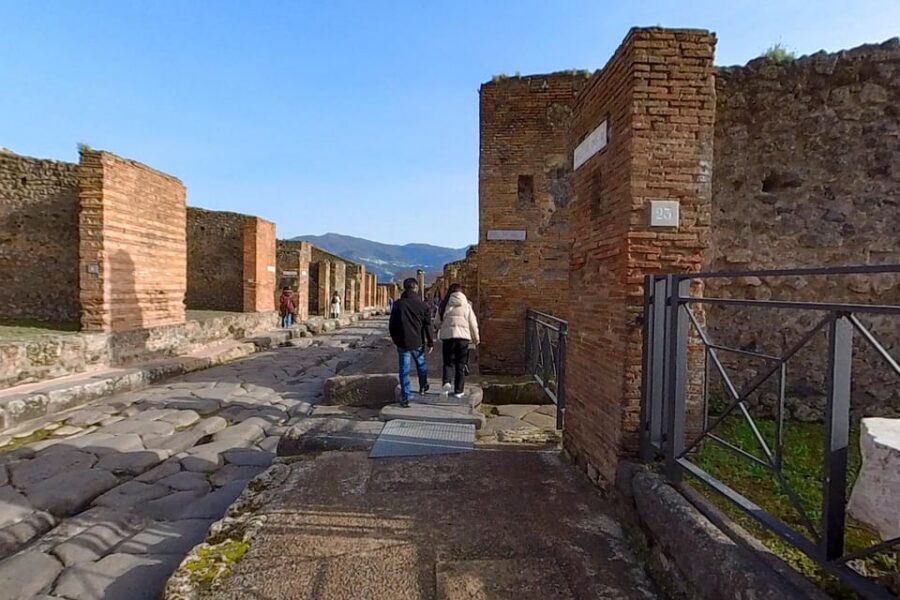
The core of the tour is built around how Pompeii worked as a city, not just famous ruins. The plan highlights:
- The Roman Forum, where politics and commerce mixed.
- An ancient Roman house so you can recognize how private life looked in daily reality.
- Areas tied to markets and artisan workshops, including the kind of spaces where goods were made and bought.
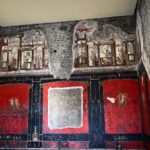
- Frescoes and visible evidence that connect you to daily life—what people talked about, decorated with, and used.
Why this is worth paying for: Pompeii rewards pattern recognition. When your guide explains how the Forum connects to business, or how a house’s layout points to routines, the site stops feeling random.
If you’re the kind of traveler who likes understanding “how it all fit together,” this tour’s structure is aimed directly at you. In a short visit, it’s hard to get that insight on your own.
Thermopolium stop: the ancient fast-food experience
One of the most fun, very human stops is the Thermopolium—an ancient fast food place where Pompeiians grabbed quick meals. Seeing it with a guide turns it from “a restaurant-looking room” into a clear clue about daily habits.
A thermopolium is useful for understanding scale and speed in daily life. People didn’t always plan a long sit-down meal. They ate quickly, kept moving, and relied on neighborhood commerce.
In a tour that only lasts about two hours on paper, this stop is a smart choice. It gives you an immediate way to imagine daily routines, not just impressive stones.
Lupanare (brothel) visit: Roman society seen through a specific lens
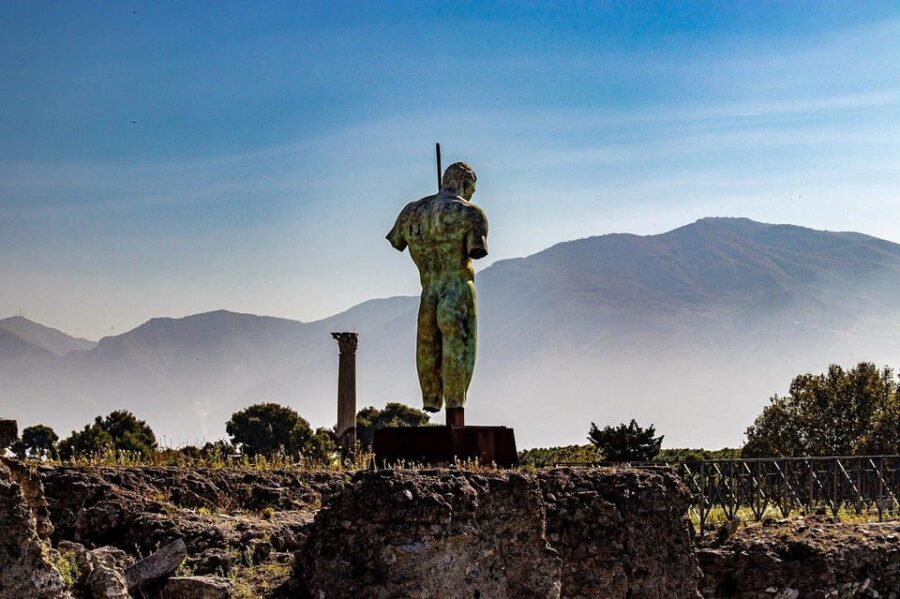
The tour also includes the Lupanare, Pompeii’s brothel. This stop is often awkward for people who don’t expect it on a sightseeing circuit, but it’s historically relevant—and a good guide will keep it grounded in context rather than shock.
What I’d look for: how the site helps you read Roman society through everyday spaces. The Lupanare is one of those places where Pompeii’s survival of physical details makes the past feel specific.
If you prefer a very sanitized version of history, you might find this stop uncomfortable. But if you want Pompeii to represent real city life—ads, commerce, and social systems—this is one of the most direct windows you can get in a short tour.



Terme Stabiane baths: where people relaxed and socialized
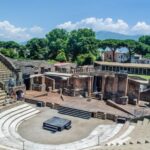
You’ll also visit the Terme Stabiane—the Stabian baths. Baths were social hubs, and your guide’s explanation is what makes them click as more than just “public buildings.”
This stop helps balance the tour. After the Forum (public life), quick meals (daily routine), and the Lupanare (social systems), the baths show another side: relaxation, routine, and socializing.
In a two-hour experience, this kind of pacing is valuable. Pompeii can feel heavy if you stay in only one theme. The baths add a rhythm and give you a more rounded picture.
The eruption angle: why Pompeii still feels like a snapshot
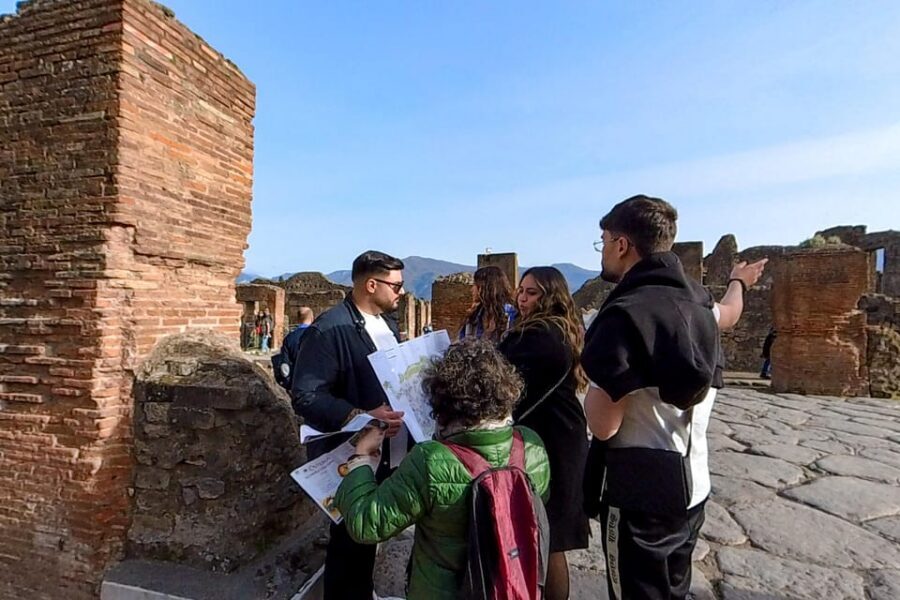
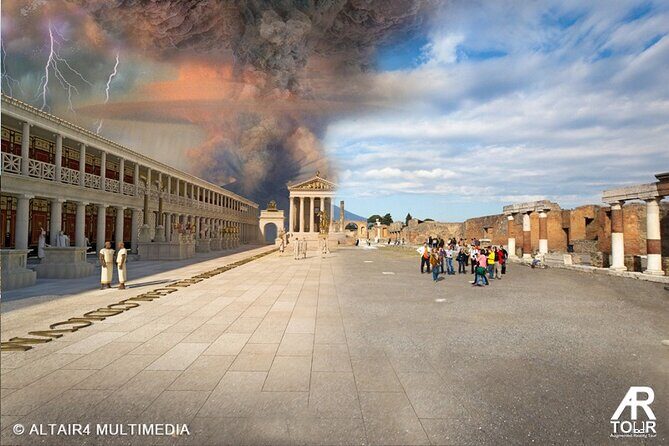
One of the tour’s selling points is the eruption explanation—how Pompeii was “frozen in time.” You’ll hear the story with visible evidence: preserved spaces, readable layouts, and frescoes that help you understand day-to-day life rather than just the moment of catastrophe.
This angle is key for first-timers. Without it, Pompeii can feel like a burial mystery with no daily texture. With it, you start connecting buildings to people—what they cooked, how they shopped, where they met, and how they entertained themselves.
Group size and timing reality check: what can affect your 2 hours
The tour is advertised at 2 hours, but real schedules aren’t always perfect. A couple of recent experiences described shorter-than-promised tours, including instances around 1 hour or 1.5 hours, often tied to group movements or other tours continuing.
So here’s the practical way to plan: treat 2 hours as a best-case target, not a guarantee. If your day schedule is tight—like trains, ferries, or a timed lunch—give yourself buffer time after the tour ends.
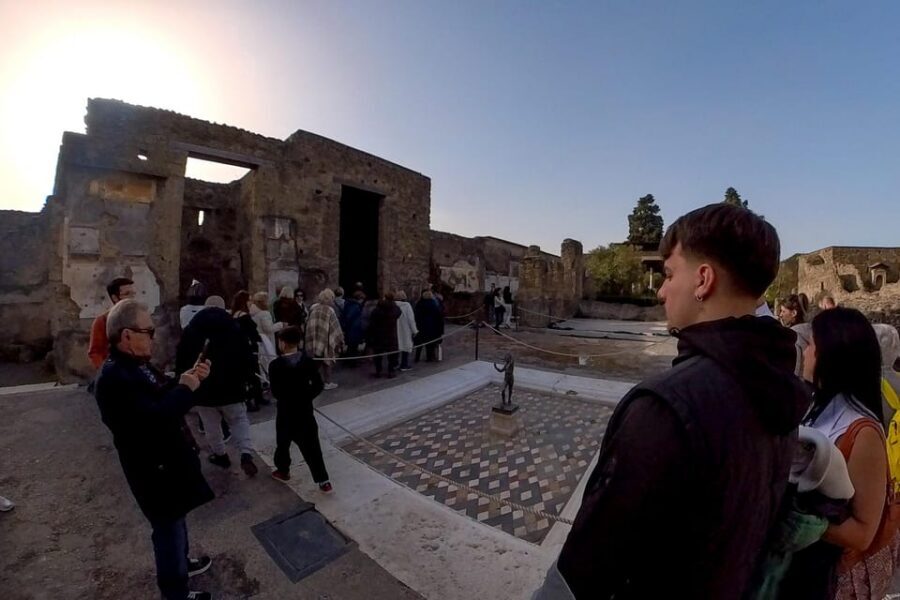
Also, group size can be larger than you might hope. One experience described the group as quite large and suggested smaller groups would be nicer for attention and pace. With headsets, you can still hear your guide, but you’ll have less “space” to linger at specific details.
Price and value: is $58 worth it for a guided Pompeii loop?
At $58 per person, you’re paying for three things that matter in Pompeii:
- Time saved at the entrance via skip-the-line access
- Interpretation from a licensed guide in English or Spanish
- A fixed route built around high-signal stops like the Forum, a Roman house, a thermopolium, the baths, and the Lupanare
The big value question is: what’s included in your ticket bundle. The tour description indicates that entry tickets are included, but at least one experience suggested ticket inclusion wasn’t clear. So I’d do a quick check of your confirmation before you go, or ask at the helpdesk if anything looks off.
Assuming entry is included, this price can be fair for a guided, headset-supported Pompeii experience—especially if it replaces the hassle of planning a route yourself. If you’re comfortable navigating Pompeii solo and you already know what you want to see, you might pay less by going without a guide. But for many first-timers, the guide time is what justifies the cost.
Who this tour is best for (and who should pick a different plan)
This fits best if you:
- Want a short, structured Pompeii visit rather than a half-day of wandering
- Like history explained through rooms and routines (Forum, house, baths, and meal spaces)
- Appreciate a guide who points out what to look for, including frescoes and everyday evidence
Consider a different option if you:
- Need strict timing for the rest of your day and can’t absorb a potentially shorter tour
- Prefer a very small group for maximum flexibility and individualized pacing
- Would rather skip adult-themed sites like the Lupanare
Should you book? My straightforward recommendation
Book this tour if you want Pompeii to feel understandable fast. The combination of skip-the-line entry, headsets, and a route that moves through real-life city areas is the core advantage.
Skip it (or choose another format) if your schedule is too tight for the tour to end early, or if you’re strongly opposed to seeing the Lupanare on a guided walk. And regardless of what you choose, I’d plan to arrive at Piazza Esedra early enough to get your bearings before you join the group.
If you’re aiming for value in a limited window, this one is a solid bet—just give it a little breathing room in your day.
FAQ
How long is the Pompeii tour?
The duration is listed as 2 hours. Starting times depend on availability.
Where do I meet the guide?
You meet at the ticket office near Hotel Vittoria in Piazza Esedra.
Does the tour include skip-the-line access?
Yes. The experience is listed as skip the ticket line.
Are entry tickets included?
Entry tickets for Pompeii are included as part of the activity.
Will I get headsets on the tour?
Yes, headsets are included.
What stops are included during the visit?
The guided tour includes Pompeii plus stops at the Thermopolium, the Lupanare, and Terme Stabiane.
What languages are offered?
The live guide is available in English and Spanish.
What do I need to bring?
Bring your passport or ID card.
Is cancellation free?
Free cancellation is offered up to 24 hours in advance for a full refund.
Can I reserve now and pay later?
Yes. The option is Reserve now & pay later, so you can book without paying immediately.
Is this tour a small group?
The group size can be quite large, so if you want a smaller group experience, you might prefer a different option.