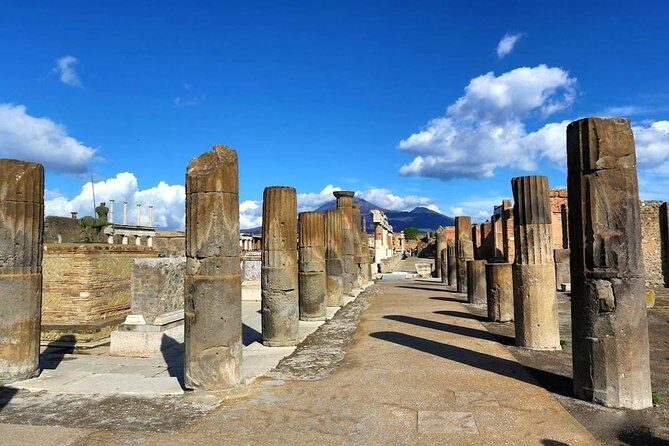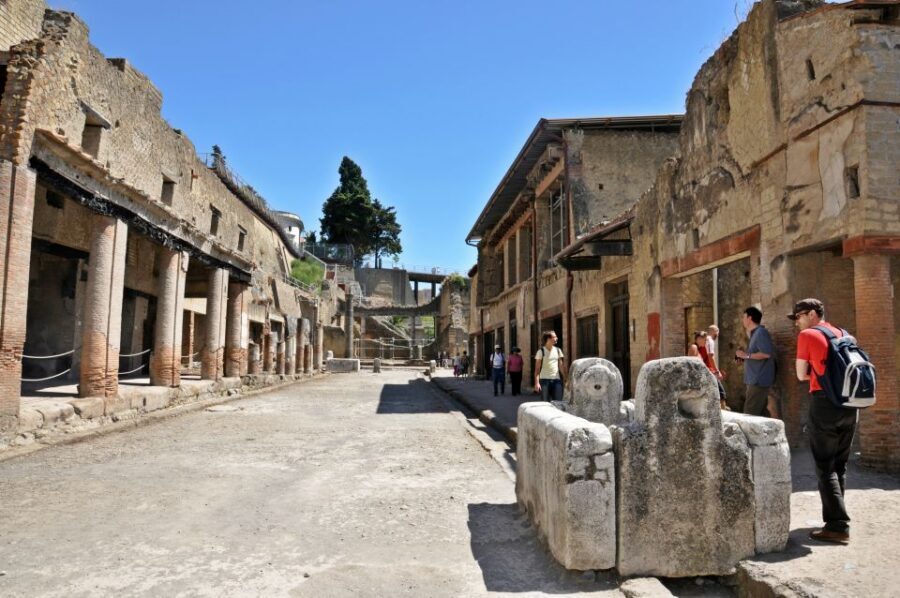
Pompeii feels huge until someone sets the route. This guided visit has a simple goal: help you see the big sights in a short window, with clear explanations of daily life and the city’s destruction. Linda Guadagnuolo runs the show and keeps the ruins from feeling like random stone.
I like the skip-the-line advantage because it protects your time at the entrance. I also love the way the guide points things out as you walk—Roman streets, shops, public baths, houses, the main square, temples, and even the brothel—so you don’t just pass by major areas without context.
One drawback to plan for: Pompeii admission is separate. The park ticket is nominative (you need to match personal data to the people visiting) and there’s a daily cap of 20,000 admissions, so you’ll want to sort your official ticket ahead of time and bring the required ID.
In This Review
- Quick take before you go
- Entering the Pompeii ruins with a guide who keeps you oriented
- Skip-the-line help and the nominative ticket rules since Nov 2024
- Your two-hour circuit: streets, baths, homes, temples, and the brothel
- The plaster casts stop and why it hits so hard
- Value of about $120 plus the park ticket: is it worth it?
- Should you book this guided Pompeii tour?
- FAQ
- How long is the guided tour of Pompeii?
- Is the tour offered in English?
- Is the Pompeii park admission ticket included in the price?
- What are the requirements for the nominative Pompeii admission ticket?
- Is there a daily limit for Pompeii admissions?
- Do I get skip-the-line entry?
- Where does the tour start and end?
- Will I receive a mobile ticket?
- What is the cancellation policy?
Quick take before you go
- Skip-the-line support helps your 2 hours start faster than self-guided entry
- Linda Guadagnuolo’s background and humor make the facts easier to hold onto
- A tight walking route through streets, baths, houses, the main square, temples, and the brothel
- A planned stop for the plaster casts so you get the emotional and historical context
- Private for your group (not a mixed group with a headset and chaos)
- Real-world patience when plans slip, because the tour style is flexible when possible
Entering the Pompeii ruins with a guide who keeps you oriented
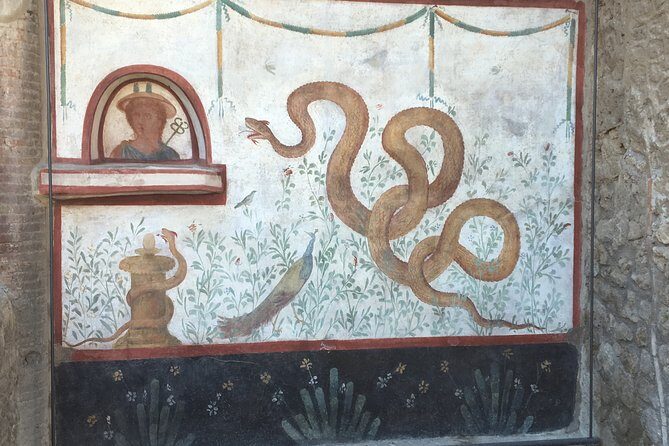
Pompeii is big. Even if you think you’ve got a handle on it, the streets and buildings can blur together fast. The value here is that the guide gives you a route that makes sense, so you spend less time figuring out where you are and more time noticing what matters.
This is a guided 2-hour circuit through the core highlights of the archaeological park. You’ll move from Roman street life into civic spaces like baths and the main square, then into religious areas with temples, and finally into more unusual stops like the brothel. The guide also slows down when it counts, so you can connect what you’re seeing to how people lived before the eruption.
I also like the tour style: interactive, not lecture-only. Linda asks questions to keep you engaged, and she uses humor without turning the site into a joke. That matters at Pompeii, where you want the information to land, but you also don’t want to feel stuck in a stiff museum talk.
Another plus: you may get access to two buildings not usually open to the public, which can be the difference between a standard highlights tour and something that feels more special. (It depends on what’s open on the day, but the possibility is there.)
And while Pompeii can get crowded, the pacing aims to keep you away from the worst bottlenecks. You’re not sprinting in a cattle-call line with a headset; you’re walking with a person who cares that you see the right things in the right order.
Other guided tours in Pompeii

Skip-the-line help and the nominative ticket rules since Nov 2024
The official Pompeii park admission ticket is not included in the tour price. That separate ticket is the one with the new nominative rules that started in November 2024, plus a daily limit of 20,000 visitors.
Here’s the practical part you’ll want to follow:
- When you buy the official admission online (the tour info points to TicketOne), you fill in personal fields for the ticket holder.
- When you arrive in Pompeii, you must bring the ID or passport to show before entering.
- If your ticket wasn’t purchased with the correct personal data for the people entering, it can turn your day into a hassle.
- If you arrive without a pre-purchased park ticket, you can buy at the ticket counter, but the ID/passport requirement still applies.
This is also where the skip-the-line support helps. Even though you still have to sort admission, you’re not stuck as long in the chaotic start-of-day queues. The result is that the guided part actually feels like a “visit,” not an extended waiting room.
For the tour activity itself, you’ll have a mobile ticket, and you should receive confirmation at booking. The start is in Pompeii (listed as 80045 Pompei, Metropolitan City of Naples), and the tour ends back at the meeting point.
You’ll also want to know what isn’t included. Private transportation isn’t included, so you’ll be handling your own ride to and from Pompeii (public transport is nearby, which helps). Service animals are allowed, and the tour is described as suitable for most travelers.
One small real-life tip: if you’re coming from the train station area, use the entrance at the bottom of the road—the train-station entrance tends to be quieter. It’s the kind of detail that saves stress when you’re on a tight schedule.
Your two-hour circuit: streets, baths, homes, temples, and the brothel
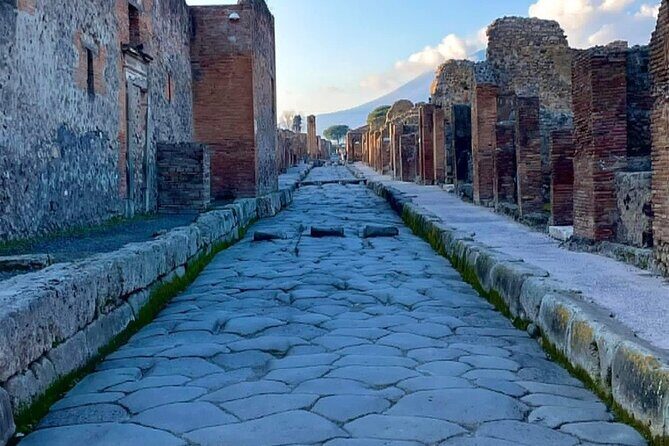
The tour is structured around seeing Pompeii’s big “story stops.” In about two hours, you’ll cover the essentials without wandering aimlessly across the sprawling site.
You start with the main Pompeii Archaeological Park area, then the guide routes you through:
- Ancient Roman streets and shops: you’ll connect buildings to street-level life, not just architecture on paper
- Public baths: an easy way to understand daily routines, social life, and how people spent time
- Ancient houses: you’ll see what domestic spaces looked like and how those spaces reflected status and routines
- Main square: where civic life played out, with the feeling of a community center
- Temples: so the religious areas don’t stay mysterious or generic
- The brothel: an important piece of the full picture, including how Pompeii functioned as a real city
What I like about this setup is that you’re not just collecting “must-see” photos. The guide’s commentary focuses on daily life, and that turns the site into a lived-in place. You start to recognize patterns—where people gathered, where they worked, where they relaxed—which makes the layout easier to follow as you keep walking.
Also, Pompeii’s destruction isn’t treated like a dramatic afterthought. The explanations tie destruction to what you’re looking at now, including what the eruption changed and why the site became such a powerful time capsule.
The pace tends to feel relaxed, but focused. You can expect to hit all the planned highlights, not just the first few because of slow-moving group logistics.
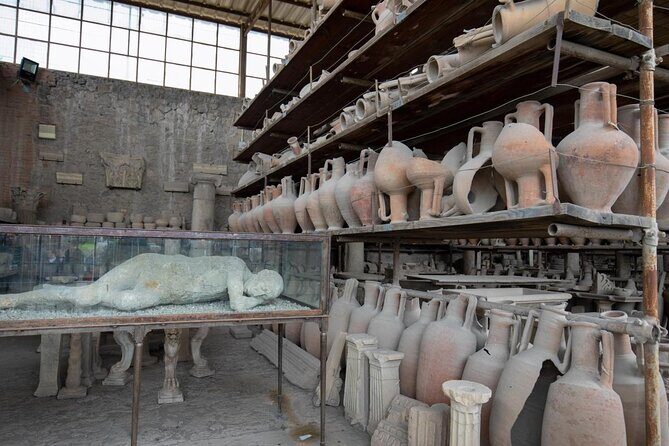
And at some point in the route, the tour includes a stop to take in the famous plaster casts, which is where the emotional impact really starts to settle in. (That’s worth its own section, because it’s not just a photo op.)
The plaster casts stop and why it hits so hard
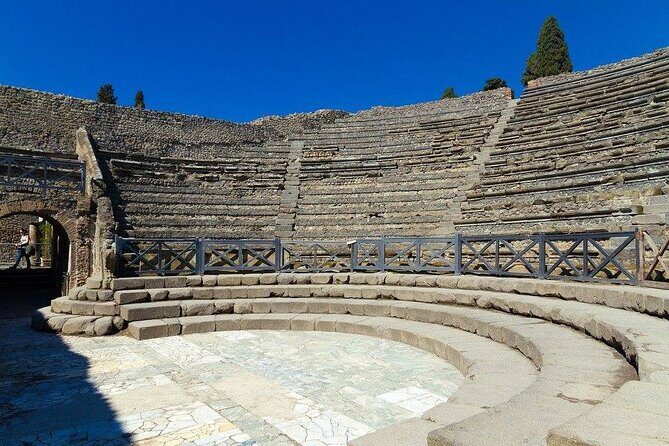
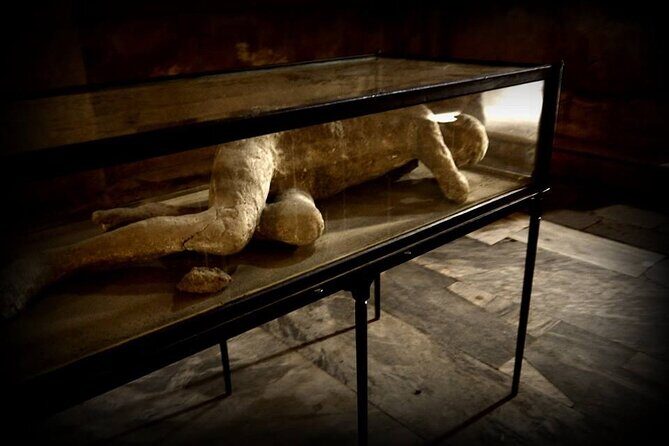
Pompeii’s plaster casts are famous for a reason. The tour includes a dedicated stop to take them in, and the guide’s commentary helps you understand what you’re seeing beyond the surface.
What makes this stop work is the buildup. When you’ve already walked past streets, baths, homes, and temples, the casts don’t feel like random tragedy. They feel like the final moment of real people—people with routines, places they lived, and a city’s daily rhythm that got interrupted.
This is exactly where a guided explanation earns its keep. Without context, you might look at the forms and think only of the spectacle. With the guide’s framing—plus the earlier talk about daily life and the destruction—you’re more likely to notice posture, placement, and the human scale of the disaster.
It’s also one of the reasons I’d recommend booking a guide even if you’re short on time. In a self-paced walk, it’s easy for this stop to become another “thing you saw.” With a guide, it becomes a moment you actually understand.
Value of about $120 plus the park ticket: is it worth it?
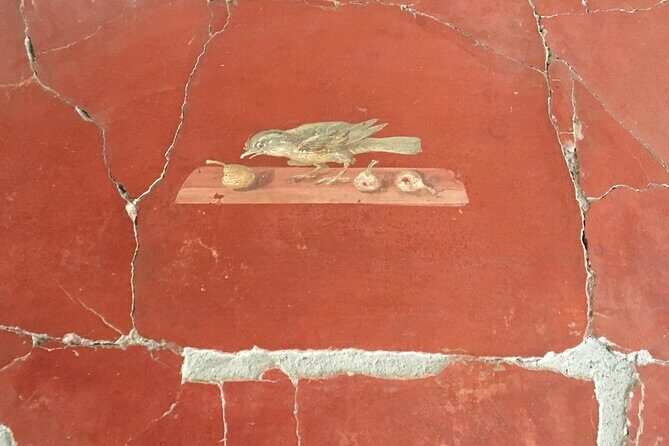
The headline price is $120.68 per person for an approximately 2-hour English guided tour. The admission ticket for the Pompeii Archaeological Park is not included, and the separate park admission is listed as €19.00 per person.
So what are you really paying for? Not just someone walking next to you. You’re paying for:
- Time saved at entry through skip-the-line support
- A guide who knows how to route you through Pompeii’s main sights
- Explanations that connect what you see to daily life and the city’s destruction
- A structure that helps you actually cover the highlight set in the limited time window
If you’re on a tight itinerary—say you’re fitting Pompeii between Naples, the Amalfi Coast, or a train schedule—this format tends to make the most sense. You also get the benefit of a private tour for your group, which usually means the pace and route can match your needs better than a large shared group.
I’ll also say this: the ticket rules since November 2024 are not small. If you’re the type who loves last-minute flexibility, the nominative admission requirement (and daily cap of 20,000) can feel annoying. In that case, you’re not “wasting” the guide—you’re just taking on planning work for the official entrance ticket.
Still, there’s value here, especially when the guide is the kind of person who handles real-world delays calmly. Linda’s approach comes up in multiple accounts: when trains ran late, the priority was getting everyone settled and then still delivering the planned tour time, with patience and no drama. That’s the kind of competence that matters when you’re traveling.



Should you book this guided Pompeii tour?
I’d book this tour if you want:
- A high-structure Pompeii visit in about two hours
- The plaster casts stop with meaningful context
- An English guide who uses humor and checks your understanding (not a silent walking museum experience)
- A private setup that avoids headset-and-herd dynamics
I’d think twice if you know you hate planning for nominative ticket requirements. You’ll need to buy the official park admission separately and bring ID/passport matching the ticket holder details. If that sounds like your worst travel chore, consider whether you’d enjoy the site more at your own pace with time buffer.
One more practical nudge: if you do book, set yourself up for success by buying the official entrance ticket early enough to avoid daily-limit stress. Then arrive ready to show your ID at entry. That’s how you turn Pompeii into a win instead of a scramble.
If you want Pompeii as a story you can follow—streets to baths to homes to temples to the plaster casts—this is a solid choice.
FAQ
How long is the guided tour of Pompeii?
It’s about 2 hours.
Is the tour offered in English?
Yes, the tour is offered in English.
Is the Pompeii park admission ticket included in the price?
No. The admission ticket to the Archaeological Park is not included in the tour price.
What are the requirements for the nominative Pompeii admission ticket?
Since November 2024 the park ticket is nominative, and you should bring the ID or passport to show before entering. You also need to match the personal data used when purchasing the ticket.
Is there a daily limit for Pompeii admissions?
Yes. There is a daily limit of 20,000 admissions.
Do I get skip-the-line entry?
The tour highlights mention skip-the-line ticket support for Pompeii entry.
Where does the tour start and end?
It starts in Pompeii (80045 Pompei, Metropolitan City of Naples, Italy) and ends back at the meeting point.
Will I receive a mobile ticket?
Yes, the experience includes a mobile ticket.
What is the cancellation policy?
You can cancel for a full refund up to 24 hours before the experience’s start time.