REVIEW · POMPEII
Discover Pompeii on this Guided Walking Tour of the Buried City
Book on Viator →Operated by Gray Line I Love Rome by Carrani Tours · Bookable on Viator
Pompeii is history you can walk through. This guided walking tour of the buried city is a fast, well-structured way to make sense of what you’re seeing, without losing hours to queues. You also get headsets, so the guide’s explanations stay clear as you move.
I like that the tour keeps the focus on why Pompeii looked and worked the way it did, not just what’s standing there. You’ll get expert context on the city’s origins, its setting near the Sarno River and port, and what the remains can tell you about everyday Roman life.
One thing to keep in mind: language options depend on your group. If you book German or French, there’s a minimum number of participants needed, and if that threshold isn’t met the tour runs in English instead.
In This Review
- Key takeaways before you go
- A quick start at Piazza Esedra that saves your vacation hours
- Stop 1 in Pompeii: the buried city’s setting, size, and early roots
- Walking through daily life: what the remains can actually teach you
- Vesuvius explained the way it helps you see the ruins
- Languages, headsets, and audio guides: where to be confident (and where to double-check)
- Price and value: what you get for $63
- Who this tour suits best (and who might want a different plan)
- Practical tips that make the experience smoother
- Should you book this Pompeii guided walking tour?
- FAQ
- How long is the guided Pompeii walking tour?
- What is included in the price?
- Do I need a physical ticket?
- Where do I meet the guide?
- What languages are available for the guided tour?
- Are headsets provided?
- Do I need to bring an ID or passport?
- Is free cancellation available?
Key takeaways before you go
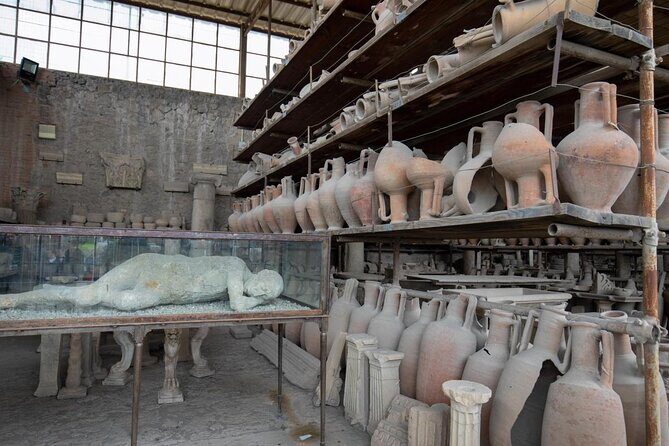
- Admission included: you avoid having to solve ticket math while you’re on vacation.
- Headsets are provided: clearer narration as the group moves around the site.
- Max 15 travelers: small-group pacing, which matters in a place this spread out.
- Two-hour format: enough time to learn and see the core without feeling dragged.
- Language availability can shift: French/German may switch to English if minimum numbers aren’t reached.
- Audio guides vary by season: available languages change from November–March to April–October.
A quick start at Piazza Esedra that saves your vacation hours
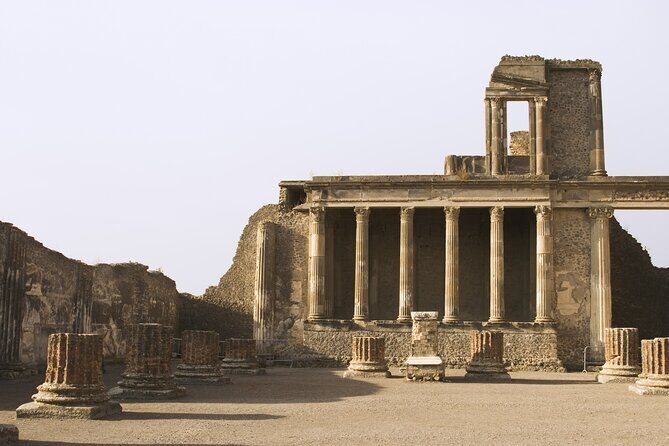
This tour begins at Piazza Esedra, 2, 80045 Pompei NA and returns you to the same meeting point. That simple loop matters in Pompeii, because once you’re inside the Archaeological Park, you don’t want to keep re-navigating your way back.
You’ll use a mobile ticket, and the experience is designed to help you bypass the long ticket line on arrival. In practical terms, that means you spend your time looking at Roman street corners instead of standing still while everyone else catches up.
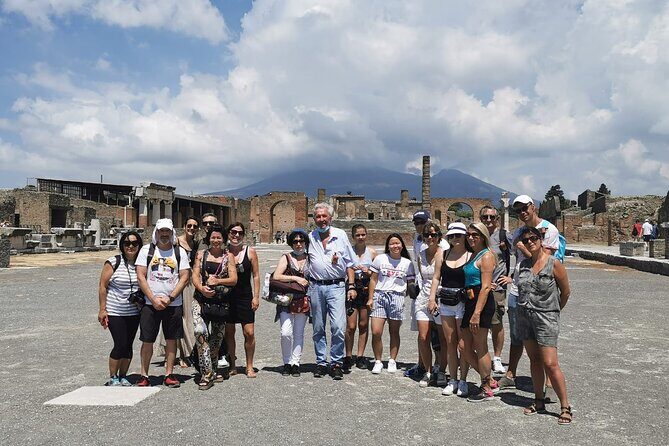
With a maximum of 15 travelers, the group moves at a pace that fits a walking visit. And since you get headsets, you won’t be fighting to hear the guide over your own questions, other groups, or the open-air noise.
Other walking tours of the Pompeii ruins


Stop 1 in Pompeii: the buried city’s setting, size, and early roots
Your main experience is centered on the Pompeii Archaeological Park, where the city sits on a plateau shaped by lava from Vesuvius. As you walk, the guide’s explanations give you a mental map: Pompeii controlled the valley around the Sarno River, and its port was fed by the river delta—an important detail if you want to understand why this place mattered.
The tour also brings you back to the city’s beginnings, which aren’t crystal clear but are still fascinating. The oldest traces go back to the 7th–6th centuries BC, when early tuff walls (called pappamonte) enclosed about 63.5 hectares. That’s a helpful anchor point because it turns Pompeii from one dramatic eruption into a long-lived settlement.
The city’s growth is explained as a mix of peoples—Etruscans, Greeks, and other Italic groups—which helps you see Pompeii as more than a Roman showpiece. Even in a short, two-hour visit, those origins make the later Roman neighborhoods feel less random and more like a real society that kept changing.
What I like about this approach is that it gives you context before you start recognizing patterns. Once you understand how the land and water shaped the city, the ruins feel less like disconnected walls and more like a functioning layout.
Walking through daily life: what the remains can actually teach you
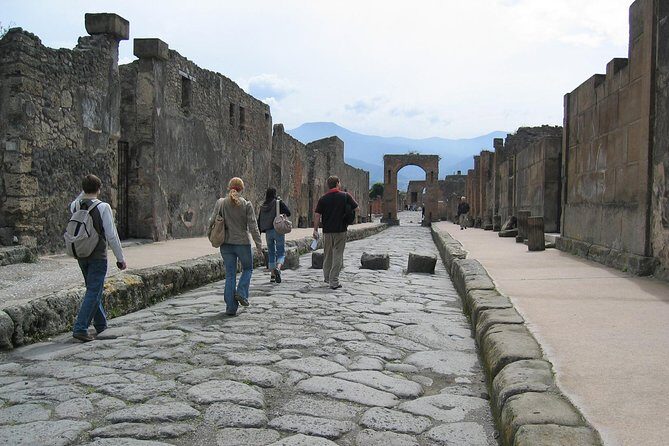
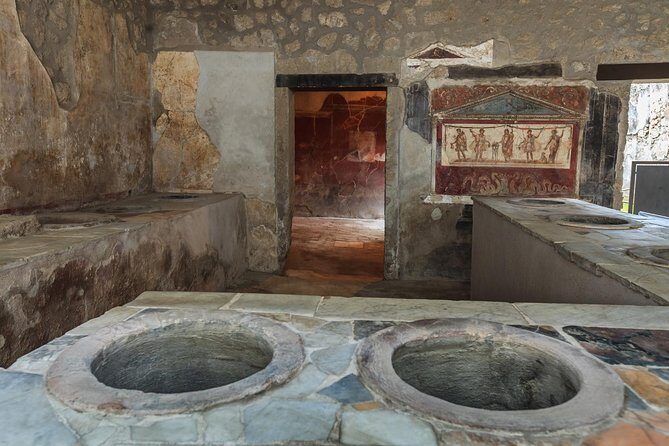
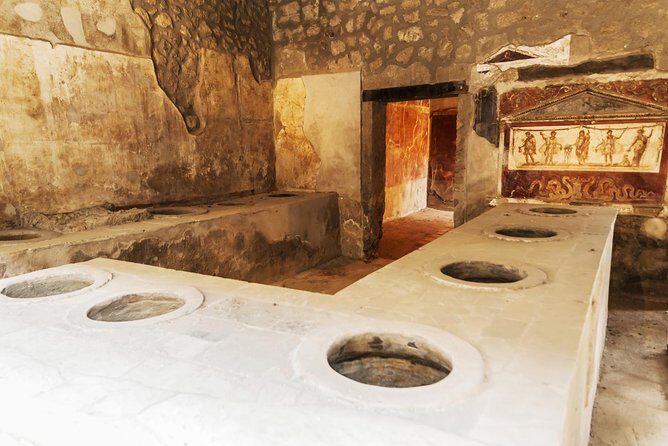
A big part of this tour is that it doesn’t treat Pompeii as a museum of disasters. Instead, the guide uses the remains to show the daily life of Romans, and that’s what makes the walk click.
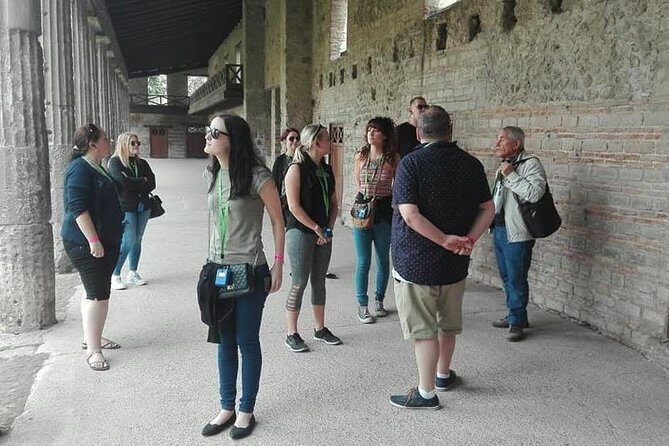
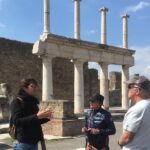
You’ll follow a guided path through the UNESCO-listed site, with the narration tied to what you’re standing next to. The headsets are key here: as you turn corners and move through open spaces, it’s easy to miss details if you’re relying on standing close to the speaker.
Even though you’re walking through ruins, you’ll be encouraged to think like a resident. The guide’s job is to help you connect the built environment to routine—commerce, public life, and private spaces—so you can picture how people lived before the eruption stopped time.
The experience is offered in English, Spanish, German, or French (live), and that’s not just a comfort feature. When the language matches, it’s easier to ask quick questions and keep up with the story without feeling lost.
Vesuvius explained the way it helps you see the ruins
While this is not a volcano-standpoint excursion, the guide’s narration links Pompeii to the volcano that froze it in place. You’ll hear about Mount Vesuvius as a somma-stratovolcano in the Bay of Naples region, about 9 km east of Naples.
The tour context also explains that Vesuvius is part of the Campanian volcanic arc, and it has a large cone partly encircled by the steep rim of a summit caldera. That matters because it helps you understand why this eruption was so sudden and catastrophic for the city below.
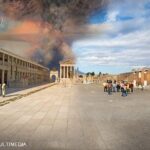
As you walk Pompeii’s streets and structures, this volcanic context changes how you interpret what’s preserved. Instead of treating the ruins as fragile ruins, you start seeing them as snapshots—frozen moments where ordinary life was interrupted by a force on a different scale entirely.
If you’re the type who likes to know the “why” behind the “wow,” this portion of the tour is one of the most satisfying parts. It turns dramatic geography into something you can actually picture.
Languages, headsets, and audio guides: where to be confident (and where to double-check)
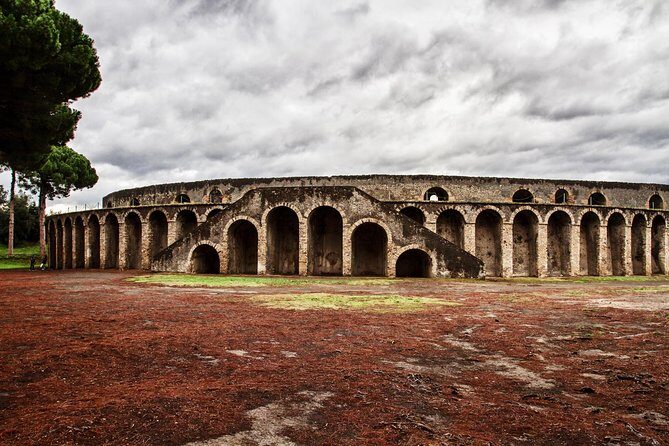
This tour is designed for multi-language comfort, but it does come with a few practical constraints you should know up front.
For live guides, the tour is offered in English, Spanish, German, and French. However, there’s a minimum number of participants required for French and German. If that minimum isn’t met, the tour will be conducted in English instead. If German or French is important for your group—especially for kids or teens who need every detail—plan to confirm close to departure.
On top of the live narration, there are audio guides available in additional languages. The exact language set changes by season:
- From November to March: Italian, Portuguese, Chinese, Russian, Japanese
- From April to October: Italian, German (Mondays to Fridays), French, Portuguese, Chinese, Russian, Japanese
This is one of those “small detail that changes everything” items. If you’re visiting during the off-season, you might want to verify that your preferred audio language is included.
The good news is that headsets are included and that they help you stay engaged even when the group is moving. In Pompeii, where the ground can slope and pathways can funnel, being able to hear the guide cleanly is a real quality-of-life upgrade.
Other walking tours we've reviewed in Pompeii

Price and value: what you get for $63

At $63 for about two hours, the value depends on what you’d otherwise pay to self-navigate.
Here’s what’s bundled:
- A professional guide (in your selected live language, if the minimum is met)
- Admission ticket included
- Headsets
- Audio guides in multiple languages (season-dependent)
- A structured walk through the Pompeii Archaeological Park with an expert explanation focus
That combination is usually the sweet spot for Pompeii. You’re not paying extra for logistics, and you’re not spending your limited time trying to piece together context from signage that may not match your pace or interests.
Also, skipping the ticket line can be worth more than it sounds. Pompeii can feel time-tight once you’re inside, so every minute you don’t lose waiting is a minute you can spend learning and looking.
If you’re planning to visit Pompeii anyway, this kind of guided format is often the best “learning per hour” choice—especially for first-timers.
Who this tour suits best (and who might want a different plan)
This is an excellent pick if:
- You want a short, guided overview that still feels meaningful
- You’re visiting with limited time and want to make Pompeii click fast
- You prefer explanations in English, Spanish, German, or French
- You’d rather hear the story than spend your energy reading every label
It may be less ideal if:
- You need guaranteed German or French narration no matter what. Because minimum participant rules can switch the tour to English, you should be comfortable with that possibility.
- You’re hoping for a very deep, slow, building-by-building study. This is about smart orientation and learning key ideas within roughly two hours.
Practical tips that make the experience smoother
Pompeii rewards comfy shoes. You’ll be walking a lot over uneven and historic terrain, so plan for traction and long days on your feet.
Since beverages and lunch aren’t included, I’d plan snacks or water around your schedule before or after the tour. You’ll enjoy the explanations more if you’re not also managing hunger or thirst halfway through.
Bring a valid ID/passport for entry verification, since that’s required for the experience.
And one small but important habit: arrive early enough to find Piazza Esedra, 2 without stress. A two-hour tour moves fast, and you’ll get more value if you’re not rushing at the start.
Should you book this Pompeii guided walking tour?
I’d book it if you want a time-efficient Pompeii visit with real interpretation and clear audio support. The headsets, admission included, and the focus on how Romans lived make the experience feel like more than a quick walk past stones.
The main reason to pause is language certainty. If you’re traveling with German or French as a must-have, check that your specific departure meets the minimum participant requirement, and consider how the audio guide language by season might affect your group.
If you can live with that flexibility, this tour is a solid way to turn Pompeii from scary ruins into a readable story in just about two hours.
FAQ
How long is the guided Pompeii walking tour?
It lasts about 2 hours.
What is included in the price?
The price includes the Pompeii admission ticket, a professional guide, headsets, and audio guides in additional languages. Beverages and lunch are not included.
Do I need a physical ticket?
No. You’ll use a mobile ticket.
Where do I meet the guide?
You meet at Piazza Esedra, 2, 80045 Pompei NA, Italy. The tour ends back at the same meeting point.
What languages are available for the guided tour?
The tour is offered in English, Spanish, German, or French. Audio guides are available in additional languages depending on the season.
Are headsets provided?
Yes. Headsets are included so you can hear the guide as you walk.
Do I need to bring an ID or passport?
Yes. You’ll need a valid ID/passport for entry verification.
Is free cancellation available?
Yes. You can cancel for a full refund up to 24 hours in advance of the experience start time.