REVIEW · POMPEII
Visit Pompeii with a local expert guide
Book on Viator →Operated by Guide Turistiche Campania di Febronia Amato · Bookable on Viator
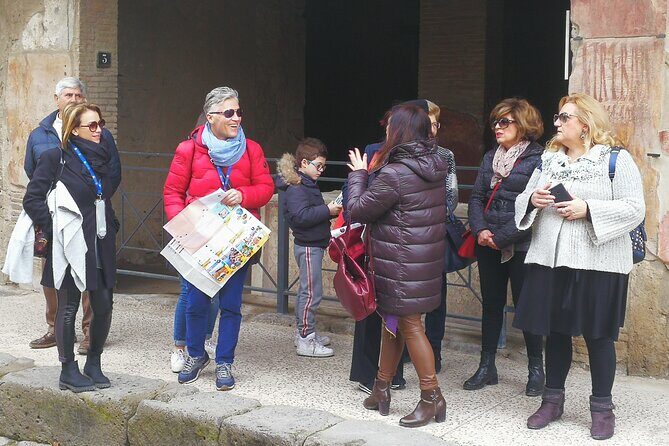
Pompeii clicks faster with a real guide. This private 3-hour walk is built around two high-impact areas, with a certified local expert steering you through the buried city’s public spaces and daily life. You also get to choose your language, so the story lands, not just the scenery.
I especially like the focus and pacing: you’re not rushing a giant checklist. Instead, you’ll spend real time at the Foro de Pompeya and Teatro Grande, with admission tickets included for both stops.
One thing to consider: it’s a 3-hour tour. If you’re the type who wants to wander every side street on your own, you might wish you had more time after the guided route ends back at Piazza Esedra.
In This Review
- Key highlights you’ll care about
- A 3-Hour Private Pompeii Plan With Local Expert Guidance
- Start at Piazza Esedra: Simple meeting point, smooth flow
- Stop 1: Foro de Pompeya and the pulse of Roman public life
- Stop 2: Teatro Grande for how Pompeii entertained and socialized
- Tickets and language choice: making sure you actually follow the story
- Price and value: what $210.52 per group really buys
- Who this tour suits best (and who might want more time)
- Practical tips to get the most out of your Pompeii morning
- Should you book this Pompeii guided visit?
- FAQ
- FAQ
- How long is the Pompeii guided tour?
- What is the group size for this Pompeii experience?
- Where do I meet the guide?
- What time does the tour start?
- Are admission tickets included?
- Does the price include the guide?
- Is private transportation included?
- What’s the cancellation policy if the weather turns bad?
Key highlights you’ll care about
- Private group up to 10: only your group on this Pompeii visit
- Tickets included at both stops, so you’re not juggling paperwork
- Foro de Pompeya (30 minutes) centered on Roman public life
- Teatro Grande (50 minutes) focused on dating and how people used it day to day
- Local expert guide service with proven enthusiasm in the role
- Choose your language, so the details actually make sense
A 3-Hour Private Pompeii Plan With Local Expert Guidance
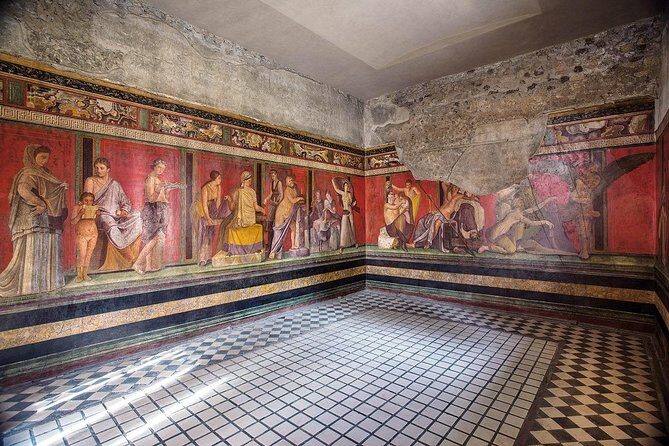
Pompeii can feel overwhelming fast. The ruins are huge, and it’s easy to look at stone and miss what it once meant. This tour helps you get your bearings fast by staying tight on two places where you’ll understand the city’s rhythm: what people did in public, and how they spent time together.
You’ll meet at Piazza Esedra, 80045 Pompei, and the activity ends back at the same meeting point. That matters more than it sounds. It keeps the visit simple, especially if you’re coming from Naples by train or bus and you don’t want to deal with extra logistics on arrival.
The tour runs about 3 hours, and it’s set up to feel like a guided walk through time rather than a lecture from start to finish. The big payoff is that the guide’s job is to connect what you see to how the people around you would have lived—so Pompeii becomes a place with routines, not just a dramatic tragedy.
Other guided tours in Pompeii

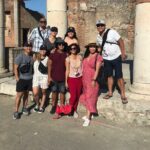
Start at Piazza Esedra: Simple meeting point, smooth flow
If you’ve ever shown up to a Pompeii meeting point and spent 20 minutes trying to figure out where everyone convenes, you know why this part is worth noting. Starting at Piazza Esedra keeps things straightforward, and the tour notes say it’s near public transportation.
Also, the tour is described as a private experience. That usually means the guide can manage the pace around your group—stopping when you need a moment, moving when it’s time to keep the day from dragging. In a site where crowds can surge, having a guide who can manage timing makes the experience feel calmer.
There’s no private transportation included. So you’ll want to plan your own way into Pompeii ahead of time. The upside: you’re staying flexible once you’re there, and the walking part stays the focus.
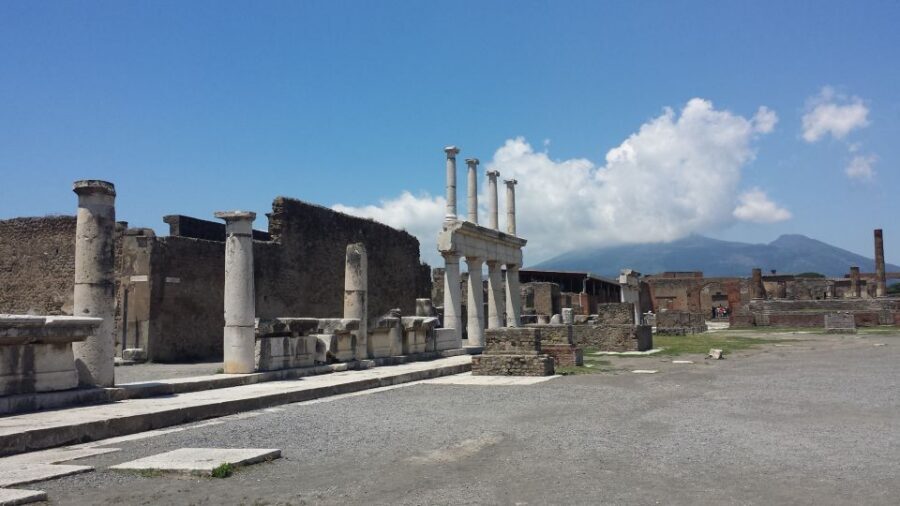
Stop 1: Foro de Pompeya and the pulse of Roman public life
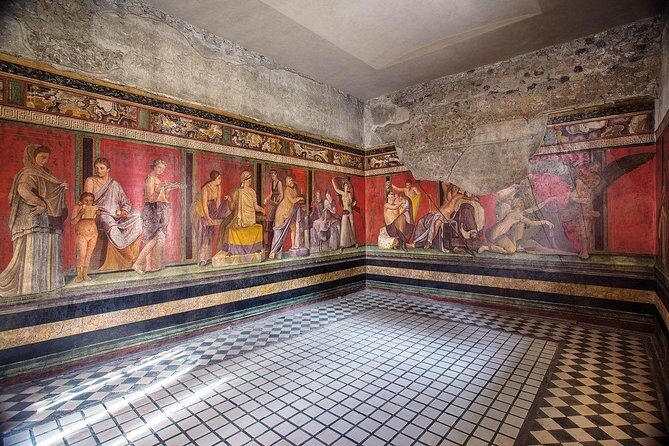
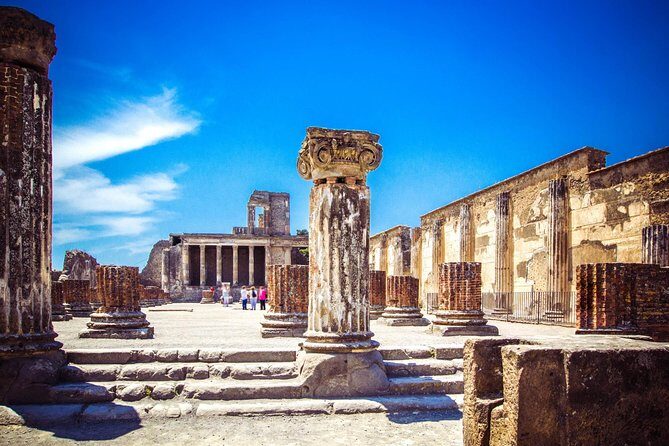
Your first stop is the Foro de Pompeya, with about 30 minutes on site and the admission ticket included. This is the kind of location where you quickly see why Pompeii is such an important time capsule. A forum was the city’s public center—where people met, discussed things, and lived their daily civic life in plain sight.
What I like about starting here is that it gives you context before you move into entertainment. If the forum is where the city organized itself, the theater is where that organization shows up as leisure and social routine. When you do those in order, the story feels connected instead of random.
A good guide at this stop helps you notice patterns: how public life shapes architecture, why certain spaces get designed for crowds, and how the everyday might have felt in a small city that still had strong public habits. Even with only 30 minutes, this stop is long enough to turn your first walk through Pompeii from sightseeing into understanding.
Possible drawback: 30 minutes passes quickly. If you’re the type who likes to linger on textures—doors, stairways, inscriptions—you may want extra self-guided time afterward. Still, as a “foundation stop,” it’s the right length for a 3-hour tour.
Stop 2: Teatro Grande for how Pompeii entertained and socialized
Next up is the Teatro Grande, with about 50 minutes and admission included. Your itinerary specifically highlights dating and habits, which is a smart pairing of ideas. The “dating” part helps you place what you’re seeing in time. The “habits” part is what makes it human—how people might have treated this space as part of their routine.
This is the stop where many first-time Pompeii visitors feel the biggest shift from “big ruins” to “a living social world.” Even if you don’t memorize dates, you’ll walk away with a clearer sense of how public entertainment fit into everyday life.
And the extra time here—nearly an hour—matters. A theater isn’t just one point on the map. It’s a structure that’s made for gatherings. With enough time, you can understand sightlines, the idea of crowd flow, and the layout that supports performance and public attention.
A key thing to watch for: Pompeii is an active walking site. Between surfaces, uneven ground, and the fact that you’re moving between major zones, you’ll benefit from wearing shoes you trust. If you’re prone to foot fatigue, you’ll appreciate that the tour keeps you moving with purpose rather than letting the visit sprawl into a long day.
Tickets and language choice: making sure you actually follow the story
This tour includes admission tickets for both the Foro de Pompeya and the Teatro Grande. That’s a value point worth caring about. In Pompeii, tickets and timing can turn into a distraction. Bundling admission into the guided plan keeps the focus on the ruins, not the admin.
The other big advantage is language choice. You can choose the language you prefer, which is a practical way to make sure the guide’s explanations land clearly. With Pompeii, you don’t just need to see stone—you need to understand what it was used for and why certain features mattered.
In the reviews, guides from this region are praised for being attentive and good at pacing, and you see that theme again and again with local names like Alessia and Soraya. The common thread: the best experience isn’t just accuracy; it’s how well the guide connects details to what you can see right now.
That also helps if you’ve already read a bit about Pompeii. Even when you think you know the basics, a strong guide often gives you a sharper lens—like how public spaces shaped daily routines, or why a theater becomes more meaningful once you understand how people used it.



Price and value: what $210.52 per group really buys
The price is $210.52 per group, up to 10 people, for the guided experience. That pricing structure changes the math. You’re not paying per person. You’re paying for a group-based private guide service with admission included at the two stops.
For a couple or a small group, it can feel like a splurge compared to a basic group bus tour. But value-wise, you’re buying something different: time on the ground with a guide who can shape the experience to your group’s pace, plus included tickets at both locations. If you’d otherwise be paying for admission while also trying to piece together your own self-guided route, the guide becomes the “translation layer” that saves you effort.
Here’s the practical way to decide if it’s worth it for you:
- If you want structured Pompeii (not a free-for-all) and you care about understanding what you’re looking at, this price tends to make sense.
- If you just want to wander for hours and read signs slowly, you might get by with self-guided admission. But you’ll likely miss how the spaces connect—especially in a short 3-hour window.
Who this tour suits best (and who might want more time)
This works especially well if you want a concentrated Pompeii experience with a local expert guiding you through the parts that explain the city’s public life and social habits. The tour duration and stop selection are designed for people who don’t want a full-day commitment.
It’s also a good fit for families and mixed-age groups because it’s private and focused. The tour notes say most travelers can participate, which is reassuring, and it’s set up with a short list of stops rather than a marathon.
Where it might not fit: if your dream Pompeii day is to roam independently, stop for long photo breaks, and add extra archaeological areas on your own, you may feel the 3-hour time box. In that case, you can still use this as the “core understanding” visit, then add your own exploration after the guided portion ends.
One more note from the guides’ reputation in the feedback: people repeatedly mention guides being friendly, managing groups well, and making the ruins feel understandable rather than overwhelming. If that’s what you’re hoping for, this is the right style of tour.
Practical tips to get the most out of your Pompeii morning
These ruins don’t reward rushing. Even on a guided route, you’ll enjoy it more if you go in prepared.
- Start your day with comfortable walking shoes. Pompeii’s surfaces are not the kind that forgive bad footwear.
- Bring a light layer. Even in good weather, mornings near the ruins can shift.
- If you care about photos, remember that the best angles often take an extra minute. Build in some slack into your pace rather than trying to freeze every moment.
- Pay attention during the forum stop. It sets up what you’ll see at the theater, and the connection is the point.
And since the tour is weather-dependent, you’ll want to plan for a backup plan in your schedule. If poor weather causes cancellation, you should expect an offer of a different date or a full refund.
Should you book this Pompeii guided visit?
If you want Pompeii to feel understandable in a limited amount of time, I’d book it. The tour is structured, focused on two big meaning-making stops, and it includes guide service plus admission tickets. The private group setup up to 10 people keeps it efficient, and the option to choose your language can be a deal-maker.
I’d pass if you’re hoping for a long, self-directed Pompeii day where you explore every corner without a guided explanation. This isn’t that. It’s a smart “core Pompeii” visit for people who want to leave with a clear picture of how public life and social habits shaped the city.
FAQ
FAQ
How long is the Pompeii guided tour?
The tour lasts about 3 hours (approx.).
What is the group size for this Pompeii experience?
It’s a private tour/activity for your group only, with a maximum of up to 10 people.
Where do I meet the guide?
You start at Piazza Esedra, 80045 Pompei NA, Italy. The tour ends back at the same meeting point.
What time does the tour start?
The start time is listed as 9:00 am.
Are admission tickets included?
Yes. Admission tickets are included for both stops: Foro de Pompeya and Teatro Grande.
Does the price include the guide?
Yes. The guide service is included in the price.
Is private transportation included?
No. Private transportation is not included.
What’s the cancellation policy if the weather turns bad?
You can cancel for a full refund if you cancel at least 24 hours before the experience’s start time. The experience requires good weather, and if it’s canceled due to poor weather, you’ll be offered another date or a full refund.