REVIEW · POMPEI CAMPANIA
From Sorrento: Pompeii with an Archaeological Guide & Ticket
Book on GetYourGuide →Operated by Amo Italy S.r.l. · Bookable on GetYourGuide
Pompeii is huge, so timing matters. This one-day Pompeii tour from Sorrento focuses on getting you into the ruins with an archaeologist guide, plus the practical transport you need to make it happen without stressing.
I like two things right away: the archaeologist-led guided portion inside Pompeii (about 2 hours), and the fact that coach transport with pick-up and drop-off is handled for you from Bar Kontatto. On top of that, you’ll get headsets if your group is larger than 10, which really helps when the site is loud and busy.
One thing to consider: it’s only about 4 hours total end to end, so you won’t see Pompeii at an unhurried museum pace. Also, it’s not suitable for wheelchair users, since the terrain in Pompeii is uneven and walking-focused.
In This Review
- Key highlights to know before you go
- Pompeii, condensed: the real value of this one-day plan
- Getting started: Bar Kontatto pickup and the Sorrento-to-Pompeii coach ride
- Entering Pompeii with a guide: what the 2-hour guided walk feels like
- The stops you’ll encounter: Forum areas, theaters, temples, and more
- Forum Baths and the Forum area zones
- Large Theatre: entertainment as a daily rhythm
- Temple of Apollo: a religious anchor
- Macellum of Pompeii: the food-and-market piece
- Villa of the Mysteries: when Pompeii turns personal
- Lupanare, and the “scenic views on the way” segments
- Timing and crowd reality: how this tour keeps you moving (and hearing)
- Price and value: does $94 make sense?
- What to bring (and what to think about before you go)
- Who this Pompeii tour is best for
- Should you book Pompeii with an Archaeological Guide & Ticket from Sorrento?
- FAQ
- What time does the tour start in Sorrento?
- Where is the meeting point?
- How long is the tour?
- Is transportation included?
- Is the Pompeii ticket included?
- How much of the time is guided inside Pompeii?
- What language is the tour guide?
- Are headsets provided?
- Is lunch included?
- Is the tour wheelchair accessible?
Key highlights to know before you go
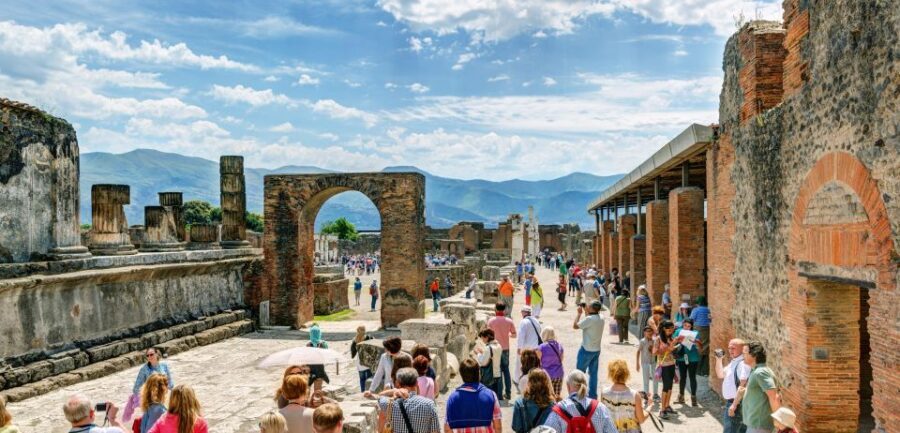
- Archaeologist guide on-site: you’re not just looking at ruins, you’re learning what you’re seeing.
- Ticket + guided access included: admission is part of the package, so you can focus on the experience.
- Headsets for groups over 10: easier listening in crowded areas.
- Coach round-trip from Sorrento: you save energy and planning time.
- A well-chosen route: stops like the Forum area, Temple of Apollo, Macellum, and Villa of the Mysteries shape the visit.
Pompeii, condensed: the real value of this one-day plan
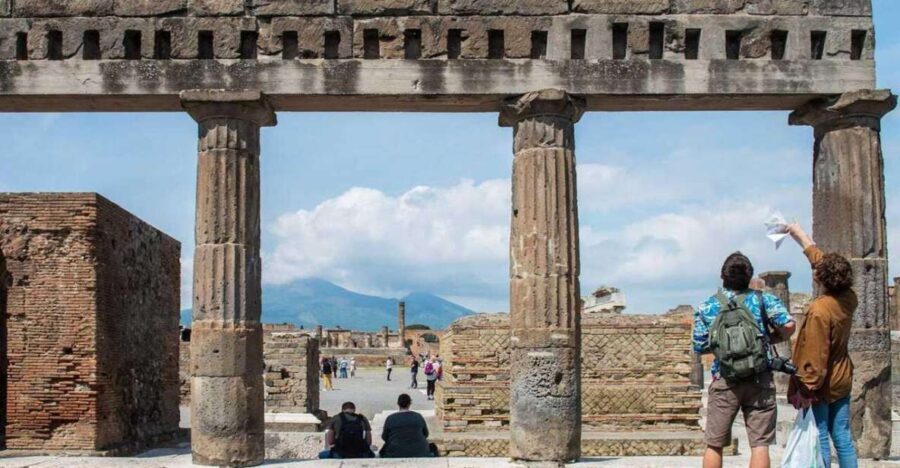
Pompeii rewards people who move with purpose. Left to your own devices, it’s easy to wander for an hour and then realize you missed the structures that tell the story best. This tour keeps things tight and structured: transport from Sorrento, a guided walk inside the ruins, and enough viewpoints to connect the dots between neighborhoods.
The best “value” here isn’t just the ticket or the bus. It’s the fact that the guide is there to help you decode the site quickly—what you’re looking at, why it mattered to daily life, and how the eruption in 79 A.D. turned Pompeii into such an important time capsule.
The other advantage: you get a half-day timeline you can actually fit into a Sorrento itinerary. Back around 2:30 p.m., you’re not stuck burning an entire day just reaching and entering Pompeii.
If you're still narrowing it down, here are other tours in Pompei Campania we've reviewed.



Getting started: Bar Kontatto pickup and the Sorrento-to-Pompeii coach ride
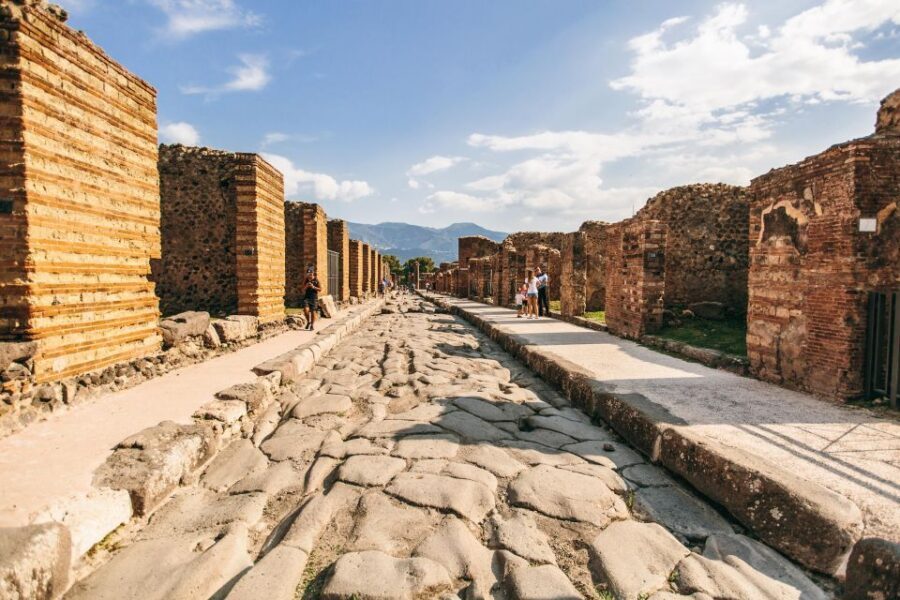
The tour begins at 8:00 a.m. at Bar Kontatto, Corso Italia n.257, Sorrento. The stop is only a few minutes’ walk from the train and bus station, which makes it convenient if you’re already using public transport around town.
There’s a 50-minute coach ride to Pompeii. This matters more than you might think. Getting there early is one of the only ways to see Pompeii with your sanity intact. The morning timing gives you a better shot at working with the crowds rather than fighting them.
One smart detail from the tour experience: the bus guide helps set context on the ride. Reviews highlight that the guide on the coach was helpful and informative, and at least one group enjoyed the humor and energy of the guide (named Gino). That kind of lead-in helps when you step into the streets of Pompeii—suddenly you’re not just looking at stones, you know what to look for.
Entering Pompeii with a guide: what the 2-hour guided walk feels like
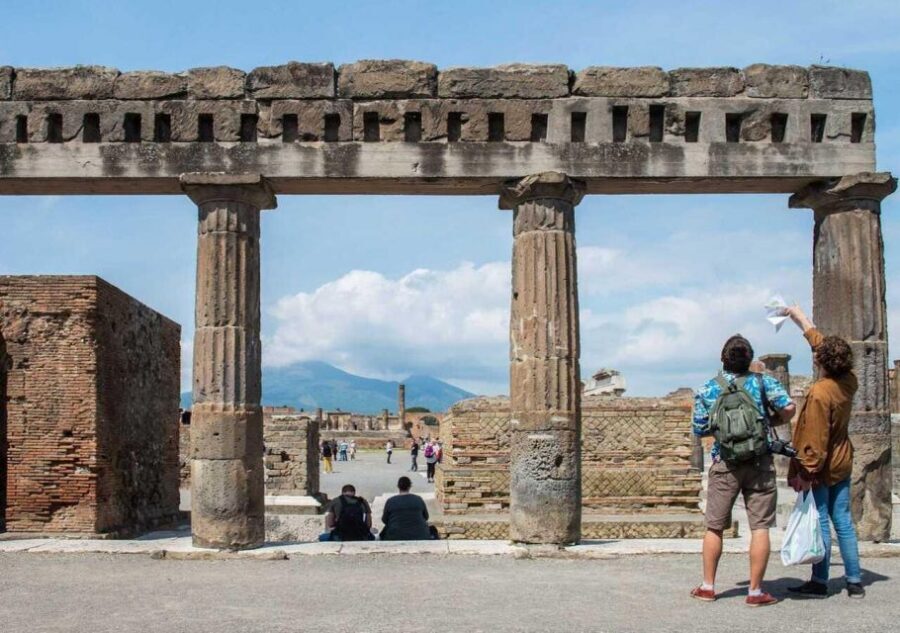
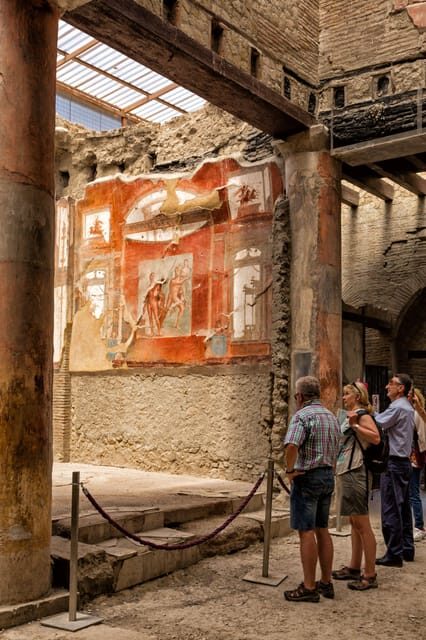
Inside Pompeii, the heart of the experience is the 2-hour guided tour with an expert archaeologist guide. This is the portion that tends to make people happy, because it turns a chaotic site into something you can follow.
In practical terms, you’re guided through a route that hits major points and themes—forum life, public buildings, entertainment spaces, and residential or semi-residential areas. You’ll also do actual walking, so comfortable shoes matter. The guide’s job is to keep you moving, but also explain the “why” behind what you’re seeing.
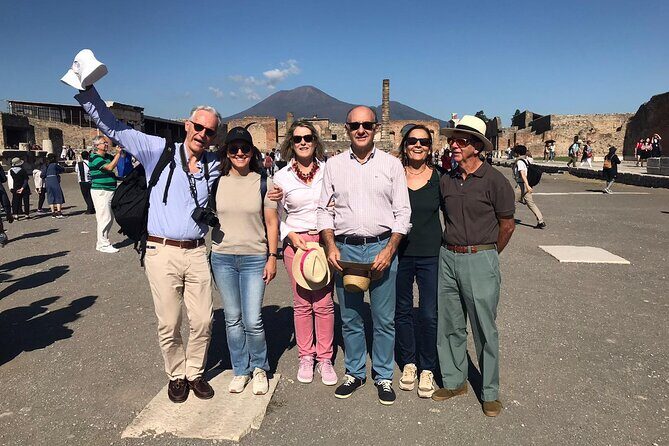
A group size note from feedback: one review suggested that a small group of around 12 people is ideal for tours like this. That tracks with what you’d want in Pompeii: small enough to hear the guide, big enough that you’re not waiting around. If your group is bigger, the included headsets (for groups over 10) are there for a reason—so you can still follow the explanation without leaning into other people’s shoulders.
The stops you’ll encounter: Forum areas, theaters, temples, and more

Pompeii is famous for its big-name landmarks, but it’s the sequence that makes sense. Here’s how the included stops fit together, and what you should pay attention to at each.
Forum Baths and the Forum area zones
Your itinerary includes Forum Baths and the broader Foro Civile di Pompei area. These are the kinds of places where Pompeii’s public life comes into focus. You’re looking at spaces tied to social routines—places where people gathered, washed, and handled everyday business around the civic heart of town.
What to watch for: when you’re moving through these zones, notice how public buildings cluster. It’s easier to understand Pompeii when you see how people would have moved through the city in real life.





Large Theatre: entertainment as a daily rhythm
The Large Theatre is one of the big sights because it connects Pompeii to entertainment and public gatherings. Even if you only get a limited window here, it’s worth treating it as a “big picture” moment: think sound, seating, and the role of shows in community life.
Practical tip: take a minute to pause and look at the layout from where your guide positions you. The architecture makes more sense when you understand the space as a whole, not just from one angle.
Temple of Apollo: a religious anchor
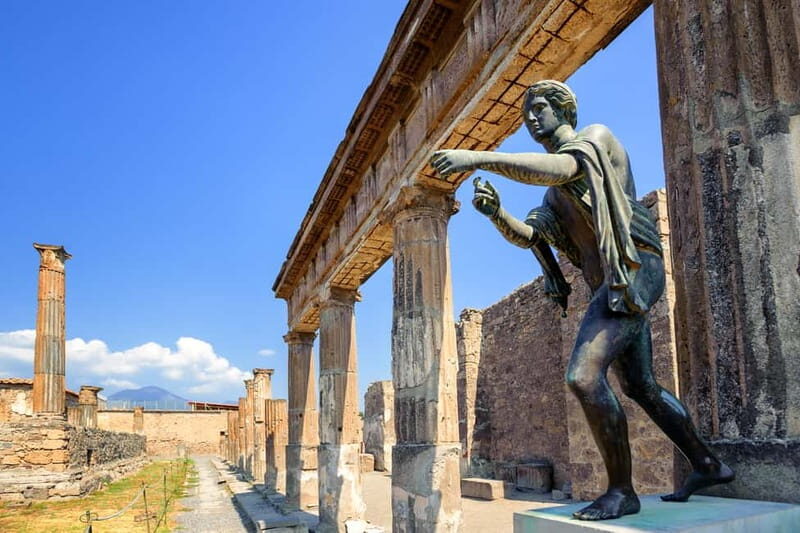
You’ll pass by the Temple of Apollo. Temples like this were not side quests. They were central to the city’s identity—religion, civic pride, and public ceremony overlapping.
What I find useful for you here: ask your own brain a simple question while you walk—who would come here, and why would they travel from different streets to the same point? The guide helps you fill in the details, but that question keeps you paying attention.
Macellum of Pompeii: the food-and-market piece
The Macellum of Pompeii is the stop that helps shift your view from monuments to everyday needs. Markets weren’t just about buying food—they were social hubs.
Look for: the building’s “market” logic. Even without spending hours here, the guide framing can help you understand the flow of people and goods.
Villa of the Mysteries: when Pompeii turns personal
The Villa of the Mysteries is one of the stops that draws strong interest because it connects Pompeii’s public face to more private, symbolic spaces. It’s the kind of place that makes you think about ceremonies and beliefs in a more human way.
A realistic expectation: with only about 2 hours of guided time inside Pompeii, you won’t study every detail like an art historian. But you can still get meaningful context—enough to recognize what makes the villa special when you move on.
Lupanare, and the “scenic views on the way” segments
Your itinerary also includes Lupanare (often discussed in context of ancient entertainment and adult life) and Terme Stabiane plus other areas like Forum Baths. The plan mentions these as scenic views on the way, which means you may not get the same depth of explanation at each spot as you do in the main guided walking portion.
That doesn’t make them worthless. It’s actually a smart compromise for a short tour. You get exposure to key districts so the guided walk doesn’t feel like a random checklist.
My advice for you: use these moments to re-orient. If you’re paying attention to the guide’s route logic, each scenic stop becomes a chapter title.
Timing and crowd reality: how this tour keeps you moving (and hearing)
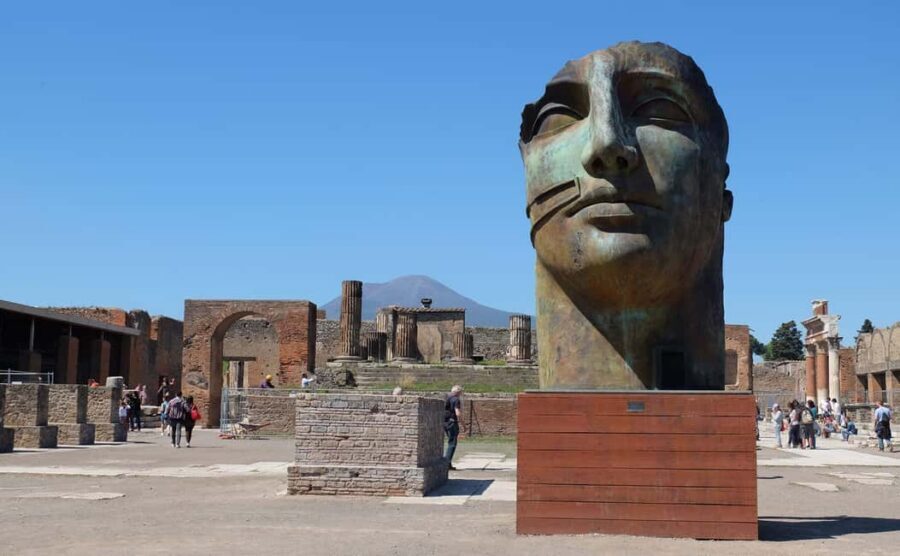
Pompeii can overwhelm you fast. This tour uses a simple formula: morning departure, transport organized for you, and a guided route designed to cover the “must-understand” areas without turning into a marathon.
The schedule is also clear:
- Coach ride to Pompeii is about 50 minutes
- Guided tour inside Pompeii is about 2 hours
- Return coach ride is about 50 minutes
- You’re back in Sorrento after about 4 hours, roughly around 2:30 p.m.
When crowds are heavy, the headsets included for groups over 10 are a big deal. Even if you’re hearing fine, noisy groups near you can drown out the guide’s explanations. Headsets help you keep your focus on the story being told.
From one review, there was also a lesson worth taking seriously: delays can happen when late participants hold up the group. So don’t treat the timing lightly. Arrive at Bar Kontatto 10 minutes early so you’re not the reason the day slips.
Price and value: does $94 make sense?
At $94 per person for a ~4-hour package, you’re paying for three main things:
- Transport and logistics (coach transfer from Sorrento and back)
- Admission ticket included for Pompeii
- A live archaeologist guide and guided time inside the ruins
If you were doing this solo, you’d still spend time and money on getting yourself to Pompeii, arranging entry, and then figuring out what’s worth your attention. What you’re really buying is a guided structure that turns a huge site into a manageable experience.
Is it perfect value for everyone? Not necessarily. If your dream is slow wandering, this may feel too short. But if your goal is to leave Pompeii with a clear understanding of the major areas—without spending extra time planning—this price can feel fair.
What to bring (and what to think about before you go)
This tour is walking-focused. Bring the stuff that keeps you comfortable for a morning/early afternoon out in the open air:
- Comfortable shoes
- Sun hat and sunscreen
- Water
- Camera
- Cash
- Passport or ID card (a copy is accepted)
Also, quick mental prep: Pompeii is active, crowded, and bright. If you’ve got a habit of getting distracted by side alleys, this is exactly the kind of day where you’ll benefit from sticking with the group so you get the full benefit of the guide’s route.
Who this Pompeii tour is best for
This is a strong match if you:
- Want a high-impact Pompeii visit from Sorrento without planning headaches
- Prefer an expert-led route over self-guided guessing
- Like the idea of hearing explanations through the ruins, not reading everything afterward
- Want to be back in Sorrento by early afternoon
It might not be ideal if you:
- Need wheelchair accessibility (the tour is not suitable for wheelchair users)
- Want a full-day Pompeii experience with plenty of free time to roam
- Get frustrated by group timing and want total independent control
Should you book Pompeii with an Archaeological Guide & Ticket from Sorrento?
I’d book it if you want a smart, efficient Pompeii day with the key sights covered, plus the confidence that you’re getting context from an archaeologist guide. The combination of ticket + guided route + coach logistics makes it easy to execute well—especially if it’s your first time in Pompeii.
Skip booking if you already know you want hours of unstructured wandering, or if your mobility needs don’t match uneven, walking-heavy ruins. Otherwise, for most visitors, this is one of the cleaner ways to see Pompeii without letting the day get swallowed by transport, lines, and confusion.
FAQ
What time does the tour start in Sorrento?
The tour starts at 8:00 a.m. from the meeting point at Bar Kontatto in Sorrento.
Where is the meeting point?
The meeting point is Bar Kontatto, Corso Italia n.257, Sorrento. It’s a few minutes walk from the train and bus station.
How long is the tour?
The tour duration is about 4 hours total.
Is transportation included?
Yes. You get pick-up and drop-off and transfer via a 50-seat coach to Pompeii and back to Sorrento.
Is the Pompeii ticket included?
Yes. Admission to the ruins is included as part of the tour with the archaeologist guide and guided tour inside.
How much of the time is guided inside Pompeii?
The guided tour inside Pompeii is about 2 hours.
What language is the tour guide?
The live tour guide is English, and the audio guide included is also in English.
Are headsets provided?
Yes, headsets are included for groups larger than 10 so you can hear the guide clearly.
Is lunch included?
No. Lunch isn’t included, and there may be extra costs for extras not listed in the included items.
Is the tour wheelchair accessible?
No. The tour is not suitable for wheelchair users.