REVIEW · POMPEI CAMPANIA
Combo Tour_Pompeii & Vesuvius
Book on GetYourGuide →Operated by VISITING CAMPANIA S.R.L. · Bookable on GetYourGuide
A volcano and an ancient city, in one day. I like the stress-free transfers and the way you get autonomy during free time, so the day doesn’t feel like a rushed parade. One thing to plan for: Pompeii is big, and without a live guide it’s easier to get turned around.
This combo pairs time near the crater of Vesuvius with a focused block of time in Pompeii. You’ll have an audio guide for Pompeii ruins, and you’ll need your passport/ID for the audio guide rental.
You’re paying for the convenience: return transport, park entries, and an audio guide, all packed into a 5–6 hour window. Price is $101 per person, and it’s best value if you’re the type who wants to see a lot without handling tickets, transfers, and logistics alone.
In This Review
- Key Things I’d Prioritize Before You Go
- The Big Idea: Why This Combo Tour Works in One 5–6 Hour Block
- Pickup Points and Transfers: Making the Day Feel Effortless
- Vesuvius National Park: How the 1.5 Hours Near the Crater Actually Feels
- Pompeii’s Archaeological Site With an Audio Guide (Not a Live Guide)
- Getting Lost in Pompeii: A Simple Way to Reduce Stress
- The Value Question: Is $101 Worth It for Pompeii + Vesuvius?
- Who This Tour Fits Best (and Who Should Look Elsewhere)
- What to Bring (So the Day Doesn’t Stumble)
- Should You Book This Pompeii & Vesuvius Combo?
- FAQ
- How long is the Pompeii and Vesuvius combo tour?
- Where do I get picked up?
- How much free time do I get at Vesuvius and Pompeii?
- Is there an audio guide included for Pompeii?
- What tickets are included?
- What if Vesuvius National Park closes because of weather?
- Are food and drinks included?
- Is the tour suitable for mobility impairments?
Key Things I’d Prioritize Before You Go

Skip-the-line ticket handling
You’re meant to avoid the worst queue situations at both sites, which matters in peak season.
Vesuvius National Park time with crater access
You get 1.5 hours free time after a bus ride, including time to reach the crater area.
Stop at about 1,000 meters elevation
That break helps set expectations for how the day feels once you’re close to the volcano.
Audio guide for Pompeii ruins (with ID required)
It’s not just a ticket. You’ll need a valid ID document to rent the device.
You choose your pace during free time
This is a “guided logistics, self-guided exploring” style tour.
Weather contingency includes Herculaneum
If Vesuvius National Park closes due to inclement weather, the plan shifts to include Herculaneum excavations instead.
The Big Idea: Why This Combo Tour Works in One 5–6 Hour Block
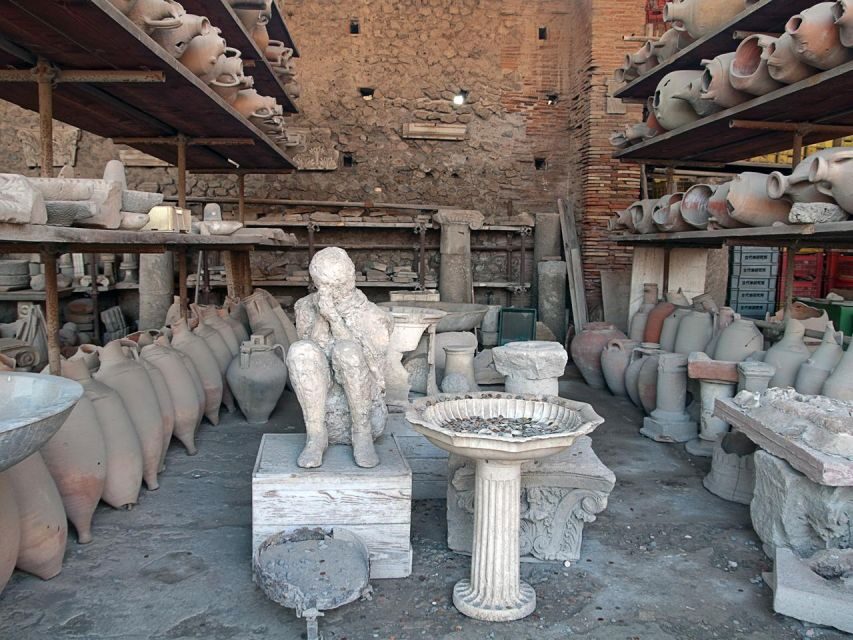
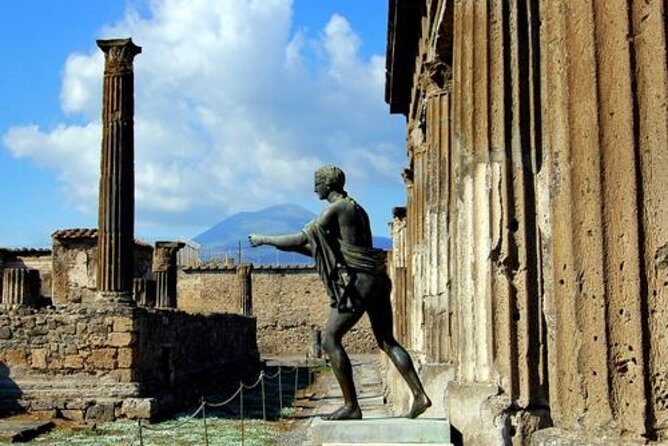
This is a practical combo: it stitches together two of Campania’s most famous stops without making you figure out the hard parts. I like that it’s not pretending to be a deep, slow-study tour. Instead, it’s built for people who want the drama of Vesuvius views and the gut-punch realism of Pompeii’s ruins in a single day.
The structure is straightforward. You travel to Vesuvius first, then you head to Pompeii. Your job is simple: show up at the pickup point, move with the schedule, then explore on your own during the free-time windows.
Also, the timing matters. With a 5–6 hour total duration, you’re not trying to do this as a half-day + an all-day add-on. You’ll leave Pompeii or Naples knowing you hit the highlights and didn’t waste hours buying tickets or waiting for transport.
If you're still narrowing it down, here are other tours in Pompei Campania we've reviewed.



Pickup Points and Transfers: Making the Day Feel Effortless

You start at one of three locations (the exact meeting point depends on what you book): Via Roma 32, Via Cristoforo Colombo 45, or Via Galileo Ferraris 40. Drop-off is at the same three addresses, so you’re not hunting down a separate end location.
The tour includes pickup in either Pompeii or Naples, plus round-trip transfers. That’s a big deal for this route because the area isn’t laid out for easy “hop on, hop off” sightseeing when you’re short on time.
You’ll ride by bus/coach for about 40 minutes on each major travel segment. The driver is listed as English and Italian, which can help if you need clarity on timing once you’re already on the move.
Practical tip: wear comfortable shoes and plan for a lot of standing and walking. Even if the schedule feels controlled, Pompeii involves uneven ground and frequent walking decisions.
Vesuvius National Park: How the 1.5 Hours Near the Crater Actually Feels

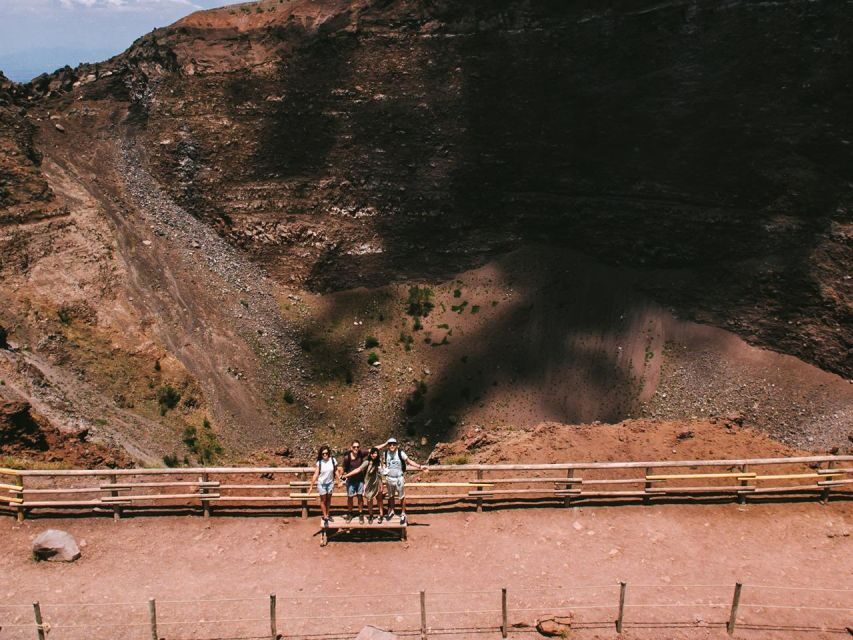
At Mount Vesuvius, you get 1.5 hours of free time. Before that, there’s a transfer to the Vesuvius National Park area and a stop at around 1,000 meters of elevation, which helps you adjust to the conditions as you head toward the crater zone.
The main goal is simple: get up to the crater area and take in the views. The time window is long enough to do the walk, catch a few viewpoints, and still have slack if you stop for photos or want to pause and watch the horizon.
One consideration: this is crater-side travel, not just a roadside viewpoint. The time feels “tight but fair,” especially if you’re moving slowly, taking lots of photos, or stopping repeatedly to catch your breath. If you know you’ll need breaks, give yourself permission to start early inside that 1.5-hour slot.
Weather contingency is important here. If the Vesuvius National Park closes due to inclement weather, the tour swaps in a visit to the Herculaneum excavations. That’s a helpful Plan B, because you still get archaeology time instead of a wasted bus ride.
Pompeii’s Archaeological Site With an Audio Guide (Not a Live Guide)
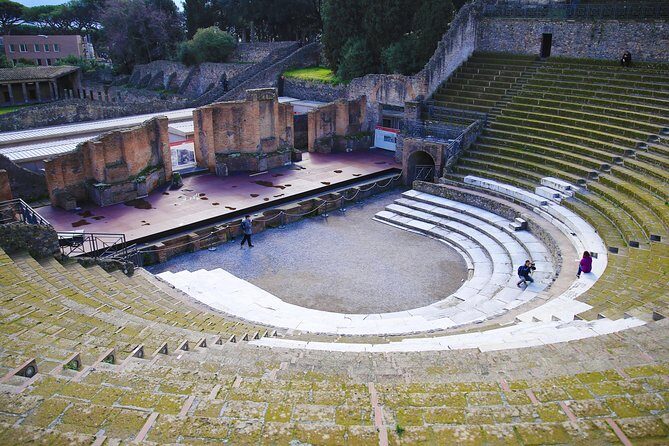
When you arrive at Pompeii, you get about 2 hours free time in the archaeological site. The tour includes audio guides for the Pompeii ruins, so you’re not walking through with only signs for company.
Here’s how to make the audio guide work for you: use it early and stay oriented. Pompeii can feel like a maze once you’re inside, and if you drift too far from the main walking flow, you can spend precious time backtracking. Since the tour gives you autonomy, your best tool is your rhythm: pick a route, listen as you go, then commit to the direction of travel toward the exit.
Also note the rule that the audio guide requires a valid ID document to rent. Bring your passport or ID card. Without it, you may lose the benefit you paid for, which would leave you with a less satisfying Pompeii experience than this tour is designed to deliver.
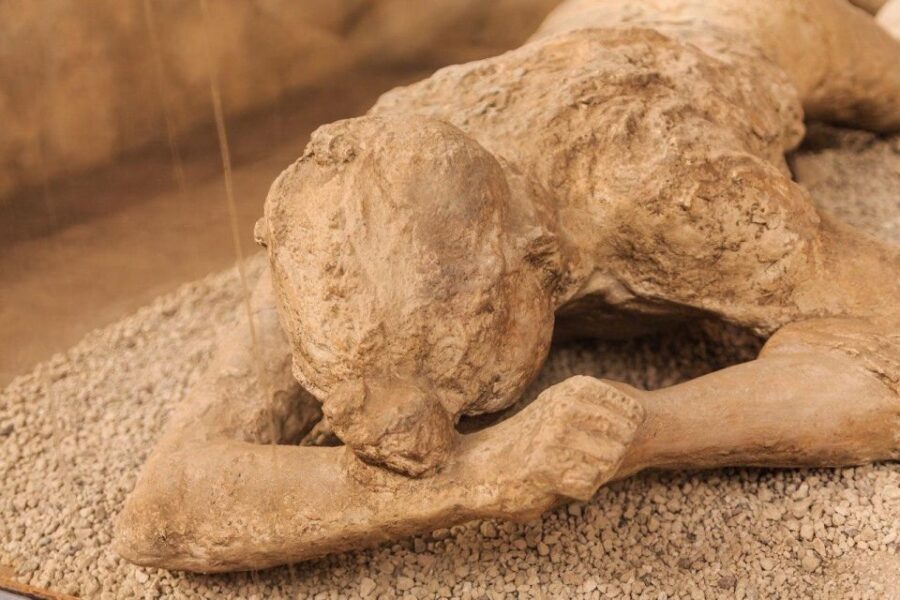
One lesson I’d take from past confusion at Pompeii: maps inside the site can feel too vague to be your only plan. If you care about seeing specific features (like plaster casts or particular exhibits), don’t wait until you’re already lost. Check what’s available and where it sits before you peel off into side lanes.
Getting Lost in Pompeii: A Simple Way to Reduce Stress
Pompeii doesn’t reward wandering when you’re on a tight schedule. The site is huge, entrances and exits can be less intuitive than you’d expect, and it’s easy to realize you’re off-course only when it’s almost time to leave.
To avoid that, I suggest you do three things:
- Before you go far, learn the exit direction. Spend a few minutes on arrival to find the direction back to the meeting point area.
- Use the audio guide as your backbone, not a soundtrack. When a stop feels unclear, listen, follow the cues, then decide your next move.
- If a detail matters to you, verify it quickly. At Pompeii, it can be faster to ask staff early than to hunt later once you’ve already committed to a route.
If you’re the type who likes a lot of interpretive context, you’ll likely wish you had a live guide inside Pompeii. This tour is designed to cover that gap with the audio guide, but it’s still self-guided, so you’ll be the one shaping your route and pace.





The Value Question: Is $101 Worth It for Pompeii + Vesuvius?

At $101 per person for a 5–6 hour day, the value is strongest when you treat this as a bundle of costs you’d otherwise have to manage. You’re not just paying for access. You’re also paying for return transfers and organization that reduces your planning workload.
Included items you should count toward value:
- Pickup in Pompeii or Naples
- Transfer to Vesuvius National Park
- Entrance tickets for the National Park and the Archaeological Park of Pompeii
- Stop near the 1,000-meter level
- Pompeii audio guide
- Booking fee
Not included:
- Food and beverages
So the “hidden cost” to plan for is lunch or snacks. The good news is you’ll have free time that can fit a quick bite, but the tour won’t supply it. If you want a smoother day, bring a snack water strategy that matches your walking pace.
Is it the cheapest way? Maybe not. But it’s often the least stressful way if you’re trying to visit both Vesuvius and Pompeii without turning your day into a logistics project.
Who This Tour Fits Best (and Who Should Look Elsewhere)

This combo works best if you:
- Want Vesuvius and Pompeii in one day without renting transport or managing complex timing
- Prefer self-guided exploring once you’re in each place
- Like using an audio guide to build context as you walk
- Travel with a group of friends or as a couple and enjoy choosing your own pace during the free-time windows
It’s also a reasonable fit for first-timers who want the headline experiences and a clear schedule.
It’s not a great match if you have mobility challenges. The tour notes it is not suitable for people with mobility impairments. Pompeii especially involves uneven terrain and lots of walking decisions.
If you’re hoping for constant, detailed explanations from a human guide, you may find Pompeii less satisfying than the tours with a live guide. The audio guide helps, but it doesn’t replace the flexibility of a person who can respond to your exact interests.
What to Bring (So the Day Doesn’t Stumble)
Keep it simple. The tour lists:
- Passport or ID card
- Comfortable shoes
I’ll add a practical mindset: shoes are non-negotiable. Both Pompeii and the Vesuvius area involve walking on surfaces that aren’t designed for fragile footwear.
If you bring a lot of stuff, note that oversize luggage isn’t allowed. Pack like you’re doing a half-day hike plus an archaeological walk, not a full-day road trip.
Should You Book This Pompeii & Vesuvius Combo?
I’d book it if your priority is getting to Vesuvius and Pompeii without fighting ticket lines and transport timing. The combination of round-trip transfers, included entrance access, and an audio guide for Pompeii is the core reason it feels like good value at $101.
Skip it if you’re craving a highly guided, slow-moving Pompeii experience where you can ask lots of questions face-to-face. This tour gives you the stage and the tools. You still have to steer your own route in Pompeii during the 2-hour window.
If you’re a planner, you’ll get the most out of the autonomy. If you’re the type who freezes when maps get confusing, you’ll still be fine—you just need to spend a few minutes getting oriented when you arrive so you don’t lose time near the end.
FAQ
How long is the Pompeii and Vesuvius combo tour?
The duration is 5 to 6 hours.
Where do I get picked up?
Pickup is available in Pompeii or Naples, and the meeting point can vary by option booked. The listed starting addresses are Via Roma 32, Via Cristoforo Colombo 45, and Via Galileo Ferraris 40.
How much free time do I get at Vesuvius and Pompeii?
You have 1.5 hours of free time at Vesuvius and 2 hours of free time at the Pompeii archaeological site.
Is there an audio guide included for Pompeii?
Yes. Audio guides are included for the Pompeii ruins. You can also choose optional languages, and the rental requires a valid passport or ID.
What tickets are included?
The tour includes entrance ticket coverage for the Vesuvius National Park and the Archaeological Park of Pompeii, and it’s described as skipping ticket lines.
What if Vesuvius National Park closes because of weather?
If the Vesuvius National Park closes due to inclement weather, the tour will instead include a visit of the Herculaneum excavations.
Are food and drinks included?
No. Food and beverages are not included.
Is the tour suitable for mobility impairments?
No, the tour is listed as not suitable for people with mobility impairments.