REVIEW · NAPLES
Pompeii private small group tour – 4 hours including transfers
Book on Viator →Operated by A DRIVE INTO THE BLUE · Bookable on Viator
Pompeii is much easier with a good pickup. This private small-group trip runs from Naples with round-trip transfers, so you spend less time figuring out trains and more time looking closely at the ruins. It’s a smart way to do the big sights even if your schedule is tight.
Two things I really like: you get about two hours inside Pompeii, and the itinerary is built around the key public and everyday places. If you choose the guide option, you’ll also have a licensed guide—one of the standout experiences I saw was led by archaeologist-type expertise, with drivers like Antonio and Toni described as excellent at keeping things smooth and on time.
One consideration: in a half-day format, the pace is brisk. You won’t get a slow, wandering full-day feel, and you should double-check whether your entry ticket is included in your selected option before you arrive, so you don’t lose time at the gate.
In This Review
- Key things to know before you go
- From Naples to Pompeii: the point-to-point transfer you’ll appreciate
- A cruise-port practical tip
- Pompeii in ~2 hours: how to get value without rushing yourself
- What the ruins teach fast
- The highlights route: Forum to Teatro Grande (and what each stop means)
- 1) Foro de Pompeya (main square)
- 2) Basilica (law courts and business hub)
- 3) Lupanar (brothel)
- 4) Teatro Grande (major theatre)
- Stabian Baths and Casa del Menandro: daily life in Pompeii’s quieter details
- 5) Stabian Baths (Terme Stabiane)
- 6) Casa del Menandro (a wealthy home)
- Guide option vs. self-guided: what changes, and what to double-check
- Why the guide can matter
- The one pitfall to avoid
- Value and timing: is $300.40 per person a smart spend?
- When the price feels justified
- When you might rethink it
- What to expect on the day: pacing, comfort, and what to bring
- Dress code and footwear
- After Pompeii: a Naples detour you can ask for
- Should you book this Pompeii private small group tour?
- FAQ
- How long is the Pompeii private small group tour from Naples?
- What time does pickup happen?
- Is pickup included from Naples hotels and cruise ports?
- Is the tour offered in English?
- Is a guide included?
- Are Pompeii admission tickets included?
- What group size is this?
- What’s the dress code?
- Is free cancellation available?
Key things to know before you go
- Pickup where you’re staying or at the cruise port means less commuting stress
- About two hours at Pompeii keeps the visit focused and doable
- English-speaking licensed guide option can change your experience a lot
- Stops cover the Forum, Basilica, Lupanar, and major theatre rather than random wandering
- Admission ticket handling depends on your option, so confirm ahead of time
From Naples to Pompeii: the point-to-point transfer you’ll appreciate
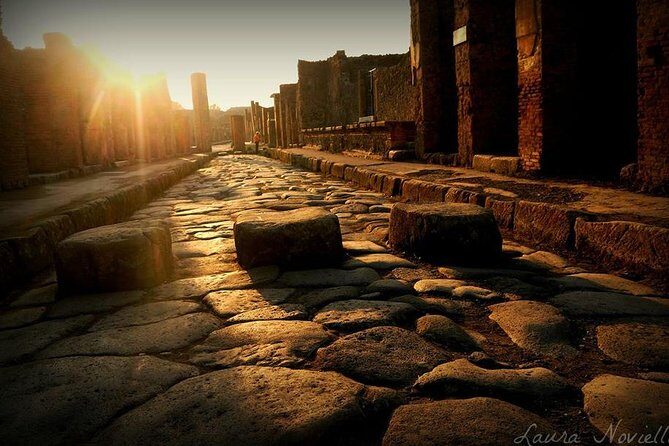
The biggest win here is simple: you’re not left to DIY transport on a schedule you can’t control. Your day starts with a pickup from your accommodation or the cruise docking area, usually around 8:00–8:30 am. That timing matters. Pompeii can get busy, and starting early gives you a better shot at moving through with less waiting and less heat.
This is also set up as a private tour/activity for your group only. In practice, that means fewer bottlenecks and less pressure to keep up with strangers when you’re trying to read inscriptions, spot mosaics, or take a moment in a quieter corner.
From the Naples side, I like that the experience includes bottled water and a driver, not just a drop-off. In real-life terms, it can be the difference between arriving frazzled and arriving ready to look.
If you're still narrowing it down, here are other tours in Naples we've reviewed.

A cruise-port practical tip
If you’re coming by ship, don’t assume you should wait right outside the vessel. One helpful pro tip from an actual cruise experience: walk out and follow the pickup directions so you meet the driver where they expect you. That small move can save a surprising amount of time.
Pompeii in ~2 hours: how to get value without rushing yourself
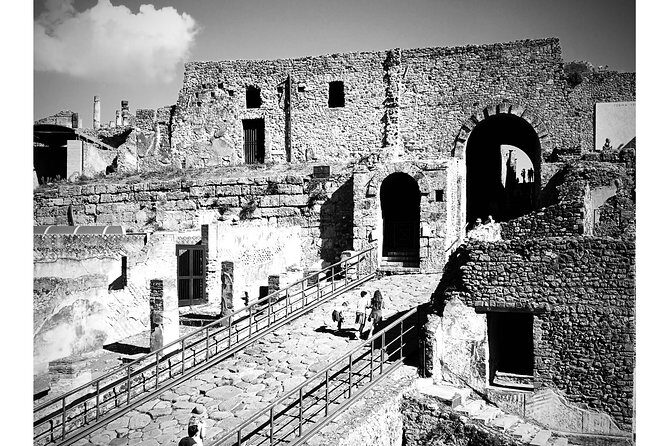
You’ll arrive at the entrance and then have roughly two hours to explore Pompeii. That’s the core of the tour: enough time to hit the important zones, but not enough to see Pompeii like it deserves to be seen over multiple visits.
Here’s the key to enjoying this time window: don’t treat it like a full-day museum crawl. Treat it like a “highlights with context” visit. If you go in with a few mental targets, the half-day format works.
You can go two ways:
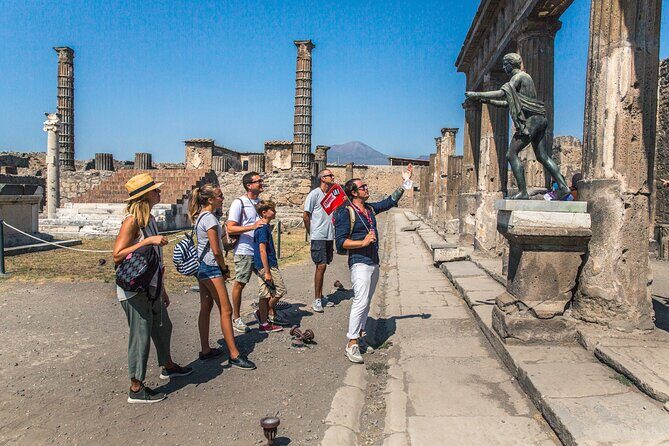
- If you choose the option with a licensed guide, you’ll meet them at the site and get a structured walk through major stops.
- If you don’t choose a guide option, you can still visit on your own with about the same overall time at the park.
Either way, your plan should include a mix of quick movement and a couple of deliberate pauses. Pompeii’s power isn’t just what’s left—it’s how the pieces fit together: public life, daily life, entertainment, and domestic spaces.
What the ruins teach fast
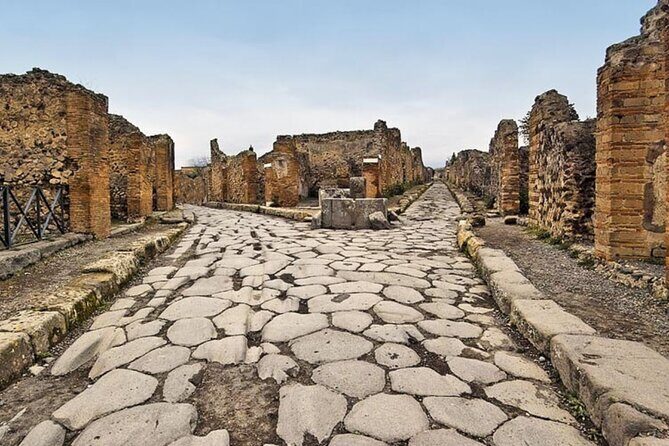
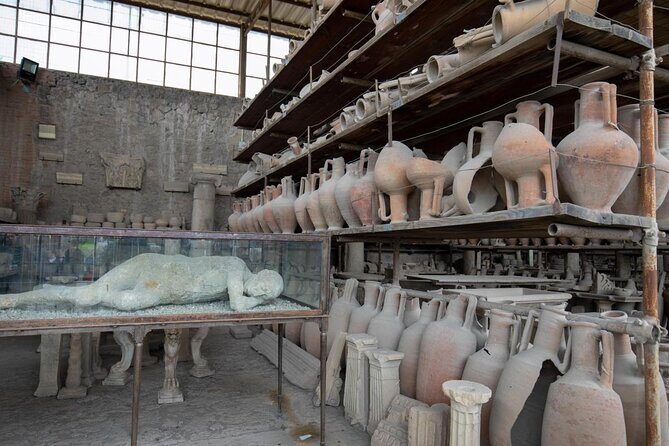
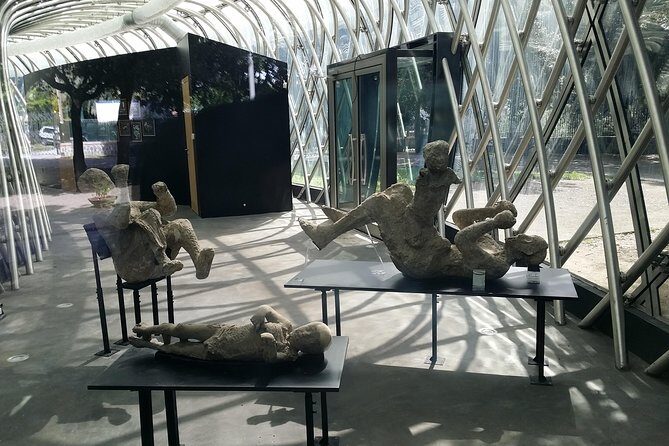
Pompeii was a Roman city built on earlier roots, and the eruption of Vesuvius on August 24, A.D. 79 is the reason the site is so well preserved. In a short visit, you won’t master everything, but you can absolutely learn the feeling of the place: a “middle-class Rome” where everyday people lived, worked, shopped, argued, and relaxed.
If you have a guide, that context can be the difference between seeing ruins and understanding what you’re looking at. If you don’t, you’ll still leave with big visual takeaways—you’ll just want to read and observe on your own as you go.
The highlights route: Forum to Teatro Grande (and what each stop means)

This tour’s stop order is designed for a logical sweep through the city center and public landmarks. Even though the time at each stop is brief, each one is chosen because it represents a major part of how Pompeii functioned.






1) Foro de Pompeya (main square)
The Forum was Pompeii’s central stage for civic, commercial, political-religious life. In a short visit, this is one of the best places to start because it helps you understand the “where everything happened” feeling.
Practical tip: when you look around the Forum, try to picture movement. People didn’t wander here for fun—they came for decisions, trade, and public ceremony. Once you get that mental picture, the rest of the city makes more sense.
2) Basilica (law courts and business hub)
Next up is the Basilica, the seat of law courts and also a significant business area. It’s the kind of place that helps you see how Roman civic life mixed authority and commerce in the same footprint.
If you have a guide, they can usually tie this stop to the broader theme of Roman governance and daily economic life. If you’re self-guiding, you’ll still benefit from pausing just long enough to notice the structure and how it would have worked in use.
3) Lupanar (brothel)
The Lupanar is one of the most discussed sites in Pompeii for obvious reasons. But beyond the shock value, it’s a clue about social life, services, and the reality of city living.
This stop is short, and that’s fine. Treat it like a quick reality check: Pompeii wasn’t a postcard—Roman life included everything from public ceremonies to paid services.
4) Teatro Grande (major theatre)
Then you get to the Teatro Grande, a well-preserved Greek-Roman theatre with seating for about 5,000. This is a big moment because it connects architecture to culture: performances mattered, and public entertainment had a serious scale.
If you only had time for one “wow” stop, this would be high on my list. From a viewing standpoint, you can also see how the theatre shaped the crowd experience—how people gathered, watched, and reacted.
Stabian Baths and Casa del Menandro: daily life in Pompeii’s quieter details
After the central public zone, the itinerary moves toward spaces that show everyday habits rather than just politics and spectacle.
5) Stabian Baths (Terme Stabiane)
The Stabian Baths are your introduction to Roman bathing culture. You’ll see the three pool zones:
- frigidarium (cold water)
- tepidarium (warm water)
- caldarium (hot water)
Even with limited time, this stop helps you understand how Romans handled health, routine, and socializing. Baths weren’t just practical; they were part of city life.
Time matters here: 10 minutes is enough to grasp the overall layout, but not enough to fully “feel” the sequence. I’d treat this as a quick orientation stop, then use your remaining time at Pompeii to hunt for mosaics or street scenes that catch your eye.
6) Casa del Menandro (a wealthy home)
The Casa del Menandro offers a window into how the wealthier segment lived—through a typical example of a more comfortable household. This stop works best when you look at it as a contrast to the public spaces.
You’ll get the idea fast: Roman cities had layers. Pompeii wasn’t only temples and streets; it also included homes with decorated, private interiors (and the differences would have been obvious to someone living there).
Guide option vs. self-guided: what changes, and what to double-check
One of the most important parts of your booking is whether you chose the professional guide option. The experience data says that a licensed guide is included only if you pick that option, and the tour also notes admission handling that can vary by ticket selection.
So here’s my practical advice: confirm what’s included before you show up, especially if you’re counting on a guide to make sense of what you see.
Why the guide can matter
In the real-world examples I saw, Antonio and Toni were highlighted for keeping the day moving and explaining what you were looking at. One cruise visitor also specifically praised a guide described as an archeologist, which makes sense: Pompeii is the kind of place where a trained voice can connect street-level ruins to the bigger story of Roman life.
The one pitfall to avoid
There was also a case where a participant thought they booked a guide, but the day functioned more like transport plus self-exploration, and they ended up finding a guide outside the doors. That’s not something you want to gamble on.
If you want interpretation, verify your guide choice in writing before travel day. If you didn’t pick the guide option, you should plan to do the reading and observing yourself.
Value and timing: is $300.40 per person a smart spend?
At $300.40 per person for a private half-day with transfers, this isn’t a budget add-on. The value comes from what you don’t have to handle:
- you’re not coordinating transport on your own,
- you’re not negotiating meeting points,
- and you get a scheduled window that fits cruise or short-stay timelines.
This tour is best when you’re trying to solve a specific problem: “I’m in Naples, I want Pompeii, and I need it to work smoothly.” The half-day length is exactly why the price can feel high—because you’re paying for speed and logistics as much as for the ruins.
When the price feels justified
You’re more likely to feel this was worth it if:
- you’re short on time,
- you want hotel/port pickup handled for you,
- you’re traveling with a small group where private time is valuable,
- or you selected the option that includes a licensed guide and/or tickets.
When you might rethink it
If you want to linger for hours, revisit areas, and explore in a slow, photo-by-photo way, a half-day may feel tight. Pompeii rewards patience. In that case, consider whether you’d rather do a longer, more flexible format.
What to expect on the day: pacing, comfort, and what to bring
This tour is structured and efficient: pickup at 8:00–8:30 am, around two hours at Pompeii, plus short stops as part of the highlight route. Total duration is roughly 3–4 hours, depending on how timing works with your pickup and the site flow.
Because admission ticket rules can vary by option, I recommend you arrive ready:
- If your option includes tickets, you’ll be set.
- If it doesn’t, plan for entry costs at the site.
Also, even though bottled water is included, I’d still treat this like a half-day outing and plan for comfort. Some groups recommended bringing your own snacks and lunch planning since you won’t have time for a full meal during the ruins portion.
Dress code and footwear
Dress code is smart casual. Pompeii involves walking on uneven ground and spending time outdoors, so comfortable shoes matter more than outfit style.
After Pompeii: a Naples detour you can ask for
The tour includes pickup and drop-off, not a pre-set lunch stop. That said, some drivers have been known to help with local plans after Pompeii. One cruise group was dropped near a highly regarded pizza spot in Naples (Sorbillo) and also had the chance to get a local-style lunch recommendation.
If you want that kind of help, it never hurts to ask your driver where nearby locals eat. You’ll get the benefit of their local awareness without building the day around a forced restaurant schedule.
Should you book this Pompeii private small group tour?
Book it if you want Pompeii in a tight window and you value pickup, a focused route, and private pacing. For cruise passengers or anyone who feels overwhelmed by transport logistics, this kind of “door-to-ruins” plan is exactly what makes the visit feel doable.
Skip or reconsider if you’re the type who wants to wander for hours, take your time with every street corner, and go deep into architecture without time pressure. Pompeii is big, and half-day limits what you can see.
If you’re deciding right now, here’s my quick checklist:
- Do you need a smooth transport solution from Naples or your cruise port?
- Will you likely want a licensed guide, or are you comfortable exploring on your own?
- Have you confirmed whether your entry tickets are included in your chosen option?
Get those aligned, and this is a solid way to hit Pompeii’s major beats without blowing your day.
FAQ
How long is the Pompeii private small group tour from Naples?
It runs about 3 to 4 hours total, including transfers, with around two hours to explore Pompeii.
What time does pickup happen?
Pickup is typically around 8:00 to 8:30 am.
Is pickup included from Naples hotels and cruise ports?
Yes. The tour includes hotel or port pickup and drop-off, starting from your accommodation or the cruise docking area.
Is the tour offered in English?
Yes, it’s offered in English.
Is a guide included?
A professional guide is included if you choose the option that includes a guide. A licensed guide meets you at the site for the guided portion.
Are Pompeii admission tickets included?
Admission tickets are not guaranteed in every option. The tour notes that tickets are included only if you select the option that includes tickets, while the route description also indicates admission ticket may not be included—so confirm your option before you go.
What group size is this?
It’s private for your group only, with a minimum of 2 people per booking.
What’s the dress code?
Smart casual is recommended.
Is free cancellation available?
Yes. You can cancel up to 24 hours in advance for a full refund.