REVIEW · NAPLES
From Naples: Herculaneum, Mount Vesuvius & Pompeii Day Trip
Book on GetYourGuide →Operated by Di Sarno Car Service · Bookable on GetYourGuide
Volcano views and buried streets, in one day. This full-day tour strings together Herculaneum and Vesuvius for a rare compare: quiet, preserved Roman homes under volcanic ash, then a hike to the crater edge with wide-open Naples views.
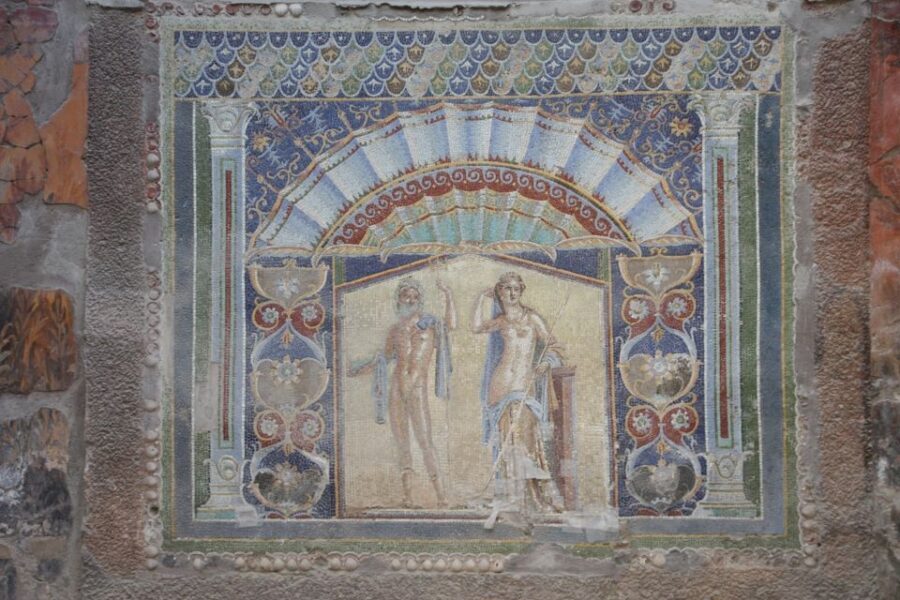
I especially loved Herculaneum’s preserved streets and mosaics, which make the past feel close and real. And I liked that Vesuvius crater time is built in, so you’re not just driving past a landmark.
The main drawback is practical: Pompeii and Herculaneum site entry tickets are not included, and the day can feel long once you factor in walking, heat, and uneven ground.
Key points to know before you go
- You get guided transport plus your own exploration time, with roughly two hours at Herculaneum and Pompeii.
- Vesuvius crater access is included, but plan to handle any required Vesuvius ticket timeslot in advance.
- Onboard stories help connect the sites, and guides you might meet include names like Rita, Gabby, Noemi, and Polly.
- Two start points in Naples make it easier to match your hotel or cruise: Stazione Marittima or Ramada by Wyndham Naples.
- The biggest time crunch is Pompeii, where two hours is enough to hit highlights but not enough to see everything.
- Comfortable minibus transport helps you skip parking and navigation stress around active tourist sites.
In This Review
- Naples Ruins by Minibus: How This Day Trip Really Works
- Herculaneum (Ercolano) First: The Roman City Under Volcanic Mud
- Mount Vesuvius Crater Time: The Part You Can’t See From Naples
- Pompeii’s Two Hours: How to Prioritize a Massive Place
- Onboard Host vs Site Guides: Getting the Right Level of Help
- Price and Value: What $135.94 Gets You (and What It Doesn’t)
- Timing, Crowds, and the Best Way to Spend Your Free Hours
- Who This Tour Fits Best (and Who Might Want a Different Plan)
- Should You Book This Naples Day Trip?
- FAQ
- FAQ
- What’s the total duration of the Naples day trip?
- Where do I get picked up in Naples?
- How much time do I have at Herculaneum and Pompeii?
- Is Mount Vesuvius entry included?
- Are entrance tickets included for Pompeii and Herculaneum?
- Are certified guides included inside the archaeological sites?
- What languages will I hear during the trip?
- Is the tour wheelchair accessible?
Naples Ruins by Minibus: How This Day Trip Really Works
This is a classic “big hitters in one day” setup. You start in Naples (either Stazione Marittima or Ramada by Wyndham Naples), ride in a comfortable minibus with air-conditioning, and then use your time at each site to explore at your own pace.
You’re not traveling between stops by yourself, which matters here. Parking and driving around busy archaeological areas can be a headache. Instead, you focus on the experience: walk through Herculaneum’s sheltered-to-the-eye Roman neighborhoods, climb up toward the volcano rim, then spend your free time in Pompeii’s open-air streetscape.
One more thing I like: you’re not stuck in a rigid line the whole day. The plan builds in free time at Herculaneum and Pompeii, while the host/driver provides the main context during transit.
Herculaneum (Ercolano) First: The Roman City Under Volcanic Mud
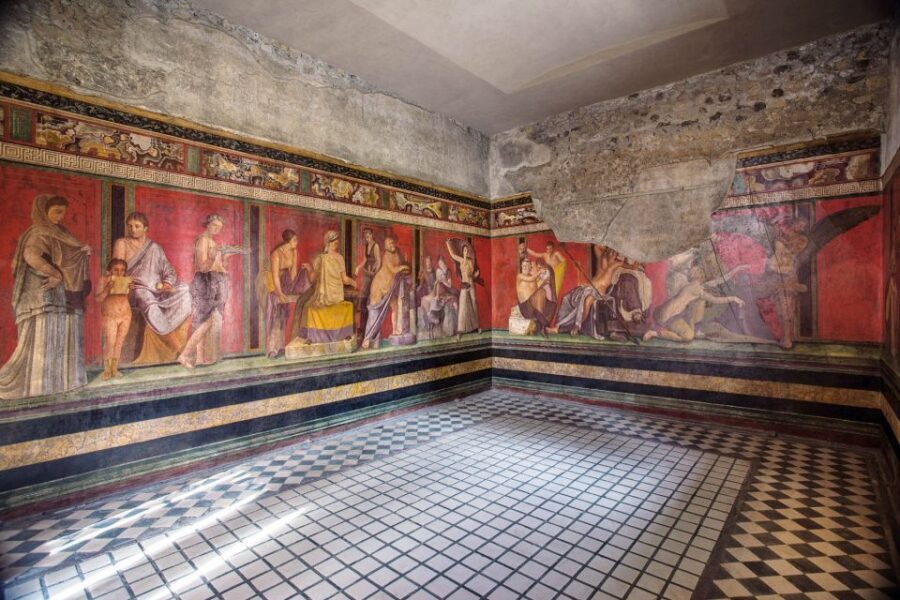
Starting with Herculaneum feels smart. It’s a chance to shift gears from the modern city to a place where the eruption didn’t just destroy—it preserved. You get about two hours here, which is enough time to absorb the atmosphere and pick out a few favorites.
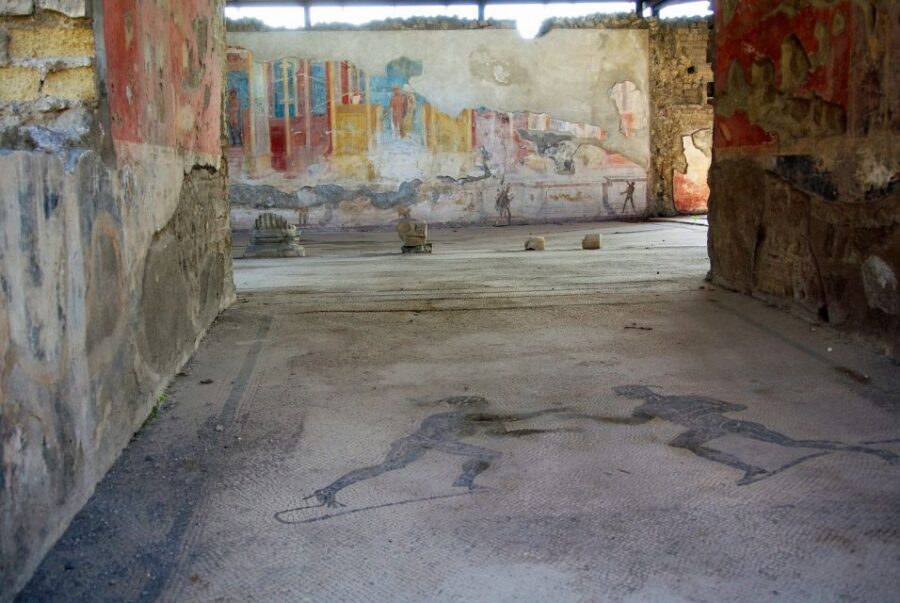
Herculaneum’s standout is how well it’s kept. The volcanic material that buried the city preserved details you just don’t get in every archaeological site. In particular, people consistently gravitate to the villa areas and mosaics, because they show craftsmanship and daily life rather than only stone walls.
There’s also a big emotional difference between Herculaneum and Pompeii. Pompeii often feels like a dramatic museum of ruins, while Herculaneum can feel closer to lived-in spaces—its preserved residential feel makes it easier to picture what it was like to move through these rooms and streets. And if your guide on the bus shares the eruption story, it helps you connect the dots fast once you’re on the ground.
Practical note: wear shoes with solid grip. The sites have uneven footing, and you’ll do more walking than you might think after a long ride.
If you're still narrowing it down, here are other tours in Naples we've reviewed.
Mount Vesuvius Crater Time: The Part You Can’t See From Naples
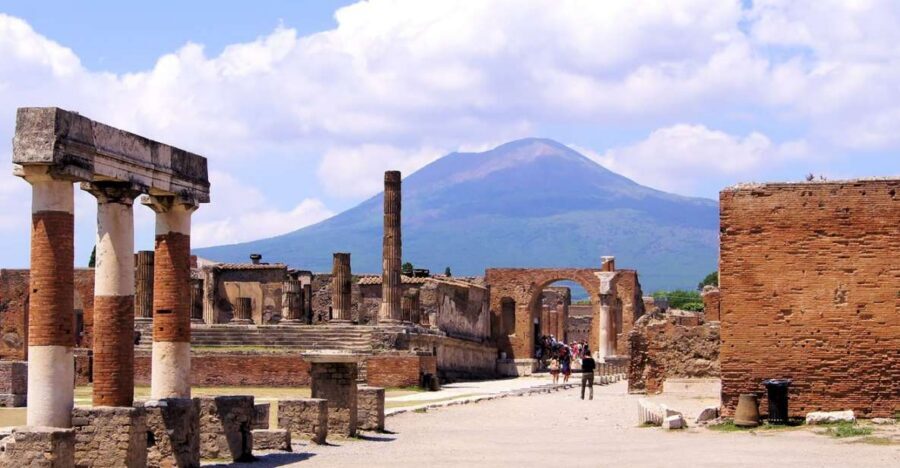
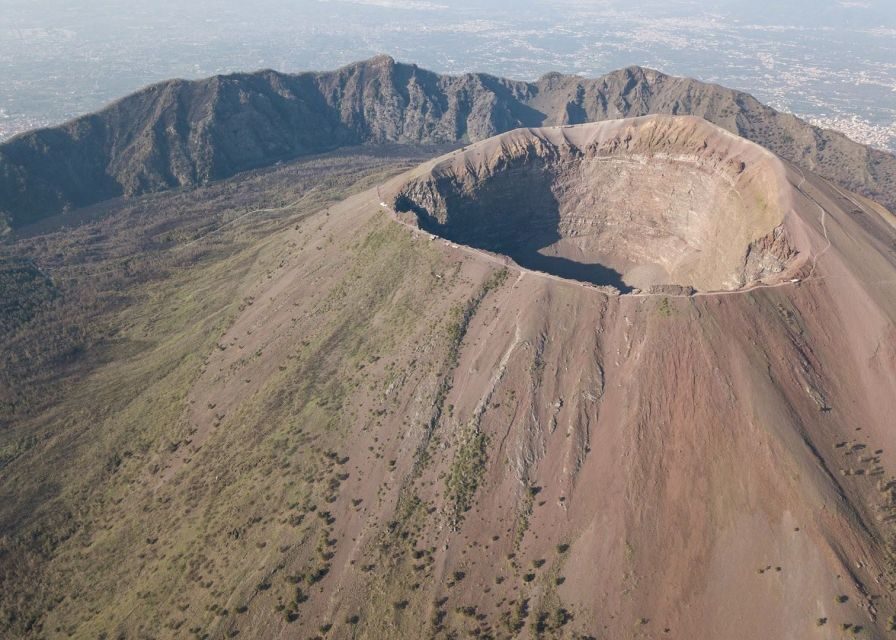
Then comes the volcano. You get about 1.5 hours at Mount Vesuvius for visits and sightseeing, with entry to the mountain included in the tour cost. This is the moment where the day-trip turns from history lesson into real-life geography.
The core experience is going up toward the crater edge area and taking in sweeping views over Naples and the Bay of Naples. Even when the weather is a little moody, being on the volcano—standing where the eruption changed everything—adds a physical sense of scale you can’t replicate in a photo.
A key detail: your success depends partly on conditions. One review described extreme weather affecting the drive back down, which is a reminder that roads and visibility can change fast. The tour operator also flags that weather can disrupt plans beyond their control, so keep expectations flexible on the day you travel.
If you’re even mildly curious about volcanos, this stop is worth planning for with extra care. Wear layers, carry a light layer in case the air feels cooler up top, and give yourself time to move steadily. The hike and surfaces can be physically demanding for some people because you’re on slopes and uneven ground.
Pompeii’s Two Hours: How to Prioritize a Massive Place
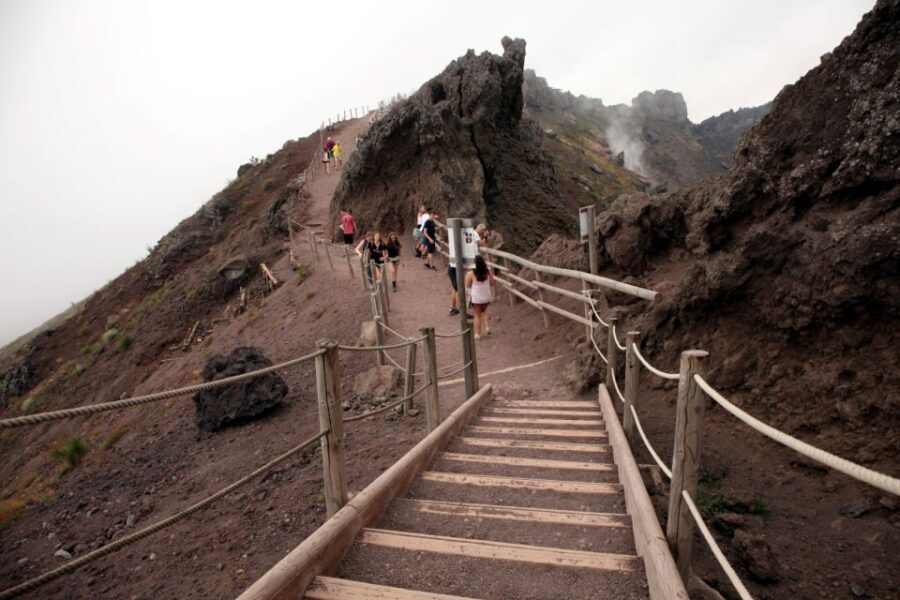
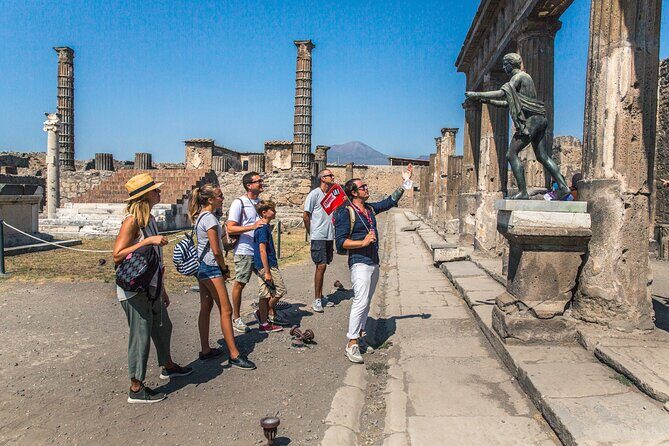
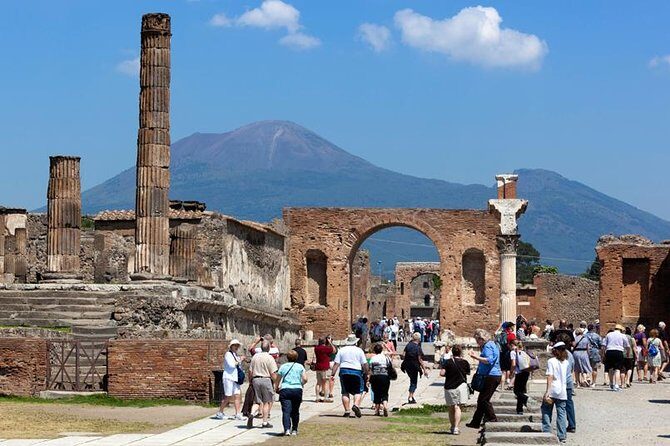
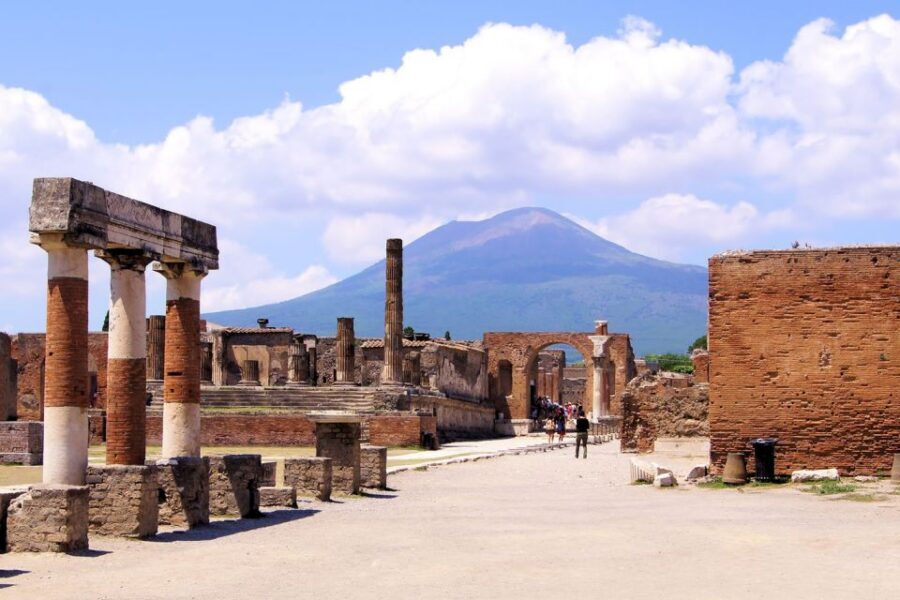
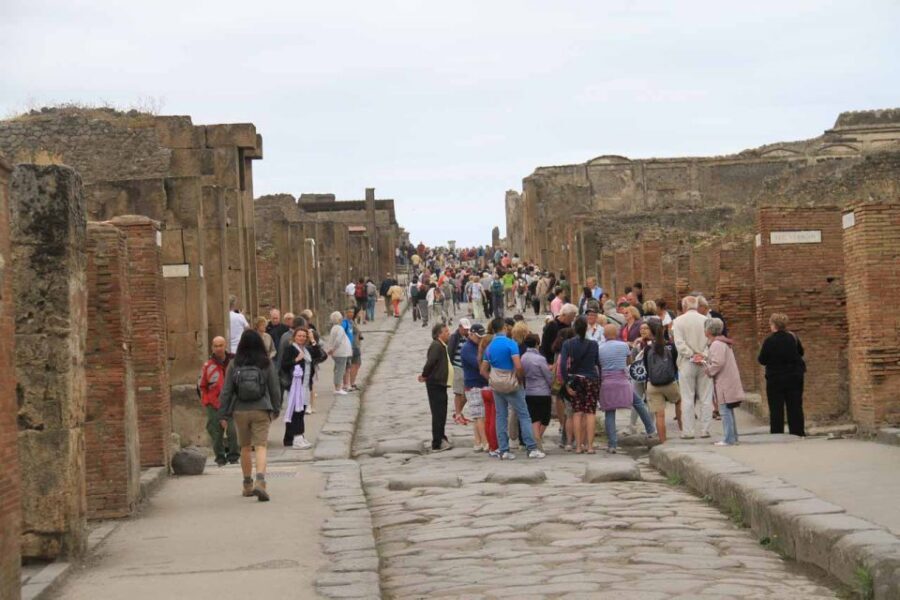
Your final major stop is Pompeii Archaeological Site, with about two hours of free time. Pompeii is large, so your choices matter more than you’d expect. Two hours won’t cover everything. Instead, it’s a time-boxed chance to see key streets and a handful of highlights that make the whole city make sense.
What you’ll like most is the sheer idea of Pompeii as a frozen-in-time open-air city. You’ll walk through ancient streets and see ruins that connect directly to everyday life before the eruption. That connection is what makes Pompeii more than a list of structures. You start to recognize patterns: where people moved, where they gathered, how spaces were arranged.
The most practical way to enjoy Pompeii on this schedule is to commit to a route based on your interests before you go in. If you love art and domestic life, focus on residential and decorative areas. If you’re into public space and civic structure, aim for central streets and major crossroads. You’ll get more satisfaction doing a focused circuit than trying to sprint everywhere.
Also, don’t assume you’ll easily see everything without help. The tour doesn’t include a certified archaeology site guide at Pompeii, so you’re relying on your own curiosity, signage, and whatever audio options you decide to use.
Onboard Host vs Site Guides: Getting the Right Level of Help
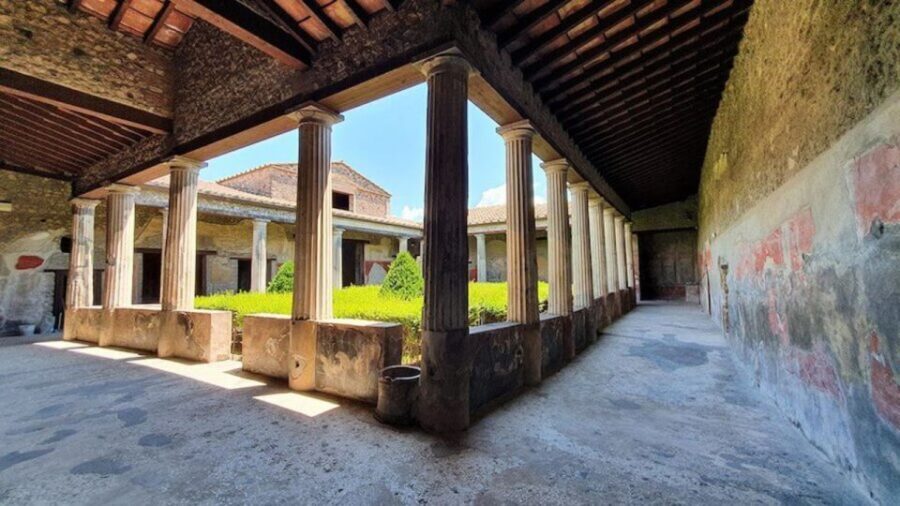
This tour includes live commentary during the drive. That context helps you understand what you’re seeing when you arrive, and it can also make the eruption story clearer across all three sites. You might hear region-focused information en route—one of the tour details mentions stories about the Amalfi Coast secrets, which shows they’re aiming to give you something more than just driving directions.
What’s not included is a certified guide for Pompeii and Herculaneum. That’s a real decision point for you. If you love learning but don’t want to read on your own, you’ll likely want an audio guide or a paid add-on at the sites. The tour info also says guide services and audio guides are available upon request, and some feedback noted extra costs if you want audio support in Pompeii and Herculaneum.
The upside is flexibility. You can spend time exactly where you want. The downside is that if you want deep explanations at every major stop, you may need to pay extra for that layer of guidance.
As for the people factor, this tour seems to score big with hosts and drivers. Names you may run into include Rita, Gabby, Noemi, Michele, Polly, and Alfredo—and the common theme in feedback is that the team helps you get oriented and keeps logistics smooth between sites.
Price and Value: What $135.94 Gets You (and What It Doesn’t)
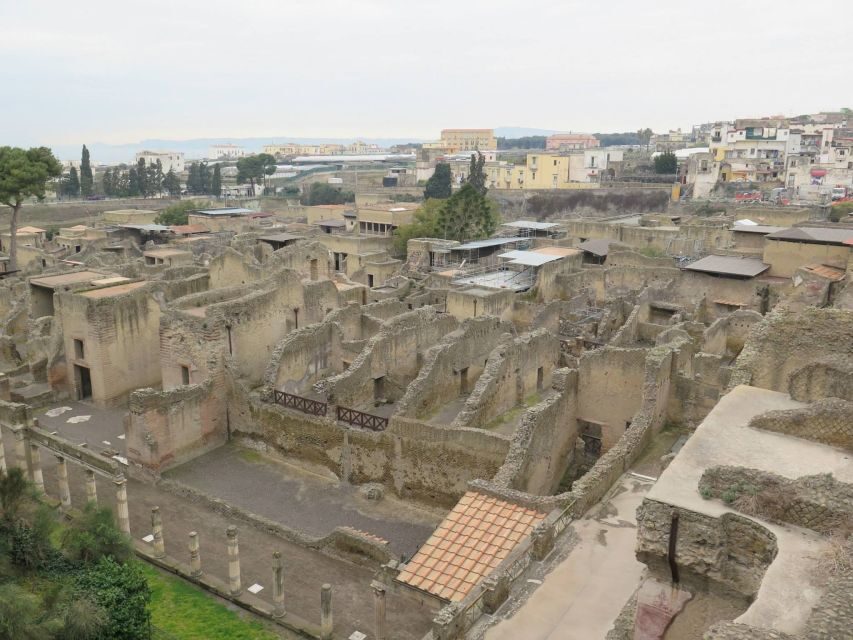
At $135.94 per person, this isn’t the cheapest way to do the ruins loop, but it can be good value if you weigh it against two things: transport stress and crater logistics.
Included that cost is minibus transport, pickup/drop-off, onboard commentary, and water. Also included is entry to Mount Vesuvius. Those pieces matter because they reduce decision fatigue. You’re not coordinating multiple tickets while also figuring out timing and driving.
What’s not included in the tour price: entrance fees for Pompeii and Herculaneum. The info is clear about this, and feedback also suggests budgeting extra for site add-ons like audio guides. So your true total will be tour cost plus whatever you choose for Pompeii/Herculaneum entry and any audio guidance.
Where Vesuvius gets tricky is planning. Even though entry to the mountain is included, you may still need to line up with how access is timed. Some feedback noted that booking the Vesuvius timeslot in advance is important. So if you’re going during a busy period, handle timing early so you don’t end up scrambling.
Bottom line: you’re paying for a structured day with transport and included Vesuvius access, plus the convenience of not dealing with parking. If that convenience matches your travel style, the price feels more reasonable.





Timing, Crowds, and the Best Way to Spend Your Free Hours
Because you only have two hours at each of two sites and about 1.5 hours at Vesuvius, you should expect a “highlights pace.” That doesn’t mean it’s rushed—it means you’ll be making choices.
In real life, crowd levels can vary. Feedback from people who went on specific dates suggests some departures can feel relatively manageable at the first stop, with Pompeii and the crater not overly packed. Still, don’t bank on empty sites. Instead, treat this tour as a planning advantage: you’ll spend your time efficiently because the day is organized for movement between stops.
In Herculaneum, use your time to focus on the preserved residential vibe. Aim to walk through main street areas, linger where mosaics and villa details are concentrated, and take photos where the preservation makes the most sense.
In Pompeii, use your time to see the city as a grid of movement: street, crossroads, public areas, and a few residential spaces. The goal isn’t to see everything—it’s to leave with a clear mental picture of how Pompeii worked.
On Vesuvius, your job is to move carefully, enjoy the climb, and then spend your view time taking in the Bay of Naples. The crater experience is the payoff, so don’t rush it to chase extra stops.
Who This Tour Fits Best (and Who Might Want a Different Plan)
I think this tour fits best if you want the major Vesuvius area hits without driving. If Pompeii is your top priority, you’ll still enjoy it, but accept that two hours means highlights only. If you’re the type who likes to wander, you’ll like the free time allotments.
It’s also a good fit for history-minded travelers who want context during the ride. The onboard host commentary helps connect Herculaneum, the volcano, and Pompeii so your day has a thread, not just three separate visits.
If you have limited mobility or expect a lot of difficulty with slopes and uneven ground, be cautious. One note from feedback mentioned that wheelchair use was challenging at the sites, and the mountain path and crater access can be physically demanding. The tour materials include conflicting notes about wheelchair accessibility, so you should contact the operator ahead to confirm what’s realistic for you on your departure.
Also, if you’re an extreme deep-dive person who wants certified guides inside the archaeological areas, you may end up paying extra for audio or guidance. This tour gives you context and transport, but it doesn’t replace on-site certification.
Should You Book This Naples Day Trip?
I’d book this tour if you want a clean, stress-free way to do Herculaneum + Vesuvius + Pompeii with included Vesuvius access and enough on-your-own time to enjoy the places at your pace. It’s especially worth it if your Naples schedule is short and you want to feel confident you’ll see the big three without driving or parking headaches.
I’d hesitate if you know you need a lot of structured interpretation at Pompeii and Herculaneum. With two-hour blocks and no certified site guides included, you’ll either do more self-guided reading or add audio. And if you want a slower pace with lots of stops inside Pompeii, you may want a different plan with more time at fewer sites.
FAQ
FAQ
What’s the total duration of the Naples day trip?
The tour runs for about 8 hours, with the exact start time depending on availability.
Where do I get picked up in Naples?
You can be picked up at either Stazione Marittima or at Ramada by Wyndham Naples, depending on the option you book. The tour returns you to the meeting point area.
How much time do I have at Herculaneum and Pompeii?
You get free time at Ercolano (Herculaneum) for about 2 hours and free time at the Pompeii Archaeological Site for about 2 hours.
Is Mount Vesuvius entry included?
Yes. The tour includes entry tickets to Mount Vesuvius as part of the package.
Are entrance tickets included for Pompeii and Herculaneum?
No. Entrance fees to Pompeii and Herculaneum are not included, so you’ll need to purchase those separately.
Are certified guides included inside the archaeological sites?
No certified archaeology-site guide is included within Pompeii and Herculaneum. Audio guides or guide services may be available upon request.
What languages will I hear during the trip?
The host or greeter is listed as English and Italian.
Is the tour wheelchair accessible?
The information provided includes a wheelchair accessibility note, but it also says the tour is not wheelchair accessible and suggests contacting in advance to explore possible solutions. If accessibility matters, confirm details with the operator before booking.