REVIEW · POMPEII
Private Tour with Official Guide through the wonders of Pompeii.
Book on Viator →Bookable on Viator
A guided walk makes Pompeii click fast. With an official guide, I love how Paolo turns ruins into stories you can follow, with jokes at the right moments and explanations that actually stick. You also get his excavator perspective, so you’re not just looking at stones, you’re learning how Pompeii was studied.
One of my favorite parts is the tight 2–3 hours route that hits theaters, homes, baths, and temples without wasting time. The only real drawback is the Pompeii entry ticket is not included, so you’ll need to plan for that extra cost before you go.
In This Review
- Key highlights you’ll care about
- Meeting at Via Villa dei Misteri: what to expect from the start
- Teatro Grande and the public-face of Pompeii
- Casa dei Vettii: frescos, status, and the art of everyday life
- Suburban Baths and Stabian Baths: Roman relaxation, up close
- Temples of Jupiter and Apollo: religion that ruled the calendar
- Odeon to the street life loop: Via dell’Abbondanza and Thermopolium food stop
- How much is this Pompeii tour really worth?
- Who this private Pompeii tour suits best
- Should you book this Pompeii private tour?
- FAQ
- How long is the Pompeii private tour?
- What time does the tour start?
- Where does the tour meet?
- Does the price include the Pompeii ticket?
- What is included in the tour price?
- Is tipping included?
- Is the tour offered in English?
- Is this tour private?
- Are service animals allowed?
- Can I cancel for a full refund?
Key highlights you’ll care about
- Official guide in English who points out small details and answers questions on the spot
- Short stops across the site (often 5–20 minutes) that keep Pompeii manageable
- A tour route built around daily life: public buildings, rich homes, and Roman bathing culture
- Pause points for photos and for taking your time where you want it
- Included essentials: map of the archaeological park and bottled water
Meeting at Via Villa dei Misteri: what to expect from the start
This Pompeii private tour starts at Via Villa dei Misteri, 1, 80045 Pompei NA, Italy, with a 12:30 pm start time, and it ends back at the same meeting point. That matters more than it sounds. Pompeii is big, and having the walk loop cleanly planned helps you avoid the “where do we go next” stress that ruins the mood.
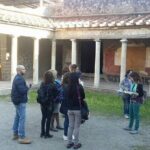
You’ll be with only your group, not a mixed crowd. That’s a big deal for two reasons. First, you can ask questions without waiting for a guide to catch up to a dozen voices. Second, it’s easier to match your pace, whether you’re the kind of person who reads every inscription (slow) or you mainly want the big scenes and key layout (faster).
The tour is offered in English, and you should get confirmation at the time of booking. Service animals are allowed, and the meeting area is near public transportation, so it’s not a “remote meeting point” situation.
One more practical note on logistics: the tour price is $102.35 per person, and you’ll still need to buy the Archaeological Park Pompeii ticket separately. That doesn’t make the tour bad value. It just means you should treat the guided portion and the site entry as two parts of the same plan.
Other private Pompeii tours we've reviewed in Pompeii


Teatro Grande and the public-face of Pompeii
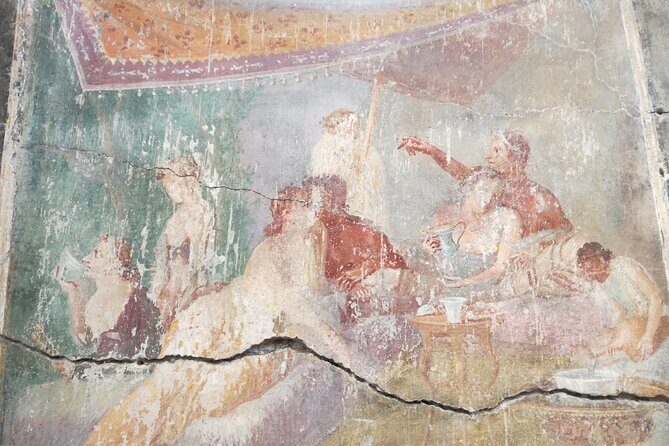
The walk starts with Teatro Grande, the Greek-Roman theater associated with major tragedies and comedies. Even if you’re not a drama person, this stop helps you understand how Pompeii’s big public life worked. The theater isn’t just entertainment. It’s where civic identity showed up in stone.
From there, the route moves you through a sequence of “how people gathered” spaces and landmark civic buildings. You get short, focused time at each stop, which is exactly what you want when Pompeii is your one big visit and you don’t want to burn the day.
Odeon (Teatro Piccolo) is next on the list, and it’s a nice contrast to the larger theater. This smaller stage is tied to the singing tradition, and it reinforces an idea that’s easy to miss when you only think about museums: Pompeii was built for audiences.
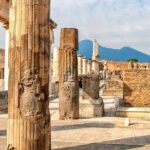
Then you hit Foro de Pompeya, the main square. This is one of those places where the guide’s storytelling can change how you see everything else. A square like this isn’t just a pretty open area. It’s the “meeting point” of politics, commerce, and daily movement. When you understand that role, the whole site layout makes more sense.
If there’s a drawback to this part of the route, it’s the pacing. Some people want longer “stand and stare” time in a single spot. This tour spreads the stops across 2–3 hours, so if you’re aiming for deep lingering, you’ll need to use your guide’s flexibility during the shorter breaks.
Casa dei Vettii: frescos, status, and the art of everyday life
Next you move into Pompeii’s residential world, starting with Casa dei Vettii. This is where you get hit with what “rich home” meant in the ancient city—architecture plus wall art like frescoes and decorative mosaics.
What I like about doing the homes in this order is that the guide can connect the dots between public spaces and private living. The theater shows you community rituals. The houses show you how people displayed status inside their own walls.
Then comes Casa del Fauno, one of Pompeii’s older villas. I like this stop because “old villa” tends to carry a special weight. You get an early glimpse of how the city’s wealth and architecture evolved over time.
After that, Casa degli Amorini Dorati is on deck, and it’s described as a villa whose beauty is hard to put into words. You’ll see why when you’re standing where the art was made to be seen. This is the kind of place where your guide’s attention to detail helps you notice what you’d otherwise overlook.
Finally in the homes section, you reach Casa del Poeta Tragico, known for its famous mosaic. Even with limited time, you’ll get the point of the art: it wasn’t decoration only. It was messaging.
If you’re the type who prefers fewer stops and more time at each, you might feel the homes are packed. On the other hand, Pompeii is exactly the place where a “guided selection” beats random wandering, because the guide’s explanations help you know where to look.
Suburban Baths and Stabian Baths: Roman relaxation, up close
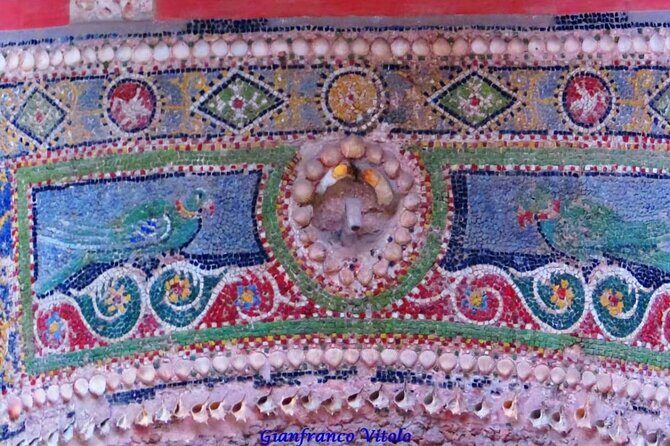
After the homes, the tour shifts to bathing culture, starting with the Suburban Baths. The description you get is clear: this is an extraordinary spa built near the walls. That location detail matters. It suggests the bathing experience wasn’t only for internal city life—it was woven into the city’s outer edge too.
Then you go to Stabian Baths (Terme Stabiane), the largest baths of Pompeii. This stop is a strong payoff because big bath complexes explain a lot about Roman daily habits in one glance. Even if you’re not looking for “wellness history,” baths explain how social life worked. People met. People relaxed. People talked.
If you’ve ever visited ruins and felt lost in a sea of rooms, baths are a good fix. The function of the space gives you a built-in way to track the layout. And the guide can connect that layout to how Pompeii residents would have moved and used the areas.
One thing to consider: baths can feel visually similar when you’re moving quickly between rooms. That’s where having an official guide earns its keep. You’re not just “seeing more rooms.” You’re learning what each part was for.
Temples of Jupiter and Apollo: religion that ruled the calendar
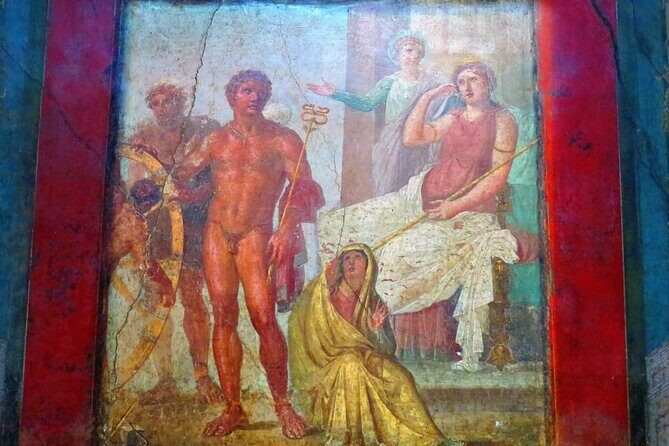
The tour continues into the religious heart of Pompeii with two temple stops that make an easy story: Tempio di Giove Capitolino (Temple of Jupiter) and Temple of Apollo.
The Tempio di Giove Capitolino stop is framed as the Temple of the temples. That kind of wording is a hint to what to look for: this is where you expect the highest religious focus, and the guide can tie the architecture to what people believed mattered most.
Then you move to Temple of Apollo, described through the basics of who Apollo is in relation to Zeus and the sun. Even a short visit here can do a lot because religion in Pompeii wasn’t tucked away in the corner. It shaped the rhythms of the city.
This part of the route also benefits from the tour’s timing. You’re not spending all afternoon trapped in one zone. You’re building a complete picture: entertainment, domestic life, relaxation, and then worship.
Other guided tours in Pompeii


Odeon to the street life loop: Via dell’Abbondanza and Thermopolium food stop
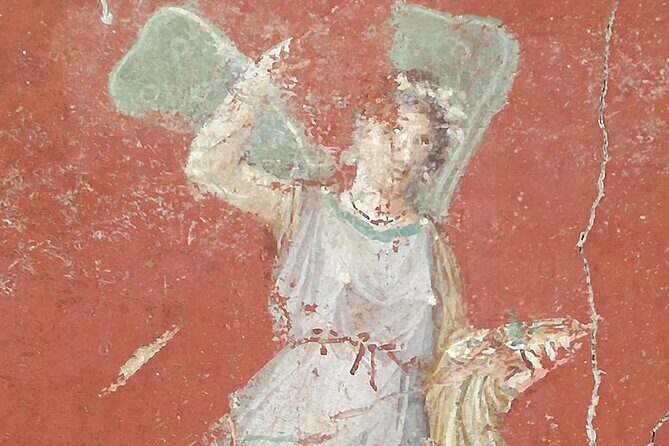
After you’ve taken in public buildings, homes, baths, and temples, you get the “street level” view.
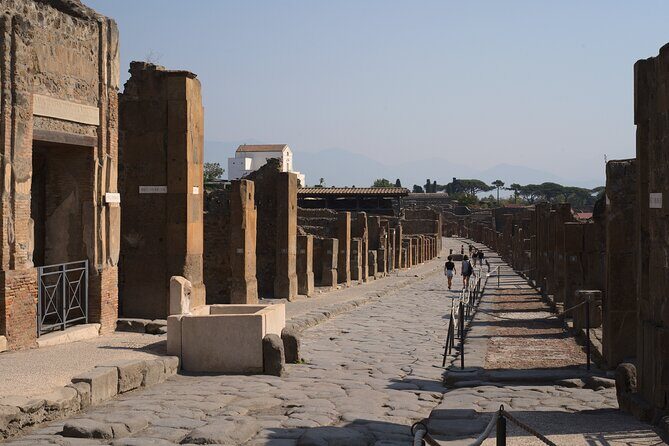
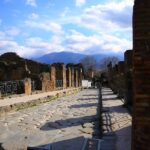
Via dell’Abbondanza is the main street, and the tour gives you a short, focused walk time there. This street stop helps you reconnect to scale. Pompeii isn’t just individual monuments. It’s a connected town with movement between points.
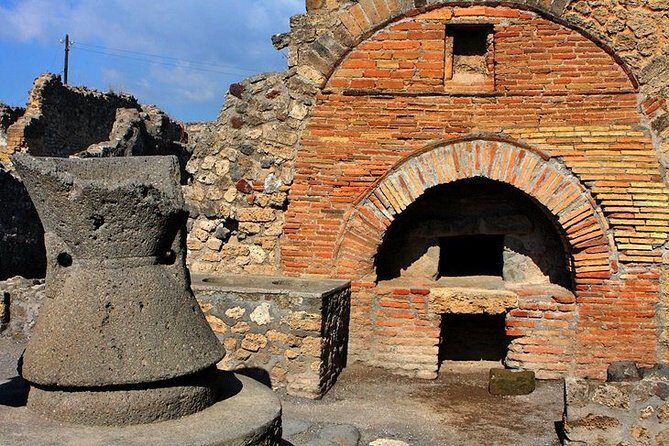
Then you visit Thermopolium Regio VI, Insula VIII, 8. A thermopolium is basically an ancient refreshment and food counter, and this stop is described as one of the restaurants of the time. You get a quick look, but it’s a valuable shift. It reminds you that Pompeii wasn’t all high-end art and ceremonies. It was also about ordinary meals and practical places to eat.
If you’re wondering whether this food stop matters, here’s the honest answer. It won’t replace a museum-style food experience. But as a tour moment inside Pompeii’s daily-life puzzle, it’s the kind of detail that makes the visit feel more human.
How much is this Pompeii tour really worth?
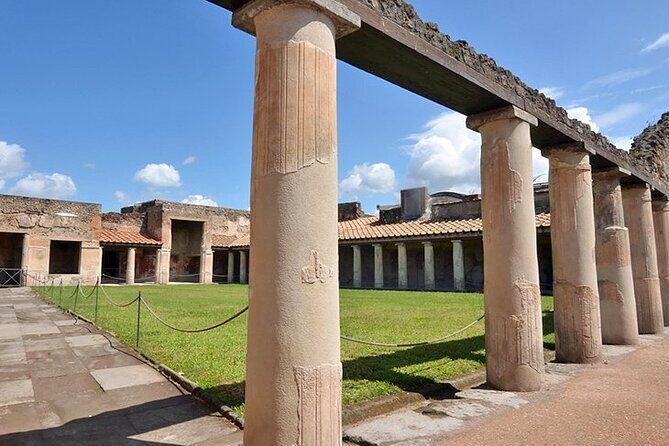
At $102.35 per person, you’re paying for three things: an official guide, a private format, and a structured route that covers key areas in a limited window.
You get bottled water and a map of the Archaeological Park Pompeii included. You also get a tour route that spends time at 13 specific stops, often in short segments (5–20 minutes). That’s not random. It’s designed to keep you from spending half your time figuring out where to go next.
The fact that the Pompeii ticket is not included can feel like a hassle, but it’s also normal for guided tours. The value question becomes: does the guide’s explanation save you from doing this wrong on your own? In a place like Pompeii, the answer is often yes.
Where the guide really earns the money is in the kind of storytelling that helps you notice what you’d miss. In these tours, the guide is described as funny in the right way, very informed, and able to point out small details across architecture, daily life, and ongoing excavation work. Some guides, like Paolo, are described as having worked as archaeologists on the site long ago, which you can feel in how they talk about evidence and what it means.
One more value note: there are group discounts. If you’re traveling with friends or family, that can make the per-person cost easier to swallow while keeping the private experience intact.
Who this private Pompeii tour suits best
This is a good fit if you want a guided highlights route rather than a free-for-all. It’s also a strong choice if you like asking questions, because the private setup makes that possible.
You’ll likely enjoy it most if:
- you have only 2 to 3 hours and want the big sights without skipping the smaller details
- you want a guide who ties buildings to daily life, not just facts on a sign
- you’re visiting in English and prefer explanations in real time
If you’re a super independent traveler who hates structure, you might feel boxed in by the timed stop approach. Still, you can usually slow down at a few places if the guide is able to accommodate your pace.
Should you book this Pompeii private tour?
I’d book it if you want Pompeii to feel clear and connected. The route hits theaters, villas, baths, temples, and street life without requiring you to plan every turn. And the private, official-guide format means you’re not just collecting photos. You’re learning what each stop was for and why it mattered.
I’d think twice if you already have a strong plan for Pompeii, a guide you trust deeply, and you’re comfortable navigating the site ticket-first and stop-by-stop. In that case, you might be fine doing it solo.
But for most first-time Pompeii visitors, paying for an official guide here is a smart shortcut. You leave with a real sense of the city, not just snapshots.
FAQ
How long is the Pompeii private tour?
The tour lasts about 2 to 3 hours.
What time does the tour start?
The start time is 12:30 pm.
Where does the tour meet?
It meets at Via Villa dei Misteri, 1, 80045 Pompei NA, Italy.
Does the price include the Pompeii ticket?
No. The Archaeological Park Pompeii ticket is not included.
What is included in the tour price?
The tour includes the tour guide, a map of the Archaeological Park Pompeii, and bottled water.
Is tipping included?
No. Tip is not included.
Is the tour offered in English?
Yes. It’s offered in English.
Is this tour private?
Yes. It’s a private tour/activity, meaning only your group participates.
Are service animals allowed?
Yes, service animals are allowed.
Can I cancel for a full refund?
Yes, you can cancel for a full refund if you cancel at least 24 hours before the experience’s start time.