REVIEW · POMPEI CAMPANIA
Pompeii VIP 3h Tour: Skip-the-line with your Archaeologist
Book on GetYourGuide →Operated by Grand Tour Experience · Bookable on GetYourGuide
Pompeii feels personal when the archaeologist leads. This Pompeii VIP 3-hour tour is built for fast, smart access through the ruins, with a licensed guide who can explain what you’re seeing in plain language. From the start, you get the kind of context that makes Pompeii feel less like a postcard and more like a real place that still has secrets, especially with excavation finds discussed at the antiquarium. In the guide credits you’ll see names like Ricardo and Federica, and both show up in reviews as people with real archaeological training and the confidence to share it.
I especially like the combo of skip-the-line entry and a tightly planned route. You’ll move through the big public spaces like the Basilica and the forum areas, then switch to street life along the Greater Decumano and Via dell’Abbondanza, and finally end in the Amphitheatre. The stops include domus restorations and houses that have been recently opened, plus recognizably Roman details—baths/thermal systems, market buildings, and even the Lupanare.
One thing to consider: this is a personal-ticket system, and it’s strict. You’ll need to send the full names of everyone in your party and bring an original ID or passport, and you should be on time since tickets are personal.
In This Review
- Key things that make this Pompeii VIP tour worth your time
- Starting Smart: Porta Marina Superiore and the skip-the-line effect
- The first stop: Porta Marina to the Antiquarium and the eruption clues
- Basilica, forum spaces, and the Temple circuit: where the city did business
- Greater Decumano to the Lupanare: streets, systems, and real Roman habits
- Domus and restorations: recently opened houses and the House of Golden Cupids
- Via dell’Abbondanza and the “Fugitives” Garden: seeing what happened
- Great Gymnasium, theatre stops, and ending at the Amphitheatre
- Price and value: what you get for $407.83 per private group
- Practical tips so the tour feels easy, not exhausting
- Who this Pompeii VIP 3h Tour suits best
- Should you book the Pompeii VIP 3h Tour with your Archaeologist?
- FAQ
- Where is the meeting point for the tour?
- How long is the Pompeii VIP tour?
- Are admission tickets included?
- What languages are the guides available in?
- Is the tour wheelchair accessible?
- Do I need to provide names or ID for the tickets?
Key things that make this Pompeii VIP tour worth your time
- Skip-the-line at Porta Marina Superiore so you start seeing ruins sooner, not waiting.
- A licensed archaeologist guide who can explain excavations and why new evidence changes what we know.
- Last-excavation finds at the antiquarium, including a coin that shifted the eruption timeline and a heavy golden arm cuff.
- Recently opened domus and notable restorations, like the House of Golden Cupids.
- The Garden of the Fugitives with body moulds, presented as a story you can actually visualize.
- A strong 3-hour route that touches major monuments without feeling like you’re sprinting through everything.
Starting Smart: Porta Marina Superiore and the skip-the-line effect
Your tour starts at Porta Marina Superiore, right in front of Hortus Bar. That location matters because it puts you at one of the main gates of the archaeological area, so you don’t waste your energy playing “where do we go next?” before the real sights begin.
The “VIP” part here isn’t just marketing. You’ll get skip-the-line service plus admission tickets included, which is a big deal in Pompeii where lines can eat up the best part of the day. In a 3-hour tour, saving 30–60 minutes can feel like you added an entire extra stop.
This is also set up as a private group experience. That changes the feel: you can ask questions, and the guide can slow down where you’re genuinely curious instead of reading a loud script for a crowd.
If you're still narrowing it down, here are other tours in Pompei Campania we've reviewed.



The first stop: Porta Marina to the Antiquarium and the eruption clues
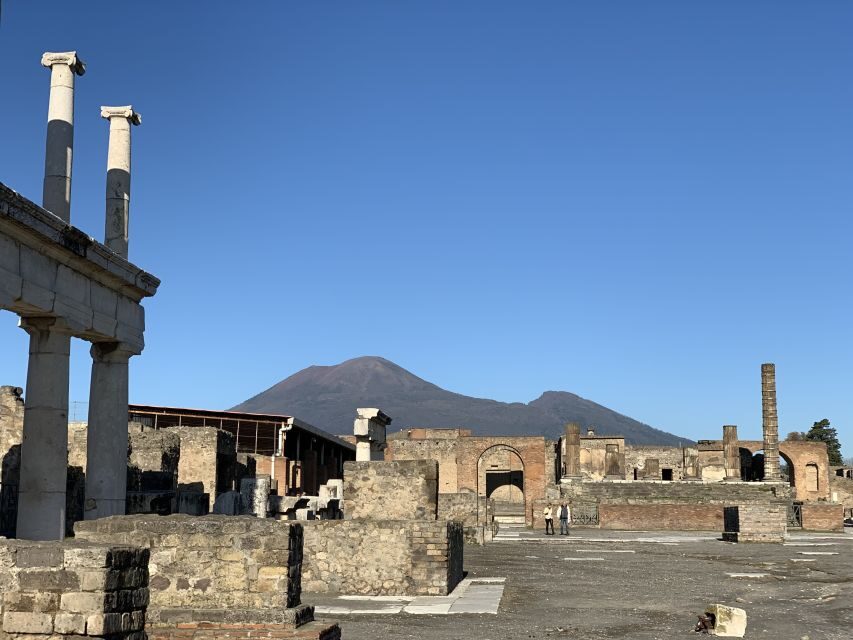
You’ll begin moving into Pompeii at Porta Marina, and the route quickly orients you toward the story of the city and the volcanic disaster that froze it. One detail I like from the planned flow: while you’re looking toward Vesuvius, your guide introduces the antiquarium as more than a “museum room.” It’s where the latest discoveries get turned into explanations you can carry through the ruins.
Inside the antiquarium, your archaeologist points out objects from the last excavations, including:
- a coin that changed what archaeologists understand about the eruption date
- a heavy golden arm cuff, a reminder that wealth and fashion existed right up to the end
Why I like this start: it teaches you to read Pompeii like evidence, not just scenery. You’re not only staring at stone. You’re learning how archaeology revises dates and details when new finds show up.
Basilica, forum spaces, and the Temple circuit: where the city did business
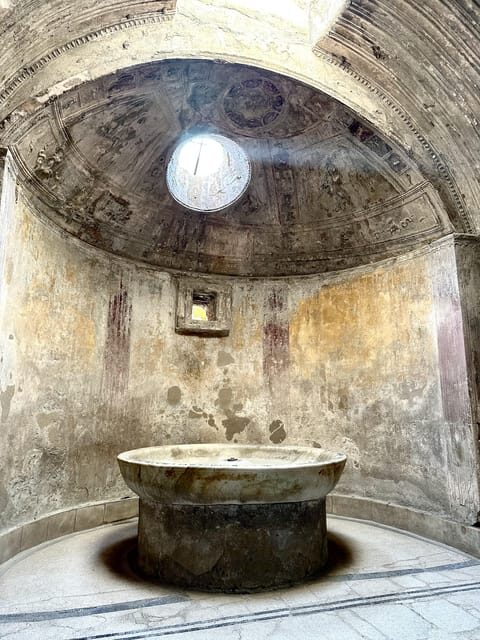
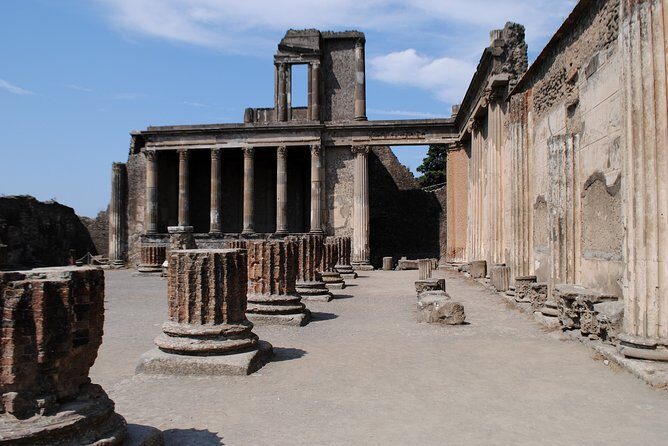
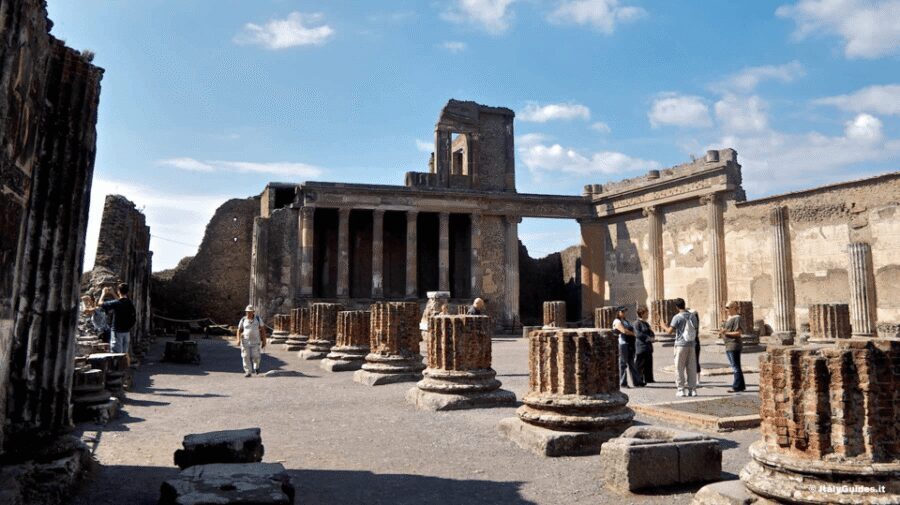
After Porta Marina, you step into the public heartbeat of Pompeii. The tour includes the Basilica, the Foro Civile di Pompei (civic forum area), and key temples such as:
- the Temple of Apollo
- the Temple of Jupiter
This segment is great if you want to understand how Romans organized daily life. In Pompeii, public buildings can feel similar at first glance—walls, columns, and floors. A good archaeologist guide helps you notice differences: the civic purpose, the flow of people, and why certain spaces mattered for politics, religion, and trade.
The forum area also connects to the tour’s market stops. You’ll visit the Macellum of Pompeii, which is essentially a market complex. Then you’ll move through temple and civic space so you can see how commerce and belief lived side by side.
A small drawback to keep in mind: forum monuments are dense. The upside is that you’re learning a lot; the downside is you’ll want to keep good footing and stay mentally fresh, because your guide is likely to pack in lots of explanations in a short span.
Greater Decumano to the Lupanare: streets, systems, and real Roman habits
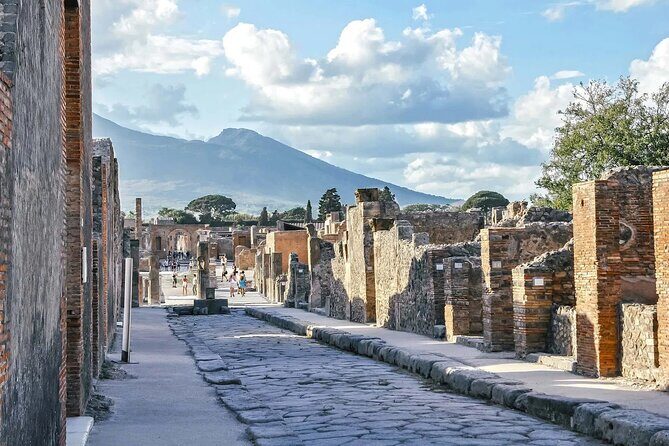
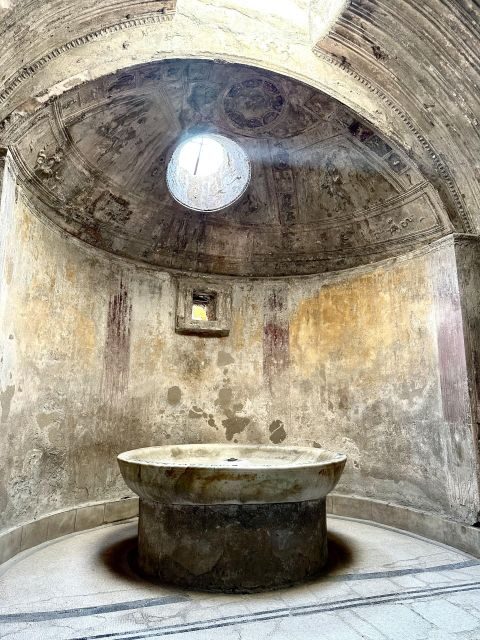
Next comes the kind of Pompeii section that feels most like daily life. You’ll walk along the Greater Decumano, a major street axis, and your guide points out the thermal system details—how hot water and heating worked in Roman buildings.
Then you’ll look at the Lupanare. It’s not a comfortable stop in content, but it’s an important one for understanding that Pompeii wasn’t only temples and grand homes. It included the messy, everyday side of Roman life too. Your archaeologist’s job is to frame it with context rather than sensationalism, so you leave with understanding instead of awkward staring.
This street-life portion is also where you start noticing patterns in the city layout. Streets aren’t random. They funnel movement. They connect public and private spaces. When you can see that logic, the ruins stop being confusing and start being readable.
Domus and restorations: recently opened houses and the House of Golden Cupids
One of the biggest promises in this tour is access to the nicer “read the room” side of Pompeii: domus (Roman houses) and restorations, including some spaces that have been recently opened. Your route includes multiple house stops such as:
- House of the Tragic Poet
- House of Menander
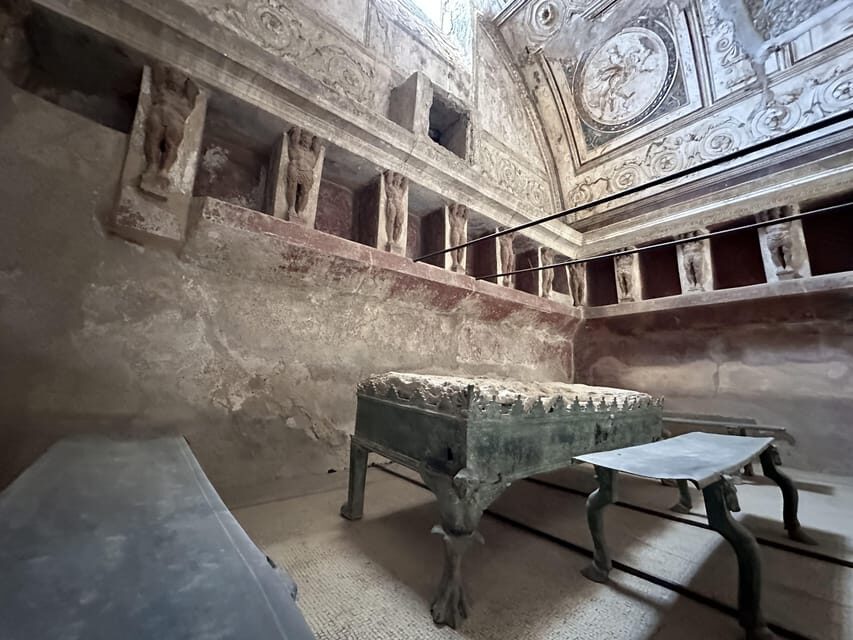
You’ll also encounter the House of Golden Cupids as part of the restoration story. The tour is set up so the guide can explain what you’re seeing—where repairs are obvious, what’s original, and what changed due to restoration work and ongoing excavation.
Why this matters for your experience: house interiors in Pompeii are where you learn social status fast. You also learn how Romans used art, light, and practical layouts. Even when the walls look similar to a first-time visitor, a trained guide can point out the cues that tell you if the space was meant for display, private routine, or both.
If you’re the type who loves details (house features, household life, how spaces were used), this is the part you’ll probably remember most.



Via dell’Abbondanza and the “Fugitives” Garden: seeing what happened
The tour continues along via dell’Abbondanza, one of the streets that helps connect major clusters of monuments. You’re moving through the city at a human walking pace, so by the time you reach the last major dramatic stop, you’re not just looking at ruins—you’ve built a mental map.
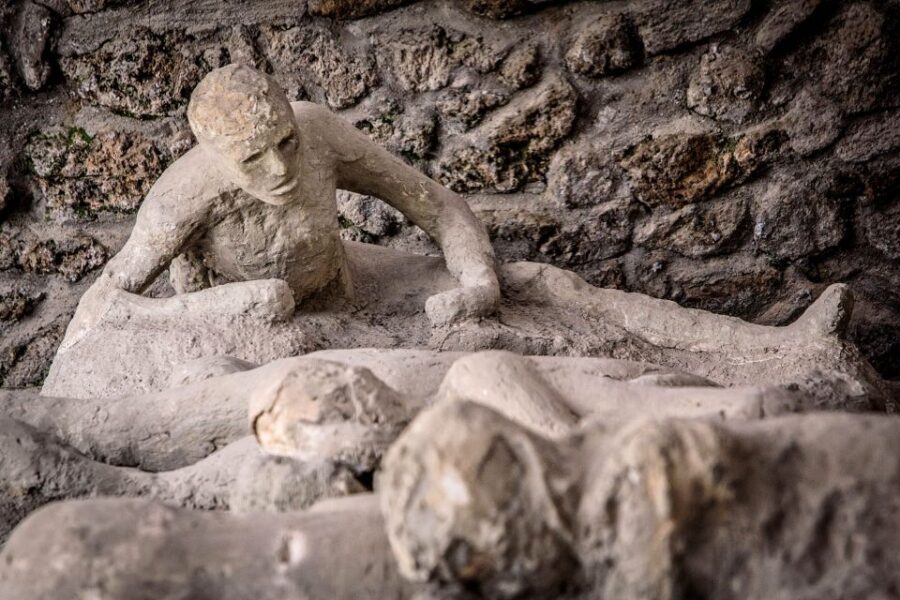
Then comes the Garden of the Fugitives. During the eruption, some people tried to find escape but perished. In this stop, the guide points out the body moulds, which is exactly as intense as it sounds. This isn’t a stop for people who want only pretty views. It’s a stop that reminds you Pompeii ended in seconds, not centuries.
What I appreciate here is the balance: the tour doesn’t treat the tragedy like a horror prop. The archaeologist’s role is to anchor it to how we know what happened and what the evidence represents.
After that weighty moment, the route eases back into educational and architectural context—so you don’t just end on heavy emotions.
Great Gymnasium, theatre stops, and ending at the Amphitheatre
Your final stretch includes a mix of public entertainment and daily-use space. The itinerary includes:
- the Great Gymnasium
- the Large Theatre
- and the Amphitheatre as the last stop
At the Great Gymnasium, the tour highlights how the space is presented with many daily objects exposed. Even when objects are fragments, seeing them laid out gives you the missing link between architecture and routine.
Then you’ll head to the Large Theatre, which helps round out the picture of how Romans spent leisure time and how performance culture worked inside a city that also managed markets, baths, and religious life.
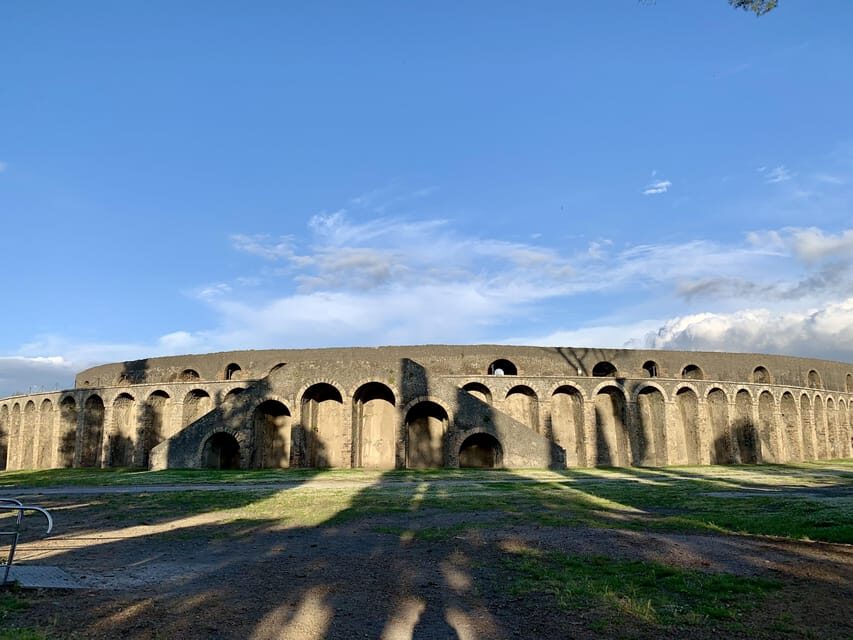
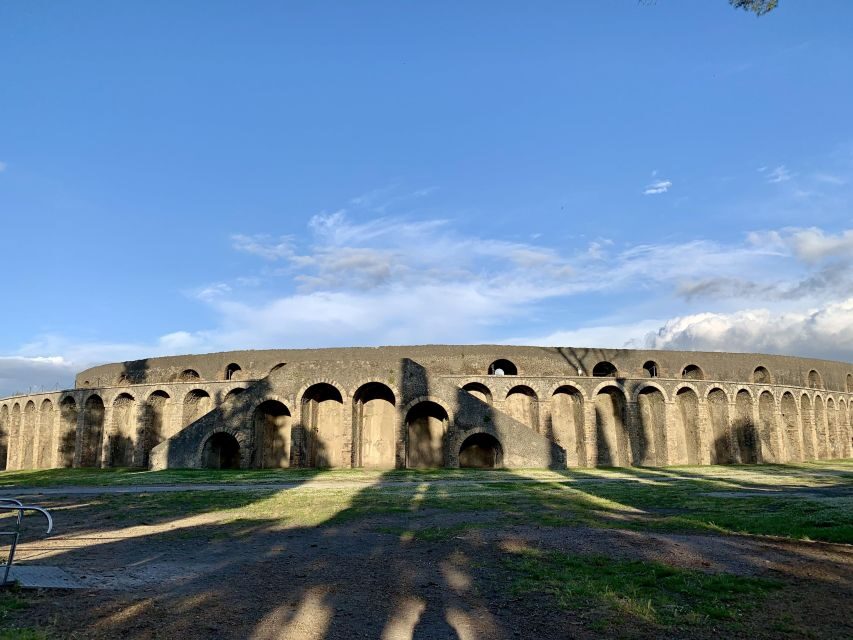
Finally, you finish at the Amphitheatre. Ending here works because it’s a natural “exhale” point: you’ve covered public buildings, private houses, the eruption story, and performance spaces. You leave with a clearer sense of how Pompeii functioned right up to the end.
Price and value: what you get for $407.83 per private group
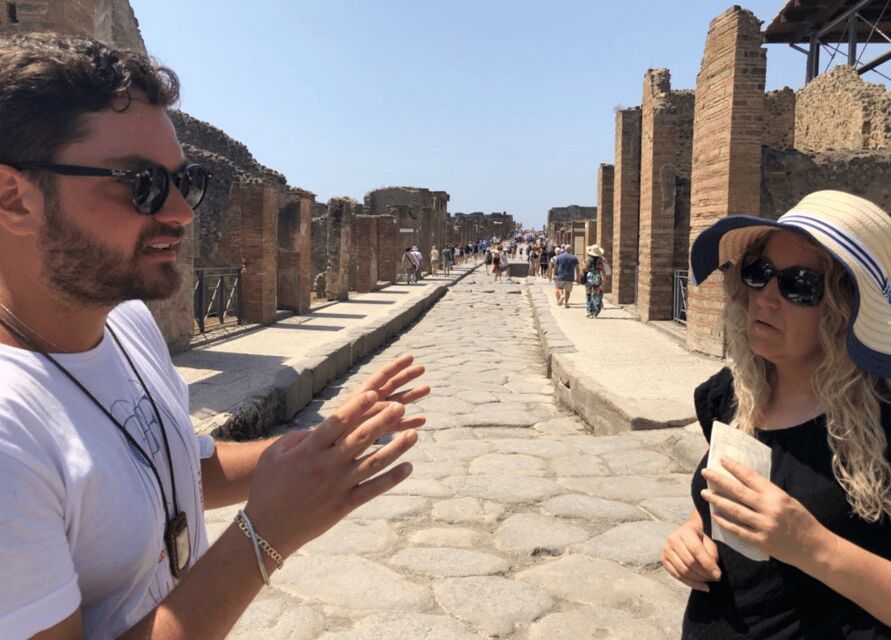
At $407.83 per group (up to 1, based on the listed group size), this is not a budget Pompeii plan. But I think it can be good value if you’re traveling in a way where time matters and you want real expertise.
Here’s what you’re paying for, and why it matters:
- Private guided tour with a personal archaeologist
- Admission tickets included
- Skip-the-line service
If you compare this to piecing together general entry plus an audio guide plus the time you lose to lines, this package feels less expensive than it first appears—especially in a 3-hour window. In other words, you’re not just buying access. You’re buying interpretation, speed, and a route designed to hit the meaningful points.
The main “value check” is this: if you’re the kind of visitor who wants to wander independently and take photos without much explanation, you might not feel the difference. If you want Pompeii explained in a way that connects monuments to evidence, it’s a strong match.
Practical tips so the tour feels easy, not exhausting
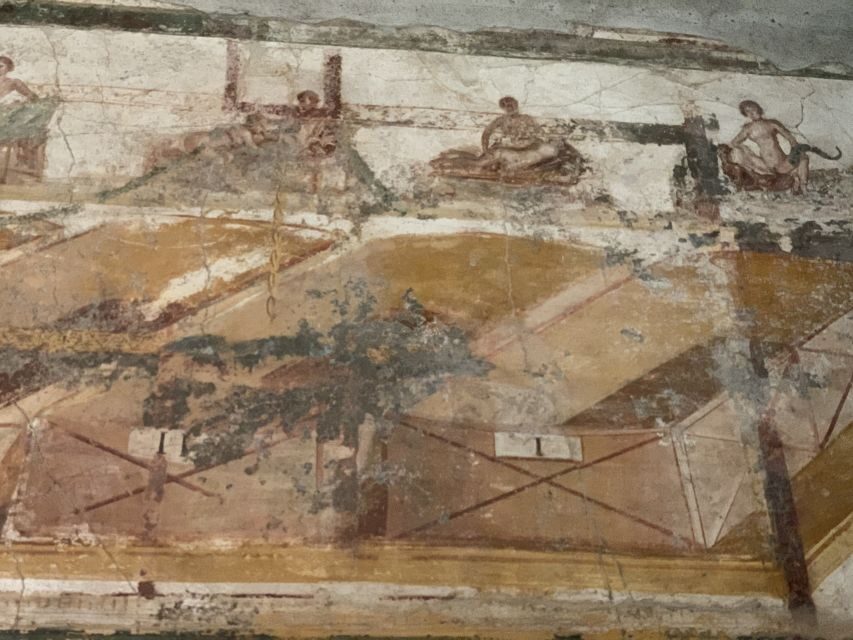
This is a ruins walk, so plan for comfort. You’ll be on your feet through uneven stone paths, so I’d bring:
- comfortable shoes
- sunscreen
- comfortable clothes
Pompeii can also feel hot in full sun, and the stops are spread in a way that can make waiting uncomfortable. So the fastest way to enjoy this tour is to show up ready to walk and think.
A few rules to remember because they affect your day:
- Pets are not allowed.
- Alcohol and drugs are not allowed.
- The ticketing system requires full names and surname for everyone, and you must bring original ID or passport. Also, be on time since tickets are personal.
Food isn’t included, so if you’re hungry afterward, plan a meal nearby. Transportation isn’t included either, so build your arrival time around the meeting point at Porta Marina Superiore.
Who this Pompeii VIP 3h Tour suits best
This is a great pick if:
- you want archaeology-focused storytelling, not just highlights
- you like structured routes with meaningful stops (forum, temples, domus, and the darker evidence like the Fugitives garden)
- you’re short on time but still want a “whole Pompeii feeling” in a compact visit
- you prefer a private setting for questions and slower pacing where needed
It might be less ideal if:
- you don’t want to deal with the personal-ticket ID requirement
- you’re hoping for a long, leisurely meander. Three hours is a concentrated hit.
Should you book the Pompeii VIP 3h Tour with your Archaeologist?
If your goal is to understand Pompeii—not just see it—then yes, I’d book it. The standout value is the combination of skip-the-line access and a guide who can connect what you’re standing in front of to excavation evidence, including details like that coin that changed the eruption date and the golden arm cuff from the latest finds.
You’re paying for speed, entry, and interpretation in a short window. If that’s your kind of Pompeii day, this VIP 3-hour plan is a smart use of time.
FAQ
Where is the meeting point for the tour?
You meet at Porta Marina Superiore, right in front of Hortus Bar, and the tour ends back at the same meeting point.
How long is the Pompeii VIP tour?
The tour lasts 3 hours. Starting times depend on availability.
Are admission tickets included?
Yes. Admission tickets are included, and you also get skip-the-line service.
What languages are the guides available in?
The tour guide is available in English, French, Spanish, and Italian.
Is the tour wheelchair accessible?
Yes, this experience is wheelchair accessible.
Do I need to provide names or ID for the tickets?
Yes. You must send the full name and surname of all participants, and you need to bring an original ID or passport. Tickets are personal, so arrive on time.