REVIEW · POMPEII
Private Pompeii & Amalfi Coast Tour: Sorrento & Positano -Tickets
Book on Viator →Operated by Leisure Italy · Bookable on Viator
Pompeii plus the Amalfi Coast in one day is a smart move. This private tour strings together skip-the-line Pompeii and real time in Sorrento and Positano, so you’re not stuck staring out a bus window all day. I like that the Pompeii visit is organized around major sights, not just a random walk, and that the ride includes onboard commentary to set the context as you travel.
My other big win is flexibility: you can customize the pace and use free time in town to linger where you want. One thing to consider is the schedule is tight, with about 1 hour each in Sorrento and Positano, so if you want a long beach session or a slow café crawl, you’ll feel the time limits.
In This Review
- Key Points You’ll Care About
- Why This Pompeii & Amalfi Day Feels Efficient (Not Rushed)
- Private Mercedes Transport With Live Commentary: The Real Value
- Pompeii Priority Access: What the “Skip-the-Line” Changes
- Pompeii Highlights You’ll Hit: The Big Civic, Sacred, and Everyday Stops
- Porta Marina e cinta muraria: City Gate to Defensive Walls
- Basilica: Where Business, Justice, and Politics Happened
- Temple of Apollo: Religion in the Forum Neighborhood
- Forum: The Civic Heart and the Viewpoint Advantage
- Macellum: Pompeii’s Main Food Market
- Terme del Foro (Forum Baths): Daily Life in Public
- Casa dei Vettii: Elite Living and Fresco Detail
- Insula dei Casti Amanti: A Neighborhood Caught Mid-Moment
- Teatro Grande: Public Entertainment and Vesuvius Views
- Antiquarium di Pompei: The Emotional Bridge Before You Leave
- Pompeii for Kids and Families: Making the Ruins Click
- Sorrento in One Hour: Where You’ll Actually Get to Wander
- Piazza Tasso: Your Easy Orientation Point
- Corso Italia: Passeggiata Energy Without the Stress
- Cloister of San Francesco: A Quiet Reset
- The Amalfi Coast Drive: SS163 Views and Photo Stops You Can Enjoy
- Positano in One Hour: The Iconic Town Without the Long Lines
- Spiaggia Grande: The Town’s Waterfront Stage
- Chiesa di Santa Maria Assunta: The Dome and the Black Madonna
- Price and Value: What You’re Paying For (and When It’s Worth It)
- Should You Book This Tour? My Honest Take
- FAQ
- Is Pompeii entry included, and is there a skip-the-line option?
- What does the private transportation include?
- Where can pickup happen?
- How much free time do you get in Sorrento and Positano?
- Is lunch included?
- What’s the cancellation window?
Key Points You’ll Care About
- Priority Pompeii entry saves time before you even start walking.
- Private Mercedes van + live onboard commentary keeps the day moving with less guesswork.
- A guide-focused Pompeii route hits major civic, religious, and residential sites efficiently.
- Family-friendly Pompeii options exist, including activities designed for kids aged 6 to 11.
- Staged photo moments on the Amalfi drive help you get the views without racing.
- Two real town stops give you space to explore instead of only passing through.
Why This Pompeii & Amalfi Day Feels Efficient (Not Rushed)
This tour is built for one simple goal: maximizing the highlights without turning your day into a sprint. You get a guided-style Pompeii route first, then you shift to scenery and free time in two of the most famous coastal towns.
The flow matters. Pompeii rewards a planned route because the park is huge and easy to get lost in. After that, Sorrento and Positano are best enjoyed at street level, where you can pick what you want—coffee, shopping, lookouts, or a slow wander down toward the water.
The day runs about 8 to 9 hours, which is plenty for this combo, but not enough to do everything at full depth. Plan your expectations: you’re seeing top sites and soaking in the atmosphere, not attempting to master every single corner of the ancient city.
Other private Pompeii tours we've reviewed in Pompeii


Private Mercedes Transport With Live Commentary: The Real Value
The private van part isn’t just comfort—it’s decision help. You’re in a clean Mercedes minivan with A/C, and you’ll have an English-speaking driver plus live commentary on board, so the trip time feels useful instead of passive.
Pickup is flexible too. You can start from Naples, Sorrento, Pompeii, and more (hotels, vacation rentals, train stations, airports, and cruise terminals/ports). That door-to-door setup can save you from the stress of transfers and timing games on the Amalfi side of things.
On the Amalfi Coast, roads curve and viewpoints are scattered. Having a driver who’s doing the driving keeps you free to focus on two things: getting the best sightlines at photo stops and arriving at each town stop when you still have energy to enjoy it.
One practical note: you’ll want moderate walking fitness. Pompeii is uneven, and even when the guide selects highlights, you’ll still cover enough ground to need solid shoes and a calm pace.
Pompeii Priority Access: What the “Skip-the-Line” Changes
Pompeii can swallow a morning if you get stuck at entrances. With Pompeii Express skip-the-line tickets included, you start your visit with less waiting and more time in the ruins.
Priority entry is most valuable if your day is already scheduled tightly for Sorrento and Positano. Here, the point isn’t only speed—it’s preserving the best hours for looking carefully at the details that make Pompeii special.
Also, your visit is built around a guided selection of highlights. That matters because Pompeii isn’t one single monument—it’s a whole city, with separate neighborhoods, civic spaces, temples, homes, and markets. A good guide helps you see the story fast, then gives you enough orientation to enjoy the spaces on your own.
Pompeii Highlights You’ll Hit: The Big Civic, Sacred, and Everyday Stops
The Pompeii route here is smart: it balances the city’s public life, religious space, commerce, and elite residences. Expect short, focused stops inside the park rather than long sits at every location.
Porta Marina e cinta muraria: City Gate to Defensive Walls
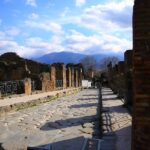
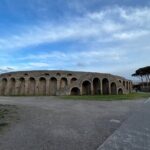
You start near Porta Marina, one of the main gates close to the port area. This is the place where many visitors first entered ancient Pompeii, and it connects to the city’s defensive walls.
Even if you only spend a few minutes here, it’s a great way to reset your brain from modern travel mode to ancient reality. You can literally trace how controlled access worked—how merchants and sailors came in, and how the city managed that flow.
Other Amalfi Coast day trips from Pompeii




Basilica: Where Business, Justice, and Politics Happened
Next comes the Basilica, built in the 2nd century BC as a major public hall. In Pompeii, this space wasn’t just ceremonial; it was where people met for commerce and governance.
Look for the tall columns and the way the layout creates a central open space. The design shows why basilicas influenced later Christian church layouts, which helps you connect Pompeii to what you’ll see in Italy’s bigger museum network.
Temple of Apollo: Religion in the Forum Neighborhood
The Temple of Apollo is one of Pompeii’s oldest religious spaces. It sat near the Forum and connected worship with public life—offerings and guidance from Apollo, the god associated with the sun, music, and prophecy.
This stop gives you a feel for how intertwined religion and civic space were. Even in ruins, the courtyard setting helps you imagine daily movement around the temple area rather than treating it like a stand-alone monument.
Forum: The Civic Heart and the Viewpoint Advantage
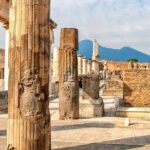
The Forum of Pompeii is where politics, religion, and commerce overlap in one central public space. From the raised modern walkways and terraces around the square, you can understand the way buildings frame the civic stage.
This stop is one of the best “big picture” sections of your visit. You’ll be able to see the arrangement of key sites like the Capitolium, Basilica, and Macellum from above, which makes the city feel organized instead of chaotic.
Macellum: Pompeii’s Main Food Market
Food was power, and the Macellum shows it. This covered market complex was where vendors sold fish, meat, fruit, and imported delicacies—basically, the engine of daily life.
If you like market culture, this is a fun stop. You can still picture stalls, storerooms, and counters shaping a routine that repeated morning after morning.
Terme del Foro (Forum Baths): Daily Life in Public
The Forum Baths were a social hub, split for men and women, and organized around warm and hot bathing halls plus a cold plunge. A major detail here is the hypocaust heating system, which was advanced by ancient standards.
This is one of the stops where Pompeii feels most human. Bathing was part hygiene, part leisure, and part conversation—so even a short visit helps you imagine the sound and rhythm of a real day.
Casa dei Vettii: Elite Living and Fresco Detail
If you want “wow” art, the House of the Vettii delivers. It’s known for rich frescoes and an elegant layout built around atria and peristyle gardens.
Look at the way wealthy homes were organized around light and open space. This helps you separate the idea of Pompeii as a tragedy from Pompeii as a living society where people had taste, status, and routines.
Insula dei Casti Amanti: A Neighborhood Caught Mid-Moment
The Insula dei Casti Amanti is named after a fresco showing lovers. What makes it especially interesting is the elevated viewing access, which lets you look into workshops, storerooms, and domestic rooms without wrecking fragile surfaces.
From these ramps, you can better imagine daily work alongside home life. The half-finished state in places makes Pompeii feel like it stopped mid-sentence right before AD 79.
Teatro Grande: Public Entertainment and Vesuvius Views
The Teatro Grande brings Pompeii’s entertainment culture to life. From terraced viewpoints, you can see the semicircular seating tiers and the stage area, plus the orchestra space where performers once worked.
The acoustics and the views toward the city and Mount Vesuvius are part of the appeal. Even if you only spend minutes here, it’s a powerful reminder that Pompeii had festivals, performances, and large crowds.
Antiquarium di Pompei: The Emotional Bridge Before You Leave
The Antiquarium is a smart final step because it gives you context. You’ll see statues, household objects, inscriptions, and jewelry recovered from excavations—plus displays that explain daily life and the eruption of AD 79.
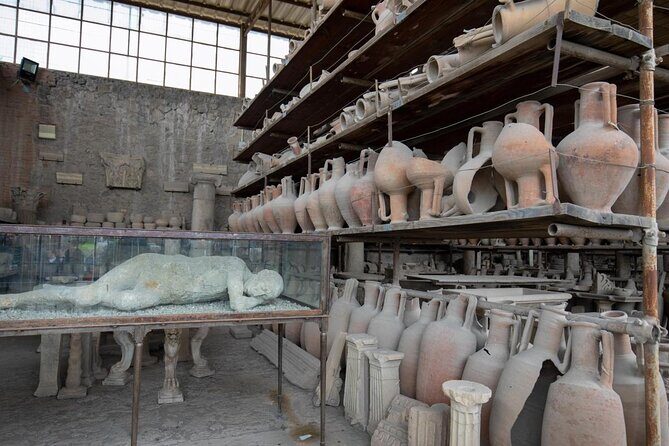
One reason this stop works is the pacing. It helps you process the ruins rather than just ticking off structures. It can also be the most emotional moment of the day due to plaster casts of victims and eruption material shown inside.
Pompeii for Kids and Families: Making the Ruins Click

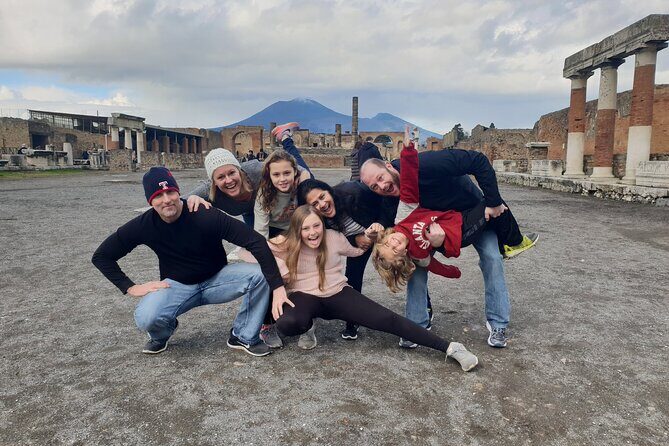
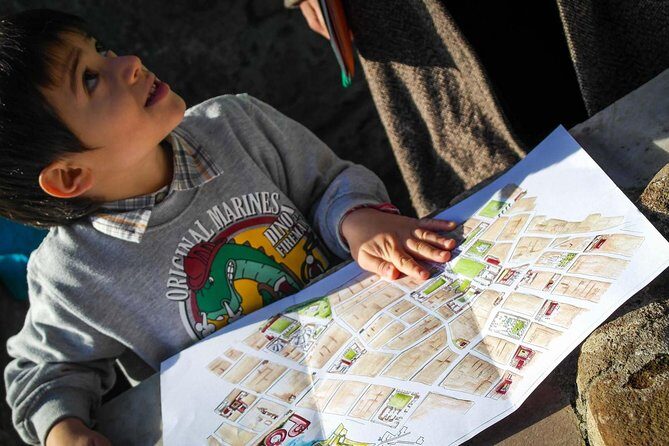
If you’re traveling with children, Pompeii can either be amazing or exhausting. This experience includes Pompeii-for-kids activities designed as a special visit for children roughly ages 6 to 11.
That age range is important because it targets attention span and curiosity. The goal is to turn the walking and looking into games and stories instead of a checklist.
In one family day, Giuseppe (one of the guides used for family groups) kept kids engaged with games, a positive attitude, and plenty of patience for questions. That kind of energy can make a big difference—especially in a place where kids might otherwise get bored fast.
Sorrento in One Hour: Where You’ll Actually Get to Wander
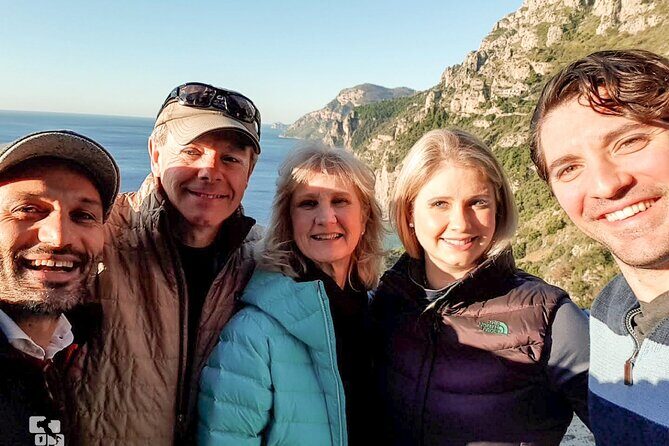
After Pompeii, you travel along the cliffs toward Sorrento. SS145 is the kind of road where the views keep pulling you to the window—terraced lemon groves, small ports, and glimpses of Vesuvius.
Then you get about 1 hour in Sorrento, which is enough for one or two key stops. Use it like this: pick a central square for people-watching, then walk one main street for sights and snacks.
Piazza Tasso: Your Easy Orientation Point
Piazza Tasso is Sorrento’s social hub, lined with cafes and patisseries. It’s also a practical meeting point inside the old town, which helps if your group splits briefly.
If you only do one quick pause, do it here. It’s the kind of place that makes you feel like you’ve arrived, not just transported.
Corso Italia: Passeggiata Energy Without the Stress
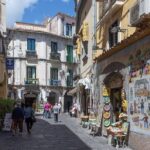
Corso Italia is the main promenade, with boutiques, leather goods shops, limoncello producers, and bars. It’s wide enough for comfortable strolling and good for browsing without feeling trapped.
If you want souvenirs that feel local rather than mass-market, this is where you’ll look. Late afternoon is when the traditional passeggiata rhythm shows up most clearly.
Cloister of San Francesco: A Quiet Reset
The Cloister of San Francesco offers a calm pause with a portico and arches. It’s a nice contrast to the busier lanes, especially if the Amalfi sun has you moving a bit slowly.
Even a short stop here is useful because it gives you a breather before the next leg of the day.
The Amalfi Coast Drive: SS163 Views and Photo Stops You Can Enjoy
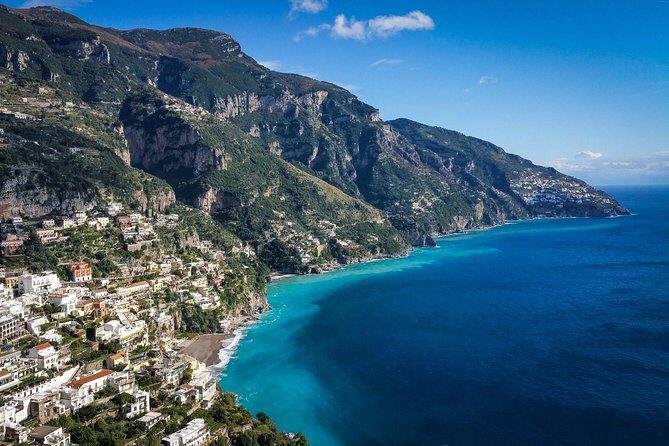
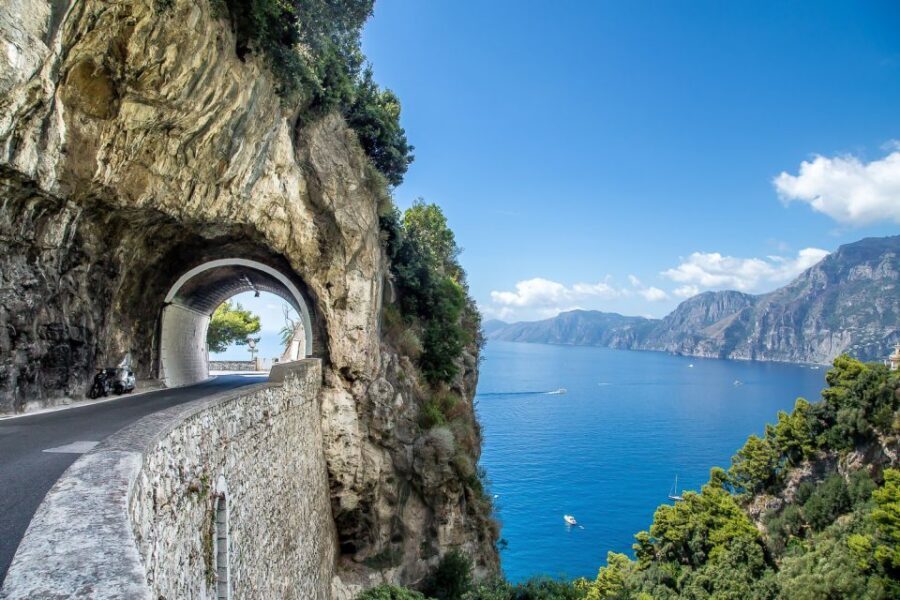
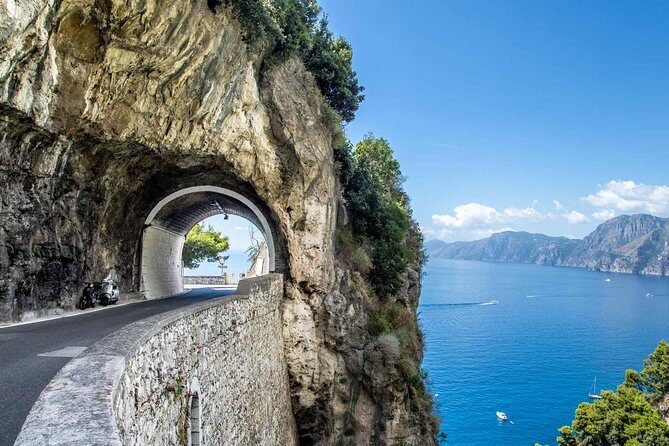
The Amalfi stretch is famous for a reason: viewpoints come fast, and each bend in the road can reveal a new layer of cliffs and villages. You’ll travel along SS163 and get photo stops timed for what’s visible from the road.
This is where live commentary helps most. As you pass rugged headlands, deep valleys planted with lemon groves, and pastel towns clinging to the mountainside, you’ll get the “why” behind the spectacle.
Keep your camera ready, but also keep your expectations realistic. This is a road journey with limited stop time, so you’re photographing and absorbing—not doing a full Amalfi walking tour.
If you’re the type who wants extra time in one place, remember the schedule can be adjusted. One family tour included stops such as Maiori and Ravello viewpoints, showing the day can stretch into a more personalized style when timing allows.
Positano in One Hour: The Iconic Town Without the Long Lines

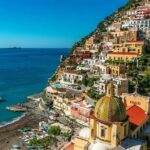
Positano hits you fast. The town rises almost vertically from the sea with pastel houses, stairways, and the recognizable silhouette that looks like a postcard—because it’s always been that way.
You’ll get about 1 hour in Positano, which means you should focus on one main walk and one landmark, then decide if you want beach time.
Spiaggia Grande: The Town’s Waterfront Stage
Spiaggia Grande sits directly at the base of the cliffside houses and acts like the town’s social hub. You can stroll along the shoreline, watch ferries connect to nearby towns, and see boats moving in and out.
This is a great choice if you want an immediate Amalfi mood without committing to a long trek.
Chiesa di Santa Maria Assunta: The Dome and the Black Madonna
The Chiesa di Santa Maria Assunta is Positano’s landmark, with a majolica-tiled dome that stands out above the waterfront. Inside, you’ll find a serene Baroque interior and the celebrated Byzantine icon of the Black Madonna.
From the church steps, the view direction is part of the experience. It’s one of those stops where you feel the town’s drama because you’re looking back out toward the sea.
Price and Value: What You’re Paying For (and When It’s Worth It)
At $486.47 per person, you’re not buying a cheap bus day. You’re paying for three things that matter in this region: priority entry, private transport, and guided structure.
First, the Pompeii priority tickets help protect your time. Second, private Mercedes transportation reduces friction with pickups and transfers, and you get onboard commentary to make the travel time useful. Third, the Pompeii route is organized around key sites, so you’re less likely to waste time wandering without a plan.
For families and groups who want control, private touring can be a strong value. One family highlight was how the guide (Giuseppe) tailored the day so kids stayed excited, with games and stories and a patient pace for questions. That kind of guidance is often hard to replicate on more basic group tours.
The main “value trade-off” is time pressure. With only about an hour each in Sorrento and Positano, you have to choose your priorities. If you want slow, long beach hours or deep museum-style time, this schedule may feel tight.
Should You Book This Tour? My Honest Take
Book it if you want a high-impact day that combines Pompeii’s must-see sites with genuine time on the Amalfi Coast towns. It’s a solid pick for first-timers to Pompeii who want a guided overview, plus anyone who wants Sorrento and Positano without the hassle of coordinating multiple trips.
Skip it if your dream day is mostly beach lounging or slow wandering with no schedule. This tour gives you just enough time to enjoy the places, not enough to fully live there.
If you’re traveling with kids, it’s also a strong option because Pompeii for kids activities exist and guides can use games and stories to keep attention moving.
FAQ
Is Pompeii entry included, and is there a skip-the-line option?
Yes. Pompeii Express skip-the-line tickets are included, and the Pompeii admission ticket is listed as included for the stops in the archaeological park.
What does the private transportation include?
You get private transportation in a Mercedes minivan with an English-speaking driver, plus live commentary on board and A/C for comfort.
Where can pickup happen?
Pickup is offered from Naples, Sorrento, Pompeii, and also from hotels, vacation rentals, train stations, airports, and cruise terminal/ports. You specify your pickup place when booking.
How much free time do you get in Sorrento and Positano?
Sorrento includes about 1 hour of free time, and Positano includes about 1 hour of free time.
Is lunch included?
Lunch is not included. If you request lunch, it’s listed as not included.
What’s the cancellation window?
You can cancel for a full refund up to 24 hours in advance of the experience’s start time. Changes made less than 24 hours before the start time aren’t accepted.