REVIEW · POMPEI CAMPANIA
Pompeii Tour_Skip the line ticket + audioguide
Book on GetYourGuide →Operated by MOTORENT S.R.L. · Bookable on GetYourGuide
Pompeii is big, and time disappears fast. What makes this one work is skip-the-line entry plus a ready-to-use audio guide so you can move at your own pace. I like the independent setup and how it helps you not waste hours figuring out where to go next. One possible drawback: the audio guide can feel a bit succinct for people who want deeper storytelling.
This package is built for a straightforward day in Campania: enter, listen, walk, and pick the stops that matter to you. Pompeii sees around 3 million visitors a year and covers about 66 hectares, so anything that reduces friction at the start is genuinely valuable. If you dislike walking a lot or you want a live guide explaining every layer, you may wish you’d booked more than just an audio track.
For most people, this is a solid value way to see the essentials of an UNESCO-listed archaeological site without getting bogged down at the entrance.
In This Review
- Key highlights worth your attention
- Pompeii in a single day: why this format works
- Starting near Bar De Vivo: getting into Pompeii without drama
- What’s included: the ticket and the audio that guide your route
- Pompeii’s size means you need a strategy, not just enthusiasm
- Domus and frescoed houses: seeing everyday wealth and artistry
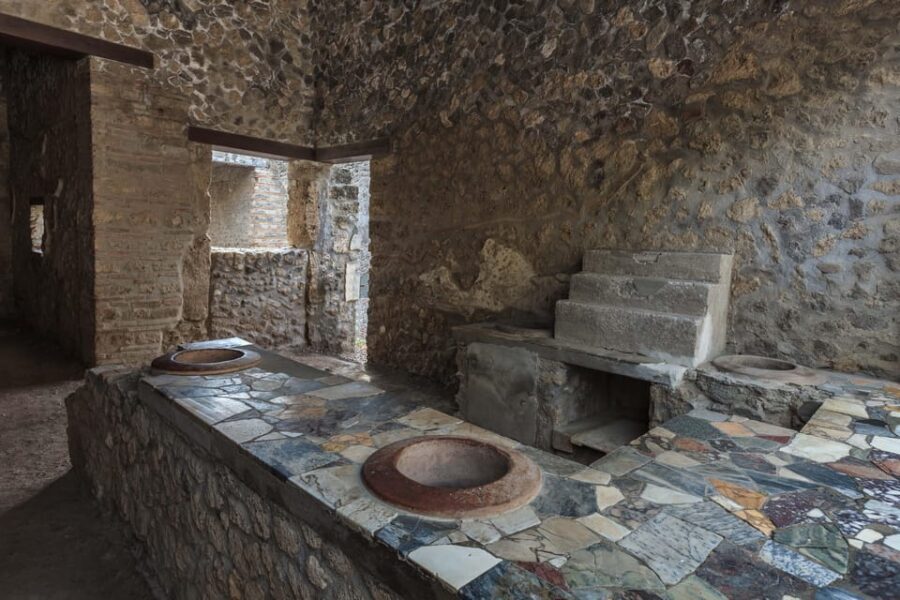
- Baths, temples, shops, and thermopolium: the city’s pulse
- Theaters and brothels: a side of Rome most people forget
- The victim casts: when Pompeii stops being just ruins
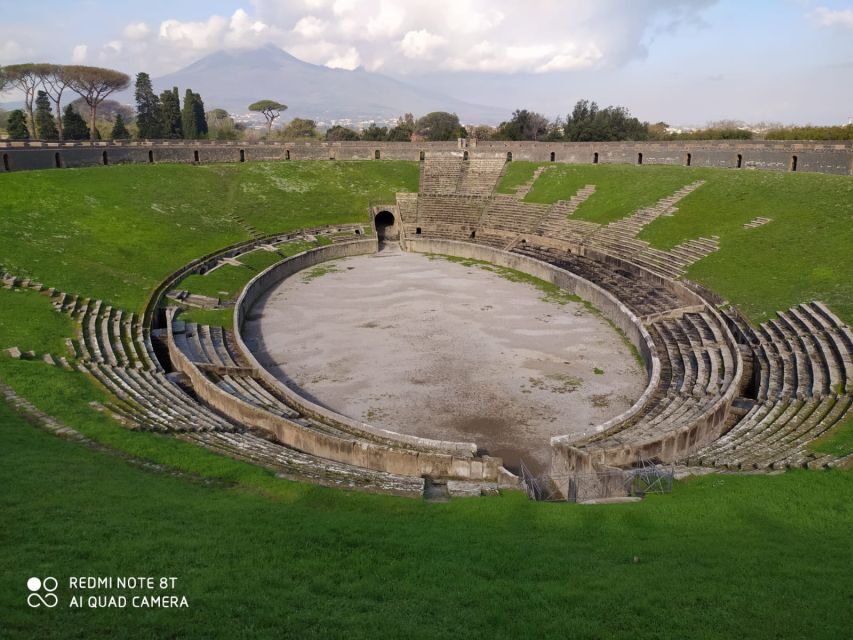
- The amphitheater: best preserved Roman drama in the open air
- Walking tips that protect your time (and your feet)
- Price and value: is $44 worth it?
- Who should book this Pompeii package?
- Should you book this skip-the-line Pompeii with audio?
- FAQ
- Where is the meeting point?
- How long is this Pompeii experience?
- What does the ticket include?
- Do I need to book a live guide?
- Is transfer included?
- Is skip-the-line access included?
- What languages are the audio guides available in?
- What languages can the host or greeter speak?
- What should I bring?
- Is there free cancellation?
Key highlights worth your attention
- Skip-the-line ticket: you avoid the main bottleneck at one of the most visited ancient sites in Italy
- Audio guide included: listen in many languages and keep moving without waiting for explanations
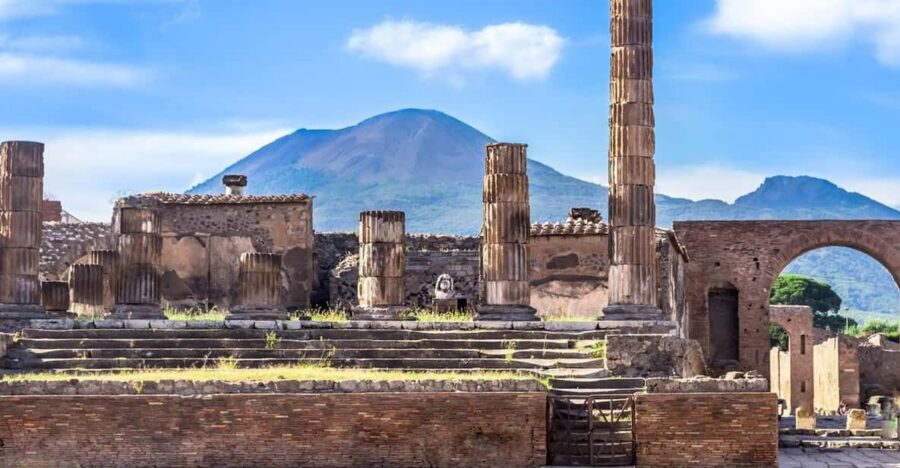
- A day that fits the scale: Pompeii’s roughly 66 hectares is manageable when you focus on the core areas
- Big-stuff sightseeing: domus with frescoes, baths, temples, theaters, and the amphitheater
- The human shock: the casts of victims give the tragedy a hard, memorable reality
- Easy meeting point: it starts exactly next to Bar De Vivo
Pompeii in a single day: why this format works
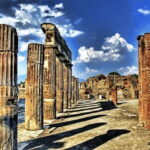
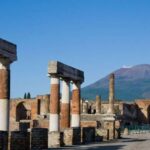
Pompeii is the kind of place that can swallow an entire trip—or give you a great day—depending on how you plan. With about 3 million visitors each year and a site spread across 66 hectares, crowds and distance are real issues. This is why a skip-the-line ticket matters more here than it would at a smaller attraction.
The other big win is that you’re not stuck waiting on a live group. You’re there for a self-guided walk supported by an audio guide and an updated map. That means you can do this like a field trip: hit the highlights, pause where something catches your eye, and skip what doesn’t hold you.
This is also a smart choice if you’re the type who likes to wander, but gets frustrated when there’s no context. Pompeii has plenty of “what am I looking at?” moments. An audio track helps you turn ruins into something you can actually place in your head.
If you're still narrowing it down, here are other tours in Pompei Campania we've reviewed.



Starting near Bar De Vivo: getting into Pompeii without drama
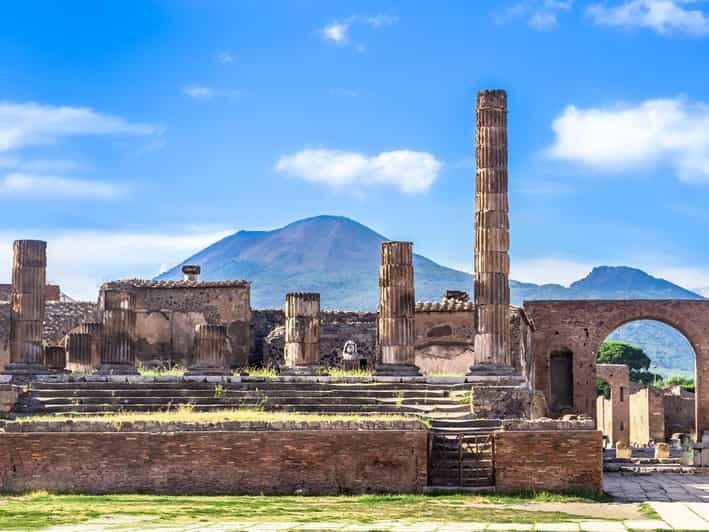
The meeting point is simple: it’s right next to Bar De Vivo. That matters because the first stress point at Pompeii is usually confusion and bottlenecks, not the ruins themselves.
Once you’re at the entry, the whole logic of the day is clear. You have a skip-the-line ticket, which should cut down the time you’d otherwise spend standing around before you even start walking. In a place this busy, those minutes turn into extra time for seeing things like the preserved amphitheater and the casts of victims.
Also note that the meeting is supported by a host/greeter in English, Italian, Spanish, and French. The audio guide handles the site interpretation across many more languages, but the human contact at the start can still help you get oriented fast.
What’s included: the ticket and the audio that guide your route
This package includes two key pieces:
- Entrance ticket for Pompeii Ruins
- Audioguides in languages
It also includes audio options in a wide list: English, French, German, Italian, Hebrew, Chinese, Russian, Spanish, Portuguese. That’s useful if you’re traveling with someone who doesn’t want to listen in English.
One caution from a verified booking: the audio guide that guest had was described as too succinct and lacking in information. That doesn’t mean it’s always inadequate, but it does tell you something important about your expectations. If you want lots of background detail—names, historical context, and explanations that go beyond what you can see—prepare to supplement with your own reading (on your phone, from a book, or even quick notes before you go).
Pompeii’s size means you need a strategy, not just enthusiasm
Pompeii covers about 66 hectares, so a “see everything” plan is fantasy. The smart approach is to pick your must-sees and use the audio guide to fill in the meaning as you go.
Here’s the value of the audio + map setup: it helps you not just walk from ruin to ruin, but connect each stop to what life looked like in Roman times. Without that, you can end up treating the site like a museum hallway. With it, the same streets and buildings start to feel like a real place.
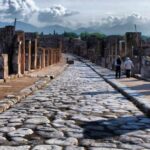
Your day will also depend on your comfort level with walking. The site is outdoors and uneven in places. Comfortable shoes aren’t optional here—they’re the difference between enjoying the amphitheater at the end and limping back to the exit.
Domus and frescoed houses: seeing everyday wealth and artistry
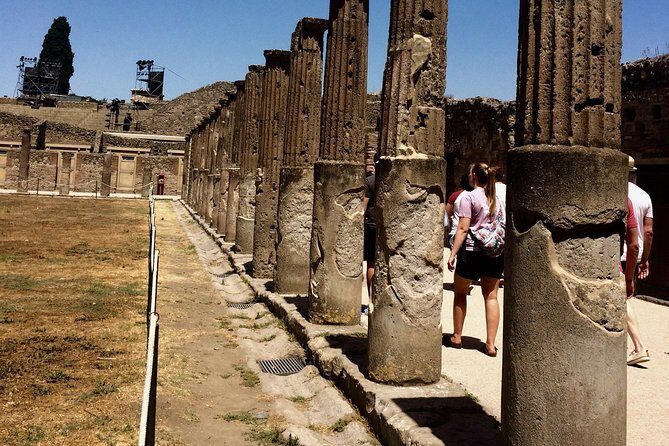
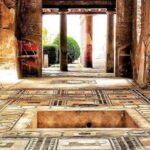
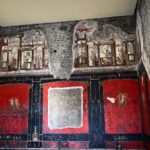
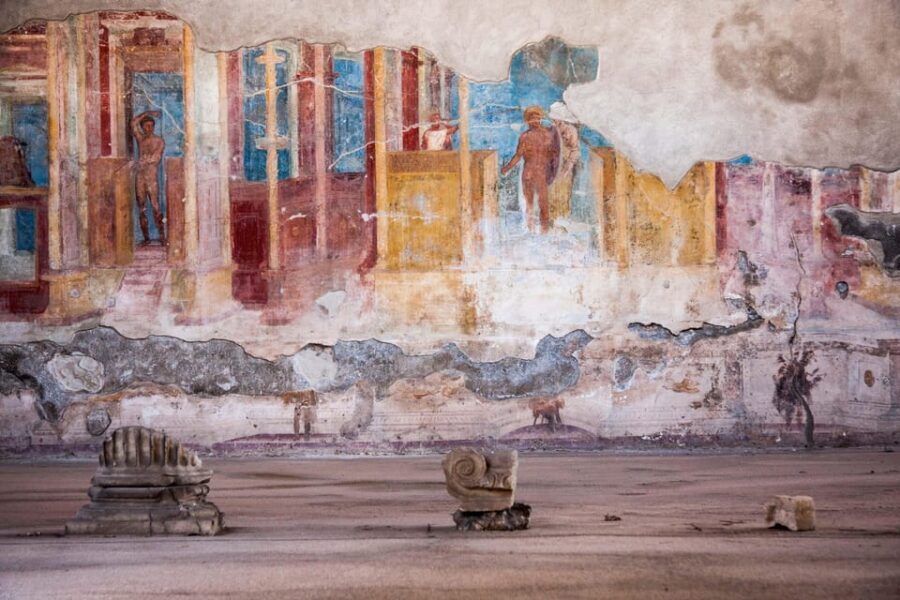
One of the most unforgettable parts of Pompeii is how intact so many domestic spaces remain, especially the frescoed houses (domus). Roman homes weren’t just “houses.” They were statements—about status, taste, and comfort.
When you visit the domus area, think about what survives. Frescoes are fragile by nature. Seeing them preserved enough to understand their decorative style helps you picture the social life that once happened behind those walls: visits, feasts, and the daily rhythms of a city where wealth differences were visible.
This is also a great zone for slowing down. If your audio guide feels brief, this is where you can compensate by using visual cues: color layers, room layout, and how decoration was used to make spaces feel bigger or more important.



Baths, temples, shops, and thermopolium: the city’s pulse
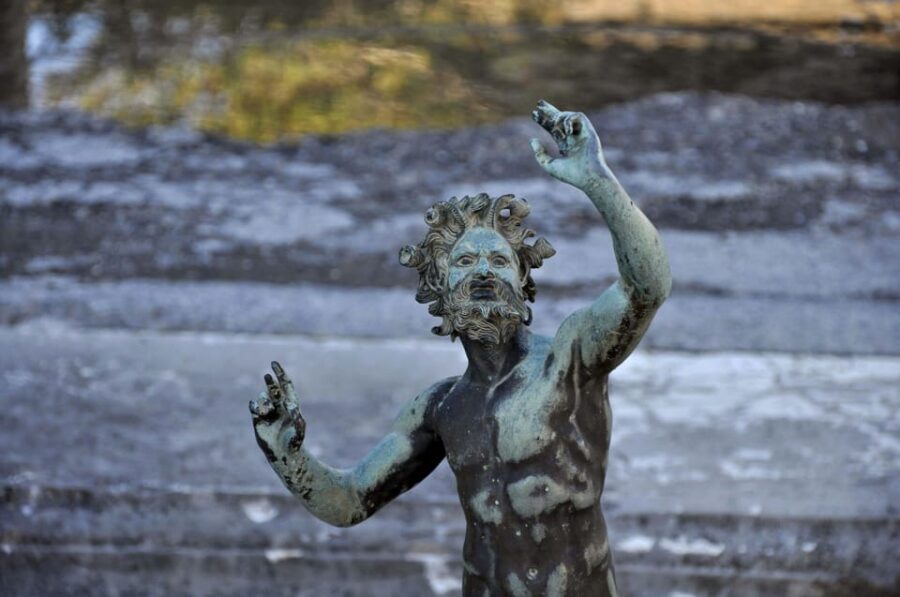
Pompeii isn’t only about grand architecture. It’s about ordinary spaces that tell you how people ate, worshipped, shopped, and relaxed.
Expect to come across:
- Spas
- Temples
- Shops
- Thermopolis (the ancient version of quick food)
The most interesting thing about these stops is that they show a mix of public and private life. A bath space hints at socializing and routine. A temple shows belief as part of daily culture. A shop or thermopolis reminds you that this city had workers, buyers, and people grabbing food fast—basically, the same energy you’d find in any busy neighborhood market, just with ancient tech and different ingredients.
If you’re traveling with kids or anyone who needs something tangible, these everyday locations usually land better than the most abstract explanations.
Theaters and brothels: a side of Rome most people forget
Pompeii doesn’t sanitize itself. You can see theaters and the less comfortable side of Roman entertainment through brothels.
The theater ruins help you understand how public life moved around performances—crowds, scheduled events, and shared culture. Even if you don’t know the details, the scale and design make the function obvious.
The brothel area is different. It’s not there to be shocking for shock’s sake. It’s there because that’s part of the real economic and social structure of the city. If you’re sensitive to that theme, just know it’s part of the site you’ll encounter while following a typical highlight path.
This section is where your audio guide really helps, because you’ll want to connect what you see to the meaning behind it. If your audio feels too short, you might want to spend extra time with each stop—reading any available signage or using quick personal research before you enter.
The victim casts: when Pompeii stops being just ruins
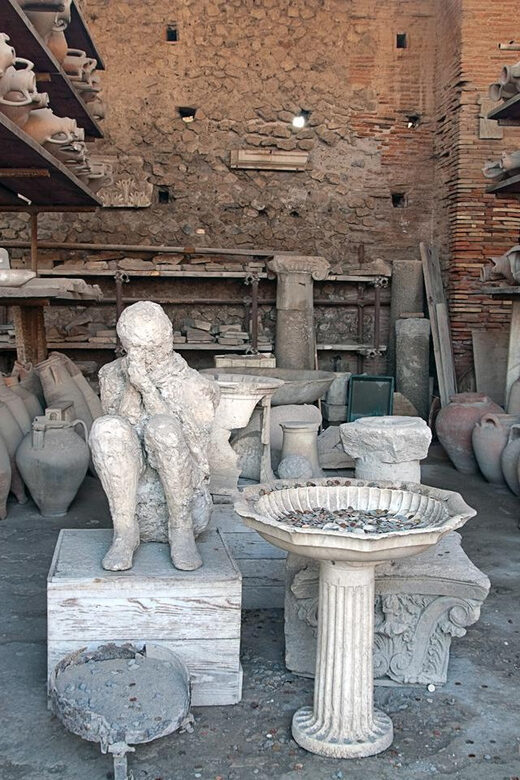
The casts of the victims of the eruption are the emotional center of Pompeii. This is where the site stops being a photo project and becomes something heavier.
What makes this stop stand out is the realism. Pompeii is full of preserved artifacts, architecture, and street detail, but the casts add a blunt human scale. It’s not abstract. You’re confronted with people, posture, and the suddenness of what happened.
If you’ve been speed-walking earlier, slow down here. Don’t rush past it because you have other stops to hit. This is the moment most people remember most clearly.
The amphitheater: best preserved Roman drama in the open air
One of the best preserved features is the Roman amphitheater. This is a logical target for your final stretch because it gives you a big, clear payoff.
In a one-day plan, the amphitheater works in two ways:
1) It’s visually dramatic from many angles, so even quick stops can feel satisfying.
2) It ties together the theme of public life—performances, crowds, and civic entertainment.
If you’re trying to squeeze the maximum value out of your day, I’d aim for the amphitheater late enough that you’re energized, not so late that fatigue makes it hard to enjoy the space. Also, the outdoor setting means you’ll feel the sun, so plan for breaks if the day is hot.
Walking tips that protect your time (and your feet)
This isn’t a sit-and-watch tour. You’re moving through a complex outdoor site, and Pompeii rewards steady pacing.
A few practical habits help:
- Wear comfortable shoes. The ground can feel tough even if you’ve walked worse places.
- Use your audio guide as you go, not all at once. If you start it early, you might stay tuned when you reach a key stop.
- Build in short pauses at the domus, baths/temples, and the casts. Those are the places where your brain needs a minute to process what you’re seeing.
- If your audio guide seems brief, give yourself time to look at details you can see: room layout, decoration, and the relationship between street and building.
You’ll also appreciate having a plan if you’re visiting with someone who has different interests. One person can focus on frescoes and house layouts while the other leans into everyday spaces like shops and the thermopolis. The audio guide can act as the common thread.
Price and value: is $44 worth it?
At $44 per person for a 1-day entry package with audio, the value is mostly about the combination of three things:
- You get the entrance ticket
- You get the audio guide
- You get skip-the-line access to start sooner
What’s not included is also clear: transfer, guide, food, and beverages. That’s normal for this type of self-guided product, but it affects your true day budget. If you need a bus or taxi from elsewhere, that cost sits outside the $44.
Still, in Pompeii, reducing the time you lose at the start is a real savings. The alternative is paying the same site admission price and then spending extra minutes in line while the clock ticks toward your one-day window. For many people, that time saved is worth more than it looks like on paper.
Where the value might feel weaker is if you’re the type who expects a deep, narrated history lesson from the audio. A verified booking criticized the audio for being too succinct. If that would disappoint you, consider adding your own context via a guidebook or quick pre-reading.
Who should book this Pompeii package?
This fits best if you:
- Want a fast, easy day at one of the world’s most significant archaeological sites
- Prefer self-guided walking with audio support
- Like planning your own pace across domus, baths, temples, shops, theaters, and the amphitheater
It’s less ideal if you:
- Want a live guide explaining details minute by minute
- Need very deep background storytelling from the audio alone
- Strongly prefer minimal walking
Should you book this skip-the-line Pompeii with audio?
If you’re aiming for an efficient Pompeii day and you don’t want to get stuck in long entry lines, this is a smart way to do it. The skip-the-line ticket plus multi-language audio guide is exactly the kind of friction-killer that pays off in a site as crowded and spread out as Pompeii.
My main “think twice” point is the audio depth. The audio can work well for a self-guided highlight route, but one verified experience flagged it as too succinct. If you want lots of narrative detail, go in with a backup plan (a guidebook or extra reading), and you’ll be happier.
If you want an easy, independent Pompeii walk that covers the essentials, this package is a good match.
FAQ
Where is the meeting point?
The meeting point is exactly next to Bar De Vivo.
How long is this Pompeii experience?
It’s valid for 1 day.
What does the ticket include?
You get an entrance ticket for the Pompeii Ruins plus audioguides in multiple languages.
Do I need to book a live guide?
No. A guide is not included. You’ll have the audio guide for site interpretation.
Is transfer included?
No, transfer is not included.
Is skip-the-line access included?
Yes, this package is described as a skip-the-line ticket.
What languages are the audio guides available in?
Audio guides are available in English, French, German, Italian, Hebrew, Chinese, Russian, Spanish, and Portuguese.
What languages can the host or greeter speak?
The host or greeter speaks English, Italian, Spanish, and French.
What should I bring?
Bring a passport or ID card, plus comfortable shoes and comfortable clothes.
Is there free cancellation?
Yes. You can cancel up to 24 hours in advance for a full refund.