REVIEW · ROME
From Rome: Pompeii with Expert Guide & Amalfi Coast Day Trip
Book on GetYourGuide →Operated by Walks of Italy · Bookable on GetYourGuide
One day, two legends of southern Italy. You get Pompeii with an archaeologist guide plus a long, scenic Amalfi Coast drive that shows off the reason this stretch of coast is famous.
I like how the day is paced around real highlights: you arrive with less hassle thanks to express entry into Pompeii. The trade-off is simple: it is a long, packed day, and Positano time is limited (plus traffic can stretch the return).
In This Review
- Key highlights you will feel right away
- Pompeii first, then the Amalfi Coast: why this combo works
- Meeting at Piazzale Flaminio: the easiest way to start from Rome
- The AC coach ride to Pompeii: settle in, snack up, and watch your timing
- Pompeii with an archaeologist: what you do in 2.5 hours
- Sites you will focus on: streets, baths, shops, houses, and Vesuvius context
- The Amalfi Coast drive: where the driver earns their day
- Positano time: make the most of 2+ hours (and plan for the season switch)
- Value and price: what $146.14 really buys you
- Comfort, pace, and limits: who this tour is best for
- Practical tips that make a real difference
- Should you book this Pompeii and Amalfi day trip?
- FAQ
- How long is the tour?
- Where do I meet the tour in Rome?
- Is the tour guide available in English?
- What parts of the day are guided?
- Do I get express tickets for Pompeii?
- Is lunch included?
- How much free time do I get in Positano?
- Will I always visit Positano?
- Is this tour suitable for wheelchairs or strollers?
- What should I bring, and what is not allowed?
Key highlights you will feel right away
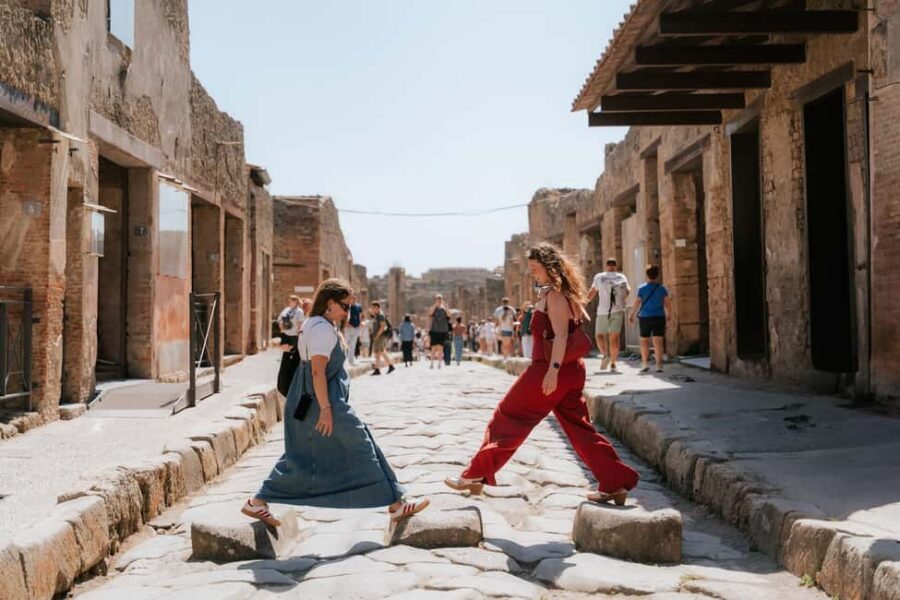
- Pompeii led by an archaeologist with English explanations focused on how daily life worked before Vesuvius
- Skip-the-line express Pompeii tickets so you spend more time inside and less time waiting
- A professional driver for the hairpins on the Amalfi Coast roads, not a bus-and-prayer approach
- Free time in Positano for lunch and shopping with a guide’s practical tips before you go loose
- Season-based swaps: winter often switches from Positano to Amalfi or Sorrento; weekend summer days may also shift to Sorrento
- A moderate walking day with no strollers or large luggage allowed on board
Pompeii first, then the Amalfi Coast: why this combo works

This is the classic Campania hit list, but it is arranged in a smart order. You start with Pompeii while your brain is fresh, then you switch gears into coast-and-sea views, which feels like a reward instead of a second chore.
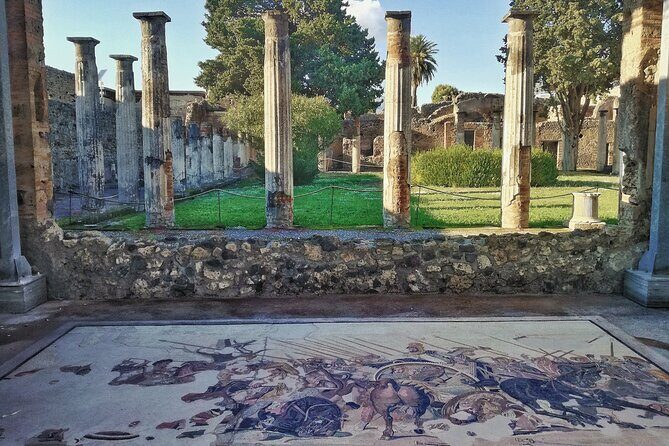
Pompeii is not just ruins. With an archaeologist guide, you get the city as a living place: shops, public baths, houses, and the street layout that tells you how people moved and worked. After that, the Amalfi Coast drive hits a different part of your travel mood: bends, viewpoints, and that dramatic coastline where the road seems to cling to the cliffs.
The day is long, no sugarcoating. You are looking at about 13 hours overall, with several hours of driving. But the structure helps: the heavy lifting (transport and ticket line avoidance) is handled for you, so your time in Pompeii and Positano stays the point of the trip.
If you're still narrowing it down, here are other tours in Rome we've reviewed.



Meeting at Piazzale Flaminio: the easiest way to start from Rome
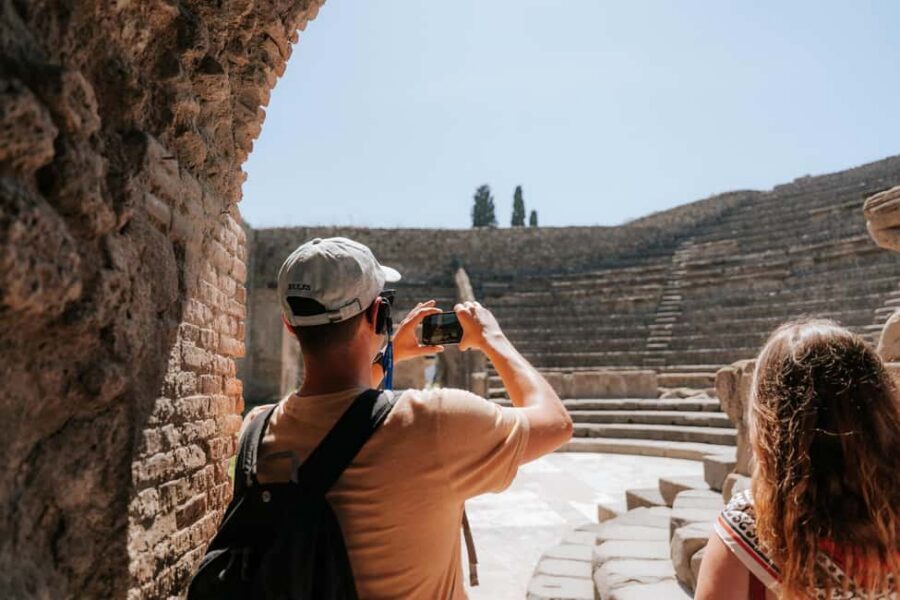
You meet at Piazzale Flaminio 15, right in central Rome, outside the McDonald’s on the corner of the square. It is convenient because you are already near a major transit hub: the closest Metro stop is Flaminio – Piazza del Popolo on Line A.
The best part about the setup is that you avoid the stress of piecing together multiple legs on your own. You hop aboard an air-conditioned bus and you have a dedicated driver the whole way. That matters because the route from Rome to southern Italy is a long one, and you will appreciate the ability to sit back and stay comfortable.
Also, the bus ride is not just travel time. You often get commentary along the way from the tour leader, and that helps you connect what you see later. In the same day, you go from Rome’s daily rhythm to the Campania story—then into the ash-stopped city at Pompeii.
The AC coach ride to Pompeii: settle in, snack up, and watch your timing
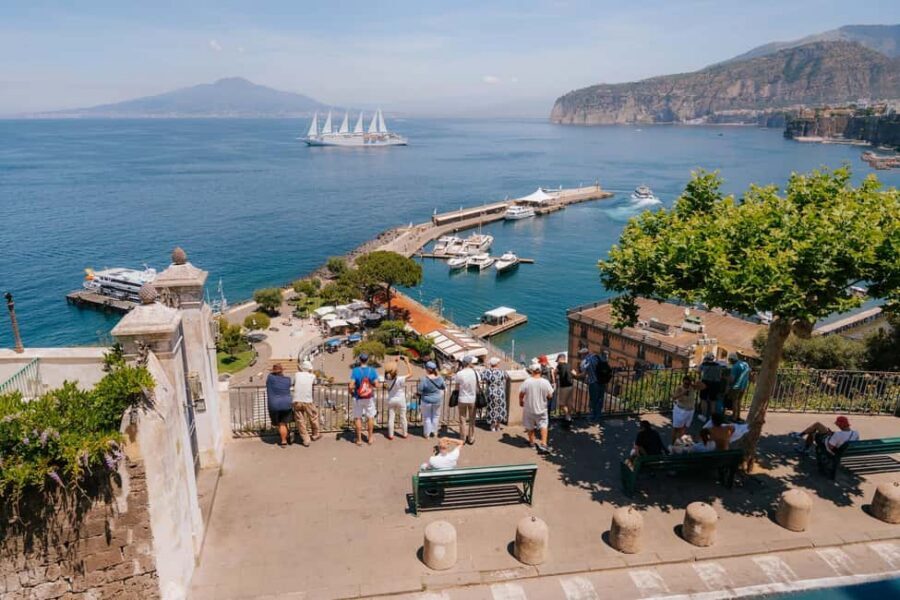
The driving portion is about 3.5 hours before you reach Pompeii. This is where I suggest you set yourself up for success: wear comfortable shoes even before you arrive, and keep a small snack ready if you tend to get hungry quickly.
A couple comfort notes to plan for:
- Bus seating can feel tight on longer trips. Some departures have smaller seat spacing than you might expect.
- Depending on the vehicle, USB charging may be hit-or-miss.
You do get regular organization for the day, though. The tour is designed to keep you moving between Pompeii, the Amalfi Coast drive, and Positano without you doing the logistics math.
One more practical reality: traffic can influence timing. If you are trying to catch a later dinner reservation in Rome, keep your schedule flexible. Several days can run long on the return, especially if leaving Positano gets slow.
Pompeii with an archaeologist: what you do in 2.5 hours

Once you arrive, you meet your English-speaking archaeologist guide and you start your Pompeii walkthrough right away. The guided time inside is about 2.5 hours, which is enough to see the big story if you are on a focused route.
This is where guides make the difference. In Pompeii, you can walk for hours and still feel like you saw random walls. With an archaeologist leading you, you are taught to read the city:
- which buildings were public versus private
- what the street layout suggests about movement and commerce
- how everyday life functioned before 79 AD
On different departures, you might get guides with different styles. I’ve seen names like Vitale and Francesco mentioned for Pompeii leadership, and the common thread is that you get both explanations and a light tone. That helps when you are surrounded by stone that can feel heavy and silent.
The group also has a built-in advantage: your guide typically knows how to handle crowds and bus groups so you do not spend your best moments stuck behind someone else’s photo stop.
Sites you will focus on: streets, baths, shops, houses, and Vesuvius context
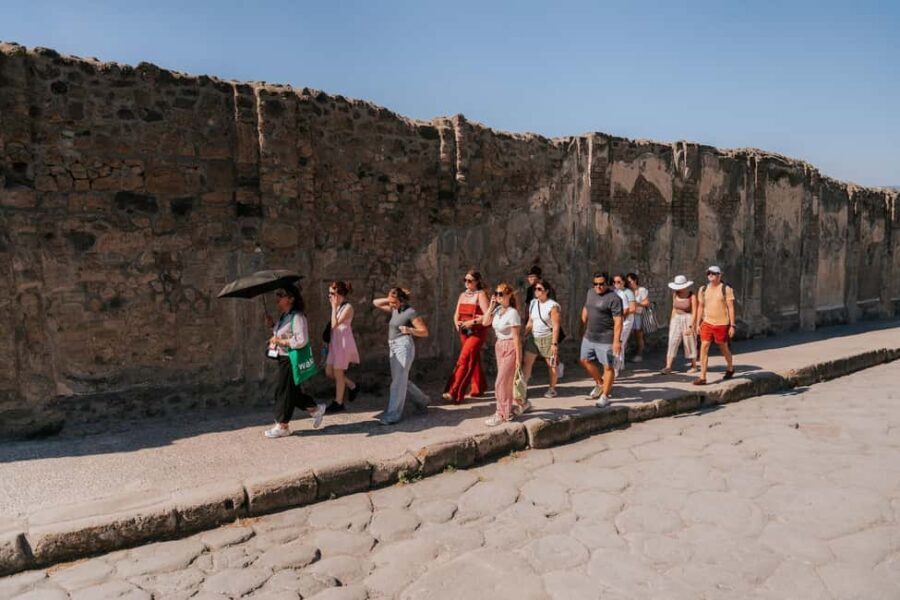
Your Pompeii route is aimed at the human parts of the city. You will move through areas tied to daily routines: shops, temples, public baths, and homes. The guide connects those places to how Pompeii worked as a community.
Then comes the center of the story: the eruption of Mount Vesuvius in 79 AD. You are not just told the event—you get it explained as the turning point that ended normal life overnight.
One of the most striking stops involves the famous plaster death casts. These are the preserved forms of people caught in the eruption. It is heavy material, but when an expert frames it properly, it becomes more than shock value. You understand what you are seeing in a more grounded, historical way.
There’s also the brothel topic. Some groups may visit an ancient brothel depending on age appropriateness and group rules. If you are traveling with teens or you are sensitive to that kind of content, it is worth knowing this is part of the possible Pompeii agenda.






The Amalfi Coast drive: where the driver earns their day
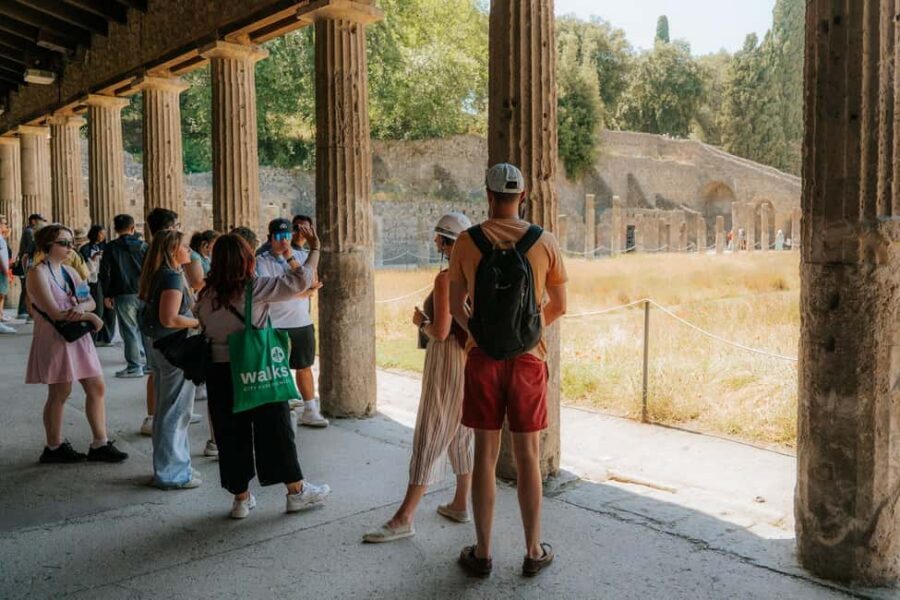
After Pompeii, you get back on the bus for the coast. This part lasts about 1 hour for the scenic drive, and it is built around the views people come for.
The key is not just the scenery. It is the fact you are driving the Amalfi Coast roads with a professional driver. If you have ever driven tight switchbacks on a cliff road, you already know this is the kind of place where nerves can turn the trip into a stress test.
You will likely see frequent photo pull-offs and panoramic angles from the bus. You will also get a small amount of coaching on what to look for—so you understand why certain viewpoints feel dramatic.
One good mental trick: think of the drive as a moving slideshow with commentary, not as a replacement for hiking. You are collecting impressions for later, so you do not need to be able to sprint between stops.
Positano time: make the most of 2+ hours (and plan for the season switch)
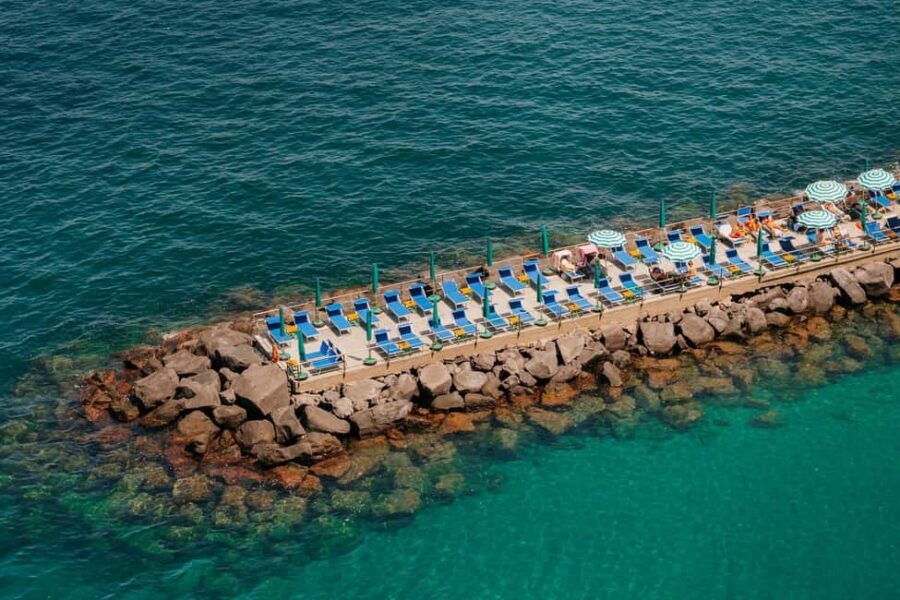
Then comes Positano. You get about 2.25 hours of free time, after a short intro and practical tips from the guide on where to eat and what to shop for.
Here’s the good news: Positano is easy to love. You are walking around a cliffside town with pastel buildings and postcard views that feel almost too good to be real.
Here’s the constraint: two hours plus can disappear fast. You may spend time finding lunch, getting a drink, and heading back toward where the bus picks up. Several days run so smoothly that you feel rushed anyway, because that is just the math of a day trip.
Season matters, and your route may change:
- From November through late March, many businesses in Positano are closed, so the plan often switches to Amalfi or Sorrento instead.
- On weekends in May–September, the tour may also visit Sorrento instead of Positano.
This is important for expectations. If you go in winter and you expect shops open at every corner, you will be disappointed. If you go in summer, you should expect more energy—but also more foot traffic.
A smart approach for your free time:
- Decide your top priority first: lunch, views, or shopping.
- Keep your wallet and phone accessible; you are on and off paths quickly.
- Build in a buffer for the pickup walk, since the town’s layout is not built for rushing.
Value and price: what $146.14 really buys you

At $146.14 per person (with the day running roughly 13 hours), you are paying for four things at once:
1) coordinated transport from Rome on an AC bus
2) a professional driver
3) express entrance to Pompeii
4) an expert archaeologist guide for the Pompeii portion
That package is usually where the value lives. If you were to DIY it, you could absolutely do the drive and figure out tickets. But you would also add uncertainty: ticket lines, timing gaps, and the risk of wasting time in transit when you are trying to fit Pompeii and the Amalfi Coast into one day.
The one thing you do not get is food. Lunch is on your own. Plan for that by bringing a small snack and then treating the meal in Positano or your seasonal alternative as the main event.
Comfort, pace, and limits: who this tour is best for

This tour is not for everyone. It is a walking tour and you should be comfortable at a moderate pace for the day.
It is also not suitable for:
- wheelchairs
- mobility impairments
- strollers
- large bags or luggage (there is no extra storage, so oversize items are a no)
If you can walk without trouble and you do not need to bring bulky items, you will likely find the structure helpful. If you are traveling with a young child needing a car seat, you should contact the guest experience team before you go, because the tour notes this requirement needs prior handling.
From the practical standpoint, it is long. Some people find the driving portion tiring, especially with tight seating. If you are prone to back pain or you hate long bus rides, consider bringing a supportive layer and a small comfort item.
Practical tips that make a real difference
I treat day trips like a checklist: remove friction, then enjoy the highlights.
1) Wear shoes you can trust. Pompeii walking is uneven and you will likely stand in spots longer than you planned. Comfort beats style here.
2) Bring cash and a credit card. You will want both options for lunch and shopping in town.
3) Pack snacks. Food is not included, and waiting can stretch longer than you expect.
4) Expect a crowd mindset. Pompeii draws groups. Your guide’s route planning helps, but you still need patience.
5) Plan for the time reality. Positano is short and the return depends on traffic. Keep your evening open.
As for guides, you may notice from other departures that the tour leaders can vary by day. Names like Andy, Cosimo, Roberta, Chiara, Giozio, and Anna-Maria have shown up as guides in the Pompeii or bus portions, and many of the comments point to clear explanations and helpful recommendations. Your exact guide may be different, but the goal stays the same: keep the story understandable and the timing smooth.
Should you book this Pompeii and Amalfi day trip?
If you have limited time in Rome and you really want to see Pompeii plus the Amalfi Coast without turning your day into logistics, this is a strong pick. The express Pompeii entry and the archaeologist-led route are the kind of value that matters, because Pompeii is where you most want your time to feel intentional.
Skip it if you hate long bus days, need wheelchair access, or you want a relaxed, lingering Positano experience. With only a few hours in town, you will not leave with a deep sense of local life—you leave with big scenes, a clear Pompeii story, and a camera roll full of coastline.
If that matches your travel style, book it and go in prepared. You will get a lot for one day.
FAQ
How long is the tour?
It runs about 13 hours.
Where do I meet the tour in Rome?
Meet at Piazzale Flaminio, 15 (in front of the McDonald’s on the corner of the square). Arrive 15 minutes early.
Is the tour guide available in English?
Yes. The tour is conducted in English, including the Pompeii archaeologist guide.
What parts of the day are guided?
Pompeii is guided by an expert English-speaking archaeologist. You also get a guide introduction and tips for Positano before you go on your own.
Do I get express tickets for Pompeii?
Yes. The tour includes express entrance tickets for Pompeii.
Is lunch included?
No. Food is not included, so you’ll plan lunch on your own in Positano (or the seasonal alternative town).
How much free time do I get in Positano?
You get about 2.25 hours for a self-guided visit.
Will I always visit Positano?
Not always. In low season (November through late March), most businesses close, so the plan may visit Amalfi or Sorrento instead. In weekends during high season (May–September), it may also visit Sorrento instead of Positano.
Is this tour suitable for wheelchairs or strollers?
No. It is not suitable for wheelchair users, and baby strollers are not allowed.
What should I bring, and what is not allowed?
Bring comfortable shoes and snacks, plus cash and/or a credit card. Oversize luggage and large bags are not allowed, and there is no extra storage.