REVIEW · POMPEI CAMPANIA
Pompeii: Entry Ticket with Book
Book on GetYourGuide →Operated by Tempio Travel Pompei Tickets · Bookable on GetYourGuide
Pompeii is big enough to feel unreal. With skip-the-line entry and a guide book, you get moving fast and learn as you walk ancient Roman streets. Two things I especially like: the self-paced freedom to linger where you want, and the built-in route help that keeps you from feeling totally lost. One drawback to factor in: the site layout can still feel a bit confusing, and not every house or space you’ll want to see is guaranteed to be open.
This ticket package fits well if you want independence without sacrificing basic interpretation. You’ll use a separate entrance to bypass long lines, then pick your own order of sights inside the ruins. You’ll also have access to the Shrine of Our Lady of Pompei area and the bell tower as part of the overall visit, so it’s not only about bare ruins.
Key highlights at a glance
- Skip-the-line entry through a separate entrance to save time for roaming
- Complimentary guide book + map so you can learn as you go
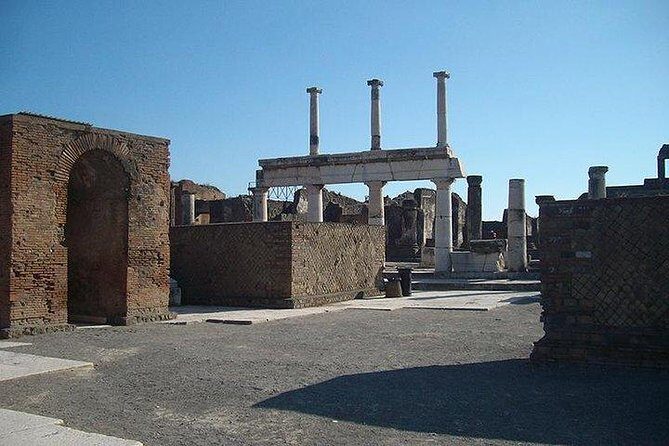
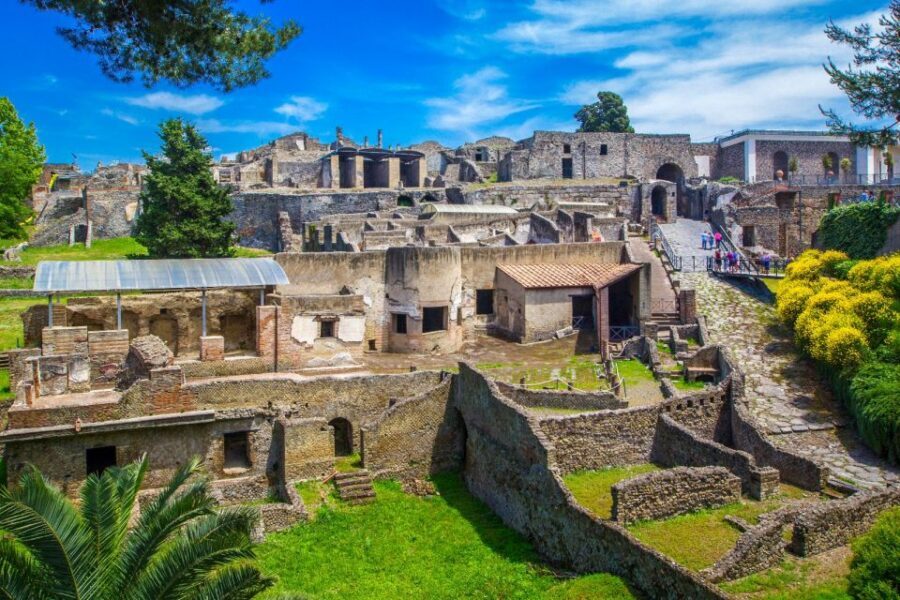
- Self-paced walking through Roman streets, houses, temples, shops, cafes, and amphitheatres
- Additional sights including the Shrine of Our Lady of Pompei and the bell tower
- Helpful multilingual host/greeter to orient you (Italian, English, Spanish, German, French, Russian, Polish, Dutch)
In This Review
- Skip-the-line Entry Into Pompeii Without the Headache
- Your Guide Book and Map: The Real Secret to Enjoying Pompeii
- Finding Your Pace: Walking Pompeii’s Roman Streets Like a Local
- Houses, Temples, Shops, Cafes, and Amphitheatres: What to Look For
- Houses: Look for everyday layout clues
- Temples: Notice how sacred space fits into civic space
- Shops and cafes: Focus on commerce and social interaction
- Amphitheatres: Save your energy for the crowd spaces
- The Shrine of Our Lady of Pompei and Bell Tower Add a Layer
- How to Build a One-Day Route That Feels Smart
- Step 1: Pick your theme, then let it evolve
- Step 2: Use the map to connect zones, not to micromanage
- Step 3: Plan for closures without losing momentum
- Step 4: Build in time for reading
- Price and Value: What $39.86 Gets You in Real Terms
- Meeting Point, Timing, and What to Expect on Arrival
- Who This Pompeii Ticket With Book Suits Best
- Should You Book This Pompeii Ticket With Book?
- FAQ
- What’s included with this Pompeii ticket?
- Does it really skip the line?
- Do I need a guided tour or audioguide?
- When should I arrive at the meeting point?
- How long is the ticket valid?
- Can I cancel and get a refund?
Skip-the-line Entry Into Pompeii Without the Headache
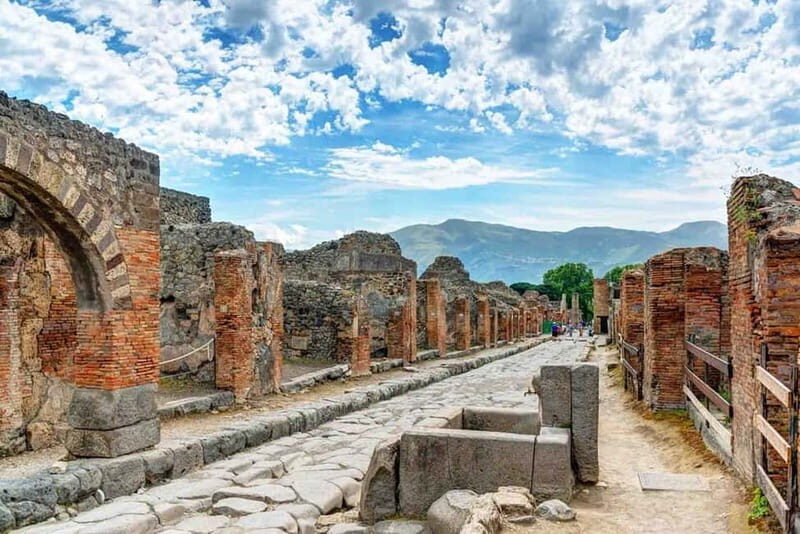
Pompeii is one of those places where the first decision matters: do you want to spend your best energy waiting, or walking? This ticket is built for the second choice. The big win is skip-the-line entry via a separate entrance, which means you can get into the ruins instead of burning time in a slow-moving queue.
I like that the experience is designed around a simple goal: “get you in, give you tools, then let you explore.” You’re not tied to a scripted group schedule. You can start at the time shown on your voucher and still shape the day around your interests—street life, architecture, or the social story the ruins tell.
One practical note: come about 10 minutes before the meeting point time on your voucher. That small buffer helps you avoid last-minute stress, especially if you’re matching your ticket to the correct window and entrance flow.
Your Guide Book and Map: The Real Secret to Enjoying Pompeii
A lot of Pompeii frustration comes from trying to do it like a checklist. It’s not a “hit one monument and leave” site. It’s an entire city of rooms and street corners—so the tools you bring shape your experience.
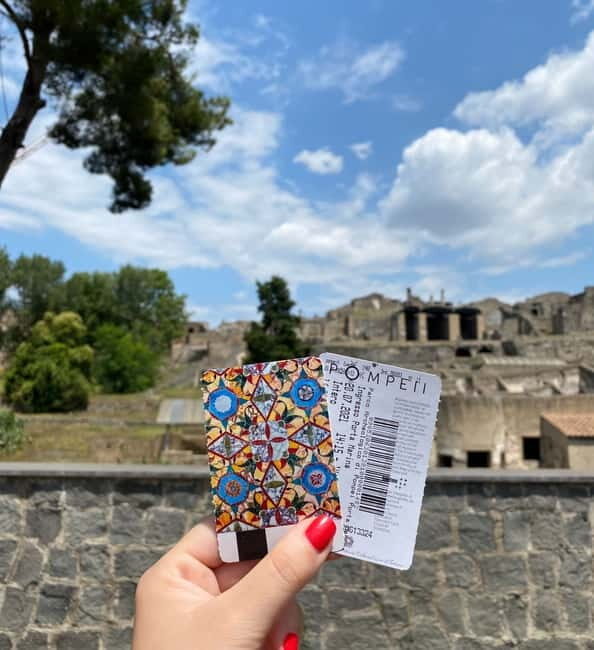
Here, you get a guide book and a map of the ruins with your entry. The book gives you context as you move through the site, so you’re not just staring at stones and guessing what you’re looking at. The map helps you connect areas, and you can use it to build a route rather than wandering in circles.
I also think the guide-book style works better than people expect. Reviews highlight that the book is informative and that the routing feels good. That doesn’t mean you’ll finish in an hour. It means you’ll actually have a reason to pause, read, and connect what you see to how people lived.
Still, be aware of the one common snag: the map is workable, but it may feel less straightforward than you’d like, especially when street names don’t match building signage the way you might hope. My advice is simple: use the map to orient yourself, then let the street grid guide your sense of direction rather than trying to force one-to-one label matching.
If you're still narrowing it down, here are other tours in Pompei Campania we've reviewed.



Finding Your Pace: Walking Pompeii’s Roman Streets Like a Local

The heart of Pompeii is walking. This ticket is set up for you to do that at your own speed. You start on your own way into the archaeological area and then choose what to inspect first.
I love that the visit isn’t built around constant “next, next, next” pressure. That makes a huge difference at Pompeii, because the interesting parts are often small: a layout that hints at daily routine, a threshold worn by footsteps, or a space that suggests how people gathered.
You can move through:
- Roman streets that act like the city’s backbone
- millennia-old houses and courtyards
- temples and religious spaces
- shops and everyday commercial areas
- cafes and social gathering spots
- amphitheatres designed for crowds and spectacle
With a self-paced plan, you can cluster your interests. If you’re more visual and like “read with your feet,” focus on streets plus public-facing buildings first. If you like domestic architecture, spend more time inside the houses and pay attention to how rooms open into one another.
The other benefit of independence: you can linger when something clicks. Reviews mention spending most of the day looking around and still not finishing everything. That’s not a failure of planning. It’s Pompeii being Pompeii—too big to fully tame in a single pass.
Houses, Temples, Shops, Cafes, and Amphitheatres: What to Look For

Pompeii ruins can feel overwhelming at first. The solution is not to see everything. It’s to see better parts of the city’s “daily rhythm.” This ticket covers the major categories, which makes it easy to build meaning even if you don’t memorize dates.
Houses: Look for everyday layout clues
When you walk into a house area, don’t treat it like a museum room. Think about how people moved. Where does the light come from? How do spaces connect? Pompeii’s domestic areas help you imagine private life—family routines, work, hosting, and how public and private space overlapped.
Also, keep expectations flexible. One of the practical considerations mentioned in feedback is that not all houses are open. So when you hit a closed section, don’t let it derail your flow. Treat it as a sign to shift priorities to the open areas nearby.
Temples: Notice how sacred space fits into civic space
Temples and religious areas aren’t isolated fantasies. They live inside the city’s fabric. When you visit them, pause and compare the scale and placement with the surrounding streets and public buildings. You’ll often feel how religion and city life were intertwined rather than separated.





Shops and cafes: Focus on commerce and social interaction
Shops and cafe-like spaces are where Pompeii starts to feel like a living neighborhood. Even without modern signs, you can interpret the function from the layout and the street-facing design. These stops give you the strongest sense of the city as a place where people bought things, chatted, and paused between tasks.
Amphitheatres: Save your energy for the crowd spaces
Amphitheatre areas are built for viewing from the outside and inside perspectives. Plan time here deliberately. Don’t rush. The amphitheatre is where you can feel the scale, because it was designed for crowds gathering in one shared experience.
Reviews repeatedly point out amazement at Pompeii’s sheer size and the overall scope. This is where that feeling often lands.
The Shrine of Our Lady of Pompei and Bell Tower Add a Layer
Pompeii isn’t frozen in one moment. Part of your ticket experience includes the Shrine of Our Lady of Pompei and the bell tower area. This is valuable because it reminds you the region’s identity didn’t stop when the ancient city did.
In practical terms, these spots give you a breather from only-scattered ruins. They also add a modern religious-cultural context to the day, so your visit doesn’t feel like you’re only reading the past as archaeology. Instead, you’re seeing how the present uses and responds to the landscape.
I suggest using this as a mid-visit reset. If you’re starting to feel “ruin fatigue,” this is a good place to step back, refocus, and then return to your walking route with fresh energy.
How to Build a One-Day Route That Feels Smart
You have a valid 1-day ticket, so you’ll want a plan that’s flexible. Here’s what works best for me when I have one day and Pompeii size staring back at me.
Step 1: Pick your theme, then let it evolve
Choose one main goal at the start:
- Roman daily life (houses + shops + cafes)
- public spaces (streets + temples + amphitheatre)
- a mix, with the map guiding transitions
Then follow what grabs you. If you spend longer in houses, that’s fine. Just shift how you spend time in the rest—don’t try to “catch up” by sprinting.
Step 2: Use the map to connect zones, not to micromanage
Think of the map as a link between big areas. Don’t get stuck comparing street names that might not match building labels. Use it to decide which direction to walk next, then confirm by looking around.
If the map feels less straightforward to you, don’t panic. One review notes it would’ve helped to have street names match building references more clearly. That’s exactly why your job is to use the map for direction, then rely on visible layout.
Step 3: Plan for closures without losing momentum
Not all houses are open. When something you want isn’t accessible, you can still move to a nearby open area without feeling like you missed the trip. The city’s layout gives you options—so treat closures as route tweaks rather than dead ends.
Step 4: Build in time for reading
The guide book is included for a reason. If you skim everything, the experience can turn into sightseeing without context. Even 10 minutes of reading at a few key stops gives you a stronger day overall.
Price and Value: What $39.86 Gets You in Real Terms
At about $39.86 per person, this is a straightforward entry-tiny-extras type of value. The value isn’t that it’s “cheap.” It’s that you’re paying for three things that matter in Pompeii:
1) Entry ticket to a major site
2) A guide book that adds meaning while you walk
3) A map so you can navigate a big area more confidently
4) Skip-the-line access, so you spend time exploring instead of waiting
You’re not buying a guided tour here. That’s important. If you thrive with live narration, you might prefer a guided option. If you enjoy learning on your own and want the freedom to wander, this is a cost-effective way to get the essentials without paying for a full group format.
Also, the host/greeter support helps smooth the start. Some reviews mention staff and the system feeling reliable and on point. That initial orientation can make the rest of the day feel less chaotic.
Meeting Point, Timing, and What to Expect on Arrival
This is not a “hop on a bus” day. It’s an on-site experience. The most reliable way to avoid stress is to treat arrival like part of your tour.
- Come 10 minutes before the time indicated on your voucher at the meeting point
- Use the separate entrance for skip-the-line entry
- Expect the experience to be self-led, supported by the guide book and map
The included host or greeter speaks multiple languages, so you can get help if you run into questions about where to go next. The listed languages are Italian, English, Spanish, German, French, Russian, Polish, and Dutch.
You also won’t get an audioguide with this ticket. If you like audio storytelling, plan to rely on the printed guide book instead.
Who This Pompeii Ticket With Book Suits Best
This setup fits travelers who want to learn without being locked into a schedule. I’d especially recommend it if you:
- like self-paced walking and don’t want a group pace
- want a guide book and map rather than a full guided tour
- are comfortable navigating with a bit of planning
- value skip-the-line entry to protect your time
It’s also a good match for people who tend to linger—Pompeii rewards slow attention. Reviews back that up by noting people spent most of the day and still didn’t complete everything.
If you want a tightly structured “see these exact rooms in order” format with continuous narration, you may feel like you’re doing the work of organizing without enough direction. In that case, a guided tour model might feel more effortless.
Should You Book This Pompeii Ticket With Book?
Yes—if you’re the type of traveler who enjoys shaping the day yourself, this is a smart way to do Pompeii. Skip-the-line entry is the kind of practical upgrade that pays off immediately. The included guide book and map help you turn wandering into understanding, which is the difference between “I saw ruins” and “I got the city.”
I’d only think twice if you know you hate route planning. The site can feel hard to get around, and not every house is open. If that sounds stressful, you’ll want extra structure, or you’ll need to spend a few minutes studying your priorities before you arrive.
Overall, this ticket offers a strong value blend: access, learning tools, and freedom—without turning Pompeii into a group factory. If you’re ready to walk, read, and choose your own pacing, it’s a great fit.
FAQ
What’s included with this Pompeii ticket?
You get the Pompeii entry ticket, a guide book with information, and a map of the ruins. A guided tour and an audioguide are not included.
Does it really skip the line?
Yes. It includes skip-the-line entry through a separate entrance.
Do I need a guided tour or audioguide?
No guided tour is included, and there’s no audioguide. You’ll rely on the included guide book and your own pace.
When should I arrive at the meeting point?
Come 10 minutes before the time indicated on your voucher.
How long is the ticket valid?
It’s valid for 1 day. Check availability to see starting times.
Can I cancel and get a refund?
Yes. Free cancellation is offered up to 24 hours in advance for a full refund.