REVIEW · POMPEII
VIP Pompeii Tour including Newly Opened Houses With Archaeologist
Book on Viator →Operated by Raphael Tours & Events · Bookable on Viator
Skip Pompeii without the chaos.
This VIP private tour is built for comfort and clarity, with skip-the-line entry and stand-out access to the newly opened Domus of Venus (and other restored villas). I like that you get a tight route through the big Roman highlights, then the artwork and daily life details in the restored houses make Pompeii feel personal. The one catch: at $359.22 per person, it’s a serious spend, and you’ll still cover a lot of ground on foot in about 4 hours.
You meet in central Pompeii near Porta Marina, use a mobile ticket, and head inside right away. From the Forum to the theatres (including the spot where the little theatre’s acoustics get attention), you’re guided through the city’s layout and what life was like there long before the 79 AD eruption. Then the tour shifts to the restored domus—some opened to the public only in March 2017—where mosaics, frescoes, and myth-themed gardens turn the ruins from stone shapes into real homes.
In This Review
- Key highlights I’d prioritize
- Skip Lines, Not Answers: What Makes This VIP Pompeii Tour Work
- Meet at Porta Marina: Mobile Tickets, Passport, and Packing Notes That Actually Help
- The Roman City Part: Forum to Theatres to Baths (And Why Each Stop Matters)
- Foro: The main square where Pompeii gets real
- Teatro Grande and Odeon/Teatro Piccolo: architecture plus a lesson in sound
- Stabian Baths and the day-to-day buildings
- The amphitheater moment
- A small caveat on the walking rhythm
- The Domus Switch: Newly Opened Houses and Why March 2017 Still Matters
- Domus of Venus: Birth of Venus in a courtyard you can picture
- House of Octavius Quartius: Narcissus and the art of storytelling
- More Restored Villas: Fruit Trees, Iulia Felix, and Myth Garden Details
- House of the Fruit Trees: frescoes that reward slow looking
- House of Iulia Felix: a spa retreat in Roman style
- Gardens and statue moments
- Why the Best Guides Change Everything (From Laylo to Giada to Veronica)
- Timing Reality Check: 4 Hours, Big Walking Energy, and How to Use the Time
- Value Check: Is $359.22 Worth It for This VIP Pompeii Format?
- Should You Book This VIP Pompeii Tour With Newly Opened Houses?
Key highlights I’d prioritize
- Newly opened domus access to restored villas, including Domus of Venus with the Birth of Venus painting
- Guaranteed skip-the-line entry, so your time stays on site (not in queues)
- A guided art-and-archaeology approach, with standout attention to frescoes and mosaics
- Flexible departure times and a private format that lets the route match your interests
- Theatres and baths included, so you see both civic life and everyday routines
- No-hassle meeting plan at Porta Marina, with an option for hotel/port pickup for an extra cost
Skip Lines, Not Answers: What Makes This VIP Pompeii Tour Work
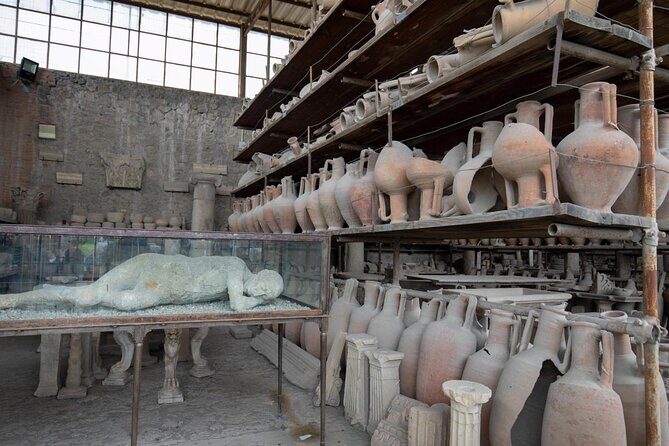
Pompeii is one of those places where the site can overwhelm you fast. You might know the basics, but without a guide, it’s easy to wander among ruins and miss how everything connects. This tour is designed to solve that problem with two big advantages: priority entry and a private walking format.
The priority part matters because Pompeii’s biggest sites can be bottlenecks. Here, you head in using skip-the-line tickets, and that changes the day immediately. You start seeing real context right away—how the streets funnel you toward the Forum, how the civic buildings relate to daily life, and why those theatres were more than entertainment.
The private format is the second lever. You’re not squeezed into a large mass of people trying to hear over everyone else. That makes it easier to ask questions, pause for photos without losing the whole group, and follow a route that matches your pace. If you’re traveling with kids, this structure also helps keep the day manageable because the guide can slow down when needed.
The goal isn’t just to hit famous spots. It’s to help you understand what you’re looking at: Roman social life, architecture, and how the eruption froze a whole city in time.
Other archaeologist-led tours in Pompeii


Meet at Porta Marina: Mobile Tickets, Passport, and Packing Notes That Actually Help
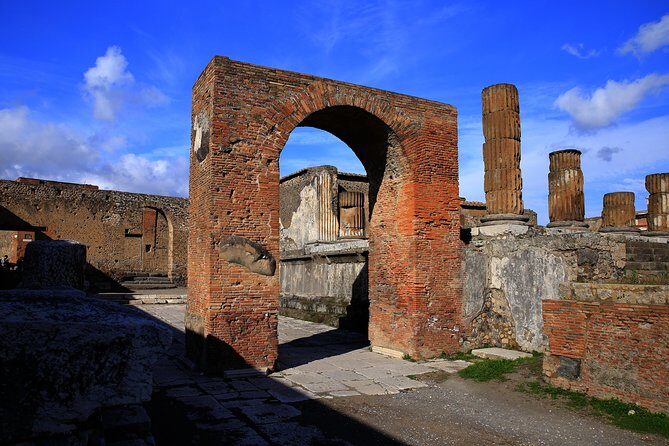
Plan for a straightforward meeting point in central Pompeii: Coffee Shop Vittoria, Via Mare, 80045 Pompei (near the Porta Marina area). Most people make their own way there, unless you pay for hotel or port pickup.
A few practical things you should take seriously:
- Bring a valid passport on the day of travel (required for entry).
- Wear comfortable walking shoes. Pompeii is uneven, and you’ll cover a lot of ground.
- Bring water. Once you’re inside, there isn’t convenient water service everywhere. Many guides help you plan breaks, and you may find water fountains on site, but it’s smart to arrive ready.
- Expect sun with limited shade in parts of the park. A hat can be a real lifesaver.
- If you’re bringing children, they must be accompanied by an adult.
You’ll also use a mobile ticket on the day. That’s useful because it reduces time spent figuring out paper tickets and lets you focus on getting into the ruins.
One more practical angle: the tour ends back at the starting area after about 3–4 hours of exploring Pompeii. So if you want dinner or a winery stop afterward, this tour fits well. Some guides even help you time the next plan smoothly.
The Roman City Part: Forum to Theatres to Baths (And Why Each Stop Matters)
The heart of Pompeii here is a guided walk through the city’s major “public life” areas, then a shift into buildings that show how people ate, bathed, and lived.
Foro: The main square where Pompeii gets real
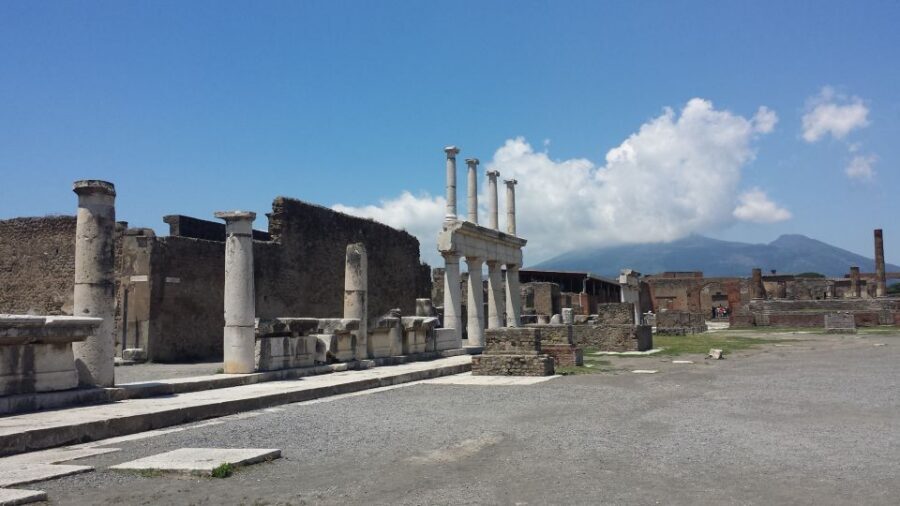
You start with the Forum, the political and social core. This is where a guide can do something you can’t do as easily on your own: explain how the street layout funnels crowds into civic space, and what the buildings around the square signaled to residents.
If you’ve ever walked a ruined square and wondered what everyone used it for, you’ll appreciate a focused guide moment here. You’re not just looking at stones; you’re learning why the Forum mattered.
Teatro Grande and Odeon/Teatro Piccolo: architecture plus a lesson in sound
Next you’ll move to the theatres. The Teatro Grande is your big scale moment. Then comes the Odeon / Teatro Piccolo, where the guide pays attention to something practical: the way the space supports sound.
A few guides on this kind of tour have used voice and performance-style demonstrations to show how ancient design affected the audience experience. Even if you’re not into theatre history, this is a strong “wait, that actually makes sense” stop.

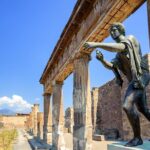



Stabian Baths and the day-to-day buildings
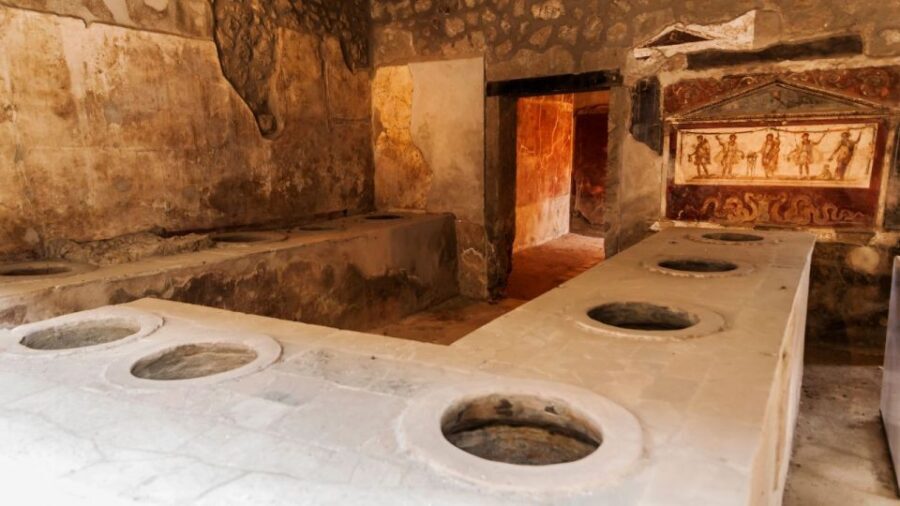
Pompeii’s baths are where the city’s routine shows up. You’ll see the Stabian Baths (Terme Stabiane) and also get time with other key interiors and streetscapes that explain everyday life, like preserved structures such as Roman baths and sites associated with meals and local routines.
You may also hear about the eruption context as you move through the city. Pompeii was buried after the AD 79 eruption of Mount Vesuvius, and that story works best when your guide anchors it in what you’re actually seeing around you—materials, room layout, and what preservation lets us understand.
The amphitheater moment
You’ll stand before the kind of landmark that makes Pompeii feel extra alive: the world’s oldest surviving Roman amphitheater. Even if you’ve seen amphitheaters elsewhere, this is a different experience because Pompeii’s remains are so intact that you can better picture how movement through the space would have worked.
A small caveat on the walking rhythm
This Roman-city section is a lot of walking. If you have mobility limits, you’ll want to manage your expectations and ask the guide to plan pacing. The upside of a private tour is that you can usually request short stops, water breaks, and extra time for a photo without it turning into a meltdown.
The Domus Switch: Newly Opened Houses and Why March 2017 Still Matters

After you’ve built a foundation of what Pompeii was, the tour shifts into the part many people come for: the restored domus (elite homes) that have only recently reopened to the public.
A key detail: the houses don’t all open at once. They rotate, and your guide customizes the route based on what’s open during your date and what you care about most. So you should treat the domus visit as a “best available selection” rather than a fixed checklist.
Still, two places are strong anchors of this experience.
Domus of Venus: Birth of Venus in a courtyard you can picture
At the Domus of Venus, you’ll get a guided look at the colonnaded façade, the courtyard, and the famous painting tied to the legend of Venus. The highlight is the painting of Birth of Venus, where she emerges from a seashell.
What I like about this stop is that it doesn’t feel like a museum exhibit stuck behind glass. You’re seeing elite taste in context—how the space would have supported private receptions, daily movement through rooms, and the performance of status.
You’ll also get attention to the decorative program: mosaics, restored fresco areas, and garden elements with myth-based symbolism. This is where Pompeii stops being “ruins” and turns into “imagined living.”
House of Octavius Quartius: Narcissus and the art of storytelling
Next you’ll visit the House of Octavius Quartius, where the standout art is the painting of Narcissus.
This is the kind of artwork that can be easy to dismiss as just decorative if you don’t understand the story. With a guide, you’re more likely to catch how these myth scenes functioned like culture markers—people weren’t just covering walls, they were communicating education, taste, and identity.
And because you’re in a house, you can better understand how art sat in real sightlines: where you would have paused, how you’d have walked past it, and what it meant to a home’s routine.
More Restored Villas: Fruit Trees, Iulia Felix, and Myth Garden Details
Beyond Domus of Venus and Octavius Quartius, the tour typically includes other recently restored homes and villas, depending on what’s open that day.
House of the Fruit Trees: frescoes that reward slow looking
You may spend time at the House of the Fruit Trees, highlighted for its exquisite frescoes. This is a good stop if you like colour and pattern—because it’s not just an outline of a room. You see surfaces restored enough to appreciate how carefully the decoration was planned.
If you’re the kind of person who always wishes a guide had you stand in one spot for a while, this is one of the places where that habit pays off.
House of Iulia Felix: a spa retreat in Roman style
Another possible stop is House of Iulia Felix, described as a spa retreat. The interesting part here is how it connects to the earlier bath and routine theme from the main Pompeii walk.
Once you’ve seen Roman bathing culture, moving into a home-style spa space lets you compare public versus private comfort. It’s the same idea—ritual and relaxation—tuned for different social roles.
Gardens and statue moments
Across the domus visits, you’ll spend time in outdoor spaces and landscaped areas, including gardens decorated with statues of mythical gods. This isn’t just “pretty yard time.” It’s how elite homes extended their story-making beyond walls.
Even when parts are restored, the overall design logic is clear enough that your guide can show you what you’re looking at and why it was placed where it was.
Why the Best Guides Change Everything (From Laylo to Giada to Veronica)
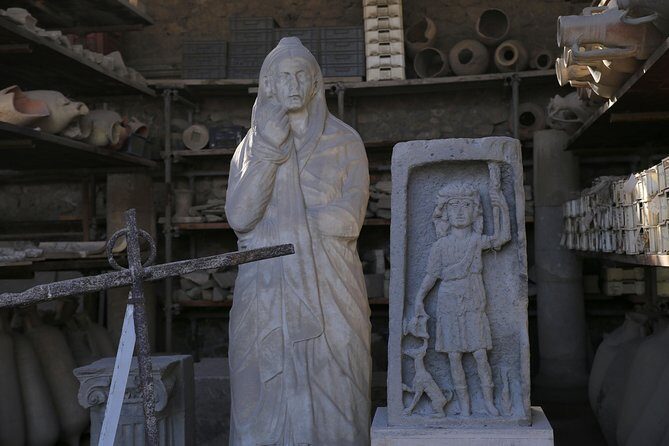
The common thread across strong private Pompeii guides is not just facts. It’s pacing, context, and the ability to explain what you’re seeing in a way you can keep in your head as you move through the site.
Some examples from guides you might encounter:
- Laylo: a guide who can keep you moving to the front of lines and make the whole day feel like it flies.
- Roberta: friendly, funny, and strong on helping you understand what you’re looking at (with a note that not every guide is exactly the same specialist type described in marketing).
- Raphael: an experience built on passion and warmth, keeping people engaged for the full time slot.
- Italo / Antonio: guides who focus on turning ruins into real daily life, including smart adjustments when schedules or logistics get messy.
- Giada and Veronica: guides who bring storytelling energy and help include kids in the conversation.
- Loretta: a guide who has used voice demonstrations to show how theatre engineering worked.
- Fiorenza, Rossana, Barbara, Margaretta, Andrea Fiorello: guides known for humour, clear explanations, and taking breaks like restrooms without turning the day into chaos.
That last point is more important than it sounds. Pompeii can be tiring. Good guides remember that your brain needs small reset moments. You might also get help planning a smooth ending, like suggestions for where to eat or even a vineyard stop after the tour.
If you want Pompeii to feel less like a scavenger hunt and more like a story with a beginning, middle, and end, prioritize a guide with confident navigation and the ability to explain art and rooms in human terms.
Timing Reality Check: 4 Hours, Big Walking Energy, and How to Use the Time
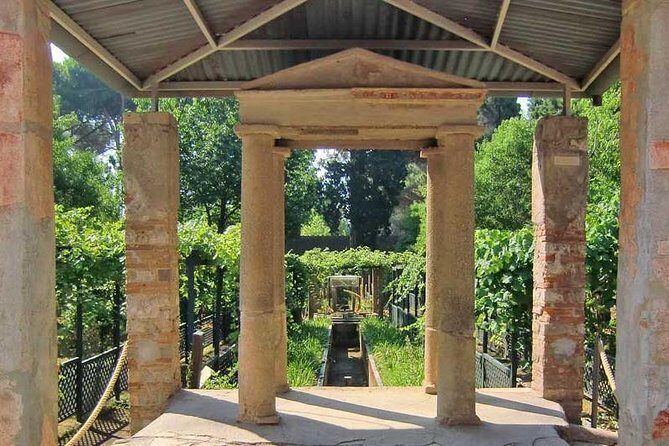
Your tour is roughly 4 hours, focused on the main Pompeii highlights plus newly opened domus. That duration is ideal for most first-time visitors who want a “greatest hits” Pompeii day without getting exhausted.
Still, Pompeii doesn’t do “quick visits” well. Even when everything feels efficient, you’ll spend time walking between sites, pausing for explanations, and taking in the art and architecture. So treat comfortable shoes and hydration as non-negotiable.
One practical tip that comes up again and again: the tour can include time in areas where shade is limited. Bring a hat and expect to ration sun. Restrooms tend to be available on site, and you can plan stops during the guide-led pauses.
If you’re the type who gets restless when you can’t read labels, tell your guide you want more time in the domus spaces. That’s where there’s more to see and more to understand, especially with restored fresco scenes like Birth of Venus and Narcissus.
Value Check: Is $359.22 Worth It for This VIP Pompeii Format?
At $359.22 per person, you’re paying for three things that add real value in a place like Pompeii:
- Guaranteed skip-the-line entry
That saves time you can’t get back. It also reduces the stress of arriving and figuring out entry logistics while you’re already tired.
- Private guiding with expert interpretation
You’re not just buying access. You’re buying a person who can explain why buildings matter, how Pompeii worked socially, and how to read the artwork in restored domus.
- Admission included for the major stops
The sites on the route come with admission included, so you’re not stacking separate ticket purchases on top of the tour.
Where it might not feel worth it: if you’re traveling on a tight budget and you’re comfortable doing Pompeii on your own with a basic map and audio guide. In that case, you’re paying a premium for convenience and clarity.
But if you care about seeing newly opened houses, hate lines, and want your day shaped into something coherent, the price makes more sense. This is the kind of tour that can help you leave with real understanding, not just photos.
Should You Book This VIP Pompeii Tour With Newly Opened Houses?
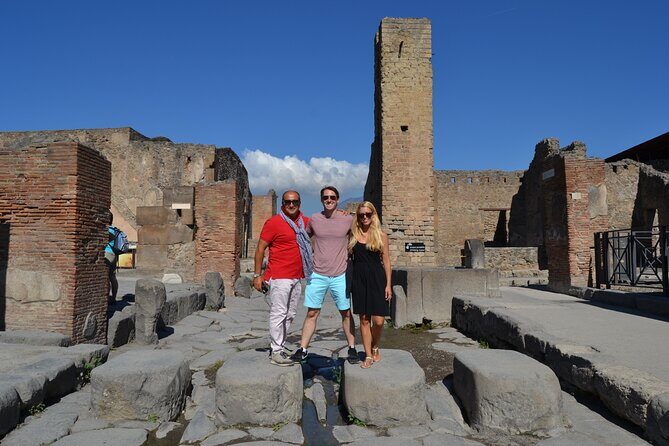
If you want Pompeii to feel organized, story-driven, and focused on both Roman civic life and the art in restored homes, I’d say yes, book it. Prioritizing skip-the-line access, a private format, and the chance to see newly opened domus spaces gives you the best odds of turning a big site into a memorable day.
It’s especially a smart pick if:
- you’re visiting for the first time and want the major highlights without wandering,
- you love art in real architectural context (especially frescoes and mosaics),
- you want a guide to handle pacing, breaks, and route logic for your group.
If the idea of paying a premium makes you wince, then consider your travel style. Pompeii works on your own, but this tour is built for people who want less stress and more meaning in the time they have.