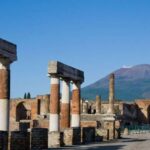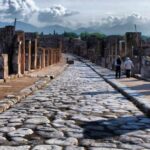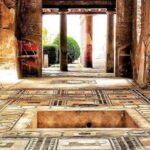
REVIEW · POMPEI CAMPANIA
Pompeii, Herculaneum, and Vesuvius: Full-Day Tour
Book on GetYourGuide →Operated by Around Vesuvio · Bookable on GetYourGuide
Three sites, one eruption, one long day. This full-day tour ties Pompeii and Herculaneum directly to the Vesuvius eruption of 79 AD, and I love the skip-the-line tickets that keep the day moving. I also like the chance to stand at the edge of the Vesuvius crater area with views over Naples and the coast. The main catch: you’re committing to a hot day of walking and uneven ground, especially at Pompeii, where shade is limited and time can feel tight.
You get an easy flow between sites by deluxe minibus transfers, plus audio support for independent exploration. If you want the big names of Campania in one day without wrestling with transit, this format makes sense—just plan for a lot of steps and keep your expectations focused on seeing highlights rather than covering every inch.
In This Review
- Key highlights worth planning for
- A practical route from Via Roma to three eruption-era stops
- Vesuvius National Park and the Great Cone free time
- Herculaneum’s ruins: easier to read, harder to stop looking
- Pompeii with an audio guide: where planning pays off
- Timing, transfers, and how to enjoy a hot day without rushing
- What you’re getting for the price (and where you’ll spend extra)
- Should you book this Pompeii, Herculaneum, and Vesuvius full-day tour?
- FAQ
- How long is the Pompeii, Herculaneum, and Vesuvius full-day tour?
- What is included in the ticket and tour?
- Do I need to bring my own food?
- What languages are available for the audio guide?
- Is there luggage allowed?
- Do I need an ID for the Pompeii audio guide?
Key highlights worth planning for
- Skip-the-line entry to Pompeii, Herculaneum, and Vesuvius so you lose less time to queues
- Vesuvius National Park free time (about 1.5 hours) with a chance to reach the crater area
- Two full blocks of site time (about 2 hours each) at Herculaneum and Pompeii
- Audio guide support and a detailed map for self-paced wandering, especially at Pompeii
- Built-in transfer pacing that links the eruption story across three very different places
A practical route from Via Roma to three eruption-era stops
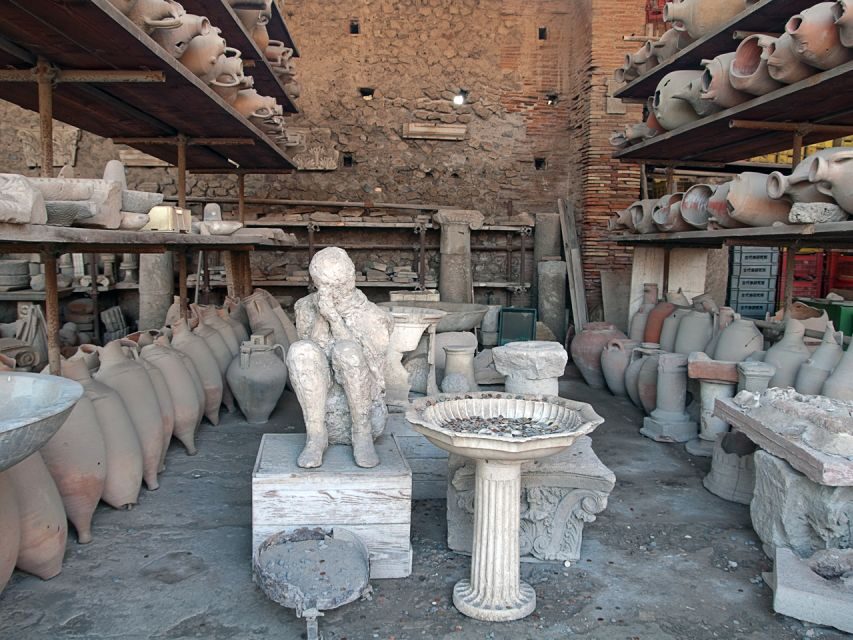
This day is built around simple logistics: you start at Via Roma 32, then the tour uses a comfortable minibus rhythm to connect you to Vesuvius first, then to Herculaneum, and finally to Pompeii. The big value here is not just comfort—it’s timing. Instead of spending your day stuck on local buses or figuring out schedules, you get uninterrupted blocks of time inside each place.
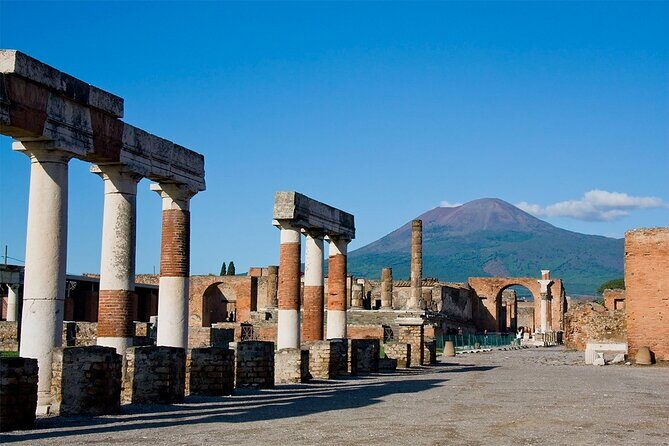
The flow also helps you understand the story. Vesuvius comes first, so you can picture what the eruption did. Then Herculaneum lands next, and you’ll notice quickly that the town feels different from Pompeii—more compact, more sheltered, and often easier to read emotionally because it’s not as sprawling. Pompeii is last, when your energy is lower, so the tour’s audio guide and map matter more than you think.
One thing I’d keep in mind: the tour is not described as small-pace sightseeing with long commentary at each stop. You’re getting independent site time plus a guided structure for getting there. That’s great if you like to wander. If you need lots of interpretation from a live guide on every street corner, you might wish you had more explanation on-site.
If you're still narrowing it down, here are other tours in Pompei Campania we've reviewed.


Vesuvius National Park and the Great Cone free time
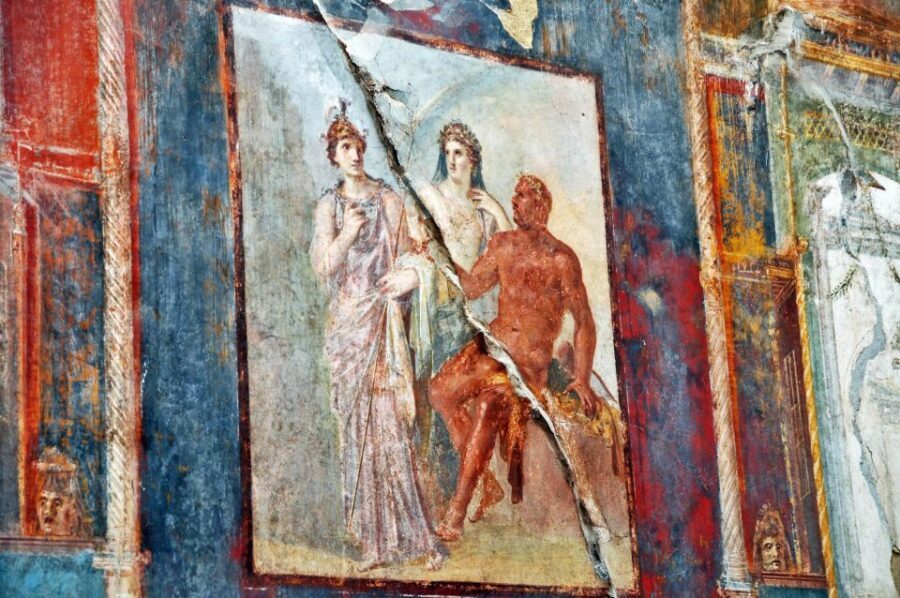
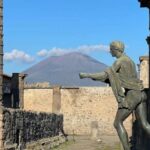
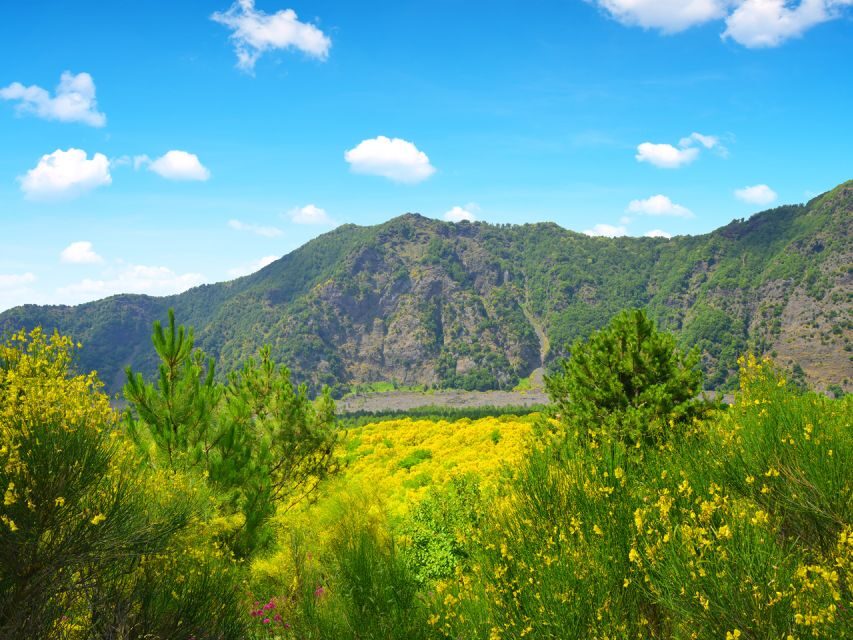
The first major stop is at Vesuvio National Park, with about 1.5 hours of free time. This is where you earn the dramatic context for everything else you’ll see later. Standing near the volcanic landscape changes how those ruins feel. It’s not abstract anymore.
The practical part: there’s time for a hike up toward the crater area, and in my notes you should plan on a roughly 25-minute uphill walk that can feel steep. It’s the kind of climb where you’ll be happy you brought comfortable shoes and taken it slow. The payoff is the view—over Naples and the coast, which helps connect the Roman world to the modern shoreline.
What I like about this design is the flexibility. You can choose your own pace within the 1.5-hour window. You don’t have to push hard to feel like you’ve done Vesuvius. But you do need to be realistic about heat and how quickly daylight and energy disappear in the summer.
Also, remember that you’re transferring after the hike. That means you’ll benefit from refilling water at opportunities when you can, and keeping your hands free—especially because the tour notes that luggage or large bags aren’t allowed.
Herculaneum’s ruins: easier to read, harder to stop looking
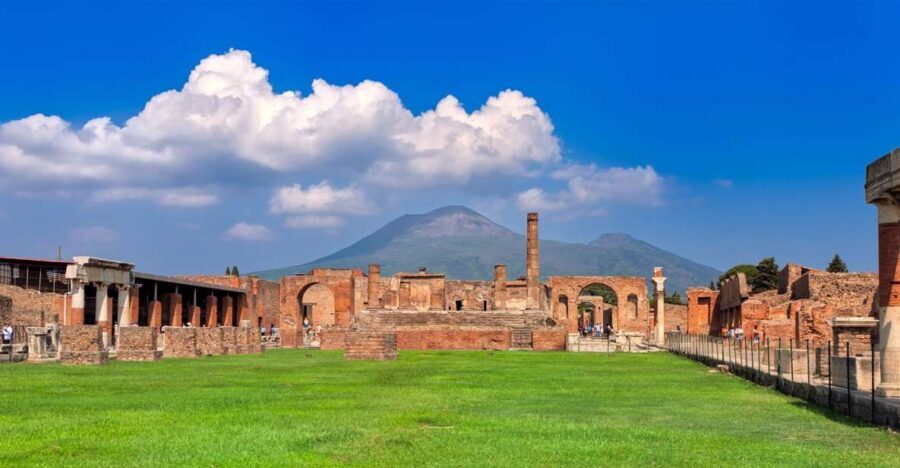
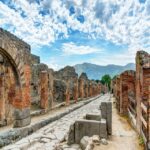
Next comes Herculaneum, with about 2 hours onsite. Herculaneum is one of those places where the ruins can feel more intimate than you expect. The streets and building fronts give you a strong sense of layout, and the scale is easier to manage than Pompeii if you like to orient yourself without constantly feeling lost.
This stop also works well late in the day because you’re not starting from zero. By the time you arrive, you’ve already visited the volcano area. That means you can connect the eruption impact to what you’re seeing in the city without needing a lecture to do it.
In practical terms, you’ll want to use the time smartly:
- Pick a few areas you want to understand rather than trying to see everything.
- Pause when you get a good street view. Herculaneum rewards looking at how the town sits and how spaces connect.
One more note from the experience: matching details from audio can be tricky at Herculaneum if the audio guide doesn’t map cleanly onto what you’re facing. If that happens, don’t panic. Step back, reorient yourself, and use your eyes for the big features—street shapes, building entrances, and the overall urban rhythm. The buildings are the story even when audio is imperfect.
Pompeii with an audio guide: where planning pays off
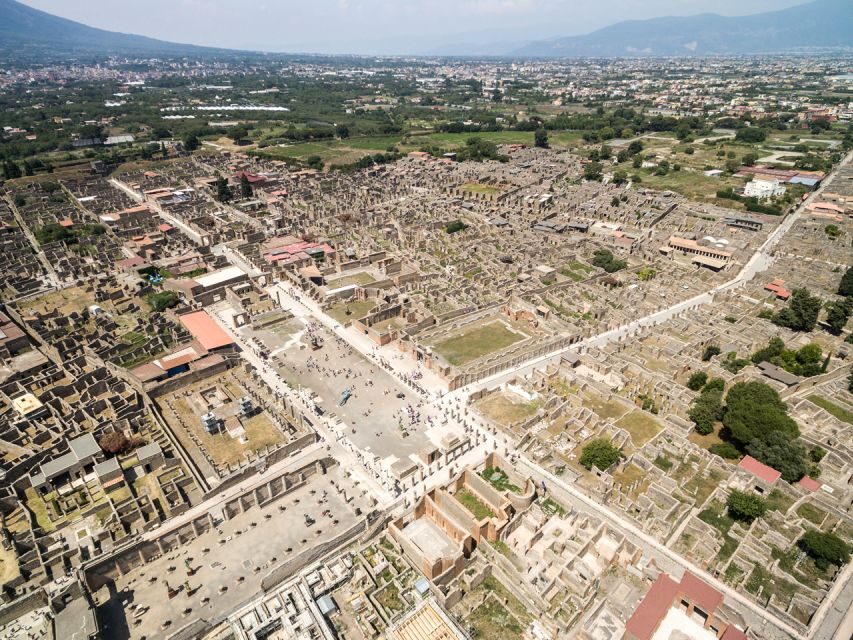
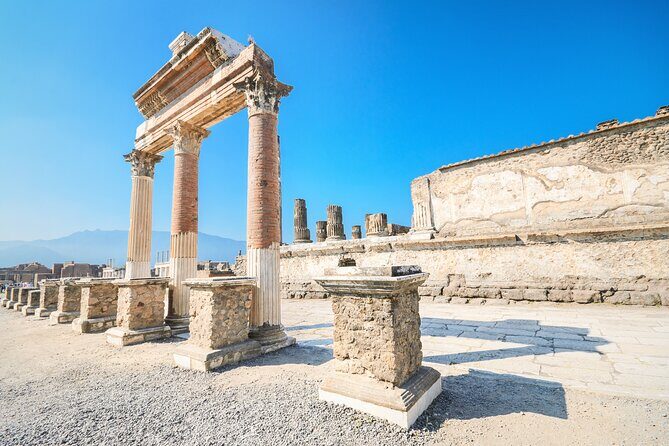
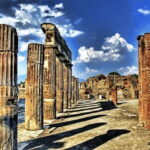
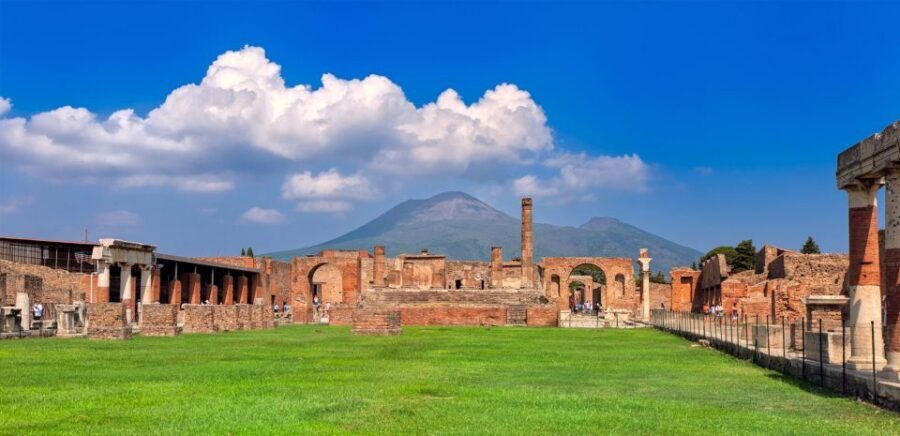
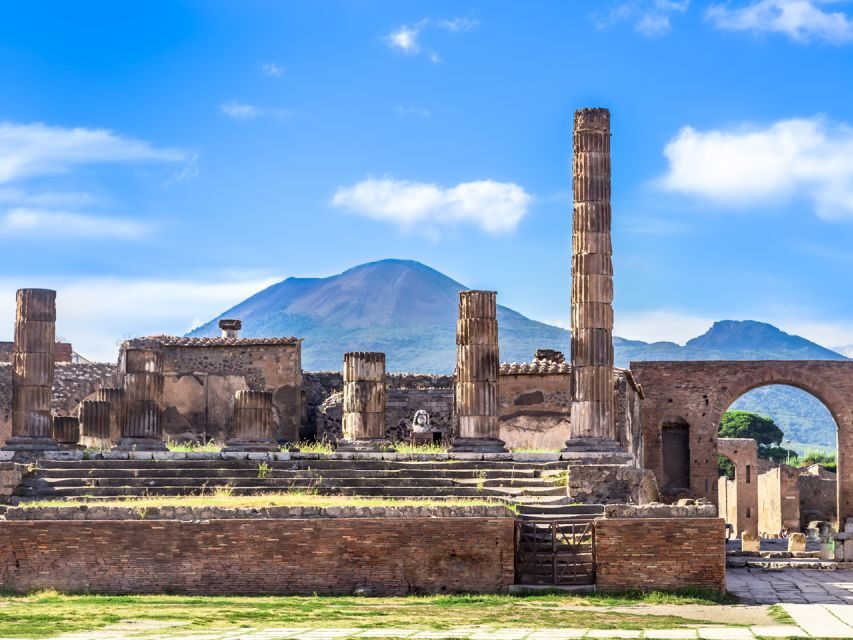
Pompeii is the star, but it’s also the place where you can feel overwhelmed. It’s big, and the day’s earlier fatigue can hit once you’re there. That’s why Pompeii’s setup matters: you get skip-the-line entrance tickets, plus an audio guide and a detailed map for your independent visit.
My practical advice for Pompeii: treat the first 10–15 minutes like setup time, not sightseeing time. Use the map to figure out where you are and which zones you want to hit. If you try to follow the guide too quickly without getting your bearings, you’ll lose time.
You should also be ready for two real-world issues:
1) The audio guide and map guidance may be harder to use in a very large city.
2) Some audio segments can be missing or not match what you’re seeing.
When that happens, the best move is simple: ask an employee for directions to the exhibits you want. This is one of the few days where a quick human answer saves more time than any map shortcut.
The good news: Pompeii has practical visitor supports. There are refreshing water fountains throughout the site where you can refill water bottles. That’s a big deal in the heat, especially because shade is limited in many areas. Plan to move steadily, take breaks when you can, and don’t let your day turn into an exhausting sprint from one empty building to the next.
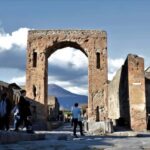
If you only do one thing different in Pompeii than you would anywhere else, do this: slow down at the intersections where you can see multiple buildings and street lines. Pompeii becomes clearer when you understand the city as a layout, not just a set of highlights.
Timing, transfers, and how to enjoy a hot day without rushing

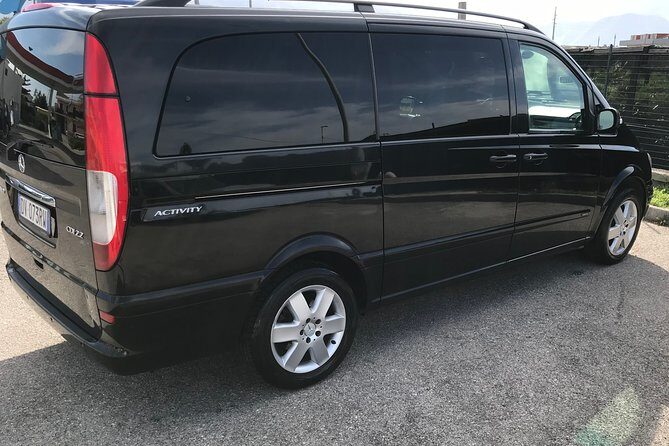
This tour is designed to reduce stress. You have direct transfers by deluxe minibus between stops, with parking and the entrance logistics handled. The total day is listed as 8 hours, and the transfers are built into the schedule so you can focus on site time.
Even so, you still need to manage your body. The day includes a hike portion at Vesuvius and then walking at two major archaeological sites. The experience notes it’s not suitable for people with mobility impairments, which matches what you’ll feel on the ground: uneven terrain, long distances, and a limited amount of shade.
Here’s what I’d do to make the day feel good rather than exhausting:
- Wear shoes you can walk in for hours.
- Bring a hat. It’s explicitly recommended, and it matters.
- Keep water accessible. The Pompeii fountains can help you refill, but you still need a bottle you can carry.
Another small but important factor: you’re not bringing luggage. The tour specifically says no luggage or large bags are allowed, so travel light. A small daypack is the workable choice.
Finally, keep your expectations aligned with the structure. This is a full-day tour with independent visit time at each site. That means you’ll get maximum freedom, but you also own part of the experience—how you choose what to see and how you pace yourself.




What you’re getting for the price (and where you’ll spend extra)
The price listed is $141.61 per person for an 8-hour outing that covers three major sites. For this region, the value comes from the mix of things that are hard to coordinate yourself: direct transfers in a deluxe minibus, skip-the-line tickets for all three places, and skip-the-headache entrance handling.
What you should note is what’s not included: food and beverages. That means you’ll need to plan your own lunch or snacks. In hot weather, you don’t want to wait until you feel weak. If you can buy or bring something you’ll actually eat, you’ll feel better for Pompeii’s later hours.
There’s also audio to think about. The tour includes an audio guide, and it’s available in multiple languages. However, there’s an important instruction: bring a valid ID document for Pompeii Ruins to rent the audio guide. If you show up without ID, you may lose a core piece of your on-site navigation.
So the real value equation is:
- You pay to save time and reduce logistics stress
- You pay to get guided support for your independent walking
- You still budget for food and you provide your own energy management
If that fits your travel style, the price feels easier to justify.
Should you book this Pompeii, Herculaneum, and Vesuvius full-day tour?
I think this is a smart choice if you want the three headline stops of Campania in one day, and you don’t want the day to become a transportation puzzle. You’ll like it if you enjoy independent wandering with tools—audio guide, map, and a transfer plan that keeps you from missing key access windows.
I’d hesitate if you:
- need a slow, low-walking day, because this includes a steep-ish climb on Vesuvius and long visits on foot
- rely on perfectly matching audio-to-site guidance, because audio can be imperfect at large ruins
- hate heat and want lots of shade, because shade is limited and the schedule can feel intense
If you’re flexible, carry water, and use the map early to set your route at Pompeii, this tour can be one of those days that makes the whole region make sense.
FAQ
How long is the Pompeii, Herculaneum, and Vesuvius full-day tour?
It runs for 8 hours total. Starting times vary, so you’ll want to check availability for the exact departure.
What is included in the ticket and tour?
You get direct transfers in a deluxe minibus, skip-the-line entrance tickets to Pompeii, Herculaneum, and Vesuvius, parking, and tolls/fuel. You also get an audio guide and a detailed map for independent visits to Pompeii.
Do I need to bring my own food?
Yes. Food and beverages are not included, so you’ll need to plan snacks or a meal.
What languages are available for the audio guide?
The audio guide is listed as available in Chinese, English, French, German, Hebrew, Italian, Portuguese, Russian, and Spanish. The driver is listed as English and Italian.
Is there luggage allowed?
No. Luggage or large bags are not allowed.
Do I need an ID for the Pompeii audio guide?
Yes. The tour notes it’s important to bring a valid ID document to rent the audio guide for Pompeii Ruins.