REVIEW · POMPEI CAMPANIA
Pompeii Guided Tour with Archaeologist
Book on GetYourGuide →Operated by Max travel · Bookable on GetYourGuide
Pompeii makes more sense with an archaeologist. This tour is built for speed and clarity, using skip-the-line entry and a small group (up to 16 people) to get you to the most important sights quickly: the forum, suburban baths, and the plaster casts—plus what Vesuvius did during the 79 AD eruption. One thing to keep in mind: the promised 2 hours can feel a bit tight, since time gets spent at the start (meeting, radios, and getting organized) before real walking begins.
You’ll meet at the main entrance called Porta Marina Superiore, where the guide is holding the company sign. After the tour ends, you can stay inside Pompeii as long as you want and ask for tips on what to see next in the wider area—just plan on doing some of the rest on your own, ideally with a site map.
In This Review
- Key things to know before you go
- Pompeii with an archaeologist: what $64 buys you
- Entering at Porta Marina Superiore and skipping the hassle
- The 2-hour route: forum, suburban baths, and plaster casts
- The forum: Pompeii’s public center
- Suburban baths: when daily routine had a social side
- Plaster casts: why they matter (even if you’ve seen photos)
- How the guide keeps the pace
- The 79 AD eruption story: tying ruins to real time
- Small-group touring: what up to 16 people feels like
- What’s not included: the Villa of the Mysteries
- After the tour: how to keep exploring without getting lost
- Timing reality check: why 2 hours can feel short
- Who should book this Pompeii archaeologist tour
- Should you book this Pompeii Guided Tour with Archaeologist?
- FAQ
- Where do I meet for the Pompeii Guided Tour with Archaeologist?
- How long is the tour?
- Is the Villa of the Mysteries included?
- What’s included in the price?
- What languages are available for the live guide?
- How big is the group?
- Is there free cancellation?
Key things to know before you go
- Skip the long queue at the main entrance with an express security check
- Up to 16 people keeps the walk moving and questions from getting lost
- A regional archaeologist guide helps you connect ruins to daily life
- You cover major highlights fast: forum, suburban baths, plaster casts
- Villa of the Mysteries is not included, so plan a follow-up if it matters to you
Pompeii with an archaeologist: what $64 buys you
At $64 per person for a 2-hour guided visit, you’re paying for three things that are hard to replicate on your own: a trained archaeologist, a tight route that targets the main hits, and less time stuck in lines. The entry ticket is included in the price, so your money goes toward the guide’s time and the structure of the experience.
The biggest value is how quickly you get oriented. Pompeii is large and easy to wander around in the wrong direction. A guide-led walk helps you understand what you’re looking at—so you spend your limited time seeing rather than guessing.
There’s also a practical benefit: this is a small, efficient group. You’re not stuck behind a wall of people while you try to read a doorway or street layout.
If you're still narrowing it down, here are other tours in Pompei Campania we've reviewed.



Entering at Porta Marina Superiore and skipping the hassle

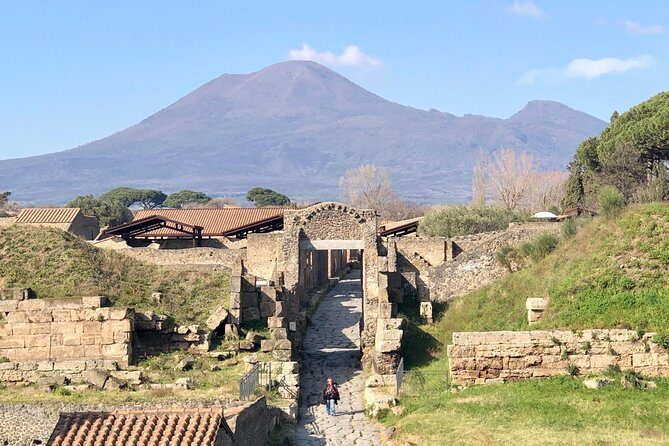
The meeting point is the main entrance at Porta Marina Superiore. You’ll want to arrive with a little buffer so you can spot the guide holding the company sign right at the entrance.
This tour specifically promises skipping the long queue through an express security check. That matters because Pompeii’s main entry can eat up your energy before you even reach the ruins. When you start with momentum, the whole visit feels more relaxed.
If you’re the type who likes calm starts, this setup helps. You get clear direction at the beginning, then you’re off to the most meaningful areas of the site.
The 2-hour route: forum, suburban baths, and plaster casts
This tour is designed as a highlights walk. In about two hours, you’ll move through some of Pompeii’s most recognizable public spaces and experience areas—exactly the kind of mix that gives you a sense of how the city worked.
The forum: Pompeii’s public center
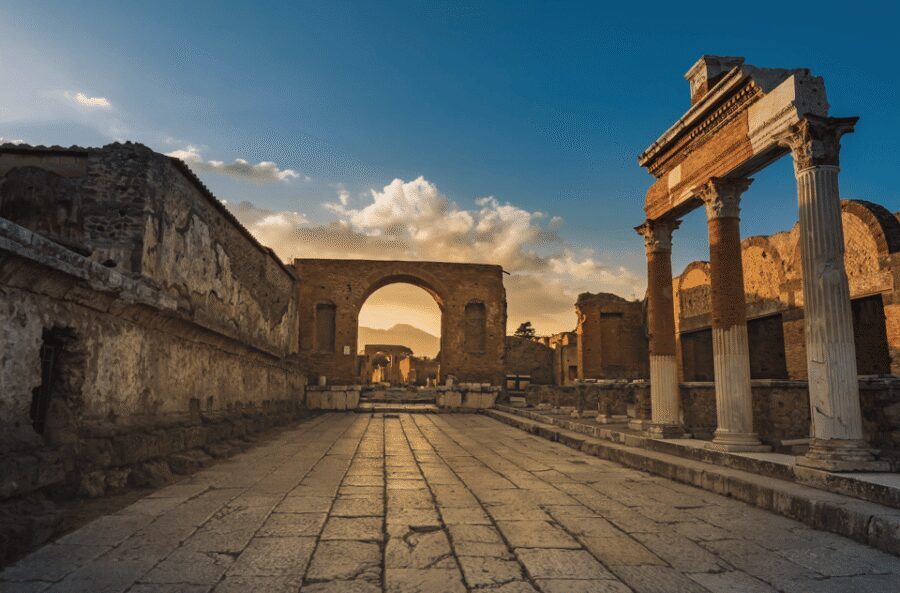
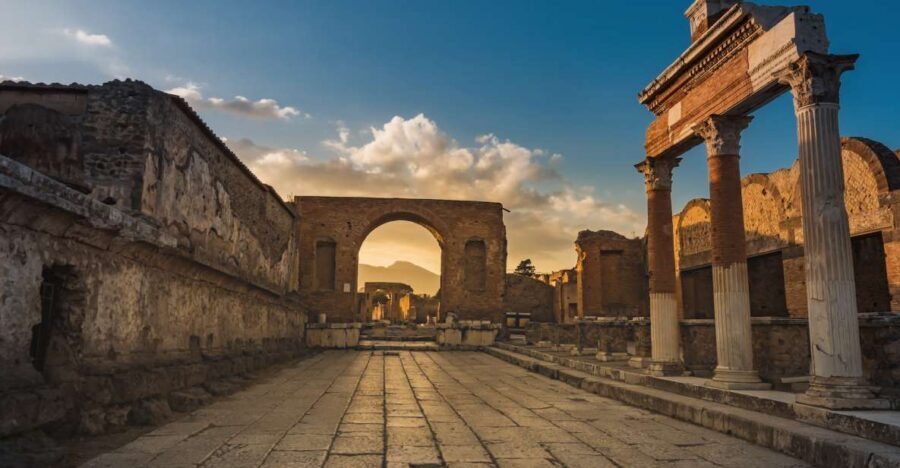
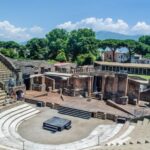
The tour takes you to the forum, the civic heart of the city. Even if you know Pompeii only from photos, a live explanation changes the experience. You start to notice how the space would have been used, not just how it looks now.
I love forum visits because they teach you “how people moved and met.” You learn to read the layout as a daily-life stage, not a pile of stones.
Suburban baths: when daily routine had a social side
Next up are the suburban baths. Baths in Roman cities weren’t just for cleanliness. They were places where people socialized, passed time, and caught up. The guide’s explanations help you connect that idea to what remains in the ruins.
This stop is a great reminder that Pompeii wasn’t only monumental buildings and dramatic statues. It was lived-in routines—washing, meeting, talking, and going back out into the streets.



Plaster casts: why they matter (even if you’ve seen photos)
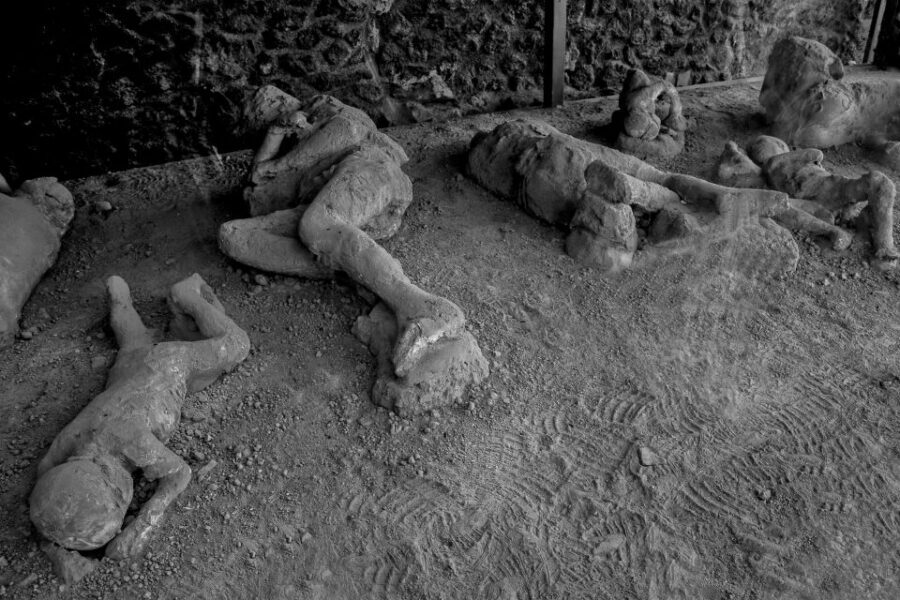
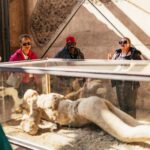
You’ll also visit the plaster casts. These are there to help you visualize what happened and what the final moments looked like in physical terms. When a guide walks you through the purpose of the casts, you understand why they’re included in a “highlights” itinerary.
I find plaster casts hit harder when you’ve already learned a bit of context. After the forum and baths, your brain is better prepared to see the people behind the structures.
How the guide keeps the pace
Because the group is capped at a maximum of 16 people, the guide can keep moving without dragging the whole group. In this kind of setting, radiolines (used for listening) also help. You’re less likely to miss key points when you’re walking and looking at ruins at the same time.
The 79 AD eruption story: tying ruins to real time
Pompeii’s ruins feel timeless until someone explains the sequence. This tour explicitly includes highlights about the Vesuvius eruption in 79 AD, with the guide connecting what you see to the larger catastrophe.
The practical benefit is simple: it gives your eyes a timeline. You start noticing why certain sites feel heavier or more urgent than others. And you stop thinking of Pompeii as a single “instant photo,” even though that’s the temptation when you first arrive.
A good archaeologist guide also helps you separate what you can tell from what you can’t. That’s where tours like this earn their keep. You leave understanding the ruins’ meaning rather than just collecting impressions.
Small-group touring: what up to 16 people feels like
A group size limit of 16 is a big deal at Pompeii. Larger groups can turn the experience into traffic management: you’re constantly waiting for the person in front to finish reading, and your questions get swallowed.
Here, the tour is described as small, efficient, and welcoming. That’s exactly what you want when you’re trying to process details quickly.
I also like that the tour aims to balance group flow with room for questions. When you’re hearing live explanations from a regional archaeologist, you’re not stuck with generic audio tracks.
In past departures, guides have handled mixed language needs smoothly, switching between Italian and English without making anyone feel left out. If you’re bilingual, you’ll appreciate the way the narration stays clear rather than forced.
What’s not included: the Villa of the Mysteries
The Villa of the Mysteries is not included in this tour. That’s important because many first-timers assume “Pompeii highlight” automatically means all the famous extras.
If the Villa of the Mysteries is on your must-see list, you have two options:
- plan to add it after the guided portion on your own
- or choose a different guided route that includes it
Either way, don’t let your expectations get ahead of the itinerary. You’ll still see major, high-impact areas on this tour, but this specific villa isn’t part of the 2-hour plan.
After the tour: how to keep exploring without getting lost
One of the best perks is that you can stay inside the ruins as long as you want after the tour finishes. That’s ideal because Pompeii doesn’t “end” when the guide does. You can follow your interests and slow down where a street corner suddenly becomes interesting.
The trade-off is that the guided portion focuses on a portion of the park. In real terms, you should plan on continuing on your own afterward. Having a site map (a paper plan works well) helps you keep momentum and avoid random backtracking.
If you want to make the most of your time, ask your guide for recommendations before you step away. They can point you toward other important areas in the surrounding site based on what you just learned.
Timing reality check: why 2 hours can feel short
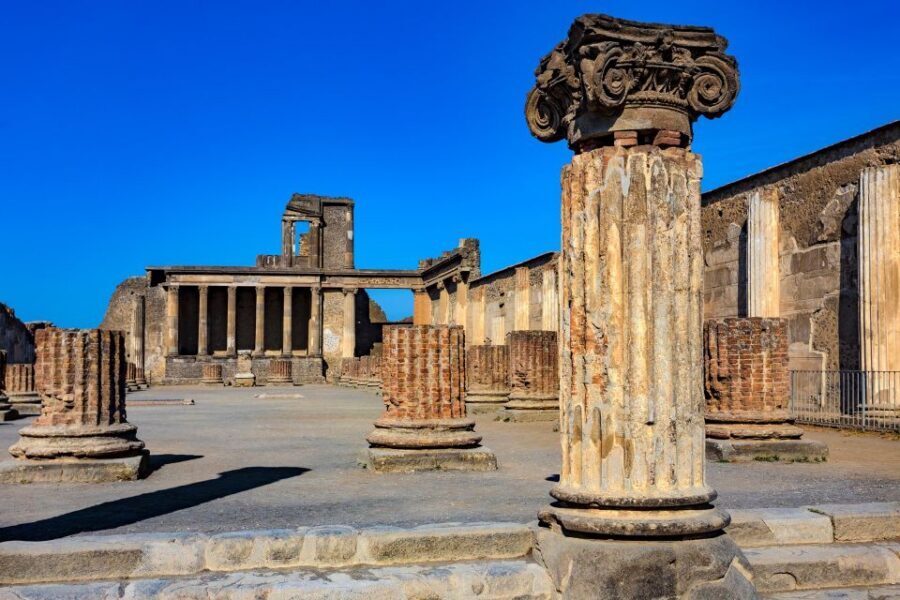
This tour advertises a 2-hour duration, but the start-up time on-site matters. You’ll meet at Porta Marina Superiore, get organized, and likely handle the radio setup before the walking portion really kicks in. That means the “active exploring” segment may feel closer to a little under the full block.
I don’t see that as a problem if you go in with the right mindset. Think of it as a fast, guided orientation to key highlights—then use your remaining time inside Pompeii for your personal pace.
If you’re racing a train or a tight schedule, build in a cushion after the tour ends. Pompeii is the kind of place where you’ll want extra minutes even when you swear you won’t.
Who should book this Pompeii archaeologist tour
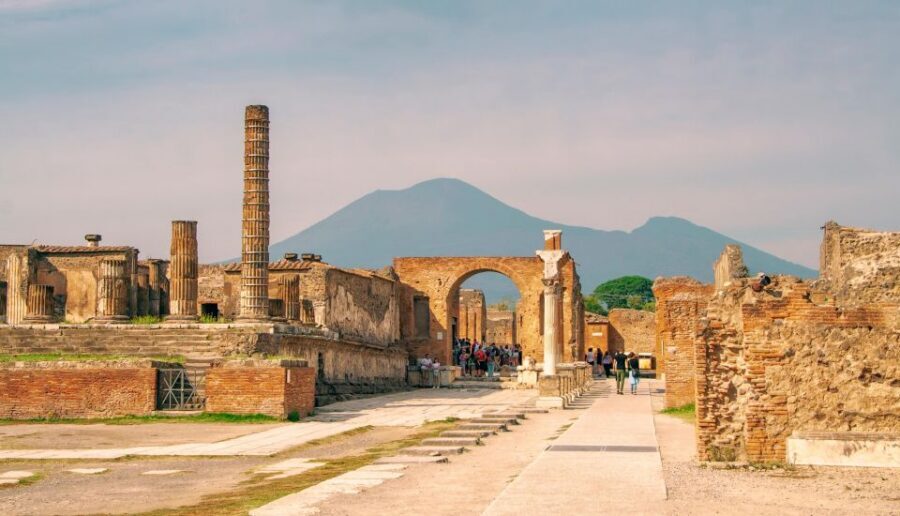
This is a strong fit if you:
- want a guided overview that hits big places fast
- like archaeology explanations and prefer not to piece everything together alone
- are traveling with limited time and need a focused plan
- enjoy small groups where you can actually hear the guide
It’s also a good choice if you’re the type who learns best by seeing the site while someone explains what you’re looking at. Pompeii rewards attention to small details, like street shapes and how public spaces connect.
If you’re a hardcore self-guided wanderer with tons of hours to spare, you might skip a guided highlights walk. But for many people, the guide’s structure is what turns the visit from photos into understanding.
Should you book this Pompeii Guided Tour with Archaeologist?
I’d book it if you want the best value combination of time and learning: skip-the-line entry, a short list of top stops, and live archaeologist explanations in a group that stays manageable.
It’s especially worth it if you’re visiting Pompeii for the first time or you feel overwhelmed by how much there is to see. The tour helps you pick up the meaning quickly, so the rest of the park doesn’t feel like a maze.
The only clear reason not to book: if the Villa of the Mysteries is your top priority and you don’t want to plan additional time on your own. Otherwise, this tour is a smart way to get your bearings fast and make the rest of Pompeii more rewarding.
FAQ
Where do I meet for the Pompeii Guided Tour with Archaeologist?
You meet at the main entrance of Pompeii called Porta Marina Superiore, where the guide holds the company sign.
How long is the tour?
The guided portion lasts 2 hours.
Is the Villa of the Mysteries included?
No. The Villa of the Mysteries is not included in this tour.
What’s included in the price?
The price includes the entry daily ticket and a 2-hour guided tour with a regional archaeologist.
What languages are available for the live guide?
The live tour guide is available in English and Italian.
How big is the group?
It’s shared in a small group tour with a maximum of 16 people.
Is there free cancellation?
Yes. You can cancel up to 24 hours in advance for a full refund. There’s also a reserve now & pay later option.