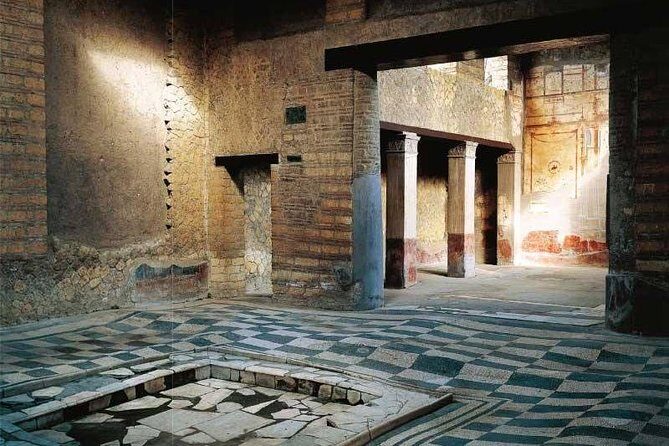
REVIEW · POMPEI CAMPANIA
Pompei: Audio guide of the archeological site
Book on GetYourGuide →Operated by Echo Audioguides · Bookable on GetYourGuide
Pompeii with a soundtrack is a smart move. This audio guide gives you a guided walk through the streets of ancient Pompeii, explaining daily life, architecture, and what the city’s volcanic preservation changed forever.
What I like most is the compelling narration plus the practical support materials (like a map) that help you keep moving instead of wandering. You get historical authenticity, not just scenic commentary.
One thing to keep in mind: this is not an entrance-ticket or earphone bundle. You’ll still need your site ticket, and you should bring headphones so you can actually hear the guide clearly.
Key points worth knowing
- 50-minute listen time that fits real touring stamina
- Offline access so you can keep going even with spotty signal
- Map included, helpful for staying on track in a big, ruin-filled site
- Markets, villas, temples, bathhouses, and frescoes get explained in plain language
- English and Italian options with an Italian/English host or greeter
- Great value at $5, as long as you plan for the missing site ticket and earphones
In This Review
- The real value: a $5 Pompeii guide that doesn’t tie you down
- What you actually get: audio, map, and extras for sorting it all out
- A practical way to plan your 50 minutes in Pompeii
- The map and navigation: why it matters more than you think
- The narration: how it makes ruins feel readable
- Pompeii’s daily life, explained in human terms
- Bathhouses and frescoes: the stops that often make it click
- Convenience that actually works on the ground
- Price reality check: $5 is great, but plan for the missing pieces
- Who this audio guide is best for
- Possible drawback: what could feel frustrating
- Quick tips to get more from your 50 minutes
- Should you book this Pompeii audio guide?
- FAQ
- How long is the Pompeii audio guide?
- What languages are available?
- Is the audio available offline?
- How long is the access valid?
- What’s included with the experience?
- What isn’t included?
- Is there a host or greeter?
- Is there free cancellation?
The real value: a $5 Pompeii guide that doesn’t tie you down

Pompeii can overwhelm fast. It’s huge, you’re outside all day, and there’s always another wall, another doorway, another sign that makes you wonder what life was like there. This audio guide is appealing because it gives you structure without forcing you into a strict group pace.
The price—$5 per person—is honestly the headline. That low cost works best when you’re already planning to buy the Pompeii entrance ticket and you’re bringing your own headphones. If you’re expecting this to replace a formal guided tour with a person standing beside you, you may feel shortchanged. But if you want a guided narrative with freedom, it’s a very practical setup.
I also like how it’s designed for flexibility. You don’t just stream a clip and hope Wi‑Fi behaves. You receive a link to the audio file and it’s meant for unlimited access even offline—so you can use it on-site and still replay parts afterward.
What you actually get: audio, map, and extras for sorting it all out

The included items are where this package becomes more than “just a recording.”
You get:
- a digital file (audio)
- a map
- a photo
- documentation
That matters because Pompeii isn’t laid out like a tidy museum floor plan. Even with good signage, you’ll keep asking: Where am I? What am I looking at? Why does this matter? A map plus a narrated route-style experience helps you connect the dots instead of just taking photos.
Also, the host or greeter is listed for Italian and English. That’s useful if you run into language issues when you’re getting access to the materials.
If you're still narrowing it down, here are other tours in Pompei Campania we've reviewed.



A practical way to plan your 50 minutes in Pompeii

The audio guide is built around about 50 minutes of listening. That’s a sweet spot. Long enough to teach you how to read the ruins, short enough that you’re not trapped listening while your legs protest.
Here’s the rhythm you can expect from the experience, based on what the guide covers:
- Orientation and city life: You start moving through streets of a once-thriving Roman city. The narration focuses on daily routines and what the built environment suggests about ordinary life.
- Markets and public spaces: You get explanations for the places where people interacted, bought things, and spent time. This is where Pompeii stops being “random ruins” and starts becoming a functioning town in your head.
- Houses and villas: The guide shifts from public life to private space—how homes were arranged and what you might learn from their architecture.
- Temples and religious settings: You’ll hear about spiritual life and how those spaces fit into the city’s overall layout.
- Bathhouses: Public bathing gets attention, and it’s a smart topic because it reveals social habits—who used these facilities and why.
- Household frescoes and personal details: The narration doesn’t ignore small, intimate art like frescoes. That’s where Pompeii feels most human.
- The city’s tragic fate: The guide closes the loop by explaining the preservation tied to volcanic ash, so you understand why these places survived.
You’ll notice a theme: it doesn’t treat Pompeii like a list of sights. It walks you through how different parts of town worked together—public, private, religious, and everyday.
The map and navigation: why it matters more than you think

Ruins are easiest when you have a simple plan. The guide includes a map, and some feedback highlighted that it helps you follow a path. That’s not a minor detail. Without navigation support, Pompeii becomes a choose-your-own-adventure you didn’t ask for.
With the map in hand, you can:
- keep your route moving without constantly checking your phone
- focus on listening instead of solving the logistics puzzle
- stop at the right spots long enough to match the narration
This guide is especially good if you’re touring independently and you don’t want to constantly ask staff where to go next.
The narration: how it makes ruins feel readable
The biggest praise point here is the narration itself—compelling and clear enough that you can connect what you see to what the guide is saying.
Why that matters: Pompeii looks dramatic, but it can still be confusing. You may spot a wall section or an entryway and think, “Okay… what was supposed to happen here?” The narration’s job is to translate form into function. It explains architecture and daily life, not just names and dates.
It also pays attention to both the grand and the personal:
- the bathhouses help you understand social life
- the household frescoes help you understand taste, decoration, and home culture
If you like learning while you walk, this style fits. You’re not stuck in one spot. You move, listen, look, and the story keeps pace with you.
Pompeii’s daily life, explained in human terms
The guide’s focus on daily life is a big part of its practical value. It doesn’t just tell you that Pompeii was important. It helps you picture what people did, where they went, and how they used spaces.
For many visitors, that shift is the difference between seeing stones and understanding a city. When the narration talks about markets, it’s not just commerce—it’s social interaction. When it talks about homes and villas, it’s not just architecture—it’s privacy, family life, and routines. When it talks about temples, it’s not just religion—it’s how belief shaped public space.
This is also where you’ll feel less pressure to be an expert. You don’t need a degree in Roman history to get something out of it. The guide is built for curious travelers who want context without homework.


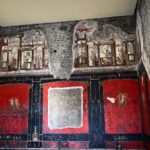



Bathhouses and frescoes: the stops that often make it click
Two themes get special attention: bathhouses and household frescoes. Those topics are worth your time because they’re tangible.
Bathhouses:
- help you understand public life beyond markets and streets
- explain how bathing was part of routine and socializing
- make the idea of daily Roman life feel concrete
Frescoes:
- bring the city closer to you
- help you see that Pompeii wasn’t only about big monuments
- show how homes reflected identity through decoration
If you tend to enjoy “how people lived” details more than pure chronology, these are the moments you’ll remember.
Convenience that actually works on the ground
Pompeii doesn’t come with perfect internet. That’s why the offline-friendly delivery is a real advantage.
What you get:
- a link to the audio file
- unlimited access
- the ability to use it offline on your trip
- the chance to replay later when you’re home
Also, access is listed as valid for 2 days. That’s handy if your timing is messy—weather, crowds, or you just want a slower second pass.
The experience is offered in Italian and English, with an Italian/English host or greeter. So you can choose the language that keeps the story smooth in your ear.
Price reality check: $5 is great, but plan for the missing pieces
At $5 per person, this is one of the cheaper ways to add guidance to Pompeii. But you should understand what the low price covers—and what it doesn’t.
Not included:
- entrance ticket to the archaeological site
- earphones
So the value math is simple: you’ll pay for Pompeii entry separately, and you should bring headphones (wired or wireless, as long as they work). If you’re already planning to buy the entrance ticket and you don’t mind using your own headphones, this becomes excellent value.
If you’re hoping the $5 covers everything from ticket to equipment, it won’t. One negative experience rating hints at “misguided” expectations, and the most common mismatch with products like this is assuming it’s a full guided tour bundle.
Who this audio guide is best for
This experience fits you if you want:
- flexibility over strict schedules
- an explanation-heavy walk without the expense of a private guide
- a route that helps you not get lost inside a huge archaeological site
- offline usability so you’re not dependent on signal
It’s also a good pick if you’re traveling with someone who learns visually and by walking. You can both focus on the story, and you can pause naturally when something grabs your attention.
If you want nonstop Q&A or a guide who can explain everything in real time, you’ll probably prefer a live tour. This is about narration and self-guided movement.
Possible drawback: what could feel frustrating
The biggest potential downside is also the nature of the format. You’re not getting a live person. There’s no on-the-spot clarification when you’re staring at a wall fragment and wondering what you missed.
Also, without earphones, the experience becomes hard. The guide explicitly doesn’t include them, and outside in a busy site, you don’t want to rely on speaker audio if you can avoid it.
If you’re the type who needs a very structured, supervised path with zero decision-making, you might find independence annoying. That said, the map is provided, and that’s clearly intended to reduce wandering.
Quick tips to get more from your 50 minutes
- Bring your own headphones before you leave. This is the easiest upgrade for getting the full value.
- Use the included map as your anchor. Let the audio do the storytelling; you handle the walking.
- Don’t try to listen at full speed. When you see something that matches the narration, pause a beat and look.
- If you’re a photo person, plan to stop only when the guide is describing the moment. It keeps your photos tied to meaning.
Should you book this Pompeii audio guide?
I’d book it if you want a low-cost way to make Pompeii feel understandable, not just impressive. The combination of compelling narration, a map to follow, and offline unlimited access makes it practical value for independent travel. At $5, it’s hard to beat as a support tool—especially if you already budget for the Pompeii entrance ticket.
Skip it if you’re expecting an all-in, in-person guided tour experience. This is a self-guided audio format with great storytelling, not a live guide standing beside you.
If you’re going to Pompeii anyway and you like learning while you walk, this one is a smart add-on.
FAQ
How long is the Pompeii audio guide?
The listening time is about 50 minutes.
What languages are available?
The guide is available in Italian and English.
Is the audio available offline?
Yes. You’ll receive a link to the audio file for unlimited access, even offline.
How long is the access valid?
Your access is valid for 2 days. Starting times depend on availability.
What’s included with the experience?
It includes a map, a digital file (audio), a photo, and documentation.
What isn’t included?
The entrance ticket to the archaeological site and earphones are not included.
Is there a host or greeter?
Yes. A host or greeter is available in Italian and English.
Is there free cancellation?
Yes. You can cancel up to 24 hours in advance for a full refund.