REVIEW · POMPEII
Private Pompeii & Ravello Day Trip via Amalfi Coast (Tickets)
Book on Viator →Operated by Leisure Italy · Bookable on Viator
Pompeii plus Ravello, in one smooth day. What makes this outing special is the hotel pickup option and the way you can do Pompeii at your pace (then add a private Pompeii guide if you want more story). You’re not stuck staring at maps, either. It’s a full-day driver with live commentary, so the day moves with less stress and more wonder.
The only real catch is time and effort. Pompeii is large and the Amalfi drive is scenic but long, so plan for walking, sun, and a schedule that feels full even on a private trip—bring comfortable shoes and sun gear if you’re going in summer.
In This Review
- Key points before you go
- Why this Pompeii plus Amalfi Coast rhythm feels right
- Price and what you really get for $508.61 per person
- Hotel pickup: the quiet superpower on a long day
- Inside Pompeii: Porta Marina to the feeling of arrival
- Pompeii’s big public spaces: Forum, Apollo, and the civic heartbeat
- Food, shopping, and the Roman version of a social network
- Baths in Pompeii: the daily reset that still makes sense
- The houses: luxury mosaics and merchant life side by side
- Street life on Via dell’Abbondanza
- Teatro Grande and the Antiquarium: the best add-on for context
- Pompeii at your pace: guided upgrade or self-guided flow
- Amalfi Coast drive: the part that feels like movie scenes
- Ravello: a quieter base with real time to wander
- Villa Rufolo and Villa Cimbrone Gardens: views with a strong sense of place
- Minori and Maiori: the calmer coastal break
- Cetara and Vietri sul Mare: working ports and ceramic color
- Time management: how to avoid feeling rushed
- Who this tour fits best (and who might want something else)
- Should you book this private Pompeii and Amalfi Coast day trip?
- FAQ
- How long is the Pompeii and Amalfi Coast day trip?
- Is hotel pickup included?
- Is this tour private?
- What language is the driver commentary in?
- What Pompeii options are available for tickets and guiding?
- What stops are included on the Amalfi Coast side?
- Are Villa Rufolo and Villa Cimbrone Gardens included in the ticket price?
- Is lunch included?
- What should I bring for the day?
- Can I cancel for a refund?
Key points before you go
- Hotel pickup simplifies everything so you start with less taxi wrangling
- Pompeii can be self-paced or guided depending on what you want to learn
- A licensed Pompeii guide option can include skip-the-line tickets for added flow
- The driver handles the Amalfi Coast route so you focus on the views, not directions
- Ravello is the calmer anchor town with about an hour to wander
- Minori and Maiori stops are short—this is sightseeing more than a beach day
Why this Pompeii plus Amalfi Coast rhythm feels right
This day works because it separates your experience into two different modes: the big, absorbing Pompeii ruin visit, then a slower-feeling coast and hill-town tour. Pompeii is where you slow down with ancient streets, fresco fragments, and everyday Roman details. The Amalfi Coast half is where you trade urgency for viewpoints, terraces, and quick walks.
Also, “private” here matters. You’re not negotiating with a big bus crowd. You can ask the driver for the best timing between stops, and you can keep the pace that fits your group—especially if someone wants more museum time or a shorter walking stretch.
Other private Pompeii tours we've reviewed in Pompeii


Price and what you really get for $508.61 per person
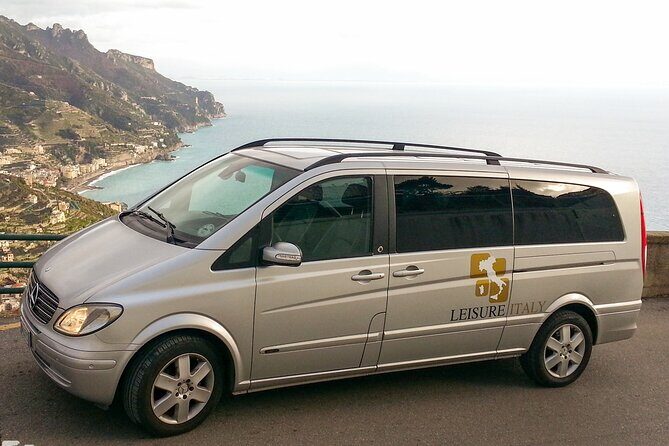
At $508.61 per person for an 8–9 hour private day, the price isn’t just about getting from A to B. You’re paying for private transportation, an English-speaking driver, and live commentary during the ride—plus the option to upgrade how you handle Pompeii.
If you choose the Pompeii guide option, the value shifts again: you may get skip-the-line access plus a private Blue Badge guide for Pompeii (the exact add-ons depend on the option you select). That can be worth it if you want more than the highlights—because Pompeii rewards interpretation. When you know what you’re looking at (markets, baths, religious spaces, and elite homes), the site stops feeling like random ruins and starts feeling like a city.
Hotel pickup: the quiet superpower on a long day
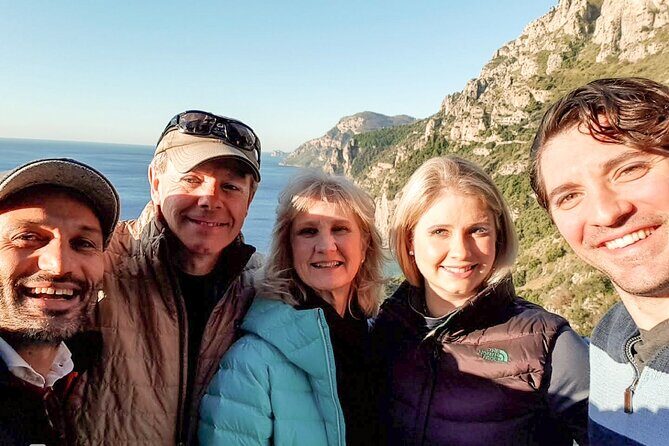
The pickup is included from places like Naples, Sorrento, Pompeii, vacation rentals, train stations, and cruise ports. That matters more than it sounds, because Pompeii + Amalfi means big driving and tight timing.
Once you’re in the vehicle, the day becomes simpler:
- You don’t coordinate parking.
- You don’t lose time to transfers.
- You can relax through the coastal bends while the driver points out things you’d miss from the roadside.
A bunch of guide/driver praise in the past bookings centers on the same theme: people felt safe and well-timed on those narrow, winding roads, and that made the Amalfi part feel like a treat instead of a hassle.
Inside Pompeii: Porta Marina to the feeling of arrival

Your visit begins at Porta Marina, Pompeii’s main gateway in Roman times. Even before you reach the famous heart of the site, the entry sequence helps you picture what visitors and merchants would have seen first.
From here, Pompeii’s scale clicks into place. Many first-timers expect a small ruin cluster. Instead, you’re walking through neighborhoods and public spaces laid out like a functioning city—homes, shops, taverns, and bath areas are all part of the same walkable world.
If you’re doing Pompeii without the guided add-on, you’ll still get structure from the planned route. If you upgrade, you gain context that helps you make faster sense of what’s where and why it mattered.
Pompeii’s big public spaces: Forum, Apollo, and the civic heartbeat
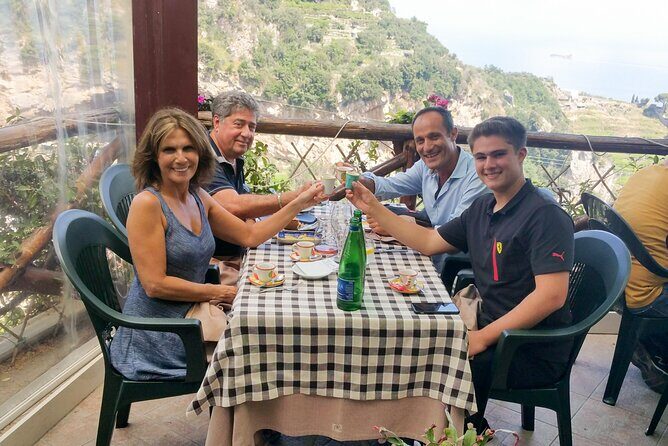
One of the best parts of Pompeii is how many public areas you can understand without being a classicist. Start with the Temple of Apollo, an early religious site with a long timeline (it dates back to the 6th century BC in this area). Even with parts worn away, the layout—portico, altar space, and the elevated podium concept—helps you feel the importance of worship in civic life.
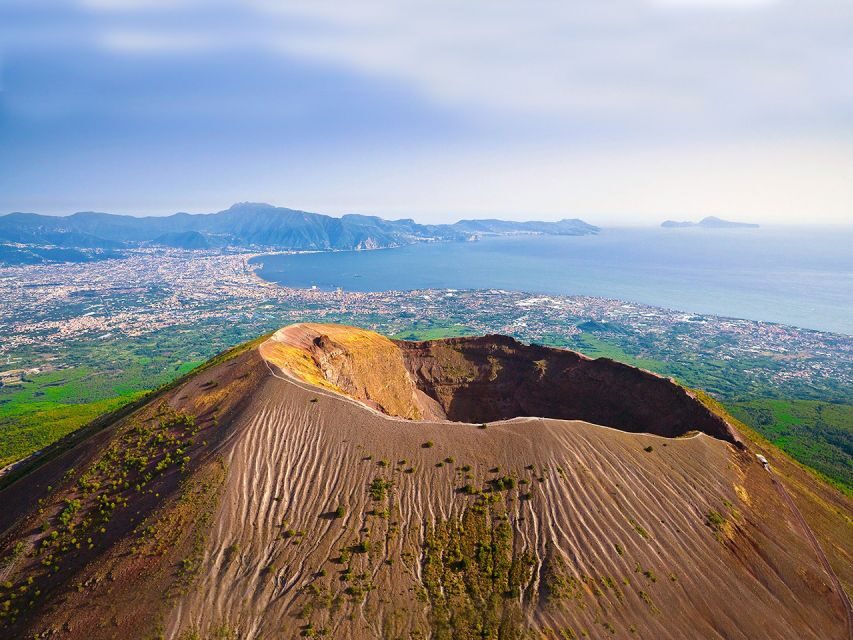
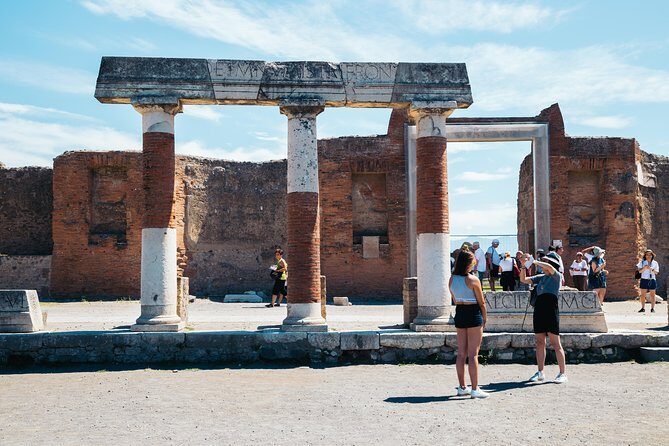
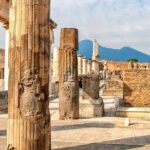
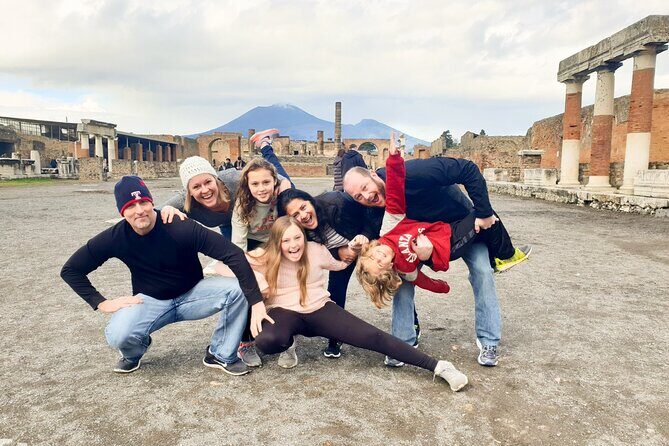
Then comes the Forum, the city’s civic center. Today it’s open-air, and that’s a feature, not a problem. With the colonnades framing the space and views out toward Mount Vesuvius, the Forum shows how politics, religion, markets, and everyday community life all shared the same stage.
One thing I love about this pairing (Apollo temple + Forum) is that it lets you watch the city’s “logic” at work: belief and daily administration are close together, and you can literally see the connections in the layout.
Other Amalfi Coast day trips from Pompeii




Food, shopping, and the Roman version of a social network
Next up is the Macellum, Pompeii’s principal food market and one of the best-preserved commercial areas. Walking through it, you get a tangible sense of organization—porticoes, stalls, and counters that hint at how people shopped and traded.
Then you can connect that to Pompeii’s broader social rhythms in a surprisingly human way. Reviews often highlight that the best guides don’t just list facts; they explain how daily routines worked. Even when you’re self-paced, this is the part of Pompeii that makes it easiest to imagine people doing ordinary things two thousand years ago—buying food, meeting neighbors, and talking through errands.
Baths in Pompeii: the daily reset that still makes sense
The Forum Baths show you why Romans cared about cleanliness, conversation, and routine. The layout is fairly easy to follow: changing spaces, warm areas, and plunge/hot zones. Heated floor concepts and ventilation features (still legible in the surviving structure) remind you this wasn’t just a luxury add-on.
This stop is also a great “breather.” Even if you’re pushing for speed, the baths can feel like a structured museum walk inside a Roman building design. It’s one of the stops where the site becomes emotionally easy to picture.
The houses: luxury mosaics and merchant life side by side
Pompeii’s elite residences can be jaw-dropping, but what really helps is pairing them with the homes that show more regular wealth.
- The House of the Faun gives you that palace-like scale: an entire block, courtyards, columned areas, and high-quality mosaics. It’s the kind of place where you see how status got built into architecture.
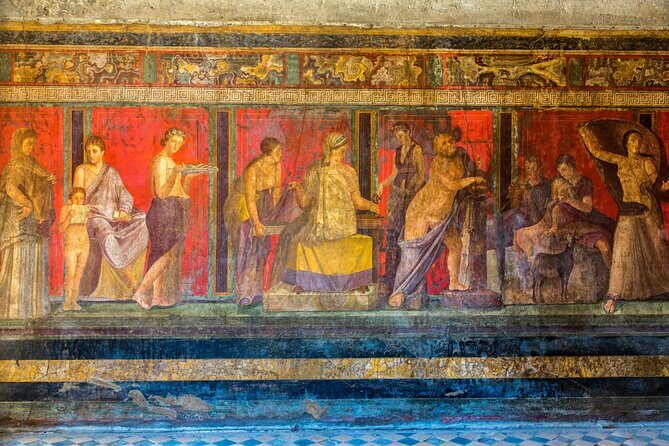
- The House of the Vettii shifts you toward a more vivid, story-filled world. Colorful frescoes on multiple walls and a garden layout make the home feel lived-in, not just excavated.
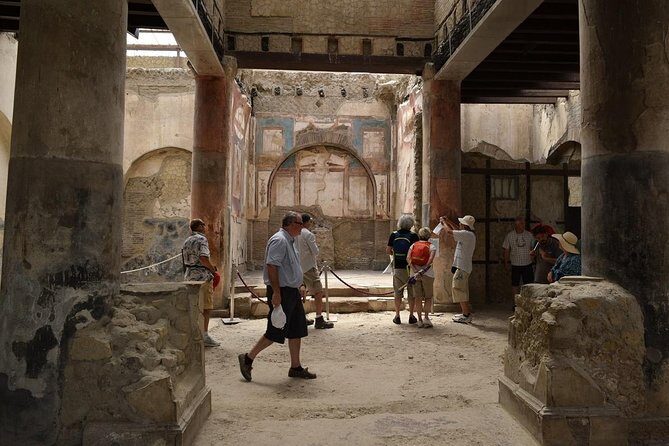
Then there’s the insula block concept—homes mixed with bakeries, shops, and work areas. From elevated walkways, you can look down into the city fabric without disturbing archaeological layers. The effect is practical: you don’t just see “fancy houses,” you see how a working neighborhood functioned.
Street life on Via dell’Abbondanza
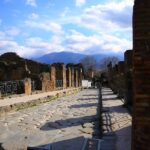
If you want one walk that makes Pompeii feel most like a real city, choose Via dell’Abbondanza. It’s a long central street with storefronts, bakeries, and spaces where people would have moved between the Forum and other major public sites.
Watch for details like stepping stones and the careful pedestrian layout. Pompeii also shows signage remnants and political-post style marks on building facades—small evidence that this place had opinions, promotions, and competition, like any town with commerce.
Teatro Grande and the Antiquarium: the best add-on for context
Two finishing touches can make your day feel more complete.
The Teatro Grande is an open-air theatre cut into the slope. The semicircular layout and the sense of built-for-sound viewing areas help you imagine how performances worked. Modern access paths also give you panoramic viewpoints over the stage area, which helps you understand scale fast.
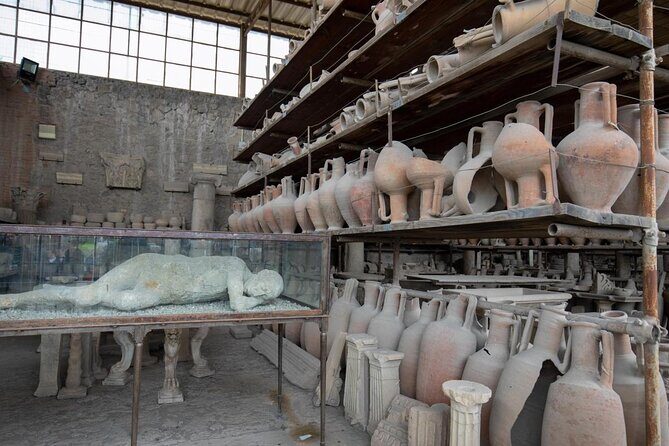
Then there’s the Antiquarium, Pompeii’s main museum space. This is where you can anchor what you saw outside. You’ll find everyday objects, fresco fragments, luxury items, and plaster casts connected to the eruption story. If your Pompeii visit feels like a highlight reel, this is where it becomes a coherent narrative.
Pompeii at your pace: guided upgrade or self-guided flow
Here’s the core decision you’re really making: how much interpretation do you want?
If you do Pompeii self-paced, you can move through the highlights on your own timing. It’s workable if your group likes freedom and you’re okay reading on-site signage as you go. Cafés and gift shops sit right by the ticket office area, so there’s a built-in “reset” zone if someone needs a pause.
If you upgrade to the Pompeii guide option, you’re buying time-saving clarity: you’re less likely to miss what matters. Past bookings specifically call out guides by name—like Fabrizio, Viviana, Umberto, and others—where guests praised how guides shaped pacing, handled crowd flow, and tailored the visit to kids and adults.
For many people, the sweet spot is this: self-paced for the first pass, then guided time for the city logic (Forum, baths, markets, elite homes) once you’re oriented.
Amalfi Coast drive: the part that feels like movie scenes
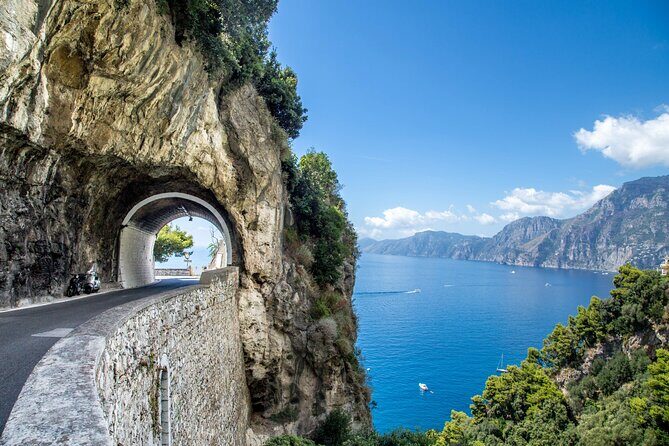
After Pompeii, you’re trading ruins for coastal drama. The Amalfi Coast drive is famous for a reason: cliffline roads, tunnels, perched villages, terraced lemon areas, and tiny harbors that look almost impossible from the road.
The big value of having a private driver is that you’re not splitting your attention between navigation and photography. You can enjoy the ride, stop when it makes sense, and let the driver share context with live commentary.
Ravello: a quieter base with real time to wander
Ravello is perched high above the coast, and that elevation changes the vibe immediately. Instead of the busy seaside bustle, you get a calmer feel with medieval streets and long views over the water.
You get about one hour of free time here, which is enough to do the essentials without sprinting:
- Piazza Duomo and the 11th-century cathedral area
- Narrow lanes with artisan shops (ceramics and linen-style products come up often in this kind of stop)
- Sitting with a view, if that’s your style
Two garden stops are close by and can add serious beauty if you like wandering at a slow pace.
Villa Rufolo and Villa Cimbrone Gardens: views with a strong sense of place
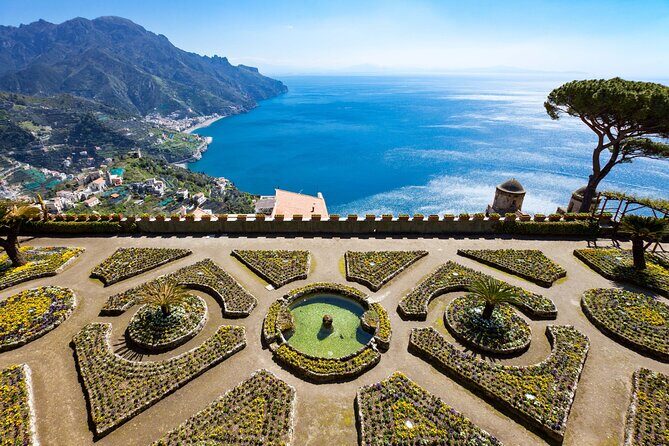
Just off Ravello’s center is Villa Rufolo. It’s known for cloistered courtyards and tiered garden spaces, with terraces that look far down the coast. It’s also tied to the Grand Tour tradition and connects to composer Richard Wagner through the villa’s artistic reputation.
Then the day continues to Villa Cimbrone Gardens, famous for its dramatic viewpoints and the celebrated Terrace of Infinity concept. Even if you don’t stay long, this is the kind of place where your brain goes quiet for a minute. And it’s short enough not to swallow your schedule.
Note: admission for these garden stops is listed as not included, so it’s worth factoring that into your total day cost if you’re hoping to do both.
Minori and Maiori: the calmer coastal break
Instead of only focusing on the most famous names, this route includes Minori and Maiori, both with about 30 minutes each.
- Minori is often described as the City of Taste. You’ll see a smaller beach area, a relaxed waterfront, and pastry shops that match the town’s reputation. It also has ancient roots, including the idea of Roman maritime village history.
- Maiori is longer and breezier, with a wide promenade that feels easy to walk. It still shows the coastal-trade culture of the area, and it can be a good place to cool off and reset.
One practical thought: these are short stops. If you’re booking hoping for a full beach day, this itinerary is more “see and snack” than “settle in for hours.”
Cetara and Vietri sul Mare: working ports and ceramic color
As the road curves, you’ll pass Cetara, a fishing village tucked between mountains and sea. It’s centered around the daily catch and is known for its anchovy tradition, which helps make it feel different from postcard towns.
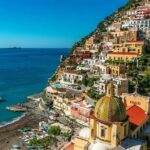
Approaching Vietri sul Mare, look for bright ceramic tiles and a domed church visible above the houses. Vietri is tied to ceramic production for centuries, and even from the road, the color and pattern give you a clear “this town has a craft identity” feeling.
These are the stops that add variety. The Amalfi Coast route can feel repetitive if every stop is built for tourists only. Here, you get a couple of glimpses into local life.
Time management: how to avoid feeling rushed
Because this is a private full-day plan, it can feel smooth. Still, you can protect the experience with three smart moves:
First, decide your Pompeii style before you arrive—self-paced highlights or guided city logic. If you want real storytelling and fewer guesswork moments, the Pompeii guide option tends to pay off.
Second, plan your energy. Pompeii takes walking time, Amalfi takes road time, and summer heat can turn “short strolls” into real effort. The operator specifically recommends comfortable shoes and sun gear in hot months.
Third, use Ravello as your “slow down” anchor. With about an hour of free time, it’s your chance to step out of the schedule and just wander the Duomo area and side streets.
Who this tour fits best (and who might want something else)
This is a great fit if you want:
- A single-day combination of Pompeii and the Amalfi Coast
- Private pickup so you start clean and stress-free
- Flexibility: you can pace Pompeii on your terms, then switch into scenic wandering
It might be less ideal if:
- You want lots of beach time. Minori and Maiori are short stops, and the plan is sightseeing-focused.
- You hate structured routes or dislike walking. Pompeii’s size means moderate physical effort is part of the experience.
Should you book this private Pompeii and Amalfi Coast day trip?
I’d book it if you’re the kind of traveler who likes seeing big “musts,” but also cares about how you get there. The combination of hotel pickup, a full-day driver with live commentary, and the option to add a Pompeii guide is a smart way to make the day feel full without feeling chaotic.
Where I’d hesitate is if you’re mostly chasing a beach day or you’re not comfortable with the walking involved at Pompeii. In that case, you might prefer a Pompeii-only plan or a coast plan with fewer towns and more downtime.
If you do book, pick the Pompeii guide option if learning is your priority. The strongest praise in past experiences centers on guide storytelling and pacing, and that can turn the ruins from impressive scenery into a place that makes sense.
FAQ
How long is the Pompeii and Amalfi Coast day trip?
The tour runs about 8 to 9 hours.
Is hotel pickup included?
Yes. Pickup is offered from places including Naples, Sorrento, Pompeii, vacation rentals, train stations, and cruise terminals/ports. You choose your pickup point when booking.
Is this tour private?
Yes. It’s listed as private, meaning only your group participates.
What language is the driver commentary in?
English.
What Pompeii options are available for tickets and guiding?
There’s a Guide in Pompeii option. If you select it, the tour includes private Blue Badge guidance in Pompeii and Pompeii Express skip-the-line tickets. Admission fees at Pompeii are noted as not included unless you select that guide option.
What stops are included on the Amalfi Coast side?
You’ll visit Ravello, plus nearby garden stops (Villa Rufolo and Villa Cimbrone Gardens), then make time in Minori and Maiori. The route also includes viewpoints/stops for Cetara and Vietri sul Mare.
Are Villa Rufolo and Villa Cimbrone Gardens included in the ticket price?
No. Admission for Villa Rufolo and Villa Cimbrone Gardens is listed as not included.
Is lunch included?
No. Lunch is not included.
What should I bring for the day?
The tour recommends comfortable shoes for Pompeii and sun gear for summertime.
Can I cancel for a refund?
Yes. Free cancellation is available up to 24 hours in advance for a full refund. If you cancel less than 24 hours before the start time, the amount paid is not refunded.