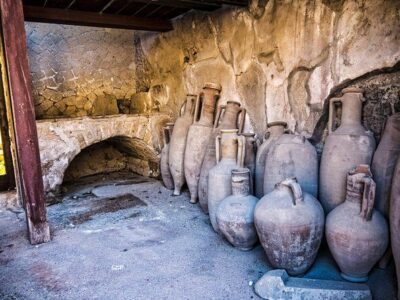
REVIEW · NAPLES
Naples: Herculaneum Entry Ticket with Digital Audio Guide
Book on GetYourGuide →Operated by Vox City International · Bookable on GetYourGuide
A city froze in ash and time. This skip-the-line Herculaneum ticket gets you past waiting and straight into a Roman world preserved by Vesuvius.
I like that it’s self-paced, so you can linger over the details that grab you. I also love the digital audio guide because it helps you read what you’re seeing without needing a human guide in your ear every minute.
One thing to consider: the digital audio download can be fiddly on a phone. If it fails right before you arrive, you may need a backup plan to get an audio track on site.
In This Review
- Key things to know before you go
- Enter Herculaneum: Fast Ticket, Real Archaeology Time
- From the Gate to the Frozen Streets of 79 AD
- Villas and Daily Life: Wealth, Work, and Hard Contrasts
- Frescoes, Mosaics, and the Little Details That Matter
- The Digital Audio Guide: How to Use It Without Stress
- One-Day Plan: How to Get the Most in a Compact Site
- What This Ticket Costs, and Why It’s a Good Value (If You Use the Audio)
- Who Should Book This Herculaneum Ticket
- Should You Book? My Take on the $28 Herculaneum Entry Ticket
- FAQ
- Where is the Herculaneum Archaeological Park entry?
- Do I get skip-the-line access?
- Is a guided tour included?
- What languages is the audio guide available in?
- How do I access my e-ticket?
- How do I download the audio guide?
- What should I bring with me?
- Can I get a refund if my plans change?
Key things to know before you go

- Skip-the-line entry saves your limited time in a smaller, compact site
- Digital audio guide (English, French, Italian) helps you make sense of villas, doors, and rooms
- Herculaneum’s preservation shows clothing, mosaics, and frescoes in a way Pompeii can’t match
- Contrasts are the story: slaves’ quarters vs opulent homes, all in one walk
- It’s about a final moment: you’ll stand where about 300 people awaited rescue
- You control the pace with a map-style walk through streets, fountains, markets, and theaters
Enter Herculaneum: Fast Ticket, Real Archaeology Time

This isn’t a tour bus day. It’s a ticket that hands you time. You get skip-the-line access to the Herculaneum Archaeological Park, and then you explore at your own pace with a digital audio guide.
The meeting point is the park entry on Corso Resina, 187. You don’t need to find a guide holding a flag. You just head there and show your e-ticket on your phone to park staff. I like that the system is simple: mobile ticket in, then start walking.
At $28 per person, the value is mostly about time and friction. If you show up during a busy period, “normal entry” can mean a chunk of your day disappears into queues. Here, you’re paying to protect that time so you can spend it inside the ruins instead.
Important detail for your day: this is not a guided tour. The audio guide is included, but there’s no live explanation. If you love asking questions and having a lecturer follow you, you’ll likely want a different format. If you’re the type who likes to wander and learn as you go, this works really well.
If you're still narrowing it down, here are other tours in Naples we've reviewed.


From the Gate to the Frozen Streets of 79 AD
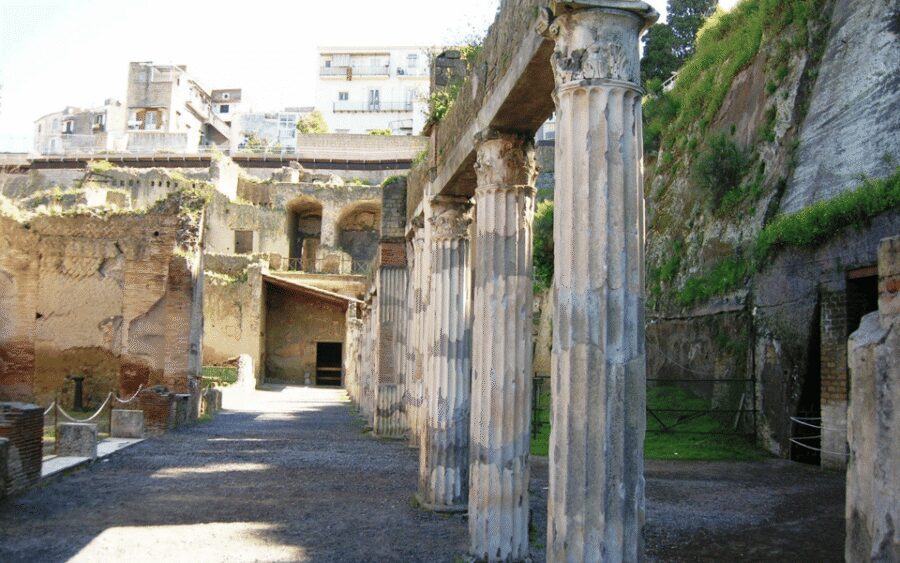
Once you’re in, you’re walking through a city that was devastated by Vesuvius in 79 AD. The eruption came in stages, and Herculaneum was hit later by a pyroclastic surge. That delay is part of what makes the site so startling: the preservation is extreme, and it makes Roman life feel close.
Your route is essentially a self-guided walk through streets, markets, fountains, and theaters. You won’t be checking off a checklist like a museum scavenger hunt. Instead, you’ll move from one preserved space to the next and let the audio guide point out what you might miss: how rooms connect, how everyday routines worked, and what sudden disaster looked like in physical space.
One moment the audio highlights is the tragedy at the end: standing where about 300 people awaited rescue. It’s not a museum-style “interpretation” that stays abstract. It’s a specific spot in the park that forces the story into focus. I find that kind of place hits hardest when you’ve already been walking through regular homes and streets first.
Herculaneum is also often easier to manage than its better-known neighbor. It’s smaller and more compact, which means you can actually see more of it in a single day without sprinting.
Villas and Daily Life: Wealth, Work, and Hard Contrasts
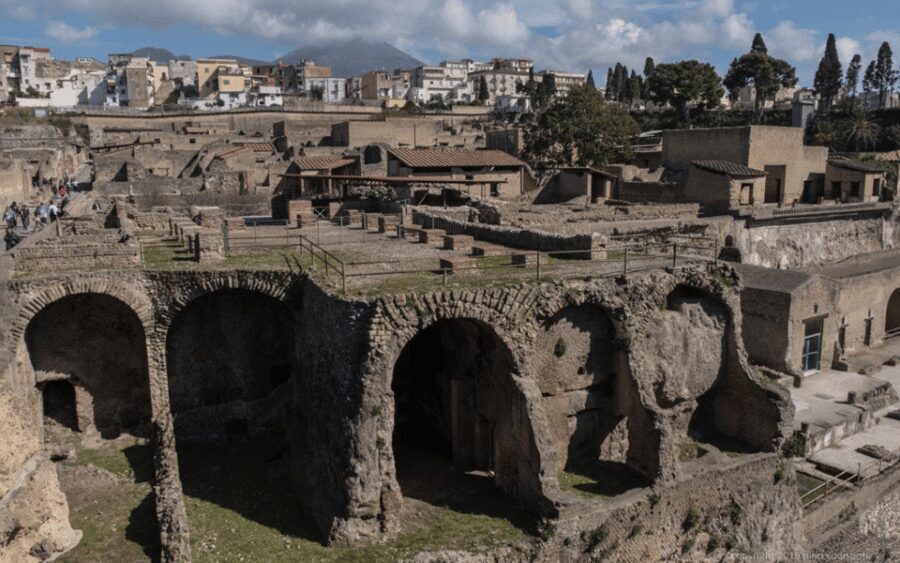
If Pompeii feels like the blockbuster of ancient Rome, Herculaneum feels like the close-up. Here, the ruins are intimate. The rooms are preserved enough that you can imagine the scale of everyday life, not just the big public structures.
The most powerful theme is contrast. You’re shown spaces that reflect Roman wealth and comfort, alongside stark areas tied to labor and lower social status. The audio guide points out differences like slaves’ quarters versus opulent homes, which changes how you read the same walls and doorways. Instead of thinking only about art and architecture, you start thinking about who lived where—and what their daily routines likely were.
Inside the park, preserved villas are a big part of the experience. These aren’t empty shells. They help you understand domestic life: entry points, thresholds, and how a home might move from public-facing areas to more private zones. You’ll also notice details like wooden doors and other structural elements that make the buildings feel less like drawings and more like places.
And because it’s self-paced, you can adjust your focus. Want household design and rooms? Stay in residential areas longer. Want human stories and tragedy? Spend extra time where the disaster is emphasized. The ticket doesn’t force a rigid order, so you can steer your own day.
Frescoes, Mosaics, and the Little Details That Matter
What makes Herculaneum special is the level of preservation. This site is known for showing things that are usually gone in most Roman ruins: intact clothing, intricate mosaics, and frescoes with visible color and detail.
In a normal museum, you’d read captions and hope your imagination fills the gaps. In Herculaneum, the gap-fill is easier because the material is right there. Even if you’re not an archaeology expert, you can see how carefully some spaces were decorated and how the everyday looked when it was still in use.
A practical tip: don’t rush the art. If you move too quickly, the frescoes and mosaics become just “pretty old stuff.” If you slow down, you start noticing patterns and contrasts—different styles of decoration, different room purposes, and how decoration signals status.
Also, pay attention to the “in-between” spaces. Doorways, small passage areas, and transitions between rooms often explain the logic of the home better than the biggest room in view. The audio guide is built for that kind of reading.
The Digital Audio Guide: How to Use It Without Stress
This ticket includes a digital audio guide in English, French, and Italian. You download it by scanning a QR code. The key instruction is to do it prior to arrival, not after you’re standing in the heat with spotty connectivity.
You’ll want headphones. Bring them. The phone audio alone in a ruin courtyard is a bad match for privacy and clarity. Also bring a charged smartphone, because your ticket lives on your phone too.
Here’s how to set yourself up for a smooth visit:
- Download the audio guide using the QR code before you enter, as instructed
- Make sure your phone battery is healthy before you leave
- Keep an eye on your messages: the e-tickets can be delivered via WhatsApp, and the sender is Vox City
- Have your e-ticket ready on your mobile screen so staff can scan it quickly
A small note from hard experience in the real world: the digital download can be difficult if the phone misbehaves. I’d treat the download as a pre-trip task. Test it once before you head over to the site, not only at the last second.
If the audio guide doesn’t download at the moment you need it, you might be asked to obtain another audio option on site. That’s the sort of problem you can reduce a lot by being early and prepared.






One-Day Plan: How to Get the Most in a Compact Site
The duration is listed as 1 day, and that matters because Herculaneum is walkable but not endless. The site rewards a steady walking pace and a few deliberate stops.
I suggest thinking of your visit in three chunks:
1) Get oriented early
Start strong with the main walk areas. Let the audio guide establish the big picture first: this is Roman domestic space, and the city layout tells you how people lived.
2) Spend time where preservation is highest
This is where you’ll want to slow down for clothing traces, mosaics, frescoes, and the residential structure. If you only do quick peeks, you’ll miss why people get emotional about this place.
3) Finish with the disaster-focused moments
Save a bit of time so you’re not rushing the heavier story. Standing where people awaited rescue hits harder when you’ve already walked through ordinary life.
Because it’s fewer crowds and a compact layout, you can move efficiently without turning the visit into a sprint. Still, if you want the best experience, don’t load your schedule with back-to-back plans right after entry.
What This Ticket Costs, and Why It’s a Good Value (If You Use the Audio)
At $28 per person, you’re paying for two things: skip-the-line access and the digital audio guide. The value depends on how you visit.
If you like sites where you can control your pace, the audio guide is doing a lot of the interpretive work that would otherwise require a paid guide. That makes the price feel more fair.
If you’re the type who reads slowly and wants to stop for details, this ticket can stretch into a satisfying day without spending extra money on add-ons. If you rush and barely use the audio, then the price feels less justified because you’re mainly paying for quicker entry.
I think it’s best viewed as a “smart ticket” for an independent visit. Not a shortcut to a guided experience, but a way to protect your time and still get context.
Who Should Book This Herculaneum Ticket
This works especially well if:
- You want an independent visit with interpretive support through your phone
- You care about how daily Roman life looked inside homes and smaller spaces
- You’re comparing Herculaneum to Pompeii and want a different tone: more domestic, often less chaotic
- You’re comfortable walking a lot and choosing when to slow down
You might want to skip it if:
- You strongly prefer a live guide and Q&A
- You don’t feel confident troubleshooting digital downloads
- Your phone battery is unreliable or you hate relying on your device for tickets
Should You Book? My Take on the $28 Herculaneum Entry Ticket

I’d book this if you want a self-guided day that feels personal. Herculaneum is one of those places where the details do the talking. The audio guide helps you notice those details, and the skip-the-line entry keeps your day from shrinking due to crowds.
The only real caution is digital reliability. Don’t treat downloading the audio guide as something you’ll solve at the gate. Do it ahead of time, bring headphones, and keep your e-ticket accessible on mobile.
If you prepare for that, the experience is excellent value for the kind of preservation and story you’re seeing.
FAQ
Where is the Herculaneum Archaeological Park entry?
The entry point is at Corso Resina, 187.
Do I get skip-the-line access?
Yes. Your ticket provides skip-the-line entry to the Herculaneum Archaeological Park.
Is a guided tour included?
No. This experience includes a digital audio guide, not a guided tour.
What languages is the audio guide available in?
The digital audio guide is available in English, French, and Italian.
How do I access my e-ticket?
E-tickets are available for download within 24 hours before your travel date, and they are also delivered via WhatsApp within 24 hours before your travel date by Vox City.
How do I download the audio guide?
Scan the QR code to download the audio guide prior to arrival.
What should I bring with me?
Bring headphones and a charged smartphone.
Can I get a refund if my plans change?
You can cancel up to 24 hours in advance for a full refund.