REVIEW · NAPLES
Herculaneum: Skip-the-Line Guided Tour with Archaeologist
Book on GetYourGuide →Operated by Askos Tours · Bookable on GetYourGuide
Herculaneum hits you fast—Roman life, frozen in ash. This skip-the-line guided tour is built for people who want more than a slow stroll: you get an archaeologist guide plus headsets, and you cover the site’s main stops in about two hours.
I especially like how the tour explains why Herculaneum feels different from Pompeii, both in the ruins you see and in what happened when Mount Vesuvius erupted. I also like the hands-on storytelling style—guides such as Luciano (and others) often use photos and props to make the disaster and the daily routines easier to picture.
One consideration: the site is vast and very exposed, so you’ll want closed-toe shoes, sun protection, and a rain layer if weather turns.
In This Review
- Key reasons this tour is worth your time
- Herculaneum in 2 hours: what you’re really buying
- Meeting at the Herculaneum ticket office (and how not to lose your group)
- The first stop you feel: starting at Via dei Papiri Ercolanesi
- Archaeological Site of Herculaneum: the 2-hour route that actually makes sense
- What life looked like before Vesuvius
- The eruption story, told with specifics
- What preservation means when you see the objects
- Casa di Nettuno ed Anfitrite and Casa dei Cervi: reading wealthy homes
- House of Skeletons: the moment your guide’s pacing matters
- Casa dell’Albergo and Casa del Salone Nero: homes (and spaces) with a purpose
- Sacellum of the Augustales (Temple of the Augustales): where public belief met civic pride
- Thermal baths, Forum, Gymnasium: where the city stayed social
- The important “how it feels” detail: headsets and moving as one group
- What the guides do exceptionally well (names you’ll likely hear)
- Price and value: why this is a smarter spend than DIY in some cases
- Who this tour fits best (and who should rethink it)
- Should you book this Herculaneum skip-the-line archaeologist tour?
- FAQ
- How long is the Herculaneum skip-the-line guided tour?
- Where do I meet for the tour?
- Does the tour include admission fees?
- Are headsets included?
- What languages are available for the live guide?
- Is transportation included from Naples?
- What should I bring?
- Is this tour suitable for wheelchair users or people with mobility impairments?
- Is the tour only available in good weather?
Key reasons this tour is worth your time
- Skip-the-line access so you spend your time walking, not waiting.
- Archaeologist-led explanations that connect buildings to real daily life.
- Headsets included, which helps when groups move quickly.
- Top Herculaneum highlights in one pass, from thermal baths to the House of Neptune.
- A strong sense of the eruption story, including the waterfront and what it meant for the people there.
Herculaneum in 2 hours: what you’re really buying

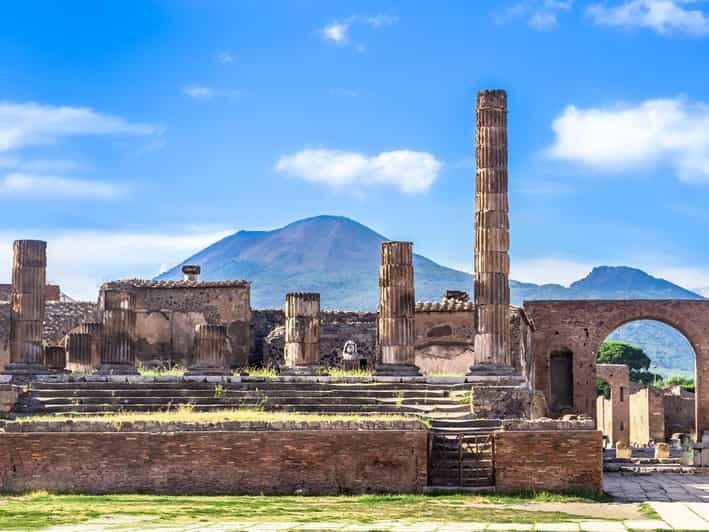
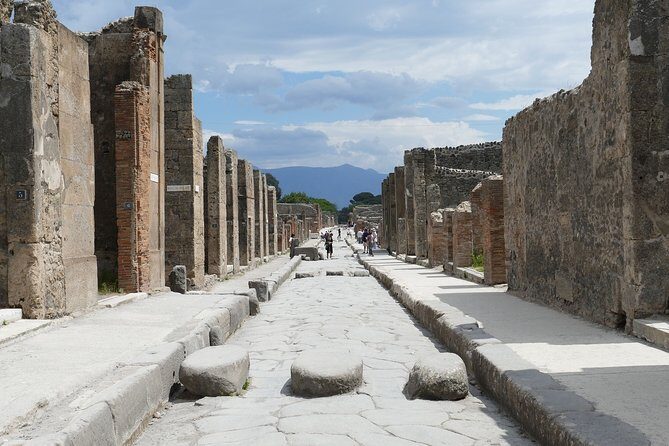
Herculaneum is one of those places where the ruins feel less like rubble and more like a city that got interrupted mid-day. That’s the whole point of choosing a guided route here. With a short tour, you don’t have to “figure it out” alone. An archaeologist guide gives you a route, but more importantly, a way to read the walls, floors, and preserved objects.
This specific tour is priced at $53 per person for a 2-hour experience that includes your admission and an archaeologist guide. If you’ve been doing day-trip math in Campania, that matters: site entry alone is listed as 16.00 euros for adults (and 2.00 euros for EU citizens aged 18–25). So you’re not paying the full ticket price on top of the tour fee—you’re getting the walk plus access built into the package.
The other value lever is the skip-the-line part. When you arrive at Herculaneum, the line situation can eat your energy. Cutting that wait helps you use your limited daylight better. And because the tour includes headsets, you’re not stuck playing phone-tag with your guide.
If you're still narrowing it down, here are other tours in Naples we've reviewed.
Meeting at the Herculaneum ticket office (and how not to lose your group)
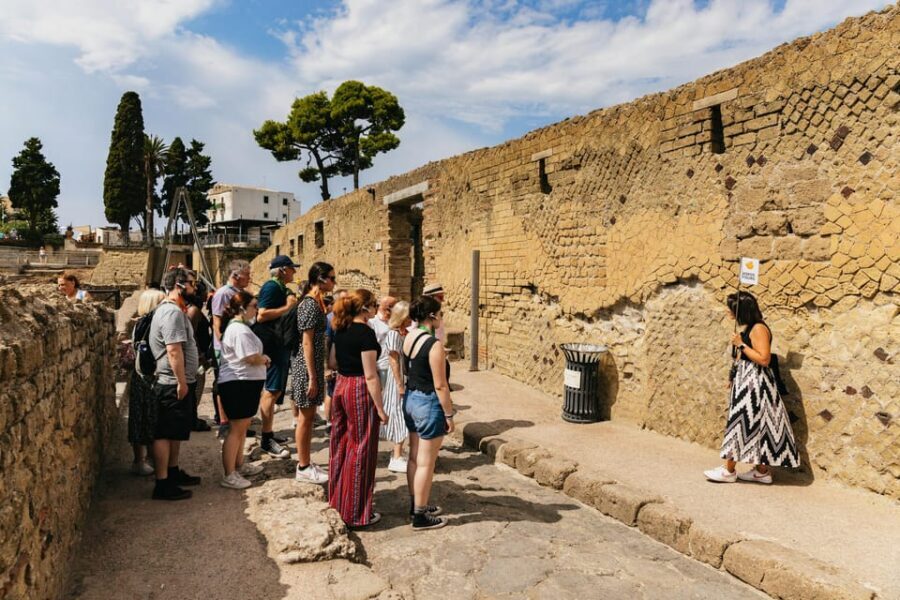
You meet at the ticket office of the Herculaneum Ruins. Your guide will be holding an Askos Tours sign.
One practical thing I take from the reviews: meeting point mix-ups can happen if an app pin isn’t exact. A few guests noted the booking point in the app can be off by a few hundred meters, while the guide is at the ticket booth area. So I’d rather you plan to orient on the actual ticket office and the guide’s sign, not the map dot.
Also, this is a walking-heavy experience. The tour route moves through exposed areas, and you’ll be outside most of the time, rain or shine. Closed-toe shoes are not optional if you want comfortable footing. You’ll also want sunscreen and a hat for strong sun.
The first stop you feel: starting at Via dei Papiri Ercolanesi
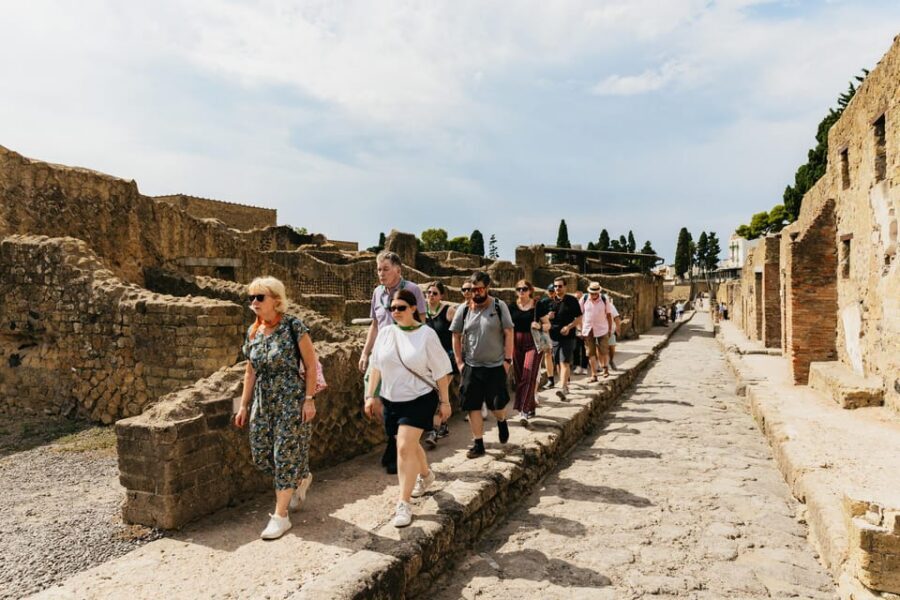
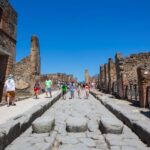
The day begins on Via dei Papiri Ercolanesi—a useful detail because it’s a street that helps you orient to the Ercolano/Herculaneum side of the site. You don’t start with a museum lecture in a chair. You start with the real context: this was a port town, and the geography and buildings mattered to how people lived.
From here, the tour’s main action happens inside the archaeological area, where the preserved city layout lets your guide turn “ruins” into specific neighborhoods and structures.
Archaeological Site of Herculaneum: the 2-hour route that actually makes sense
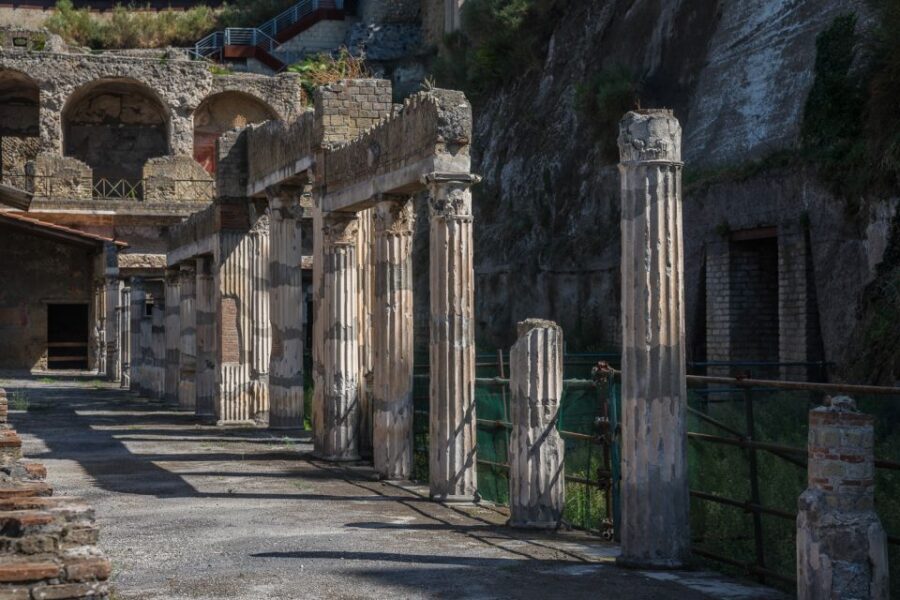
Your core time is at the Archaeological Site of Herculaneum for about two hours. This is where you’ll get the big picture story and the key buildings that anchors it.
What life looked like before Vesuvius
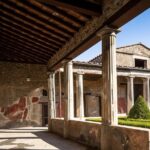
The best guides don’t just list sites. They build a mental map of daily life—especially the role of the waterfront and the fact that Herculaneum had wealthy residents, nobles, and merchants. Your guide explains the city’s status and economy, so when you see a house or public space, it’s not just decoration. You can place who used it and why.
A lot of guides also make comparisons to Pompeii. That comes through in the reviews: people singled out the way their guide highlighted both differences and similarities, which is exactly what helps you avoid confusing two very similar “erupted cities” in your head.



The eruption story, told with specifics
The tour doesn’t treat the disaster as a generic tragedy. You’ll learn how the eruption led to an outcome that devastated the city almost instantly—nearly 2,000 years ago—and how preservation happened in a way that makes Herculaneum feel unusually “legible.”
One of the most striking details you’ll hear about is the waterfront, where the remains of more than 300 people were found. The story here is brutal and real: people tried to escape by taking to the ocean.
What preservation means when you see the objects
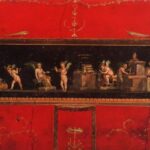
Herculaneum is famous because you don’t only see stone foundations. You also see evidence of materials that survived in remarkable ways: ceramics, paintings, and mosaics are highlighted, but you’ll also hear about more fragile survivals like carbonized wood. Even if you’re not staring at every artifact in a case, your guide will connect what you see to what must have been there before.
This is where the archaeologist angle really matters. It’s less about making the ruins sound dramatic and more about helping you understand why certain surfaces remain and what that implies.
Casa di Nettuno ed Anfitrite and Casa dei Cervi: reading wealthy homes
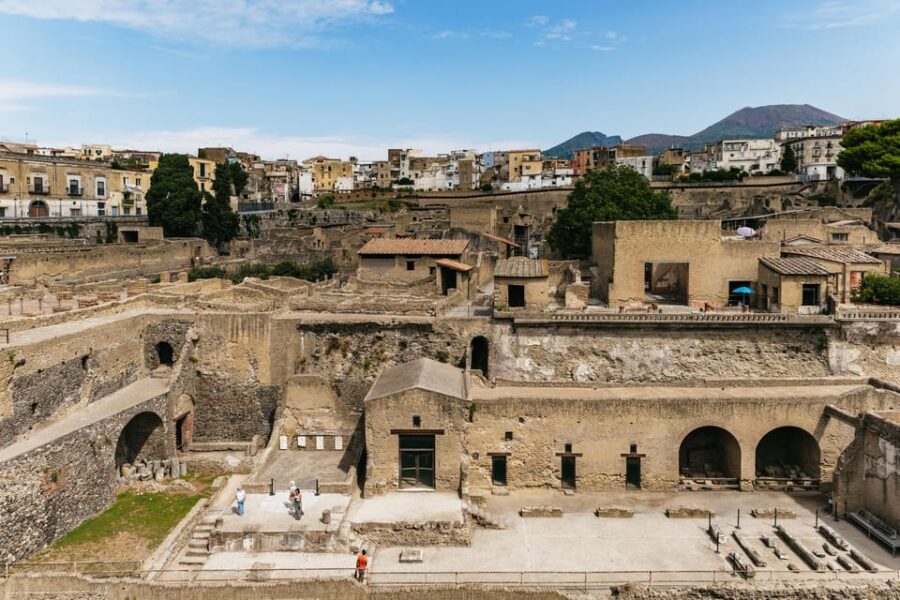
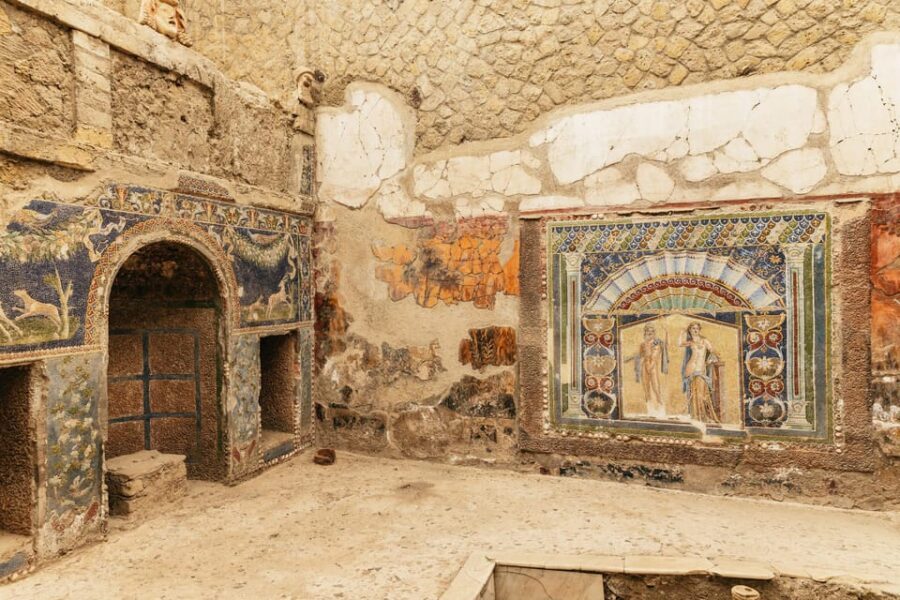
You’ll visit Casa dei Cervi and Casa di Nettuno ed Anfitrite (also referred to as the House of Neptune and Amphitrite). These homes are worth your attention because they show you what “luxury” meant in Roman domestic space.
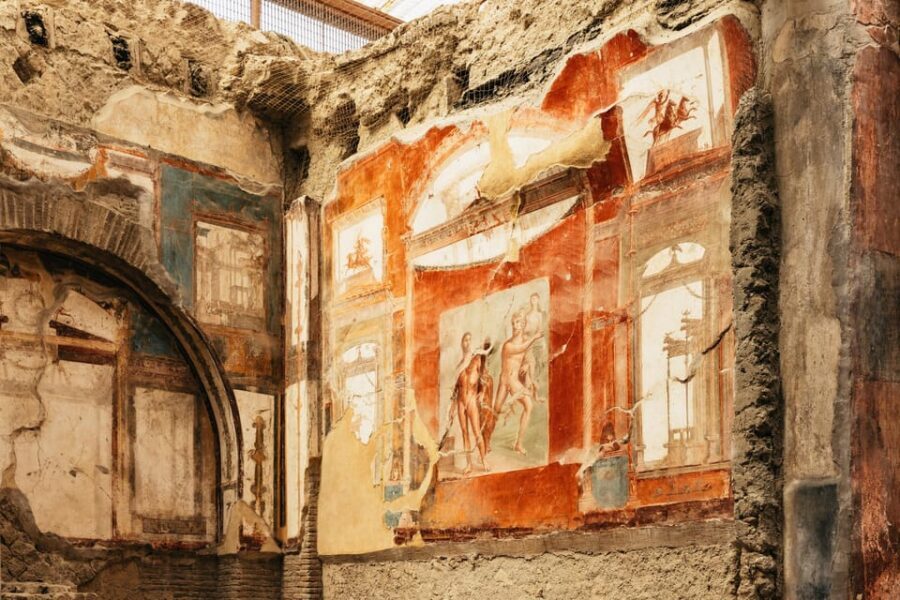
Neptune imagery is not random decoration—it signals identity, status, and myth that tied into how people wanted to see themselves. Your guide should connect the iconography to household life, and you’ll get a sense of how visual culture worked in private spaces.
Practical tip: if your group is moving fast (and it usually is), listen for what your guide says about the house layout and function. Don’t just look at the floor. The point is understanding how rooms connected and how the household likely used different areas.
House of Skeletons: the moment your guide’s pacing matters
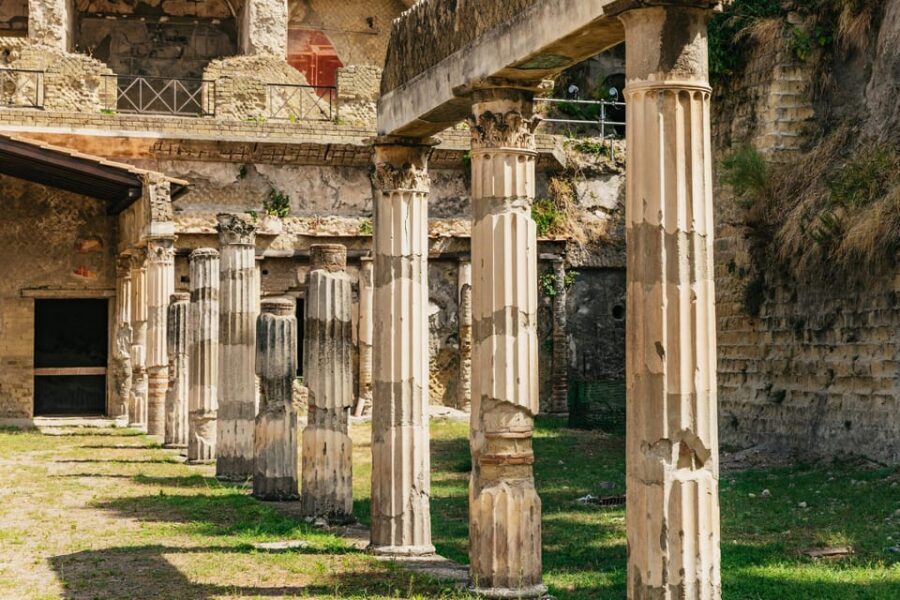
One of the stops is the House of Skeletons. This is one of those locations where the emotional weight can steal your focus. A strong guide keeps it grounded: what happened here, what the evidence suggests, and how the site’s timeline fits the larger story.
In the reviews, guests repeatedly praised guides for clarity and for keeping things moving without turning the tour into a grim lecture. If you’ve got a time-limited day, this is where you’ll feel the value most—because you’re seeing a heavy site with context instead of just shock.
Casa dell’Albergo and Casa del Salone Nero: homes (and spaces) with a purpose
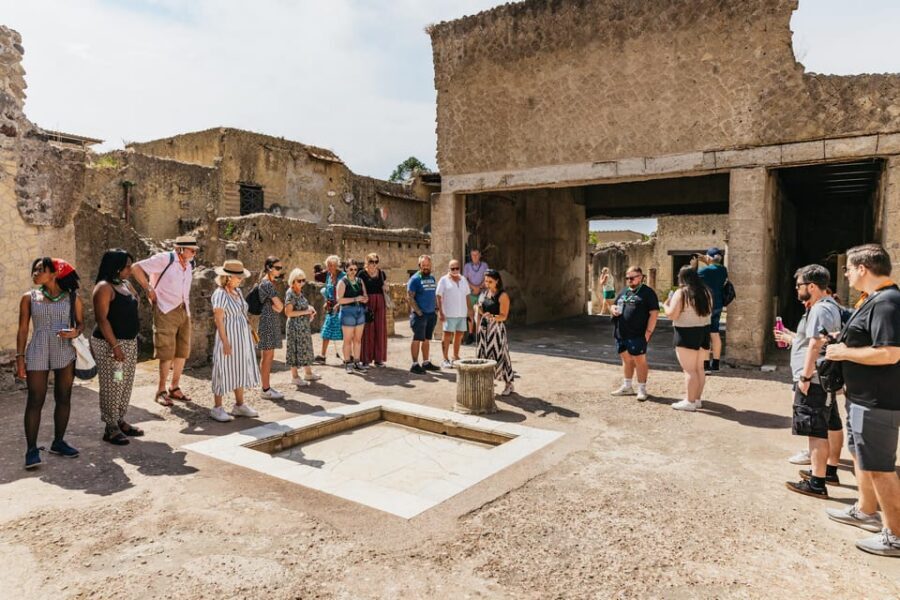
You also visit Casa dell’Albergo and Casa del Salone Nero. These are great because they widen your sense of what “a city” meant beyond big palaces.
The names hint at themes—lodging-like space and a dark hall—and your guide can explain how room function links to social life, business activity, and everyday routines. It’s the kind of stop that helps you stop thinking of Herculaneum as only “rich people’s houses” and start seeing it as a working community.
Sacellum of the Augustales (Temple of the Augustales): where public belief met civic pride
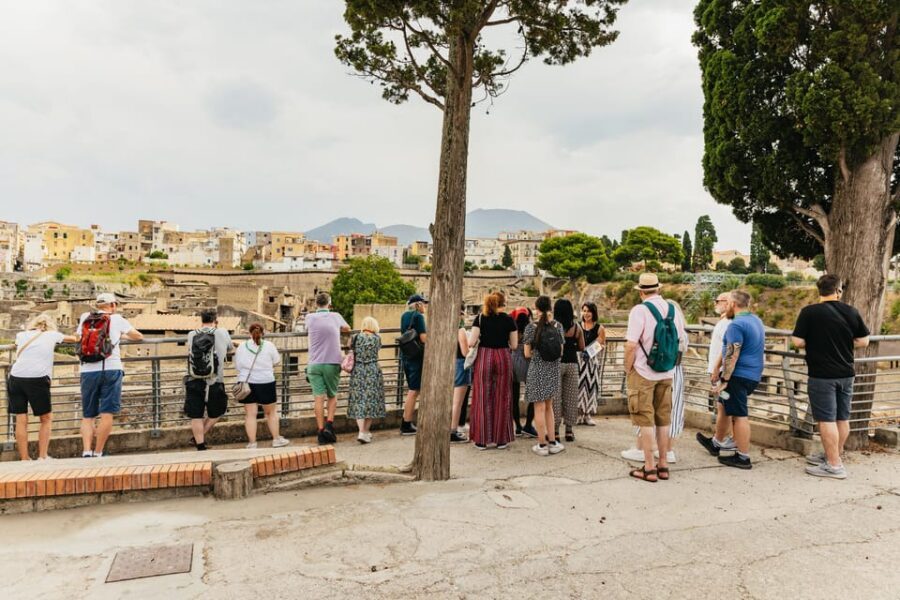
The tour includes the Sacellum of the Augustales, and you’ll also hear it connected to the Temple of the Augustales. This is a key stop because it shifts you from private domestic life to civic religion.
Guides often use this area to explain status in civic structures. The Augustales were connected to religious practice and local prestige, and your guide should help you understand what that meant socially. The best part here is that it ties back to the merchants and nobility story—religion and civic identity weren’t separate buckets.
Thermal baths, Forum, Gymnasium: where the city stayed social
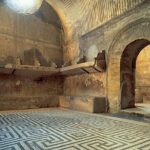
Herculaneum isn’t only about homes. The highlights mention the thermal baths, the Forum, and the Gymnasium. Even if you don’t spend a long time sitting with each location, you should feel the city’s pulse through these stops.
- Thermal baths tell you about daily routines, leisure, and public life.
- The Forum anchors the idea of civic space—talk, work, and status display.
- The Gymnasium connects to education, sport, and social culture.
One review mentioned a tunnel visit related to the gymnasium area and a swimming pool concept, which points to how some guides add extra context where the site layout allows.
The important “how it feels” detail: headsets and moving as one group
Headsets are included, and that’s a big deal at Herculaneum. The site isn’t tiny. Even though many people say it feels more manageable than Pompeii, you still cover ground quickly.
In the reviews, I saw two consistent headset realities:
- People praised guides for clear explanations through the audio gear.
- A few guests mentioned missing parts when the guide moved out of headset range, especially when the group had to keep moving.
That doesn’t mean the tour is bad. It just means you should stay close enough to hear well. If you’re near the front half of the group, you’ll get the most from the commentary.
What the guides do exceptionally well (names you’ll likely hear)
The archaeologist-led part isn’t vague here. Several names pop up in the reviews:
- Luciano (often called out for humor, enthusiasm, and showing comparisons to Pompeii)
- Yolanta, Giulia, Diego, and Roberta for clear explanation and strong Q&A
- Anna, Teresa, and Alfredo for making the city feel alive through story and structure
- Angelo, Giovanni, Bruno, Gerardo, and Cheryl’s guide details for a mix of calm guidance and site-specific insight
What I’d emphasize for you: the most praised guides don’t just know facts. They use tools—photos, overlays, and books—to help you mentally reconstruct what was destroyed and what it looked like before the eruption. If you’re the type who needs a visual frame to understand ruins, you’ll likely love this format.
Price and value: why this is a smarter spend than DIY in some cases
Let’s talk value without pretending it’s priceless.
You’re paying $53, and the package includes:
- a guided tour with an archaeologist guide
- admission fees
- headsets
If you were to buy entry on your own and build a self-guided route, you’d still be left with the hardest part: learning what you’re looking at quickly enough to keep interest. Herculaneum works best when you know what the buildings mean and why preservation is so dramatic.
Also, skip-the-line access is real value. At popular sites, time is the most expensive currency you spend.
That said, if you’re the independent type who prefers long, quiet wandering and you’re already fluent in Roman archaeology, you might decide to go on your own and spend more time at specific houses. This tour is optimized for people who want the highlights with context, not a slow, hours-long exploration.
Who this tour fits best (and who should rethink it)
This tour is a good match if you:
- want a structured route through key sites
- like explanations tied to daily life and civic structures
- appreciate comparison context (Herculaneum vs Pompeii)
- prefer a group experience where you can ask questions
It’s not suitable for:
- people with mobility impairments
- wheelchair users
- unaccompanied minors (children must be accompanied by an adult)
And it’s physically demanding in a way that surprised some first-timers: the site is described as vast and exposed, so you need comfortable walking gear and sun/rain planning.
Should you book this Herculaneum skip-the-line archaeologist tour?
I’d book it if you want the most meaningful version of a first visit: skip the waiting, get an archaeologist guide, and leave with a clear mental map of how people lived and why the eruption story matters.
I wouldn’t book it if your priority is total freedom to wander slowly for hours, or if your group needs a more accessible route. In that case, a different approach might work better.
If you’re on the fence, here’s the deciding question: do you want Herculaneum explained, or do you want it to speak for itself? For most first-timers, the guide-led format is the faster path to that wow feeling with real understanding attached.
FAQ
How long is the Herculaneum skip-the-line guided tour?
The tour lasts 2 hours.
Where do I meet for the tour?
Meet at the ticket office of the Herculaneum Ruins. Your guide will be holding an Askos Tours sign.
Does the tour include admission fees?
Yes. The tour includes admission fees to Herculaneum.
Are headsets included?
Yes. Headsets are included.
What languages are available for the live guide?
The live tour guide is available in English, Italian, German, Spanish, and French.
Is transportation included from Naples?
No. Transportation is not included.
What should I bring?
Bring a passport or ID card, comfortable shoes, and sunscreen. Closed-toe shoes are recommended.
Is this tour suitable for wheelchair users or people with mobility impairments?
No. It is not suitable for people with mobility impairments or wheelchair users.
Is the tour only available in good weather?
The tour takes place rain or shine. If needed, bring a raincoat.