REVIEW · NAPLES
Private Pompeii Tour With Guide and Transfer Included
Book on Viator →Operated by Naples bay tour · Bookable on Viator
Pompeii hits harder when you walk it with purpose. This private tour pairs round-trip transfer from Naples with a licensed guide for a focused route through the city frozen by Mount Vesuvius in 79 AD. You get stories, context, and enough time to ask questions as you move through famous—and surprisingly varied—spaces.
I especially like the pickup at your accommodation and the fact that Pompeii tickets are included, so you can spend less time on logistics and more time actually looking at the stones. A built-in drawback to keep in mind: it’s a fast, highlight-style outing, with short visits at each stop, so if you want long, slow roaming in every corner, you may feel a little rushed.
In This Review
- Key Highlights to Know Before You Go
- Pompeii in 4 Hours: What This Private Format Really Gives You
- Getting There and Back from Naples Bay: Transport That Saves the Day
- Food, Trade, and Supply Chains: Macellum and Granai del Foro
- Stop 1: Macellum (about 10 minutes)
- Stop 2: Granai del Foro (about 10 minutes)
- Public Life in Stone: Amphitheater, Forum, and Forum Baths
- Stop 3: Roman Amphitheater (about 10 minutes)
- Stop 4: Foro de Pompeya (about 20 minutes)
- Stop 5: Terme del Foro (about 10 minutes)
- Lupanar and Casa del Fauno: Art, Status, and How Elite Life Looked
- Stop 6: Lupanar (about 10 minutes)
- Stop 7: Casa del Fauno (about 10 minutes)
- How the Stops Add Up: A City You Can Actually Understand
- Communication and Service: What to Expect from Naples Bay Tour
- Price Check: Is $358.86 Per Person Worth It?
- Who This Pompeii Tour Fits Best (And Who Might Want Another Plan)
- Should You Book This Private Pompeii Tour with Transfer Included?
- FAQ
- How long is the private Pompeii tour?
- Is this tour private?
- Does the price include pickup and transportation?
- Where is the meeting point?
- Is the Pompeii admission ticket included?
- What stops are included in the guided route?
- What is not included?
- What cancellation options are available?
Key Highlights to Know Before You Go
- Private transfer plus accommodation pickup reduces stress before and after the ruins
- A licensed guide for about 2 hours means you’re not just sightseeing, you’re learning as you walk
- Tickets included with mobile ticket support helps keep things simple
- An itinerary that covers daily life and big public spaces in one route
- Stop quality is strong, from food-market evidence to elite homes
Pompeii in 4 Hours: What This Private Format Really Gives You

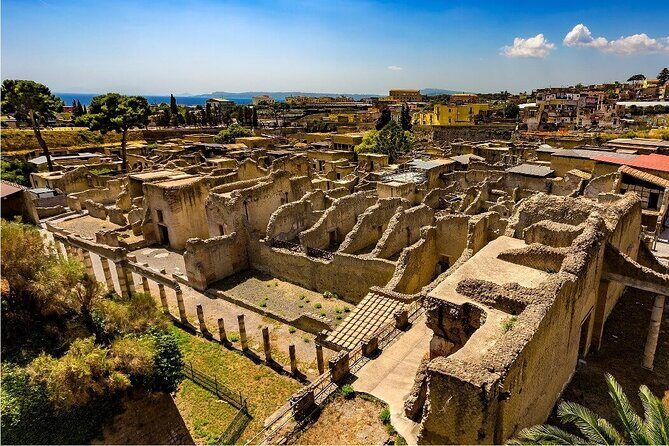
A four-hour Pompeii visit sounds short until you realize the pace is the point. This is built around a clear sequence of highlights, with a 2-hour guided walk inside Pompeii and private transport handling the “get there, get back” part. For most people, that combo is the sweet spot: you see the essentials without spending half your day wrestling schedules.
The private angle matters too. This is only for your group, so you can move at a pace that fits your energy level and questions. If you’re a couple who wants to talk things through, or a culture-minded family that needs more stops for breaks and photos, you’re not getting steamrolled by a large group timetable.
Now for the value question. At $358.86 per person, this isn’t a budget option. But the price bundles the heavy hitters: private transport, a private guide, and Pompeii tickets. You’re paying for time saved and friction removed. If you’re traveling with someone you can share that cost with (or your group size makes sense), the deal becomes much easier to justify.
If you're still narrowing it down, here are other tours in Naples we've reviewed.

Getting There and Back from Naples Bay: Transport That Saves the Day

The starting point is Molo Beverello, Naples (Molo Beverello, 80133 Napoli NA, Italy), and the tour ends back at the same meeting point. Pickup at your accommodation is included, which is a big deal in Naples, where moving around can eat up time fast.
Why I think the transfer is worth prioritizing: Pompeii is popular, and the day can feel chaotic if you’re trying to coordinate trains, buses, or finding meeting points once you’re already tired. With private transport, you avoid the mental tax of planning on the fly.
One more practical note: the tour is listed as near public transportation, and service animals are allowed. That’s helpful information for planning, even if you won’t use it.
Food, Trade, and Supply Chains: Macellum and Granai del Foro
This route starts where people lived and ate—because Roman life wasn’t built on temples alone.
Stop 1: Macellum (about 10 minutes)
You’ll visit the Macellum, Pompeii’s main food market. The guide explains how it was laid out and what business looked like day-to-day, including the fact that meat and fish were sold here. Even in a destroyed city, markets tell you a lot: what people valued, how goods moved, and how daily routines worked.
What I like about this start is that it gives you a baseline before you move into bigger public spaces. You’re primed to notice how markets connect to everything else—trade, jobs, and money.
Possible drawback: 10 minutes is quick. If you’re the type who wants to linger over details (inscriptions, stalls, layouts), you’ll want to balance curiosity with the rest of the route.
Stop 2: Granai del Foro (about 10 minutes)
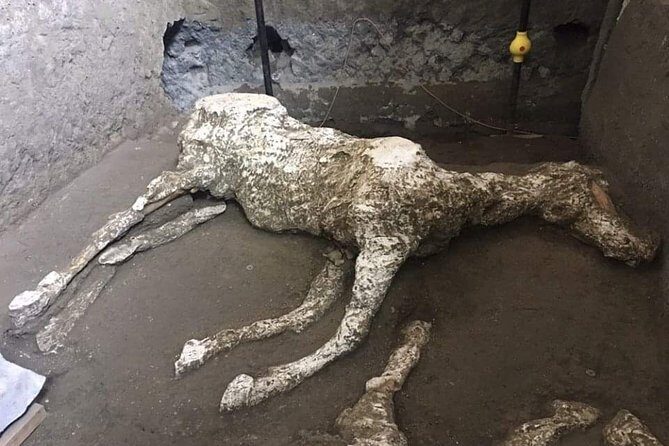
Next come the Granai del Foro, ancient warehouses that stored grain and supplies. The setting also plays a role in how you understand Pompeii now, because these spaces are used to display casts of victims of the eruption and other archaeological finds.
This stop can hit emotionally, even if you’re not trying to be moved. The value here is that it connects trade and storage to real human consequences. It also keeps the tour grounded: Pompeii wasn’t just pretty ruins—it was a working city that depended on supply.






Public Life in Stone: Amphitheater, Forum, and Forum Baths
After food and storage, you shift into the places built for people to gather, watch, and govern. These stops are where the city feels most “Roman.”
Stop 3: Roman Amphitheater (about 10 minutes)
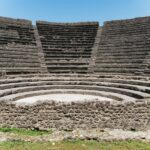
The Anfiteatro Romano is the oldest surviving Roman amphitheater, built in 70 BC. The guide explains gladiatorial games, public life, and entertainment in Pompeii.
This is one of the stops that tends to make the past feel physical. You can see where spectators would have sat, and the structure helps you picture how crowds worked. Even with the short time, the amphitheater gives you scale fast.
One consideration: since the visit is timed, you’ll get the main ideas rather than long self-guided exploration. If you’re going for photos, pick your angle quickly.
Stop 4: Foro de Pompeya (about 20 minutes)
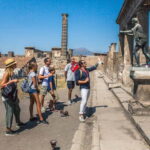
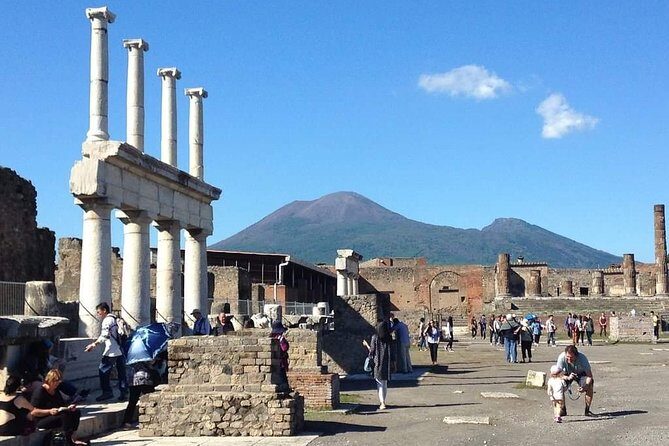
The Forum is the city’s central square, surrounded by temples, administrative buildings, and markets. This is the heart of civic life, so having 20 minutes here is important. It’s also where the guide’s storytelling can really connect dots—what power looked like, how decisions were made, and how ordinary business sat right next to official spaces.
For me, this is one of the best moments to slow down and ask questions. If you want to understand Pompeii as a city (not just a collection of monuments), the Forum is where that clicks.
Stop 5: Terme del Foro (about 10 minutes)
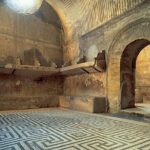
Then you’ll visit the Forum Baths, with changing rooms, heated pools, and decorative frescoes. This stop is a strong reminder that Roman daily life included comfort, routine, and public social time—not just politics and spectacle.
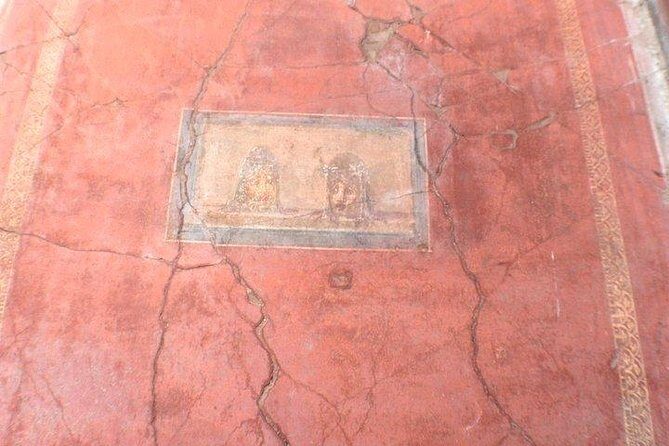
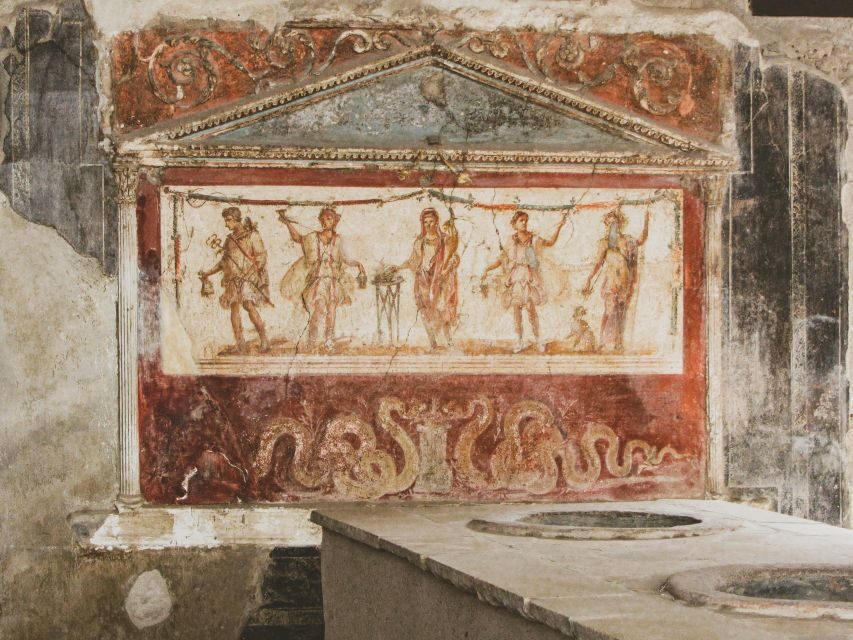
The frescoes are a detail worth paying attention to. Even when a site is damaged, decoration can still show you tastes and priorities. And because the baths are practical spaces, they help you picture how people passed the time.
Lupanar and Casa del Fauno: Art, Status, and How Elite Life Looked
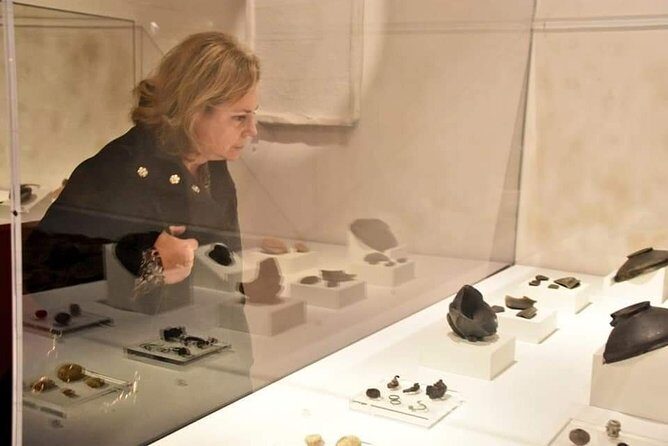
If the earlier stops explain how Pompeii functioned, these two ends show what some people aspired to—or paid for.
Stop 6: Lupanar (about 10 minutes)
The Lupanar is one of Pompeii’s best-preserved buildings and is famous for its vivid fresco cycle. The tour notes that the imagery may be connected to Dionysian rites.
This is the kind of stop that changes how people talk about Pompeii. Instead of focusing only on temples and public events, you see how art and storytelling show up in places tied to private or semi-private life. The name of the building alone can spark curiosity, and the frescoes give you something concrete to look at.
Quick reality check: because the visit is about 10 minutes, you’ll likely get the main takeaways rather than a full artistic walkthrough. If frescoes are your focus, this is still a smart stop to include, but plan to bring your questions.
Stop 7: Casa del Fauno (about 10 minutes)
Finally, you’ll reach the Casa del Fauno, known for the statue of the dancing faun and the Alexander Mosaic. This is a luxurious home, and the guide will help you read what it says about wealth and status in Pompeii.
This end stop works well because it gives you a contrast. You’ve seen markets and storage and public space. Now you see how elite Romans expressed power and taste inside private walls. The dancing faun and mosaic are exactly the kind of anchor details that make a site memorable long after your feet are tired.
How the Stops Add Up: A City You Can Actually Understand
One thing I like about this route is that it isn’t random. It follows a logic you can feel even while walking.
- You start with food and goods (Macellum) and how a city is supplied (Granai del Foro).
- You move into public spectacle and civic control (amphitheater and Forum).
- You add daily social life with the baths.
- Then you finish with art and lifestyle signals in the Lupanar and Casa del Fauno.
So even if you only spend minutes at each place, you leave with a clearer picture of how Pompeii worked—economy, society, entertainment, and class. That’s the real “value” of a guided highlight tour: you don’t just see ruins, you build a mental map.
Communication and Service: What to Expect from Naples Bay Tour
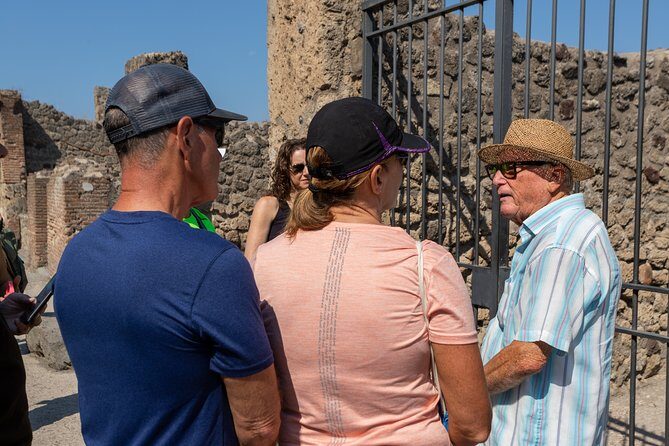
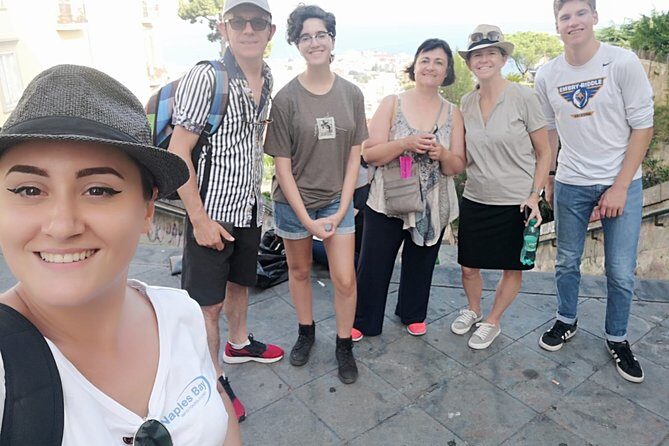
The most praised part of this experience is how smoothly things run. Clear communication shows up in the way the day is handled, including the way plans stay consistent from before the activity through the end of it. There’s also a track record of punctuality and friendly, helpful guiding based on past use cases, including a large school group where the guide was described as personable and well prepared.
You should still remember this is a timed route. The guide’s job here is to keep momentum while giving you enough context to make the stops land.
Price Check: Is $358.86 Per Person Worth It?
For many people, the sticker shock is real. But look at what’s included:
- Private transport and pickup from your accommodation
- Private guided tour
- Pompeii tickets
- A route that covers multiple key sites inside the UNESCO area
If you tried to recreate this on your own, you’d spend time figuring out transport and ticketing, and you’d lose the advantage of a guide turning the ruins into a story. The value is strongest for people who hate logistics, want a smoother day, and appreciate having a plan so they don’t miss the big anchors.
This also makes sense for couples and small families, especially if you’d rather pay for convenience than spend extra hours moving between sites.
Who This Pompeii Tour Fits Best (And Who Might Want Another Plan)
This tour is a great match if you:
- Want a private experience with a licensed guide
- Prefer a structured route through the top Pompeii highlights
- Value convenience with round-trip transfer and pickup
- Like asking questions and learning as you go, instead of walking with no context
It might be less ideal if you:
- Want an all-day Pompeii wandering experience where you can stop and linger for as long as you want
- Have a very specific focus and want to spend extended time on one area only
Should You Book This Private Pompeii Tour with Transfer Included?
I’d book it if you want a clean, efficient Pompeii day where the big places are handled for you. The combination of private transport, included tickets, and a guided route through markets, public spaces, baths, and elite homes is a smart way to experience Pompeii without turning your trip into a schedule puzzle.
I’d think twice if you know you need lots of free time for long self-guided exploration, because the stops are intentionally short to fit everything into about four hours.
If you want Pompeii that’s organized, story-led, and easy on your energy, this is a strong choice.
FAQ
How long is the private Pompeii tour?
The tour lasts about 4 hours.
Is this tour private?
Yes. It’s a private tour/activity, and only your group participates.
Does the price include pickup and transportation?
Yes. Private transport is included, and pickup at your accommodation is offered. The tour also starts and ends back at the meeting point.
Where is the meeting point?
The meeting point is Molo Beverello, Naples (Molo Beverello, 80133 Napoli NA, Italy).
Is the Pompeii admission ticket included?
Yes. Pompeii tickets are included, and the itinerary stops list admission ticket as included.
What stops are included in the guided route?
You’ll visit the Macellum, Granai del Foro, Roman Amphitheater, the Forum, Terme del Foro, the Lupanar, and Casa del Fauno.
What is not included?
Tips and food and drink are not included.
What cancellation options are available?
You can cancel for free up to 24 hours in advance for a full refund.