REVIEW · NAPLES
Skip the Line Herculaneum Ruins Ticket
Book on Viator →Operated by Askos Tours · Bookable on Viator
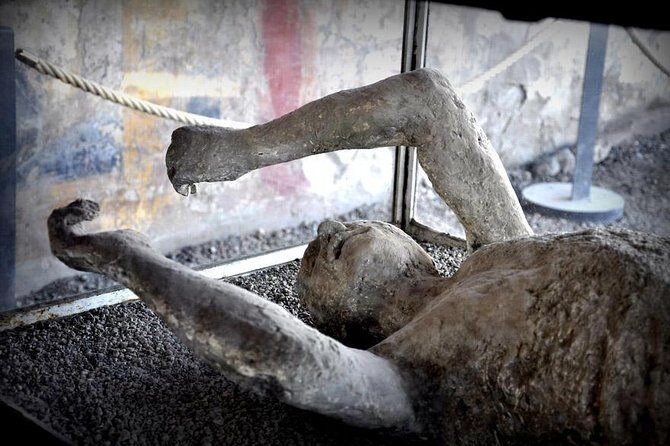
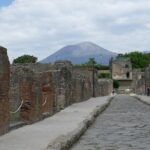
Herculaneum feels like a city on pause. This skip-the-line ticket gets you into the excavations and lets you wander through Roman streets preserved under volcanic mud and dust from the AD 79 eruption of Mt. Vesuvius. It’s a self-guided loop where you can linger over mosaics, houses, and the haunting human details that make this site hit harder than Pompeii.
I like how well Herculaneum shows everyday life. You get real house interiors and art details—from mosaic pavements to the famous House of the Skeleton—so the ruins don’t feel like random stone blocks. I also like the practical flexibility: you pick an entrance time when you book, then explore at your own pace instead of being rushed through in a crowd.
One consideration: skip-the-line can be less magical than you hope. Some visitors report that the “fast access” process may still involve queueing for paper ticket handling at the entrance, and e-ticket scanning can be temperamental—so bring your confirmation and, if you’re the cautious type, keep a backup payment plan in mind.
In This Review
- Key things to know before you go
- Herculaneum’s special pull: preserved Roman life from AD 79
- The ticket and time plan that actually work
- Price and value: is $25 worth it?
- Where your money goes: what’s included (and what isn’t)
- The self-guided route: what each stop is really about
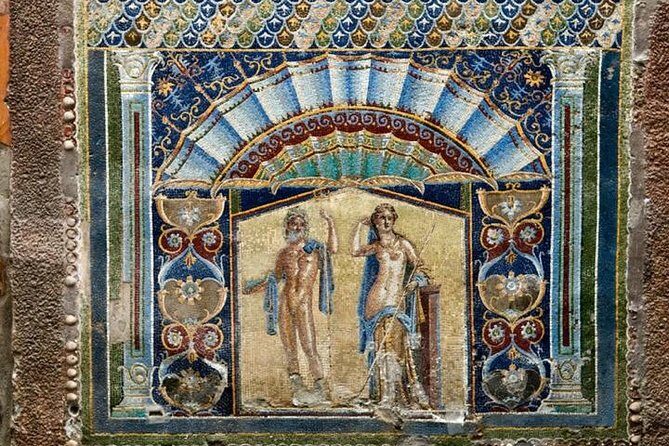
- House of Neptune and Amphitrite (mosaic stop)
- La Terrazza di M. Nonio Balbo (a viewpoint moment)
- Casa del Rilievo di Telefo (house with sculptural relief)
- Partem Domus lignea – Casa del Tramezzo di Legno (the wooden partition)
- House of the Deer (standout domestic interior)
- College of the Augustales (more than houses)
- House of the Black Salon / Salon of Nero
- House of the Skeleton (the emotional anchor)
- Casa Sannitica (a clear domestic stop)
- Central Thermae (baths, routine, and social life)
- House of the Fine Courtyard (choose this if you like open space)
- House of the Grand Portal / House with the Large Doorway
- Salone della Barca di Ercolano (the Boat Salon)
- Tips that make the difference at the gates
- What to expect on the ground: vibe, pacing, and photos
- Who this fits best (and who might want a different option)
- Should you book this skip-the-line ticket?
- FAQ
- Where is the meeting point for the Herculaneum ticket?
- What time does the experience start?
- How long should I plan for this visit?
- What’s included in the price?
- Do I need transportation from Naples included?
- Can I choose my entry time?
- Is there a maximum group size?
- Are service animals allowed?
- Do children need to be with an adult?
- Can I cancel for a full refund?
Key things to know before you go
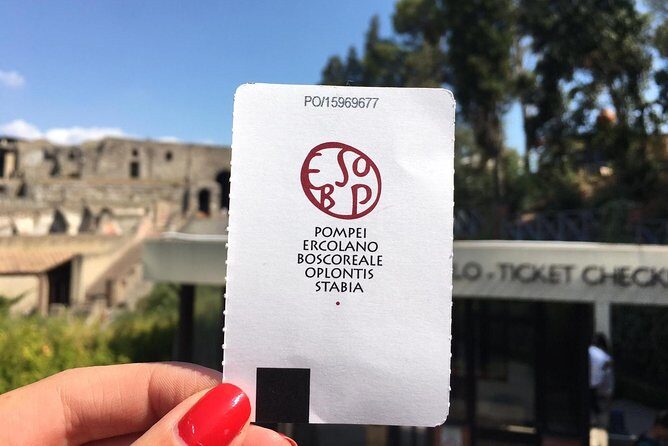
- Skip-the-line entry: Your ticket is meant to save time at the entrance gates.
- Self-guided pacing: Plan on your own rhythm across the houses, temples, and baths.
- Choose your arrival window: Entrance times are offered when you book, which helps you dodge peak flow.
- Hit the must-sees: Expect a guided-feeling experience even without a guide, thanks to standout stops like the House of the Skeleton.
- Small on-site scale: The group size cap is 15 travelers, which generally keeps the experience calmer.
- Weather matters: Like Pompeii, the site can get hot—build in water breaks even though food isn’t included.
Herculaneum’s special pull: preserved Roman life from AD 79
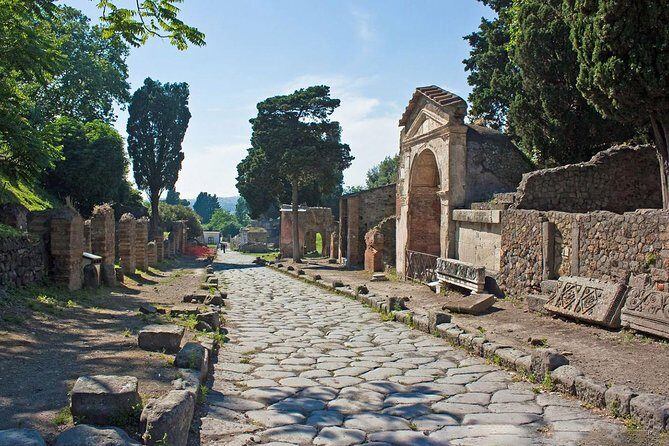
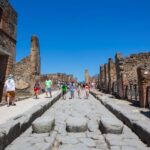
Herculaneum’s big difference is how it was saved. After Mt. Vesuvius erupted in AD 79, the city was buried by volcanic mud and dust. Over time, that cover acted like a protective layer, and today you can walk through spaces where details survived: room layouts, wall remnants, and decorative surfaces that help you picture daily routines instead of just imagining them.
What you’ll feel on the walk is contrast. Roman houses here aren’t just outlines; they’re places you can mentally furnish. Even if you’re not a hardcore history person, you’ll likely notice how the ruins keep the human scale—doorways, courtyards, and rooms where someone once sat, cooked, traded, worked, and bathed.
This is also why the experience can be more personal than the big-name alternative. Herculaneum tends to feel less overwhelming, so you can actually look at things instead of scanning for the next photo spot.
If you're still narrowing it down, here are other tours in Naples we've reviewed.
The ticket and time plan that actually work
The ticket is timed and self-directed, with an approximate duration of 4 hours 30 minutes. That’s long enough to do the full arc at a comfortable pace, but not so long that you’ll feel stuck. If you’re a fast walker, you can probably cover more quickly; if you slow down for mosaics and courtyard views, you’ll use the time well.
You start and end in the same spot: Excavations Corso Resina, 187, 80056 Ercolano (Ercolano), Italy. The tour ends back at the meeting point, which matters because you don’t need to figure out how to get to the next segment or where the group disappears to.
You also have an entrance-time choice when you book. That is one of the best value levers for this kind of ticket. If you arrive when the flow is lower, the skip-the-line component matters less to your schedule, and you might even wonder why you paid extra. If you arrive when the gates are busy, you’ll likely feel the benefit more clearly.
Price and value: is $25 worth it?
At $25, this is one of the cheaper ways to access Herculaneum without adding a full tour package. Whether it feels like a bargain depends on the day and your tolerance for waiting.
Here’s the reality check: multiple visitors have said the normal line may be short during slower periods, so in that case, the skip-the-line can feel redundant. On the other hand, the whole point is reducing uncertainty. You’re buying less waiting, steadier entry, and less stress when you’re traveling with limited time in the Naples area.
So for best value, use this ticket like a scheduling tool:
- If you’re visiting during a busier season or at a popular time, the $25 can feel like insurance.
- If you’re flexible and the day is calm, you might still enjoy the convenience but should expect that the savings might be smaller.
Where your money goes: what’s included (and what isn’t)
Included: skip-the-line tickets. That’s the core value.
Not included: guidance, plus transportation to and from the site and food/drinks. This matters because you’re responsible for your own context. Without an included guide, you’ll either need to bring a good site map (or guidebook) or plan to use any on-site interpretation you can find.
In practice, that often turns into a simple strategy:
1) Arrive prepared to choose a route.
2) Spend more time at the stops that match your interests (mosaics, baths, big courtyards, or dramatic human scenes).
3) Don’t feel bad about skipping a few smaller rooms if you’re running short.
The self-guided route: what each stop is really about
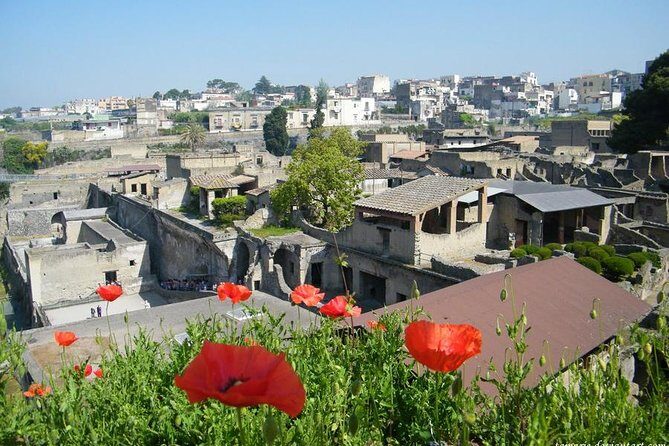
You’ll follow a set sequence of highlights. The stops are spaced so you can see a range of building types—homes, public spaces, and baths—without needing constant navigation.
Below is what each major stop means once you’re standing there, plus what to watch for.



House of Neptune and Amphitrite (mosaic stop)
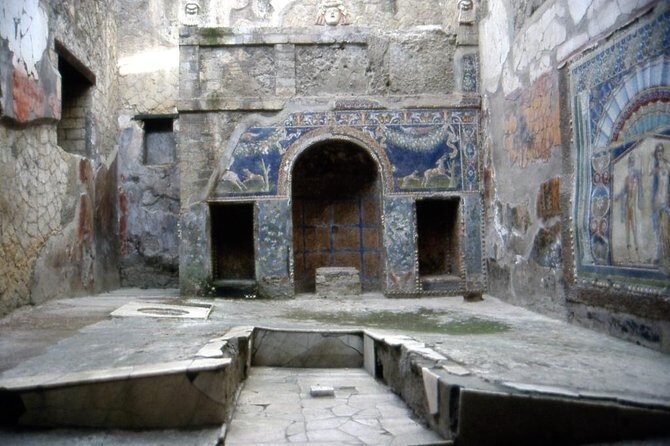
This is your early hit of Roman decorative art. Look for the mosaic associated with Neptune and Amphitrite. The main payoff here is recognizing how mosaics weren’t just for show—they also turned floors into storytelling surfaces.
If you like architecture, notice how the mosaic setting connects to the room’s function: it makes the interior feel intentional, not improvised.
Potential drawback: If you’re rushing your visit, this is one of the easiest stops to under-appreciate. Slow down for a minute and look across the design rather than just snapping one angle.
La Terrazza di M. Nonio Balbo (a viewpoint moment)
This terrace stop gives you a change of pace. Terraces like this help you orient yourself, and you can also catch how the site’s open-air spaces relate to the buried city layout.
Tip: Take a minute here to re-center—check your route, decide what’s next, and plan your remaining time.
Casa del Rilievo di Telefo (house with sculptural relief)
This stop centers on a House of the Relief of Telephus. The big idea is that Roman domestic spaces often mixed different art forms—mosaics, decorative elements, and sculptural reliefs—so the home could communicate status and taste.
Worth it if you enjoy narrative details in art. Relief scenes tend to reward slower looking.
Partem Domus lignea – Casa del Tramezzo di Legno (the wooden partition)
This is a fascinating “how did they build this?” moment. The wooden partition reference is a reminder that not everything here is stone-and-mortar. You’re seeing evidence of how rooms were divided and used.
Why it matters: it turns ruins into something practical. Instead of only thinking about decoration, you start imagining daily movement through spaces.
House of the Deer (standout domestic interior)
The House of the Deer is one of the places many people remember. It’s tied to a well-known theme in Herculaneum’s interiors, and it gives you that sense of “this was special,” even if you’re not sure why at first glance.
Practical move: spend a bit more time here than you think you need. It’s the sort of stop that benefits from a second look once you’ve adjusted to the scale of the site.
College of the Augustales (more than houses)
This stop shifts from private homes to a more communal or institutional setting: the College of the Augustales. It helps balance your understanding of Herculaneum. You’re not only seeing where people slept and cooked—you’re also seeing spaces connected to public roles and civic life.
If you’re short on time: give it a focused look. You’ll likely get more from this stop if you pause and notice how it differs from domestic buildings.
House of the Black Salon / Salon of Nero
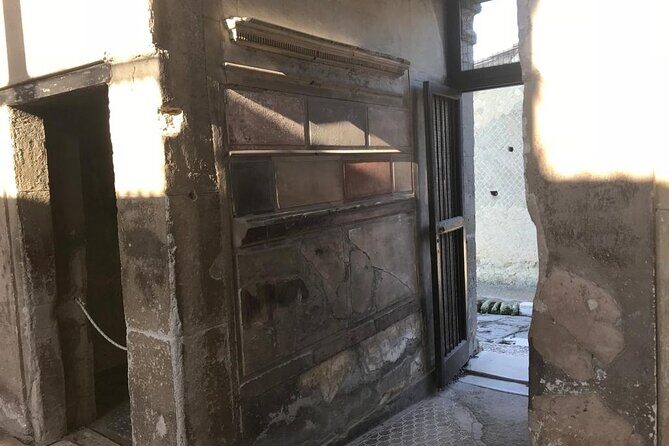
This is a highlight for people who like atmosphere. The Salon of Nero reference signals a room known for dramatic effect, and it’s a good place to think about how interiors could create mood.
Watch for: any surviving wall treatment or layout clues. Even partial remnants can help you understand how light and decoration were meant to work together.
House of the Skeleton (the emotional anchor)
This is the famous stop: the House of the Skeleton. It’s hard to treat this area as just another photo stop. The value here is the way Herculaneum can make the eruption feel immediate, not abstract.
How to do it respectfully: slow your pace and give the scene a few moments. Then take a step back and look at surrounding rooms and entrances so the building reads as a home, not only as a tragedy.
Casa Sannitica (a clear domestic stop)
The Samnite House is a straightforward domestic highlight. It helps you keep building your mental map of how homes were organized—how rooms relate to one another and how space was used.
Central Thermae (baths, routine, and social life)
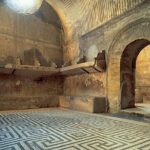
The Central Thermae bring you into Roman bath culture. Baths matter because they weren’t only about hygiene—they were social. Even in ruins, you can often pick up how bath layouts push people through stages.
Tip: if you’re traveling in warmer months, this stop is also a good reminder to pace yourself. Baths can be a natural break, but the site overall can be hot.
House of the Fine Courtyard (choose this if you like open space)
The House of the Fine Courtyard gives you an open-air feeling. Courtyards are a big deal in Roman homes because they shape light, airflow, and daily movement.
Why it’s worth your time: courtyards help you see the logic of a house. They make it easier to connect the decorative elements back to practical life.
House of the Grand Portal / House with the Large Doorway
This stop includes the House of Galba and the Large Doorway. Big entrances are a clue to status and identity. When you see a grand portal, you’re basically looking at what the homeowner wanted the outside world to notice.
Practical advice: if you care about architecture, spend extra time on thresholds and entry geometry. It’s one of the ways ruins stay readable.
Salone della Barca di Ercolano (the Boat Salon)
The final highlight is the Salon of the Boat. This is a memorable decorative theme and a strong wrap-up because it pulls you back into art and symbolism.
It’s a good place to end your mental tour. By now, you’ve seen enough domestic and public buildings that you’ll feel the site as a whole, not a list of rooms.
Tips that make the difference at the gates
Here’s what I’d do to make your entry and first 30 minutes smooth:
- Arrive with your confirmation ready. The process relies on your emailed voucher and the site entry ticket that you receive after booking. Don’t wait until you’re standing in front of the scanners.
- Bring a backup version. Some people have reported issues with e-ticket barcode reading at the gate, and they ended up needing paper ticket handling. If you can, keep a printed copy too.
- Have a payment backup. One issue reported was that staff had trouble processing voucher info, and visitors suggested paying another way on the spot. I can’t promise how your specific entrance will work, but it’s smart to plan like it might be messy.
- Use your entrance time. Even if you want to arrive earlier, your selected slot is designed to manage flow. Follow the start time guidance where possible.
What to expect on the ground: vibe, pacing, and photos
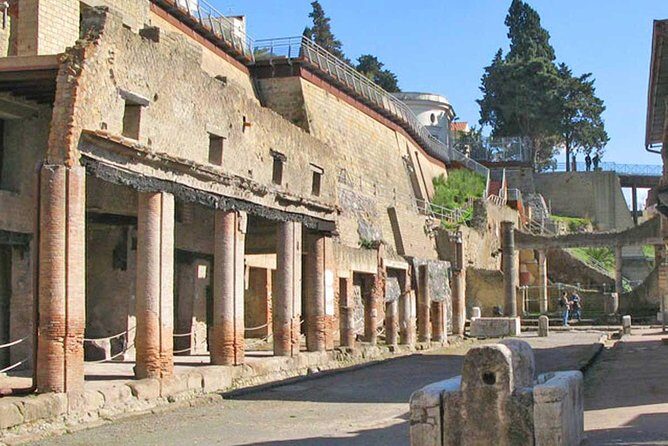
Because this is self-guided, your experience depends heavily on how you pace. The route is built around a sequence of highlights, but you can still slow down or skip stops.
A good rhythm is:
- Spend longer at art and atmosphere stops (mosaics, salons, the skeleton house).
- Move faster through more functional rooms if you’re short on time.
- Take breaks when you feel yourself rushing—this is a site that rewards looking, not just passing through.
Photo-wise, you’ll likely have moments where light is awkward. Courtyards and open spaces tend to be easier for pictures than interior rooms with partial walls. If you’re photographing mosaics, get your angle right and then step back for a second photo that shows the surrounding room context.
Also, you’ll be in a preserved archaeological environment. Avoid treating it like a park. Look with care, keep your movement steady, and plan your stops so you’re not blocking others.
Who this fits best (and who might want a different option)
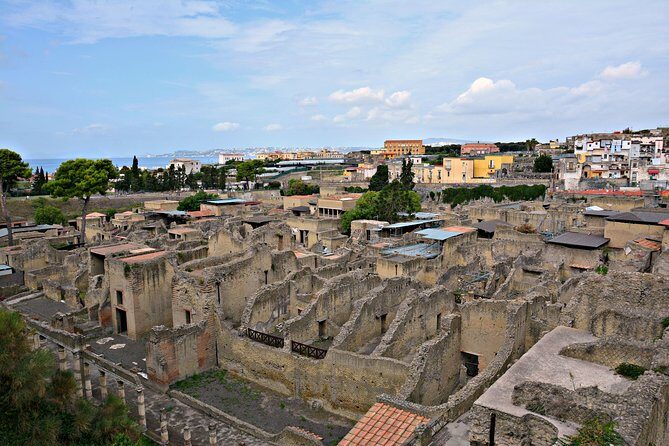
This ticket is a great fit if you:
- Want four to five hours at your own pace.
- Enjoy mosaics, domestic interiors, and the emotional impact of the AD 79 story.
- Like to travel without a guide’s schedule.
- Appreciate quieter, more intimate archaeological sites.
It may be less ideal if you:
- Want a full narrative explanation and don’t plan to use any maps or on-site interpretation.
- Need a guided experience for context and accessibility.
- Expect skip-the-line to be a separate, frictionless desk every time. It might not be.
If you’re a first-timer to Roman ruins and you love understanding details, consider pairing your visit with a guidebook or map so you can build meaning quickly.
Should you book this skip-the-line ticket?
Yes, book it if you want a flexible, low-stress way to experience Herculaneum’s standout rooms without waiting at the gate. The price is reasonable for what you’re buying—entry with time savings—and the 4h 30m window gives you time to actually look.
Skip booking only if you’re visiting at a time you strongly expect to be calm and you’re truly cost-sensitive. During low-flow days, you may not gain much from skip-the-line. In that case, your money might be better spent on a guidebook, audio option, or even a longer stay.
Either way, do yourself a favor: show up prepared for the entrance process, keep your confirmation accessible, and give the House of the Skeleton and the mosaic-focused stops the time they deserve. That’s where Herculaneum stops feeling like ruins and starts feeling like a moment frozen in time.
FAQ
Where is the meeting point for the Herculaneum ticket?
The meeting point is at Excations Corso Resina, 187, 80056 Ercolano NA, Italy.
What time does the experience start?
The start time listed is 10:00 am.
How long should I plan for this visit?
It runs about 4 hours 30 minutes (approx.).
What’s included in the price?
You get skip-the-line tickets. Guidance, transportation, and food or drinks are not included.
Do I need transportation from Naples included?
No. Transportation to and from the attraction is not included, so you’ll need to plan your own trip to Ercolano.
Can I choose my entry time?
Yes. You can choose from a selection of entrance times when you book.
Is there a maximum group size?
Yes. This activity has a maximum of 15 travelers.
Are service animals allowed?
Yes, service animals are allowed.
Do children need to be with an adult?
Yes. Children must be accompanied by an adult.
Can I cancel for a full refund?
You can cancel for a full refund if you cancel at least 24 hours in advance of the experience start time.