REVIEW · NAPLES
Herculaneum Private Tour with an Archaeologist
Book on Viator →Operated by Askos Tours · Bookable on Viator
Herculaneum feels like a Roman city caught in time. This private tour in Naples pairs a personal guide with a tight 2-hour route through some of the site’s best-preserved streets, homes, and public spaces. It’s especially interesting if you like seeing everyday Roman life up close, not just big monuments.
What I like most is the private pacing. You get your own archaeologist-led interpretation, with enough time at each stop to ask questions and connect the dots between houses, courtyards, and the bath area. It also works well for families because the stops are short and structured.
One thing to consider: the tour price does not include the Herculaneum entrance ticket (16 euros adult), and a few past bookings raised questions about whether every guide was truly a practicing archaeologist when advertised that way. It still can be worth it, but you’ll want to sanity-check the credential label when you book.
In This Review
- Key things to know before you go
- Why Herculaneum + a private archaeologist tour works
- Price and what you actually get for $178.38
- Meeting point: the red building and how not to waste time
- What the 2-hour route feels like (and how to prep)
- Stop-by-stop: your Herculaneum highlights explained
- College of the Augustales
- House of the Skeleton
- Casa del Rilievo di Telefo
- Partem Domus lignea – Casa del Tramezzo di Legno (wooden partition)
- La Terrazza di M. Nonio Balbo (terrace)
- House of the Black Salon (Salon of Nero)
- Casa Sannitica (Samnitic House)
- Central Thermae (public baths)
- Casa del Bel Cortile (fine courtyard house)
- House of the Grand Portal
- House of the Deer
- The guide experience: what to look for in an archaeologist tour
- When this tour is the right fit (and when it isn’t)
- Quick practical tips before you book
- Should you book this Herculaneum Private Tour with an Archaeologist?
- FAQ
- Where is the meeting point for the Herculaneum private tour?
- How long is the tour?
- Is the tour private?
- What language is the tour offered in?
- What is included in the price?
- What is not included?
- How much are the Herculaneum entrance tickets?
- Is there luggage storage at the meeting point?
- Are service animals allowed?
- Can I cancel for free?
Key things to know before you go
- Private guide, not a crowd shuffle: you’re touring with only your group.
- 2 hours, many stops: expect quick, focused visits at each highlight.
- Family-friendly structure: short segments help keep kids (and adults) from melting down.
- Entrance ticket is extra: plan for the main Herculaneum entry cost on top of the tour.
- Guides matter: several named guides like Mena, Michele, and Luciano got standout praise.
Why Herculaneum + a private archaeologist tour works
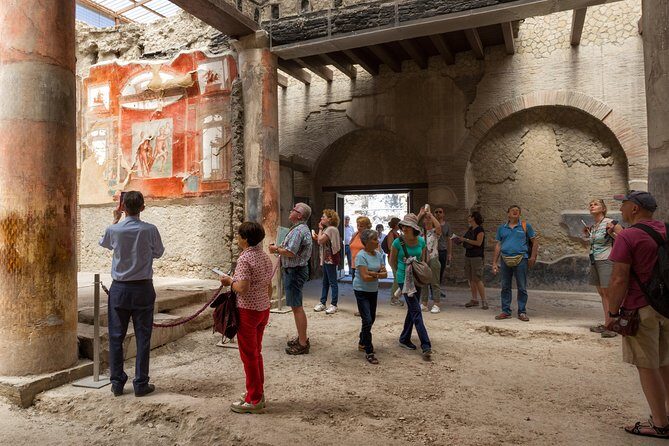
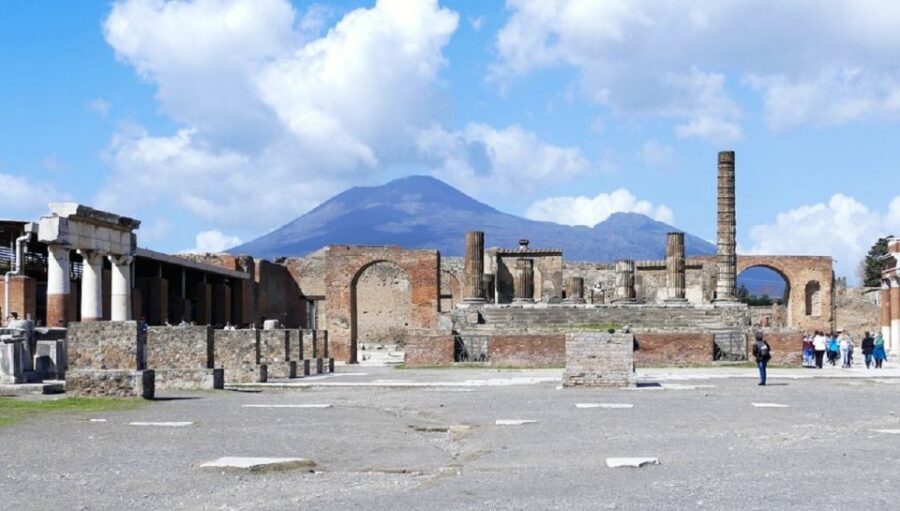
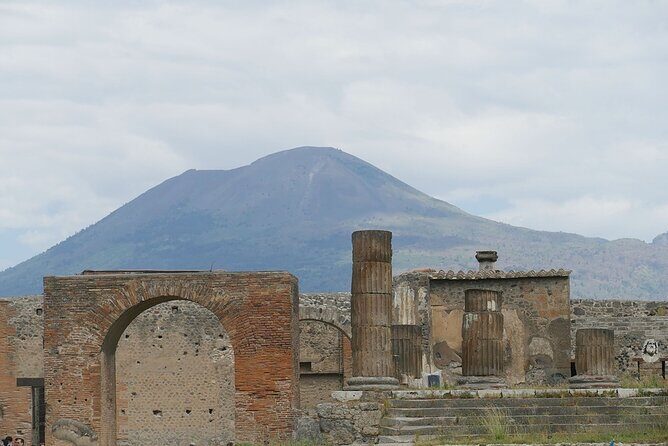
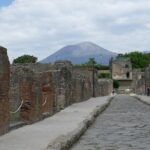
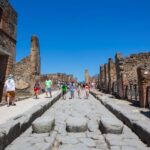
Herculaneum is the kind of place where you stop looking at ruins and start noticing how people actually lived. The city was buried by the eruption of Mount Vesuvius, and what survived gives you an unusually clear sense of everyday life in a seaside Roman resort town from the first century. Walk the streets and you can almost sense the rhythm: home, courtyard, terrace, bath, then out to the next block.
A private tour with an archaeologist guide is useful here because the site can look similar if you’re doing it on your own. You’ll see houses and public spaces, sure, but the guide helps you connect features to human habits—where people gathered, how rooms worked, and why certain spaces mattered. That’s what separates a quick photo stop from a real understanding of the place.
Also, this tour is designed to be practical. It runs at multiple times during the day, it’s offered in English, and it’s structured as a series of brief stops so you don’t end up exhausted too early. It’s a smart pick when you want depth but you’re not trying to spend half a day crawling through one museum room after another.
If you're still narrowing it down, here are other tours in Naples we've reviewed.
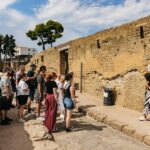
Price and what you actually get for $178.38
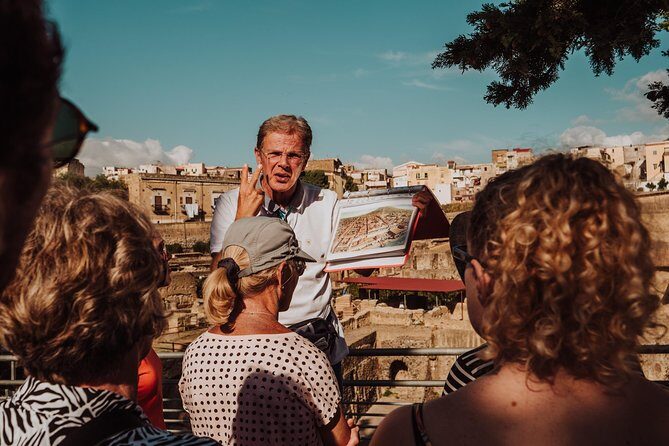
At $178.38 per person for a private 2-hour experience, you’re paying mostly for interpretation and time with a specialist, not for museum-style “stuff.” The core included items are guidance and assistance by an archaeologist guide, plus the fact that it’s a private tour.
Two costs to watch:
- The Herculaneum entrance ticket is not included.
- Transportation and food/drinks are not included.
The entrance ticket matters because it affects how you budget day-of. The ruins entry tickets are listed as 16 euros for adults, and 2 euros for EU citizens age 18–25. So your true total cost is the tour price plus that entry fee.
Is it good value? For me, the value case depends on two things:
- You want someone to explain what you’re seeing as you walk, rather than reading signs at your own pace.
- You’re okay with a tight route. This tour covers a lot of named stops in about 2 hours, which means you won’t linger long enough to fully analyze everything without the guide steering you.
If you’re the type who enjoys background stories and wants your questions answered in real time, private guidance tends to feel worth it. If you’re traveling with limited interest in archaeology (or you’d rather do a self-guided stroll with a guidebook), the extra cost may not feel justified.
Meeting point: the red building and how not to waste time
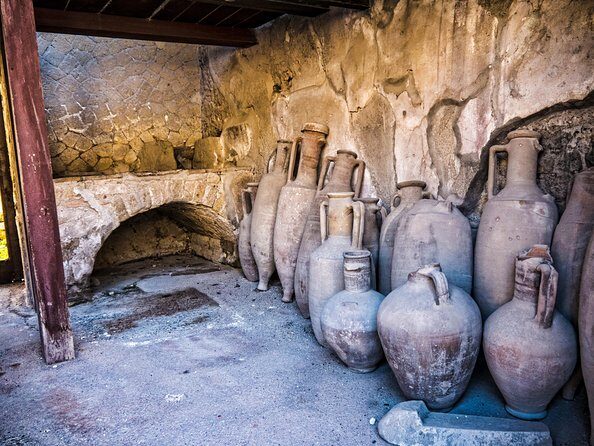
The tour starts outside the ticket office at the archaeological site, in a red building. The meeting point is Via dei Papiri Ercolanesi, 80056 Ercolano NA, Italy, and the tour ends back at the meeting point.
This matters because Herculaneum is a walk-on, walk-off kind of visit. If you miss the meeting spot, you can lose precious minutes—especially since the tour is only about 2 hours long.
Good practical detail: there’s a free luggage store at the meeting point. If you’ve got bags, shopping, or bulky day gear, this is the move. You travel lighter during the site walk and you don’t have to worry as much about where to stash things.
What the 2-hour route feels like (and how to prep)
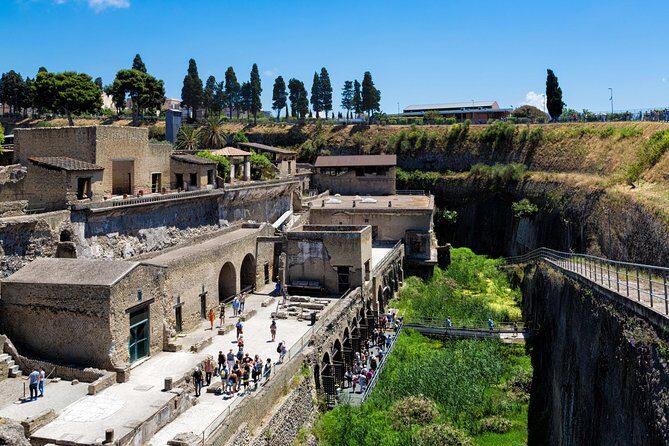
The itinerary is built around about 10 minutes per stop, and there are many stops listed. Translation: this is not a slow, meandering tour. It’s a focused circuit through key areas, with the archaeologist guiding you from one named space to the next.
That format has advantages:
- You’ll see more highlights in less time.
- You get a “big picture” sense of the city because the guide can compare spaces and explain patterns.
- It keeps energy up, which is often great for families.
What to prep:
- Wear comfortable walking shoes. Even if you’re moving quickly, you’re still covering a lot of uneven, ancient ground.
- Bring water if you’ll be there during warm hours, since food and drinks aren’t included.
- If you want better photos, stand still for 10 seconds when the guide is speaking. The guide’s “look here” moments are often the angles you’d miss on your own.
Stop-by-stop: your Herculaneum highlights explained
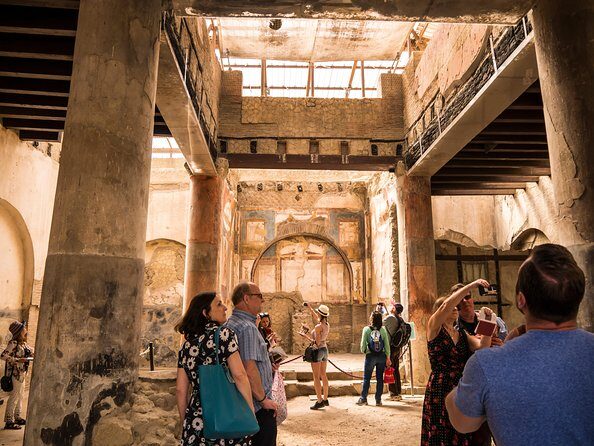
Here’s what you can expect at each stop, and why it’s worth the time—even if each one is brief.



College of the Augustales
You’ll start with the College of the Augustales. This stop works as a foundation because it helps set context for how civic and religious groups fit into Roman daily life. It’s a useful opener: the guide can frame what kinds of institutions mattered to people in the community, before you move into more domestic spaces.
Since you’re starting near the ticket office area, this first stop is also about getting your bearings and learning how the tour will read the site.
House of the Skeleton
Next is the House of the Skeleton. This is the kind of name that instantly grabs attention, but the value here is what the guide helps you understand about domestic space and how a home could communicate identity.
A private guide can point out what you should notice in a preserved interior setting: layout cues, the relationship between rooms, and how daily routines likely played out in places like this.
Casa del Rilievo di Telefo
Then you’ll visit the House of the Relief of Telephus. Reliefs and decorative themes are often what people remember from Roman sites, but the guide’s job is to explain why certain themes appear and what they might have signaled about the household.
Even in 10 minutes, you can get a better read on the difference between a building as a structure and a building as a statement.
Partem Domus lignea – Casa del Tramezzo di Legno (wooden partition)
This stop is the House of the Wooden Partition. The key here is the theme of how space worked inside a home. Divisions, thresholds, and transitions are often more meaningful than people expect, and this is the kind of detail that a specialist can connect to how people used rooms.
If you like architectural explanations, this stop is a good one because the name itself points to an internal feature worth learning about.
La Terrazza di M. Nonio Balbo (terrace)
Next is the Terrace of M. Nonio Balbo. Terraces are where Roman homes blur the line between indoors and outdoors. Even if you’re not an architecture nerd, you’ll likely find this stop helpful for understanding how views, fresh air, and “in-between” space fit daily life.
It’s also a natural psychological reset during a busy route: a terrace stop can feel lighter after interior rooms.
House of the Black Salon (Salon of Nero)
Then comes the House of the Black Salon. This stop is memorable because it suggests a specific interior mood and a certain kind of room use. A guide is what turns that into meaning—what kind of space this was likely meant for, and how design choices reinforced social life.
In a quick tour format, interior rooms are where you either get lost or you learn to look. This is where your archaeologist guide earns their fee.
Casa Sannitica (Samnitic House)
You’ll visit the Samnitic House. The big reason to care in a short time is that it can help you understand how styles and influences show up in a single city. A guide can also use the stop to compare how different parts of Herculaneum reflect change over time.
If you enjoy context—how one home relates to another—this stop tends to land well.
Central Thermae (public baths)
Central Thermae is next, and this is one of the most valuable stops on the itinerary. Public baths are where you see social habits in action, and they’re also a major piece of what makes Herculaneum feel like a real town rather than a set of isolated houses.
Even if you’re not a bath-complex fan, think of this as your “community hub” moment. The guide can connect what you see here to how people used shared spaces.
Casa del Bel Cortile (fine courtyard house)
Then you’ll see the House of the Fine Courtyard. Courtyards are where light, air, and movement shape daily routines. A guide can help you understand why courtyards mattered—how they organized the home and how they influenced everyday behavior.
If you like visual organization, this stop is a good one. It’s also helpful if you’re trying to understand the layout of the whole town.
House of the Grand Portal
Next: the House of the Grand Portal. Portals are about first impressions. In Roman houses, a grand entrance can signal status and intention, even before you step inside.
This stop can also give you a strong sense of how the outside relates to the inside—what the street-facing side of a home was meant to communicate.
House of the Deer
Finally, the House of the Deer. Like other named houses on this route, the point isn’t only the name—it’s what your guide shows you to make that name meaningful. Expect a quick but focused walkthrough of how domestic design and decoration reflected identity.
This is a strong closer because it feels like a final highlight before you head back to the meeting point.
The guide experience: what to look for in an archaeologist tour
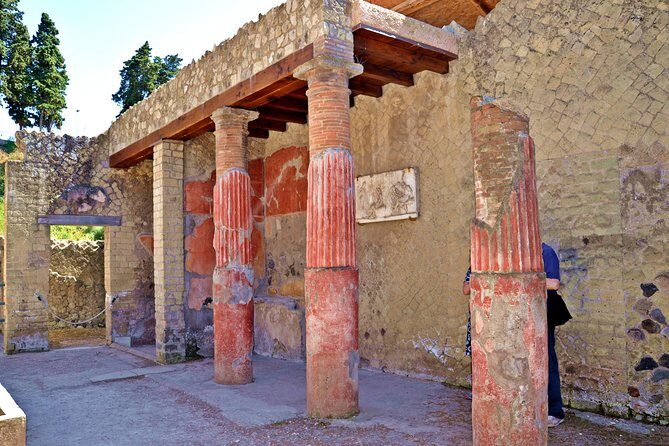
The tour is sold as private guidance by an archaeologist guide, and the results can be excellent when the guide is truly research-minded. Names that came up with top praise include Mena, Michele, Luciano Leone, Sara, Daniela, Antonella, and Giuseppe.
In particular, I love the way strong guides handle the “small details” problem. Without a guide, the site can feel like a lot of buildings and not enough explanations. With an archaeologist guide, you start noticing patterns: how spaces relate, how houses function, and why public areas like the central baths matter.
That said, one review flagged a real-world risk: the guide was described as knowledgeable but not a practicing archaeologist, despite the tour being advertised as an archaeologist-led experience. I’d treat that as a gentle warning. When you book, make sure the listing language matches what you want. If they’re emphasizing archaeologist credentials, you should expect that to be accurate.
If you’re the kind of traveler who asks lots of questions, this private format is your advantage. You can steer the conversation toward what you’re most curious about—Roman domestic life, public spaces, or why Herculaneum is so well preserved.
When this tour is the right fit (and when it isn’t)
You’ll likely enjoy this tour if:
- You want a guided walk through Herculaneum and you like explanations tied to what you see.
- You have a limited window in Naples and want a tight, high-impact plan.
- You’re traveling with kids or want a pace that doesn’t require a full-day endurance test.
- You’re comparing ruins and want context that goes beyond general sightseeing.
It may not be ideal if:
- You’d rather save money and do a self-guided visit.
- You expect long stays at each location. The structure is short per stop.
- You’re very strict about the exact credentials of the guide. If that’s you, verify before you go.
Quick practical tips before you book
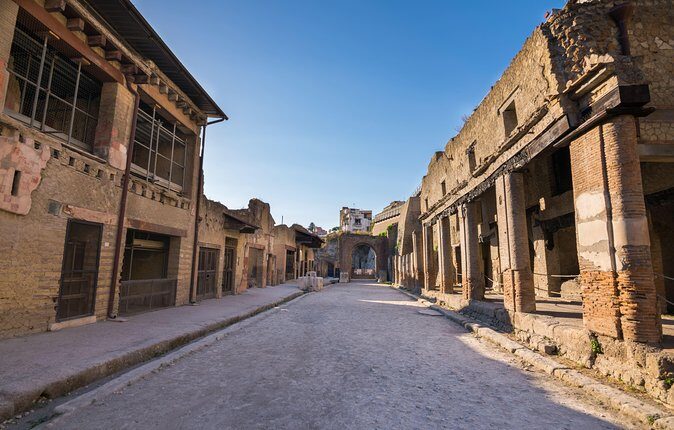
A few things I’d do to get the most out of it:
- Budget for the Herculaneum entrance ticket on top of the tour.
- Use the free luggage store so you aren’t dragging bags around a ruin site.
- Plan water and simple snacks since food and drinks are not included.
- If you care about the guide’s exact title, read the booking details closely and ask a question before finalizing.
Also, keep in mind Herculaneum is popular. The tour is offered at multiple times throughout the day, and picking an earlier slot can help you feel less rushed and more comfortable during the walk.
Should you book this Herculaneum Private Tour with an Archaeologist?
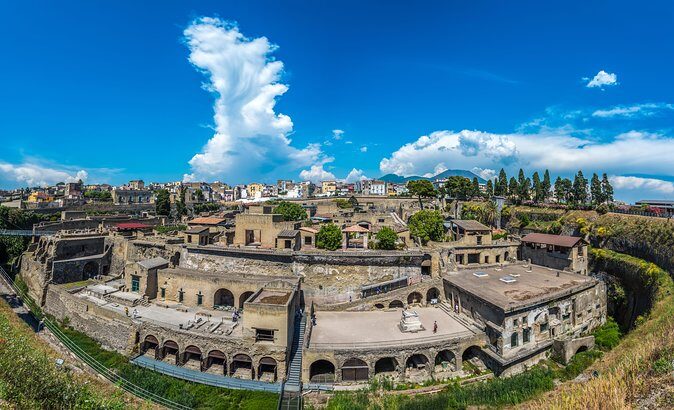
If you want the best return on your time at Herculaneum, I’d lean yes—especially because this is structured as a private, guided walk through many of the site’s core highlights in about 2 hours. The overall rating is strong (4.9) and the recommendation rate is high (98%), which usually means people got what they paid for: a guided experience that turns ruins into understanding.
Here’s my balanced take on the decision:
- Book it if you value interpretation, want to ask questions, and are okay paying for a specialist.
- Be careful if the idea of an archaeologist-led credential is non-negotiable for you—because at least one past booking raised doubts about that match.
If you’re excited by preserved Roman streets, houses, and baths—and you want a guide to connect the dots—this is a solid way to experience Herculaneum without spending the whole day guessing.
FAQ
Where is the meeting point for the Herculaneum private tour?
You meet the guide outside the ticket office of the archaeological site, in the red building. The meeting point address is Via dei Papiri Ercolanesi, 80056 Ercolano NA, Italy.
How long is the tour?
The tour duration is about 2 hours.
Is the tour private?
Yes. This is a private tour/activity, so only your group participates.
What language is the tour offered in?
The tour is offered in English.
What is included in the price?
Included: guidance and assistance by an archaeologist guide, and the private tour.
What is not included?
Not included: Herculaneum entrance ticket, transportation, and food and drinks.
How much are the Herculaneum entrance tickets?
The listed entry tickets are 16 euros for an adult, and 2 euros for EU citizens 18–25 years old.
Is there luggage storage at the meeting point?
Yes. There is a luggage store for free at the meeting point.
Are service animals allowed?
Yes, service animals are allowed.
Can I cancel for free?
Yes. Free cancellation is available. You can cancel up to 24 hours in advance of the experience for a full refund.