REVIEW · ERCOLANO
Herculaneum – Small Group Tour (admission included)
Book on GetYourGuide →Operated by Pompeiify di Parlato Gabriella · Bookable on GetYourGuide
Herculaneum feels calmer than Pompeii, but somehow bigger. In just 2 hours, you get the eruption story, the reason this Roman city survived in such detail, and a guided walk through private houses and street-level life that’s easy to picture. The skip-the-line admission also matters here, because time at archaeological sites in peak season can vanish fast.
My favorite part is how the guide turns the ruins into a lived-in place instead of a pile of stones. You’ll also spend time on the preservation angle, with a stop connected to the boat museum, which adds texture to what the cinders actually did. One thing to consider: this is a tight schedule—great for a first visit, but not the choice if you want to wander slowly or linger for long photo sessions.
In This Review
- Key Highlights You’ll Actually Care About
- Herculaneum in Two Hours: Why This Roman Ruin Feels More Personal
- Meeting at Corso Resina: Getting Started Without Losing Time
- The Eruption Story That Explains the Preservation
- Wealthy Roman Life: What You’ll See in the Houses and Streets
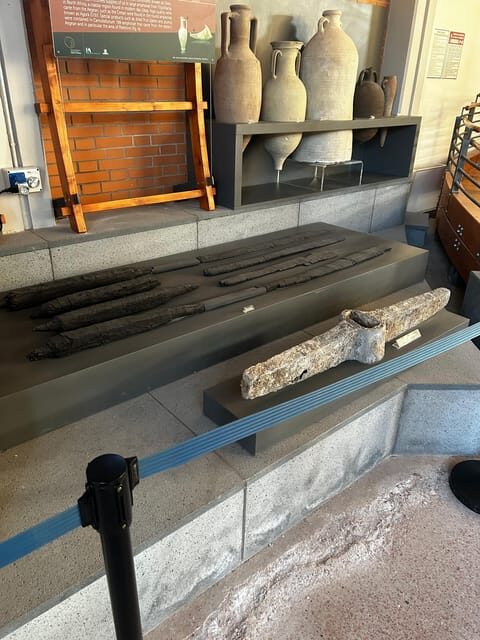
- Boat Museum Connection: Another Way to Understand What Survived
- Guided by Regione Campania Licensed Experts: The Real Value
- Price and Value: Is $75 Worth It for 2 Hours?
- Timing Tips: How to Get the Most Out of a Tight Schedule
- Who This Tour Fits Best (and Who Might Skip It)
- Should You Book This Herculaneum Small-Group Tour?
- FAQ
- How long is the Herculaneum small-group tour?
- Is the admission ticket included?
- How much does the tour cost?
- Where is the meeting point?
- What languages are available?
- Is it a small group?
- What does the tour include besides the guided visit?
- Can I cancel for a refund?
- Can I reserve without paying right away?
Key Highlights You’ll Actually Care About
- Skip-the-line entry that gets you inside without the ticket-office stall
- Licensed guide (Regione Campania) leading the walking tour
- How the eruption preserved everyday details, not just the big ruins
- Focus on wealthy Roman homes, with elegant interiors and decorations to spot
- Boat museum stop for a different angle on what survived the disaster
- Small-group feel that leaves room for questions
Herculaneum in Two Hours: Why This Roman Ruin Feels More Personal
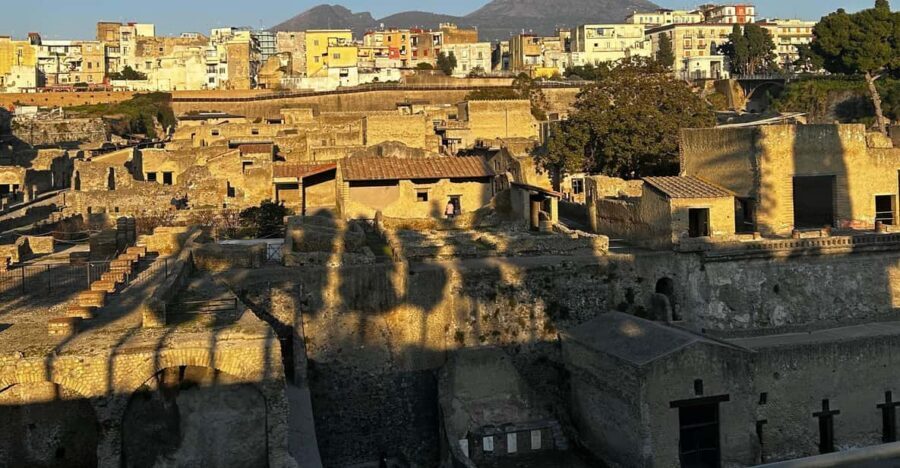
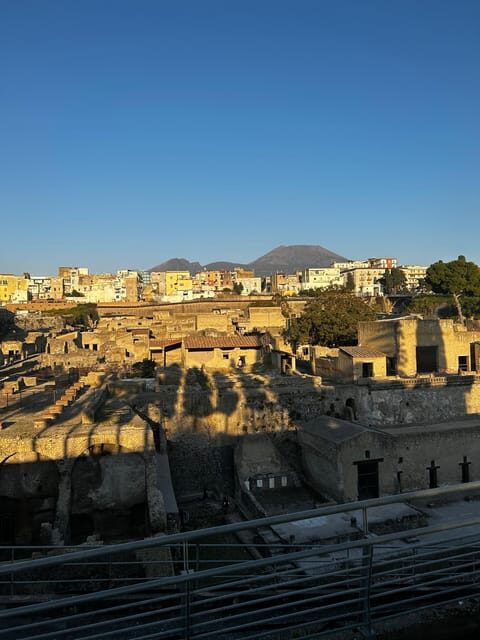
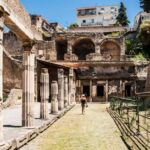
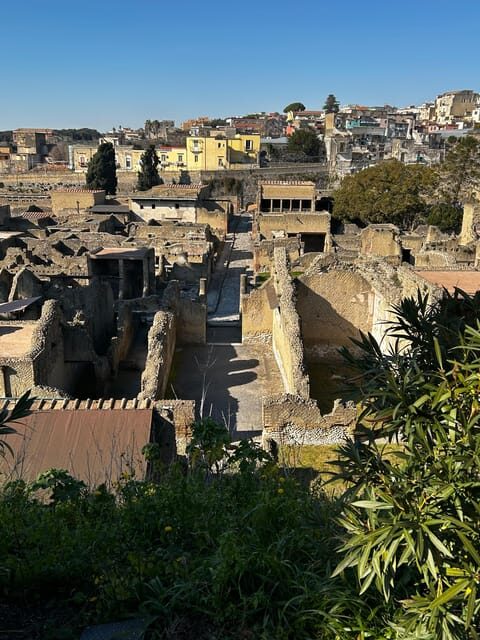
Herculaneum and Pompeii come from the same catastrophe—Mount Vesuvius erupting in 79 A.D.—but the experience can feel completely different. Pompeii often hits you with scale and drama. Herculaneum hits you with close-up detail. It’s smaller, yet it reads as richer because this was a residential area for wealthy Romans.
What makes it so compelling is the way the eruption covered the city. Pyroclastic flows buried Herculaneum under what’s described as a literal mountain of scalding ashes, with remains entombed under about 60 feet of cinder. That kind of covering didn’t just destroy things. It preserved them in ways you don’t always get in open-air ruins—so you can often recognize elements of the city’s original look, not just its layout.
In a quick 2-hour guided format, you get the big narrative fast: what happened, what it looked like in the city’s final moments, and why preservation here feels so distinct. If you’ve never done a guided ruin tour before, this is a solid way to start—because you won’t be guessing what you’re looking at.
If you're still narrowing it down, here are other tours in Ercolano we've reviewed.



Meeting at Corso Resina: Getting Started Without Losing Time
The tour meets at Corso Resina, 187, just outside the Herculaneum ticket office area. That’s a practical setup: you don’t need to locate a remote bus stop or decode a confusing rendezvous point. You’ll also be able to get moving promptly because the admission is handled as part of the experience.
Expect a straightforward flow: you arrive at the site entrance zone, meet your live guide, then head into the archaeological area for the guided walk. The meeting being right by the ticket office is one of those small details that makes the whole thing feel smoother, especially if you’re visiting alongside other popular stops in the region.
And yes, the tour includes skip-the-line admission. That’s not a luxury when you’re staring at an entrance queue—it’s one of those value pieces that turns a tour from “nice” into “worth it.”
The Eruption Story That Explains the Preservation
The tour begins with the eruption and the nature of the city—good first step, because Herculaneum doesn’t read right if you’re only looking at walls. You need the disaster context. In 79 A.D., Vesuvius didn’t just spew ash in a gentle way. You’re dealing with pyroclastic flows and scalding material that covered the town rapidly.
Your guide’s job here is to connect the science-level disaster to what you actually see in the ruins: how the coverage affected what survived and why Herculaneum looks different from Pompeii today. You’ll hear how the city was both destroyed and preserved by the same event—then you’ll walk through the proof.
This part is especially helpful because Herculaneum’s preservation isn’t just a “cool fact.” It changes the way you can interpret the city. Instead of only imagining daily life, you can often spot traces of original style and decoration. You don’t have to rely only on guesswork.
Wealthy Roman Life: What You’ll See in the Houses and Streets
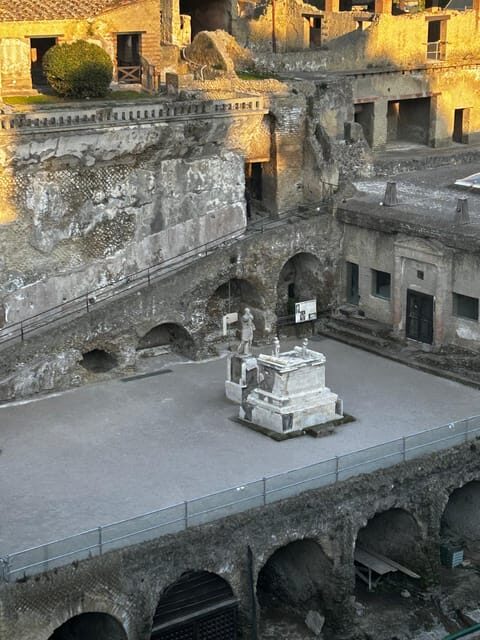
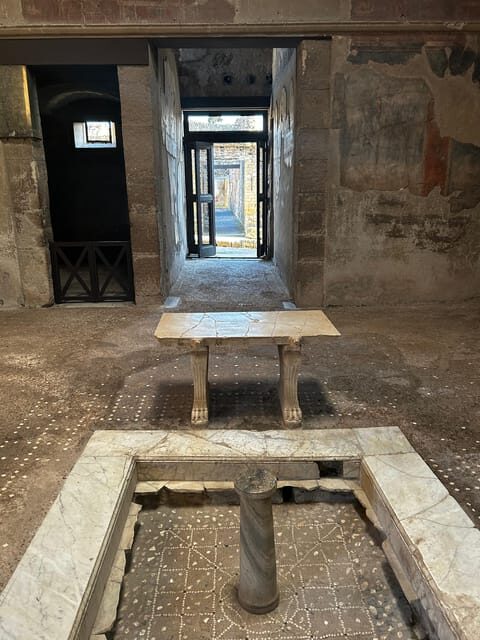
Herculaneum was home to wealthier residents compared with many parts of Pompeii. The tour focuses on typical life in an ancient Roman center, with an emphasis on the residential feel of the town.
The practical payoff for you is that the tour isn’t only about naming structures. You’ll learn what those spaces likely meant and how they functioned as part of a home life. The ruins here can be read as a set of decisions wealthier Romans made about comfort, appearance, and daily routines.
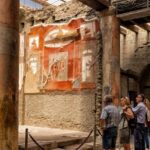
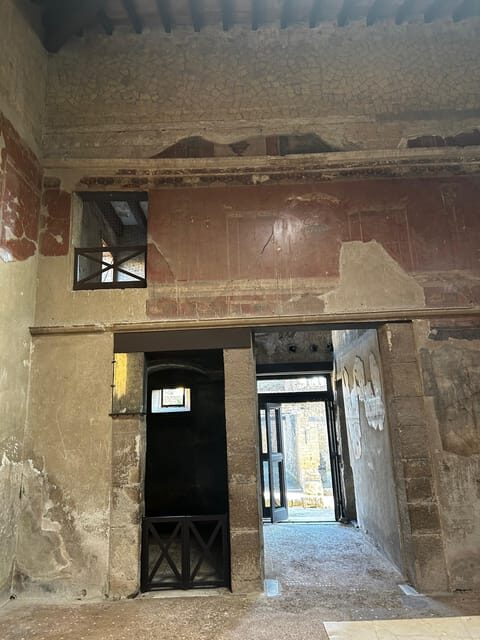
The guide also directs attention to details that help you understand why the city feels “intact” rather than destroyed. Look for the kinds of remnants that suggest affluence—original styling and elegant decorations in private houses. When you know what you’re looking for, the site becomes much more than a pretty outdoor museum.
One of the nicest benefits of the small-group approach is that you can ask follow-up questions when something clicks—or when it doesn’t. In particular, guides have shown a talent for adjusting explanations to the group, including families. If you’re traveling with kids or people who want clear, concrete answers, this is a real plus.
Boat Museum Connection: Another Way to Understand What Survived
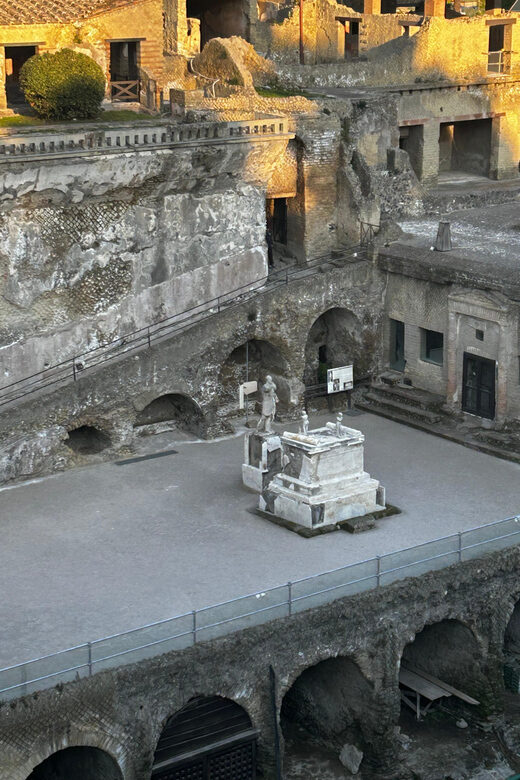
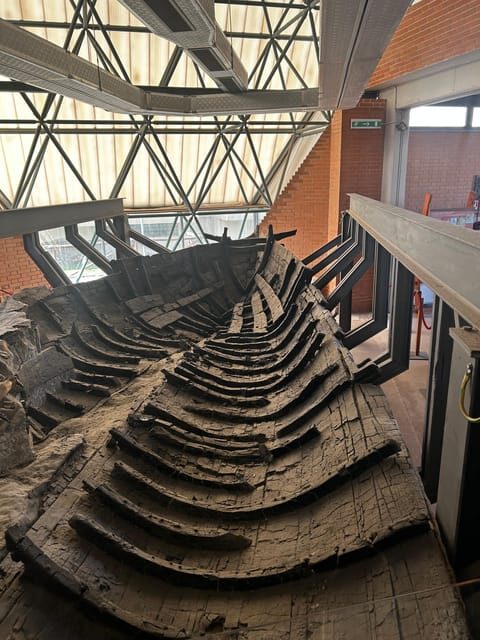
The itinerary includes a focus on preservation and a visit connected to the boat museum. Even if you don’t know anything about Roman boating or maritime life, this stop adds perspective. It reminds you that Herculaneum wasn’t only a city of buildings—it was part of a wider coastal world.
And it reinforces the preservation theme. The boat-museum element helps you visualize how something can be heavily impacted yet still leave physical evidence behind. It’s not just ruins on land. It’s a coastal city whose material culture was affected by the same catastrophe in a different way.
For many visitors, this is where Herculaneum becomes emotionally memorable. Not because it’s dramatic, but because it makes the disaster feel tangible. You’re not only standing in a town footprint—you’re seeing surviving artifacts connected to how people lived.


Guided by Regione Campania Licensed Experts: The Real Value
A standout detail here is the guide credential: the tour is led by a tour guide licensed by the Regione Campania. That matters because a licensed guide is more likely to deliver accurate context and to explain the site in a way that makes sense, not just “point and name.”
Language options are also a big deal on a two-hour tour: you can choose German, Italian, or English. The small-group format means your guide can still keep an active rhythm without rushing through people’s questions.
Names that show up with especially strong feedback include guides like Roberta and Marzia—and there’s also mention of Gabriella for engaging explanations that work even with children. Translation quality and teaching style matter most when you’re in a short time window. Here, the tour format depends on your guide doing the pacing well, and that’s where these guides tend to score high.
One more practical note: the tour uses a guided structure that helps you avoid getting lost in a big open site. You’ll see the key areas without having to build a route yourself.
Price and Value: Is $75 Worth It for 2 Hours?
At $75 per person for 2 hours, the pricing isn’t budget. But for what’s included, it’s easier to judge the value.
Here’s what you’re paying for:
- A live guide who connects the eruption story to what you see on the ground
- Skip-the-line admission included in the price
- A small-group experience that supports questions and pacing
- A focused route designed for this particular site (not a generic “ruins overview”)
If you tried to do Herculaneum independently, you could save money—maybe. But you’d likely lose the preservation context that makes the site click. Herculaneum is one of those places where understanding the “why” makes a big difference in enjoyment. This tour sells that “why,” quickly.
So the real value calculation for you is this: if you want a well-structured introduction in limited time, the guide-led format is usually worth the cost. If you’re the type who enjoys reading signage slowly and building your own route, you might find a self-guided visit cheaper. But you’d be trading off interpretation and time saved on entry.
Timing Tips: How to Get the Most Out of a Tight Schedule
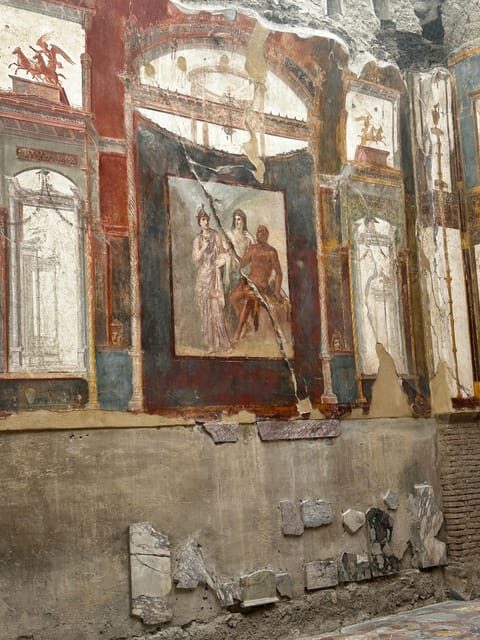
Two hours sounds short because it is short. The trick is to arrive ready to focus. This tour gives you a curated experience of Herculaneum’s most meaningful pieces: eruption context, preservation, the boat museum angle, and a guided walk through life in the ancient city.
To get the most out of it, do this before you go:
- Come in with at least the basic idea that this is 79 A.D. and Vesuvius is the driver
- Plan for walking time on uneven archaeological surfaces
- Keep a short list of questions so you can use the small-group time efficiently
A quick tour is actually a benefit if you’re doing multiple sights in Campania. Herculaneum then becomes the “detail-rich” counterpoint to Pompeii, and the two visits make more sense together.
Who This Tour Fits Best (and Who Might Skip It)
This tour is a strong fit if you:
- Want an introduction to Herculaneum that explains the preservation differences from Pompeii
- Prefer a guided route rather than figuring it out on your own
- Like asking questions and getting direct answers in a small group
- Want a compact, high-impact visit without eating your whole day
You might consider a different option if you:
- Need lots of free time to wander without structure
- Plan to spend most of your visit photographing or tracing every wall slowly
- Want a longer museum-style pacing instead of a guided walking flow
Should You Book This Herculaneum Small-Group Tour?
I’d book it if you want your time in Herculaneum to feel intentional. The mix of licensed guiding, skip-the-line admission, and a route built around preservation (plus the boat museum angle) is exactly what makes this site worth visiting in the first place.
If you’re coming to the Gulf of Naples for a first pass and you want Herculaneum to make sense—not just look impressive—this is the right kind of tour. It’s efficient, focused, and designed to turn that famous cinder-preserved reality into something you can actually understand.
If you tell me your travel dates and whether you’re also visiting Pompeii, I can help you plan a sensible order and timing so the two sites reinforce each other instead of competing for your attention.
FAQ
How long is the Herculaneum small-group tour?
It lasts 2 hours.
Is the admission ticket included?
Yes. You get skip-the-line admission as part of the tour.
How much does the tour cost?
The price is listed as $75 per person.
Where is the meeting point?
The meeting point is just outside the Herculaneum ticket office, at Corso Resina, 187.
What languages are available?
The tour guide offers German, Italian, and English.
Is it a small group?
Yes. It’s described as a small group tour.
What does the tour include besides the guided visit?
You’ll have a guided tour of the archaeological site, and the experience includes time connected to the boat museum as part of the preservation-focused visit.
Can I cancel for a refund?
Yes, you can cancel up to 24 hours in advance for a full refund.
Can I reserve without paying right away?
Yes. The option is Reserve now & pay later.