REVIEW · ARCHAEOLOGICAL SITE OF HERCULANEUM
Herculaneum: 3D Walking Tour with Skip-the-Line Ticket
Book on GetYourGuide →Operated by AR Tour srl · Bookable on GetYourGuide
Herculaneum comes back in 3D. I love how the AR glasses project 3D reconstructions right onto the existing ruins, so the site stops feeling like stone and starts feeling like a Roman city. I also like that the skip-the-line ticket pairs well with a guided walk led by helpful assistants such as Chiara or Luigi, who manage questions smoothly and keep the pace friendly for real people.
One thing to consider: this tour is best for visitors comfortable wearing lightweight AR glasses and who are ready to walk. It also isn’t suitable for children under 8 (they can enter with a normal ticket, but they can’t use the 3D technology).
In This Review
- Key things you’ll notice right away
- Pick Up Your AR Tour Kit at the Snack Area by the Ticket Office
- The 3D Overlay Moment: Seeing Life Before the 79 AD Eruption
- Walking Through Temples, Houses, and Squares That Come Alive
- Tour Assistants Matter: From Patient Explanations to Smooth Problem-Solving
- Audio Guides in 6 Languages Plus a Live Guide in Your Preferred Language
- Family-Friendly, With One Clear Limitation
- What Happens After the Glasses Come Off: Keep Exploring on Your Own
- Price and Logistics: Is $45.55 Good Value for 2 Hours?
- Who Should Book This AR Tour (and Who Might Want Something Else)
- Should You Book It? My Bottom-Line Take
- FAQ
- How long is the Herculaneum 3D walking tour with skip-the-line ticket?
- Where do I meet the tour assistant?
- Does the tour include skip-the-line entry?
- What languages are available?
- Do I get the AR glasses as part of the tour?
- Is it suitable for children?
- Can I explore the archaeological park after the tour ends?
Key things you’ll notice right away
- AR glasses with transparent lens: you keep your bearings while holograms appear over the ruins
- 3D overlaps at major sights: temples, houses, and squares are shown as they looked before 79 AD
- Small-group feel: guides often adapt on the spot, including for non-English speakers
- Guides who handle kids well: from patiently answering a 9-year-old to including families on the route
- You can keep exploring after: once you return the glasses, you’re free to wander independently
Pick Up Your AR Tour Kit at the Snack Area by the Ticket Office

Your tour starts at the Herculaneum main entrance area, and the key detail is where you physically meet your guide. Head to the snack area next to the ticket office. Your Tour Assistant waits near the vending machines with a sign that says AR Tour.
You’ll get kitted out with the AR glasses there. Expect a short intro on how to use them before you move into the walking portion. That first minute matters. The tech isn’t complicated, but it does take a moment to learn how turning your head changes what you see on the overlays. One of the joys of this experience is that you can look around and feel the city taking shape around you, instead of staring at a single panel and hoping your imagination does the rest.
Practical tip: wear comfortable shoes. Even though the tour is only about 2 hours, you’re walking an archaeological park that’s meant for foot traffic, not racing. Bring sunglasses and a sun hat too. The tour runs in all weather conditions, so you’ll want to be ready for heat as well as rain.
If you're still narrowing it down, here are other tours in Archaeological Site Of Herculaneum we've reviewed.

The 3D Overlay Moment: Seeing Life Before the 79 AD Eruption
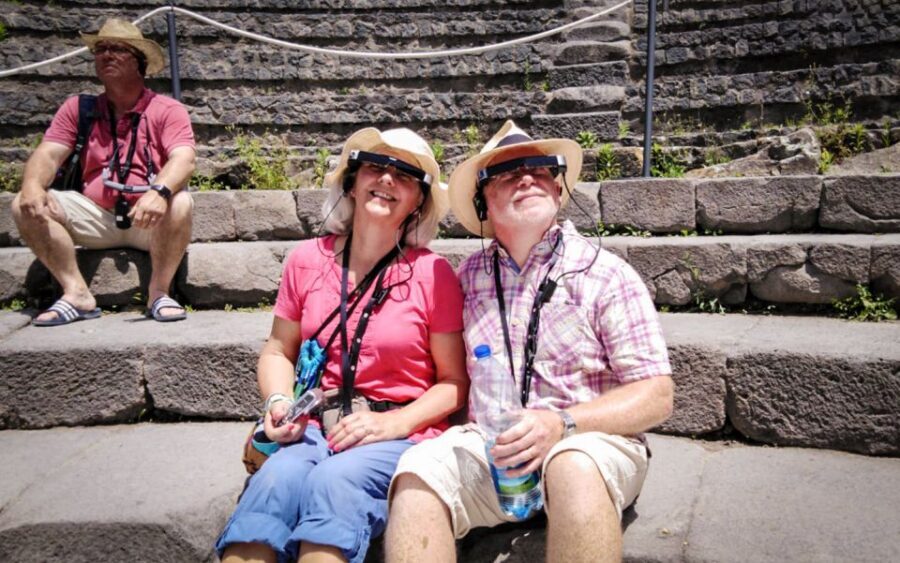
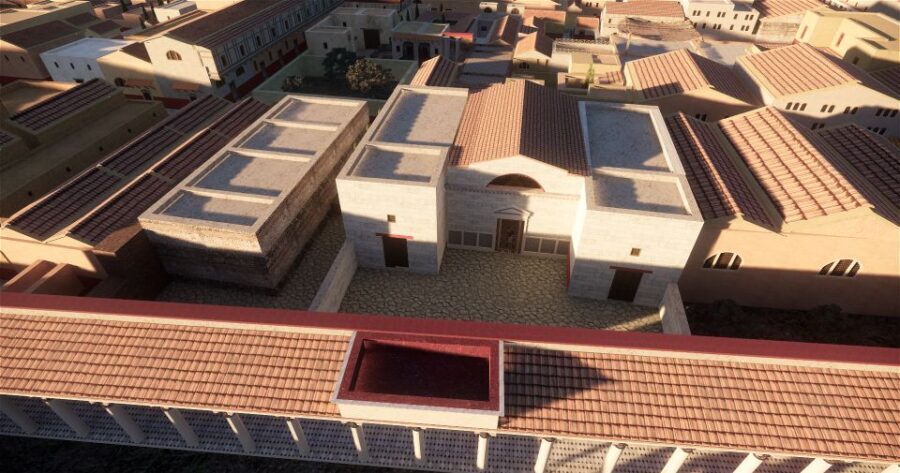
The heart of this tour is the way the software creates holograms that overlap the actual ruins. You’re not just listening to an explanation. You’re watching the ancient world re-form in front of you, then comparing that 3D version to the stone you can touch.
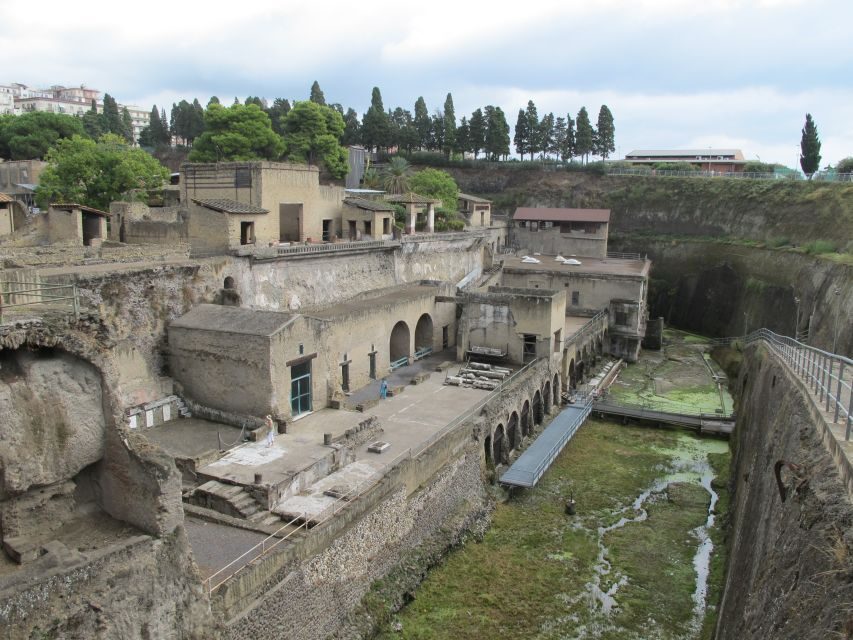
The tour is designed to show what key spaces in Herculaneum looked like before the eruption in 79 AD destroyed the city. That specific focus helps you understand what you’re looking at. Without it, ruins can feel like scattered walls. With the reconstructions, you can start reading the site like a map of everyday life.
Here’s what makes it emotionally effective: you’re walking through the same outdoor locations where Roman citizens moved, lived, shopped, and worshiped. Then the glasses add the missing pieces—rooflines, architectural proportions, and how major areas of the city would have felt as a whole. In several experiences, the 360-degree effect is part of the fun. Once you get the hang of turning your head, the overlays can feel like they’re floating in the air, matching the layout of what’s still there.
And yes, you’ll still learn from the human side. Your assistant explains history and context while you walk, so the tech never feels like a gimmick. You get both: the picture and the meaning.
Walking Through Temples, Houses, and Squares That Come Alive
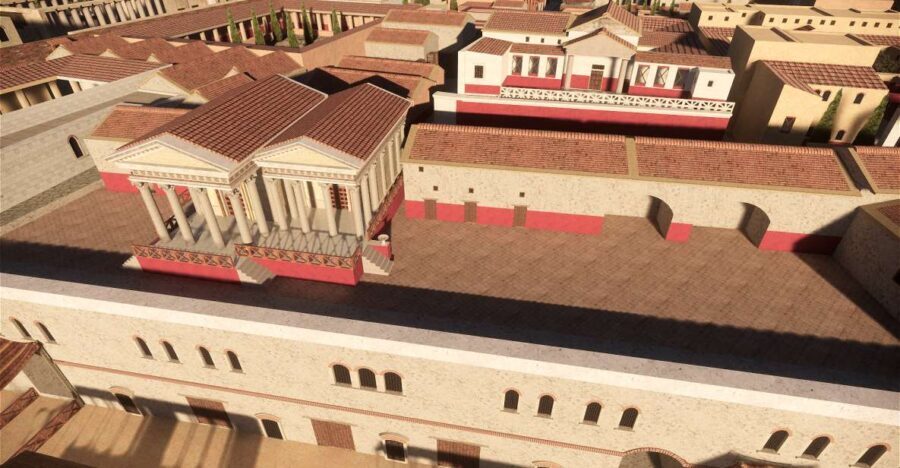
This tour is built around a guided route through the archaeological park, focused on the site’s most important temples, houses, and squares. The exact order isn’t the point. What matters is the flow: you see an area, then the glasses reconstruct it, then your guide helps you connect the space to how people used it.
Think of it like three layers of understanding:
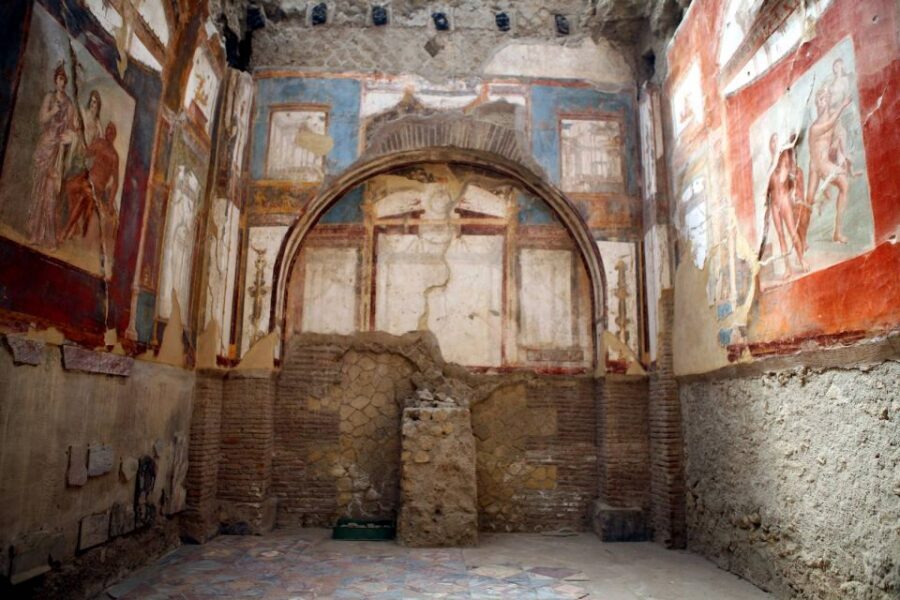
- What the ruins look like today
- What the site likely looked like before 79 AD
- Why those buildings and public spaces mattered to daily life
That’s why Herculaneum is such a strong choice for an AR walk. The site is compact enough to feel connected, but varied enough that the reconstructions give you real variety. You’re not stuck at one stop for too long. You move, look, listen, and keep matching today’s fragments with the restored city.
A good caution: this is a walking tour in an outdoor archaeological park. If you’re someone who dislikes heat or long stretches of sun, plan your clothing like you’re sightseeing all day. Because the tour runs regardless of weather, the best experience comes from being comfortable first, then curious second.
Tour Assistants Matter: From Patient Explanations to Smooth Problem-Solving
The tour includes a Tour Assistant, and the human part is a big reason this scores well. The guides aren’t just handing out equipment. They explain what you’re seeing and help with questions as you go.
A few examples from real experiences:
- Alessia is praised for being very knowledgeable and patient, including when a 9-year-old had lots of questions.
- Lucia receives shout-outs for kindness and for finding the best places to see when conditions were tough due to heat.
- Chiara stands out for excellent English, plus adaptability when non-English speakers were in the group.
- Roberta is repeatedly described as passionate and clever with languages, also making sure children feel included in the equipment and the story.
- Daniela F. is noted for being sweet and funny while still guiding visitors to the best parts.
What I take from these stories (and what you should expect): the best version of this tour happens when your assistant keeps the group together and helps everyone see what matters. Since the AR overlays can take a minute to adjust to, you want a guide who helps you move from confusion to clarity fast.
Also, don’t worry if your group isn’t perfectly uniform. One of the nicest details is that assistants seem to handle mixed language needs with care, rather than forcing everyone to suffer through silence.
Audio Guides in 6 Languages Plus a Live Guide in Your Preferred Language
The tour blends live guiding with recorded audio. You get a recorded audio available in six languages, plus your assistant language support.
From the information provided, the recorded audio includes: English, French, German, Spanish, Italian, and Portuguese. The assistant/instructor languages are listed as English and Italian.
So what does this mean for you? It means you can follow along in a language you’re comfortable with even if someone in your group speaks differently. And since the glasses are doing the visual heavy lifting, the audio helps you anchor the reconstruction to the story of the place.
Here’s a practical advantage: if you need a moment—maybe the sun is hitting the glasses, or you’re trying to line up what you see with what you’re hearing—you can focus on one part without losing the thread. You’re not just listening to a lecture while standing still.

Family-Friendly, With One Clear Limitation
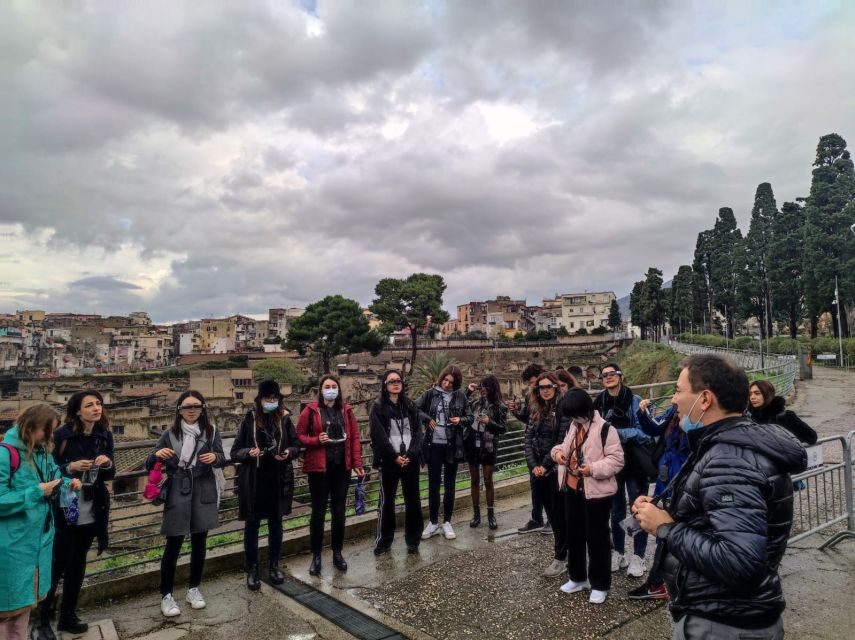
This tour is described as a fun alternative walking tour suitable for all ages, but there’s one boundary you should note up front: it’s not suitable for children under 8 for the 3D technology.
The information is clear:
- Children under 8 can access the park with a normal ticket
- They can’t use the 3D technology
So if you’re traveling with younger kids, this is a good time to think ahead. Older kids who can follow instructions and wear the glasses comfortably tend to benefit more from the AR part of the experience.
That said, the guides appear to be thoughtful with children on the tour route. Roberta, for example, is mentioned as including children with everything and taking her time with families. Alessia is praised for being especially patient with a young kid’s questions. These details suggest a more relaxed approach, not a stiff, adult-only “marching tour.”
What Happens After the Glasses Come Off: Keep Exploring on Your Own
After the tour, you return the augmented reality glasses, and then you’re free to stay in the archaeological park and explore independently.
This is a smart setup. The guided portion gives you structure: where to look, what to notice, and how to connect the ruins to their pre-eruption design. Then the self-guided time lets you linger at the parts you personally care about—maybe you want to re-walk an area to see if your brain is now reading the stones differently.
It also helps if your group has different energy levels. Some people want to ask questions until the end. Others want quiet time to process what the overlays showed them.
Price and Logistics: Is $45.55 Good Value for 2 Hours?
The price is $45.55 per person, and for a 2-hour experience that includes a Tour Assistant, AR glasses, recorded audio in multiple languages, and a skip-the-line ticket, it can be good value—especially if you plan to spend real time in Herculaneum rather than just snapping photos.
What you’re paying for is not just entry. You’re paying for:
- the AR glasses experience (the main draw here)
- the guide who explains what the reconstructions mean
- the skip-the-line ticket that helps you start faster
- the option to keep exploring after
Transportation isn’t included, so you’ll still need to handle getting to Herculaneum on your own. But once you’re there, the tour itself is fairly self-contained. That makes it easy to fit into a day already filled with other Campania highlights.
Is it worth it if you don’t care about AR? The recorded audio and guide add value, but the pitch of the experience clearly depends on the 3D overlays. If you’re purely there for ruins and don’t want tech, you might prefer a more traditional visit. If you do want the site to feel like a city rather than just a set of walls, this is where the price starts to make sense.
Who Should Book This AR Tour (and Who Might Want Something Else)
I’d book this if you:
- want a guided walk that helps you understand what you’re seeing, not just where to go
- like hands-on technology that actually helps interpretation
- are traveling with kids old enough for the 3D tech and will enjoy the visual story
- want a mix of live explanations plus multi-language audio
I might skip it if you:
- are traveling with children under 8 who would otherwise be coming along
- strongly dislike wearing glasses for a period of time
- need a very slow, minimal-walking pace (this is still a walking tour, just a friendly one)
Also, be mindful of timing. If you run late, you’ll be waited for up to 5 minutes. After that, the tour starts out of respect for other participants. That’s standard in tours, but with AR glasses involved, arriving on time is extra useful.
Should You Book It? My Bottom-Line Take
If you want Herculaneum to feel like more than ruins, book this tour. The AR reconstructions are the main reason to spend your money here, and the walking route plus a real assistant turns the technology into something you can actually understand. From the way guides like Chiara, Luigi, Roberta, Lucia, Alessia, and Daniela F. are described, it also sounds like the team does a solid job making the experience work for different ages and question levels.
If you’re on the fence, ask yourself one question: do you want the story of Herculaneum told with 3D overlays on-site? If yes, this tour is a strong fit. If not, you may get less value from the cost, even though the archaeological park itself is worth seeing.
FAQ
How long is the Herculaneum 3D walking tour with skip-the-line ticket?
The duration is 2 hours.
Where do I meet the tour assistant?
Meet at the snack area next to the ticket office. Your Tour Assistant will be waiting close to the vending machines with a sign that says AR Tour.
Does the tour include skip-the-line entry?
Yes, it includes a skip-the-line ticket.
What languages are available?
The tour assistant/instructor languages are English and Italian. Recorded audio is available in six languages: English, French, German, Spanish, Italian, and Portuguese.
Do I get the AR glasses as part of the tour?
Yes. Augmented reality glasses are included, and you’ll be kitted out before the tour starts.
Is it suitable for children?
Children under 8 can access the park with a normal ticket, but they can’t use the 3D technology. The tour is not suitable for children under 8.
Can I explore the archaeological park after the tour ends?
Yes. After the tour is over and the augmented reality glasses are returned, you can stay in the archaeological park and explore independently.