REVIEW · SORRENTO
Skip the line Pompeii Guided Tour
Book on Viator →Operated by Buyourtour di Amo Italy Travel · Bookable on Viator
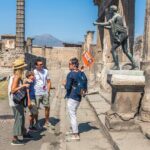
Pompeii, four hours, one great guide. This is a guided way to see the essentials without spending your whole day figuring out the site. I like how the tour uses headsets so the English commentary stays clear, and I like the smooth transport setup with a 30-seater bus pickup from Sorrento or Naples.
You’ll also feel the care in the pacing and organization. Guides like Gino get called out for being upbeat and very explanatory, and the team has even been praised for helping with prams so families aren’t stuck doing full-on logistics between ruins.
The catch is time. After the big highlight stretch, you’ll get shorter stops—so if you want to linger and wander at your own pace, this route may feel a bit scheduled.
In This Review
- Key things to know before you go
- Getting From Sorrento to Pompeii Without the Headache
- Pompeii Entry and the “Skip-the-Line” Idea
- The Main Walk: Your Two Hours in the Archaeological Park
- The most practical tip
- Forum of Pompeii: Civic Power in Ten Minutes
- Temple of Jupiter: Big Views Plus a Historic Zoom Lens
- Macellum: Pompeii’s Market Pulse
- Via dell’Abbondanza: A Main Street You Can Follow
- Stabian Baths (Terme Stabiane): The City’s Daily Wellness System
- The Brothel of Pompeii: Famous, Brief, and Not for Everyone
- Teatro Grande: Comedies, Tragedies, and a Strong Sense of Space
- Pacing, Group Size, and How to Keep Up
- A simple strategy
- Value Check: What You’re Paying For at $96.38
- Weather and Timing: Why the Tour’s Short Length Works
- Who This Tour Fits Best
- Should You Book This Skip-the-Line Pompeii Tour?
- FAQ
- How long is the Pompeii guided tour?
- Where do you get picked up for the tour?
- Is the tour offered in English?
- Does the price include admission to Pompeii?
- Are headsets provided?
- Is lunch included?
- What group size is this tour capped at?
- What’s the cancellation policy if plans change?
- What happens if the weather isn’t good?
Key things to know before you go
- Headsets for clear English guidance (so you don’t miss key details in busy areas)
- 30-seater bus with pickup in Sorrento or Naples (less stress than DIY)
- Pompeii admission ticket included (you show up ready to enter)
- A tight, high-value route through the Forum, Baths, brothel, and Teatro Grande
- Authorized English-speaking guide for about 2 hours plus a structured walkthrough
- Maximum group size up to 100 (large enough for efficiency, small enough to move)
Getting From Sorrento to Pompeii Without the Headache
If you’re basing yourself in Sorrento, a Pompeii trip can quickly turn into a puzzle: timing trains or buses, figuring out where to stand, and hoping you don’t miss the entry window. This tour takes away a lot of that friction. You get picked up at the meeting point in Sorrento or Naples, then ride in a 30-seater bus to the archaeological park.
That bus comfort matters more than you’d think when you’re traveling for a half-day. After that, you need energy for walking, steps, and those stretches where the ruins get crowded.
Also, the tour comes with a mobile ticket, which usually means fewer printed-paper worries at the gate. The experience is offered in English, and the guide time is built in—so you’re not paying for admission only.
If you're still narrowing it down, here are other tours in Sorrento we've reviewed.


Pompeii Entry and the “Skip-the-Line” Idea
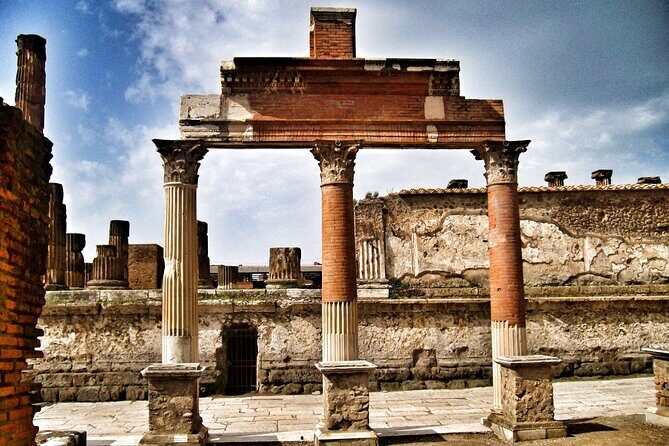
Pompeii is famous, and famous usually means lines. This tour is marketed as a skip-the-line style experience, and the overall setup is designed to keep your day moving smoothly from transport to entry.
Practically, what you should expect is a more guided arrival than a do-it-yourself approach. You’ll be organized into a group plan, then you’ll start the route instead of hunting for the right entrance, the right ticket desk, or the right moment to begin.
One thing to keep in mind: Pompeii is still Pompeii. Even with smoother entry, you’re walking through an active archaeological site with other visitors. Your best “skip the line” advantage is using your time well once you’re inside.
The Main Walk: Your Two Hours in the Archaeological Park
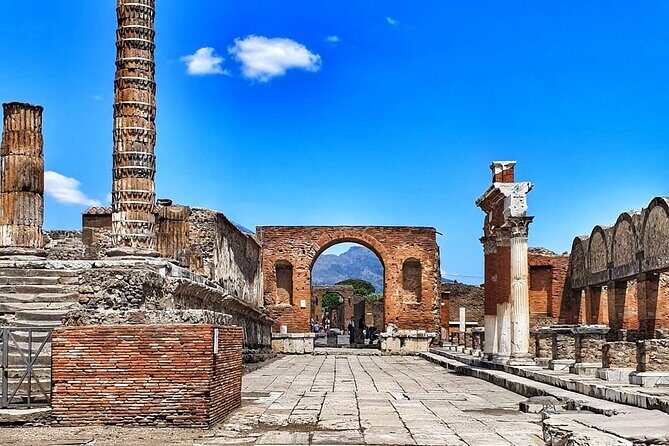
The heart of the tour is the Archaeological Park of Pompeii segment, with around two hours and admission included. This is the part where the site really does what Pompeii does best: it turns a disaster into street-level reality.
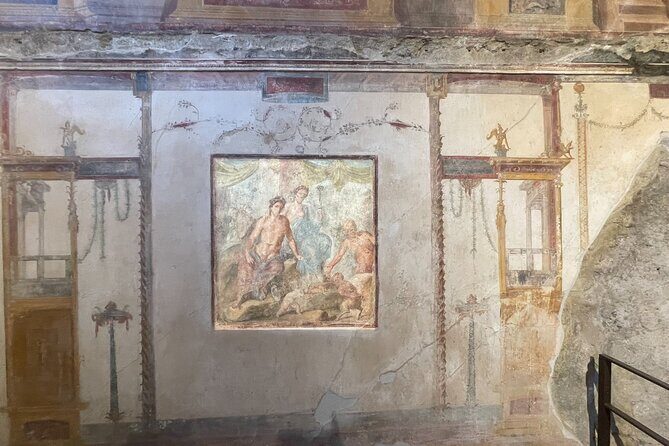
What you’ll experience here is the feeling of a living city frozen in ash. You’ll see excavated streets and houses laid out in a way that makes it easier to imagine daily routines—where people walked, ate, worked, and gathered. Even with short time windows, having a guide matters because the ruins can look like scattered stone until someone connects the dots.
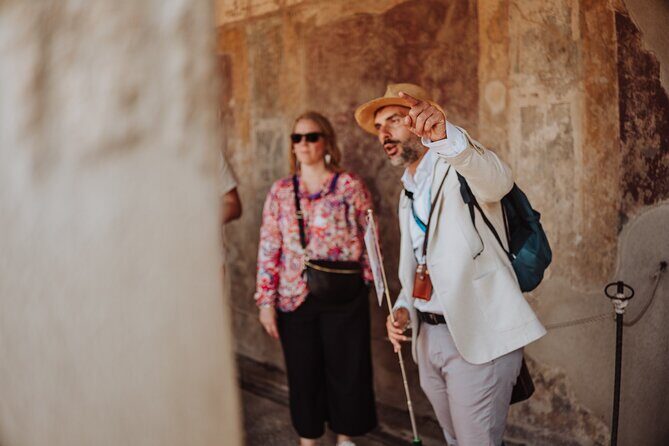
Also, the tour includes headsets, which is a big deal at Pompeii. Between wind, distance, and the noise of crowds, hearing a guide clearly is often the difference between “I saw ruins” and “I understood what I saw.”
The most practical tip
Wear shoes you’d trust on uneven ground and plan for lots of standing and walking. Pompeii rewards attention, but it punishes flimsy footwear.
Forum of Pompeii: Civic Power in Ten Minutes
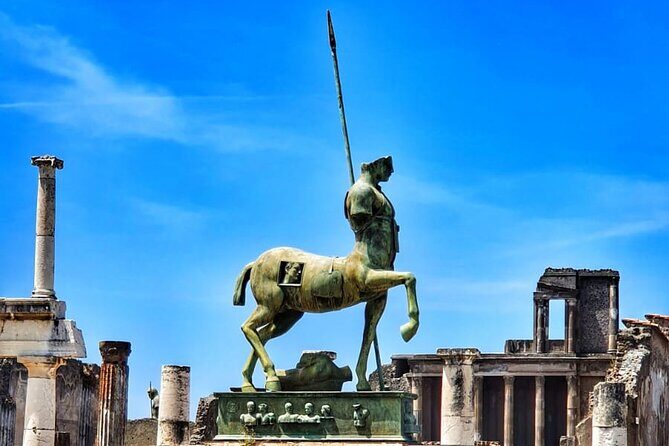
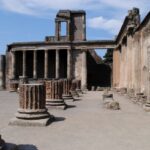
Then you move into the Foro de Pompeya, the Civil Forum—basically the administrative and public center of the city. Even though the stop is only about 10 minutes, the Forum is one of the fastest ways to get the story of Pompeii’s daily structure.
Think of it as the place where civic life happened: public buildings, justice, business, markets, and major worship. If you want one “anchor” area to help you make sense of the rest of the site, this is it.
The short timing is the drawback here, but the upside is that you get to see key landmarks without getting stuck in one crowded square for the entire tour.



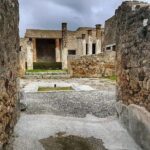
Temple of Jupiter: Big Views Plus a Historic Zoom Lens
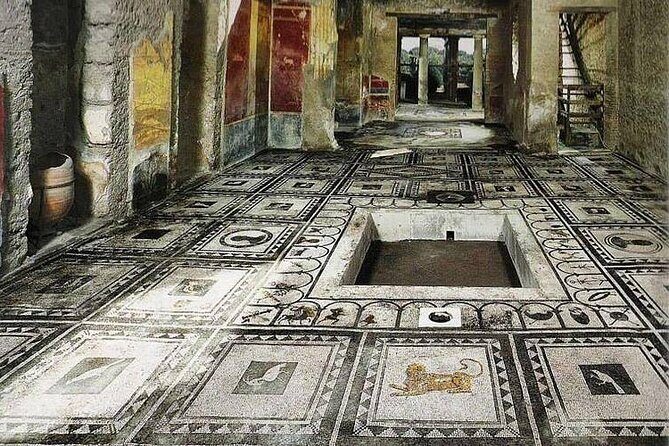
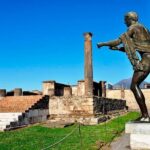
Next comes the Tempio di Giove Capitolino (Temple of Jupiter). This is on the northern side of the Forum, and the scenery is part of the presentation: you’ll have Vesuvius rising behind the temple, which helps you grasp the geography of the city.
The guide’s role is crucial for this stop because the temple has a complicated story: it was renovated after the colony was established, turning it into a Capitolium-style place meant to mirror Rome. You’ll also learn what the statues represented—Jupiter, Juno, and Minerva—set on a high base so they could be seen by people passing through the Forum.
With only about 15 minutes, you’re not going to become an expert in Roman cult politics. But you will leave with a clear sense of why this space mattered and how it fit into Pompeii’s public life.
Macellum: Pompeii’s Market Pulse
The Macellum is the city’s market area—an elevated hall on the eastern side, tied to the porticoes and designed to keep flow moving without choking the Forum square. This stop is about 15 minutes, and it’s a smart one because it shifts your brain from politics to food and commerce.
You’ll hear about how people bought necessities like fish and poultry. The porticoes were decorated with scenes from daily life as well as mythological subjects, which means even the market spaces were messaging culture, not just selling goods.
If you like social history—how people lived, ate, argued, and traded—this is one of the most rewarding stops on the route.
Via dell’Abbondanza: A Main Street You Can Follow
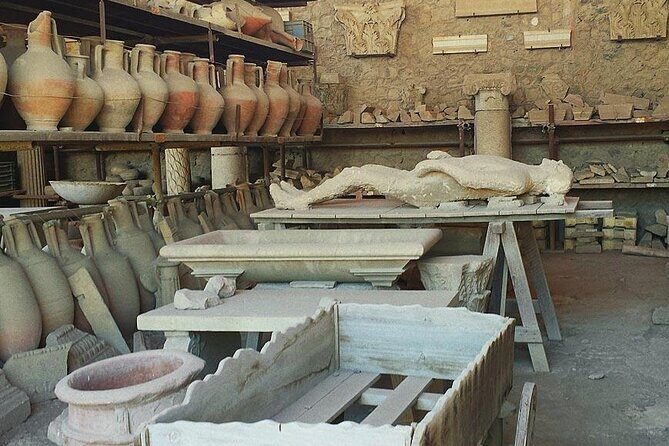
After the civic center and market zone, you move to Via dell’Abbondanza, one of Pompeii’s main streets. It connects the Forum with the Amphitheatre, so it’s like a “spine” of the city.
This is a quick stop (about 10 minutes), but it’s the kind of short segment that helps you mentally map the city. The value here is getting your bearings fast, which then makes the rest of the ruins easier to understand on the fly.
Stabian Baths (Terme Stabiane): The City’s Daily Wellness System
Now you hit something very Pompeii-like: the Stabian Baths. This stop lasts about 15 minutes, and it’s one of the best uses of short time because baths were a big part of Roman daily life.
The baths were built in phases. You’ll hear about the basic flow from cold to warm to hot, including the sequence through apodyterium (dressing), frigidarium (cold), tepidarium (medium), and caldarium (hot). There’s also the heating system—pipes in the walls and hot air circulation under floors—plus the way furnaces and braziers supported the temperatures.
One thing to remember: in Roman baths, you’re not just looking at architecture. You’re seeing a whole system for social life, hygiene, and relaxation, built into city infrastructure.
If you’re visiting during warmer months, this stop also gives your brain a break. It’s easier to process ruins when you’re thinking “how people used the space,” not just “what survived.”
The Brothel of Pompeii: Famous, Brief, and Not for Everyone
Next is the brothel of Pompeii, also about 15 minutes. It’s one of the best-known buildings at the site, partly because of the erotic paintings and because it’s described as having two floors: homes for the owner and slaves up top, and five rooms at the bottom with built-in beds.
The tour frames it in terms of function: it was a commercial sex workplace, and the people involved were often enslaved, including Greek and Oriental slaves.
Here’s the considerate note: this stop may be uncomfortable depending on your comfort level. It’s not graphic in the way modern expectations might imagine, but it is explicit in subject matter. If you’re traveling with kids or you prefer to avoid adult themes, this is the one segment where you may want to prepare yourself mentally.
Teatro Grande: Comedies, Tragedies, and a Strong Sense of Space
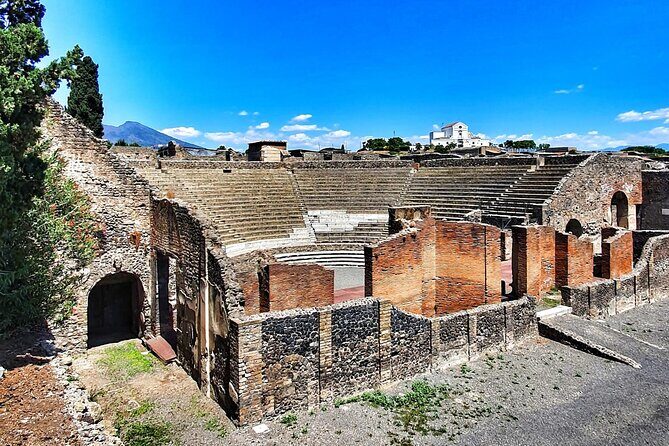
You finish with Teatro Grande, about 15 minutes. This large theatre was built around the middle of the 2nd century BC and restored in Roman style.
The big idea is what happened here: comedies and tragedies from Greek-Roman tradition. It’s also a standout because it was the first large public building freed from eruption deposits, which means you get a better sense of the structure and how it functioned.
Even in a short visit, a theatre changes the way you view Pompeii. Suddenly you’re not only imagining daily chores and markets—you’re thinking performances, gatherings, and community entertainment.
Pacing, Group Size, and How to Keep Up
The tour runs about four hours total. A schedule this tight works best if you’re okay with moving from highlight to highlight rather than wandering every alley.
There’s also the group size: it’s capped with a maximum of 100 travelers. That number can affect how crowded certain segments feel, especially in the Forum and along main routes.
The good news is the tour is set up to keep everyone moving and hearing the guide. The bad news is you’ll likely want longer time in your favorite spots. If you’re the type who reads every plaque and stares at every mosaic possibility, you may feel the pressure to keep up.
A simple strategy
Pick one or two stops you care about most—Forum/Jupiter, Baths, or the theatre—and treat the rest as “good context.” That keeps the tour satisfying instead of exhausting.
Value Check: What You’re Paying For at $96.38
At $96.38 per person, you’re paying for a bundle: pickup by bus, a guided route in English, headsets, and Pompeii admission included. Lunch isn’t included, so budget for an early meal or an after-tour stop back in Sorrento.
So is it worth it? In my view, yes—if you value time and clarity. Pompeii is too large to “figure out fast” if you want real understanding, and the guide plus headsets are doing real work here. If you’re paying just for admission and then relying on your own reading, you’ll miss much of what makes Pompeii click.
Also, this tour is typically booked far in advance (around 65 days on average). That’s a sign of strong demand for an organized half-day option. If your dates are fixed, booking sooner is smart.
Weather and Timing: Why the Tour’s Short Length Works
This experience requires good weather. That’s not just legal language—it matters because Pompeii is outdoors, and your walking time is real.
One more practical point: short tours can be a win because Pompeii can get hot, and the tour is designed to fit the day without eating half of it. If your departure happens early (and that’s common for this kind of half-day plan), you’ll likely get a more comfortable experience before the midday heat ramps up.
Who This Tour Fits Best
This is a great match if you want:
- A guided taste of Pompeii without spending a full day planning
- Clear English explanations thanks to headsets
- A route that includes major landmarks: Forum, Jupiter temple, market area, street route, Baths, brothel, and Teatro Grande
- Easy logistics from Sorrento or Naples via pickup
It’s less ideal if you:
- Want to roam freely without time limits
- Need a slow, detailed pace at every stop
- Prefer adult-theme sites to be optional (the brothel stop is part of the route)
Should You Book This Skip-the-Line Pompeii Tour?
I’d book it if you’re visiting Pompeii for the first time and you want structure, comfort, and good audio. The combination of English guidance, headsets, transport from Sorrento/Naples, and Pompeii admission included makes the price feel less like “just a bus” and more like a real half-day experience.
Skip it if you’re the type who wants long, quiet moments and you’re okay handling logistics on your own. Pompeii is big enough that only you can decide whether you want a guided highlights plan—or your own slow exploration.
If you fall in the middle, this tour is a very practical compromise.
FAQ
How long is the Pompeii guided tour?
It runs for about 4 hours.
Where do you get picked up for the tour?
You’ll be picked up at the meeting point in Sorrento or Naples.
Is the tour offered in English?
Yes, it’s offered in English.
Does the price include admission to Pompeii?
Yes. Entrance ticket to Pompeii is included.
Are headsets provided?
Yes. You get headsets to hear the guide clearly.
Is lunch included?
No. Lunch is not included.
What group size is this tour capped at?
The maximum group size is 100 travelers.
What’s the cancellation policy if plans change?
There is free cancellation. You can cancel up to 24 hours in advance for a full refund. If it’s canceled due to poor weather, you’ll be offered a different date or a full refund.
What happens if the weather isn’t good?
This experience requires good weather. If it’s canceled due to poor weather, you’ll choose a different date or receive a full refund.