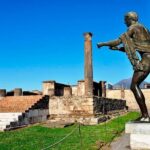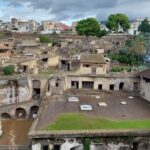
Pompeii and Vesuvius in one day is a punchy combo. I like this tour because it gets you there fast with skip-the-line Pompeii access, and because the volcano hike actually delivers big views over Naples. The day is also guided in a way that helps ruins stop feeling like random stones. One heads-up: the schedule is efficient, but it means you’ll spend real time on the road, and the Vesuvius top can close in bad weather.
You get a properly guided Pompeii walking tour with headphones help if your group is larger than 10, plus a hike up Vesuvius toward the crater rim. I also love that the tour builds in a short list of key sights you can’t easily miss, from the Forum to the baths and the big theater. The possible drawback is that some parts of the day are time-boxed, so if you want to wander forever at your own pace, this might feel a bit structured.
In This Review
- Key things you’ll remember
- One-Day Pompeii Plus Vesuvius: the big idea
- Starting in Sorrento: meeting point and how the day flows
- Pompeii with skip-the-line access: what it buys you
- The guided Pompeii route: Forum to the baths to the houses
- Archaeological Park of Pompeii (main time)
- Civil Forum: daily power and public life
- Temple of Jupiter (Capitoline viewpoint)
- Macellum: the market engine
- Stabian Baths: how hot/cold cycles worked
- Via dell’Abbondanza: the main street vibe
- Lupanar: a famous (and graphic) Roman stop
- Casa del Fauno: wealth, mosaics, and elite taste
- Teatro Grande and the Basilica
- What you likely won’t do
- Lunch break: plan for it, and don’t lose momentum
- Vesuvius National Park: the climb, the views, and the rules of the day
- Group size, guide style, and comfort on the road
- Value check: is $139.07 a good deal?
- Who should book this, and who should think twice?
- Should you book this Pompeii & Vesuvius day trip?
- FAQ
- What is the duration of the Priority Access Pompeii & Mt. Vesuvius tour from Sorrento?
- How much does the tour cost?
- Where does the tour depart from in Sorrento?
- Is this tour in English?
- What’s included in the ticket price?
- Is lunch included?
- Is Vesuvius always accessible all the way to the top?
- What if the weather is bad on the day of the tour?
- How difficult is the hike on Mount Vesuvius?
- Is skip-the-line always available for Pompeii?
Key things you’ll remember
- Skip-the-line entry to Pompeii so you can start seeing ruins sooner instead of burning time in queues
- Guided stops that hit the essentials like the Forum, Temple of Jupiter, Macellum market area, and Stabian Baths
- A real climb at Vesuvius: you go from around 1,000 m up toward the crater rim at about 1,280 m
- Air-conditioned round-trip transport from Sorrento in a minibus/van setup that most people find comfortable
- Weather reality on Vesuvius: rain or closures can change what you’re able to do at the top
One-Day Pompeii Plus Vesuvius: the big idea
This is the kind of day trip that makes sense from Sorrento: one location-heavy day, two UNESCO-level sights, and transportation handled for you. You leave the Sorrento area, get inland to Pompeii, then head to Vesuvius in the afternoon. It’s not a slow “stroll and smell the lemons” day—it’s a see-the-best-bits and move-with-a-plan day.
The value isn’t just that both places are famous. It’s that Pompeii is huge, and doing it well takes strategy. Here you get a guided walk through the most important public zones—so you understand what you’re looking at as you go.
At Vesuvius, the value shifts from history to physical effort and payoff. You’re not just riding up for a photo. You hike a bit toward the rim and get panorama views over the Bay of Naples. That combination—ruins + volcano views—is why people rate this so highly.
If you're still narrowing it down, here are other tours in Sorrento we've reviewed.


Starting in Sorrento: meeting point and how the day flows
The tour starts at IAMME IA! Gray Line Amalfi Coast at Piazza Torquato Tasso, 16, Sorrento. You’ll head out by air-conditioned vehicle with a climate-controlled ride, which matters because you’ll likely be traveling during the day’s warmest stretches.
You’ll typically begin with Pompeii first. Many visitors feel this is the smartest order because Pompeii crowds rise as the day goes on. Getting an early start also helps your guide manage the walking route through the busy zones.
Your day generally moves in two major “chunks”: Pompeii in the morning, then the volcano later. Between those chunks, you’ll have a lunch break at your own expense. Plan for your lunch to be more of a stop than a long sit-down meal, because time is managed tightly to fit the climb.
Pompeii with skip-the-line access: what it buys you
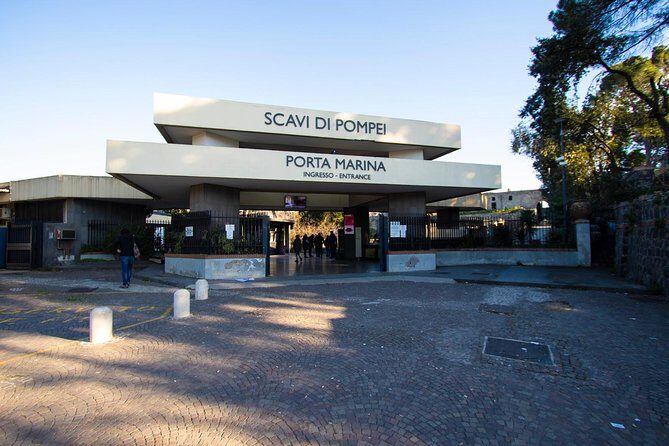
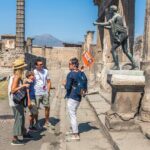
Pompeii can turn into a queue game if you arrive late. This tour reduces that stress with skip-the-line admission, plus an official local guide to steer you through the site. The practical benefit is simple: you get your first meaningful ruins on your feet earlier.
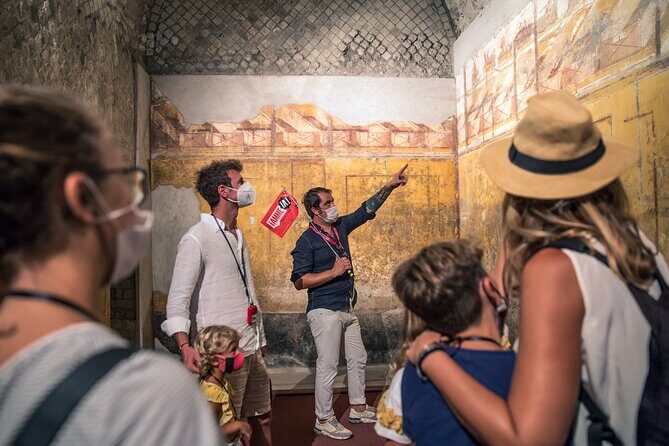
Inside Pompeii, you also get some audio support when the group is bigger—headphones in Pompeii help you hear your guide clearly. That matters because you’re walking and the guide is pointing out details you’ll miss if you only read signs.
One small reality: skip-the-line is not always possible. The tour notes that the skip-the-line option can’t be accommodated on the 1st Sunday of the month, when the park won’t allow it. If your dates line up with that, check before you plan your day around the “no lines” promise.
The guided Pompeii route: Forum to the baths to the houses
Pompeii isn’t one museum room—it’s an entire city footprint. The highlight tour focuses on the places that explain how Romans lived, worked, and worshiped, then it adds a few iconic private/residential spaces and the big entertainment areas.
Archaeological Park of Pompeii (main time)
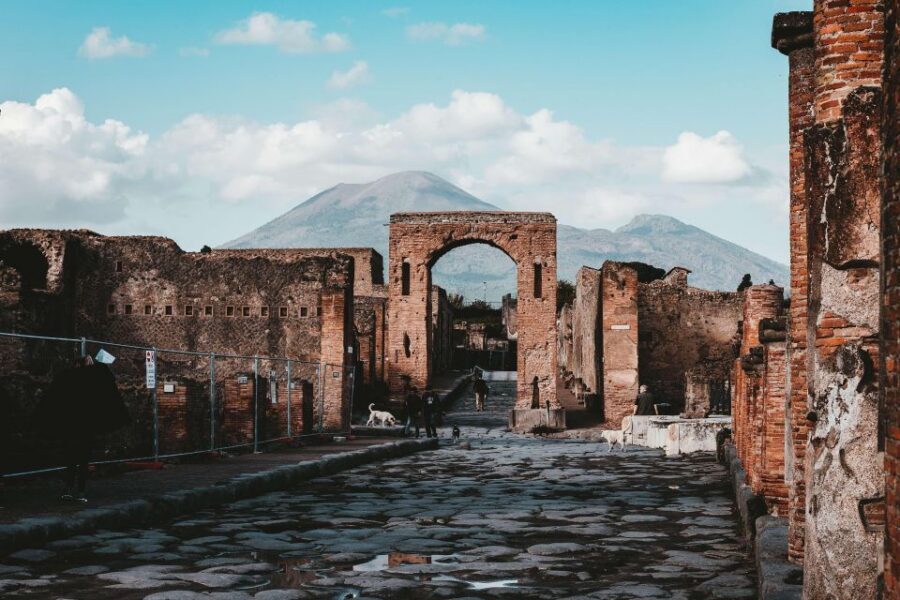
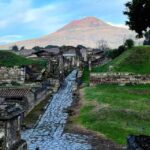
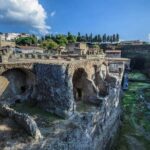
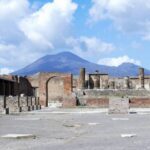
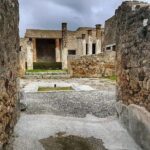
The largest block of time is at the Archaeological Park of Pompeii, with about 2 hours there and admission included. This is where your guide sets the stage for the AD 79 eruption story: Pompeii was buried under meters of ash and pumice after Vesuvius’ catastrophic eruption. Seeing the preserved streets and structures makes that explanation land fast, because the city layout is still readable.
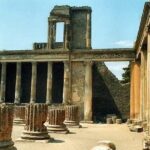
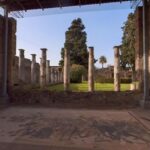

Civil Forum: daily power and public life
You’ll stop at the Forum area (often called the Civil Forum). This is the core of daily civic life—administration, justice, business, trade, and public worship all clustered here. It’s the kind of stop that helps you understand why so many major buildings face the same central spaces.
Temple of Jupiter (Capitoline viewpoint)
A quick stop comes at the Temple of Jupiter. Your guide will point out how it sat as a dominant focal point, with statues of Jupiter, Juno, and Minerva placed so people in the Forum could see them. Even in a short visit, it gives you a sense of how religious power was staged in public space.
Macellum: the market engine
The Macellum stop covers the market/preservation-provision side of life. It’s located on the Forum, and it got damaged after the earthquake of 62 CE. That detail helps you connect the ruins to time: Pompeii wasn’t frozen in perfection—it was already dealing with shocks before the volcano ended the story.
Stabian Baths: how hot/cold cycles worked
The Stabian Baths (Terme Stabiane) are behind the Temple of Jupiter. You’ll see the structure of bathing zones: dressing areas and different temperature rooms. This is one of those stops that makes you picture everyday routines—how people socialized, washed, and relaxed.
Via dell’Abbondanza: the main street vibe
You’ll also move along Via dell’Abbondanza, Pompeii’s big east-west main street. Your guide frames it as a busy decumanus maximus packed with shops, workshops, cafés, and snack bars. Even if you don’t linger long, it helps you understand Pompeii as a living street pattern, not just “ruins in a field.”
Lupanar: a famous (and graphic) Roman stop
You may also visit the Lupanar, the most famous brothel in Pompeii, known for its erotic wall paintings. This is a polarizing stop: some people find it fascinating as a window into Roman culture; others prefer to keep it brief. If you’d rather avoid sexual imagery, use your guide’s timing to step back a little.
Casa del Fauno: wealth, mosaics, and elite taste
The House of the Faun (Casa del Fauno) is one of the largest private residences. It’s famous for the Alexander Mosaic, which depicts battles from Alexander the Great’s era. Seeing a wealthy home after the public Forum and bath stops makes the social contrast feel real.
Teatro Grande and the Basilica
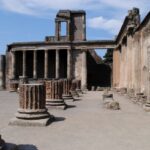
You’ll get time at the Teatro Grande (the large theater built into a hillside) and then the Basilica. The theater ties the city to Greco-Roman entertainment. The Basilica—used for business and justice—shows the administrative side of Roman city life. Together, they bookend Pompeii’s “people and power” story.
What you likely won’t do
This is a highlights plan. You’ll cover major stops, but you won’t get hours to meander through every neighborhood. If you want a slow, self-directed “follow your own rabbit holes” day, you’ll feel the constraints. The tradeoff is that you’ll walk away with a map in your head.
Lunch break: plan for it, and don’t lose momentum
Lunch isn’t included, and you’ll have a break where you eat on your own. Some visitors note an option for a fixed-price lunch around €18 at the Pompeii restaurant, which can be convenient if you don’t want to hunt. Still, treat lunch as a practical checkpoint, not a long sit-down.
If you’re the type who likes to snack early, consider grabbing something light before you head into Pompeii. That way you’re not scrambling when the group schedule moves you along.
Also, keep your water handy. Pompeii’s walking areas are exposed, and your day is active.
Vesuvius National Park: the climb, the views, and the rules of the day
After Pompeii, you drive up to Vesuvius National Park, first dropping you around 1,000 m and then continuing toward the crater edge near 1,280 m. Your time on the mountain includes both a longer stop and the final rim area for panoramic views over the Gulf of Naples and beyond.
The hike is short but not easy. It’s described as uneven, and the climb to the top area is steep enough that shoes matter. I’d treat this as moderate-to-strenuous walking. Wear grippy footwear and pace yourself—don’t sprint the first part just because the view is calling.
Two practical notes that came up in real experiences:
- No restrooms up on the mountain, so go before you start the climb.
- Weather can change everything. In rain, you might be turned away from the top or have the route adjusted.
The tour also states that if Vesuvius is closed, you’ll get an alternative: a skip-the-line ticket to visit Herculaneum instead. That’s a smart backup plan because you still get another volcanic-site experience without losing the day.
Group size, guide style, and comfort on the road
This tour caps at about 30 travelers, and that’s usually a sweet spot for getting from place to place without feeling like a moving parking lot. Many people praise the early entry and the way guides keep the group on schedule.
That said, one caution is real: sometimes groups combine. One experience described arriving to find two groups merged, making it bigger than expected. If you hate crowds, you should know that the structure is still a group tour, not a private pacing system.
On the transport side, most feedback is positive about air-conditioned vans and solid drivers on tight roads. Still, a few people mentioned cramped seating on the bus. If you’re tall or sensitive to seat comfort, it’s worth planning around that—bring a layer, and don’t expect luxury-grade legroom.
As for guides, you’ll see many names praised—Roberto and Roberta in the Pompeii portion, plus Luciano as a driver, and guides like Louisa, Lulu, Dani, Nello, and Mimi. Luigi and Gigi also show up in top-rated experiences, usually connected with both driving skill and an entertaining, clear approach. The common thread is that your guide’s job is to turn the site into a story you can actually follow.
Value check: is $139.07 a good deal?
At $139.07 per person for about 8 hours, the big question is what’s included that you’d otherwise pay for or struggle to coordinate yourself.
Here’s what you’re buying:
- Round-trip air-conditioned transportation from Sorrento
- Skip-the-line admission to Pompeii
- Official local guide in Pompeii
- Entry/admission to Pompeii and Vesuvius National Park
- Mobile ticket support
- English guiding
If you tried to do this on your own, you’d still need transport planning, a Vesuvius strategy, and some way to interpret Pompeii fast. Without a guide, it’s easy to feel lost in the scale. With a guide plus skip-the-line, you spend more time understanding and less time waiting.
The only “value risk” is if you’re expecting a super-small group, or if you dislike guided pacing. If you end up with a larger group or a guiding style that doesn’t match your taste, the experience can feel more like a structured tour than a personal exploration.
Who should book this, and who should think twice?
Book this if you want:
- a one-day way to hit Pompeii + Vesuvius without transportation hassles
- guided context so the ruins make sense quickly
- early Pompeii timing to reduce crowd stress
- the physical payoff of walking up Vesuvius toward the crater rim
Think twice if you:
- strongly prefer total self-guided freedom at your own pace
- want lots of time for sitting and reading every sign
- can’t handle steep, uneven walking
- need restroom access on the mountain (because there aren’t any up there)
If you’re a first-timer to Pompeii, this is one of the more efficient ways to get your bearings fast—then you’ll know what you’d want to return to see in greater depth.
Should you book this Pompeii & Vesuvius day trip?
I’d book it if you value a well-run plan and hate lines. The skip-the-line Pompeii access, guided highlight route, and the chance to hike to Vesuvius’ rim in the same day make it feel like more than just a sightseeing checklist.
If you’re price-sensitive, don’t ignore that part of the day is travel time. But when the alternative is juggling buses, timing, and admissions, the guided day often feels like a fair trade. Just pack the essentials for the volcano hike—good shoes, water, and a plan for the no-restroom rule—and keep weather in mind.
One last smart move: if you see rain forecasts, go in with flexibility. When Vesuvius changes, the tour notes an alternative via Herculaneum, so the day shouldn’t collapse completely.
FAQ
What is the duration of the Priority Access Pompeii & Mt. Vesuvius tour from Sorrento?
It’s listed at approximately 8 hours.
How much does the tour cost?
The price is $139.07 per person.
Where does the tour depart from in Sorrento?
The meeting point is IAMME IA! – Gray Line Amalfi Coast at Piazza Torquato Tasso, 16, 80067 Sorrento.
Is this tour in English?
Yes, it’s offered in English.
What’s included in the ticket price?
You get round-trip transportation, a Pompeii official local guide, skip-the-line admission to Pompeii, entry to Vesuvius National Park, and headphones in Pompeii if the group is larger than 10.
Is lunch included?
No. Lunch is not included, and you’ll have a break to eat on your own.
Is Vesuvius always accessible all the way to the top?
Not guaranteed. If Vesuvius is closed, the tour offers an alternative: a skip-the-line ticket to visit Herculaneum.
What if the weather is bad on the day of the tour?
The top access can be affected by weather and park authority decisions, so you may not reach the crater edge in rain.
How difficult is the hike on Mount Vesuvius?
You should have moderate physical fitness. There’s a steep hike and the path surface can be uneven.
Is skip-the-line always available for Pompeii?
Skip-the-line access isn’t available on the 1st Sunday of the month.