REVIEW · NAPLES
Private Transfer: Naples to Sorrento with Pompeii Guided Tour
Book on Viator →Operated by IAMME IA! - Gray Line Amalfi Coast · Bookable on Viator
Pompeii, then Sorrento. In one smooth trip. This private Naples-to-Sorrento transfer is built around a focused Pompeii experience with an official local guide, included admission, and skip-the-line entry, all wrapped in an air-conditioned car with a professional driver. I like that pickup in Naples is flexible—hotel, airport, or station—and the drop-off in Sorrento is door-to-door at your chosen address. The one thing to keep in mind is timing: it’s a 4 to 5 hour outing, so you’re seeing major Pompeii highlights, not trying to do the entire site.
Here’s what I really like: you get the benefit of guided context (so you’re not wandering randomly through stone ruins), and you also get practical logistics handled—your driver waits with a name sign and helps you get moving. I also like the luggage setup for a private transfer: you can bring 1 medium/big suitcase per passenger seat plus a small item, which is a lot more realistic than some “light only” transfers. The main drawback is that your Pompeii stops are intentionally short—many segments are about 10 minutes—so if you want slow, deep exploration, you may want a longer Pompeii day.
If your goal is a smart half-day plan—see the big hits of Pompeii, then land in Sorrento feeling calm—this is a strong match.
In This Review
- Key things to know before you go
- Getting from Naples to Sorrento Without Stress
- Pompeii in a Half-Day: What the 2-Hour Guided Walk Means
- Pompeii Highlights You’ll Actually Recognize: Foro, Jupiter, and the Basilica
- Foro di Pompeia (Civil Forum)
- Tempio di Giove Capitolino (Temple of Jupiter)
- Basilica
- From Markets to Main Streets: Macellum and Via dell’Abbondanza
- Macellum (Market)
- Via dell’Abbondanza (Main Street)
- Bathing, Graffiti, Brothels, and a Grand House: Terme Stabiane to Casa del Fauno
- Stabian Baths (Terme Stabiane)
- Lupanar (Official Brothel)
- Casa del Fauno (House of the Faun)
- Teatro Grande (Large Theater) and the Basilica link
- Practicalities: Timing, Heat, Shoes, and Luggage
- Time math for a 4–5 hour day
- What to wear
- Luggage reality
- Food planning
- Price and Value: Is $492.76 Per Person a Smart Deal?
- Who This Tour Fits Best (and Who Might Want Something Else)
- Should You Book This Naples–Sorrento + Pompeii Day Trip?
- FAQ
- How long is the Naples to Sorrento transfer with Pompeii included?
- Where do you get picked up in Naples?
- Do I need to buy Pompeii tickets?
- Is lunch included?
- What language is the Pompeii tour in?
- What’s the drop-off like in Sorrento?
- What are the luggage limits?
Key things to know before you go
- Private, door-to-door logistics: pickup in Naples and drop-off at your exact Sorrento address.
- Official Pompeii guide + included admission: you get the story behind what you’re seeing.
- Skip-the-line entry at Pompeii: saves time at a site that can get hectic.
- Half-day pacing (4 to 5 hours): you’ll hit major stops, but not every corner of Pompeii.
- Air-conditioned vehicle with luggage space: easier in summer heat, especially with bags.
- English-language driving and guided Pompeii tour: driver speaks English/Italian, and the tour runs in your selected language.
Getting from Naples to Sorrento Without Stress
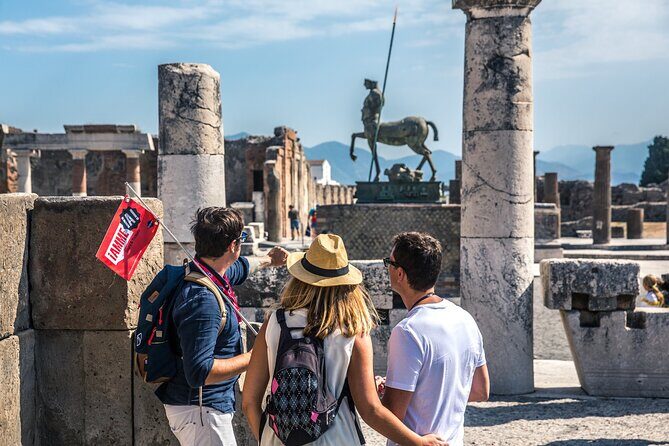
This is one of those “make your life easier” travel setups. Instead of negotiating buses or taxis across town, you start with private pickup in Naples—hotel, airport, train station, or the port—with the driver waiting holding a board with the lead passenger’s name. That alone reduces a lot of the usual day-trip friction: you’re not trying to find the right meeting point while dragging luggage and checking train times.
Then you get the reverse end of the problem solved too. When Pompeii is done, the driver drops you at your accommodation in Sorrento (or another address you provide at booking). For places like Sorrento, where getting from the main areas to your hotel can mean a bit of uphill walking or one more tricky transfer, this door-to-door finish matters.
The car itself is air-conditioned, and it’s built for comfort and practical movement. If you’re traveling with a couple of bags and don’t want your Pompeii visit to feel like a logistical obstacle course, that’s a real plus.
If you're still narrowing it down, here are other tours in Naples we've reviewed.


Pompeii in a Half-Day: What the 2-Hour Guided Walk Means
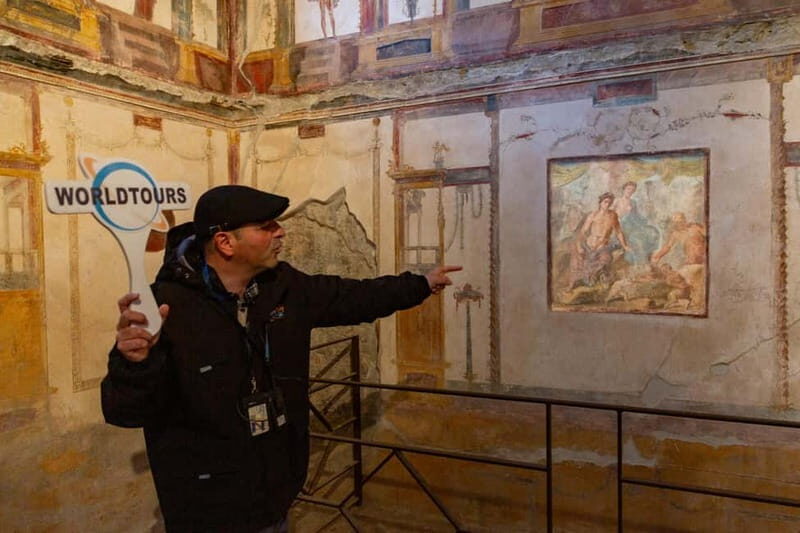
Pompeii is huge. Even with a strong plan, “half day” can turn into “half see, half rush” if you don’t have structure. This itinerary gets around that by anchoring the morning around a guided walking tour of Pompeii that lasts about 2 hours with an official guide.
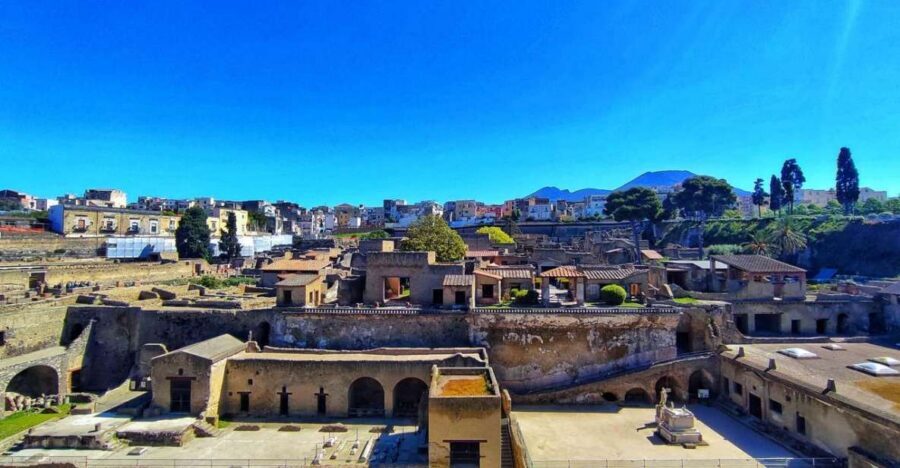
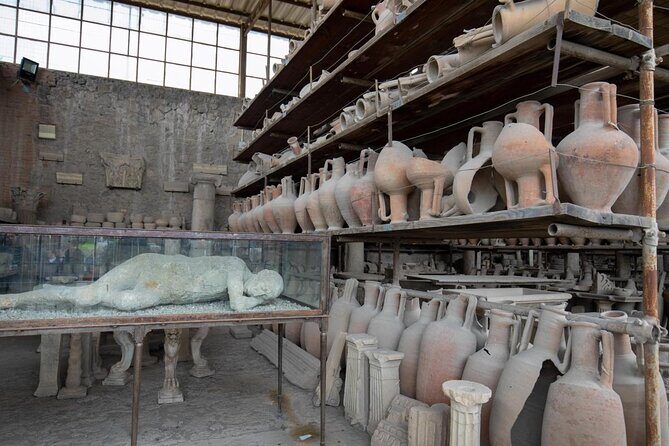
That 2-hour segment is your foundation. You’re given the main historical frame and you’re pointed to the most meaningful ruins before you move on to quicker highlight stops. After the volcanic eruption of Mount Vesuvius in 79 AD buried the city under lapilli and lava, the ruins stayed preserved in a way that makes Pompeii feel oddly specific—streets, architecture, and daily-life spaces all still make sense. A guide helps you read that quickly instead of just looking at it.
The big trade-off is pacing after the walking tour. The rest of the listed stops are short—often around 10 minutes each. That doesn’t mean the stops aren’t important; it means the tour is designed for a “greatest hits” approach. You’ll leave knowing what these places are and why they mattered, but you won’t linger long enough to master every detail like you might on a full-day Pompeii plan.
Pompeii Highlights You’ll Actually Recognize: Foro, Jupiter, and the Basilica

The Pompeii route here is built around the spaces that connect civic life, religion, and administration—so you don’t just see random walls and columns.
Foro di Pompeia (Civil Forum)
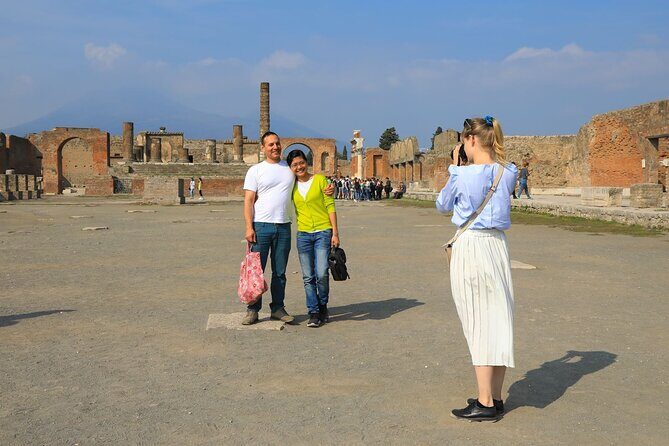
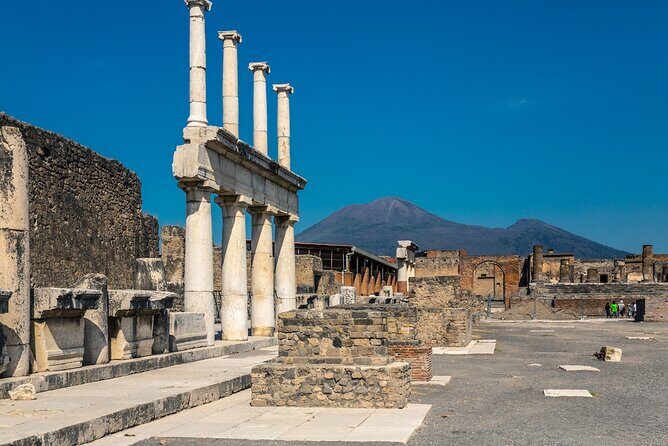
You start with Foro di Pompeii, the city’s core of daily life. This is where the civic system ran—administration and justice—as well as business activity and trade. Even in a short stop, the Forum layout helps your brain map Pompeii: public buildings clustered around the main square, and the religious side of civic life mixed in with everything else. If you’ve ever visited a Roman city and wondered why religion and politics feel tangled together, the Forum is the answer.
One useful detail here: the itinerary includes admission for each listed stop, and entry fees are covered. That removes the usual question of whether you should hop in and out of areas and saves you time at a site where time matters.
Tempio di Giove Capitolino (Temple of Jupiter)
Next comes the Temple of Jupiter on the north side of the Forum, with Mount Vesuvius framed behind in a classic Pompeii view. The temple underwent major renovation when the colony was founded, and it became a true Capitolium aligned with Roman models, with statues associated with Jupiter, Juno, and Minerva.
Even if you’re not a temple architecture nerd, this stop helps you understand that Pompeii wasn’t just a place people lived—it was a Roman city shaped to express Roman identity. The scenic Mount Vesuvius backdrop can also make the whole experience feel more real, not just “archaeology.”






Basilica
The Basilica is next, and it’s a surprisingly practical stop. This was the most sumptuous building of the Forum, used for business and justice. In other words: this is where contracts, legal decisions, and the daily work of governance happened. A quick look can help you connect how money and law flowed through the same public spaces as religion and politics.
From Markets to Main Streets: Macellum and Via dell’Abbondanza
After the Forum core, the tour moves toward commerce and the rhythm of everyday movement through town.
Macellum (Market)
The Macellum is the Pompeii market complex, described as a tuff quadriporticus with a central hall and details suggesting worship and even imperial-cult connections. It’s also tied to practical life: an area where items could be sold, and a layout that shows how food markets weren’t purely functional—they were part of civic identity too.
This stop is a good reminder that Pompeii’s ruins weren’t only dramatic villas and big theaters. People shopped here. They gathered here. The city was a working machine.
Via dell’Abbondanza (Main Street)
Then you’re placed on Via dell’Abbondanza, Pompeii’s ancient main street, running east to west from the Forum toward Porta Sarno. What makes this stretch valuable is not just the “main street” concept—it’s that it helps you visualize how a day in Pompeii unfolded. You can picture shops, workshops, cafes, and places for snacks and drinks.
Even at about a 10-minute stop, the street setting makes Pompeii feel like a city you can walk through in your imagination. It’s also a nice contrast to the heavier civic buildings: the Forum is about governance; this street is about motion, commerce, and noise.
Bathing, Graffiti, Brothels, and a Grand House: Terme Stabiane to Casa del Fauno
This is where Pompeii turns from impressive public buildings into something more human.
Stabian Baths (Terme Stabiane)
The Stabian Baths are located behind the Temple of Jupiter and date to soon after the colony was founded. You get a quick look at how baths functioned—dressing rooms, hot and cold areas, and the fact that these places were socially important. There were separate entrances for men and women, which is a detail you don’t always see in simplified Pompeii overviews.
One realistic consideration: many Pompeii ruins involve uneven ground and steps. Wear comfortable shoes. You’ll be on foot a lot, and the summer heat can turn “short stops” into “hot climbs” if you’re not prepared.
Lupanar (Official Brothel)
The Lupanar is Pompeii’s most famous official brothel, and it’s short but memorable. The building is small and purpose-built with rooms and built-in masonry beds. What people talk about most are the preserved erotic frescoes and the graffiti left by visitors—both of which connect you to the language and daily life of Roman plebeians.
If you’re traveling with kids or prefer not to deal with sexual content, this is the one stop to think about. The tour includes it as a listed highlight, so factor that into what you’re comfortable with.
Casa del Fauno (House of the Faun)
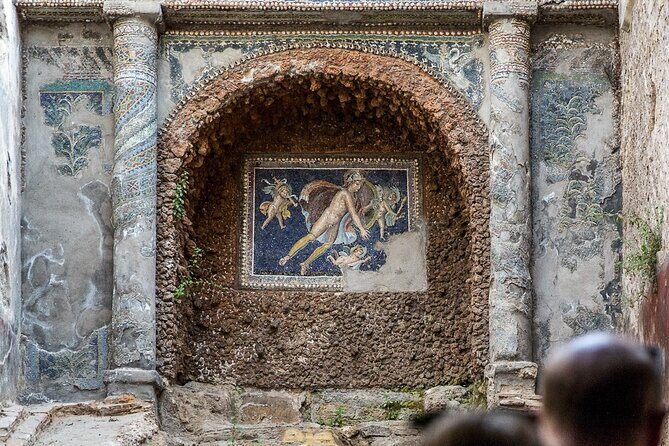
Then you reach a major shift in scale: the Casa del Fauno, one of Pompeii’s largest and most impressive aristocratic private residences. It’s tied to a time when wealthy residents displayed art and status, and it’s described as unusually revealing even compared with evidence you’d find in Rome.
If your “Pompeii taste” leans toward villas and art-filled interiors, this stop is likely to feel like the emotional payoff. Even in a brief visit window, the idea of what belonged to wealthy households comes through.
Teatro Grande (Large Theater) and the Basilica link
Finally, you end with the Teatro Grande, built into a hillside and designed with multiple sectors. It helped shape entertainment in Roman style, with tragedies in a Greco-Roman tradition.
Even the short stop format helps: you connect the civic spaces to spectacle. Pompeii wasn’t just administration—it was social life, too.
Practicalities: Timing, Heat, Shoes, and Luggage
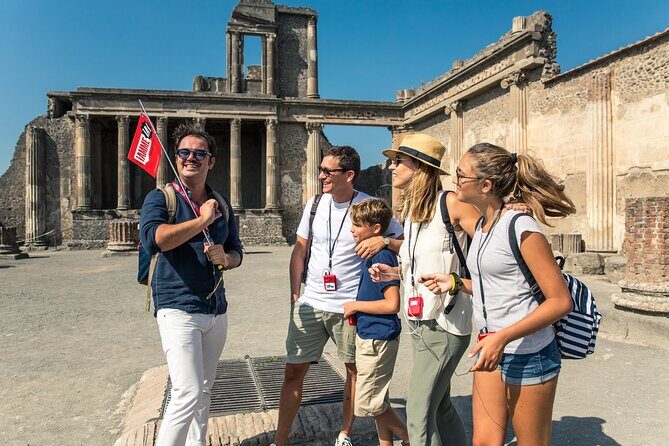
This is the part that can make or break a half-day tour. Pompeii is famous for its ruins, but the ground truth is your comfort.
Time math for a 4–5 hour day
The whole experience runs about 4 to 5 hours. Pickup in Naples plus transfer plus Pompeii walking and highlight stops means there’s little margin for detours. If you’re coming from the airport or the train station, build in a little slack so you don’t feel rushed before you even arrive at Pompeii.
What to wear
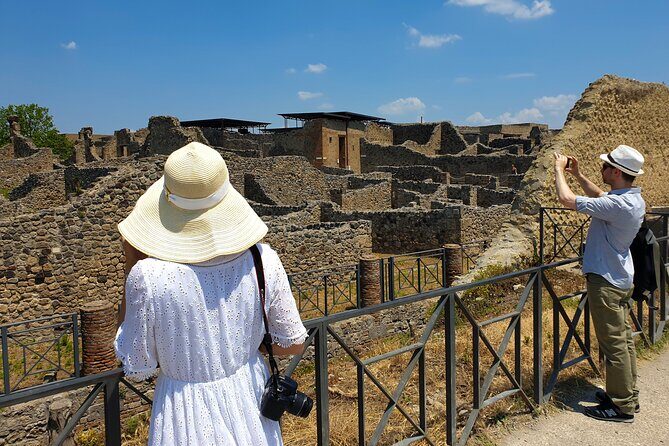
The operator suggests sunscreen and comfortable shoes, and I agree. Pompeii can be extremely hot in summer, and the ruins involve lots of walking and sun exposure. A hat helps too if you’re the type who remembers it.
Luggage reality
You can bring 1 medium or big suitcase per passenger seat, plus one small item like a laptop, camera bag, or small shoulder bag. That’s a practical allowance for travelers going straight to Sorrento with bags in tow.
One caution: always double-check the vehicle capacity with the local supplier if you’re traveling with oversized luggage. Private transfers are flexible, but vehicles have limits.
Food planning
Lunch and beverages are not included. With a short day, you might be tempted to snack quickly and move on. If you can, plan a light meal before pickup or plan where you’ll eat right after dropping off in Sorrento. This is the simplest way to avoid feeling stuck hungry during the transition.
Price and Value: Is $492.76 Per Person a Smart Deal?
$492.76 per person is not a cheap add-on. But for what you’re getting, it can be very good value depending on your situation.
You’re paying for:
- Private transportation in an air-conditioned vehicle
- Door-to-door pickup and drop-off
- An official local guide for Pompeii
- Skip-the-line entry and admission tickets included for the Pompeii stops
If you tried to assemble this yourself, you’d likely spend time and money on separate tickets, taxis, and guide coordination. The big “value” isn’t only the savings; it’s the stress reduction. When you’re traveling from Naples to Sorrento and you only have half a day, getting it bundled is often the smartest choice.
That said, price is also about fit. This itinerary is built for a focused highlights visit. If you want to photograph everything, linger in every section, and stop whenever your curiosity sparks, a longer Pompeii-focused tour may cost more but might match your pace better.
Who This Tour Fits Best (and Who Might Want Something Else)

This tour is best for you if:
- You want Pompeii without the hassle of transportation planning.
- You prefer an organized route with an official guide rather than self-guided wandering.
- You’re staying in Sorrento (or nearby) and want a smooth day plan that ends at your accommodation.
It may not be ideal if:
- You want a full Pompeii deep dive. This is a “top ruins” style day, not an all-day exploration.
- You dislike structured pacing and short stops. Some areas are handled in about 10 minutes.
If you’re a couple, a small family group, or friends traveling together with bags, the private format and luggage allowance make it especially workable.
Should You Book This Naples–Sorrento + Pompeii Day Trip?
I’d book it if you’re aiming for the classic Pompeii highlights and you value a clean logistics plan. The combination of private door-to-door transfers, official guided interpretation, and skip-the-line entry is exactly what turns Pompeii from a “maybe later” idea into a real, doable day.
But book with eyes open: you’re compressing Pompeii into a half-day format. If your travel style is slow, photographic, and detail-obsessed, you might prefer a longer stay with fewer stops. If your travel style is practical and you want Pompeii plus Sorrento without stress, this is a strong choice.
FAQ
How long is the Naples to Sorrento transfer with Pompeii included?
It runs about 4 to 5 hours.
Where do you get picked up in Naples?
Pickup can be arranged from the hotel, airport, train station, or port in Naples. The driver will wait holding a board with the lead passenger’s name.
Do I need to buy Pompeii tickets?
No. Admission tickets are included for the listed Pompeii stops, and skip-the-line entrance is part of the package.
Is lunch included?
No. Lunch and beverages are not included.
What language is the Pompeii tour in?
You choose a language. The Pompeii guide will run the tour in your selected language, and the driver speaks English or Italian.
What’s the drop-off like in Sorrento?
You’ll be dropped off directly at your accommodation or chosen address in Sorrento. You need to provide the drop-off address at booking.
What are the luggage limits?
You can bring 1 medium or big suitcase per passenger seat, plus 1 small item (like a laptop or camera bag). If you have unusual-sized luggage, you should double-check the vehicle capacity with the local supplier.