REVIEW · NAPLES
From Naples: Day Trip to Pompeii with skip the line
Book on GetYourGuide →Operated by Napoli Official Tour · Bookable on GetYourGuide
Pompeii without the misery of ticket lines. This day trip pairs a Naples shuttle with priority entrance, so you spend more time walking and less time waiting. I also like the simple setup: roundtrip transport plus free time at the site, which lets you go at your own pace.
The one real catch is that there’s no guide or audio included, so you’ll want to be comfortable exploring using signs (or adding your own context on the side).
In This Review
- Key takeaways before you go
- Naples to Pompeii, the fast way to start strong
- Piazza del Gesù Nuovo pickup: simple, but double-check your stop
- Riding the shuttle: what you gain with roundtrip transport
- Priority entrance at Pompeii: use it to get oriented fast
- The 4-hour reality: plan for “free time,” not a full museum day
- Walking Pompeii like a Roman consumer: shops, streets, and public space
- Baths, temples, and villas: the Roman comfort zones you’ll recognize
- House of the Faun and mosaic floors: what to look for
- Entertainment in the ruins: brothel, theaters, and everyday choices
- Naples return and the one pickup hiccup to watch for
- Price and value: when $71 makes sense
- Who should book this Pompeii shuttle-and-entry option
- Quick prep checklist so you don’t waste your Pompeii minutes
- Should you book this Pompeii skip-the-line shuttle?
- FAQ
- How long is the Pompeii day trip from Naples?
- Where do I meet in Naples for the shuttle pickup?
- Does this experience include priority entrance to Pompeii?
- Is a guide or audio guide included?
- What transport is included?
- How much time do I get at the archaeological site?
- Do children need ID?
- Is it free for very young children or discounted for kids?
- Can I cancel, and is there pay later?
Key takeaways before you go
- Priority entrance helps you skip the long ticket hassle when you arrive at Pompeii.
- Roundtrip shuttle picks you up from Naples in the historical center and returns you after your visit.
- Free time on site means you can target the areas you care about instead of being rushed.
- Roman life highlights include baths, villas, temples, shops, and theaters—covered in ash after 79 AD.
- House of the Faun and mosaic floors are among the standout sights for art-and-architecture lovers.
- Timing is flexible, but not exact: departure time is approximate and confirmed the day before.
Naples to Pompeii, the fast way to start strong
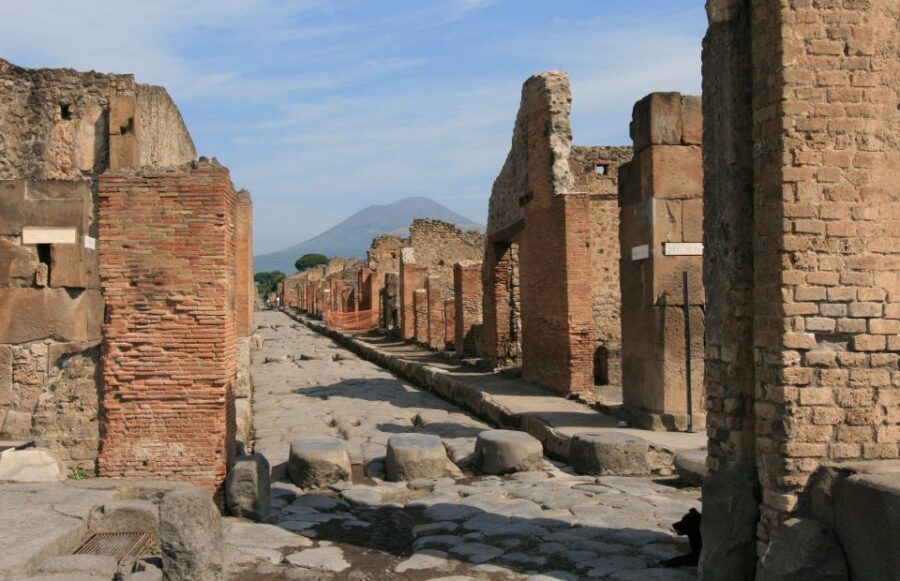
A day trip to Pompeii can feel either smooth or chaotic, depending on one thing: how you get there and whether you burn time in lines. This experience is built around a practical goal—get you from Naples to the ruins quickly and then let you explore once you’re inside.
I like that the transport is handled for you. You’re not trying to figure out buses or schedules on your own, and you don’t have to negotiate the first uphill step of the day. The other big win is priority entrance. Pompeii’s popularity means lines can swallow good energy. This setup is designed to protect your time so you can start walking sooner.
One more reason it works: the format is low-pressure. You get a shuttle ride, entry saved from the line, and then free time at the archaeological site. That combination fits travelers who want autonomy, but still want logistics taken care of.
If you're still narrowing it down, here are other tours in Naples we've reviewed.


Piazza del Gesù Nuovo pickup: simple, but double-check your stop
The shuttle pickup point in Naples is Piazza del Gesù Nuovo in the historical center. That’s helpful, because it’s a recognizable landmark area rather than a random street corner. You’ll board in the city and travel directly to Pompeii.
A detail that matters: the departure time is approximate. The exact time is confirmed the day before by the local operator, and you’re asked to select your preferred meeting point from a proposed list. That means you should treat your confirmation message as part of the plan, not as optional reading.
Also, bring ID for kids. The info provided is clear that children need a passport or ID card. If you’re traveling as a family, this is one of those small items that can save stress at the worst possible moment.
Riding the shuttle: what you gain with roundtrip transport
This experience includes roundtrip transportation by shuttle bus, so you’re not responsible for the return journey after your Pompeii walk. That matters more than people think. Pompeii ends up taking more brainpower than expected—routes, sights, stairs, crowds—and having a ready return option reduces the “panic sprint” feeling at the end.
The shuttle drops you at the main entrance area, which is exactly where you want to begin. From there, you’re directed to use your priority entrance ticket so you can get in faster.
In the supplied feedback, the return liaison and driver were praised for being professional, on-time, and helpful. One passenger also described a return drop-off at the wrong stop, which is a reminder to confirm your exact designated city stop before you head back. In practice, that means: when you get your confirmation, write down your pickup/meeting details and stick to them like it’s a train connection.
Priority entrance at Pompeii: use it to get oriented fast
Once you arrive, the big payoff is your priority entrance ticket. The idea is straightforward: fewer minutes in line means more minutes in the ruins.
But getting in faster only helps if you spend those saved minutes wisely. Here’s how I’d use the advantage.
- Get your bearings immediately after entry. Pompeii is spread out, and the temptation is to wander first and plan later. With limited time, that can cost you.
- Choose a “must-see circle.” Focus on a compact set of sights that connect logically. For example: public baths + nearby villas/shops areas, or the entertainment/house areas first, then mosaics.
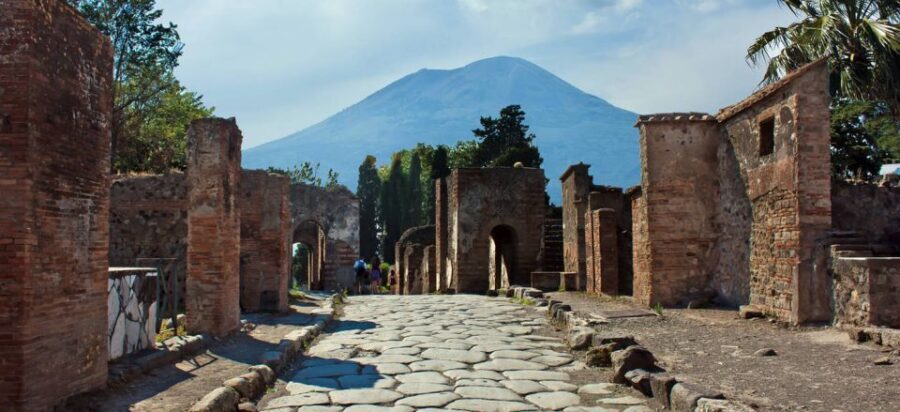
- Slow down for texture, not distance. The streets are cobblestone paths laid over 2,000 years ago. The most memorable moments are often small: worn stone, entrances, and wall remnants you can stand close to.
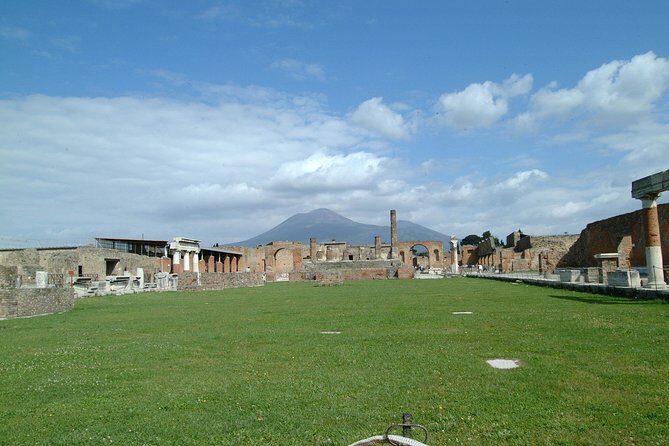
You also get the sense of the catastrophe that preserved Pompeii. The ruins were covered in lava and ash after the eruption of Mount Vesuvius in 79 AD. That’s not just a museum fact. It explains why so many building remains are still readable like a freeze-frame.
The 4-hour reality: plan for “free time,” not a full museum day
The duration is listed as 4 hours. That’s not long in Pompeii terms, especially if you like to stop often and read. So your goal should be depth over breadth.
Because your entry is priority and you’re not tied to a guide schedule, you can tailor the walk. But you still need to make peace with the fact that this is a “highlights” visit.
A good way to think about it: you’re being offered free time to visit the archaeological site. That means you can linger in your favorite zones, but you’ll want to keep a rough sense of time so you’re not rushing the last section.
If you’re traveling in warmer months, also expect fatigue. Walking on uneven stone and navigating routes through open spaces can slow you down. Build in short rests and don’t try to cram everything in.






Walking Pompeii like a Roman consumer: shops, streets, and public space
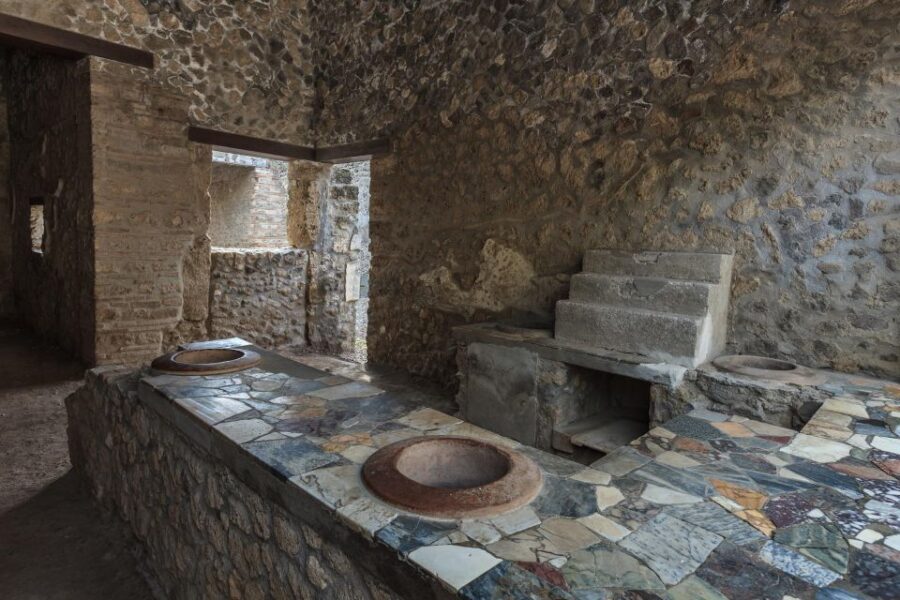
Even without a guide, Pompeii tells its story through layout. You’ll walk along cobblestone streets built over 2,000 years ago, with remains of everyday places like shops and more ceremonial spaces like temples and theaters.
What makes the ruins click for me is that Pompeii isn’t just about big monuments. It’s also about how ordinary life moved through the city. As you stroll, you’ll see remains that suggest the rhythm of a Roman day: public areas where people gathered, businesses where commerce happened, and entertainment spaces that offered an escape.
You’re also looking at structures that were covered in lava and ash after 79 AD. That preservation creates an eerie feeling of clarity. You can often understand what a space was for just by looking at its shape and what’s left behind.
For your planning, think in “themes” rather than single buildings. If you love street-level life, aim for the shop-and-public-area zones first. If you’re more architecture-and-art focused, prioritize villas and mosaics early while your energy is high.
Baths, temples, and villas: the Roman comfort zones you’ll recognize
One of the highlights listed is the chance to see remains of public baths, villas, and temples. Those categories give you a quick map of Roman priorities: hygiene and leisure (baths), wealth and status (villas), and civic/religious life (temples).
Public baths are especially worth your time because they connect with how people socialized. Even in ruin, you can sense how the bathing spaces functioned as places to meet, relax, and pass the day.
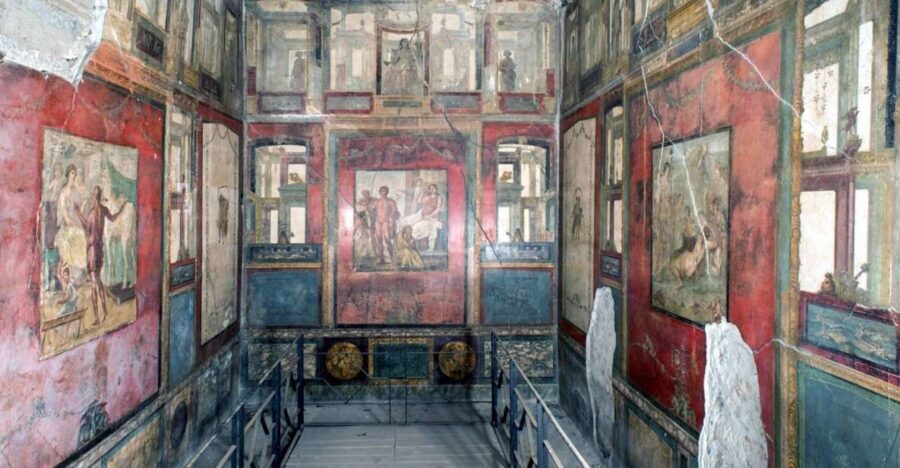
Villas and merchant homes bring a different vibe. The information notes mosaic tiles in luxury villas of rich merchants. That’s a major reason many people rate Pompeii so highly: you can stand next to artwork that still shows skill and taste, even after centuries underground and under volcanic debris.
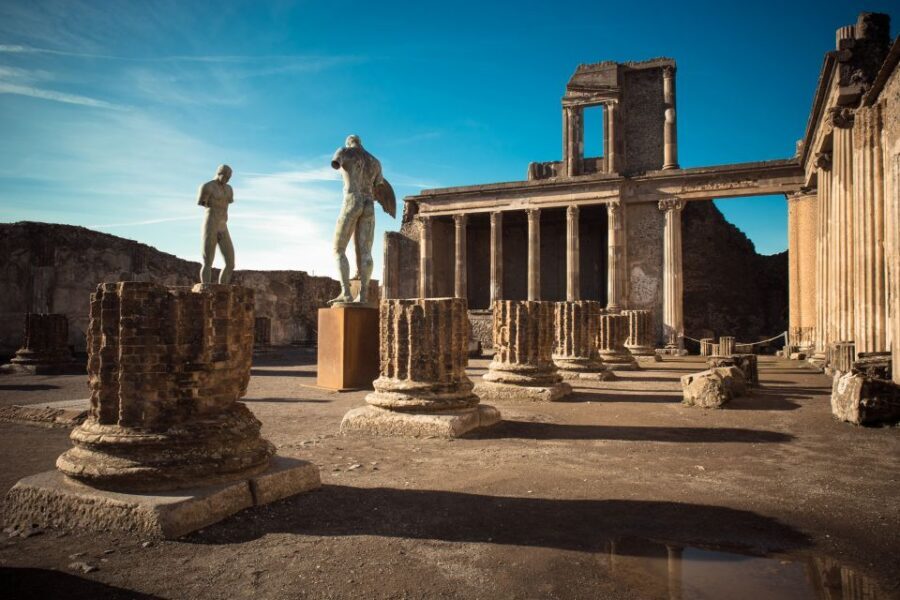
Temples and civic areas round out the view. You’ll get the impression of how public worship and community identity shaped daily life.
The key here: you’re not just sightseeing. You’re reading a city. When the time window is short, focusing on these building types gives you a strong “Roman life” snapshot fast.
House of the Faun and mosaic floors: what to look for
The House of the Faun is specifically mentioned as a key stop, and it’s a smart target. This kind of major residence helps you understand how a wealthy household represented status and identity.
The tour description also emphasizes mosaic tiles in luxury villas of rich merchants. Even if you’re not an art expert, mosaics are visually satisfying because they’re tactile and detailed. In Pompeii, you’re not looking at a modern reproduction—you’re seeing an original arrangement in place, even if only parts remain.
When you’re there, give yourself permission to slow down at mosaic areas. Try to notice patterns and how scenes or designs were organized. It helps you connect the aesthetics to the people who lived with them.
If you’re short on time, here’s a practical rule: don’t spend 20 minutes trying to photograph every single mosaic. Pick one or two mosaic-rich spots that matter to you, then move on with your eyes open for the larger story of wealth, leisure, and display.
Entertainment in the ruins: brothel, theaters, and everyday choices
One of the most memorable parts of Pompeii is how clearly it shows entertainment and social behavior. The info you’re given includes a brothel, public baths, and entertainment spaces like theaters.
That combination can be surprising if you’re expecting only solemn history. But it’s also what makes Pompeii feel like a real place rather than a lesson. The city wasn’t only about temples and civic speeches. People also spent time on pleasure, social mixing, and public shows.
The mention of a brothel is also a useful reminder that Roman society had public-facing spaces for adult life. Seeing the remains in context gives you a clearer sense of how normalized those functions were in the city’s physical geography.
Again, you don’t need a guide to understand most of this at a basic level. You’re using the site layout and the categories you’re already told to look for—baths, villas, temples, theaters, and the brothel area.
Naples return and the one pickup hiccup to watch for
The day trip includes a return shuttle. The driver and liaison details weren’t specified beyond that, but the supplied feedback included named individuals: Ciro as the driver and Inna as the liaison on one successful outing.
That kind of professionalism matters because the return trip can feel like the end-of-day scramble. When staff are on time and communicative, it keeps your day trip from turning into a hunt for your bus.
At the same time, one passenger reported being dropped at the wrong stop on the return. That’s not a reason to avoid the tour, but it is a reason to take your stop information seriously. Before you leave Pompeii, glance at your pickup details. When you reunite with your group or staff, confirm you’re heading to the correct Naples stop for your location.
Price and value: when $71 makes sense
At $71 per person for a 4-hour experience, you’re paying for two things: priority entrance and roundtrip shuttle logistics from central Naples. If you’ve tried to plan independent transportation to Pompeii before, you know how quickly time and stress add up. For many people, that’s the real value.
The no-guide policy also affects value. This tour is priced as a transport-and-entry service with free time for self-exploration. That can be a great fit if you like to wander on your terms. If you want a historian to explain every house and symbol, you may feel the absence more than you’d expect.
So I’d judge the price like this:
- If you want time savings from priority entrance and you’re comfortable exploring yourself, the $71 feels reasonable for a short, high-impact visit.
- If you want guided interpretation, you might look at a different format where explanation is included.
Who should book this Pompeii shuttle-and-entry option
This is a strong match for:
- People staying in Naples who want a straightforward, roundtrip plan.
- Travelers who like exploring at their own pace and don’t want to follow a group schedule.
- Mosaic and villa lovers who can spend a bit of time pausing for details.
- Families with kids who can benefit from a short 4-hour window.
It may be less ideal if:
- You want a full narrative guided experience with historical context delivered on the spot.
- You need very structured timing because you might otherwise wander too broadly and run out of time.
If you’re the type who likes to arrive, pick targets, and walk a route you design, this format fits nicely.
Quick prep checklist so you don’t waste your Pompeii minutes
Because the time is short and the tour is self-paced on site, your prep matters. Here are practical things you can do before you go:
- Wear comfortable shoes for cobblestones and uneven ground.
- Decide on 2–4 “must zones” so you don’t zigzag.
- Bring a light layer if weather shifts.
- For families: pack the required ID for children.
- Plan to use your priority entry moment to orient, then move toward your first target.
These small choices let you get the most out of the saved time.
Should you book this Pompeii skip-the-line shuttle?
I’d book it if you want priority entrance plus a no-stress shuttle from Naples, and you’re happy exploring Pompeii on your own. The combination is practical: less waiting, clear Roman-life highlights (baths, villas, temples, theaters, and the House of the Faun), and a manageable 4-hour window.
Skip it (or pair it with your own add-on) if you strongly prefer a guide to do the storytelling. In that case, you might feel the missing context because there’s no guide or audio included.
If your goal is a smart, efficient Pompeii day from Naples—without the time sink of ticket lines—this is a solid way to make it happen.
FAQ
How long is the Pompeii day trip from Naples?
The duration is 4 hours.
Where do I meet in Naples for the shuttle pickup?
The shuttle pickup is at Piazza del Gesù Nuovo in the historical center of Naples.
Does this experience include priority entrance to Pompeii?
Yes. You get priority entrance to the ruins of Pompeii.
Is a guide or audio guide included?
No guide or audio guide is included. You’ll have free time to visit the site on your own.
What transport is included?
Roundtrip transportation by shuttle bus is included.
How much time do I get at the archaeological site?
You get free time to visit the archaeological site, as part of the 4-hour experience. The exact on-site time isn’t specified in the details provided.
Do children need ID?
Yes. Children must bring a passport or ID card.
Is it free for very young children or discounted for kids?
Children up to 3 years old are free, and children between 4 and 17 years old have reduced pricing.
Can I cancel, and is there pay later?
You can cancel up to 24 hours in advance for a full refund, and there’s an option to reserve & pay later.